Tags
Greek Revival style, Historic Churches, Manti, NRHP, oolite limestone, Presbyterian, Presbyterian Churches, Sanpete County, utah

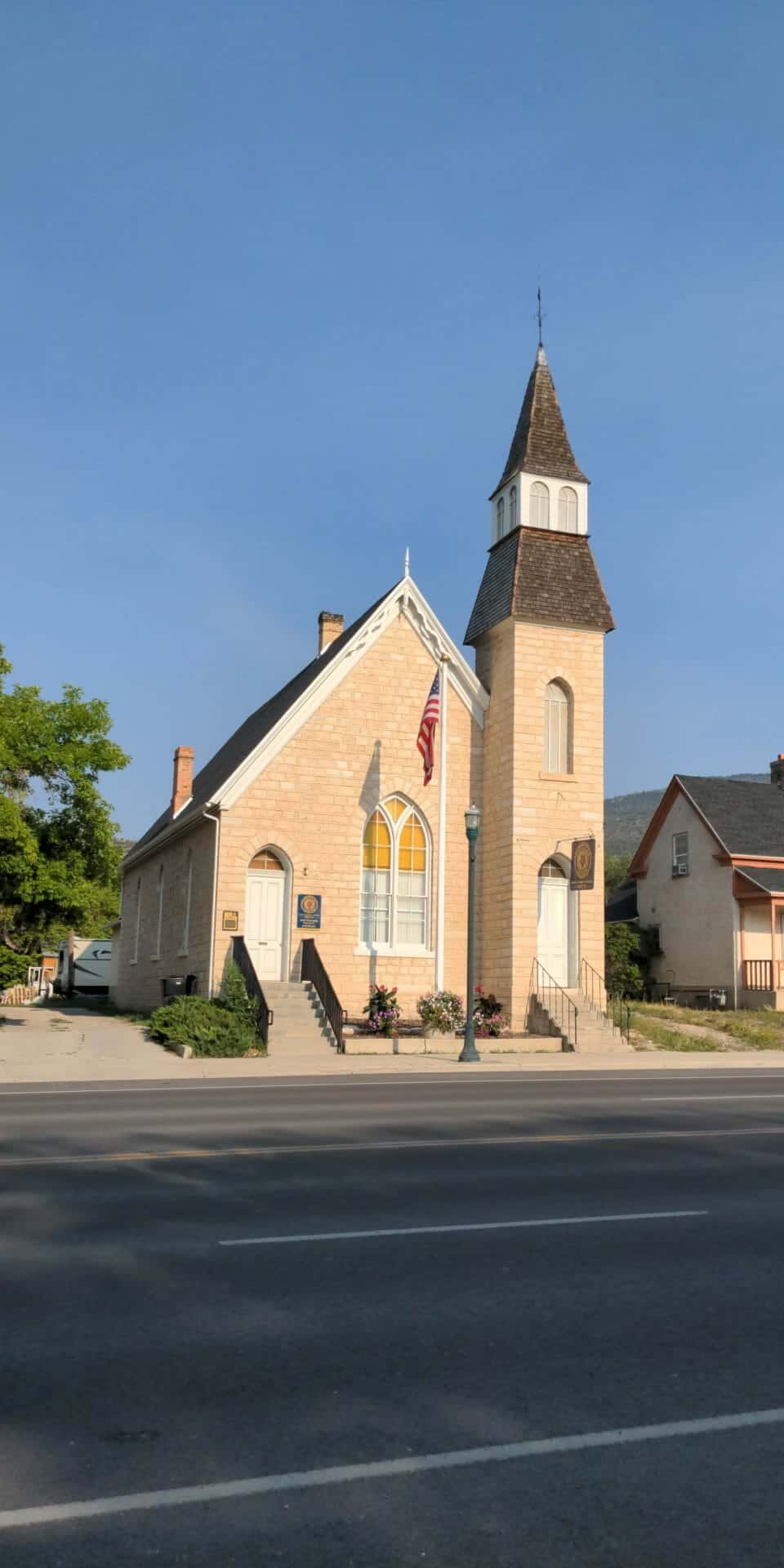
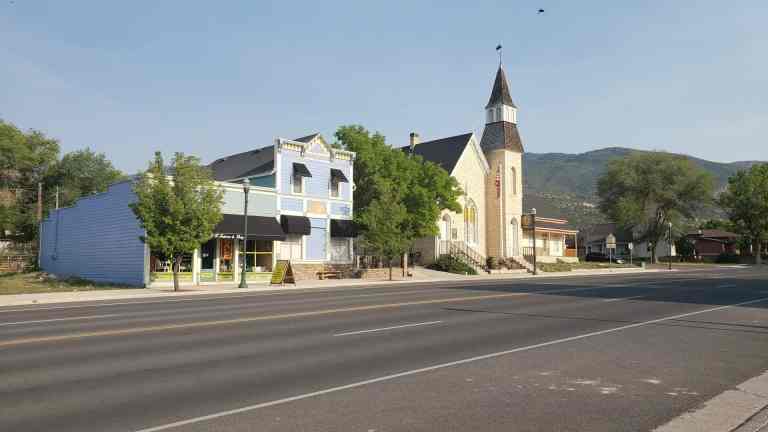
The First Presbyterian Church of Manti
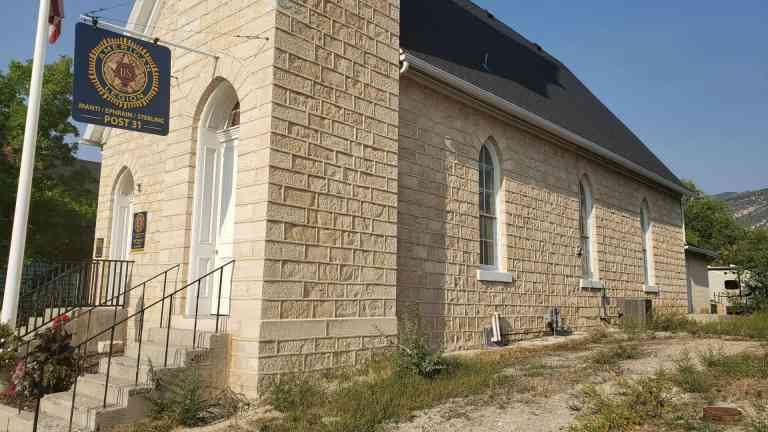
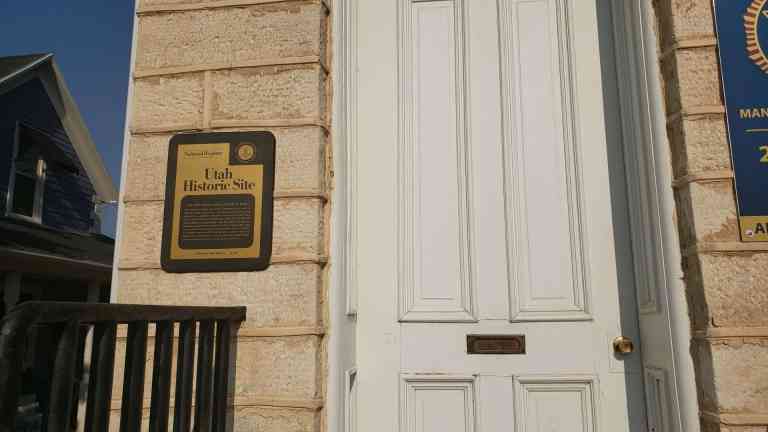
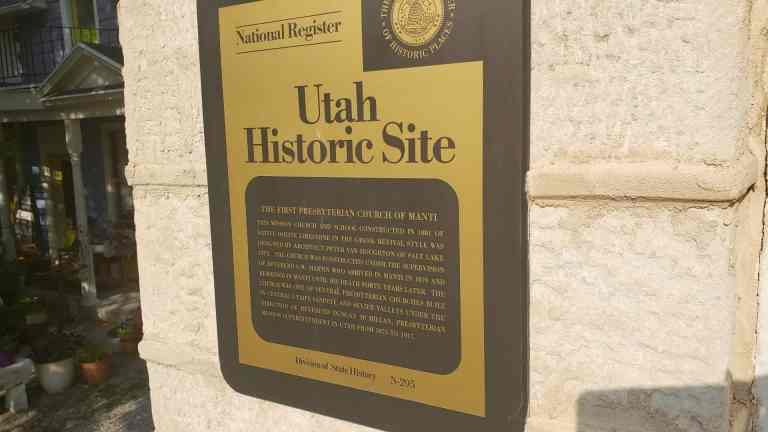
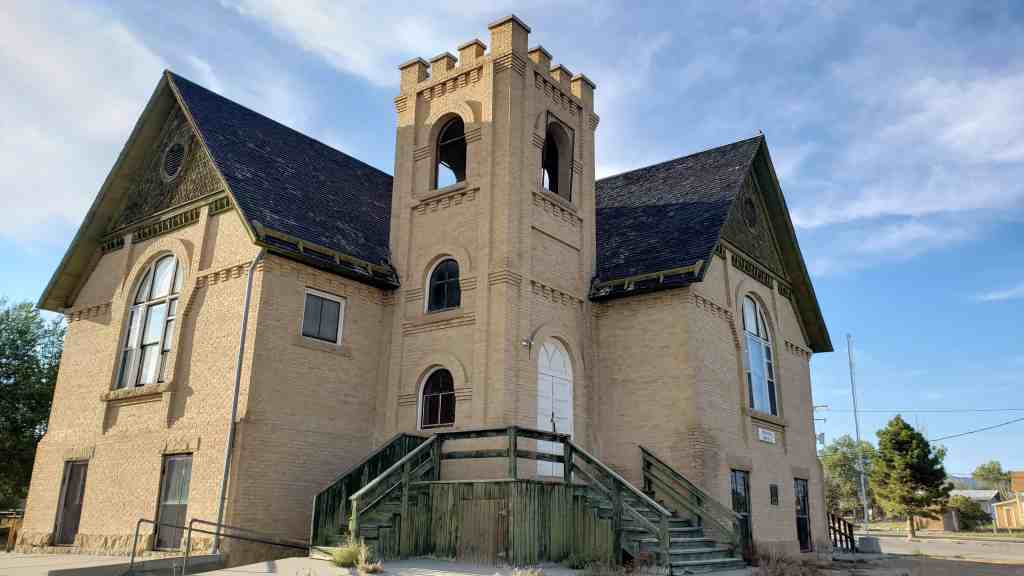
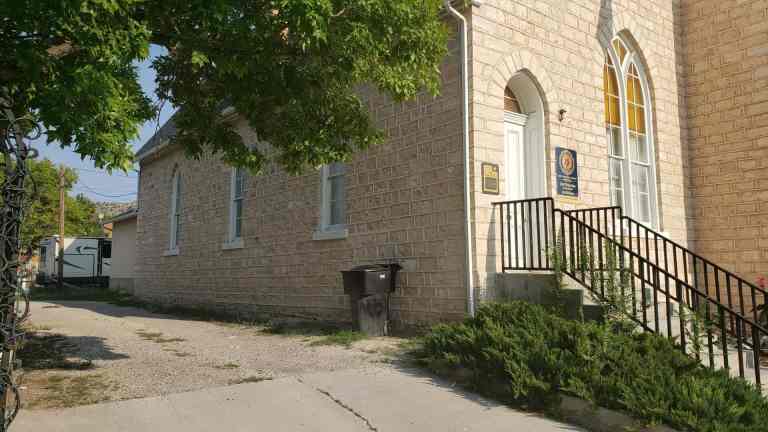
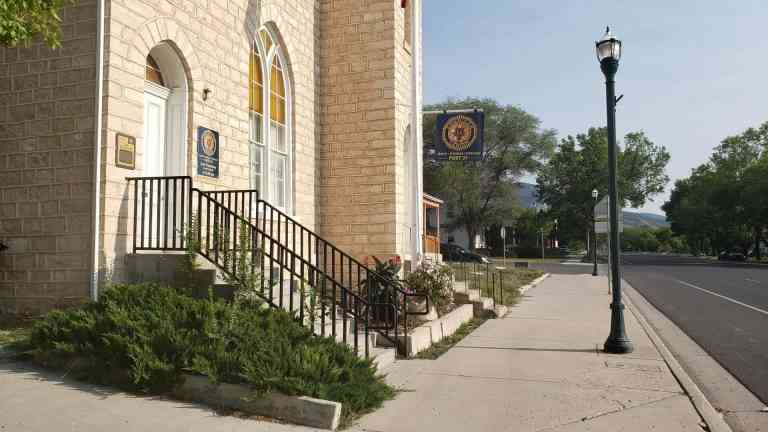
This mission church and school constructed in 1881 of native oolite limestone in the Greek Revival style was designed by architect Peter Van Houghton of Salt Lake City. The church was constructed under the supervision of Reverend G.W. Martin who arrived in Manti in 1879 and remained in Manti until his death forty years later. The church was one of several Presbyterian churches built in central Utah’s Sanpete and Sevier Valleys under the direction of Reverend Duncan McMillan, Presbyterian Mission Superintendent in Utah from 1875 to 1917.

Located at 165 South Main Street in Manti, Utah and added to the national register of historic places (#80003951) on March 27, 1980.

From the national register’s nomination form:
The First Presbyterian Church of Manti is significant because it documents the important role of a non-Mormon religious organization in stimulating improved educational opportunities in Utah and because the circumstances surrounding its being brought into existence place aspects of Mormon settlement into a new perspective. The building is a distinguished addition to the built environment of Manti.
Presbyterianism was established in Utah on June 11, 1869, with the arrival of the Reverend Melancthon Hughes to begin a pastorate in Corinne, Utah. Although begun with work in a Gentile boom town, Presbyterianism in Utah quickly became a determined missionary and youth education program aimed principally at converting Mormons.

As a religion whose own beliefs demanded an educated understanding of Christian doctrine, and whose style of religious organization was democratic, Presbyterians perceived Mormonism as a perversion, “a sort of cross between Roman Catholicism and Protestantism with vestigal marks of paganism, too eclectic to be evangelical and yet too evangelical to be wholly non-Christian.”1 Similarly, the authoritarian nature of the Mormon Church and its internal discipline was seen as “despotic suppression of liberty among its votaries and victims.” Convinced that Mormonism was both false and un-American, and, strengthened by the resolve that “Christianity and patriotism are natural allies … the Presbyterian Church discovered that it had mission work in Utah requiring intellectual strength, fervent piety, and executive ability.”
The missionary who epitomized these qualities, the Reverend Duncan McMillan, was also the man who brought into being the Presbyterian missionary strategy in Utah of offering superior educational facilities that would in time create an educated populace who would turn away from Mormonism. McMillan’s first venture demonstrated his ability to capitalize on available opportunities. Hearing of a group of disaffected Mormons in Sanpete County, he received permission from the Presbytery of Utah to proceed to Mt. Pleasant.
When he arrived on March 3, 1875, the Reverend McMillan found a group of potential converts in the Mt. Pleasant Liberal Club. These people were former members of the Mormon Church, either apostate or excommunicated, who had been growing in number since 1862 when a rift in the local Mormon Church organization had produced the defection of a sizeable number of Swedes. They had been joined over the years by others, Anglo-American and from the other Scandinavian groups, whose common bond was that they were now no longer Mormon. Politically they supported the Liberal Party against the People’s (Mormon) Party in territorial politics, but religiously they were adrift.
Since they had progressed far enough in organization to have completed a Liberal Hall just the year before, the situation for the Reverend McMillan was well-nigh perfect … to have both a congregation and a meeting place.
The other situation from which the Reverend McMillan was able to profit was the poor quality of public schools in Utah. While Mormon communities had generally established schools as among their settlement priorities, the nature and product of this schooling left much to be desired. Lack of trained teachers and an irregular and often-interrupted school year meant that most children received an indifferent education at best, but often, none at all. Fashioning benches with his own hands, McMillan opened his first school in Mt. Pleasant on April 20, 1875, with 35 students in attendance.
After overcoming some initial financial problems and with the help of other ministers and a corp of dedicated female Presbyterian missionary teachers, McMillan would establish congregations or schools throughout Sanpete and Sevier counties and in other parts of Utah territory. His school at Mt. Pleasant would become the Wasatch Academy, still operating and listed on the National Register.
In 1877 two former Mormon missionaries, Andrew Jenson and Andrew Nelson, called on McMillan and invited him to start a school in Manti. McMillan quickly called upon his brother and sister-in-law to undertake the project The school grew to 122 pupils, the largest of any school in Sanpete County,’ and a congregation was begun with twelve new Presbyterian converts. The most active elder of the new church was Andrew Nelson, a polygamist with four wives, 24 children, and 118 grandchildren. In order to accommodate to his new Presbyterian sensibilities, Nelson abandoned three of the wives.
McMillan, always sensitive to charges levelled by other Presbyterians that the Utah mission to the Mormons was inordinately expensive, triumphantly reported:
there are more converted Mormons in that one church than in all the churches of Salt Lake City put together …. Now I should like those pious economists to know that our noble, wealthy, Presbyterian Church has “wasted” only $75.00 in the conversion of those ten families, and the planting of Presbyterianism in the midst of this wilderness of sin.
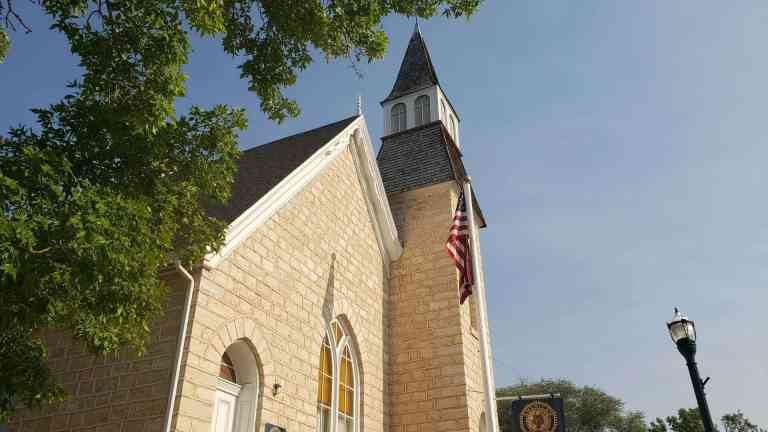
The First Presbyterian Church of Manti had been firmly established by the time the Reverend G. W. Martin and family arrived in 1879 to take up the post of minister. The Reverend Martin would remain at his post in Manti for over forty years, and during that time would witness both the first flush of success as Presbyterian schools and churches sprang up in Sanpete and Sevier county under the prodding of the dynamic McMillan and, sadly, he also witnessed the gradual stagnation of Presbyterian effort. Because the Presbyterian schools had offered solid curricula and able, well qualified teachers, Mormon parents had rarely hesitated to take advantage of this educational opportunity for their children. But by the mid-1890s Mormon Stake Academies and the improved public education system made the Presbyterian schools less attractive, and gradually with the exception of Wasatch Academy the mission schools went out of existence. Proselyting, after the first harvest of Mormon dissidents, became increasingly difficult and conversions were slow. The Manti congregation dwindled through migration and reconversion to Mormonism, and when the Reverend McMillan died in 1917 the Presbyterian Church in Manti died with him. However, unlike some of his firey colleagues, the Reverend Martin was held in considerable esteem by the Mormon community of Manti. They valued his educated (a B.A. from the University of Ohio and a B.D. from Union Theological College) commitment to civic affairs in their community, and his consistently friendly and broad-minded attitude toward Mormonism. His funeral, in the church he had built and served for forty years, was attended by dignitaries of the Mormon Church who had offered the Manti Tabernacle to accommodate the large crowd who attended the service.
Subsequently the First Presbyterian Church of Manti, with its bell that had once rung for city curfews as well as church services, fell into disuse and disrepair. It is currently operated as a lodge hall.