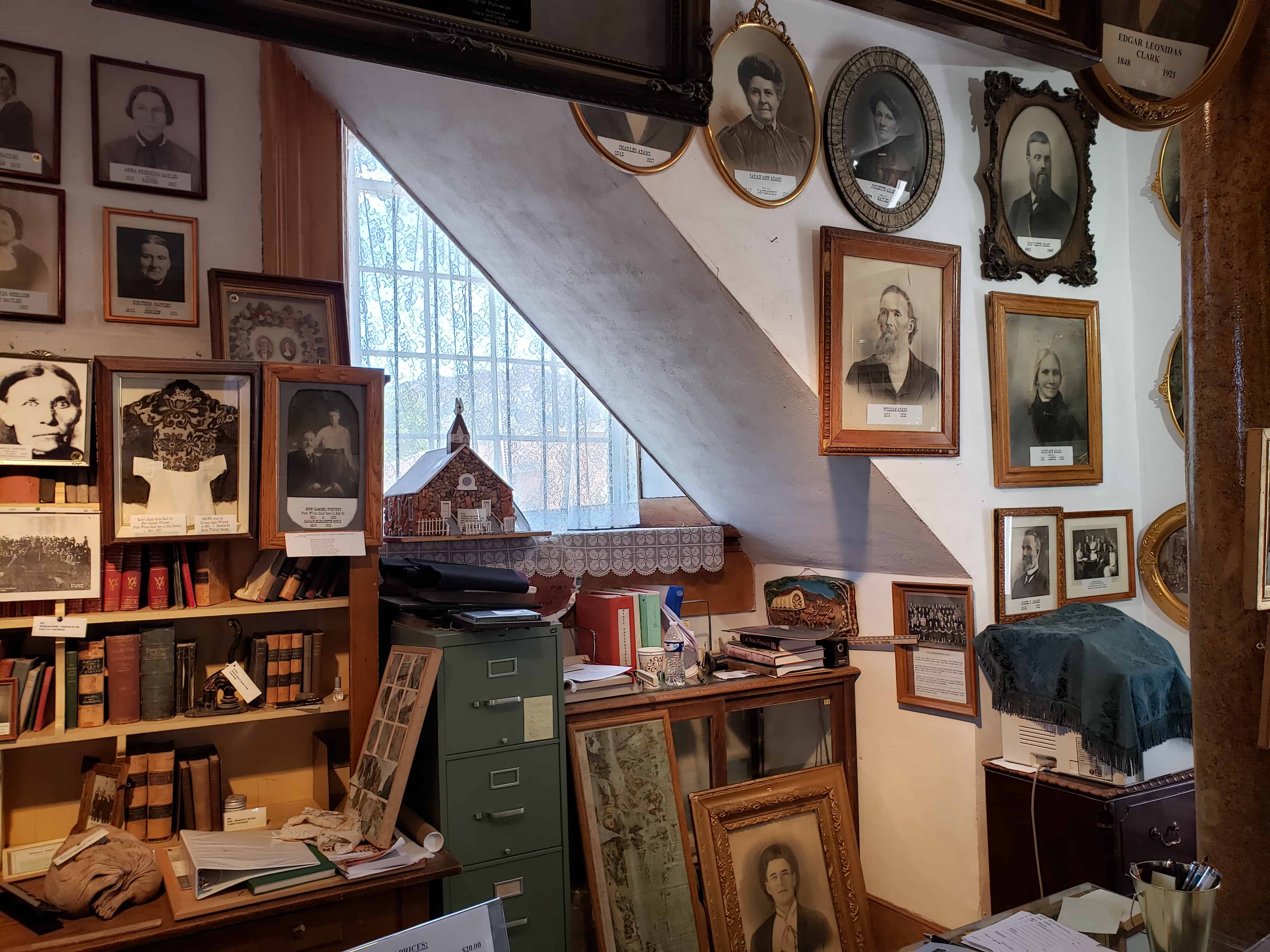
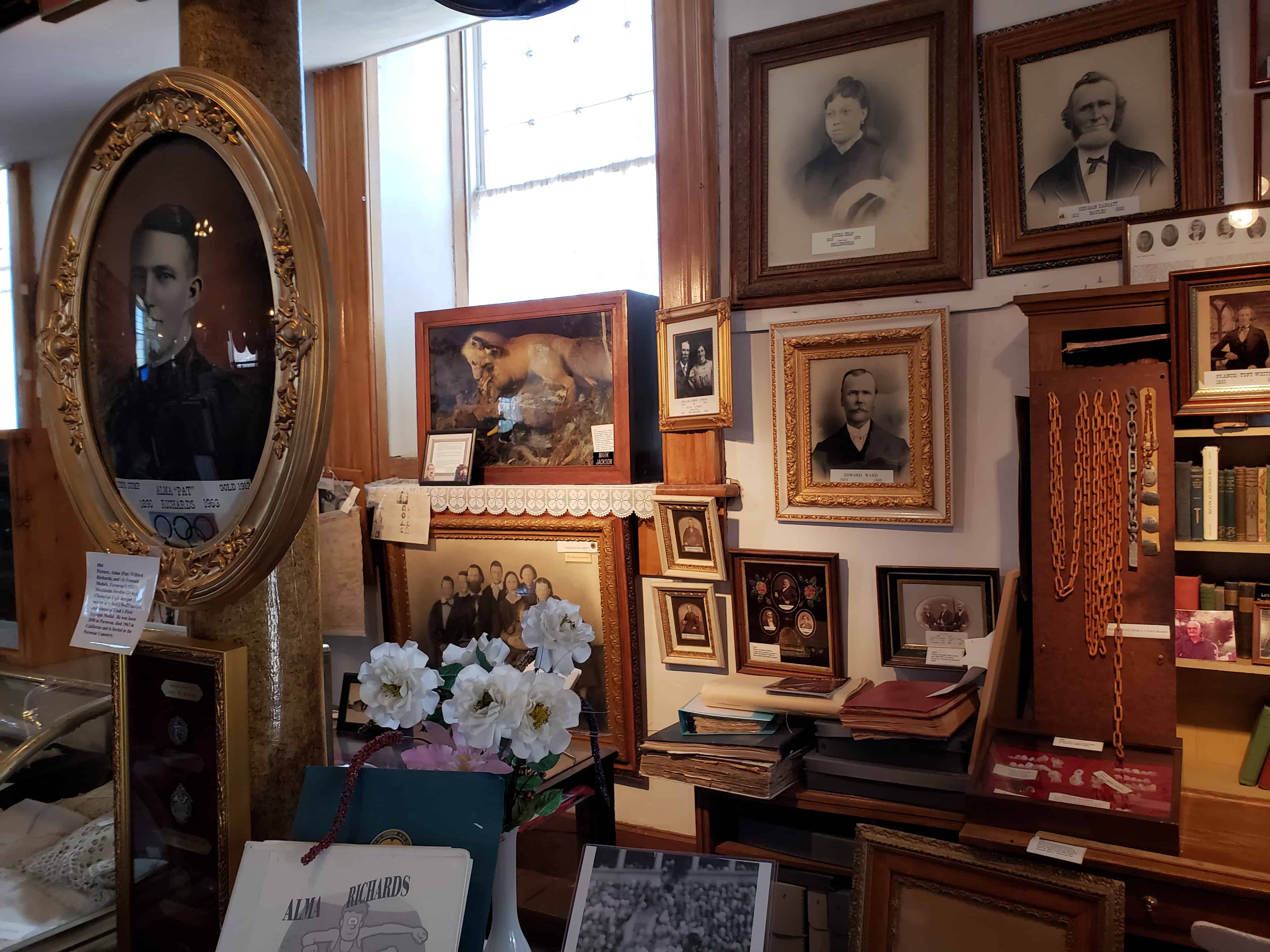
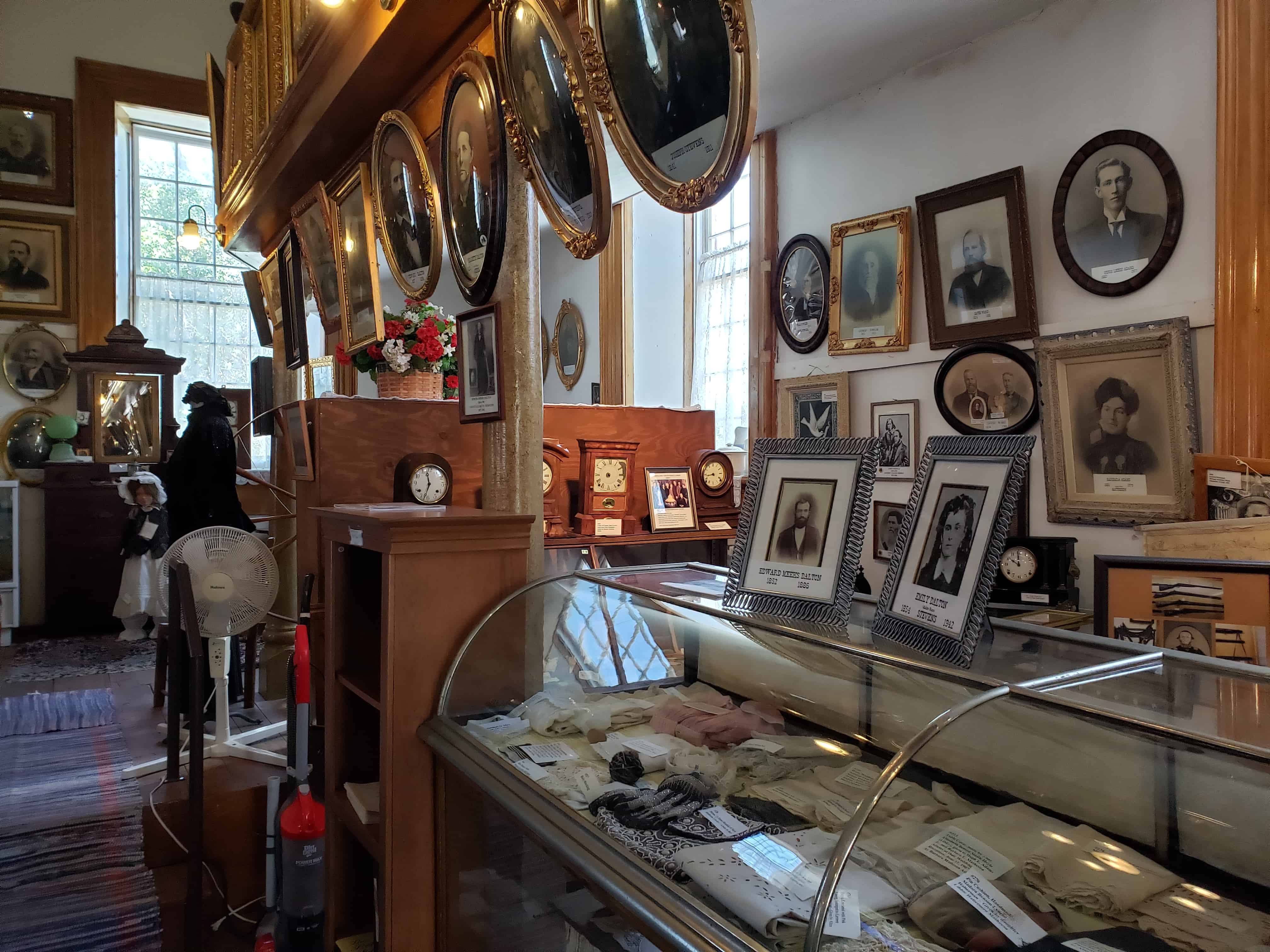
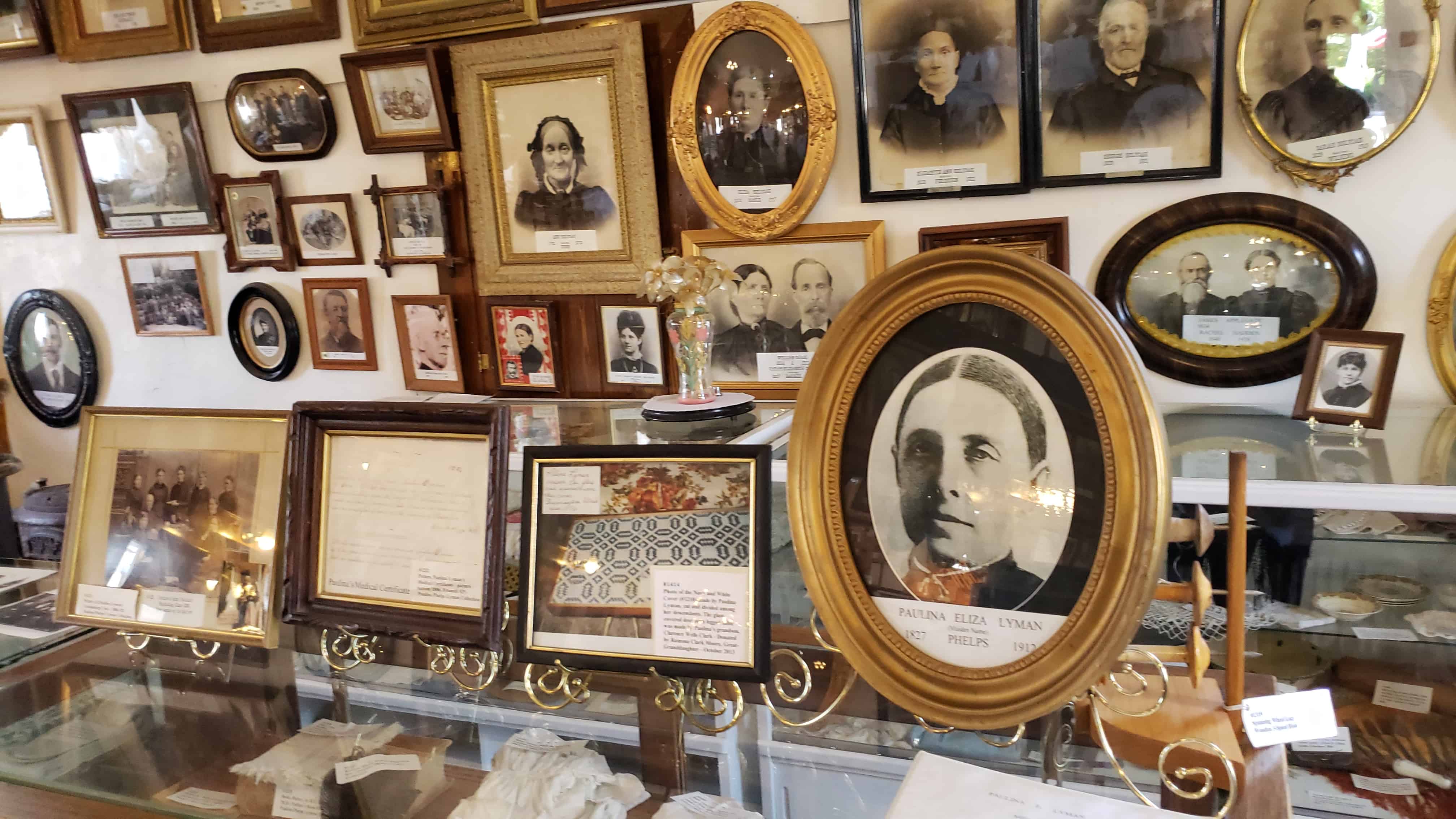
This building, erected in 1909 at Bear Creek site, was originally the first Ranger Station in Huntington Canyon. John P. Brockbank served as ranger from November, 1909, until November, 1917. Later it was used as summer headquarters by the forest ranger in the nearby district. Finally it was given to the Daughters of Utah Pioneers, and in 1951, it was moved to this location to be headquarters of the Huntington Camp.
“Mount Olympus Christmas” by Al Rounds (Thanks to Lyndsay Jones Pitbladdo for sending me this.)
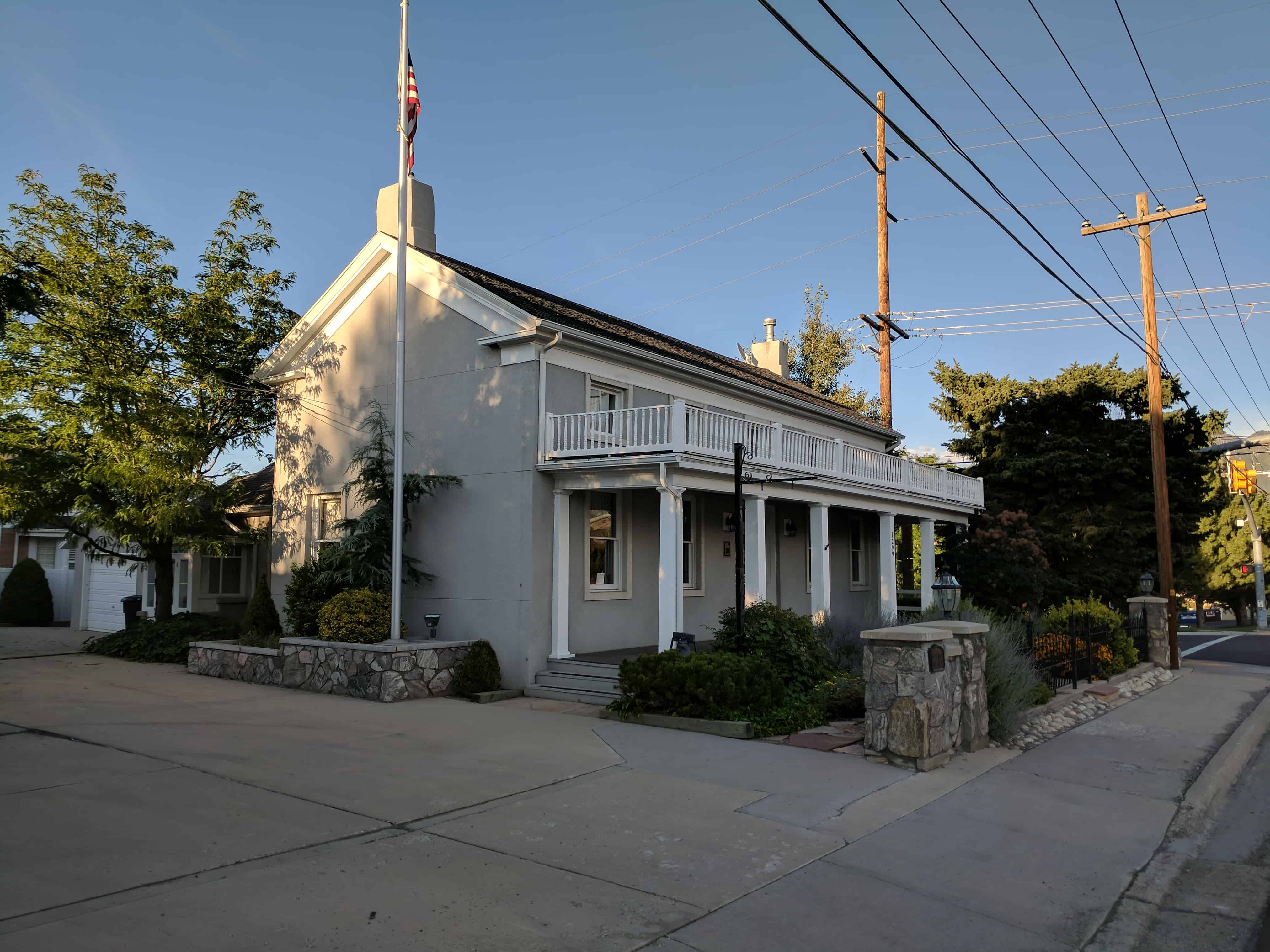
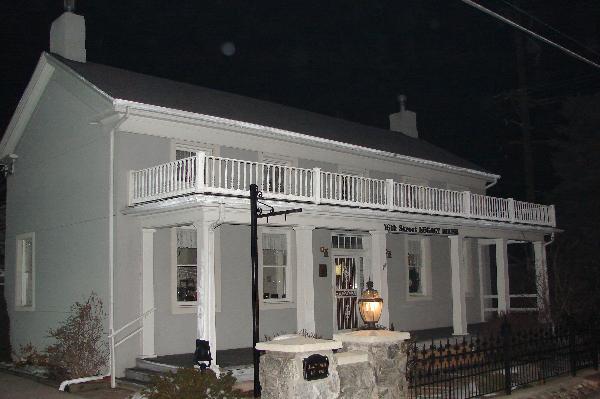
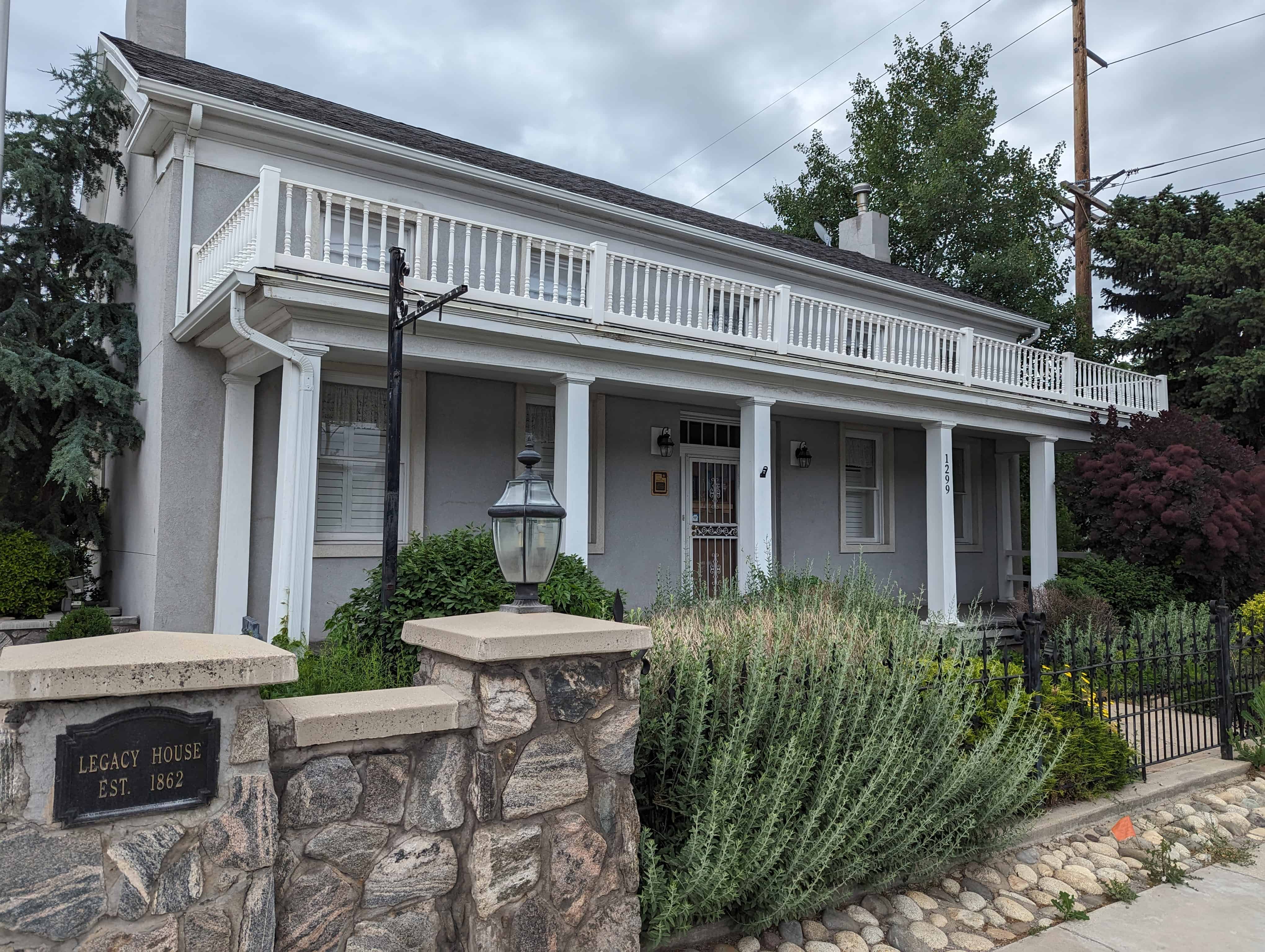
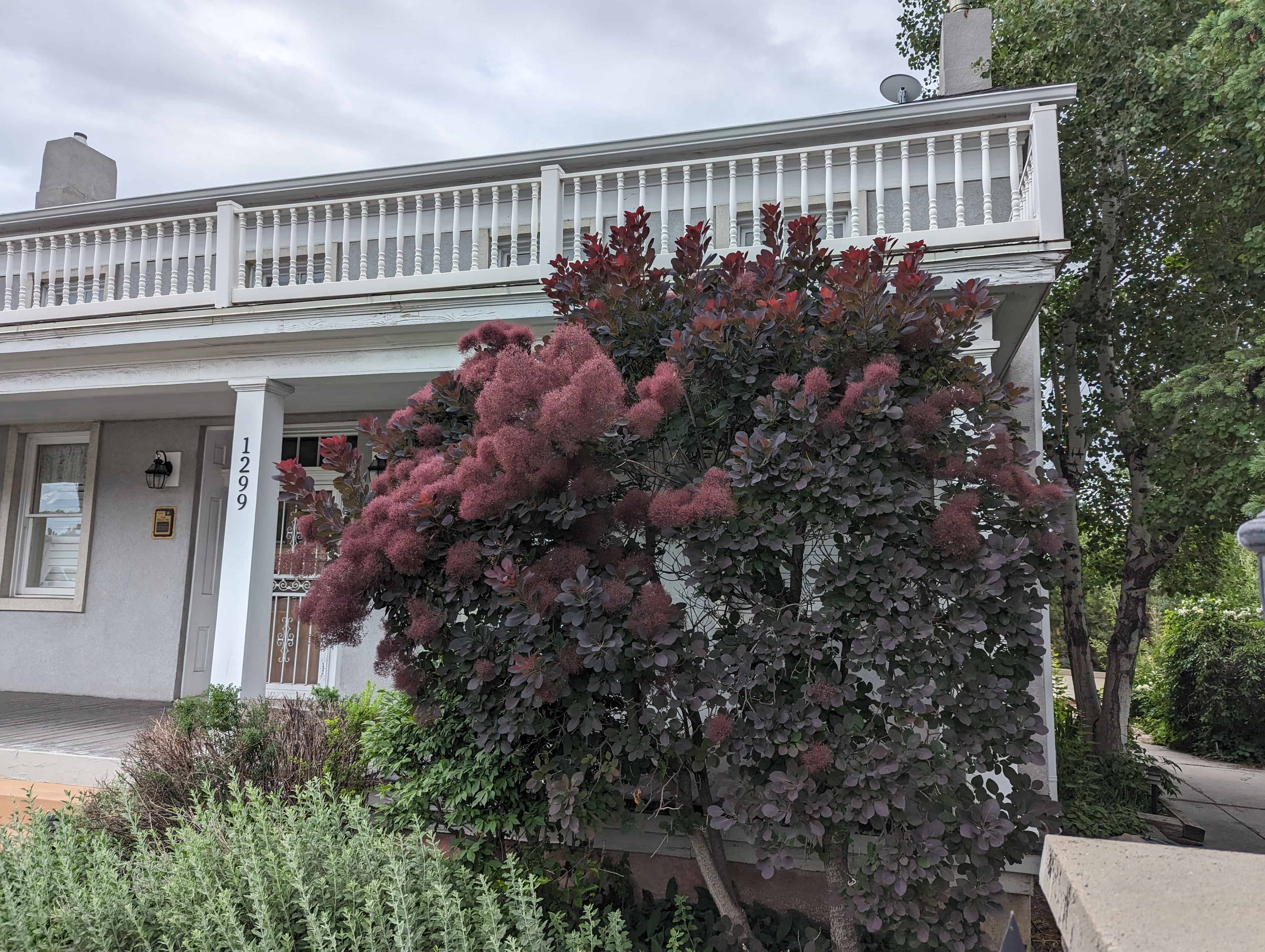
Edward Pugh Home 16th Street Legacy House
Construction began December 1862. Built of stucco adobe by Edward Pugh, an 1853 Pioneer to Utah. Patterned after Brigham Young’s Beehive House.
Located at 1299 East 4500 South in Millcreek, Utah – this home was added to the National Register of Historic Places (#78002680) on August 31, 1978.
The Edward Pugh House is significant as one of the earliest remaining pioneer houses constructed in the Salt Lake Valley. Architecturally, the house is patterned after Brigham Young’s Beehive House, completed in 1854. Like the Beehive House, the Edward Pugh House is also constructed of stuccoed adobe. The lives of Edward Pugh and his two wives, Mary and Elizabeth, which are inseparably associated with the house, offers an interesting and informative glance into some of the social problems as Mormonism developed on the American frontier.
Edward Pugh was born in Stratford, Herefordshire, England, August 28, 1824. He learned from his father, Edward Pugh, Sr., farming and masonry, two trades that served him well after he arrived in Utah in 1853.
In June 1842, Edward and his older sister, Mary, joined the Mormon church much to the disappointment of their parents who instructed them not to return home until they gave up this new religion. However, the conversion of Edward and Mary was unshakable and they both worked for one year to raise money to sail to the United States in 1843. Edward followed a year later and joined the main body of the Mormons in Illinois.
Following the exodus from Illinois, Edward Pugh was sent to Kanesville, Iowa where on July 24, 1847, he married Mary Ann Rock Williams Pugh. According to family sources the marriage was one of convenience and had been consumated at the suggestion of Brigham Young. Mary Ann was a widow with three children and one on the way. She was twelve years older than Edward but was also from near Edward’s home in Herefordshire, England.
Edward remained in Iowa until 1853 when they journeyed to Utah in the Henry Ettleman Company, arriving on October 1, 1853. Edward was directed to south Salt Lake Valley where his sister Mary and her husband had already settled. He acquired a rectangular plot of ground for a farm which stretched west from present day 13th East Street to 17th East Street and south from 4000 South Street to 4700 South Street. A log cabin was constructed adjacent to the present house near the southwest corner of the property at 13th East St. and 4500 South St.
On April 19, 1861, Edward left for England where he served as a missionary until April 23, 1862 when he began the return journey to Utah. While returning to Utah, he visited Chicago and purchased a threshing machine and a span of black mares which were used to pull the machine to Utah. The machine was reported to be the first threshing machine brought to Utah and Edward was kept busy threshing wheat for fanners in Salt Lake, Utah and Tooele valleys. In December 1852, construction on the present house was begun and completed in 1863. The new house was evidence not only of Edward Pugh’s skill as a mason, but also the degree of prosperity he had achieved through his dairy farm and threshing activities.
Another sign of Edward Pugh’s success in Utah was his decision to take a second wife. On May 5, 1866, he married seventeen year old Elizabeth Kelley, who he had first met four years earlier as he journeyed with the Kelley family from England back to Utah.
An apartment was prepared for Elizabeth in the log cabin located to the rear of the stuccoed adobe house occupied by Mary. The triangle relationship soon led to conflict as Mary resented the beautiful, young Elizabeth, thirty-seven years her junior. The strong-willed Elizabeth resented the apparent attempts at domination by the older first wife; and Edward, disappointed that his relationship with Mary had produced no children of his own and which if it had, according to Mormon Theology, would be the eternal offspring of Mary and her first husband, was concerned with the fulfillment of a promise by John Smith, brother of the prophet Joseph Smith, that Edward’s descendants would number into the thousands.”
Edward and Elizabeth’s first child, a boy, which they named Edward Kelley Pugh, was born April 18, 1868. In the fall of 1868, Edward Pugh was called to help establish settlements in the southern part of the state. Preparations were made and in November 1870, Edward and Elizabeth with their two children, began the journey to the newly founded settlement of Kanab, 300 miles south of Salt Lake City. Mary, who was near fifty-eight, chose to remain at the Salt Lake home where she died in 1895.
Edward Pugh played an important role in the history of Kanab. As a mason, he helped construct many of the buildings in the community and as an experienced farmer, he was important in the economic development of the region including Kanab’s United Order. Edward died in Kanab on September 14, 1900. The ten children born to Edward and Elizabeth and his descendants are now numbering close to the thousands promised by John Smith in 1844.
In May, 1872, a year and a half after Edward Pugh moved to Kanab, Enoch Pugh, the son born shortly after the marriage of Edward and Mary in Kanesville, Iowa, married Harriet Hughes and moved into the 1862 house where he continued to operate the farm and take care of his mother.
Enoch had worked closely with his father since childhood and following the death of Mary in 1895, acquired full title to the dairy. He died May 20, 1920 at which time his two sons, Bryon and Willard took over the operation of the farm. Willard lived in the house and cared for his mother, Harriet, until her death in 1935. Five years later, in 1940, Willard married Merle Irene Jackson Pugh, the present owner of the house. Willard Pugh died in 1965.
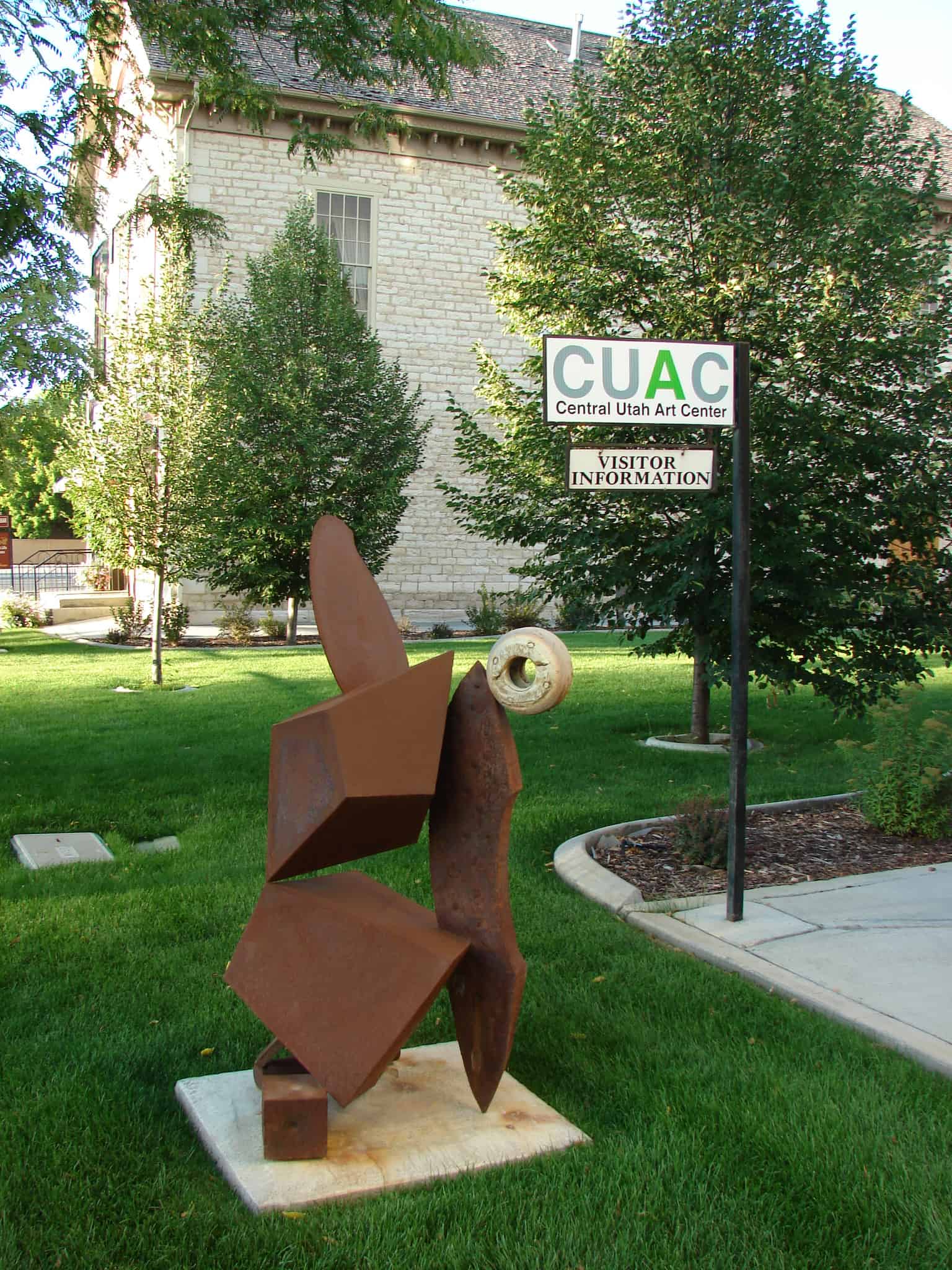
President Brigham Young, in 1876, gave the Relief Society sisters an assignment to store wheat for a time of need. This historic, oolite limestone building was constructed as a granary in response to this concept. Pioneer women and children followed the threshers to glean wheat leavings. They sold handmade items and Sunday eggs – eggs laid on Sunday – to purchase wheat to fill the bins. Wheat was given to the bishop for the needy, and grain was given to farmers for seed with a repayment of five bushels for each four bushels given.
Relief Society Wheat and flour were contributed to San Francisco after the earthquake in 1906 and to China during the famine in 1907.
In 1915, the granary was converted to a flour mill that functioned for forty years. In 1969, the granary and adjoining cooperative store were threatened with demolition but were preserved through valiant community efforts. The granary interior was completely reconstructed into The Central Utah Art Center in 1990.
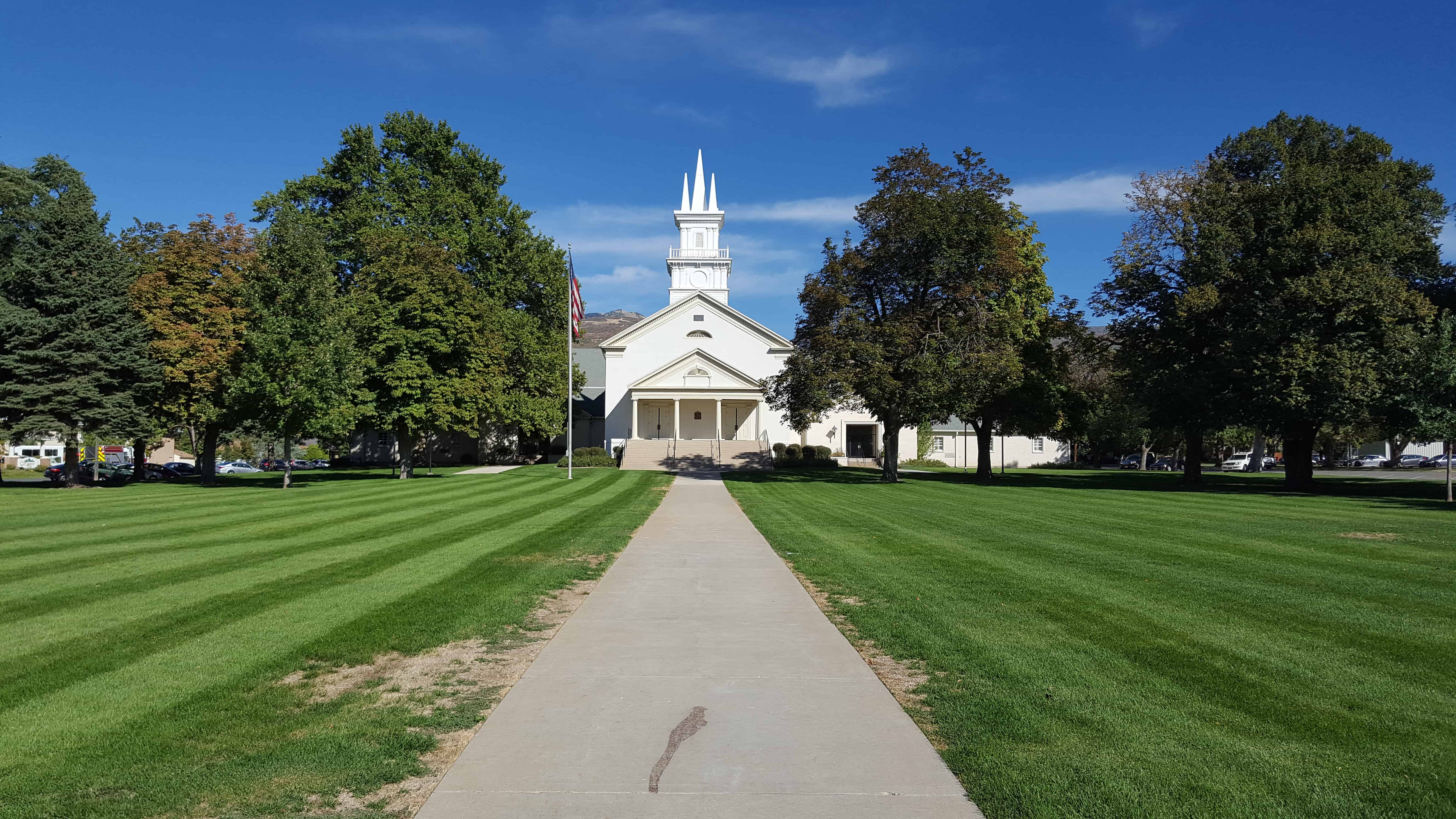
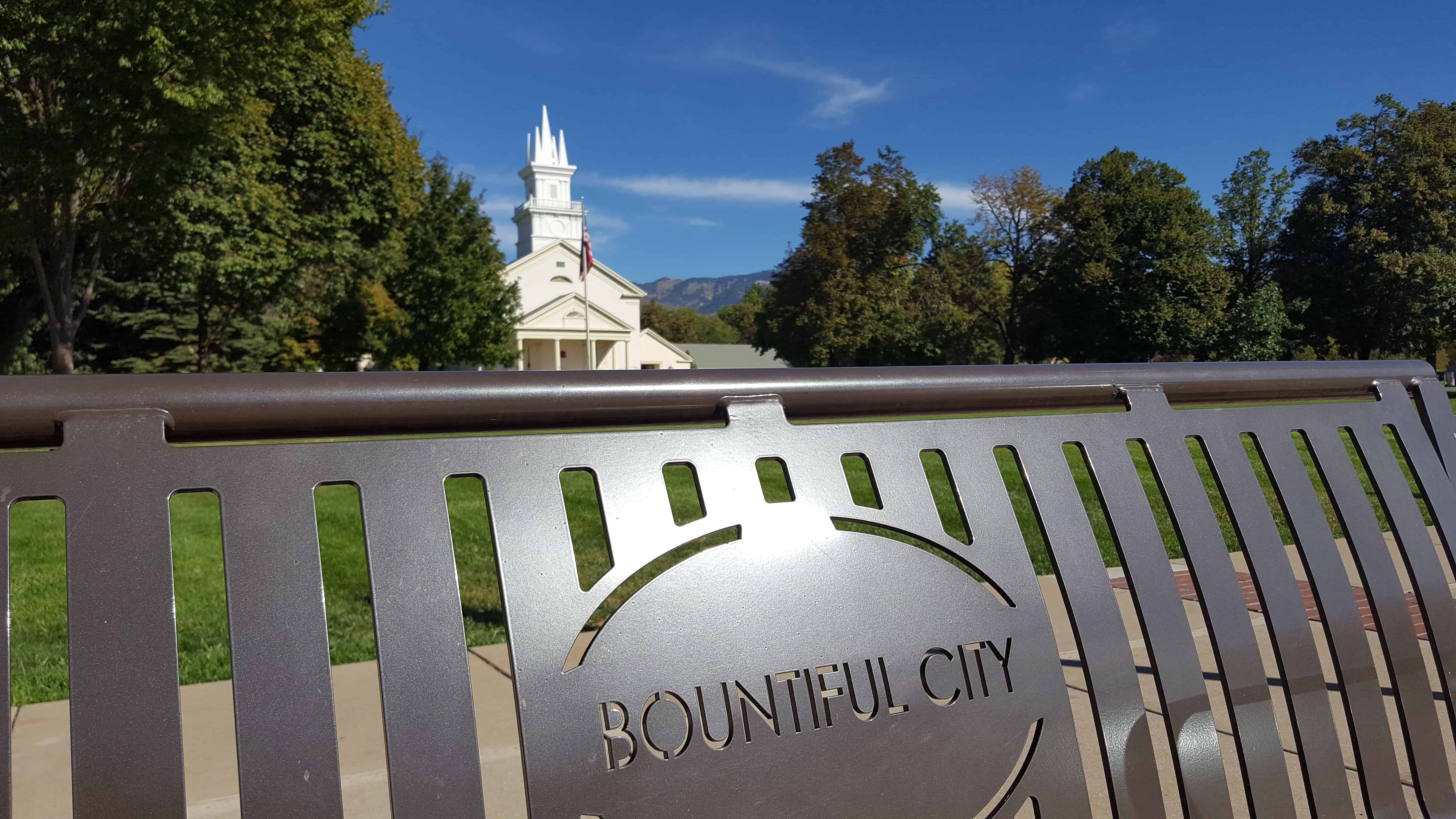
One of the oldest L.D.S. Chapels. Finest at time of erection. Augustus Farnham architect. Site dedicated Feb. 11, 1857 by Elder Lorenzo Snow. Grain was stored in stone foundation when Johnston’s Army advanced. The walls are of adobe, roof timbers fastened with wooden pegs, lumber from Meeting House Hollow, Holbrook Canyon. Tower had five spires, the center spire served as a sun dial. Dedicated March 14, 1863 by Elder Heber C. Kimball, President Brigham Young presiding. Cost $60,000, Bishop John Stoker. Councilors Wm. Atkinson and Wm. H. Lee.
Located at 55 South Main Street in Bountiful, Utah and added to the National Historic Register (#76001813) on January 1, 1976.
On February 11, 1851 (or 1857 there is some discrepancy among sources) Lorenzo Snow broke ground for the new building in a rather elaborate ceremony. The first stone was laid on February 12, 1857, The tabernacle was built almost entirely of local materials, with local labor. Cost was scene $60,000. Architect was Augustus Farnham. Apparently the best materials and artisanship available were used, and at the time of erection it had the reputation -£or being the finest meetinghouse in the Territory of Utah,
Work on the tabernacle continued as Johnston’s Army approached in 1857-58. When the town was evacuated in 1858, grain was stored in the rock foundation.
The building was finished in 1862, including the Joseph Smith mural which was commissioned by Brigham Young and painted by Daniel Waggelund. The dedication on March 14, 1863, was the occasion of a momentous gathering attended by several noteworthy dignitaries: Brigham Young presided and Heber C. Kimball offered the dedicatory prayer.
The five spires have been blown off the tower, at least once in 1906 by a Davis County east wind. They were restored some 50 years later.
In 1925 the north wing with amusement hall and classrooms, was added. The building was “remodeled, redecorated and modernized” and a new pipe organ was added in 1942. In 1957 a new wing was added to the rear of the amusement hall, containing a kitchen, Relief Society room, and offices.
The new part was dedicated on February 10, 1957, by President David O. McKay.
On March 14, 1963, a centennial service was held in and for the building. The featured speaker was President Hugh B. Brown, who rededicated the building “for another hundred years,” He declared the tabernacle to be “holy ground” where every prophet but Joseph Smith had occupied the pulpit.
The Bountiful Tabernacle is significant historically by virtue of its being the oldest religious structure in the State of Utah, the religious building enjoying the longest continuous use in Utah, and the oldest edifice built by the Church of Jesus Christ of Latter-day Saints (Mormons) to be in continuous use as a place of worship. Every prophet of the Mormons, save Joseph Smith, who was killed in Nauvoo, Illinois, before coming West, has preached in the tabernacle.
The Bountiful Tabernacle also has the distinction of being the oldest extant example, and undoubtedly the most impressive example from any period, of early Greek Revival architecture in Utah. Greek Revival styling was the first prominent style to take hold in Utah after the technology was developed to advance from the levels of primitive shelter and vernacular architecture. Architect Augustus A. Farnham, an early convert to the Mormon Church, was born in Andover, Massachusetts, and called upon his knowledge of Greek Revival motifs to enhance a potentially ordinary adobe meetinghouse. Each craftsman in turn contributed his finest decorative work to set the tabernacle apart from other public buildings at the time. From the fine circular stairways leading to the gallery but It by George W. Lincoln, to the classically pilastered and arched reredos framing the Weggeland portrait of Joseph Smith, the building was finished and detailed in the most refined methods the Bountiful pioneers were capable of. Recently saved from destruction by Mormon Church leaders, there is no other Utah structure that better represents the aspirations, pride, and accomplishments of pioneers in a primitive environment than the Bountiful Tabernacle.
The original part, the chapel, is a rectangle 40′ by 80′ with a portico over the front entrance and a small utility room at the back. The foundation is of stone, 6 feet thick and 9 feet high. The walls are of adobe, 3 feet thick. The exterior has been covered with plaster or stucco for at least half of the building’s life. The single centered inset tower is capped by five spires.
The roof is shingled. The gable is of medium pitch with a boxed and returned cornice and a decorated frieze of wood. On each side wall were three large 3-sashed recessed windows with capstone lintels and brick sills, Directly underneath were basement windows in the stone foundation, A later addition covered the windows on the north. The only windows in the front façade are 2 half-round ventilators in the wall and in the porch.
The main entrance is composed of 2 doors under the portico. The portico follows the line of the main gable. It is supported by 6 fluted columns of wood, the stairs originally descending to ground level both to the front and sides.
The basement inside is devoted to small classrooms. The main floor is a single room. Its walls are plastered with a 4 foot high wooden slat paneling around the bottom and a decorative, possibly hand-carved moulding around the top. There are three chandeliers hanging from carved mountings.
In the rear is a balcony, approached from the sides by winding staircases. It is supported from beneath by fluted columns and from above by square ones. These columns are of wood and are painted in a “marbled” pattern similar to that on the columns in the tabernacle in Temple Square. On the front of the balcony is a façade of decorative woodwork.
On the rear wall over the choir is a mural in green, gray and white, featuring a bust of Joseph Smith in an alcove surmounted by 2 cherubim holding a banner which reads “Holiness to the Lord.”
The only apparent alterations in this original part are a new stairway from the portico outside, descending only to the front the original descended to the sides as well with an added 4 iron railings; and a large door, folding, on the north side leading to the new amusement hall and replacing two of the windows.
The two additions, to the north side and to the rear a cultural hall and a Relief Society room and kitchen both with full basements, are well integrated to the exterior style of the original building.
Cove Fort, completed April 12, 1867, by direction of Brigham Young, with L.D.S. Church funds, as a travelers way station and refuge from Indians. Ira N. Hinckley built and maintained it as a hostelry and residence until 1877. A well within the fort provided culinary water. Cove Creek supplied irrigation. One of its 12 original room s was used as a telegraph station. Early in 1861 Charles Willden built 3 rooms and a dugout, known as Willden’s Fort. This was a convenient campsite for President Young and other travelers.
Check out all of the historic markers placed by the Daughters of Utah Pioneers at JacobBarlow.com/dup
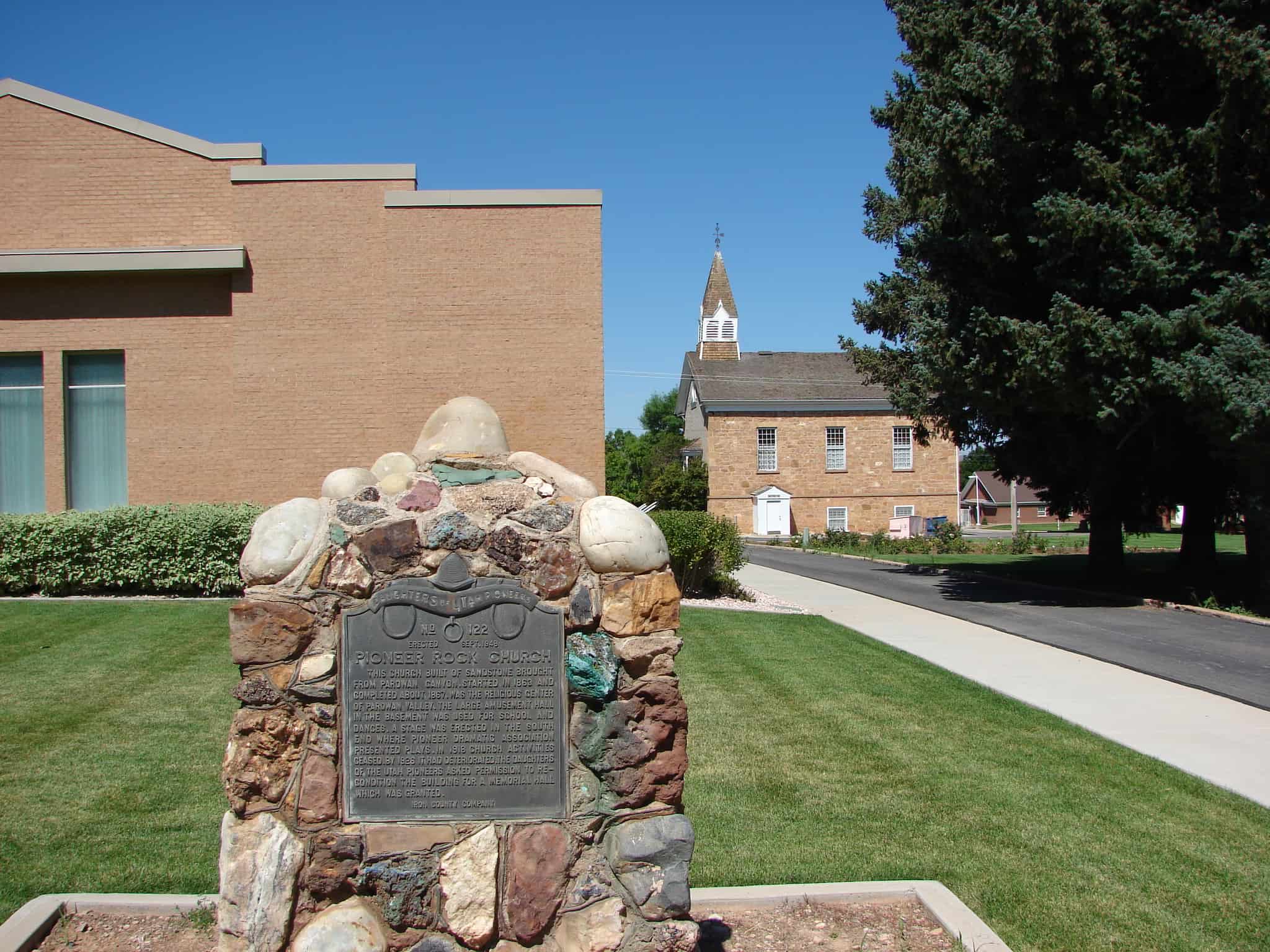
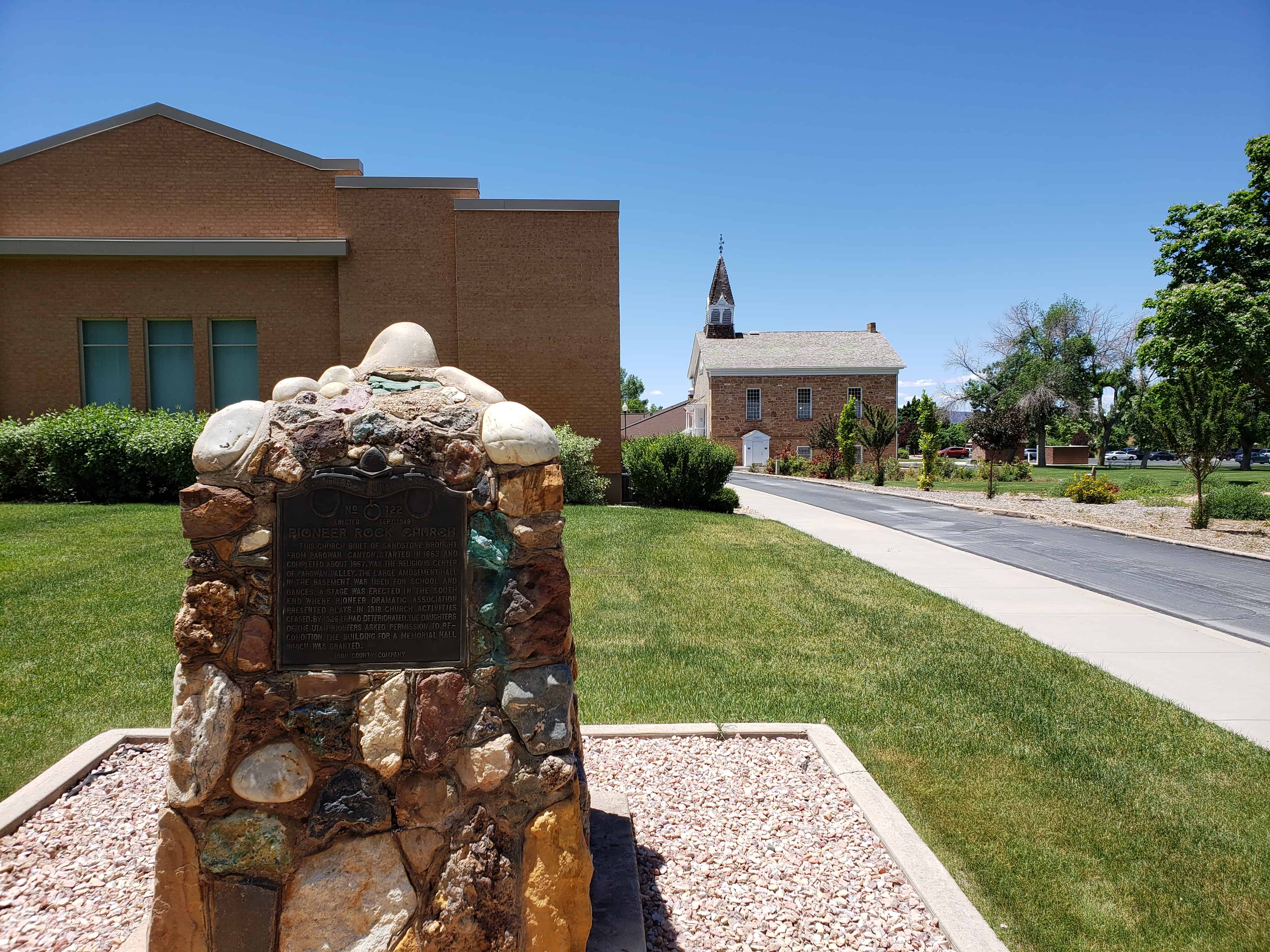
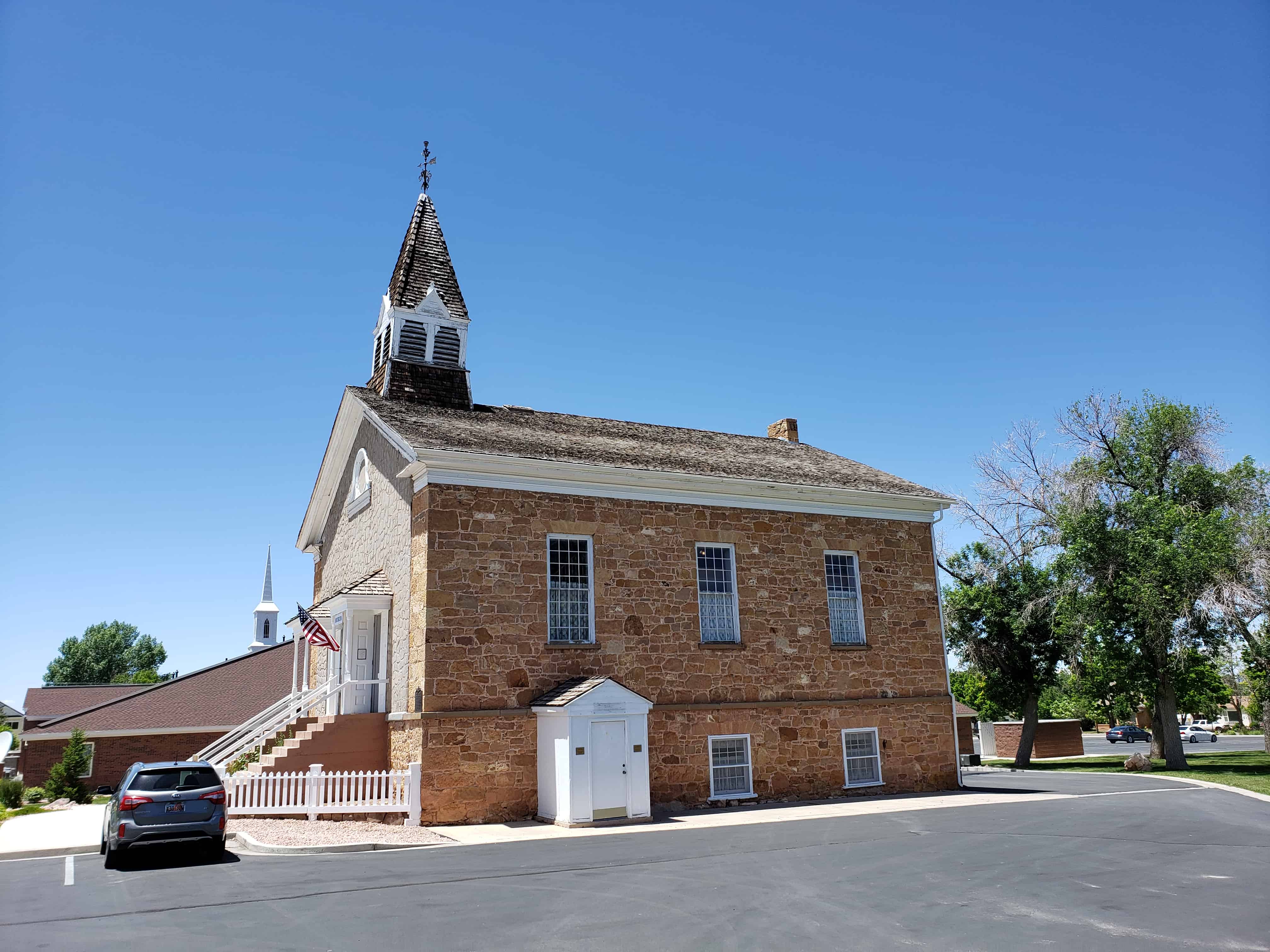
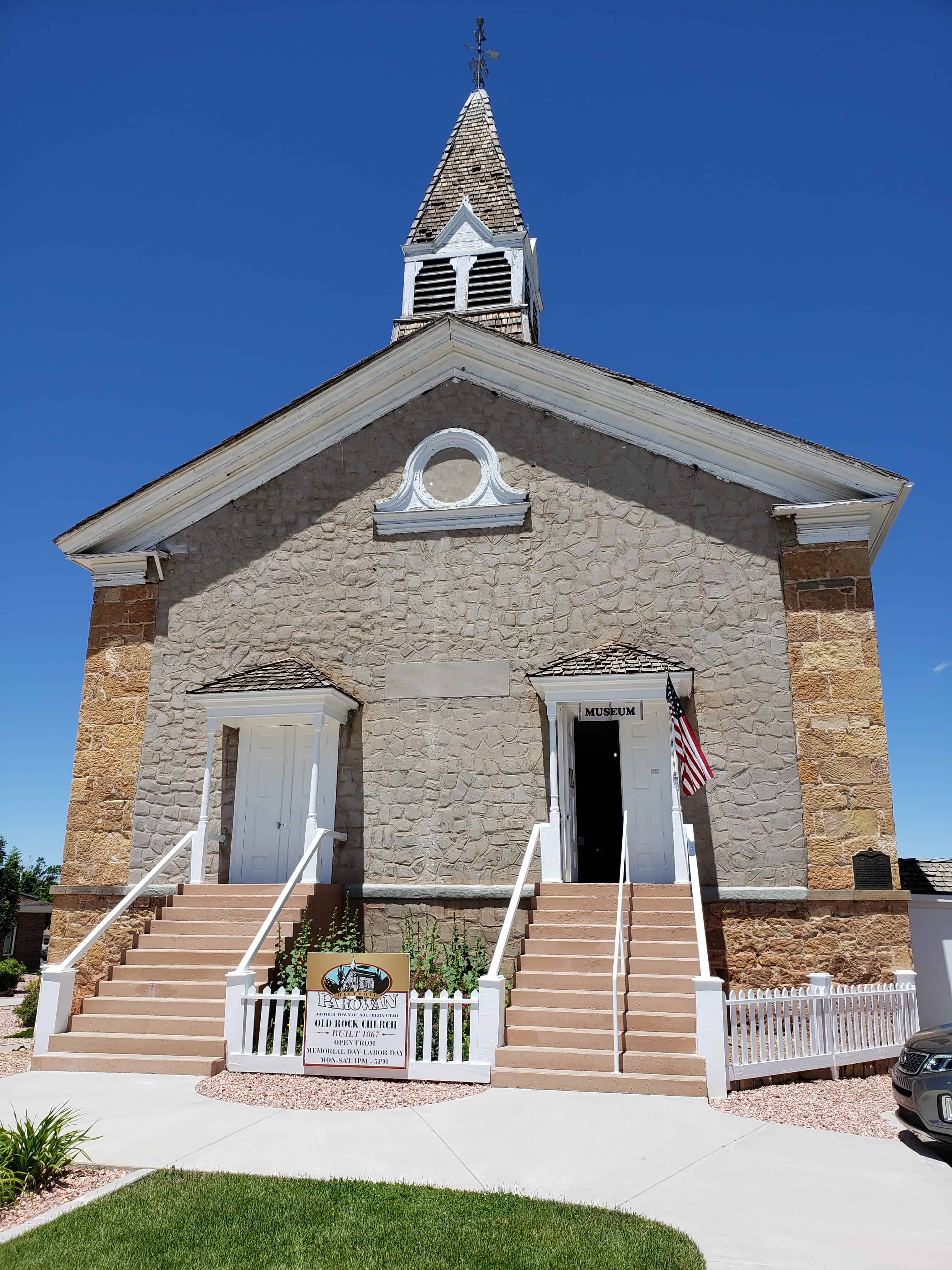
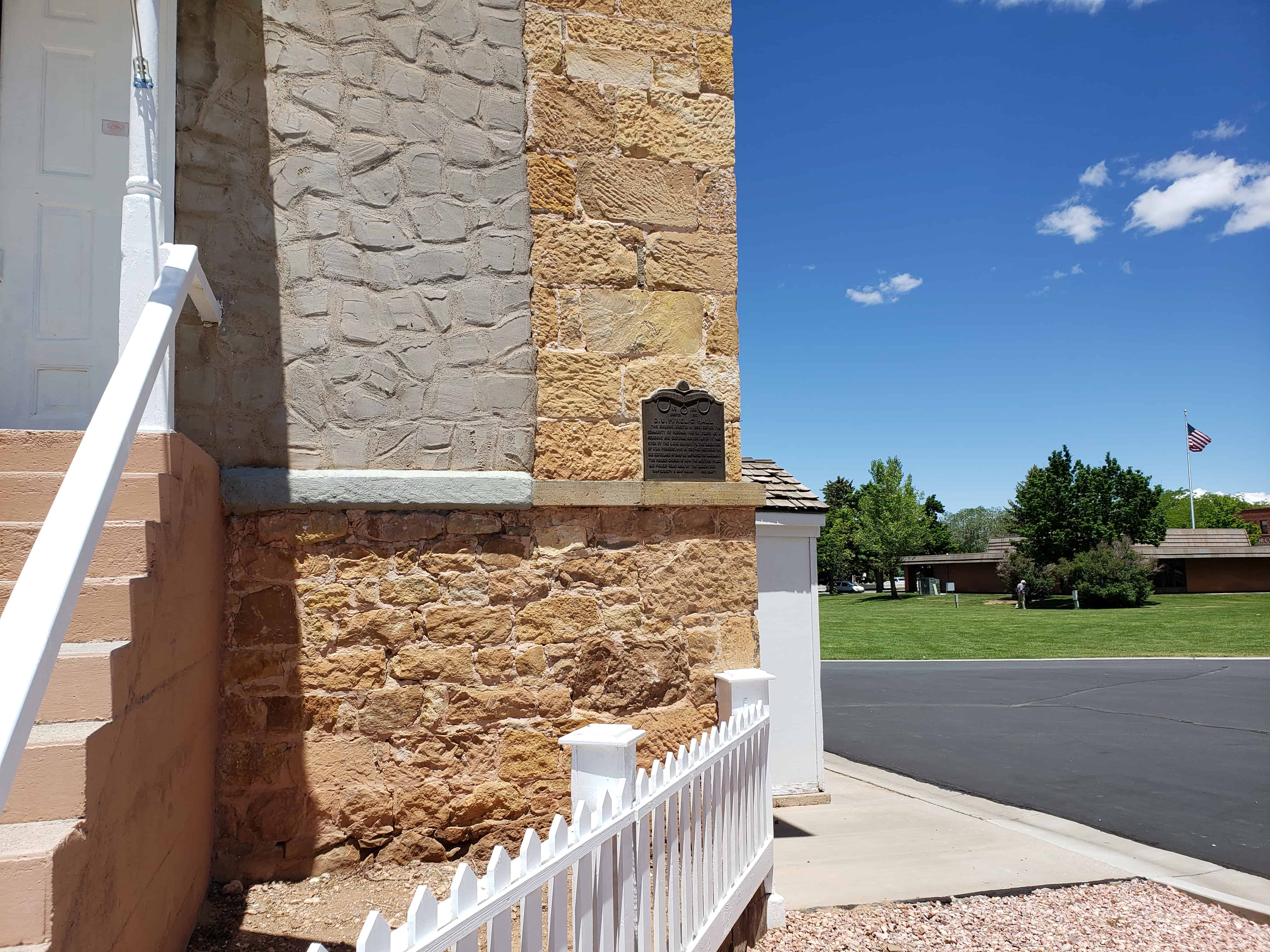
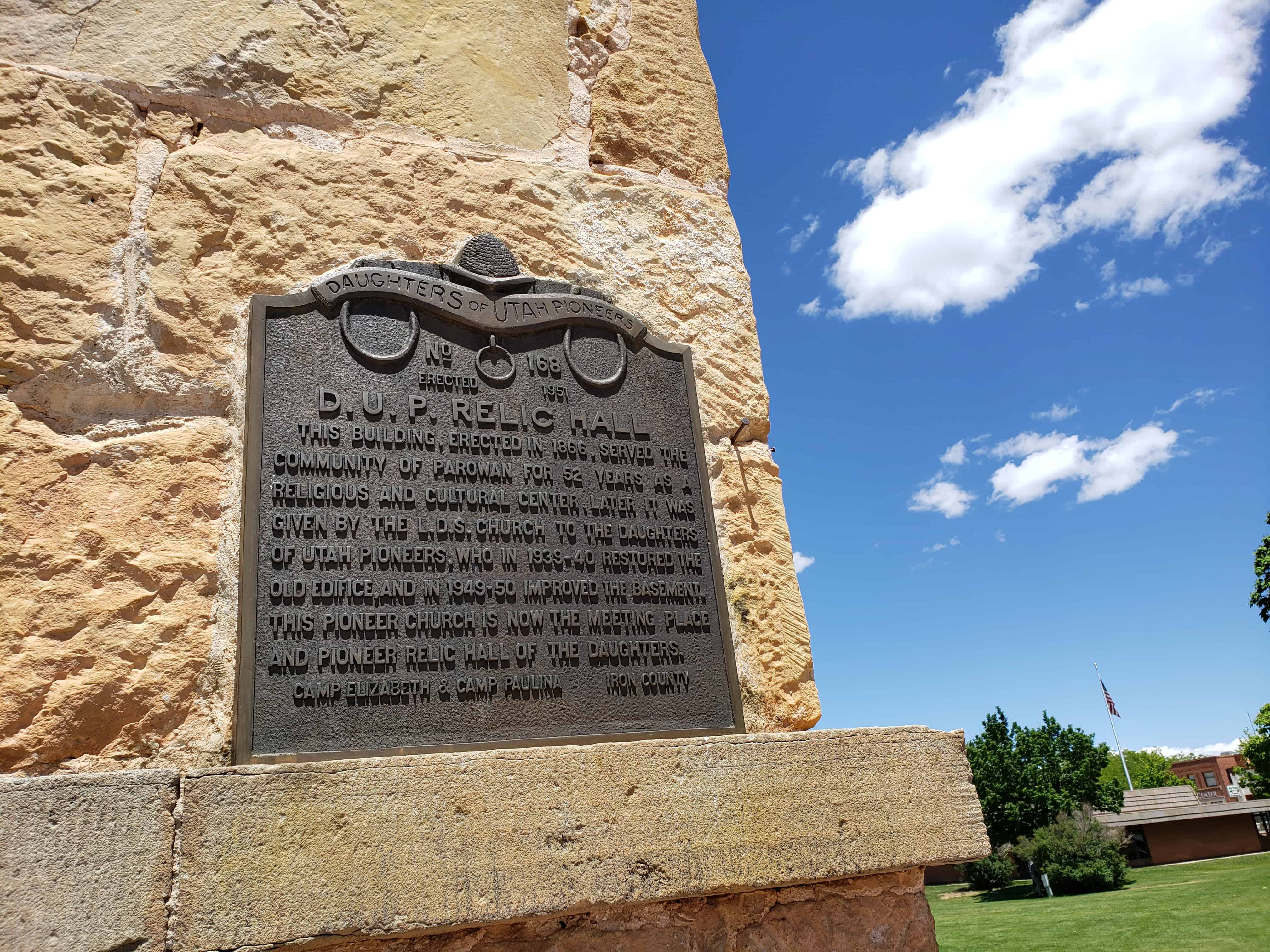
This building, erected in 1866, served the community of Parowan for 52 years as a religious and cultural center. Later it was given by the L.D.S. Church to the Daughters of Utah Pioneers, who in 1939-40 restored the old edifice and in 1949-50 improved the basement. This Pioneer Church is now the meeting place and Pioneer Relic Hall of the Daughters.
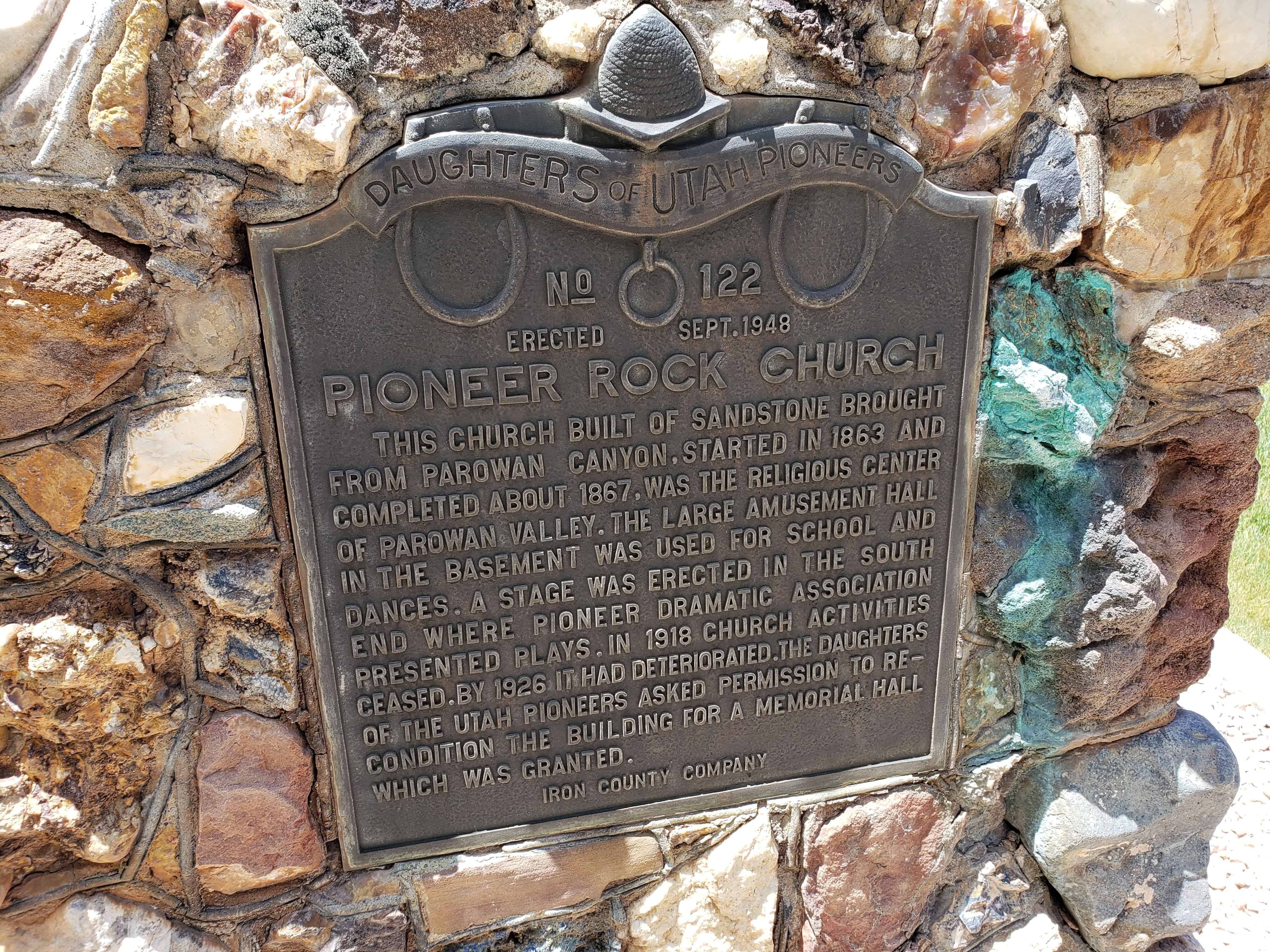
This church built of sandstone brought from Parowan Canyon, started in 1863 and completed about 1876, was the religious center of Parowan Valley. The large amusement hall in the basement was used for school and dances. A stage was erected in the south end where Pioneer Dramatic Association presented plays. In 1918 church activities ceased. By 1826 it had deteriorated. The Daughters of Utah Pioneers asked permission to recondition the building for a Memorial Hall which was granted.
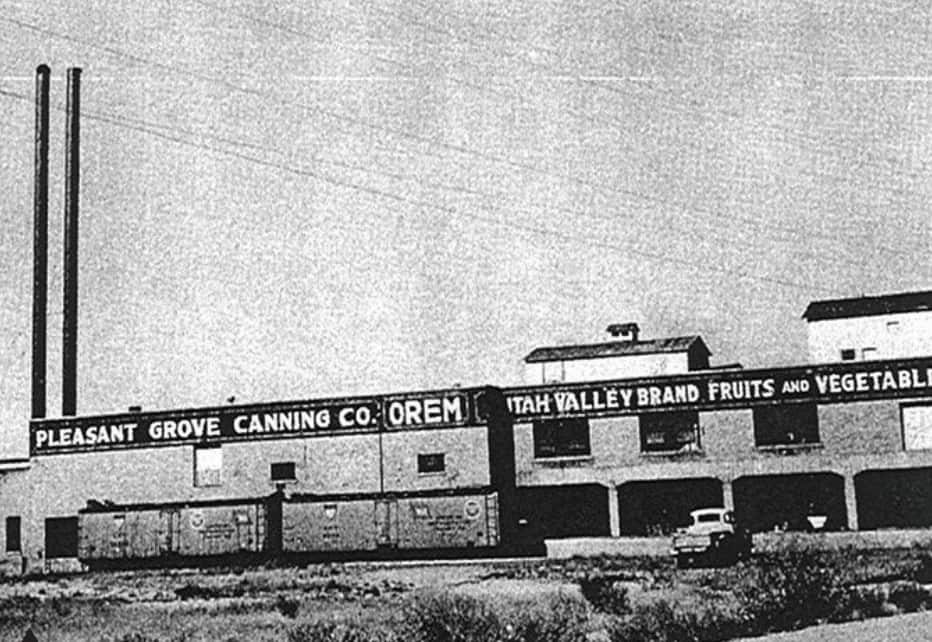
The first major industry to locate in Orem was the Pleasant Grove Canning Company. The plant was built at 325 West 700 North, currently Orem Boulevard, in 1919. This provided close proximity to the railroad that was also located along what is now Orem Boulevard. The canning company was designed to provide an outlet for locally-grown fruits and vegetables. Canned products included tomatoes, apples, cherries and strawberries.
During the 1930s the Pleasant Grove Canning Company was a major economic outlet for farmers’ produce at a time when there was little other industry around. In an average year, the cannery took the tomato crops produced on the Provo Bench and elsewhere, and processed up to 75,000 cases of tomato paste. The product was then sold to the Campbell Soup Company.
In 1972, the cannery was sold to Booth Distributing, Inc., a restaurant supply business, which used the building as a warehouse through the 1970s. Subsequent owners purchased the cannery but were unable to find a suitable commercial use for the building. It fell into disrepair and was demolished in 1993.
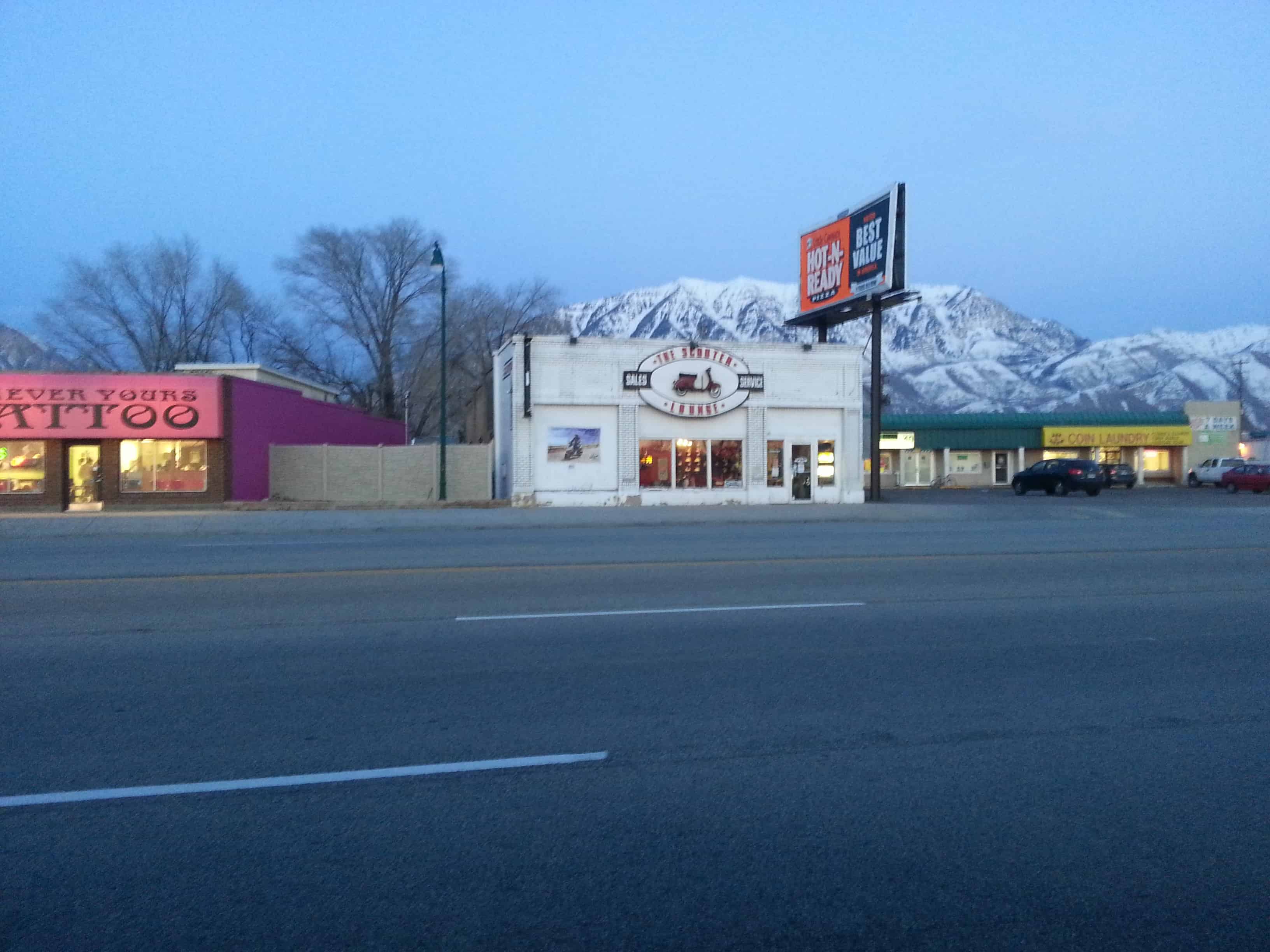
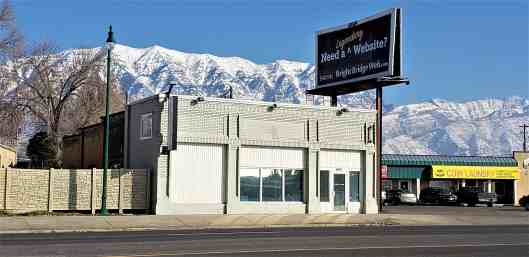
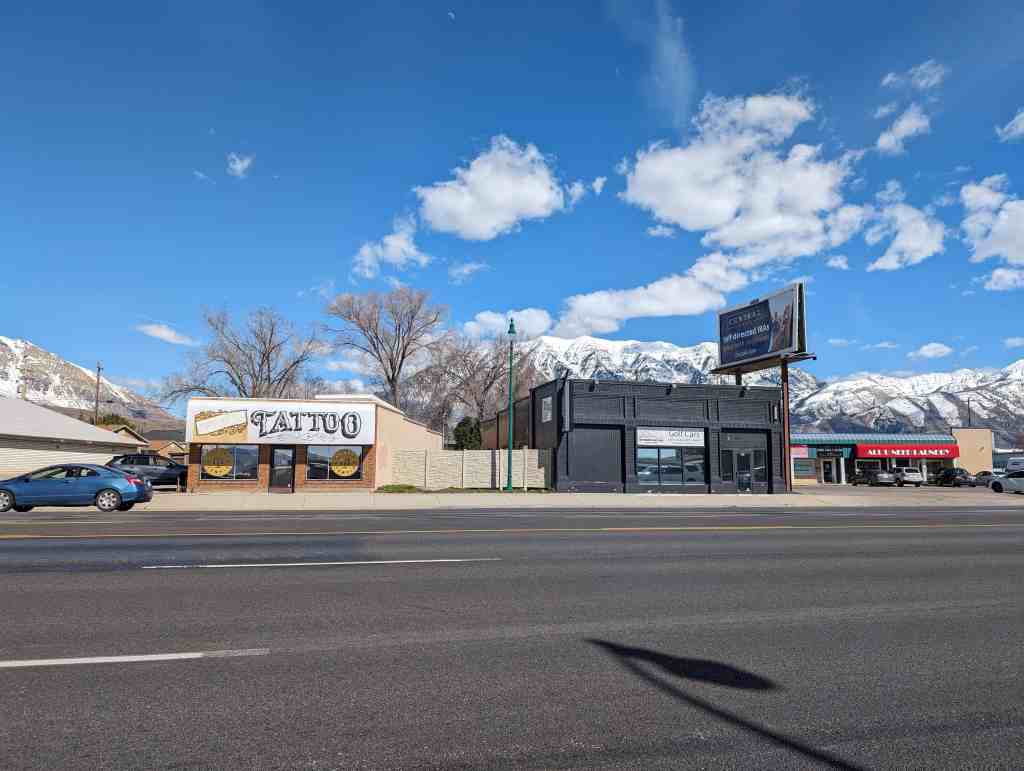
The McBride garage is a one-story, brick, one-part commercial building/garage. Built ca.1920, the garage follows a fairly conventional pattern for a one-part commercial block, and was probably one of the better constructed commercial buildings in Orem during that period.
This brick garage was a prominent fixture on Provo Bench’s State Street (State Highway 91) when the automobile was just beginning to make its debut in the area. State Street, at the time, had very few commercial buildings, especially of brick construction.
Most of them were small buildings, mainly fruit stands, of wood construction. The garage, apparently built by Sims McBride, is a good representation of the commercial changes occurring on the bench, particularly in transportation, which would bring greater prosperity to the area. Orem employed strip zoning rather than a downtown central core arrangement and this building reflects that pattern of development.
Located at 600 North State Street in Orem, Utah – it was known as Big John’s Country Store when it was listed on the National Register of Historic Places in 1998, in 2013 it was The Scooter Lounge and in 2022 is it Scissor and Bone Barber Shop.
This photo was not taken by me, it is from 1998.
The building to the north is on the same parcel of land, I saw a comment on facebook saying: The pink building next to this one was built in 1947-48. It was not pink back then, but a white one with with a green and white awning. It was built by my father, Varian C Hodgkinson as dry cleaning plant, Fashion Dry Cleaners. He built it after returning home from Japan in WWII. He also built a small home behind the “shop” as we called it. It was supposed to be temporary but ended up being our home until 1969 when we moved to south Orem. I was 16 at the time. Dad sold the shop in 1975 or 1976 and retired from the dry cleaning business. I do remember the Orchards and trees all around us. We worked hard and played hard and had great experiences.
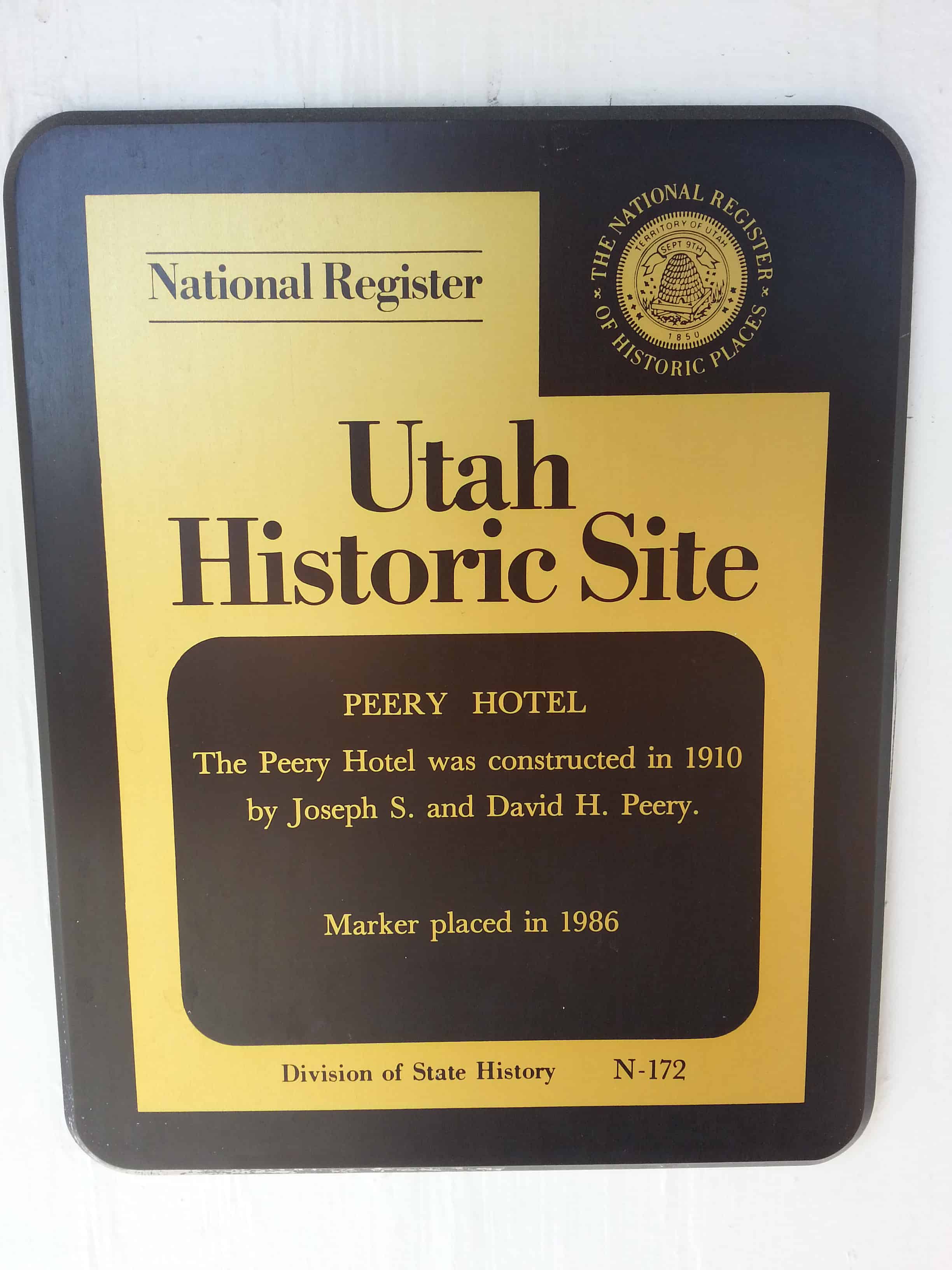
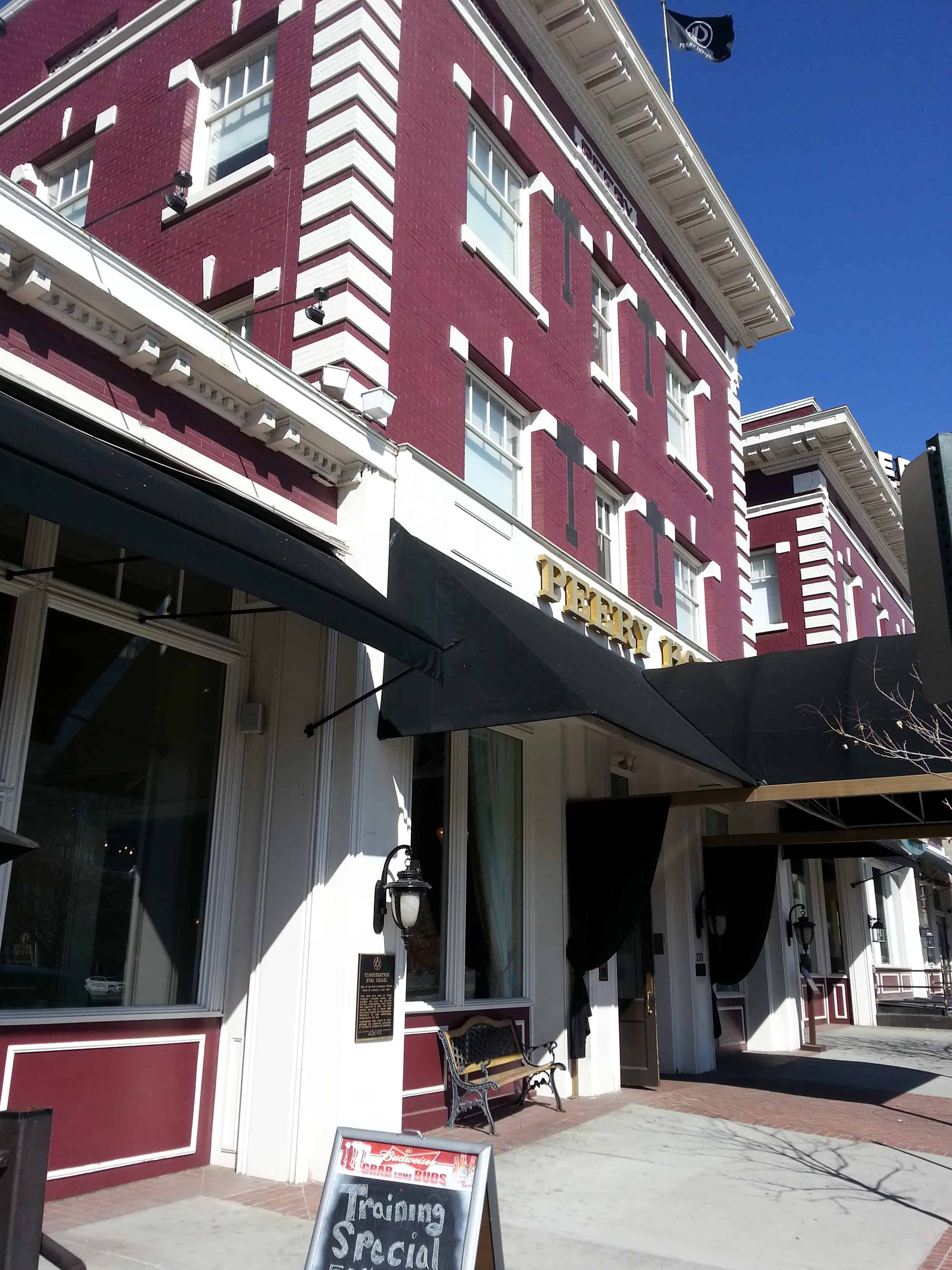
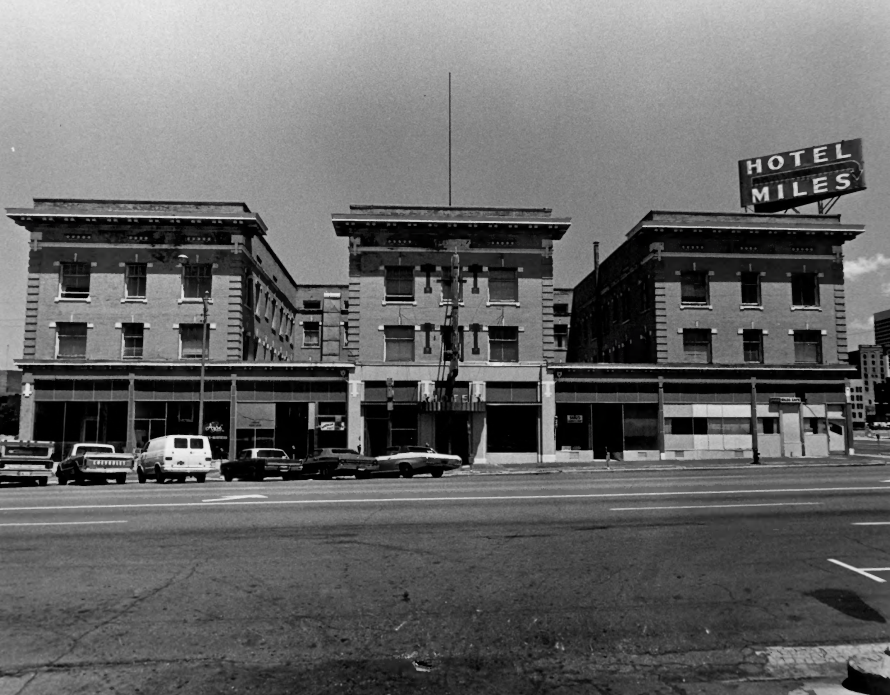
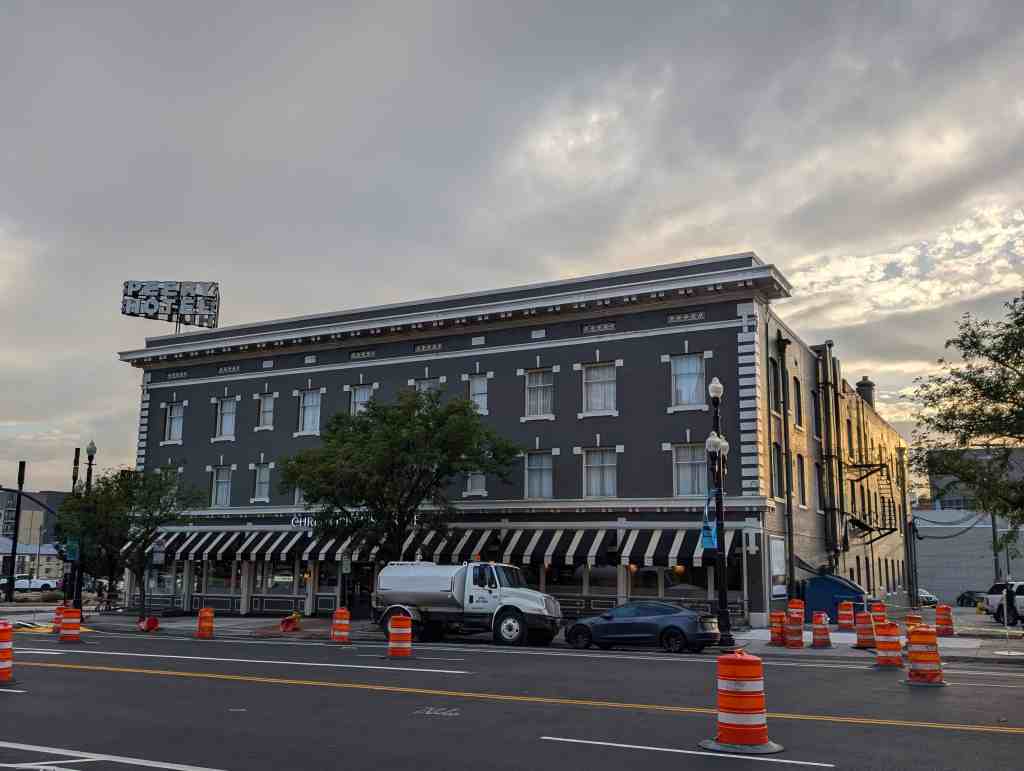
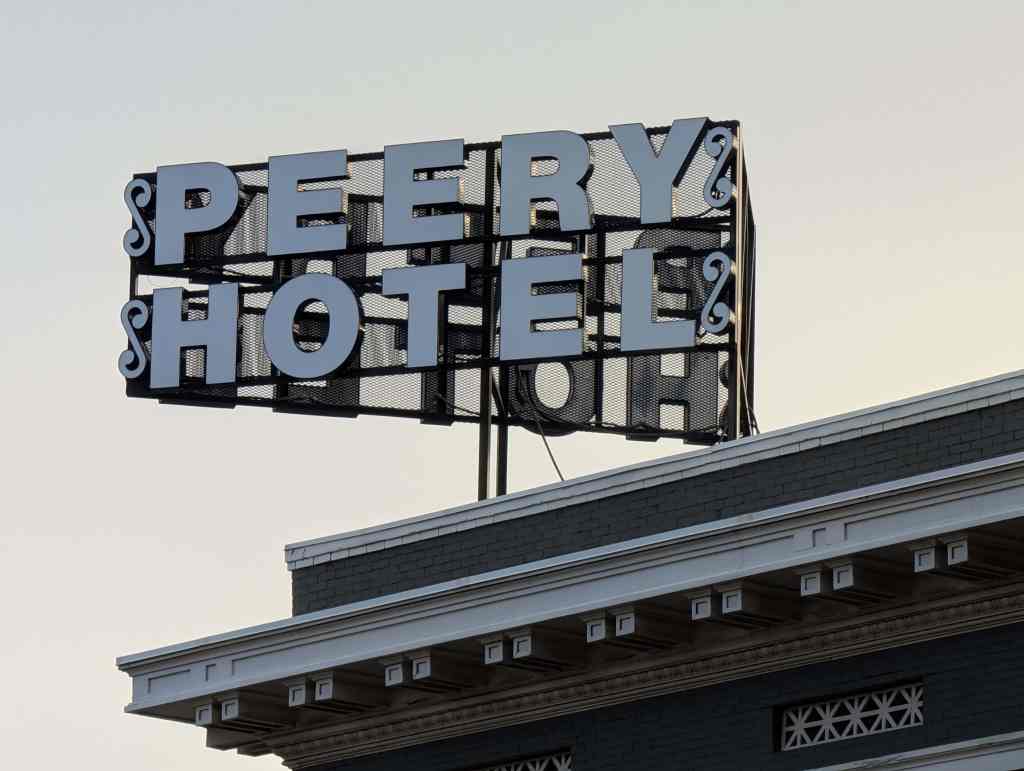
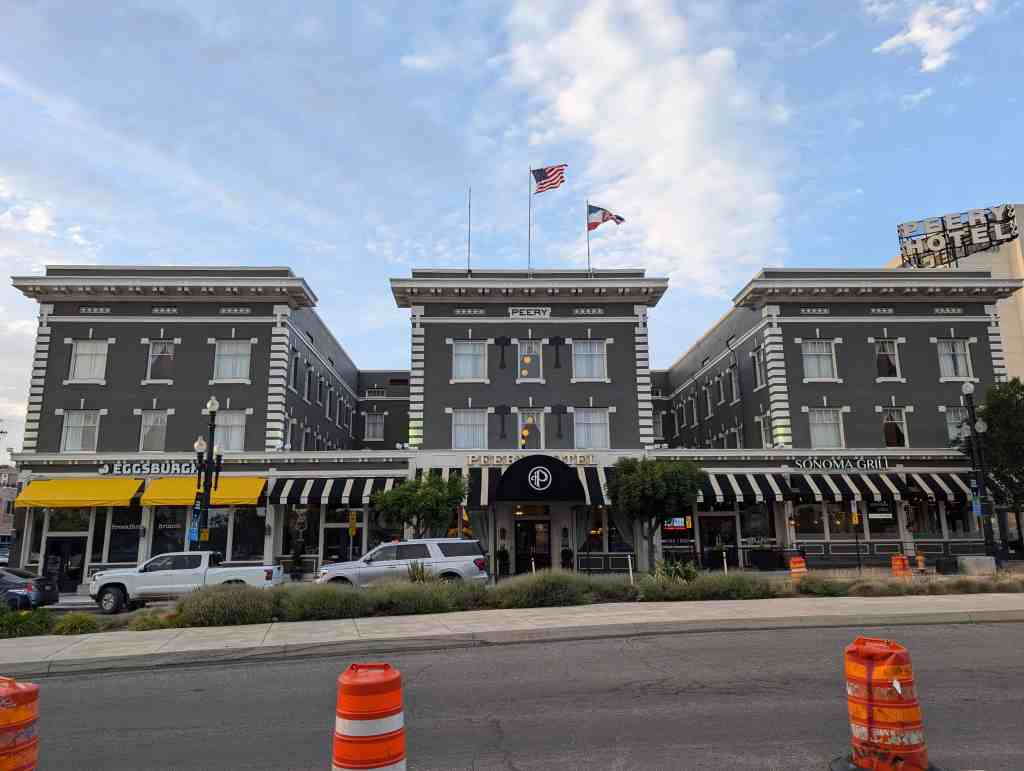
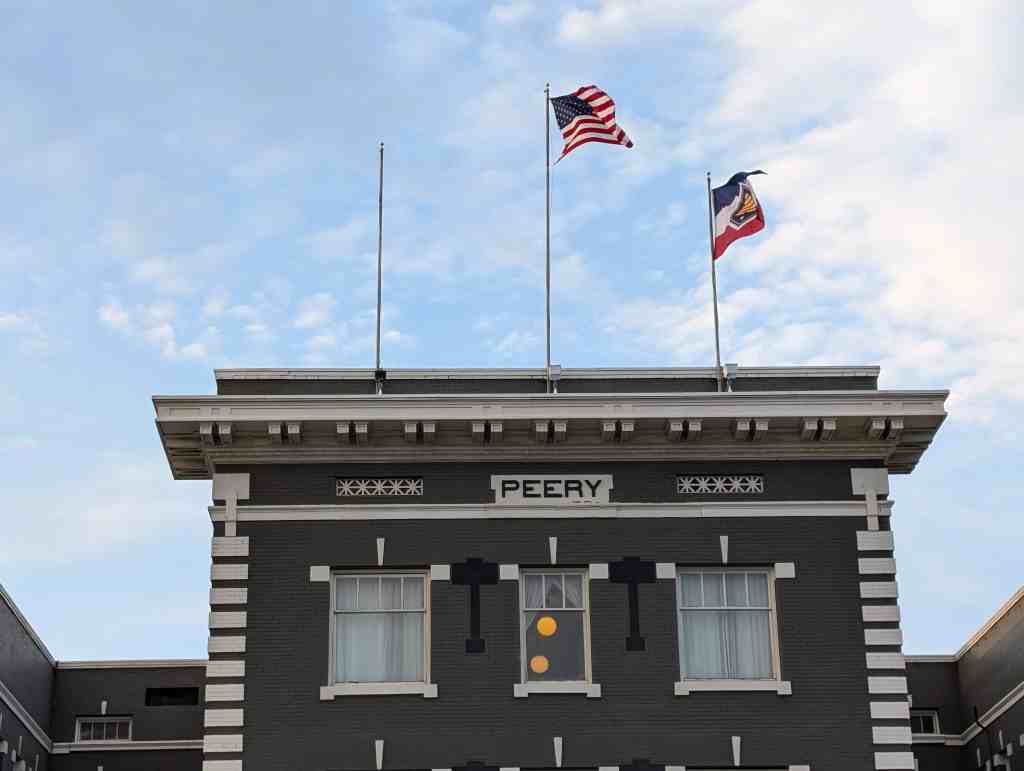
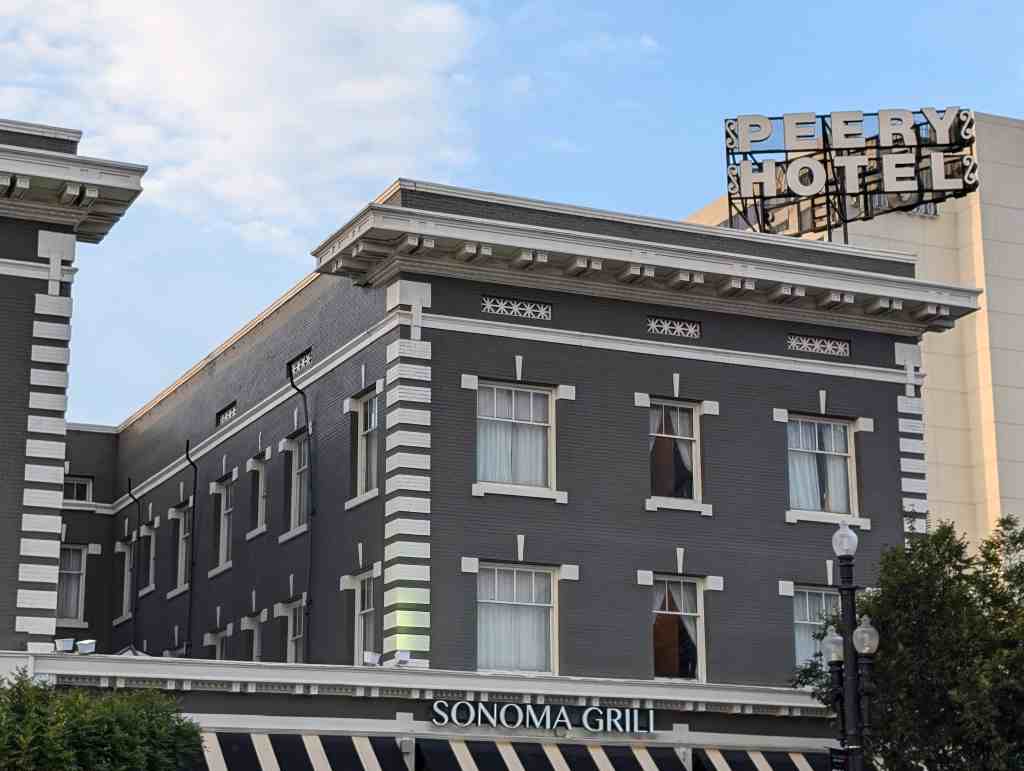
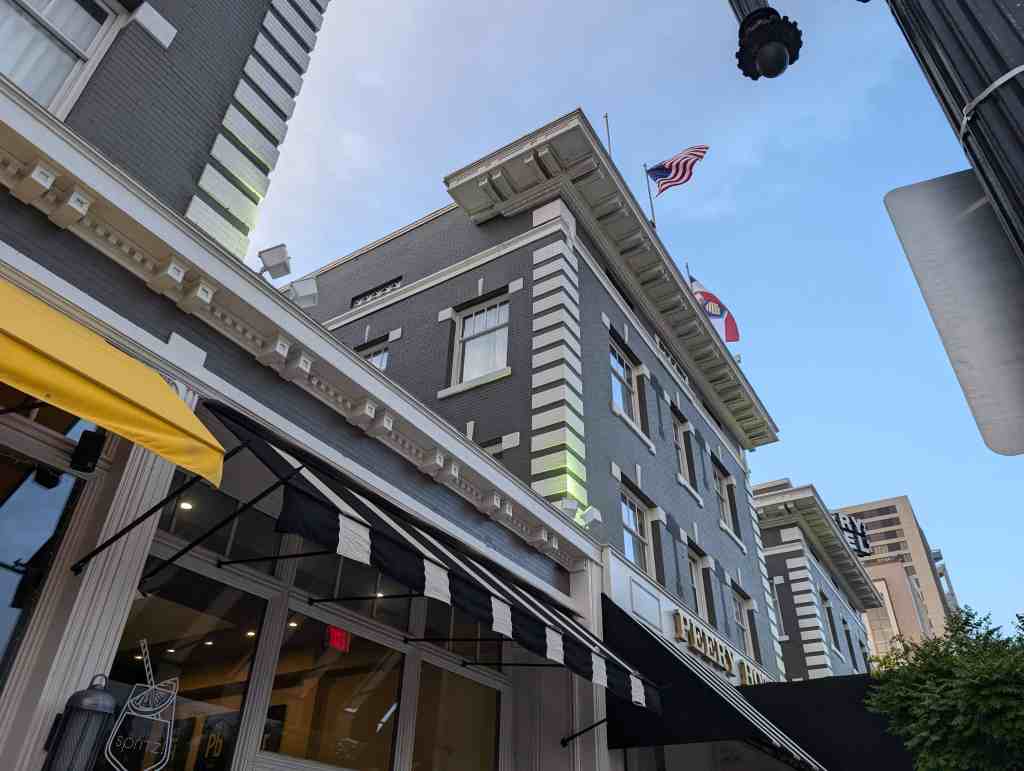
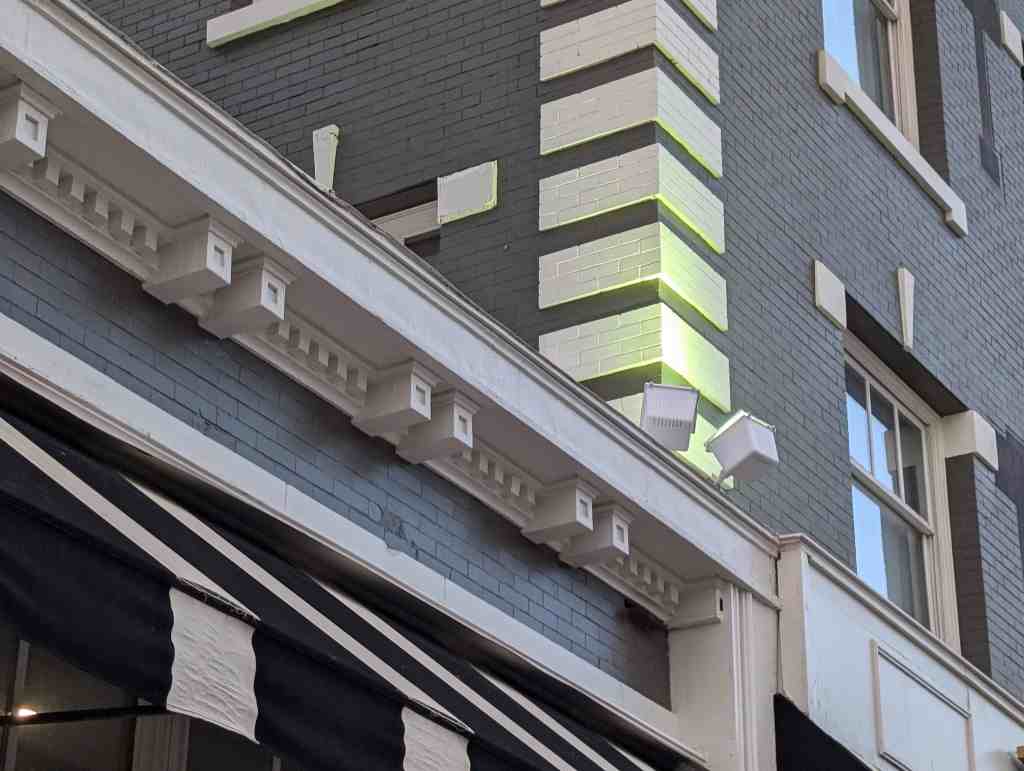
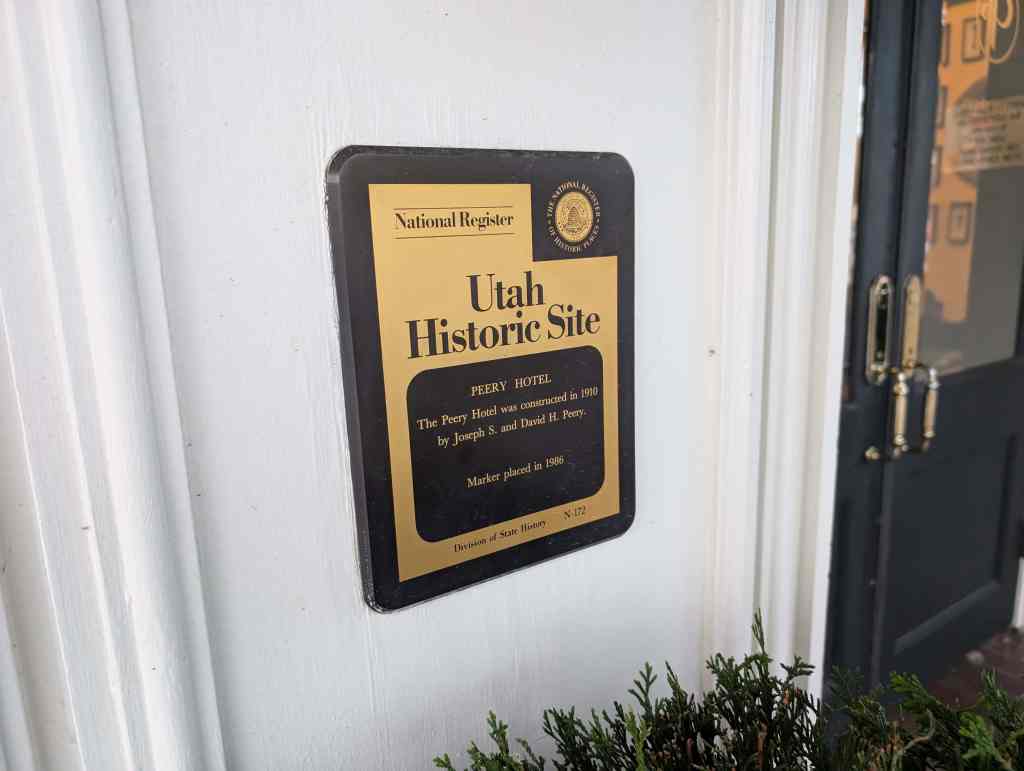
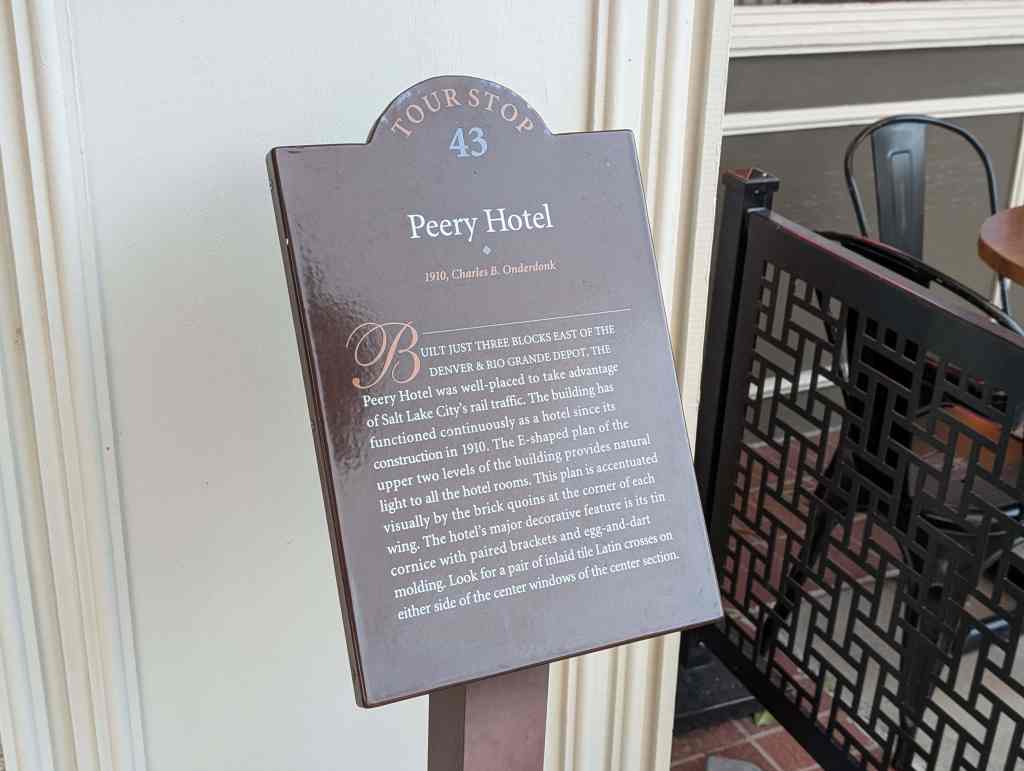
Built just three blocks east of the Denver & Rio Grande Depot, the Peery Hotel was well-placed to take advantage of Salt Lake City’s rail traffic. The building has functioned continuously as a hotel since its construction in 1910 (by Joseph S. and David H. Peery.) The E-shaped plan of the upper two levels of the building provides natural light to all the hotel rooms. This plan is accentuated visually by the brick quoins at the corner of each wing. The hotel’s major decorative feature is its tin cornice with paired brackets and egg-and-dart molding. Look for a pair of inlaid tile Latin crosses on either side of the center windows of the center section.
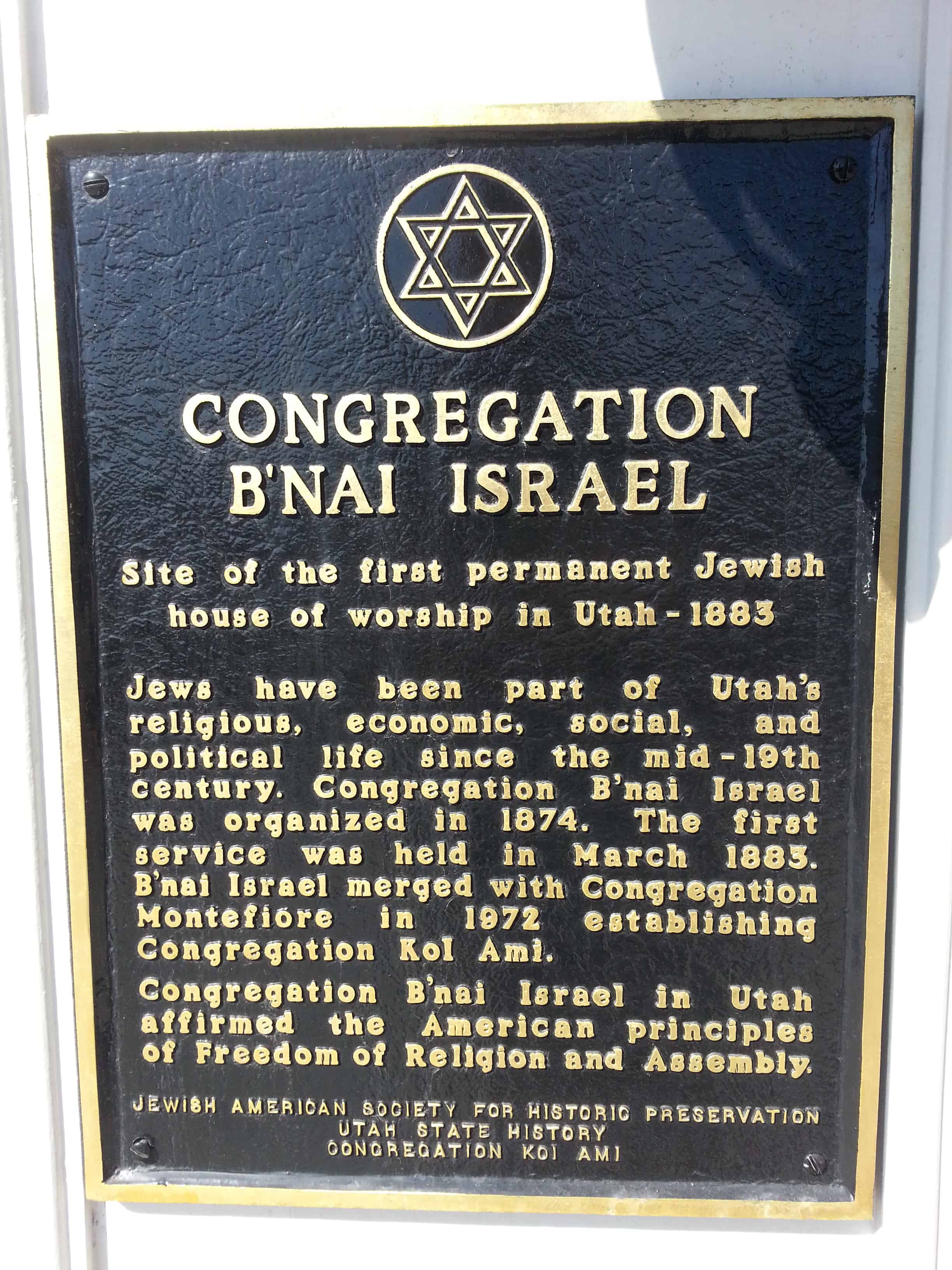
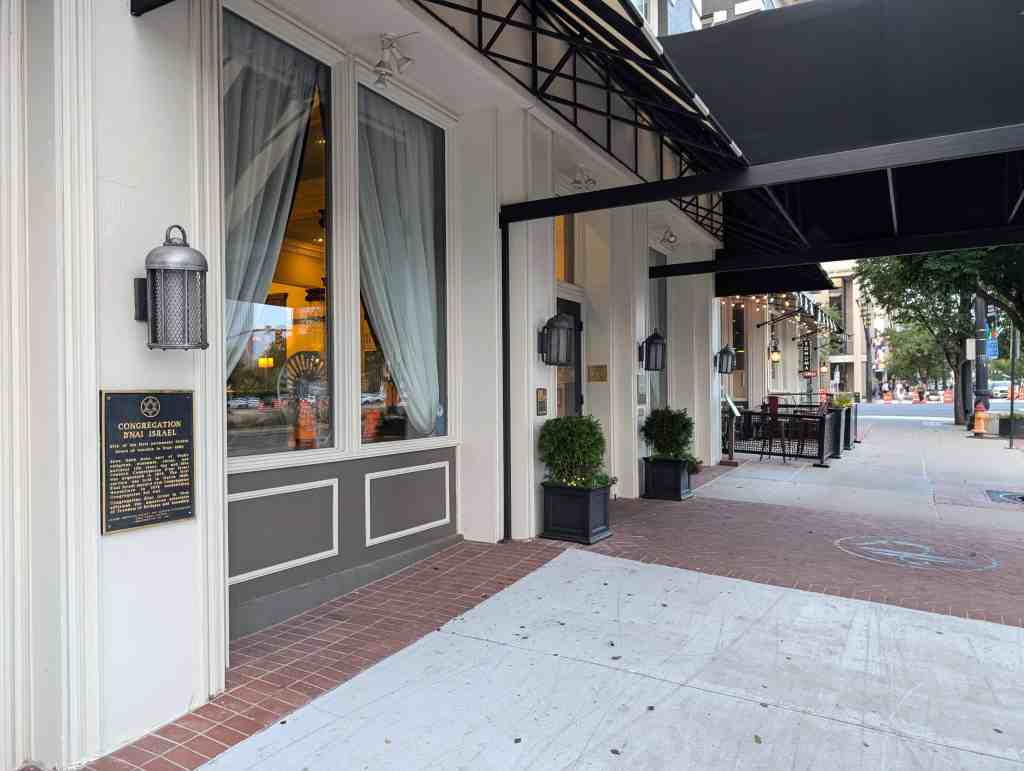
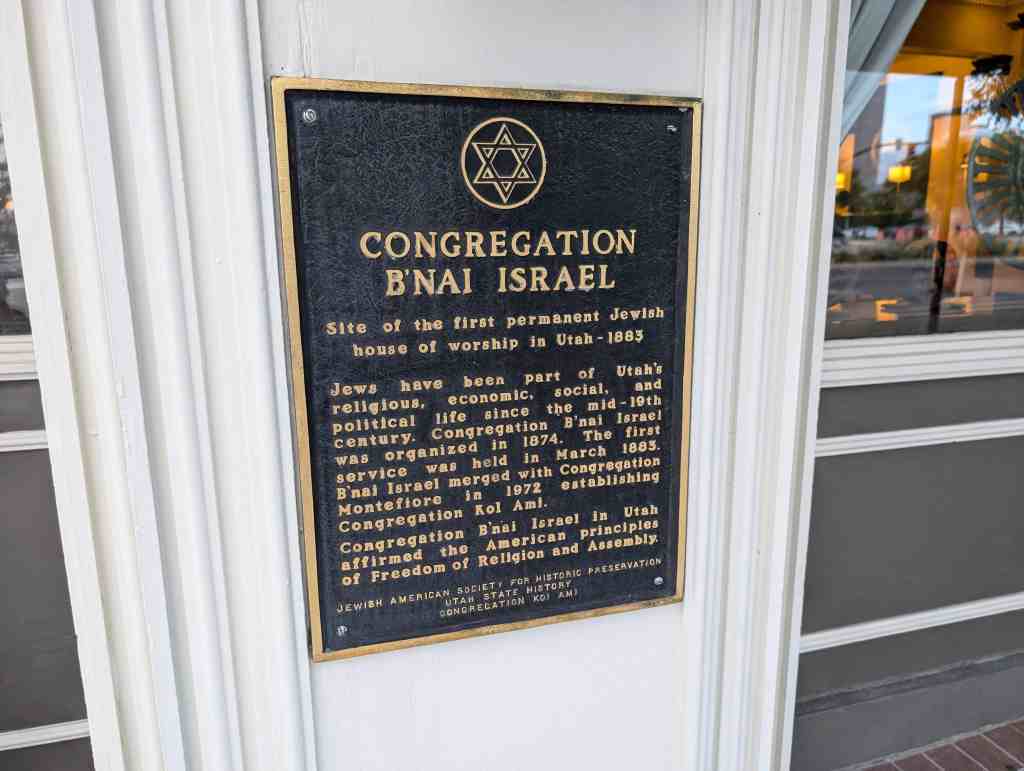
Congregation B’Nai Israel The Peery Hotel sits at the site of the first permanent Jewish house of worship in Utah back in 1883.
jews have been part of Utah’s religious, economic, social and political life since the mid – 19th century. Congregation B’nai Israel was organized in 1874. The first service was held in March 1883. B’nai Israel merged with Congregation Montefiore in 1972 establishing Congregation Koi Ami.
Congregation B’nai Israel in Utah affirmed the American principles of Freedom of Religion and Assembly.