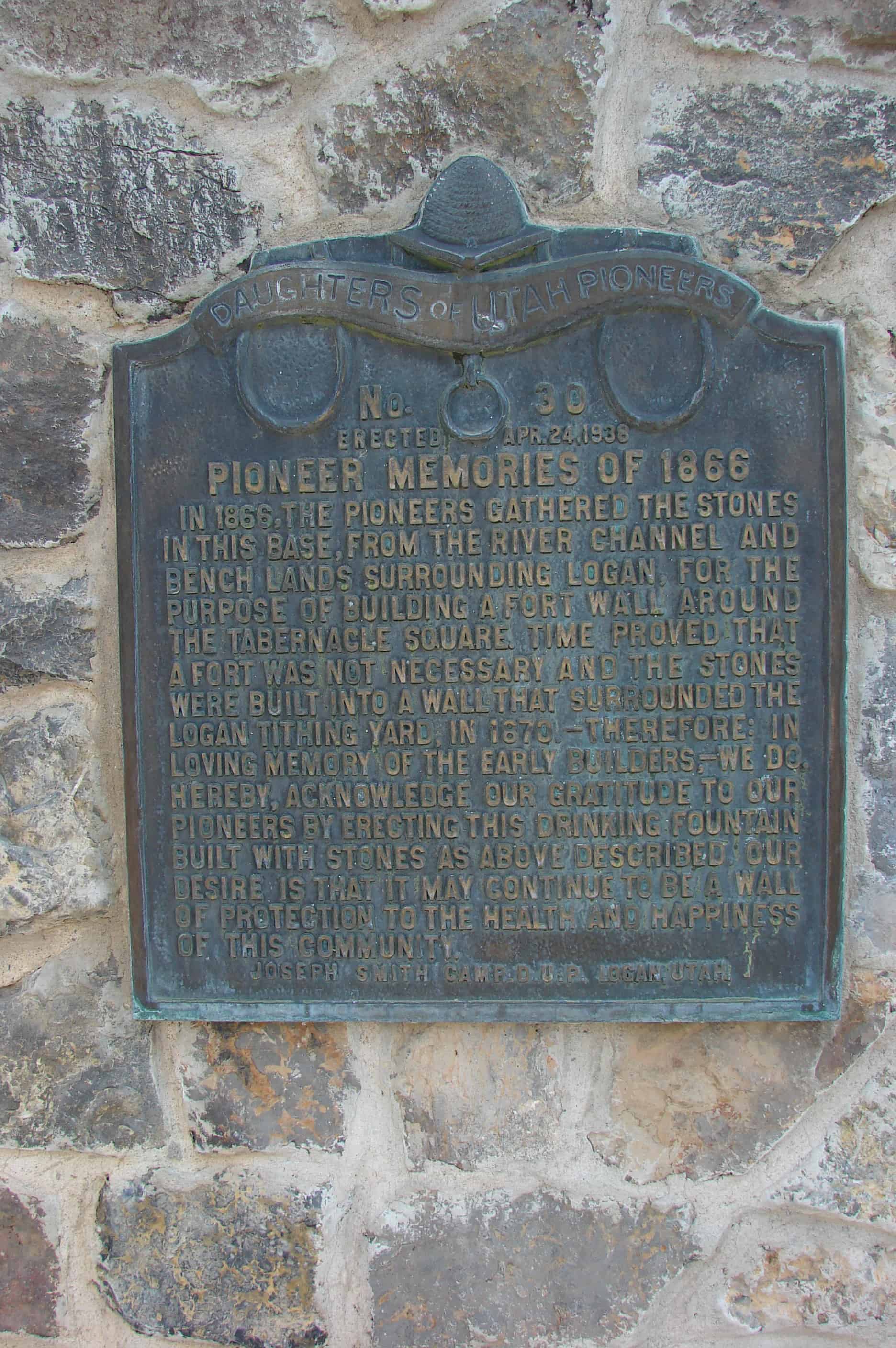
Pioneer Memories of 1866
In 1866 the Pioneers gathered the stones in this base, from the river channel and bench lands surrounding Logan, for the purpose of building a fort wall around the Tabernacle Square. Time proved that a fort was not necessary and the stones were built into a wall that surrounded the Logan Tithing Yard in 1870- therefore: in loving memory of the early builders,- we do, hereby, acknowledge our gratitude to our Pioneers by erecting this drinking fountain with the stones as above described. Our desire is that it may continue to be a wall of protection to the health and happiness of this community.
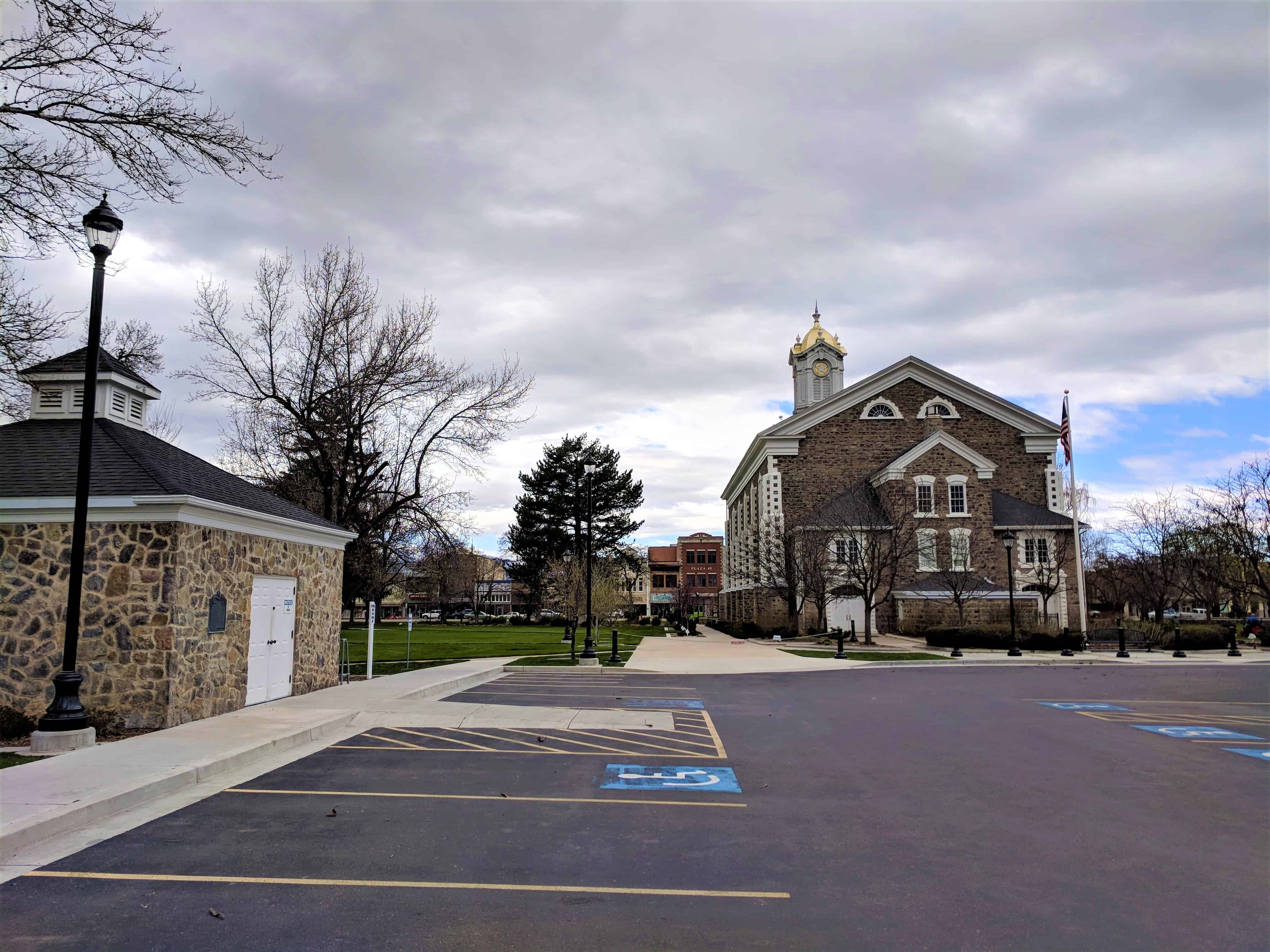
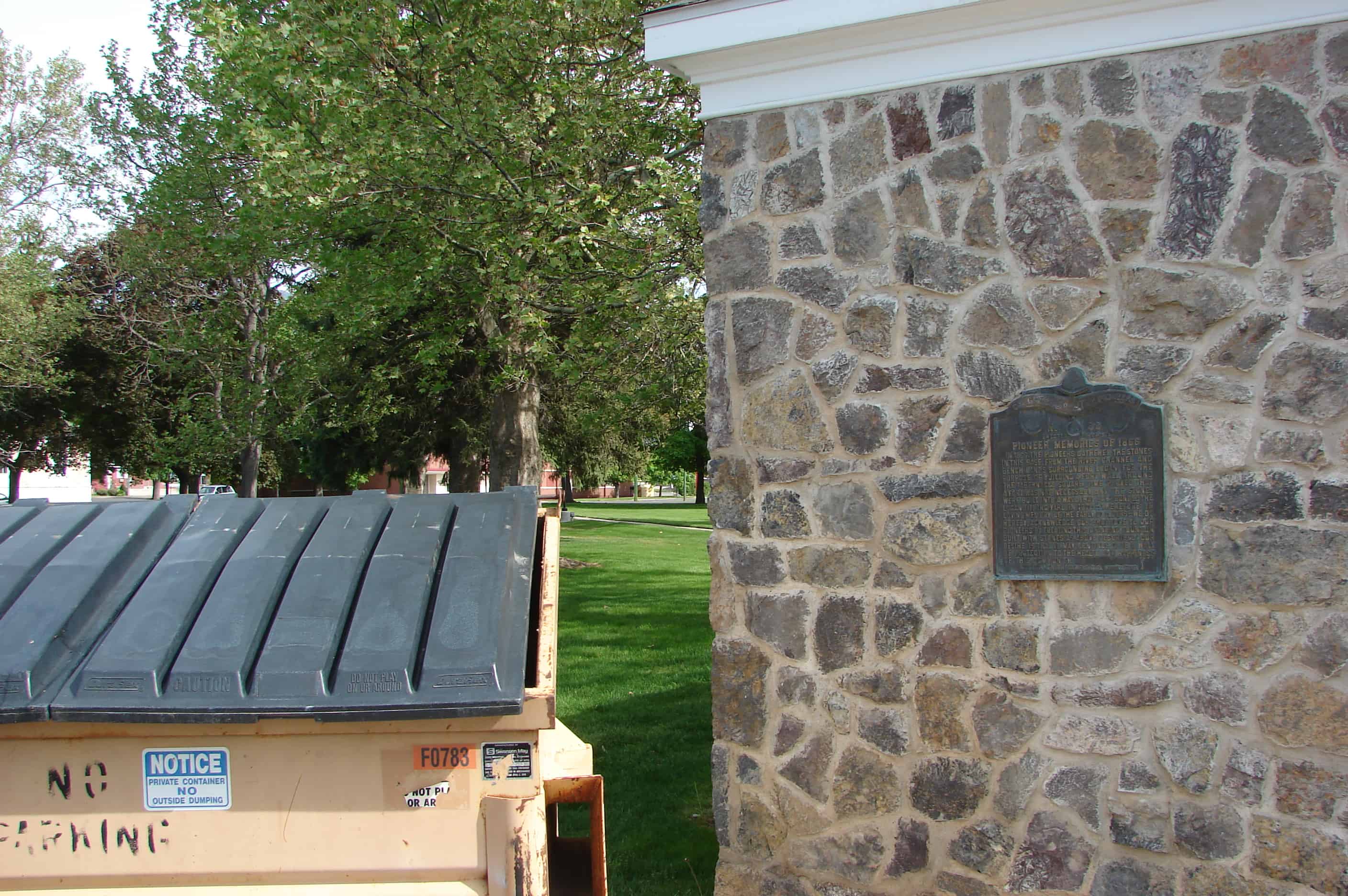
This marker is located at the Logan Tabernacle in Logan, Utah. Check out all of the historic markers placed by the Daughters of Utah Pioneers at JacobBarlow. com/dup
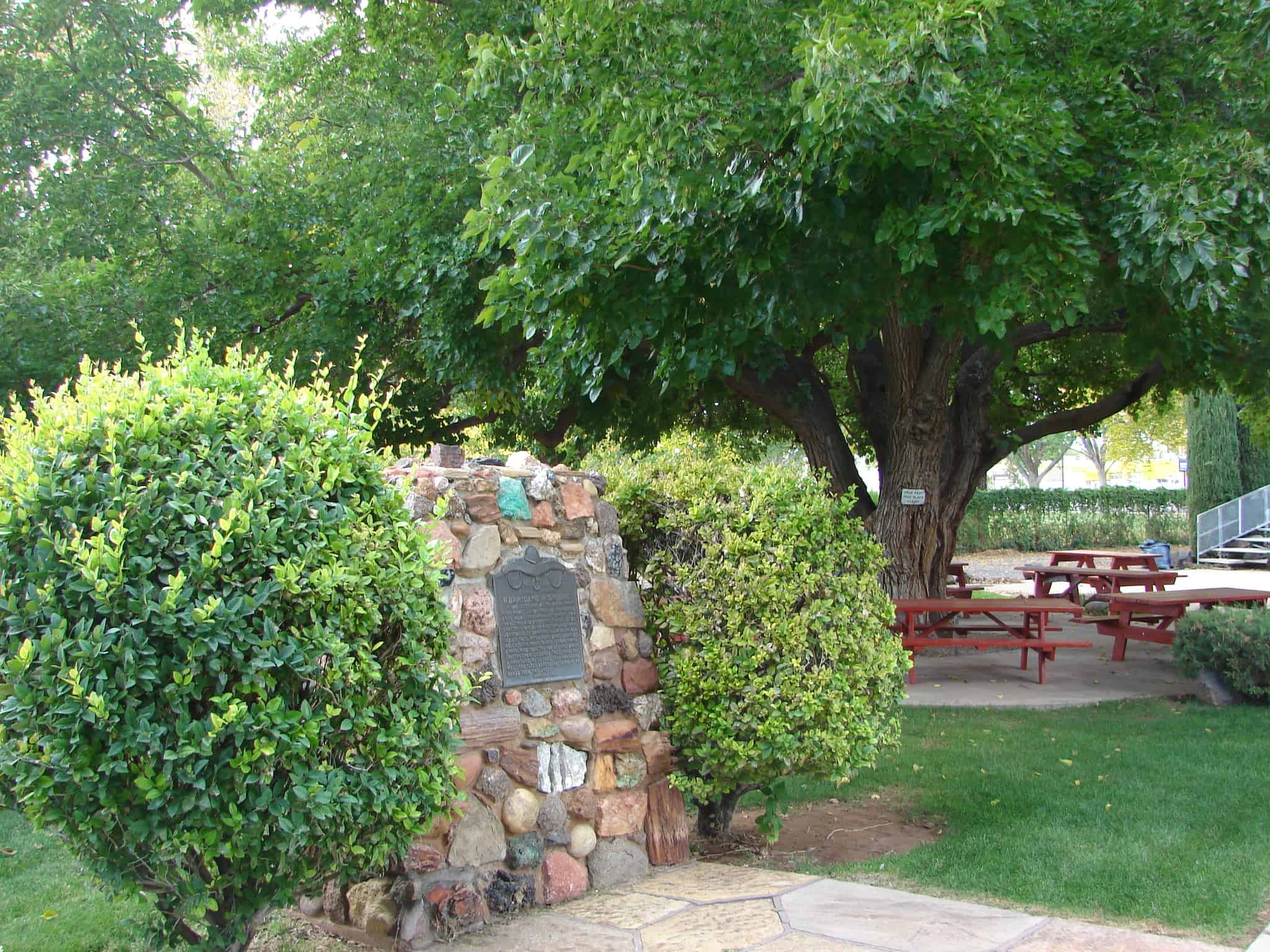
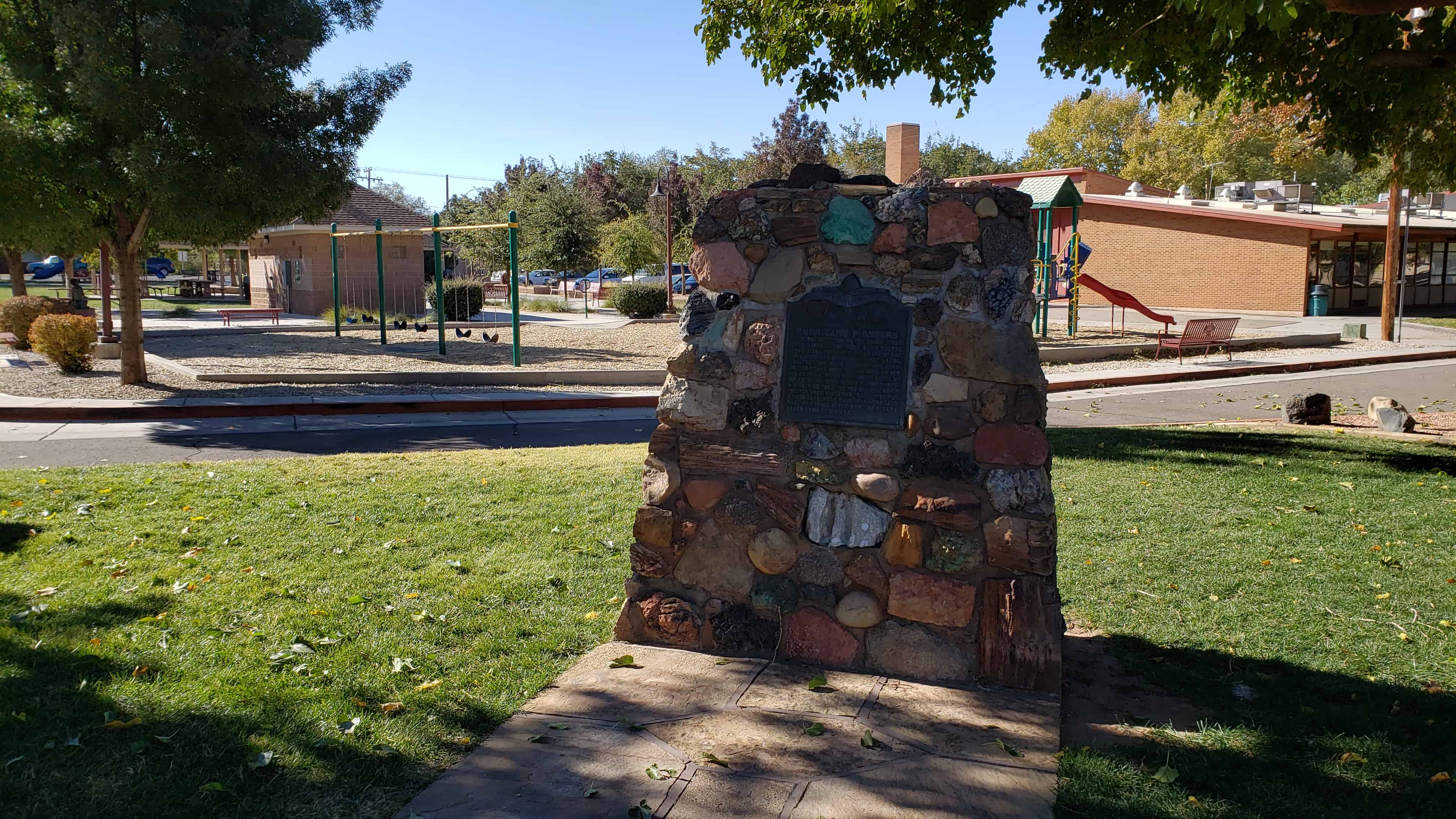
In 1863 settlers on the upper Virgin River whose lands were being washed away, made preliminary surveys for irrigating and occupying these lands. Erastus Snow, David H. Cannon and Nephi Johnson came down the hill over an old Indian trail, with a heavy buggy drawn by mules, using ropes to keep it from tipping. A whirlwind took the top off the buggy. Erastus Snow exclaimed, “Well, that was a hurricane. We’ll name this Hurricane Hill.” The fault, bench and town were named from this event.
This monument replaces one previously erected (that crumbled through weather conditions) by Langley A. Bailey, Sr., Jacob Bowers and Henry Knowles. In memory of the following pioneers: Jens Jergensen and wife, Jens Terkelsen and Christian E. Kjerulf who were massacred by Indians, June 4, 1858, near this spot while traveling unarmed on their way to Sanpete Valley.
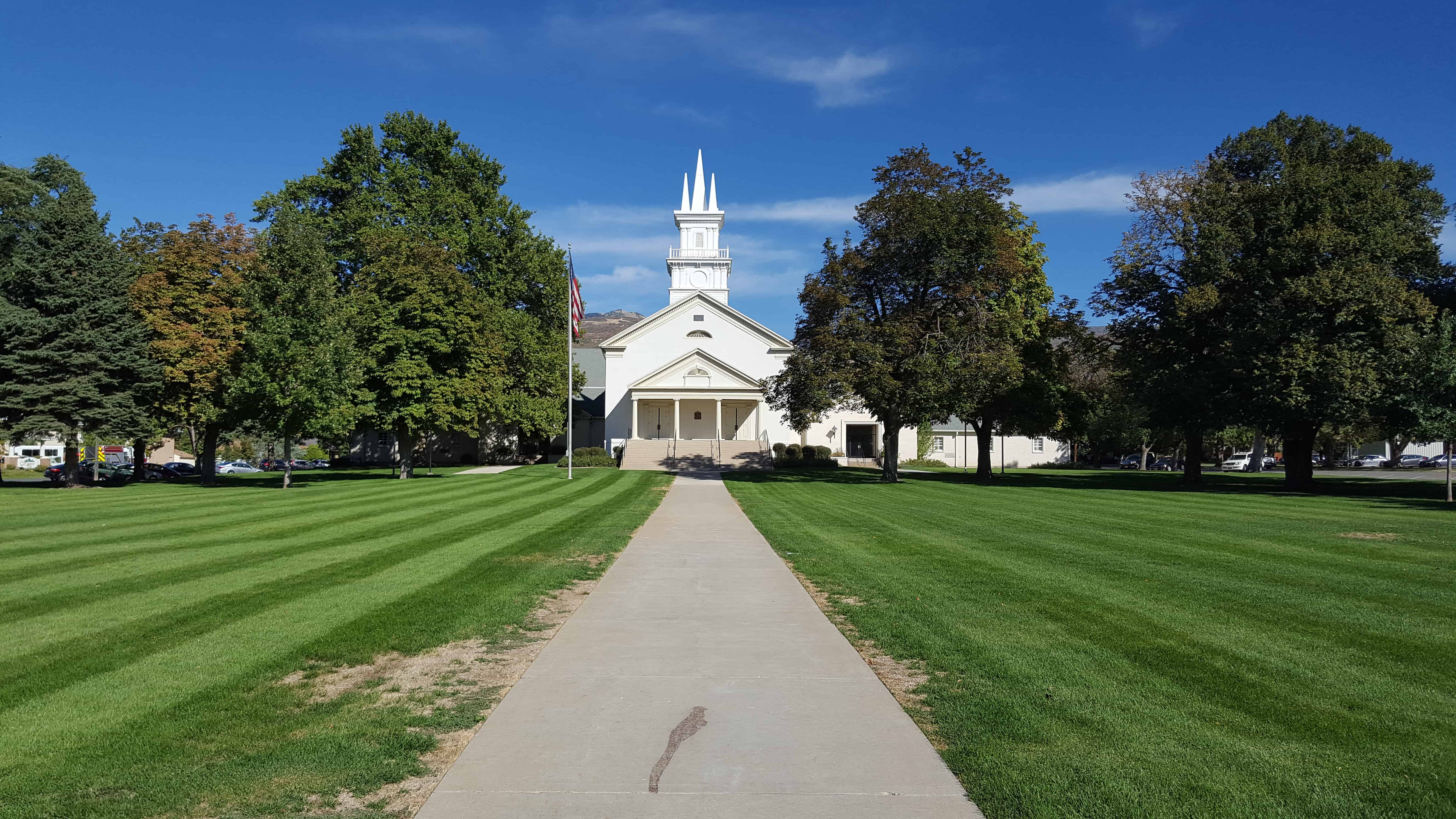
One of the oldest L.D.S. Chapels. Finest at time of erection. Augustus Farnham architect. Site dedicated Feb. 11, 1857 by Elder Lorenzo Snow. Grain was stored in stone foundation when Johnston’s Army advanced. The walls are of adobe, roof timbers fastened with wooden pegs, lumber from Meeting House Hollow, Holbrook Canyon. Tower had five spires, the center spire served as a sun dial. Dedicated March 14, 1863 by Elder Heber C. Kimball, President Brigham Young presiding. Cost $60,000, Bishop John Stoker. Councilors Wm. Atkinson and Wm. H. Lee.
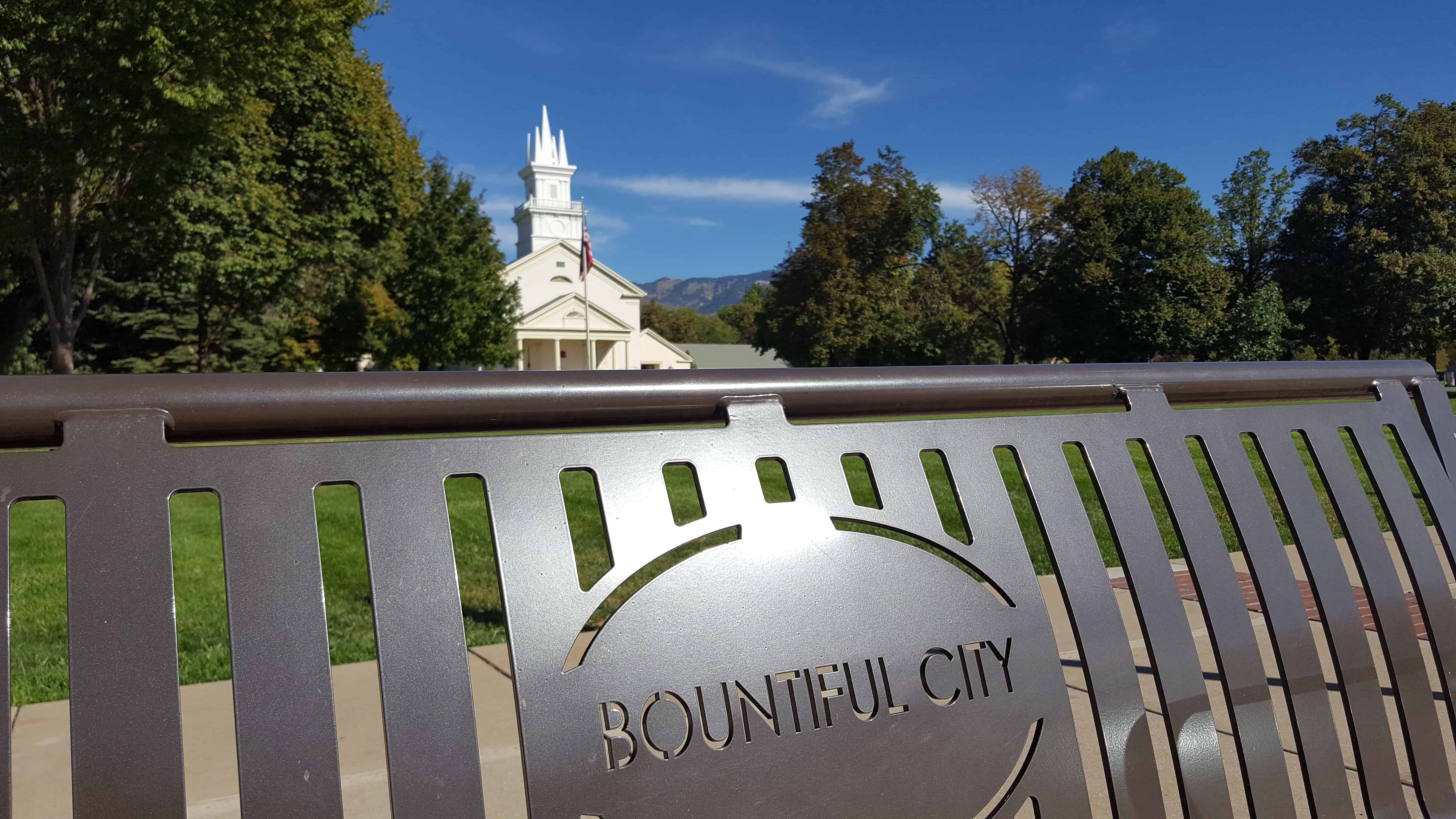
Located at 55 South Main Street in Bountiful, Utah and added to the National Historic Register (#76001813) on January 1, 1976.
On February 11, 1851 (or 1857 there is some discrepancy among sources) Lorenzo Snow broke ground for the new building in a rather elaborate ceremony. The first stone was laid on February 12, 1857, The tabernacle was built almost entirely of local materials, with local labor. Cost was scene $60,000. Architect was Augustus Farnham. Apparently the best materials and artisanship available were used, and at the time of erection it had the reputation -£or being the finest meetinghouse in the Territory of Utah,
Work on the tabernacle continued as Johnston’s Army approached in 1857-58. When the town was evacuated in 1858, grain was stored in the rock foundation.
The building was finished in 1862, including the Joseph Smith mural which was commissioned by Brigham Young and painted by Daniel Waggelund. The dedication on March 14, 1863, was the occasion of a momentous gathering attended by several noteworthy dignitaries: Brigham Young presided and Heber C. Kimball offered the dedicatory prayer.
The five spires have been blown off the tower, at least once in 1906 by a Davis County east wind. They were restored some 50 years later.
In 1925 the north wing with amusement hall and classrooms, was added. The building was “remodeled, redecorated and modernized” and a new pipe organ was added in 1942. In 1957 a new wing was added to the rear of the amusement hall, containing a kitchen, Relief Society room, and offices.
The new part was dedicated on February 10, 1957, by President David O. McKay.
On March 14, 1963, a centennial service was held in and for the building. The featured speaker was President Hugh B. Brown, who rededicated the building “for another hundred years,” He declared the tabernacle to be “holy ground” where every prophet but Joseph Smith had occupied the pulpit.
The Bountiful Tabernacle is significant historically by virtue of its being the oldest religious structure in the State of Utah, the religious building enjoying the longest continuous use in Utah, and the oldest edifice built by the Church of Jesus Christ of Latter-day Saints (Mormons) to be in continuous use as a place of worship. Every prophet of the Mormons, save Joseph Smith, who was killed in Nauvoo, Illinois, before coming West, has preached in the tabernacle.
The Bountiful Tabernacle also has the distinction of being the oldest extant example, and undoubtedly the most impressive example from any period, of early Greek Revival architecture in Utah. Greek Revival styling was the first prominent style to take hold in Utah after the technology was developed to advance from the levels of primitive shelter and vernacular architecture. Architect Augustus A. Farnham, an early convert to the Mormon Church, was born in Andover, Massachusetts, and called upon his knowledge of Greek Revival motifs to enhance a potentially ordinary adobe meetinghouse. Each craftsman in turn contributed his finest decorative work to set the tabernacle apart from other public buildings at the time. From the fine circular stairways leading to the gallery but It by George W. Lincoln, to the classically pilastered and arched reredos framing the Weggeland portrait of Joseph Smith, the building was finished and detailed in the most refined methods the Bountiful pioneers were capable of. Recently saved from destruction by Mormon Church leaders, there is no other Utah structure that better represents the aspirations, pride, and accomplishments of pioneers in a primitive environment than the Bountiful Tabernacle.
The original part, the chapel, is a rectangle 40′ by 80′ with a portico over the front entrance and a small utility room at the back. The foundation is of stone, 6 feet thick and 9 feet high. The walls are of adobe, 3 feet thick. The exterior has been covered with plaster or stucco for at least half of the building’s life. The single centered inset tower is capped by five spires.
The roof is shingled. The gable is of medium pitch with a boxed and returned cornice and a decorated frieze of wood. On each side wall were three large 3-sashed recessed windows with capstone lintels and brick sills, Directly underneath were basement windows in the stone foundation, A later addition covered the windows on the north. The only windows in the front façade are 2 half-round ventilators in the wall and in the porch.
The main entrance is composed of 2 doors under the portico. The portico follows the line of the main gable. It is supported by 6 fluted columns of wood, the stairs originally descending to ground level both to the front and sides.
The basement inside is devoted to small classrooms. The main floor is a single room. Its walls are plastered with a 4 foot high wooden slat paneling around the bottom and a decorative, possibly hand-carved moulding around the top. There are three chandeliers hanging from carved mountings.
In the rear is a balcony, approached from the sides by winding staircases. It is supported from beneath by fluted columns and from above by square ones. These columns are of wood and are painted in a “marbled” pattern similar to that on the columns in the tabernacle in Temple Square. On the front of the balcony is a façade of decorative woodwork.
On the rear wall over the choir is a mural in green, gray and white, featuring a bust of Joseph Smith in an alcove surmounted by 2 cherubim holding a banner which reads “Holiness to the Lord.”
The only apparent alterations in this original part are a new stairway from the portico outside, descending only to the front the original descended to the sides as well with an added 4 iron railings; and a large door, folding, on the north side leading to the new amusement hall and replacing two of the windows.
The two additions, to the north side and to the rear a cultural hall and a Relief Society room and kitchen both with full basements, are well integrated to the exterior style of the original building.
The first settlement of Price began in 1877 when Caleb B. Rhodes and Abraham Powell arrived here. Two years later a number of Latter-day Saints and their families strengthened the settlement. A branch of the Church was organized in 1881, and in 1882, George Frandsen became Bishop with Erastus W. McIntire and Caleb Rhodes counselors. In 1884 logs were taken from Miller’s Creek and a meetinghouse erected on this block, 24x40x12 feet, with three windows on each side and double doors in front. The first service was held April 13, 1884. The building was used for Church, schools, opera, amusement and a Court House.
The rocks used in the monument are from every county in the state and the four corner stones at the top are from the corners of the state of Utah. Stones also came from Nevada, California and Idaho. The local Primary children were tasked with collecting the rocks and adding them to the structure. It was dedicated on July 24, 1954 to commemorate the first LDS meeting house in Price which was also used for school, operas, amusements and court house. (Thanks Dennis Udink for pointing out this facebook post to learn more about this monument!)
This is Daughters of Utah Pioneers historic marker #197 located at 195 East Main Street in Price, Utah
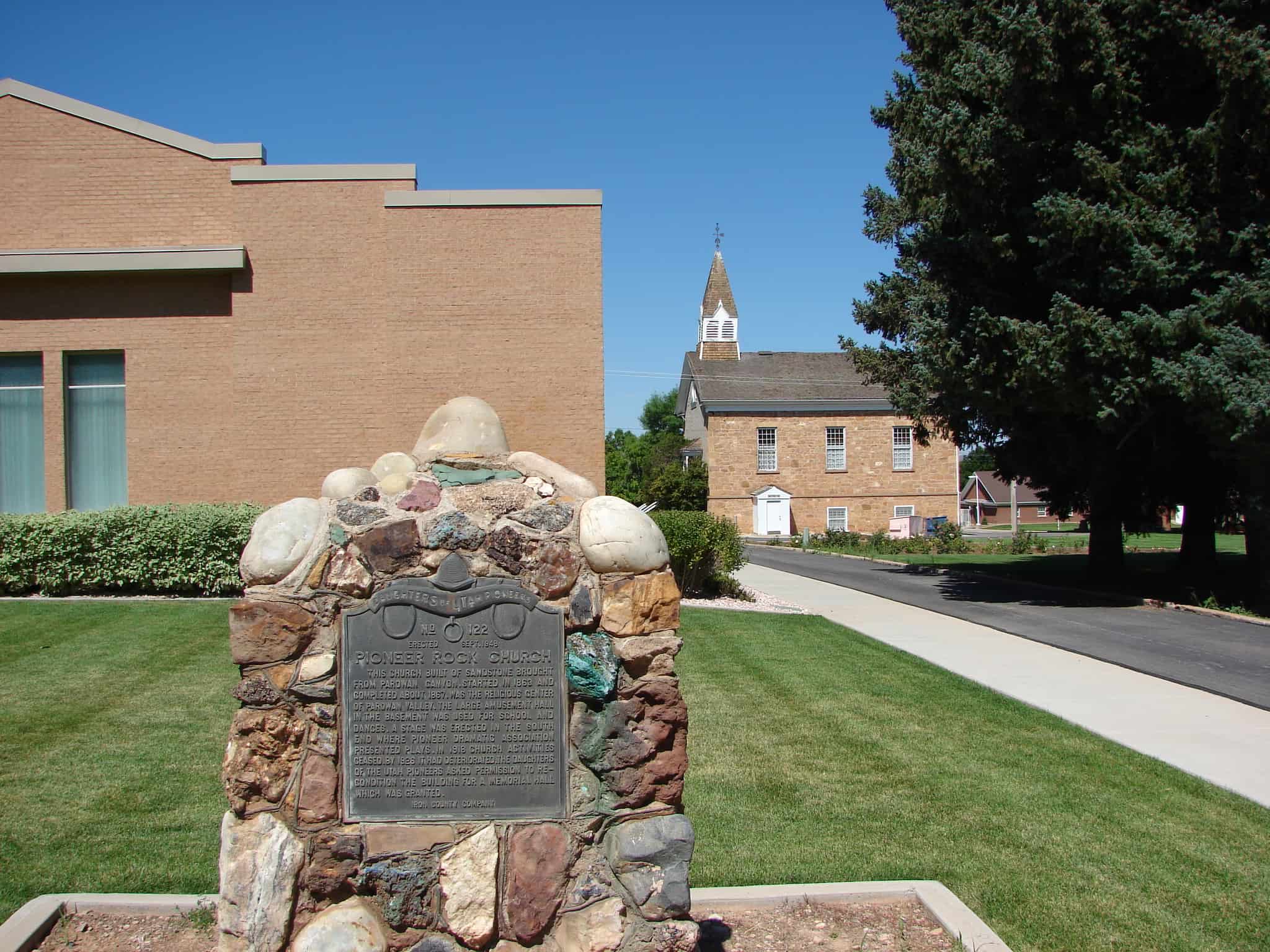
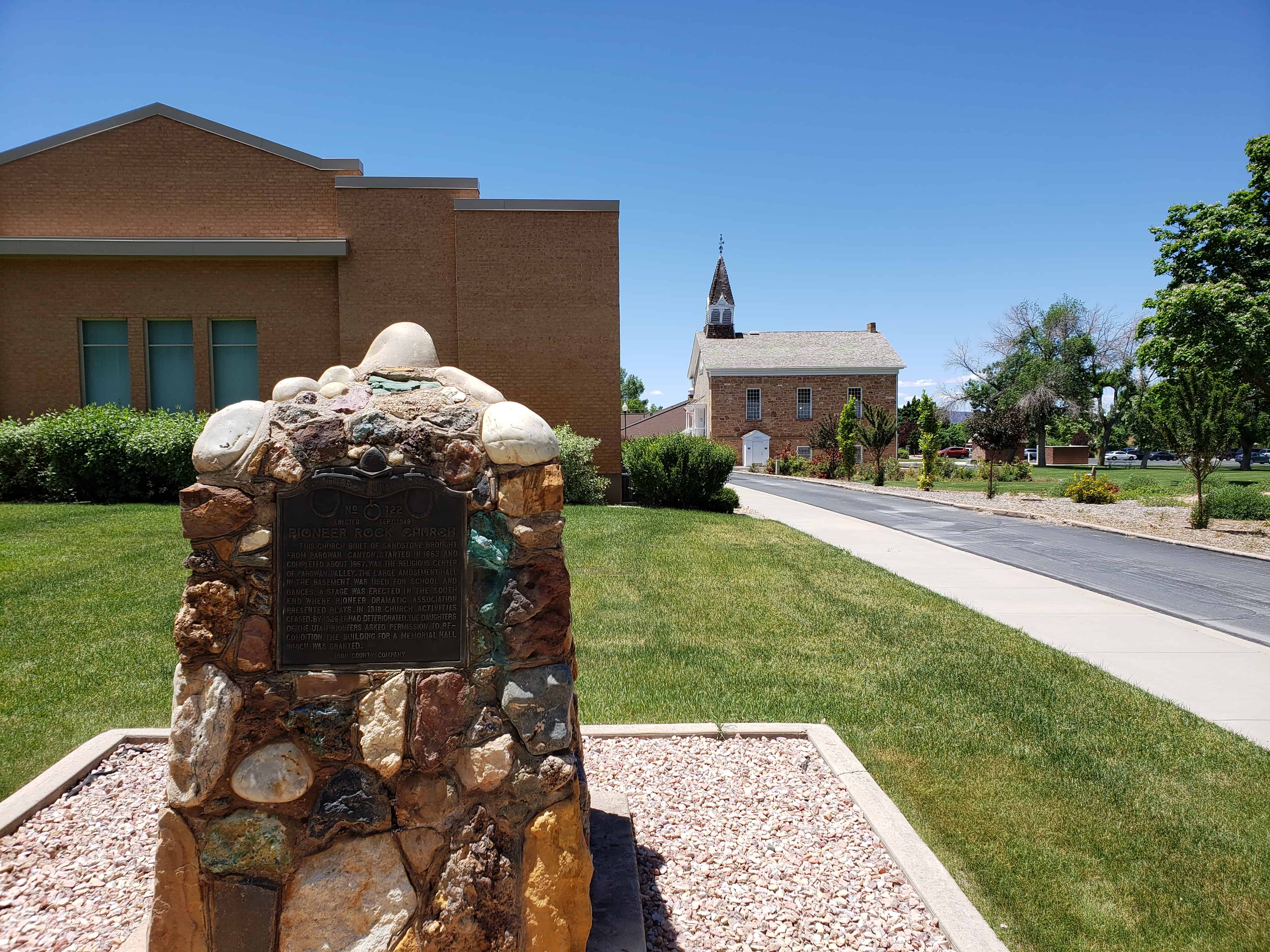
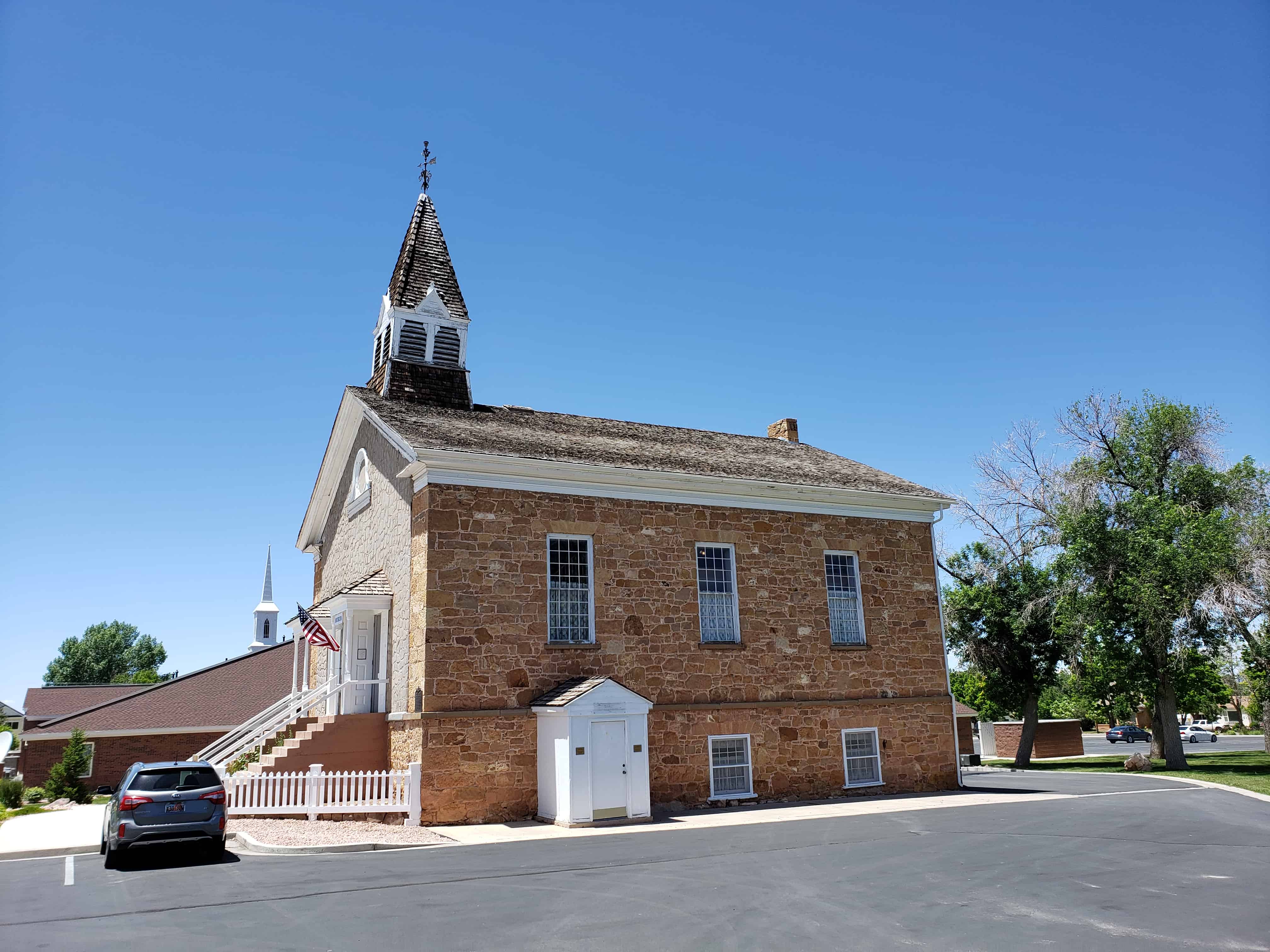
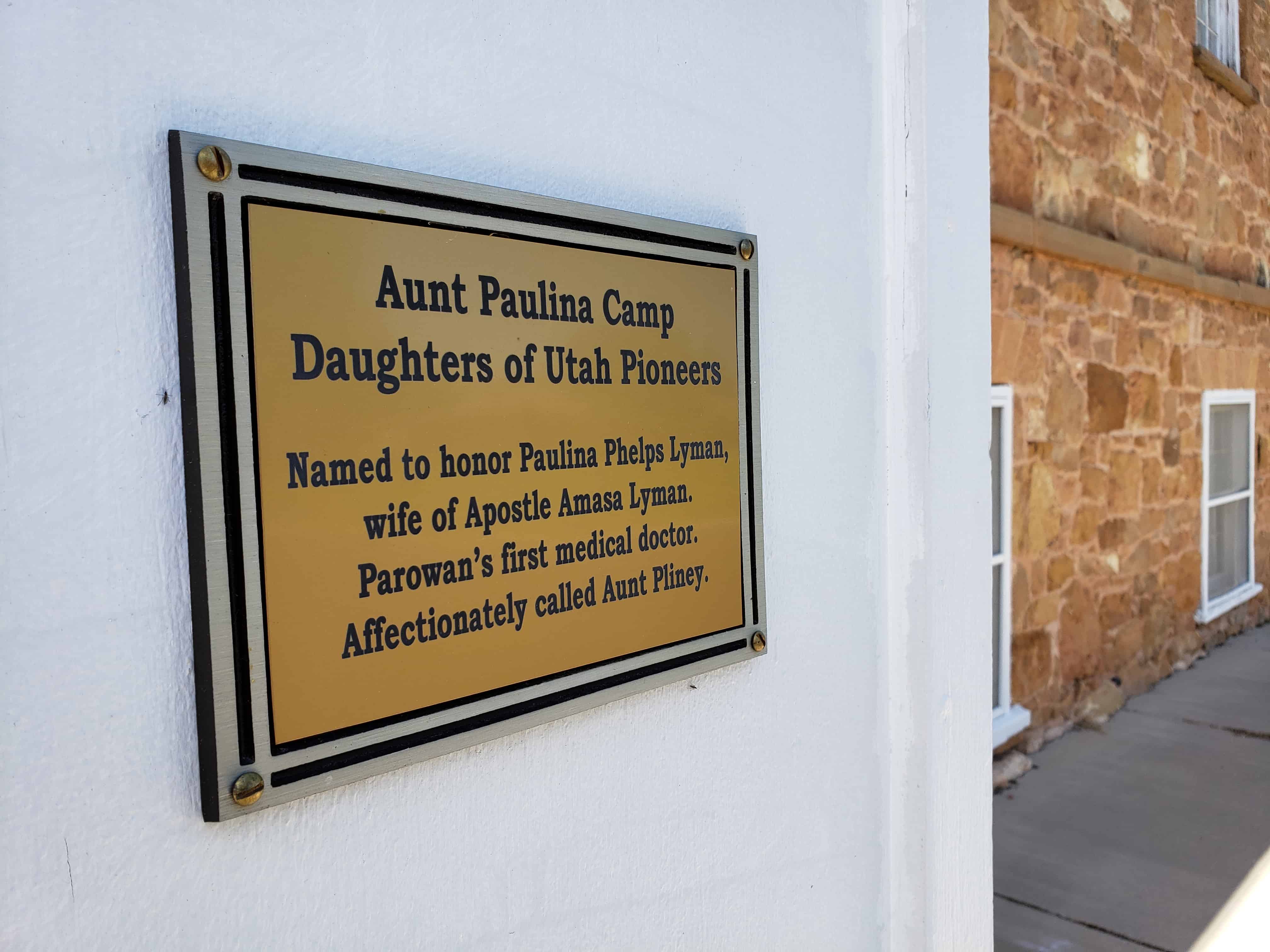
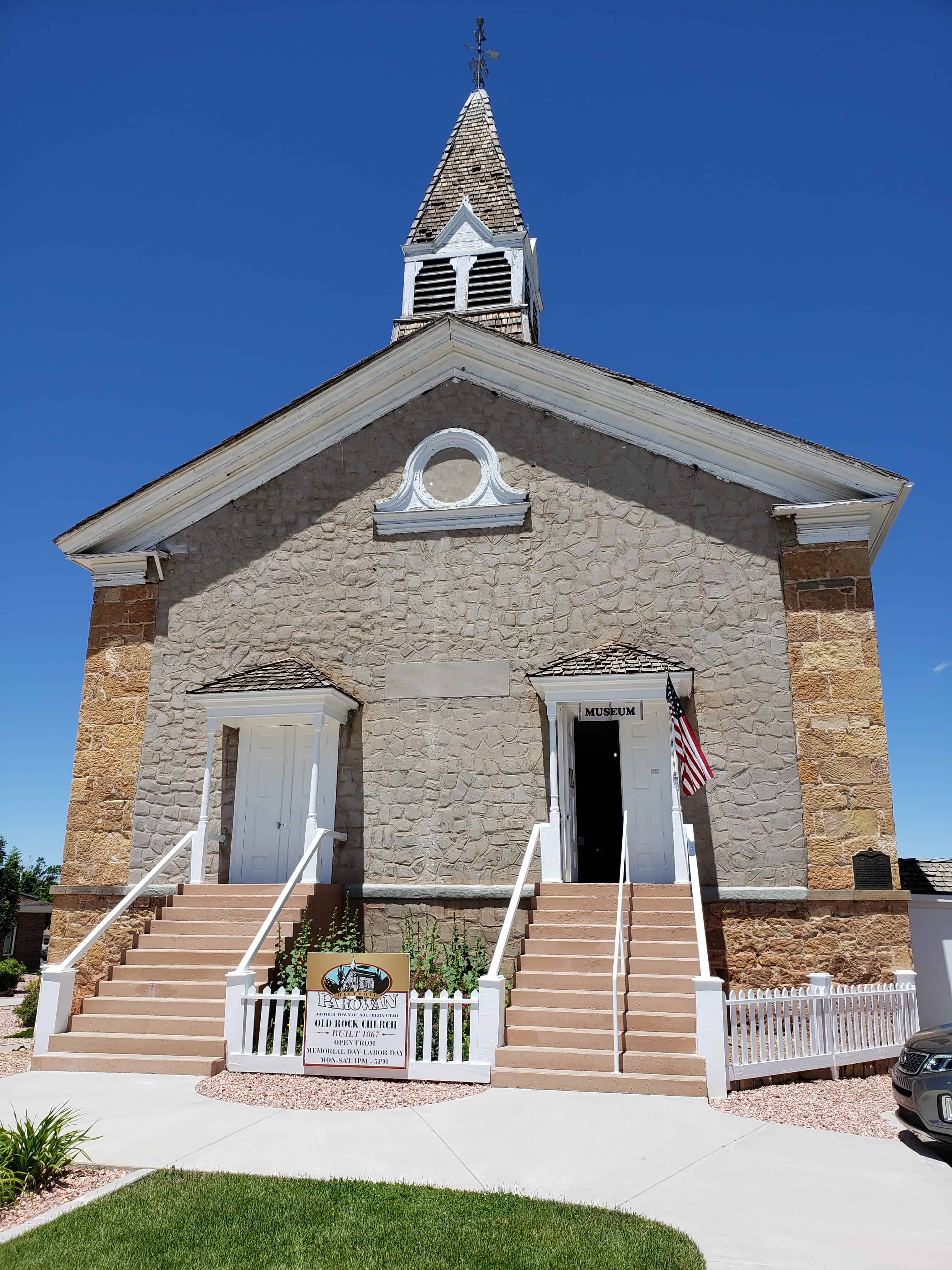
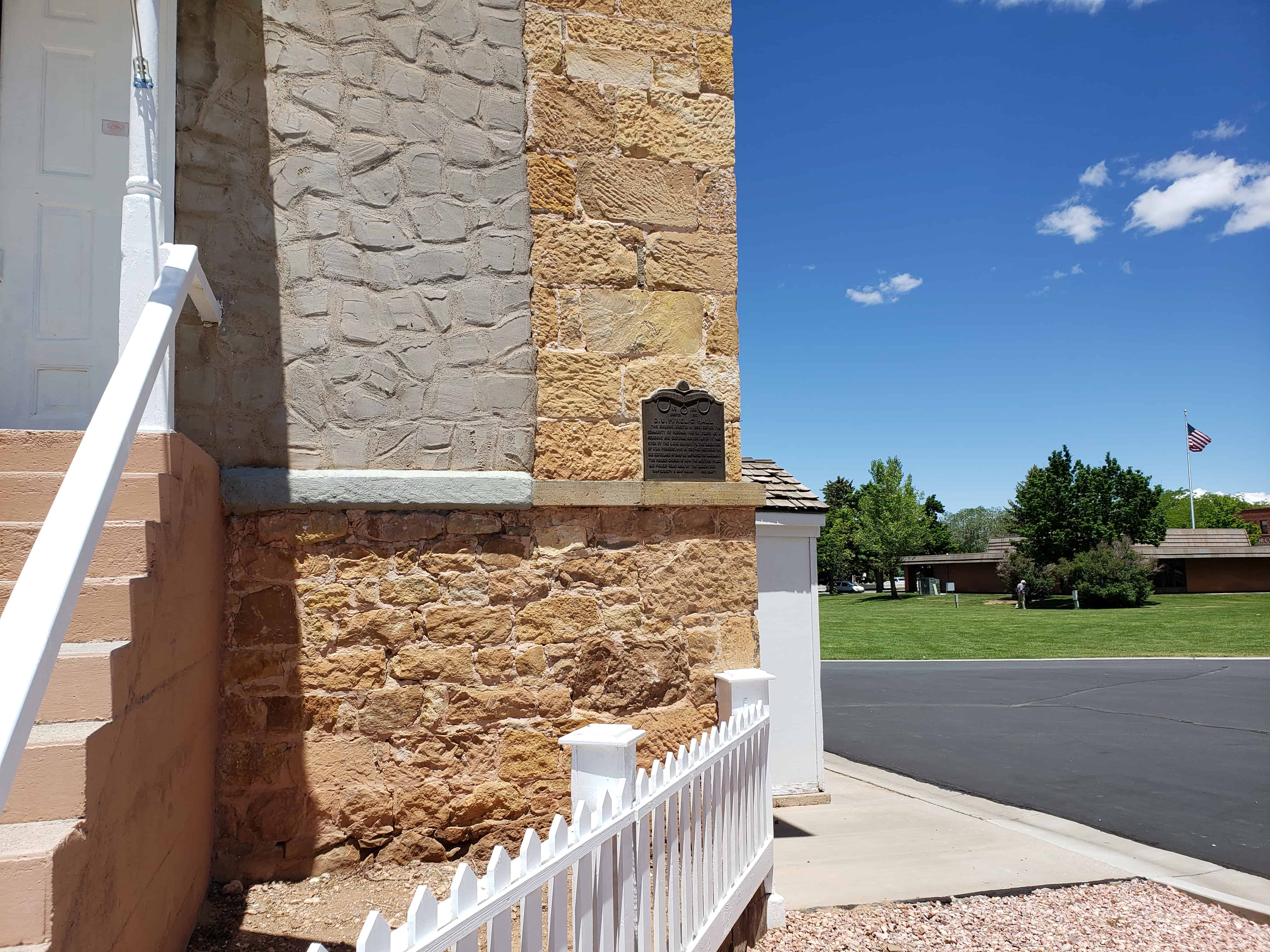
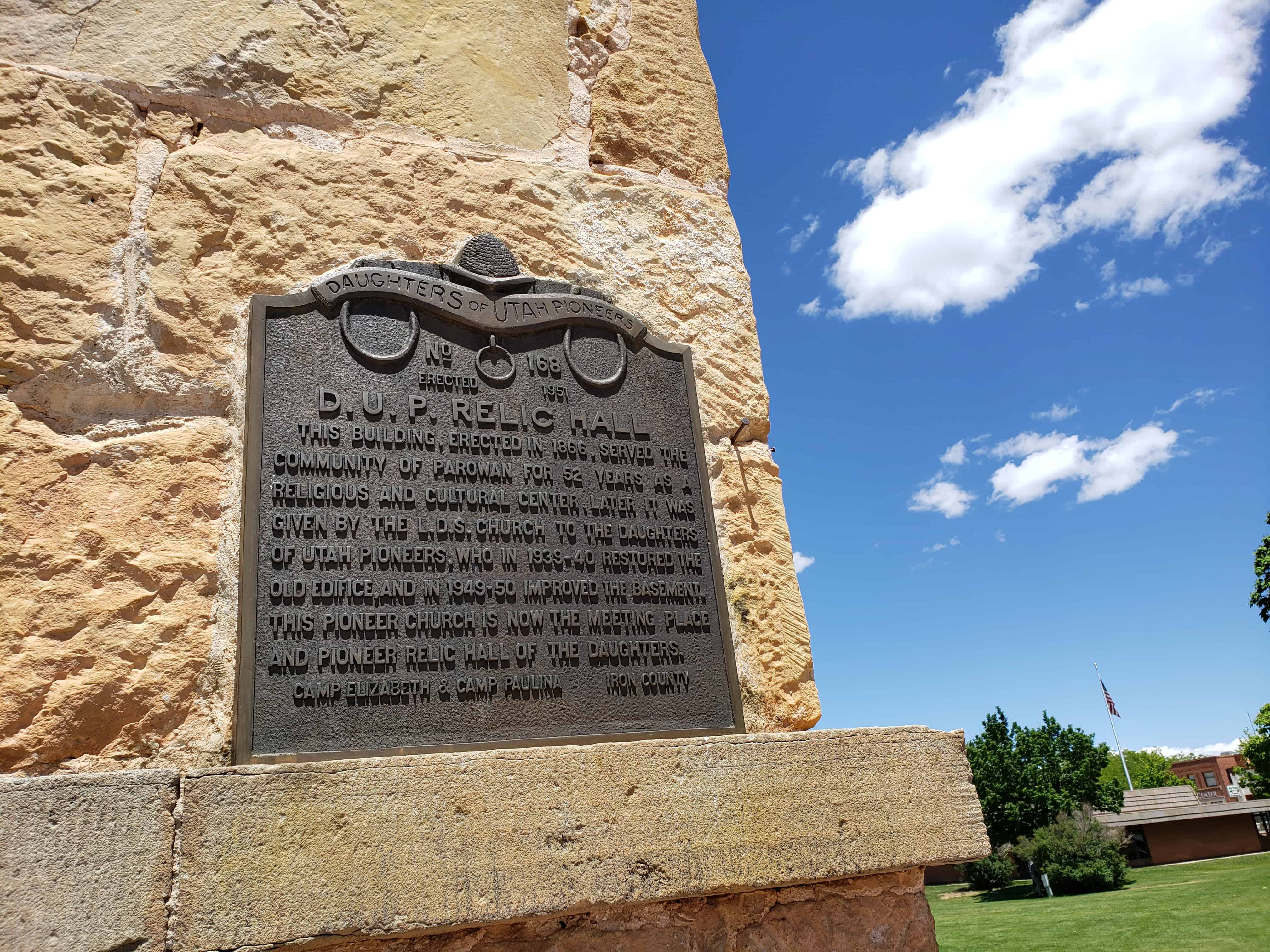
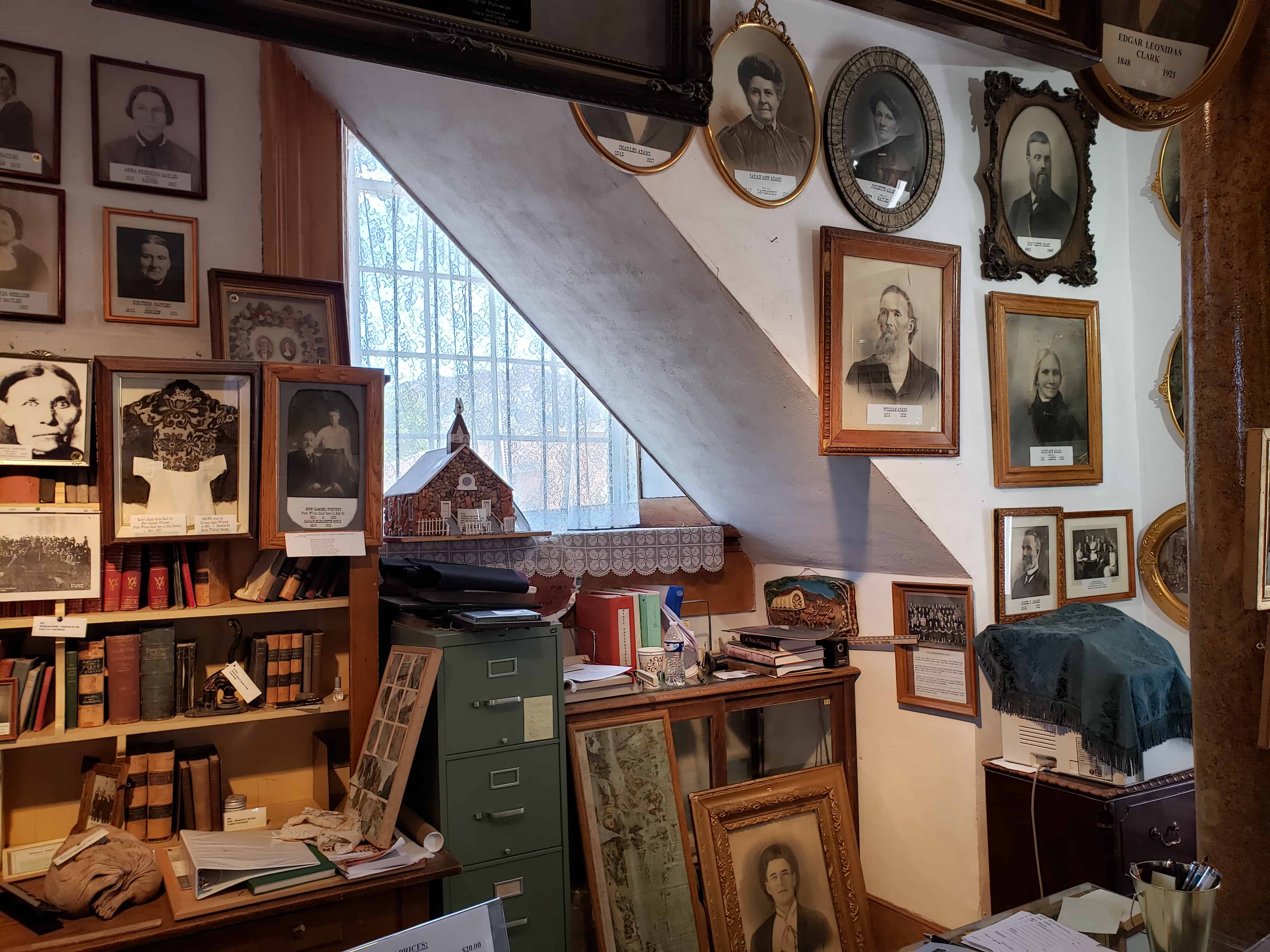
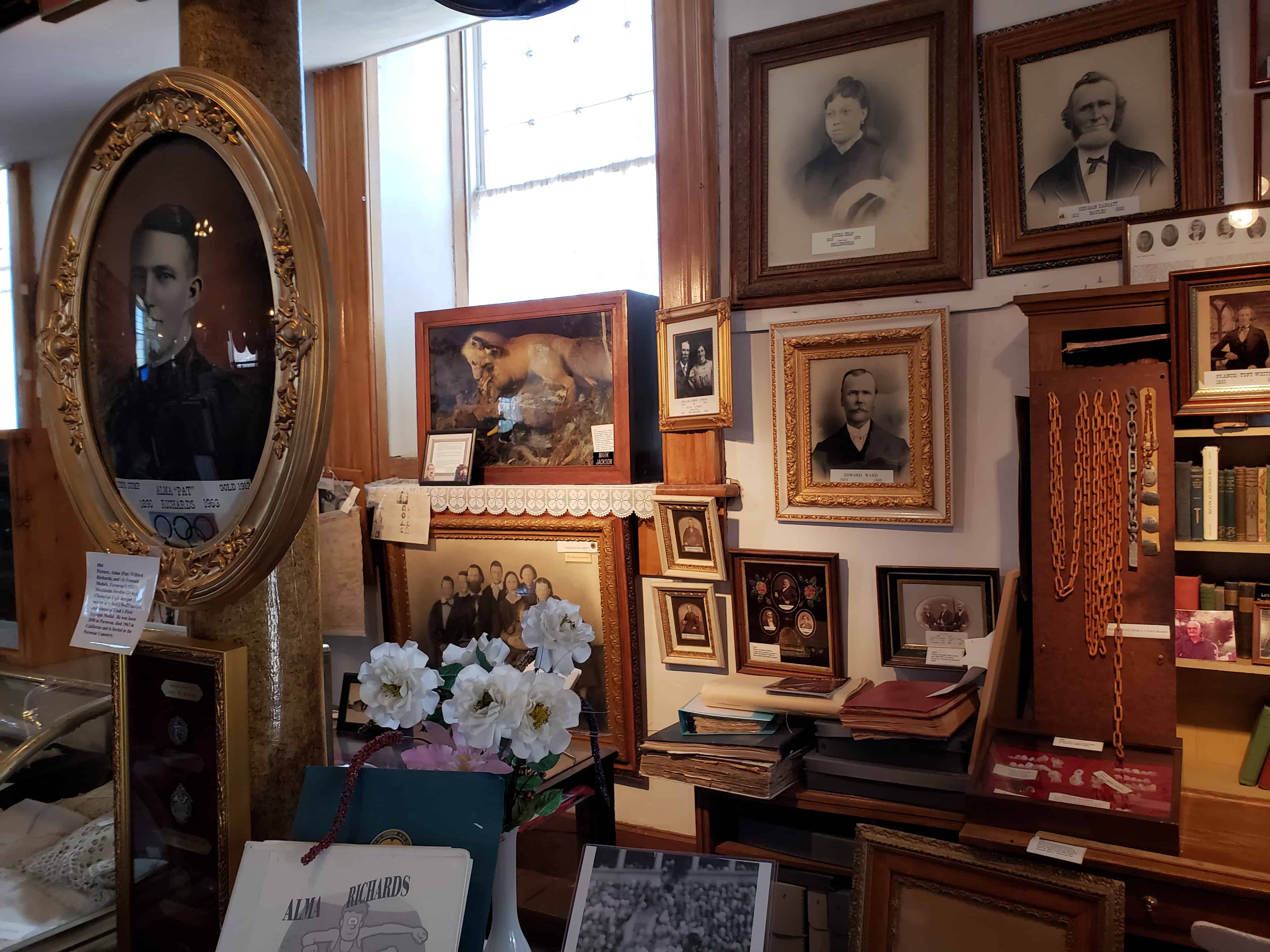
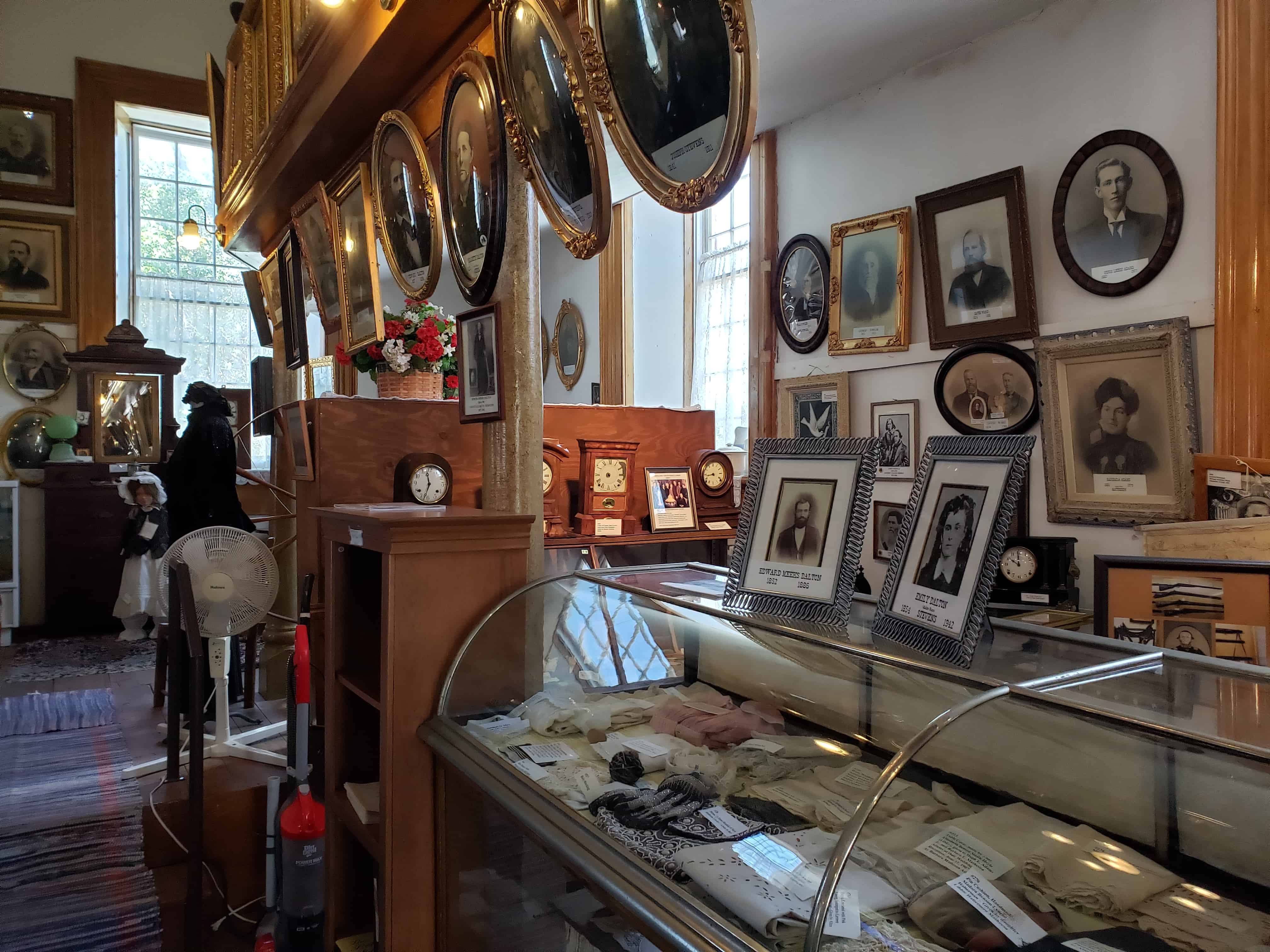
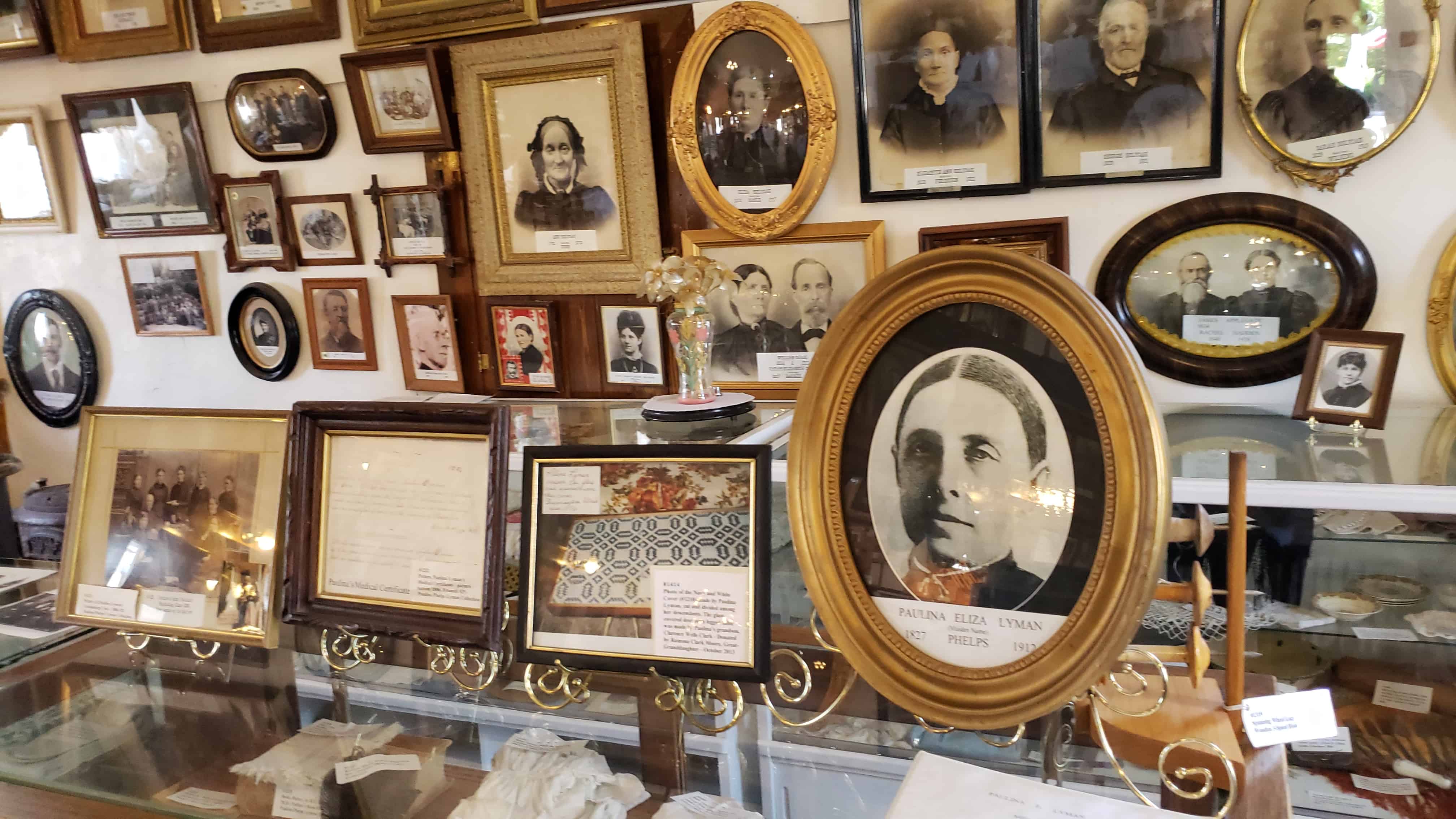
This building, erected in 1866, served the community of Parowan for 52 years as a religious and cultural center. Later it was given by the L.D.S. Church to the Daughters of Utah Pioneers, who in 1939-40 restored the old edifice and in 1949-50 improved the basement. This Pioneer Church is now the meeting place and Pioneer Relic Hall of the Daughters.
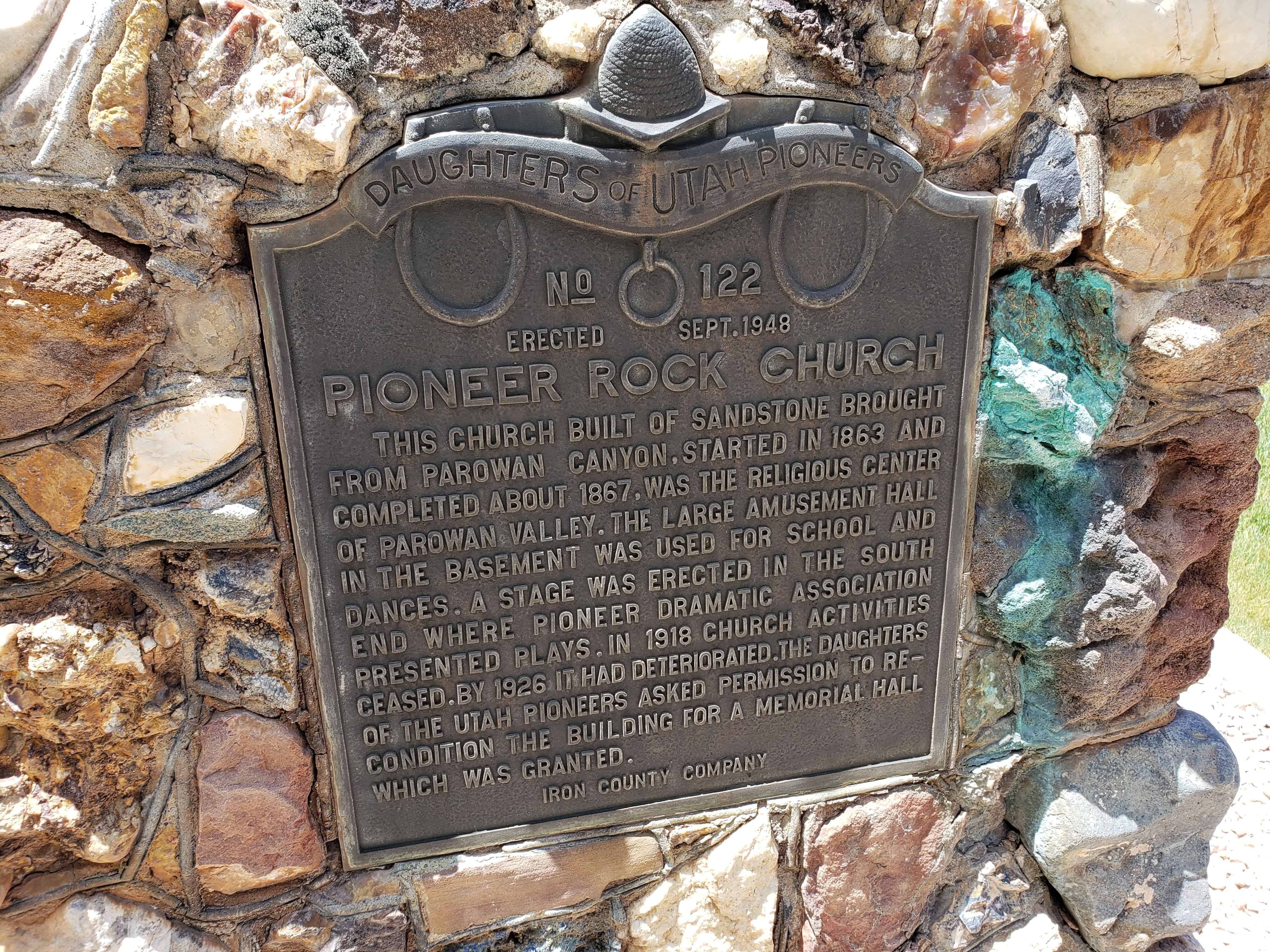
This church built of sandstone brought from Parowan Canyon, started in 1863 and completed about 1876, was the religious center of Parowan Valley. The large amusement hall in the basement was used for school and dances. A stage was erected in the south end where Pioneer Dramatic Association presented plays. In 1918 church activities ceased. By 1826 it had deteriorated. The Daughters of Utah Pioneers asked permission to recondition the building for a Memorial Hall which was granted.
“I commenced a grammar school in my wickiup by the light of the fire and only one grammar book.” Diary of George A. Smith, February 25, 1851.
The first school house, 18 x 24 ft., was built west of the Council House and dedicated December 25, 1851. This log Council House, 22 x 45 feet was erected in 1851 with a large stage, and it served as a social center for Iron County until the Rock Church was completed in 1867.
At Parowan, a pioneer industrial center was settled in 1851. Water for manufacturing and industry was carried by wooden flume from the canyon to the fort. Along this water line industries were established known as the Public Works. Among these were cabinet shop, tannery, gun and machine shop, blacksmith shop, wooden tub and bucket factory, pottery factory, saddle and harness shop and shoe shop. Located inside the fort was a grist burr mill. Monument erected on grist mill site.
Daughters of Utah Pioneers Marker #196 – Early Schools
The first settlers arrived here in 1851. A one-room building was erected and used for Church and School purposes in 1852. George Spencer and his wife were teachers. In 1855 a schoolhouse was erected inside the fort and early teachers were: Martha Hayward, Thomas Ord, Andrew Love, Mary Ellen Love, John Chapman, Amy Bigler, Martha Shofield. Later school was held in the Social Hall, and in 1894 Central School was completed. The bell on this marker was installed and used as curfew and to call the children to school.