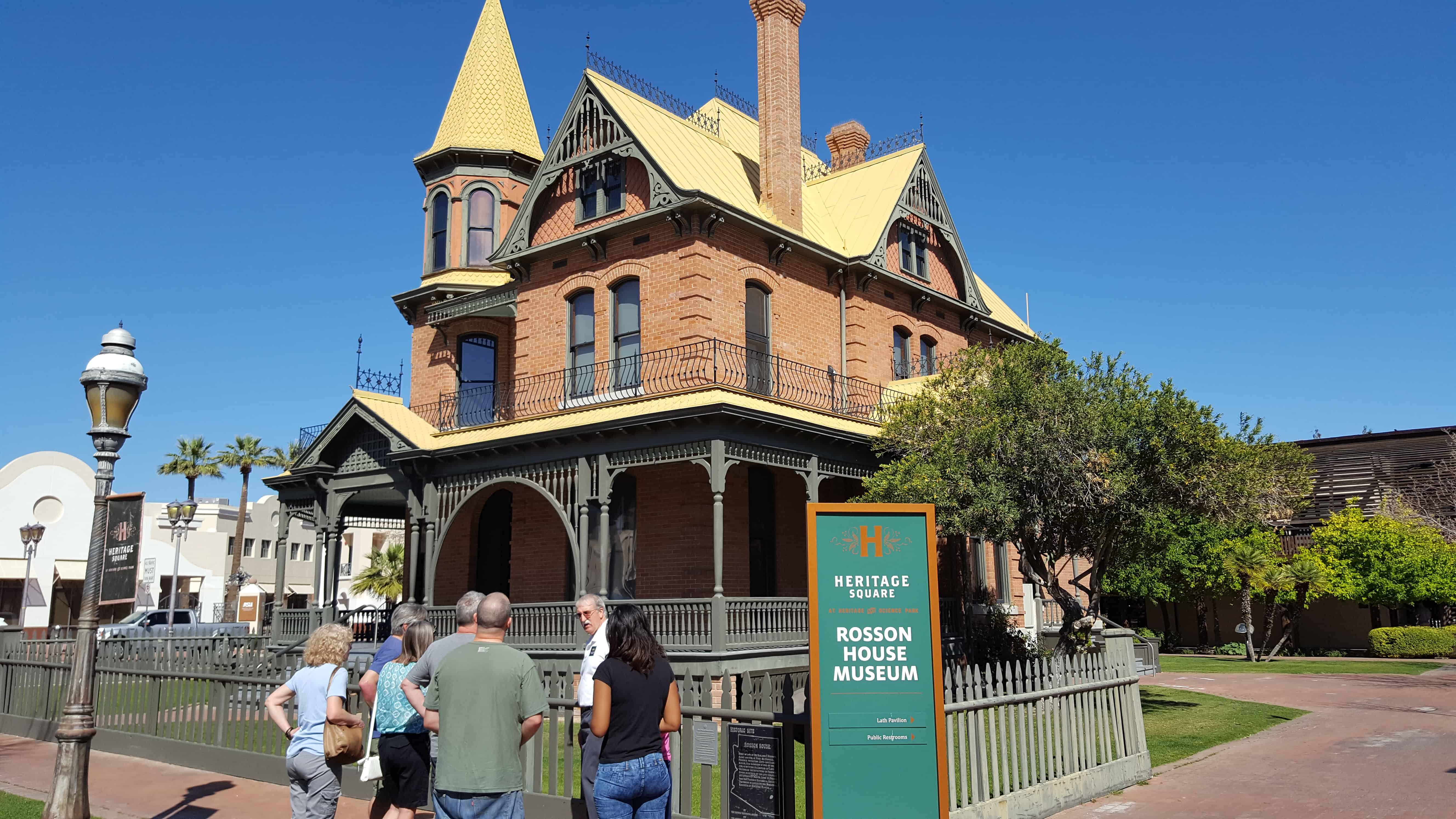
The Rosson House was built between 1894 and 1895 and still sits in its original foundation in downtown Phoenix. Named for Dr. Roland Lee Rosson and his wife Flora Murray Rosson, the house changed hands numerous times before being purchased by the City of Phoenix and restored to its original condition. It now serves as a historic house museum located in Phoenix’s Heritage Square.
Dr. Roland Rosson came to Phoenix in 1879 where he established himself as a general physician and surgeon. Rosson practiced medicine on and off in Phoenix from 1879 until 1897. In addition to his career as a physician, Rosson was also involved in politics. In 1882 he was listed on the Democratic primary ticket. In 1884 he was elected Maricopa County coroner and public administrator. In 1890 he won the office of county treasurer. In 1892 he was elected for a second term and later unsuccessfully attempted to secure the Democratic nomination for sheriff. On May 7, 1895, Rosson was elected Mayor of Phoenix. He served as a Democrat in this unpaid position along with four Republican councilmen. Rosson’s position as mayor was short lived. After difficulties with the city council, he resigned his office on April 6, 1896, before his term was over. Rosson appears to have stayed active in the political scene in Phoenix and his name appears in multiple issues of The Arizona Republican newspaper.(*)
Roland Rosson married Flora B. Murray in Phoenix on August 11, 1880. The Rossons had a total of seven children – Irene, Vivien, Floy, Norma, and Clyde lived to adulthood. Their two other children died in infancy – their first son Roland Lloyd died at age five weeks, and an unnamed daughter died at birth.
The Payson Exchange Savings Bank was opened in April of 1890 in a new two-story building located on the southeast corner of Main Street and Utah Avenue. Since the bank did not have the proper license to operate at that time, it was forced to close until the following year. It was not granted a license to operate until January 1891. The bank advertised that it could transact a general banking business, forward money to any part of the United States, Mexico, or Europe at the lowest possible rates.
In 1924, after more than thirty years in business, the Payson Exchange Bank failed and closed its doors. In 1927, Payson City purchased the building and established a city office complex. The City Library was moved from the Hancock Building located a block north of the old bank building. The library occupied the main west portion of the bank. The City Council Chamber was located on the second floor above the library.
The City Offices were moved from the old City Hall across the street west of the City Park to the east rooms of the bank building. The offices had their own entrance located on Utah Avenue. The city police and a jail were located adjacent to the city offices. R. W. McMullin, attorney-at-law occupied the rooms above the city offices.
The bank building housed the library and city offices until the early 1980’s when they were moved to the new city complex located in the newly remodeled Payson City Hospital building located on West Utah Avenue.(*)
It is now (2017) Eli’s Old Fashioned Ice Cream and Soda Shop, an awesome place that not only has great food and ice cream but is fun to sit in and look around at the old bank vault, windows, woodwork and more.
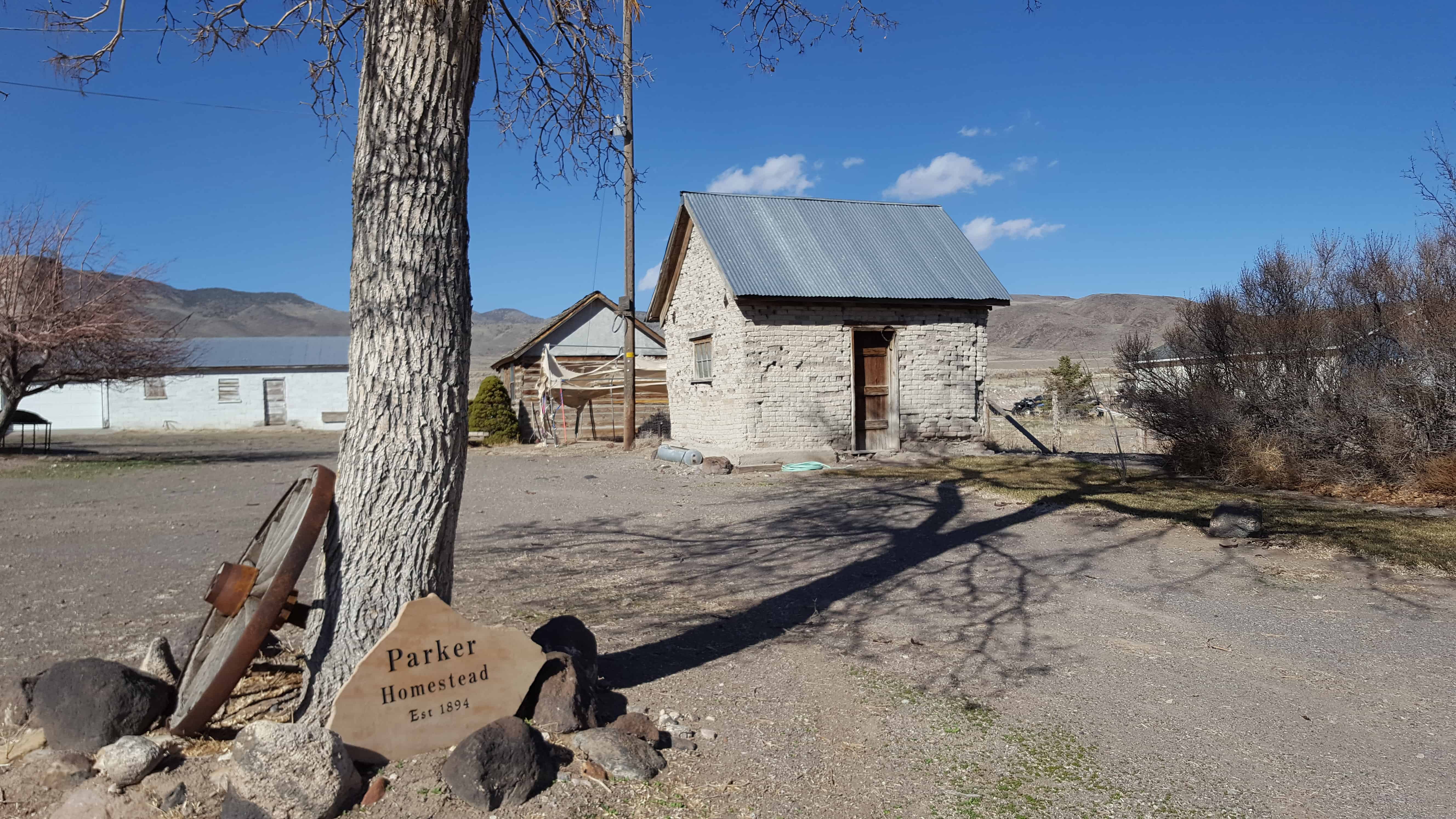
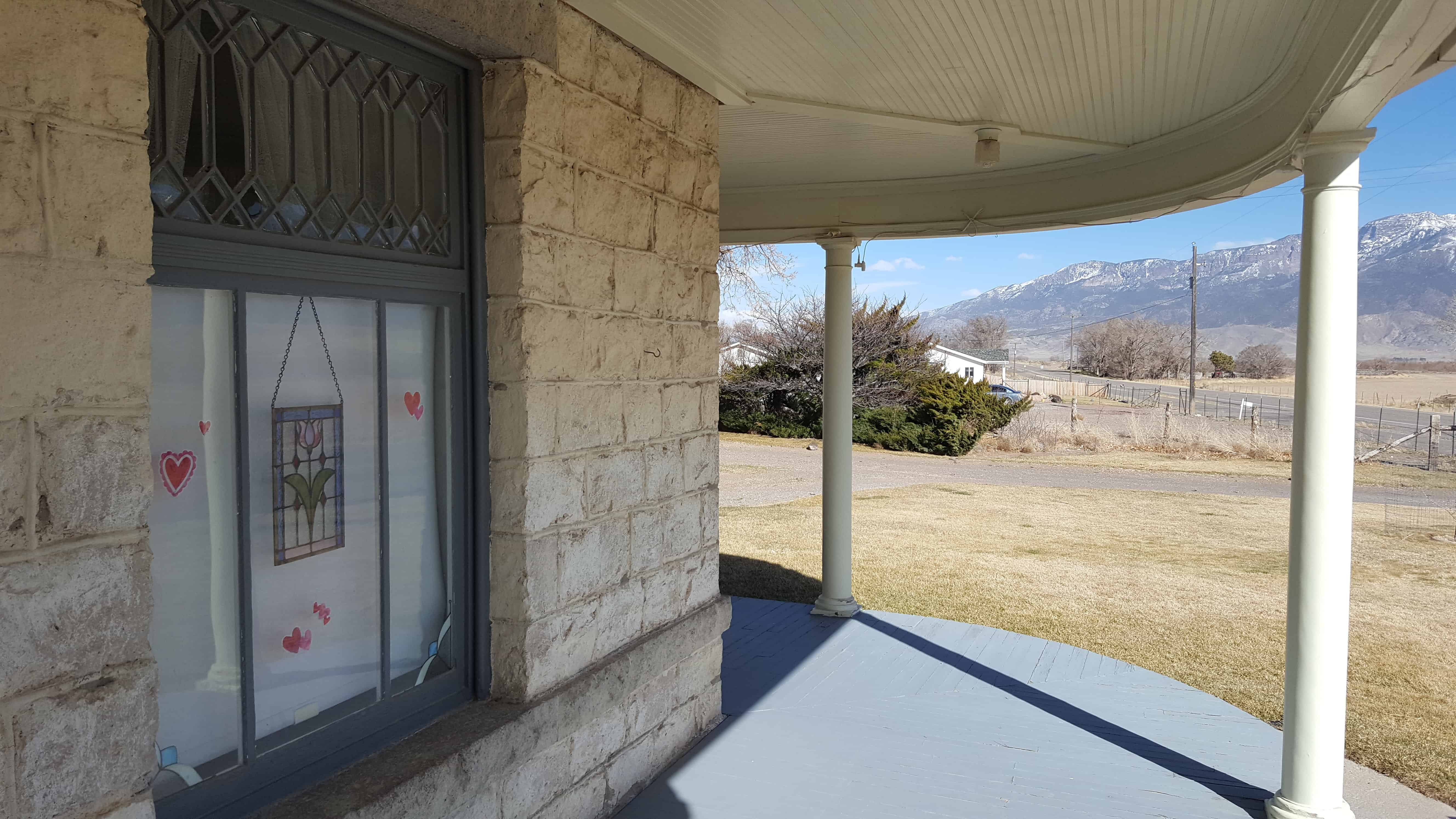
Around 1892, Joseph William Parker traded his house and land in Joseph for 74 acres of undeveloped land outside town. He built a one-room sawed log house where the large family was reared until this Victorian Eclectic style home was finished in 1911. The home was designed by architect/builder A.G. Young of Richfield and was constructed of local oolite limestone. This farm included an outstanding Jersey dairy herd and became a “show place of agricultural activity.” Mr. Parker helped organize the Joseph Cooperative and served as bishop of the Joseph Ward of the LDS Church.
Located at 1705 Sevier Highway, just outside of Joseph, Utah and added to the National Historic Register (#77001318) on March 25, 1977.
The Joseph William Parker Home is an excellent example of one of Utah’s more prosperous agricultural undertakings. Moving on to the undeveloped land in 1892 and despite a two and one half year absence while serving a mission for the Mormon Church, Mr. Parker was able to develop his property into one of the best known agricultural enterprises in South-Central Utah. The small one-room log house juxtaposed with the stately eclectic Victorian style house is a vivid statement of one man’s ability to successfully meet the challenge of Pioneer Utah.
The later Parker Home, built 1907-1911, is also significant as an example of outstanding local craftsmanship and design. Essentially a Victorianized house pattern book type plan, the well built home was designed and constructed under the direction of Archibald G. Young, an architect/builder from nearby Richfield.
Joseph William Parker was born November 19, 1864, at Heber City, Utah. In 1872 his father, Joseph Faulconer Parker, moved the family to Joseph City in Sevier County. The community of Joseph, named for Joseph A. Young, a son of Brigham Young and President of Sevier Stake of the Mormon Church, was settled in the fall of 1872. Joseph William Parker received his early education at Kanosh and Joseph, then attended Brigham Young Academy in Provo for two years. He married Margaret Jane Neel, a schoolteacher, on November 4, 1885, and they built a two-room house near the public square in Joseph City. Against the advice of his family and friends, Joseph W. Parker traded the 2-room house and twelve acres of improved farm land on the outskirts of Joseph for sixty acres of unimproved land and fourteen acres of pasture land two and one-half miles northeast of town. A one-room log house 15% feet by 18% feet was built in 1892-1893 and housed the Parker Family and their seven children, until the present home was completed in 1911. Two years after Joseph Parker began working his newly acquired property, he was called on a proselyting mission to the Southern States for the Mormon Church. Returning to his home in 1897, he spent several winters working at the Otter Creek Reservoir in Piute County to obtain money to purchase lumber to repair his neglected sheds, corrals, and fences, pay debts which had accumulated during his two and one-half year mission, and provide for his family. He also freighted garden produce to the mines at Frisco, Newhouse and Kimberly. By 1906 his efforts had brought sufficient financial success that Archibald G. Young, a Richfield architect/builder was commissioned to draw plans for a new rock home.
A. G. Young was best known as a building contractor, having constructed the Sevier and Piute County courthouses, schools in Richfield and Fillmore, the Young Block and Federal Building in Richfield and other locally significant structures which were designed by other architects. On smaller projects, Young may have drawn his own plans or may have obtained them from house pattern books. The Parker home is very similar to homes portrayed in period house pattern books (for example, “Radford’s Bungalows” printed in 1907) which were circulating locally at the time the house was built.
The architectural significance of the Parker home lies in its design and craftsmanship. The design is pretentious for its rural setting and partakes of the last strains of the Victorian movement. The execution of the design is particularly excellent. The various aspects of construction, masonry, carpentry, metalwork, etc., are masterfully handled. The home is in very good condition today. Lehi Ence and Parley Outzen of Richfield were carpenters, John Johnson and sons of Elsinore did the masonry work and Anthony Lund of Richfield did the painting and interior plastering. Stone for the house was quarried from the mountains at Vacca, near Clear Creek Canyon south of Joseph. J. Elbert and Ervin Parker, sons of Joseph Parker, assisted with the quarrying and masonry work. Improvising when necessary, the builders used pullies from the hay derrick to lift the heavy stones to the top as the walls reached higher.
The home was completed in 1911. Joseph William Parker and his sons installed a water system for the house which consisted of a settling pond, cement cistern with pipes running to the house and yards. In 1917 this system was replaced when the home was connected with the Joseph Water Works. In 1913 the Parker house was electrified when the Telluride Power Company brought electrical service to the community of Joseph.
The home and farm became a show place of local agricultural activity. The Utah Farmer described the house as “One of Sevier County’s Modern Farm Homes,” and Sevier County farm agents often brought guests from the Utah Agricultural College at Logan, and from counties throughout the State to observe the home, farm, and livestock.
Under the initiative of Mr. Parker, he and his sons built up one of the most important Jersey dairy herds in the area. Local historian Irwin L. Warnock observed, “The name Parker is almost synonymous with pure bred Jersey cattle in Sevier County.” In addition to his agricultural pursuits Joseph William Parker was active in other business activities including the organization and financing of the Joseph Co-op. An active member of the Church of Jesus Christ of Latter-day Saints, he served as Bishop of the Joseph Ward and Second Counselor in the South Sevier Stake Presidency. The home still remains in the Parker family and they have expressed a commitment to continue its preservation.
Circleville was settled in 1864 by a group of pioneers from Sanpete County, the Church of Jesus Christ of Latter-day Saints organized a branch, William J. Allred, Presiding Elder. Land was cultivated and homes erected. In 1865 the Black Hawk War forced evacuation. Non-Mormons began homesteading the valley in 1873 and Mormons from the Beaver area arrived a year later, Thomas Day, Presiding Elder. In 1876 Thomas King and sons established a United Order 2 miles east of the original settlement.
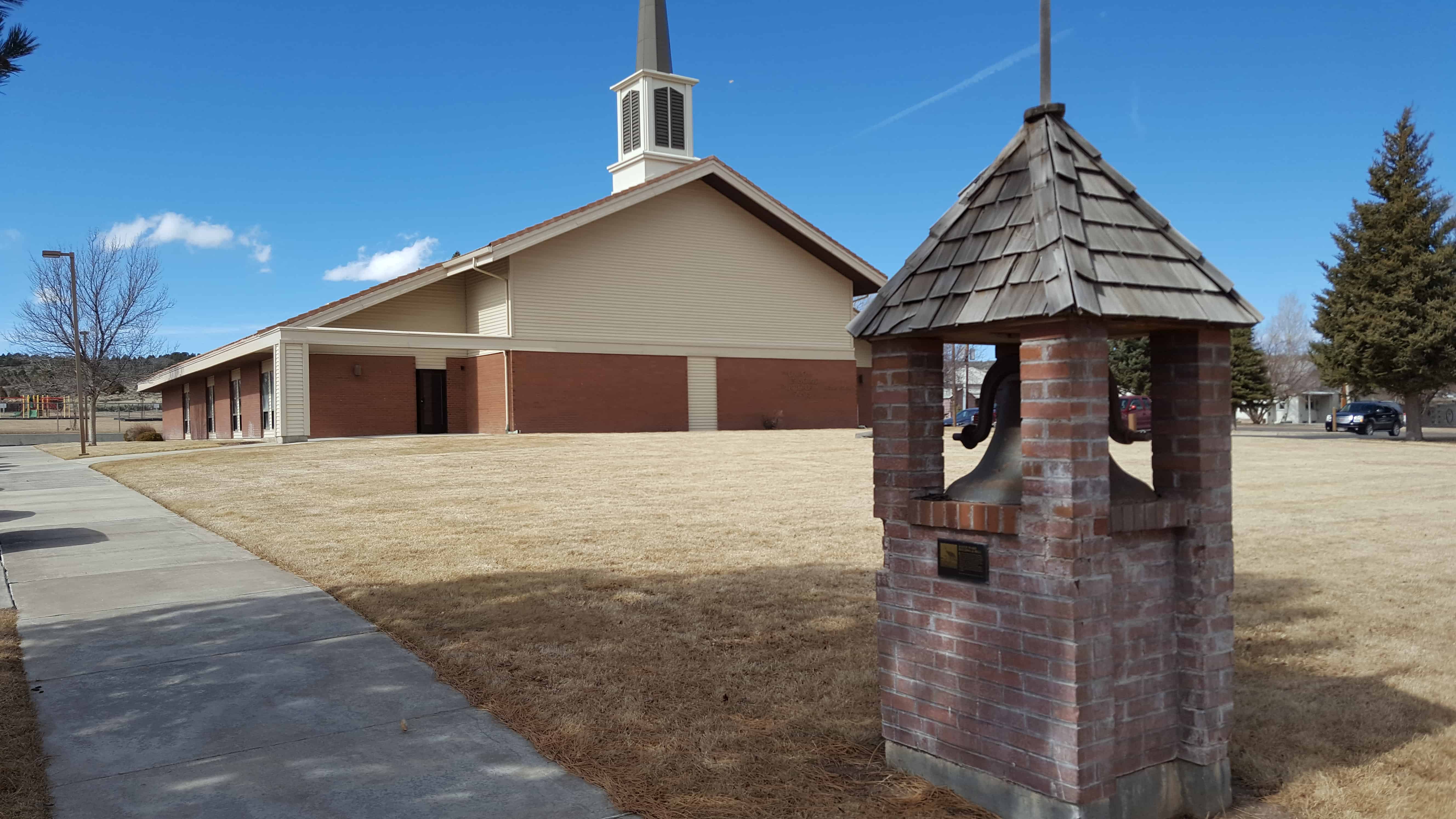
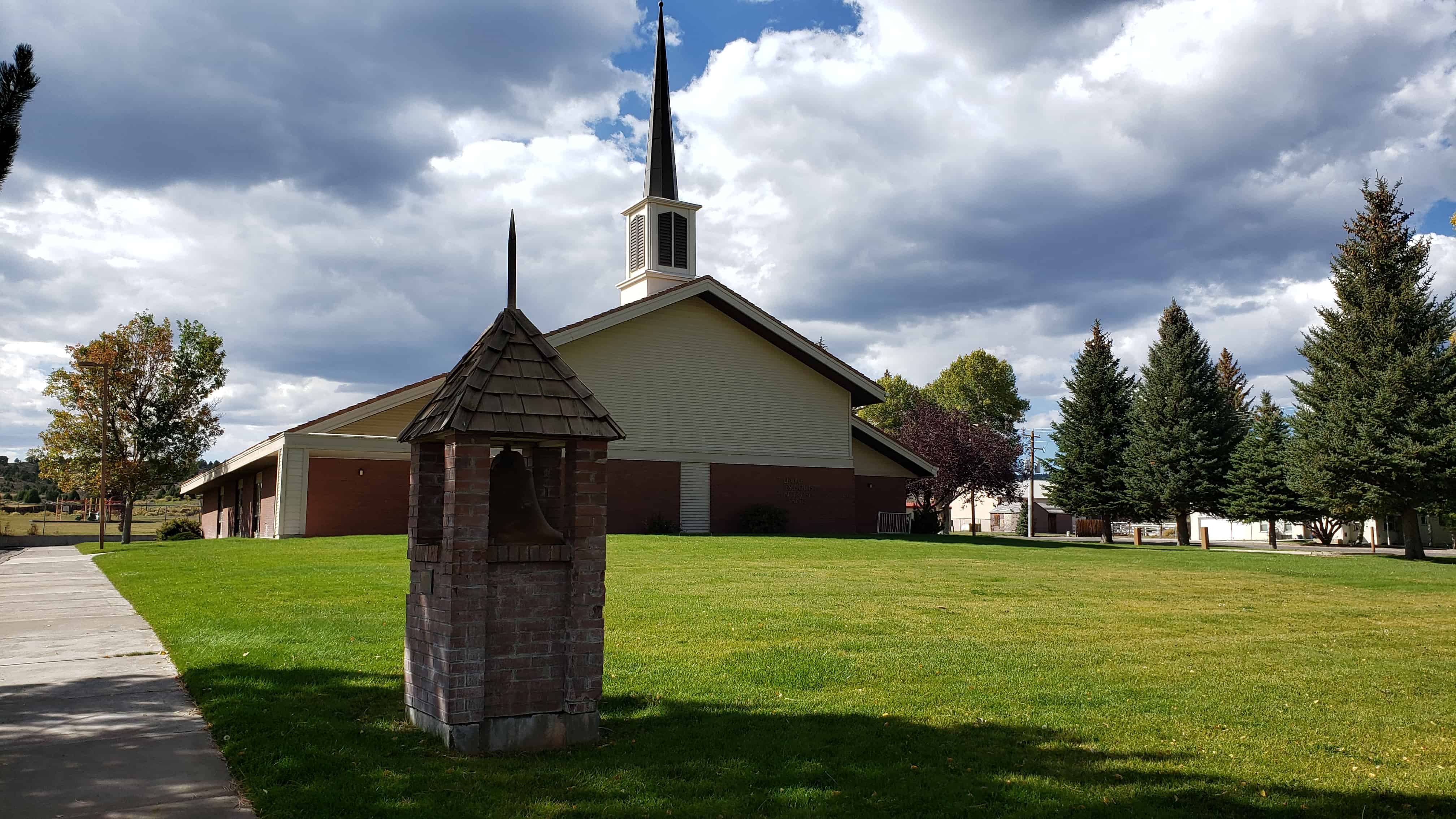
In 1904 the Hatch LDS Ward building was erected on this lot. A vestibule was added in 1901, and the bell was purchased with donations from ward members. For many years it hung in the tower and rang out for all civic, social and church activities. School was held in the building until 1913. The building was razed March 3, 1983, when the new ward meetinghouse was built.
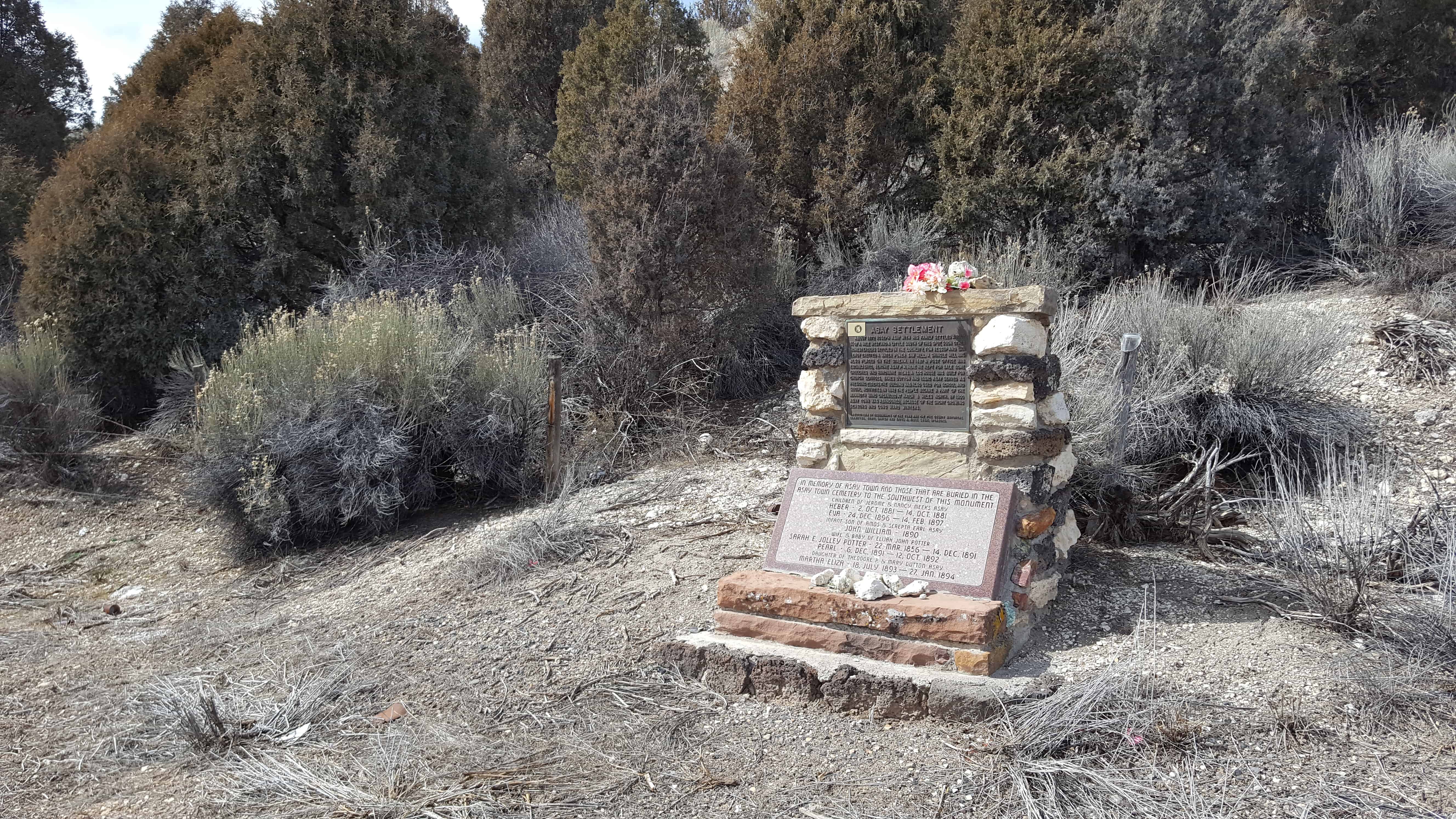
About 1872 Joseph Asay with his family settled about 3/4 of a mile west and a little south of this spot. Soon other homesteaders settled in the locality. Tom Jessup and Dan LeRoy erected a water power saw mill. A shingle mill was established, Jerome Asay P.M. Here he kept for sale some groceries and hardware items. A log house was built for church services, James Dutton and Issac Asay served as presiding elders. The building was also used for school and social activities. In 1892 the people became a part of the Mammoth Ward organized at Hatch 8 miles north. By 1900 Asay Town was abandoned, because of the short growing seasons and long hard winters.
Asay was also known as Aaron for time, named for Aaron Asay.
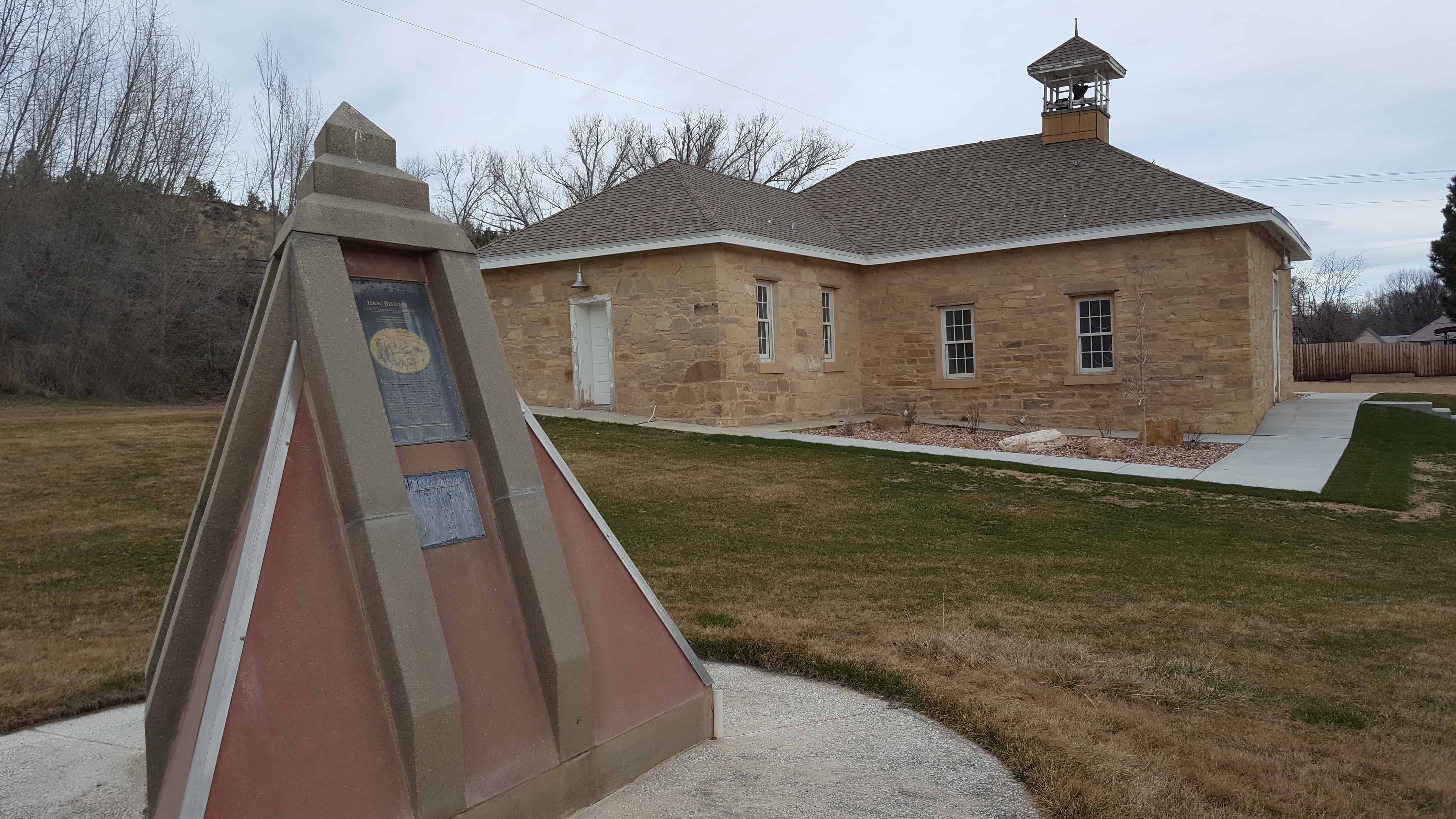
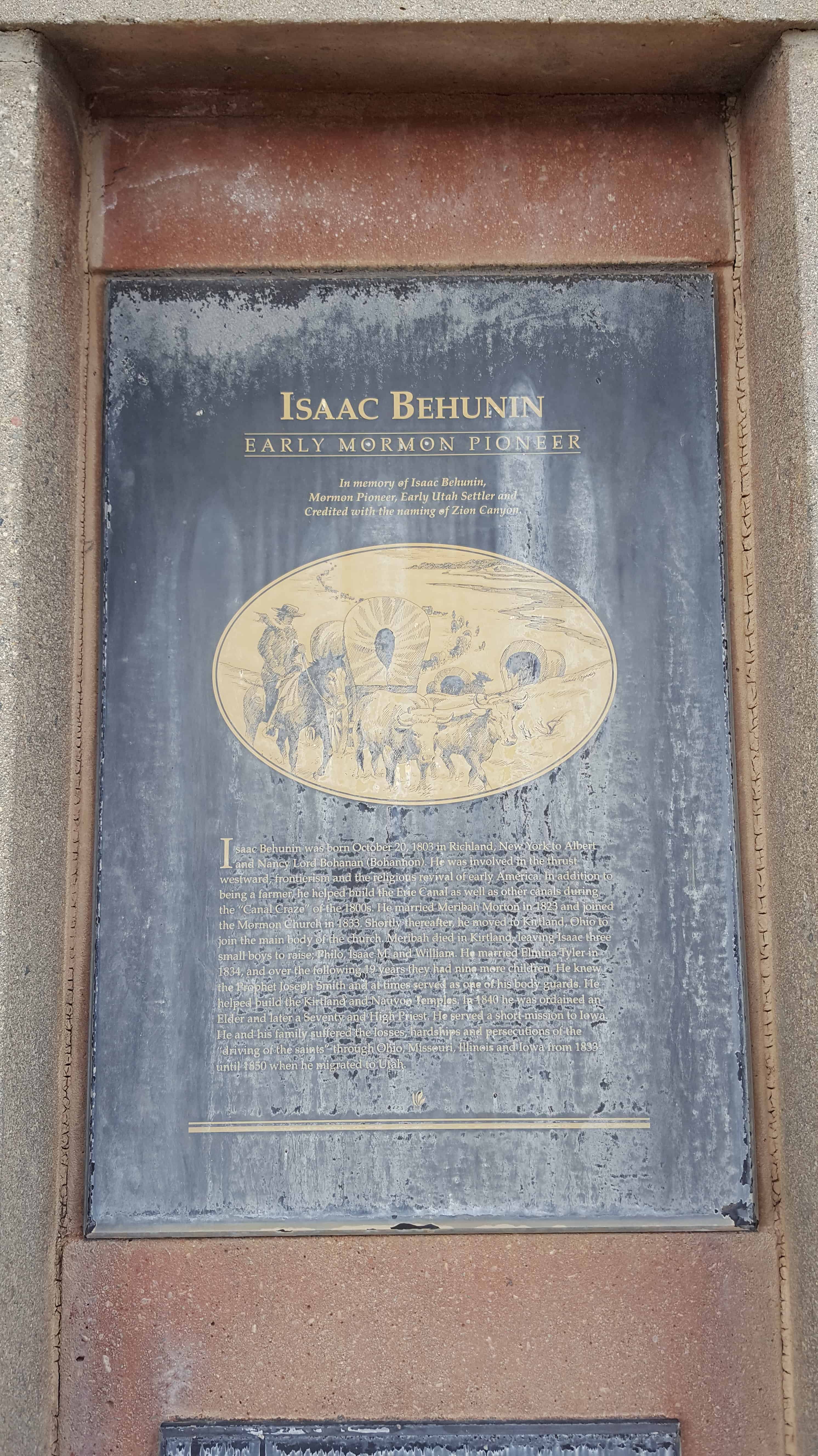
Isaac Behunin _______________ Early Mormon Pioneer _______________ In memory of Isaac Behunin, Mormon Pioneer, Early Utah Settler and Credited with the naming of Zion Canyon. Isaac Behunin was born October 20, 1803 in Richland, New York to Albert and Nancy Lord Bohanan (Bohannon). He was involved in the thrust westward, frontierism and the religious revival of early America. In addition to being a farmer, he helped build the Erie Canal as well as other canals during the “Canal Craze” of the 1800s. He married Meribah Morton in 1823 and joined the Mormon Church in 1833. Shortly thereafter, he moved to Kirtland, Ohio to join the main body of the church. Meribah died in Kirtland, leaving Isaac three small boys to raise; Philo, Isaac M. and William. He married Elmina Tyler in 1834, and over the following 19 years they had nine more children. He knew the Prophet Joseph Smith and at times served as one of his body guards. He helped build the Kirtland and Nauvoo Temples. In 1840 he was ordained an Elder and later a Seventy and High Priest. He served a short mission to Iowa. He and his family suffered the losses, hardships and persecutions of the “driving of the saints” through Ohio, Missouri, Illinois and Iowa from 1833 until 1850 when he migrated to Utah.
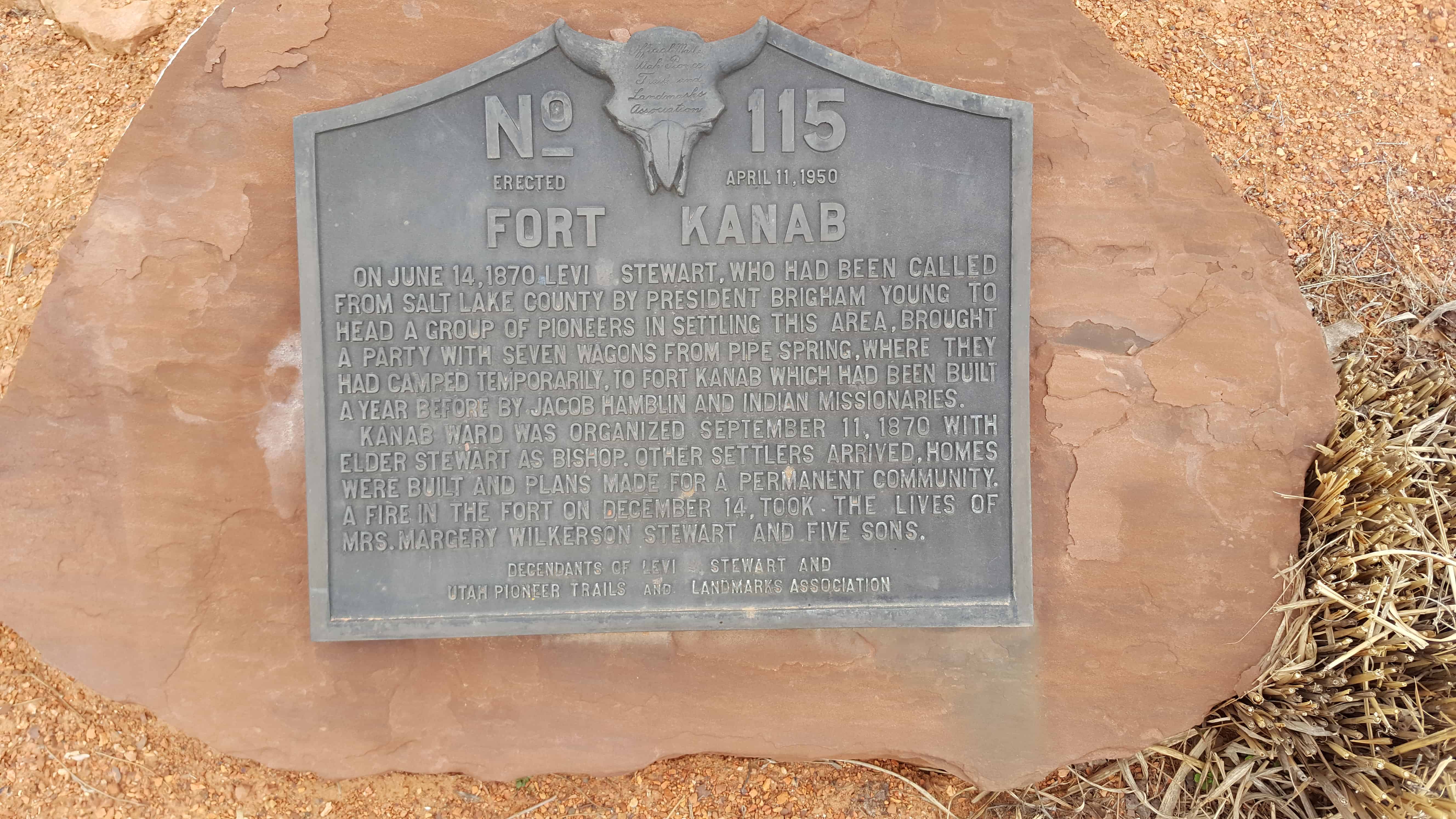
On June14, 1870, Levi Stewart, who had been called from Salt Lake County by President Brigham Young to head a group of pioneers in settling this area, brought a party with seven wagons from Pipe Spring, where they had camped temporarily, to Fort Kanab which had been built a year before by Jacob Hamblin and Indian missionaries.
Kanab Ward was organized September 11, 1878, with Elder Stewart as Bishop. Other settlers arrived, homes were built and plans made for a permanent community. A fire in the Fort on December 14, took the lives of Mrs. Margery Wilkerson Stewart and five sons.
Born April 2, 1819 – Died august 21, 1886. The great Mormon Frontiersman and Indian missionary settled in Tooele Valley, Utah in 1850 and began peaceful negotiations with the red men. He was so successful that the officials of the Church of Jesus Christ of Latter-day Saints sent him to establish residence among the Indians at Santa Clara, Utah in 1854.
A fort was erected on this site in 1865 into which he moved in 1869. He assisted Maj. J. W. Powell and party 1869-72. He was transferred in 1878 to Arizona, and later to New Mexico. He is buried at Alpine, Arizona. His friendship with the Indians saved many lives.
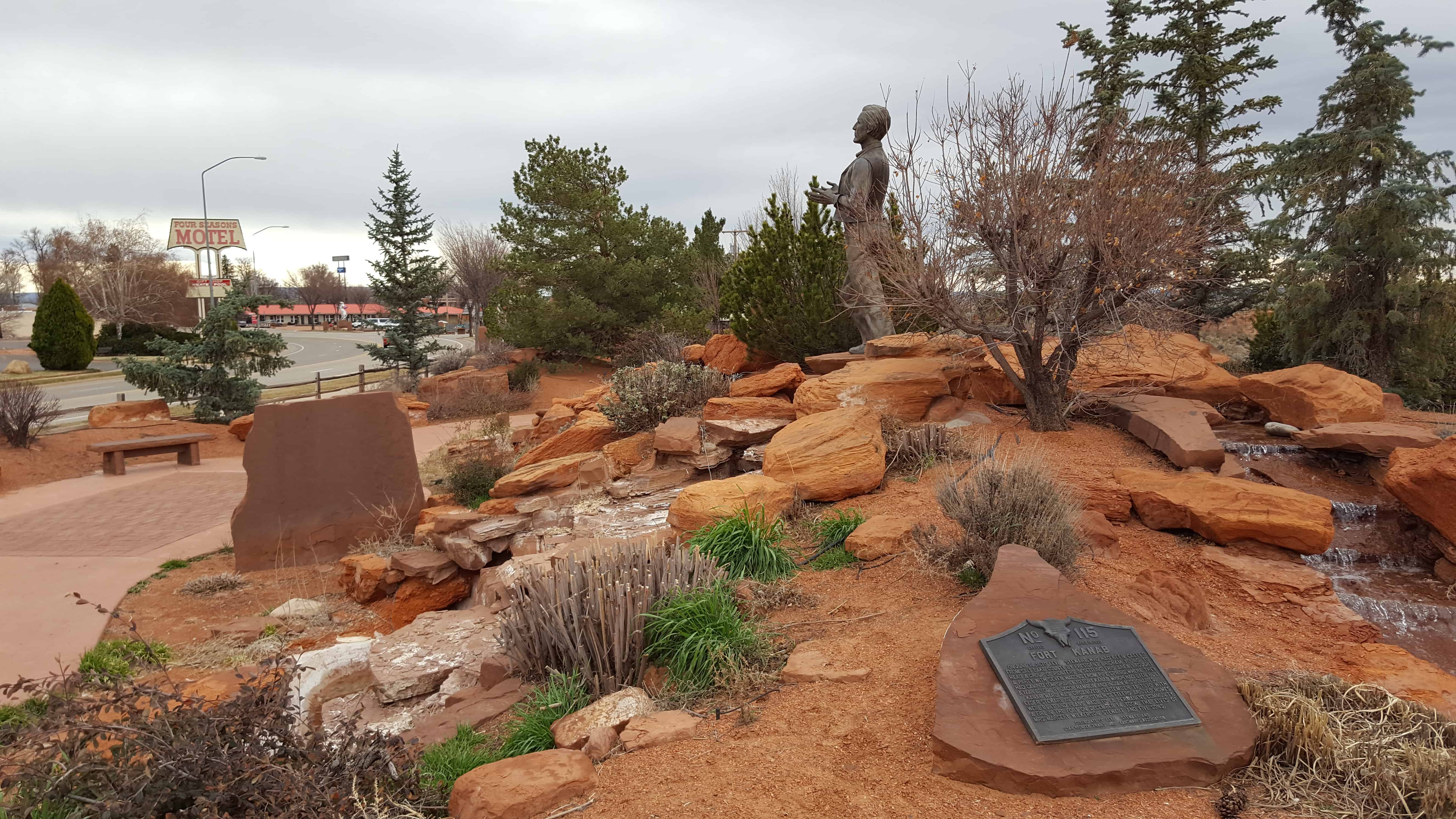
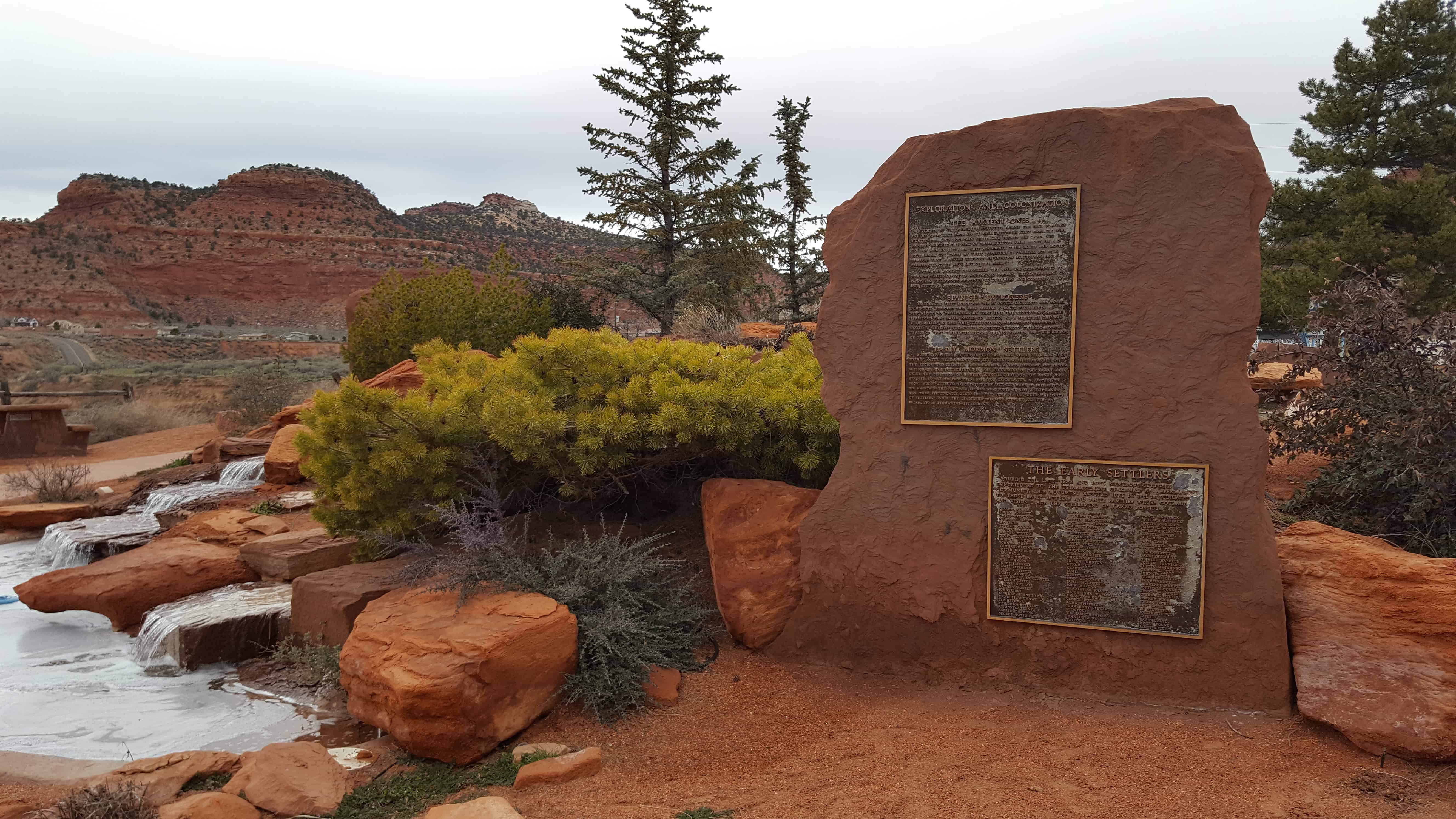
Levi Stewart Memorial Park has SUP/UPTLA Markers #21 and #115 along with many other historic plaques.
In the winter of 1869, he accompanied Brigham Young to southern Utah to seek out locations for new Mormon settlement. In 1870, Young directed him to form a settlement at the abandoned outpost of Kanab. Stewart arrived in June. He led a number of families to the area. Levi Stewart became the first Mormon Bishop of Kanab, Utah in September 1870. Over the next several years he directed the construction of dams and roads in the area, and he helped build a good relationship with the local Indians.