• About JacobBarlow.com
  • Cemeteries in Utah
  • D.U.P. Markers
  • Doors
  • Exploring Utah Email List
  • Geocaching
  • Historic Marker Map
  • Links
  • Movie/TV Show Filming Locations
  • Oldest in Utah
  • Other Travels
  • Photos Then and Now
  • S.U.P. Markers
  • U.P.T.L.A. Markers
  • Utah Cities and Places.
  • Utah Homes for Sale
  • Utah Treasure Hunt

JacobBarlow.com

~ Exploring with Jacob Barlow

JacobBarlow.com

Tag Archives: Forts

Fort Pearce

05 Friday Jul 2024

Posted by Jacob Barlow in Uncategorized

≈ Leave a comment

Tags

Forts, NRHP, utah, Washington County

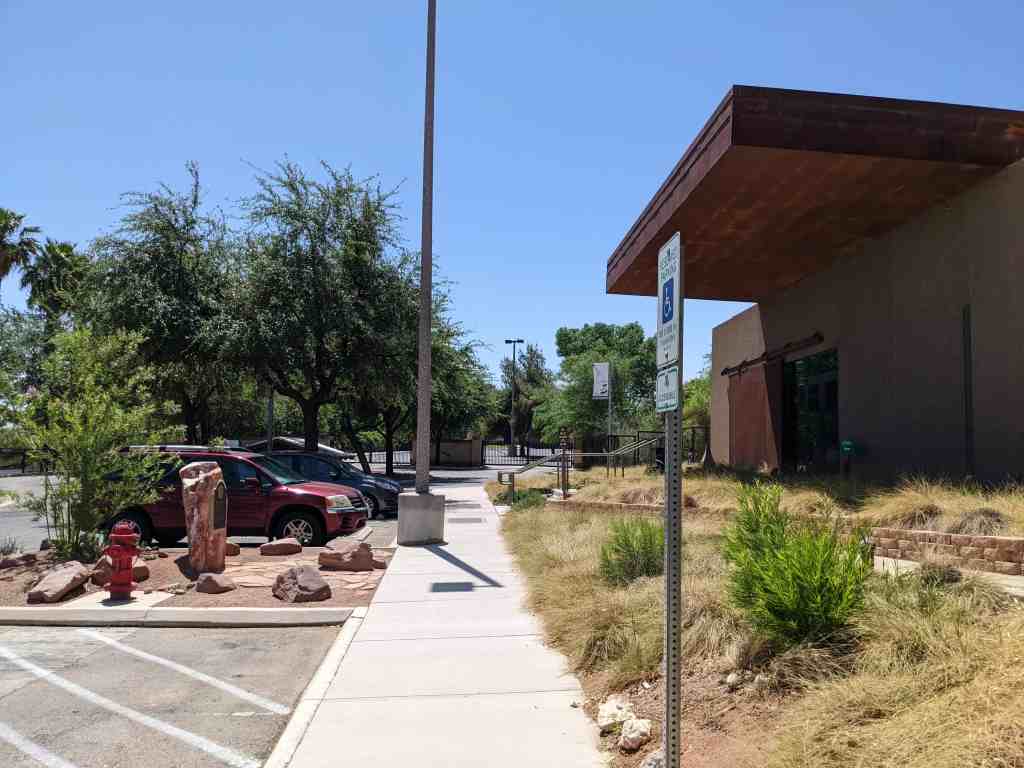
Fort Pearce

Fort Pearce was built during the Blackhawk War of 1865-1868, a period of conflict with the Ute Indians in central and southern Utah. This was Utah’s last major Indian conflict. During this time the Navajo Indians also raided the settlements of southern Utah. The Navajos used Fort Pearce Wash as a means of gaining entry into these Mormon settlements. The fort was built in 1866 to keep out the Navajo raiding parties. No battle was ever fought with the Indians at the site.

Also during this period the farmers fields were not fenced and the fort with its large corral was used to hold cattle to keep them from destroying the crops in the fields. This holding of cattle at Fort Pearce was a common practice and continued long after the Indian unrest ceased.

The fort and the wash upon which it is situated is named for Captain John D. L. Pearce, noted military leader and Indian fighter from St. George, Utah, who took part in the Blackhawk War and other Indian conflicts in southern Utah.

At the present time, the area is visited by the local people, scouting groups and historical societies as a means of conveying an awareness and interest in the pioneer heritage of this part of southern Utah.

Fort Pearce was built and occupied by Mormon settlers desirous of maintaining agricultural communities in that part of southern Utah. Although the direct purpose in building the fort was to keep Navajos from raiding settlements, its corral proved to be its most useful asset, in keeping livestock from destroying valuable crops.

Fort Pearce is located in Washington County, Utah and was added to the National Historic Register (#75001834) on November 20, 1975. The text on this page is from the nomination form for the national register.

Fort Pearce, situated on the edge of Fort Pearce Wash, is a rock-walled structure that at present has walls standing approximately six feet high. The single story structure is over thirty feet long and the gunports are now a part of the irregular outline of the top of the walls. There are also the remains of a rock corral a short distance to the south of the fort. The walls of this corral are only a few feet high at one corner and usually consist of piles of rock rubble. Much of the corral’s walls has eroded away due to its location in the wash. The fort itself is situated on exposed rock and is not in danger from soil erosion.

In Immortal Pioneers, Albert E. Miller states that originally the walls of the fort were about eight feet high. The structure was never roofed. This fort was fashioned in the shape of a cross with two portholes in the front of each of the four projecting ends, and one porthole in each side of each projection, making in all sixteen portholes. This arrangement gave the guards a crossfire from all directions. From looking at the present outline of the fort, it is doubtful whether the fort actually was in the shape of a cross as stated above.

Building of the fort started on December 4, 1866, as noted in the diary of Charles L. Walker of Washington, Utah. In 1869., the Washington Ward Tithing Ledger indicated that at least six men were given credit for work done on the repair of the fort and the building of corral. It is also noted in the diary of Charles L. Walker that he and other men of the area did repair work on the fort and built a corral in late 1869.

In Red Hills of November, A. K. Larson states that four days of hard labor (December 20-24, 1869) by nineteen men produced a corral with walls five and one-half feet high on a base two and one-half feet wide. This corral is just south of the fort and appears to have crossed the wa;Sb,5.nd included ground on both sides.
The Las Vegas Mormon Fort

26 Sunday Nov 2023

Posted by Jacob Barlow in Uncategorized

≈ Leave a comment

Tags

Clark County, Forts, Historic Markers, Las Vegas, neveda

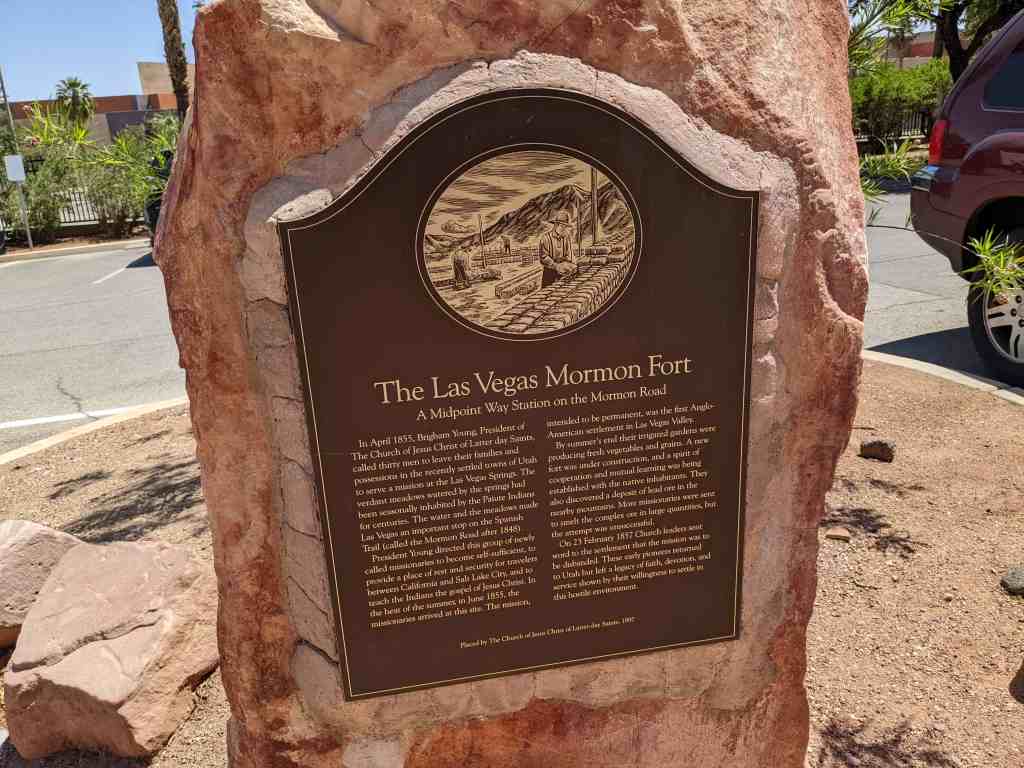
The Las Vegas Mormon Fort
A Midpoint Way Station on the Mormon Road

In April 1855, Brigham Young, President of The Church of Jesus Christ of Latter day Saints, called thirty men to leave their families and possessions in the recently settled towns of Utah to serve a mission at the Las Vegas Springs. The verdant meadows watered by the springs had been seasonally inhabited by the Paiute Indians for centuries. The water and the meadows made Las Vegas an important stop on the Spanish Trail (called the Mormon Road after 1848).

President Young directed this group of newly called missionaries to become self-sufficient, to provide a place of rest and security for travelers between California and Salt Lake City, and to teach the Indians the gospel of Jesus Christ. In the heat of the summer, in June 1855, the missionaries arrived at this site. The mission, intended to be permanent, was the first Anglo-American settlement in Las Vegas Valley.

By summer’s end their irrigated gardens were fort was under construction, and a spirit of producing fresh vegetables and grains. A new cooperation and mutual learning was being established with the native inhabitants. They also discovered a deposit of lead ore in the nearby mountains. More missionaries were sent to smelt the complex ore in large quantities, but the attempt was unsuccessful.

On 23 February 1857 Church leaders sent word to the settlement that the mission was to be disbanded. These early pioneers returned to Utah but left a legacy of faith, devotion, and service shown by their willingness to settle in this hostile environment.

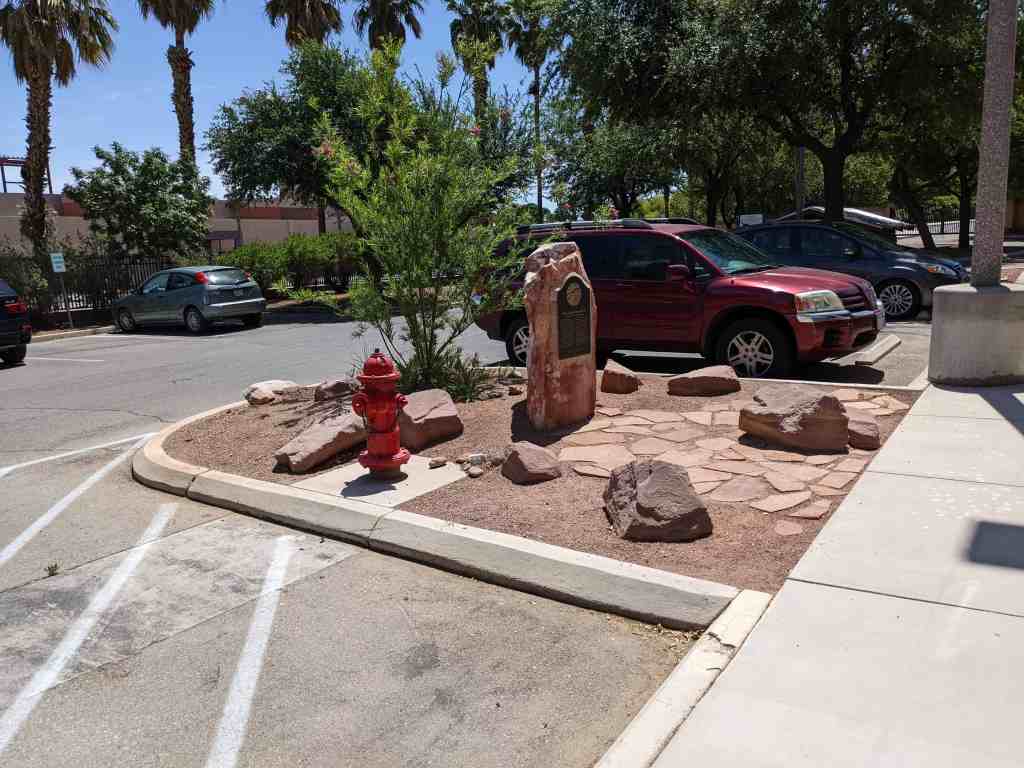
The text above is from a historic marker placed by The Church of Jesus Christ of Latter-day Saints in 1997 at Old Las Vegas Mormon Fort State Historic Park at 500 E Washington Avenue in Las Vegas, Nevada

Las Vegas Old Mormon Fort

17 Friday Nov 2023

Posted by Jacob Barlow in Uncategorized

≈ Leave a comment

Tags

Clark County, Forts, historic, Las Vegas, Moapa, Nevada, Nevada Historic Markers

Las Vegas Old Mormon Fort
(Nevada’s Oldest Building)

Las Vegas had its beginning at this location on June 14, 1855, when thirty-two Mormon missionaries arrived from Utah under the leadership of William Bringhurst. They set to work establishing farm fields that summer, and began to build a 150-foot square adobe fort that September, enclosing eight two-story houses. They cultivated small gardens and fields, planted fruit and shade trees, and tried to convert the local Southern Paiutes.

Most of the Mormons departed in 1857, and by 1865, Octavius Decatur Gass began developing the Las Vegas Rancho, using the adobe structures as headquarters. He farmed and raised beef cattle, supplying travellers and miners in the Potosi region.

Helen J. Stewart, owner of the property from 1882 to 1902, expanded the ranch to 1,800 acres, which she sold to the San Pedro, Los Angeles & Salt Lake Railroad for the Las Vegas townsite. The Company auctioned the land on May 15, 1905, starting the process of building the Las Vegas around you today.

This is Nevada State Historical Marker #35, see others on this page:
– Nevada Historic Markers

Located at Old Las Vegas Mormon Fort State Historic Park at 500 E Washington Avenue in Las Vegas, Nevada.

The Las Vegas Mormon Fort was added to the National Historic Register (#72000764) on February 1, 1972 with a boundary increase (#78003379) on December 12, 1978. The text below is from the nomination form from when it was added to the register:

The Church of the Latter Day Saints was instrumental in the early settlement and development of southern Nevada with the establishment of Mormon colonies. The Las Vegas Mission was the first of these settlements to be established, and was selected by the church to: (1) Raise crops which could not be raised in the colder northern Utah climate; (2) Find new homes for the numerous Mormons coming to Salt Lake Valley area; and (3) To establish a halfway station on the Mormon trail between San Bernardino and Salt Lake. A thirty man mission group left Salt Lake City on May 10, 1855, and arrived in Las Vegas on June 14, 1855. After touring the Las Vegas Valley on horseback, the decision was made to establish the permanent location on the site of the original stopping place, and work was commenced immediately on the Las Vegas Mormon Fort. The fort was located adjacent to one of the two clear streams of water flowing from the nearby Las Vegas springs which nurtured native grasses, and created lush meadows in the valley near the Sunrise Mountain.

The natural oasis of meadow and mesquite forest was the winter homeland of the Paiute Indians, who spent their summers in the Charleston Mountains. The valley and the meadows were first known to the Spanish, who named Las Vegas “The Meadows” and marked it as such on maps of the southwestern desert.

Antonio Armijo stopped at the springs in 1829-30, traveling the route which became known as the Old Spanish Trail. After 1830 the route was traveled by Spanish traders, emigrants and frontiersmen who rested beside the springs. On one of his western exploration trips, John C. Fremont camped here on May 3, 1844.

On about August 3, 1855 the missionaries started to build the walls 14 feet high, two feet thick at the bottom, and one foot at the top. The adobe fort, enclosed eight two-story houses. Outside the fort the missionaries cultivated small gardens and fields, two and one half acres being assigned to each of the party; they planted fruit and shade trees, and established friendly relations with the Paiutes. Near the fort was also built the first smelter west of the Missouri River. This was used by the Mormons in their Potosi lead-silver mine venture.

After the Mormons departed in 1858, called back £o Utah by their leader Brigham Young, Octavius Decatur Gass established the Las Vegas Rancho, using the adobe structures as headquarters. He farmed 800 acres in field crops, orchards, and grazed many cattle, supplying produce to miners and travelers.

In 1882 the Archibald Stewart family bought the ranch. Soon thereafter Mr. Stewart was killed in a feud with one of his neighbors. Mrs. Stewart, with children, continued to operate the ranch as an oasis in the desert, expanding it, from 800 acres to 1,800 acres. For 20 years Helen J. Stewart was known as a gracious, intelligent hostess to those who traveled the southwest. She exemplified the best of pioneer characteristics Initiative, determination, steadfastness, plus compassion for “those less fortunate. Her story ranks equally well with that of the earlier Mormon missionaries.

Mrs. Stewart sold her ranch in 190^ to the San Pedro, Los Angeles and Salt Lake Railroad Company for the Las Vegas townsite, which was auctioned in lots to buyers on May 18, 1905, starting contemporary Las Vegas.

A further note of interest, on January 10, 1856, the Las Vegas Mission was notified by the U.S. Post Office Department that the town would henceforth be known as Bringhurst, New Mexico Territory, and thus the7 Las Vegas Mormon Fort became the first Las Vegas post-office building. Las Vegas became a portion of the territory of Arizona, and finally became a part of Nevada on January 18, 1867, the state then firming up what are today’s boundaries of Nevada.

A note about Fort Baker. Fort Baker was apparently a fort in name only. It was a name assigned to the Las Vegas area, as a diversionary tactic during the Civil War in an effort to divert the attention of Confederate spies and sympathizers in California from the real objectives of getting Col. James H. Charleston’s command of the 1st California Volunteers across Arizona to New Mexico (Los Pinos). Information was released to the effect that a portion of the command would be assigned to Fort Yuma, Arizona. Three companies of infantry would go to Fort Mojave, Arizona, and one company of infantry and three of cavalry would go to Fort Baker at Las Vegas, at that time also in Arizona Territory. In reality, none of Carleton’s command ever reached, or served at Mojave or Baker nor was it designed that they should.

The fort as Las Vegas retains the name “Mormon Fort” as it was built by the Mormons assigned to the Las Vegas Mission, and was used by them as a fort during their sojourn at Las Vegas, 1855-1858.

Another note of significance, Las Vegas Mormon Fort is the oldest inhabited building in Nevada today.

Fort Hall

15 Saturday Jul 2023

Posted by Jacob Barlow in Uncategorized

≈ Leave a comment

Tags

Bingham County, Forts, Historic Markers, Idaho, SUP, UPTLA

Fort Hall
An Indian Trading Post

First habitation in this region was built by Nathaniel J. Wyeth on Snake River 14 miles west of this monument July 15, 1834 and named for Henry Hall, senior member of Wyeth’s firm.

The original stockade, 80 feet square was purchased by Hudson’s Bay Company in 1937 and rebuilt with adobe walls and substantial roofs becoming an important station of the California Oregon Trail. The trappers abandoned it about 1855.

The above text is from the monument, Utah Pioneer Trails and Landmarks Association #11 which was erected in 1932 and is located on Highway 91 in Fort Hall, Idaho in Bingham County. The UPTLA historic markers were later adopted by the Sons of Utah Pioneers.

  • S.U.P. Markers
  • U.P.T.L.A. Markers

The photos below were submitted by Marshall Hurst:

Fort Cameron

11 Tuesday Apr 2023

Posted by Jacob Barlow in Uncategorized

≈ 2 Comments

Tags

Fort Cameron, Forts, NRHP, utah

Fort Cameron is important because of its relationship to three significant aspects of Utah history.

In the early 1870’s, Indian raids against the isolated southern Utah communities began to occur with enough regularity and intensity that local settlers were fearful of the kind of confrontation that had characterized the Black Hawk Indian War in that area during the mid 1860’s.

In a letter to Washington officials, Cyrus M. Hawley, associate justice of the Utah Supreme Court, noted that attempts to bring those individuals guilty for the Mountain Meadows Massacre to trial were unsuccessful and would continue to be so until witnesses were convinced that the Federal Government would guarantee them protection, Hawley went on to recommend that a military force of at least five companies be sent to leaver to render the required protection.

Because of the “Indian problem” and the “Mormon problem,’ Secretary of War William W. Belknap recommended a governmental appropriation of $120,000 to construct a military post near Beaver. After the money was appropriated, Colonel John D. Wilkins, with four companies of troops (about 181), was sent to establish the post in mid-1872. After President Ulysses S. Grant officially set aside the reservation on May 12, 1873, the fort was named Fort Cameron in honor of Colonel James Cameron who lost his life during the Battle of Bull Run.

After the completion of the Utah Southern Railroad to Milford in 1880, General Phil Sheridan recommended that the post be closed because troops could be transported by rail into Southern Utah. Accordingly, the fort was closed May 1, 1883 and the troops removed to Fort Douglas.

The land and buildings were purchased for $15,000 by John R. Murdock, President of the Beaver Stake of the Church of Jesus of Latter-day Saints and Philo T. Farnsworth, former bishop of the Beaver Ward. Apparently the purchase was made in behalf of the church for, in 1893, Fort Cameron was converted into an academy. The laundress quarters were used as a dormitory to house students coming from outlying areas. In 1922, the church decided to discontinue the academy. The land was sold and the school equipment donated to Beaver High School.

The last use of the laundress quarters was made in 1937-1938 when a branch of the Milford Civil Conservation Corps was housed there.

Related:

  • Fort Cameron
  • Fort Cameron – Murdock Academy
  • Pioneer Forts

The original fort site was laid out in a rectangular shape 700′ x 620′. In the center was a parade ground around which the buildings were constructed. On the east side and on the west side stood two barracks.
On the south side were six officers’ quarters. To the north were the hospital, the headquarters building, and commissary store, Next to the east barracks stood the bakery. The stables were 300 yards west of the
post.

The buildings were constructed of the black, basaltic lava stone quarried nearby, mainly by local laborers. The original buildings were roughly plastered except for a two-story, 12-bed hospital which was finished with plaster of Paris.

When taken over by the LDS Church for an academy, the buildings were remodeled and a new building constructed. However, after the buildings were abandoned as a school in 1922, they soon fell into disrepair. In 1938, the CCC and WPA programs cleared away debris and built a race track.

Today only one building, the laundress’ quarters, remains. It was of black basalt rock, but altered slightly. Its rectangular dimensions are 31′ x 57′ with a gabled roof. The building has three chimneys, both ends and the center, and divides lengthwise with four rooms on each side, an outside door and a window for each room. Some of the interior partitions have been removed.

With the plans of the fort still available and part of the site undisturbed, there is good archaeological potential for much of the site. However, part of the fort site has been covered by the Beaver Golf Course. Primary preservation efforts will be devoted to the restoration of the launderess’ quarters building.

The fort was added to the National Historic Register (#74001932) on September 9, 1974.

Maughan’s Fort

16 Thursday Mar 2023

Posted by Jacob Barlow in Uncategorized

≈ Leave a comment

Tags

Forts

The Wellsville Founders Monument mentions the fort:
This monument erected in honor of these pioneer men and their families who on September 15, 1856 founded the first white settlement in Cache Valley then known as Maughan’s Fort now known as Wellsville, Utah

DUP Marker #550 “Original Settlement of Smithfield” says:
In June, a horseman brought word that the families should return to Peter Maughn’s Fort, located at Wellsville, because of the threatening activities by the Indians.

Related:

  • Pioneer Forts

Summit Creek Fort

15 Wednesday Mar 2023

Posted by Jacob Barlow in Uncategorized

≈ Leave a comment

Tags

Forts

DUP Marker #550 “Original Settlement of Smithfield” says:
An Indian attack in 1860 prompted the settlers to build a fort 1/2 mile east of this location, which aligned with the main street in Logan. Sixty-eighth cabins were associated with the fort. In 1864 it was thought safe for individual dwellings, and the fort was abandoned; farming commenced , cattle were raised, and businesses flourished.

Related:

  • Pioneer Forts

Mendon Fort

24 Saturday Dec 2022

Posted by Jacob Barlow in Uncategorized

≈ Leave a comment

Tags

Forts

The fort in Mendon, Utah, like many others around Utah was built by putting cabins in rows and then filling in the gaps.

D.U.P. Marker #573 says of the Peter Sorensen cabin:

This original log home was first constructed as a part of the Mendon Fort in 1859. It was owned by Ole Peder (Peter) Sorensen (from Denmark), one of the first settlers of Mendon.

The two rows of 25 log homes in the fort were built close together, facing each other. Peter with his wife, Fredrrika (Rikke) Andersen Sorensen, and three children lived in this home and then moved it to a lot one block south of here when the Mendon Fort was dismantled in 1864.

Fort Thornburgh

05 Tuesday Jul 2022

Posted by Jacob Barlow in Uncategorized

≈ Leave a comment

Tags

DUP, Forts, Historic Markers, Uintah County, utah, Vernal

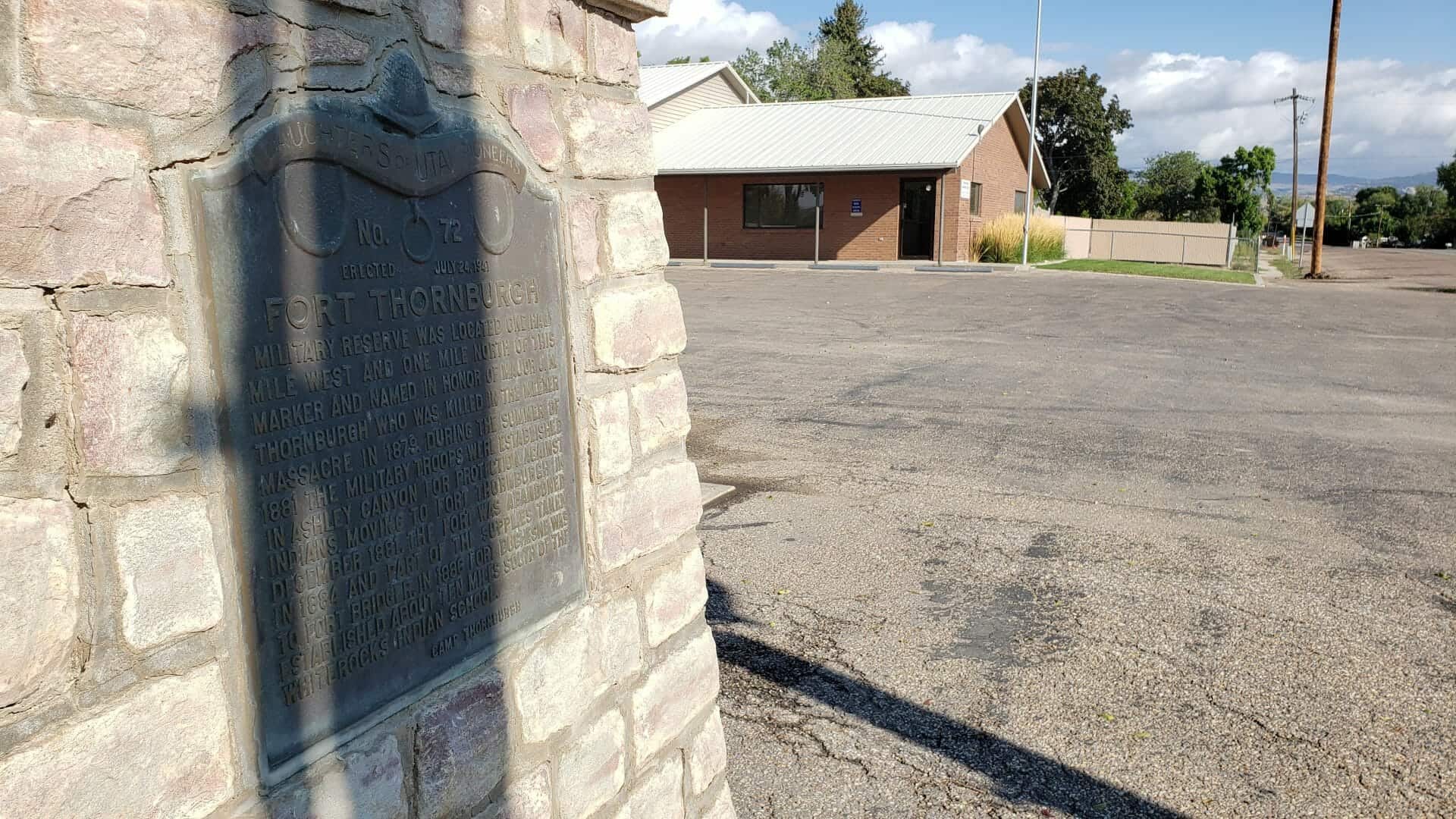
Military reserve was located one half mile west and one mile north of this marker and named in honor of Major J. N. Thornburgh who was killed in the Meeker Massacre in 1879. During the summer of 1881 the military troops were established in Ashley Canyon for protection against Indians. Moving to Fort Thornburgh in December, 1881. The fort was abandoned in 1884 and part of the supplies taken to Fort Bridger. In 1886 Fort Duchesne was established about ten miles south of the Whiterocks Indian School.

This is Daughters of Utah Pioneers historic marker #72 located at 1063 North 2500 West in Vernal, Utah.

Related:

  • D.U.P. Markers
  • Forts

Fort Thornburgh

30 Thursday Jun 2022

Posted by Jacob Barlow in Uncategorized

≈ 1 Comment

Tags

Forts, Uintah County, utah

Fort Thornburgh

This monument marks the site of the second Fort Thornburgh – established in April 1882 after its removal from the first location near the site of Ouray, Utah. The fort was founded by the United States Army as an outpost for Military troops assigned to prevent Indian – White hostilities. It was named in honor of Major Thomas T. Thornburgh who was killed by Ute Indians on September 29, 1879 in Western Colorado while attempting to quell an alleged uprising. The military reserve encompassed 21,851 acres to the west, north and east of this point. An infantry garrison of 100 to 200 men occupied the fort from April 10, 1882 until October 3, 1883. Several adobe and stone buildings, no longer evident, were constructed on the fort 300 yards east of this point.

Located at 2450 North 3250 West in Vernal, Utah

Related:

Boy scouts of America troop 246, Eagle Scout Project 2019, Aaden Frederic Clyde

← Older posts

Follow Jacob

Follow Jacob

Blog Stats

  • 2,004,698 hits

Social and Other Links

BarlowLinks.com

Recent Posts

  • Emma Thatcher Jeppeson Home
  • William Bowen Home
  • Ellen Ricks Nibley Home
  • Julie Budge Nibley Home
  • Elias and Agnes Beckstrand House

Archives


Loading Comments...