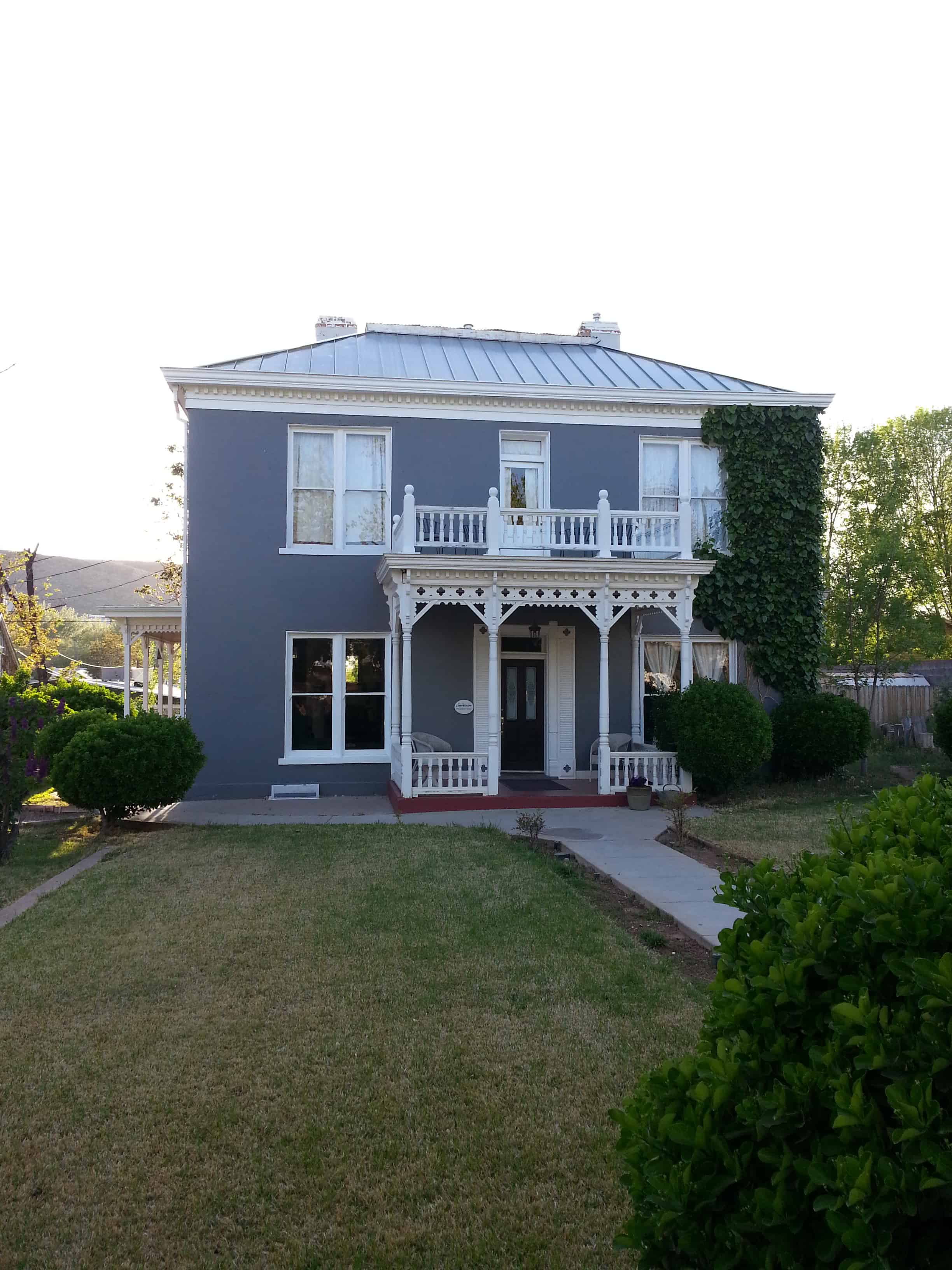
George F. Whitehead and his bridge Esther Jane Morris moved into the original part of this house on their wedding day, November 22, 1883. George was a skilled builder and many pioneer structures in St. George bear his mark.
Edna Cloward, Whitehead’s daughter, owned the house until 1965. There have been a total of four owners, it is now part of Seven Wives Inn.
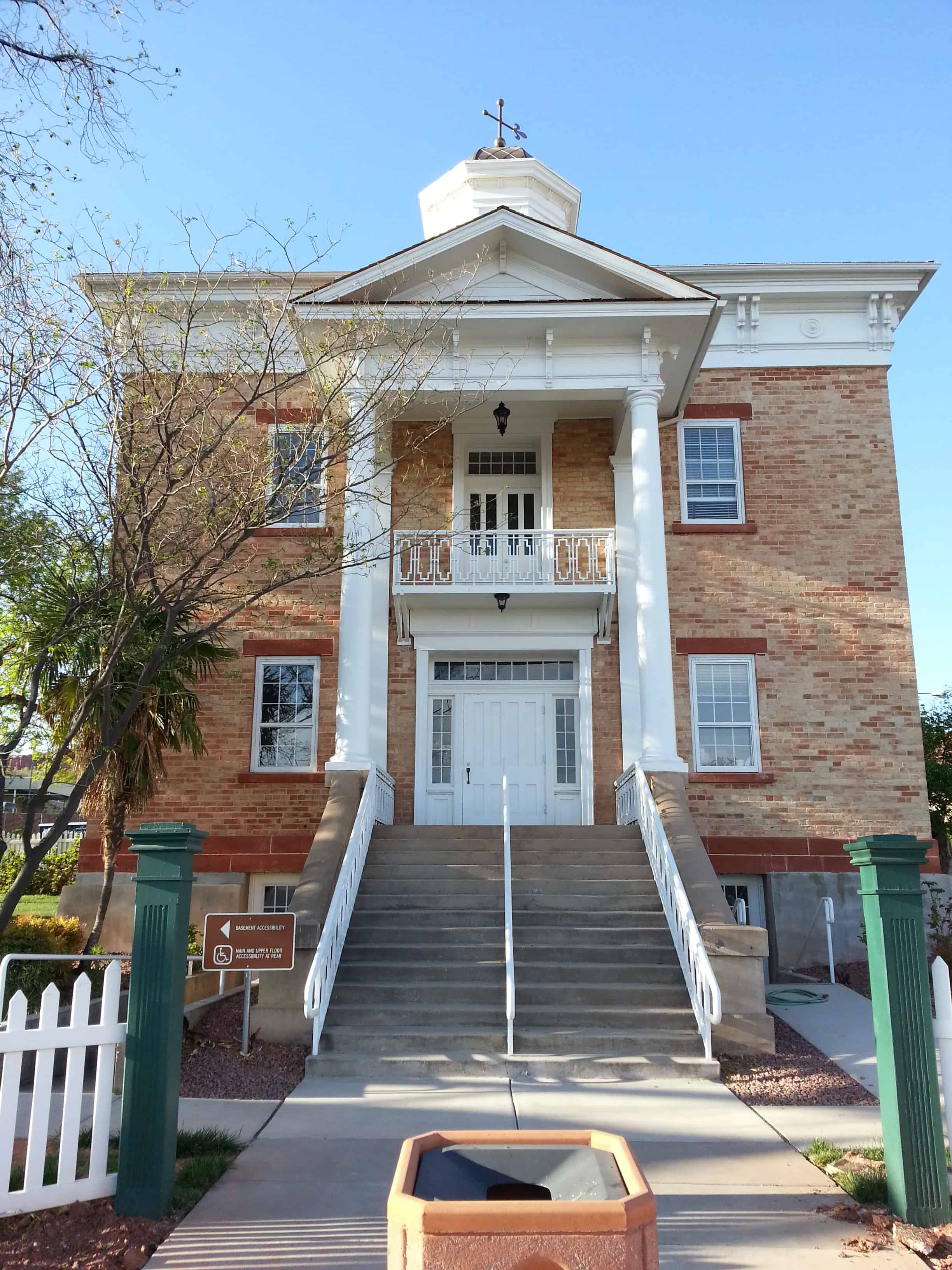
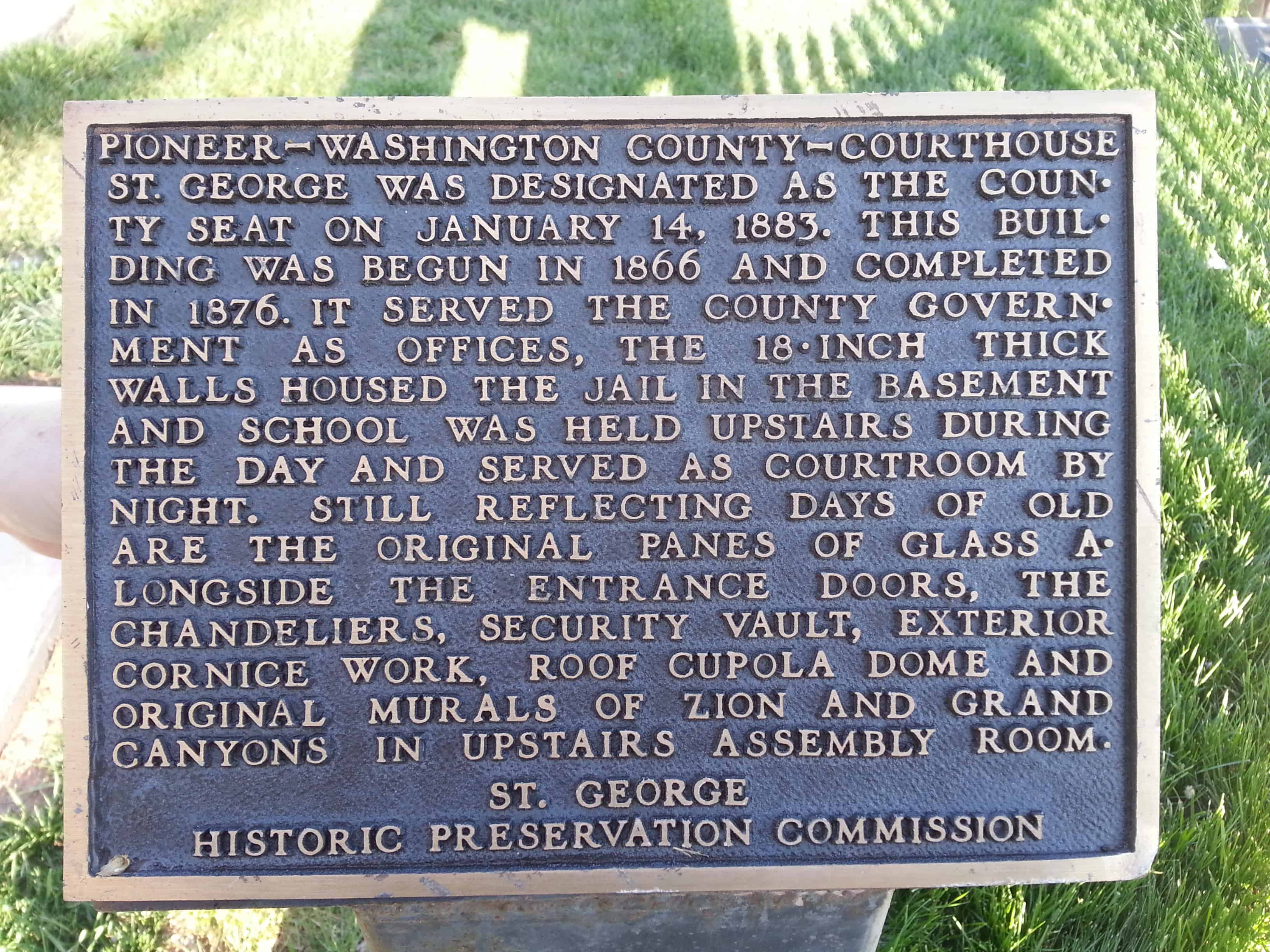
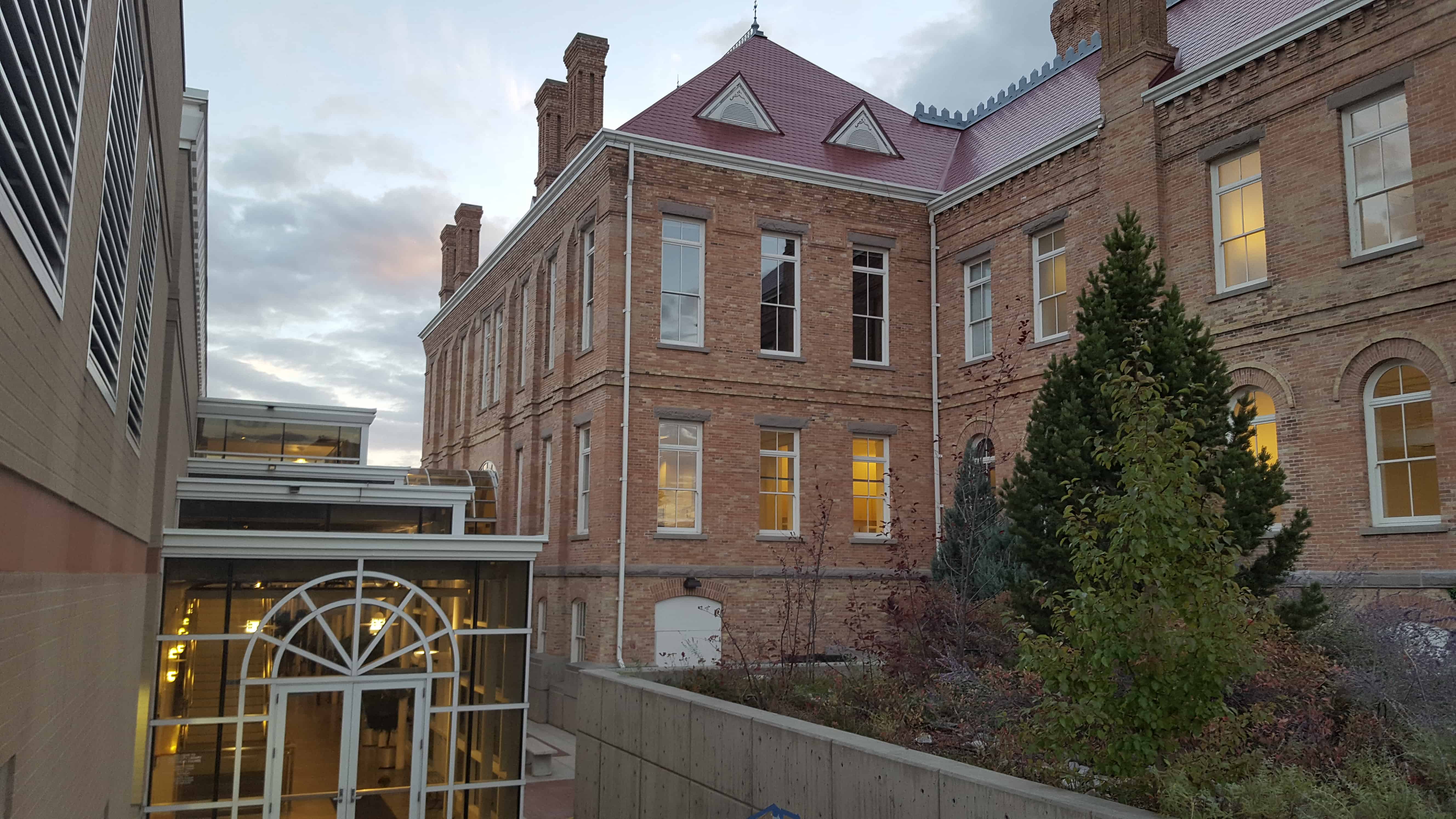
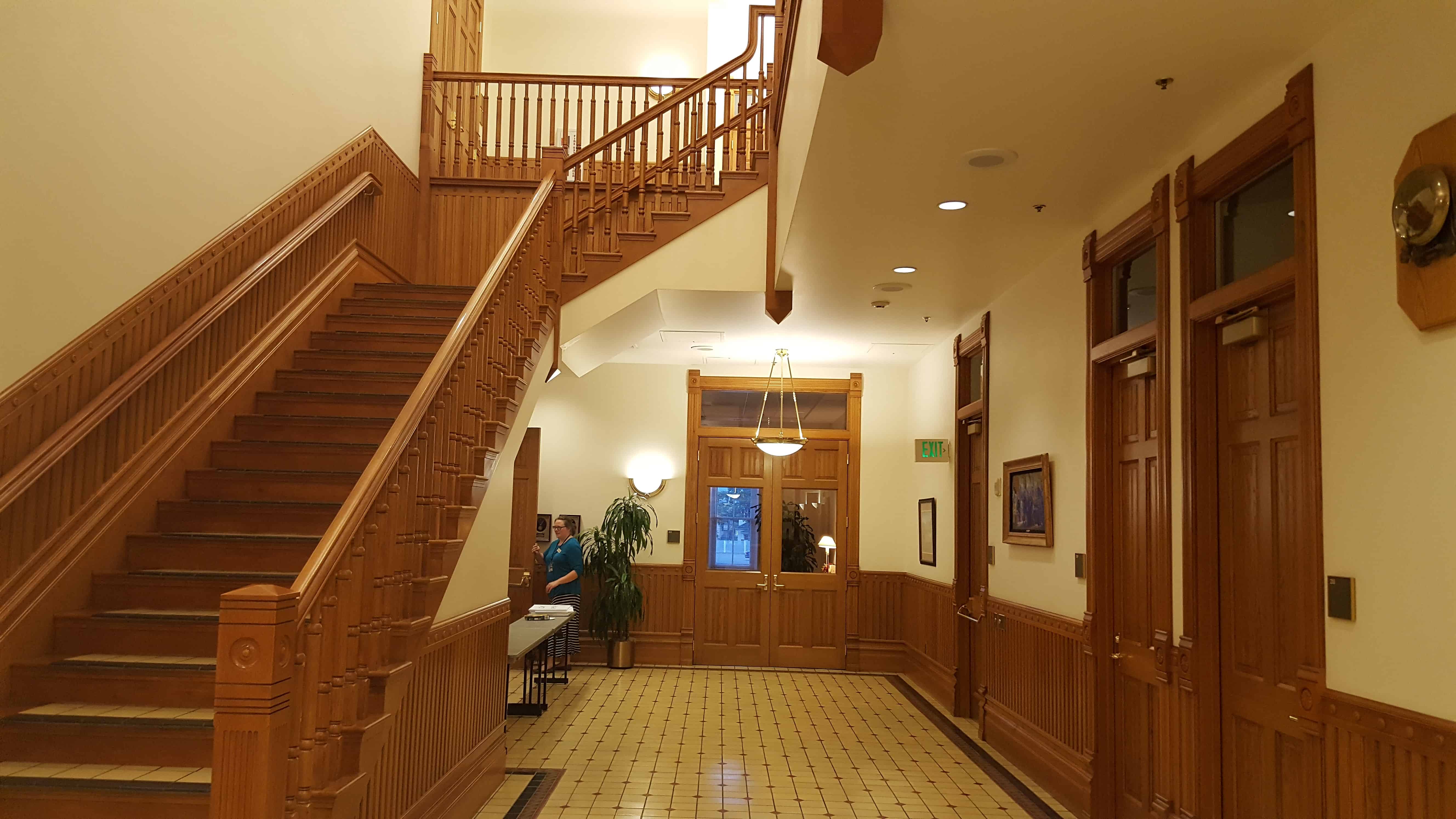
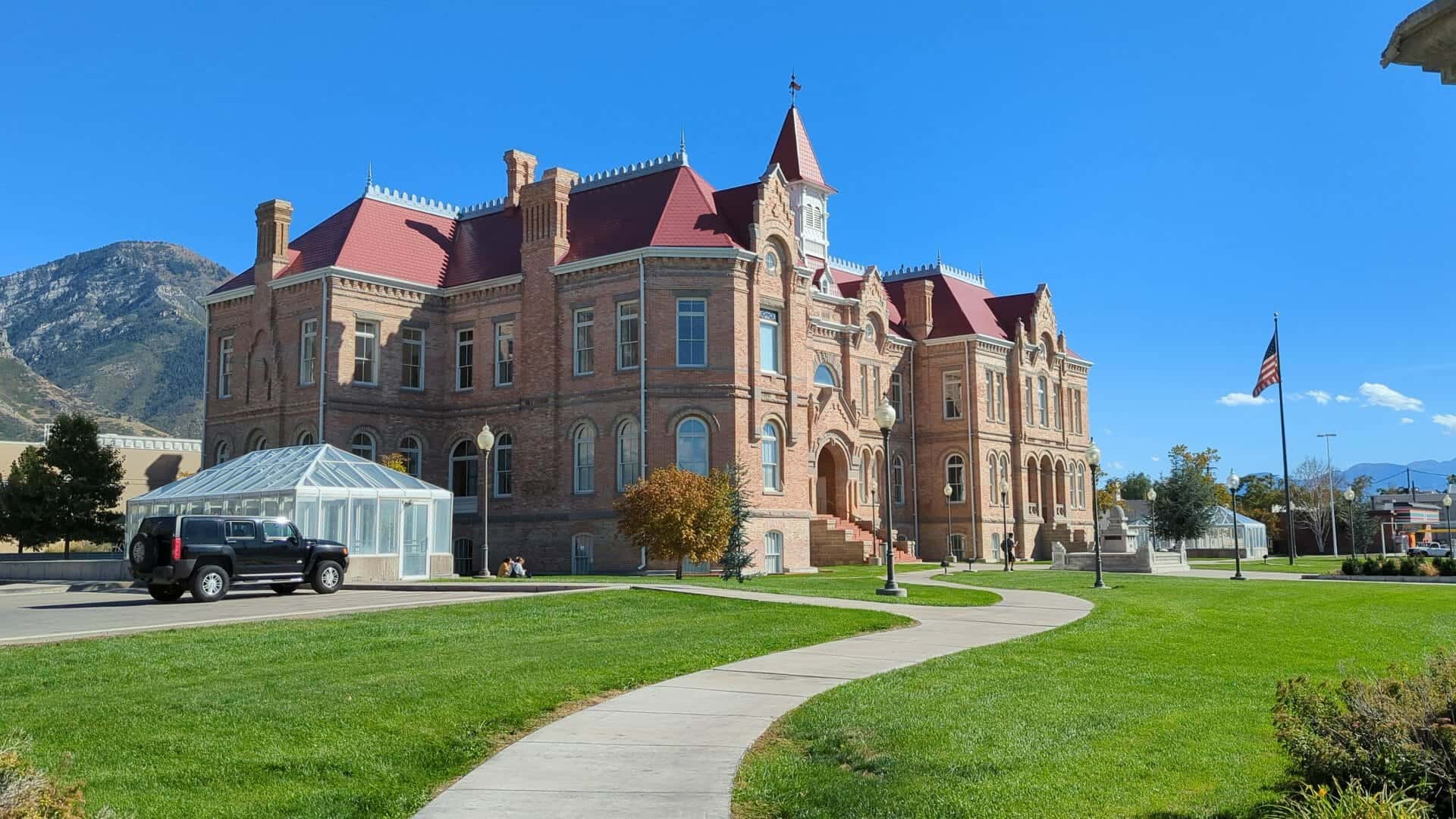
St. George was designated as the County Seat on January 14, 1883. This building was begun in 1866 and completed in 1876. It served the County government as offices, the 18-inch thick walls housed the jail in the basement and school was held upstairs during the day and served as a courtroom by night. Still reflecting days old are the original panes of glass alongside the entrance doors, the chandeliers, security vault, exterior cornice work, roof cupola dome and original murals of Zion and Grand Canyons in upstairs assembly room.
Located at 97 East 100 North (St. George Blvd) in St. George, Utah, the Old Washington County Courthouse was listed on the National Historic Register on (#70000634) September 22, 1970.
Washington County, like most of Utah, was colonized by Mormon settlers Public life centered around the church and church leadership. Several fine public buildings, constructed In St. George, still remain today. One of these, the old Washington County Courthouse, is distinctive. It was the first, in fact the only, major public edifice built in Washington County during Utah’s Territorial period that was strictly a “citizen of Utah” effort. It was financed by tax assessment, usually in “kind or labor,” rather than by tithing or church donations.
St. George was settled late in the year 1861. In 1863, the county seat was moved from the town of Washington to St. George. The court consisted of Judge James D. McCullough and Selectmen, Robert D. Covington, Jacob Gates, and Annon P. Winsor. James S, Bleak was appointed probate and county clerk. They first met in September 1863 to organize. Their next meeting was September 4, 1865. In November 1866 plans were approved to build a basement for a courthouse in St. George. An appropriation of $560,00 was made, to be expended by Judge McCullough. Excavation on the basement got underway. The following August 1867 a tax of 1/4 of one percent to raise $10,000 was discussed. A public vote approved the action. In September 1869 the tax was increased to 3/4 of one percent by public vote. The court approved $1,500 and assigned Jacob Gates to supervise the construction. The building was completed and accepted by the county in 1876.
Raising revenue in a barter economy was difficult. At a special session the “Court,” in October 1869, set the following prices for goods: molasses, $1.25 per gallon; corn, $1.50 per bushel; cotton yard, $2.50 per bunch; flour, $8.00 per cwt.
in most instances men working on the building paid their taxes in kind, received 3 dollar wage, but were paid in kind. Disbursement prices of tax items reflect a good profit to the county: molasses, $2,00 per gallon; corn, $2.00 per bushel; cotton yard, $5.00 per bunch; and flour, $10.00 per cwt.
But the citizens of Washington County persisted and constructed an impressive courthouse that served the county well until as late as 1960. Their story is even more significant when it is realized that these same people, through the Mormon Church, were also building both their Mormon Temple and Tabernacle during the same period of time. All three of these projects were a kind of public works effort to shore up the sagging economy of southwestern Utah. They represented the skilled craftsmanship of those pioneers.
Pioneer Village is an authentic representation of life in Provo before the arrival of the Utah Southern Railroad in 1873. Most of the buildings and artifacts in the Village have come from the surrounding area. The historic structures depict various businesses, public meeting places, homes and outbuildings for animal care.
The existence of this Village is due to the foresight of the George A, Smith Chapter of the Sons of Utah Pioneers, a group of dedicated men who realized the need for preserving the heritage of this area. In 1931, David Loveless donated the John Turner cabin, several outbuildings, and his large collection of artifacts to the local Sons of Utah Pioneers. The city of Provo provided the land on which the Village stands. Since the beginning, the Sons of Utah Pioneers have expanded and improved the Village by adding buildings and artifacts and by repairing and preserving the original donations.
In 2006, the George A. Smith Chapter merged with the Brigham Young Chapter of the Sons of Utah Pioneers, which took over as the official sponsor of the Village. Many visionary men have contributed time and money to the project. Hopefully, all who visit here will appreciate the faith, dedication, and determination of the pioneers who settled Provo and will desire to contribute to its preservation.
Note: This Village represents early Provo, a frontier community existing mostly in isolation. The pioneers’ very survival depended on their own skills and the support of their neighbors and friends. What they ate, they grew; what they wore, they made; and what they needed, they manufactured or they did without. Things were used and reused; little was discarded or thrown away.
The south part of the Village represents the residential community; their homes, garden, orchard, granary, corncrib, corral and loafing shed. The northeast part of the Village has the commercial enterprises including the blacksmith shop, cooper shop, wood shop, ox shoeing stock, store and grain mill (represented by the mill stones resting against the store). The northwest section of the Village has the school and town square.
See other historic markers in the series on this page for SUP Markers.
This five-acre private burial site was established in 1885 by fraternal organizations for the use of members and their families. The cemetery and headstones reflect the beliefs and customs of the time as well as display the sense of loss experienced by families and friends. The cemetery, as a single entity, best describes the sense of community that prevailed in Park City, a melting pot of nationalities.
The site was used extensively until the 1920s when a decline in the membership of fraternal organizations corresponded with the collapse of the mining industry in Park City. Use of the cemetery and maintenance of the grounds diminished greatly. In the 1980s a volunteer society, the Glenwood Cemetery Association, funded by public donations, became caretakers, restoring and maintaining the picturesque graveyard as a peaceful refuge.
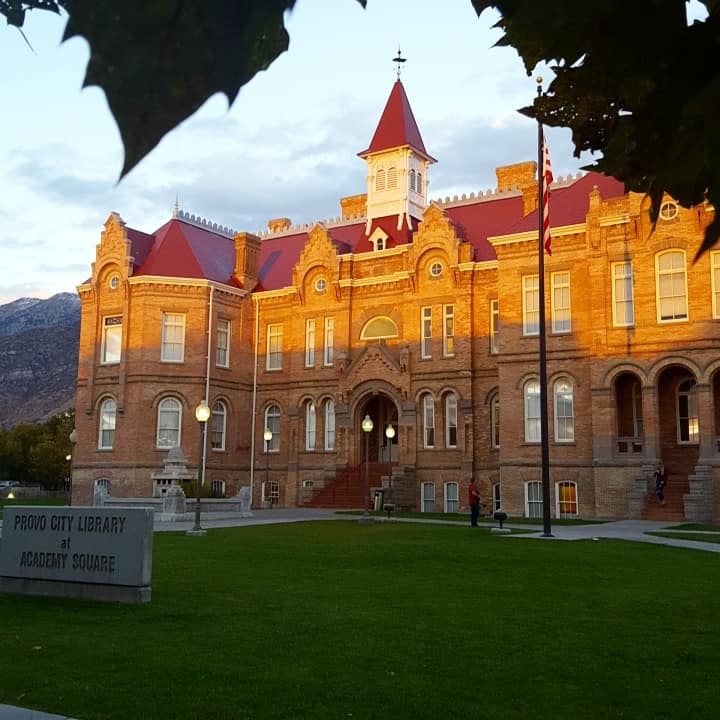
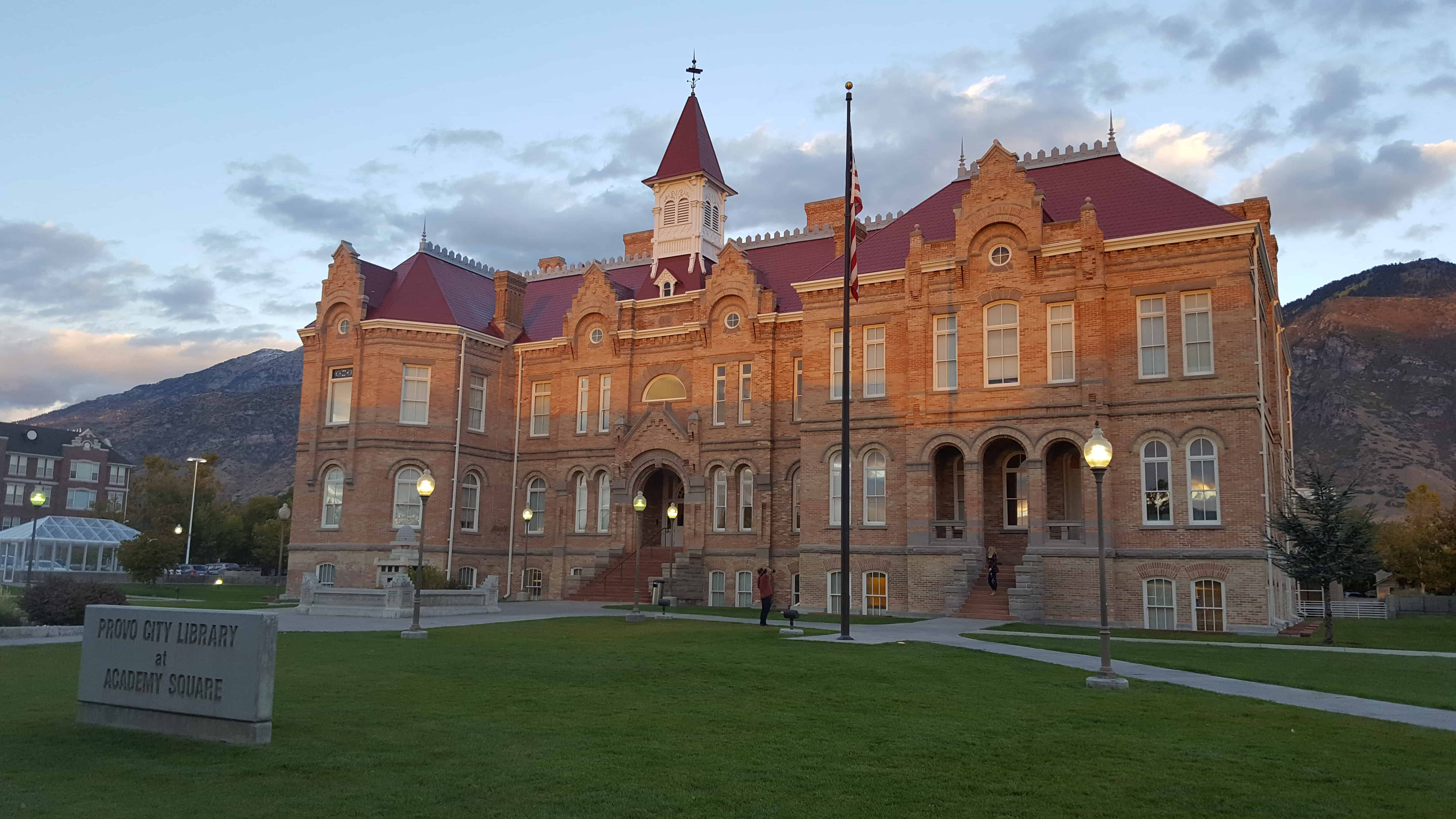
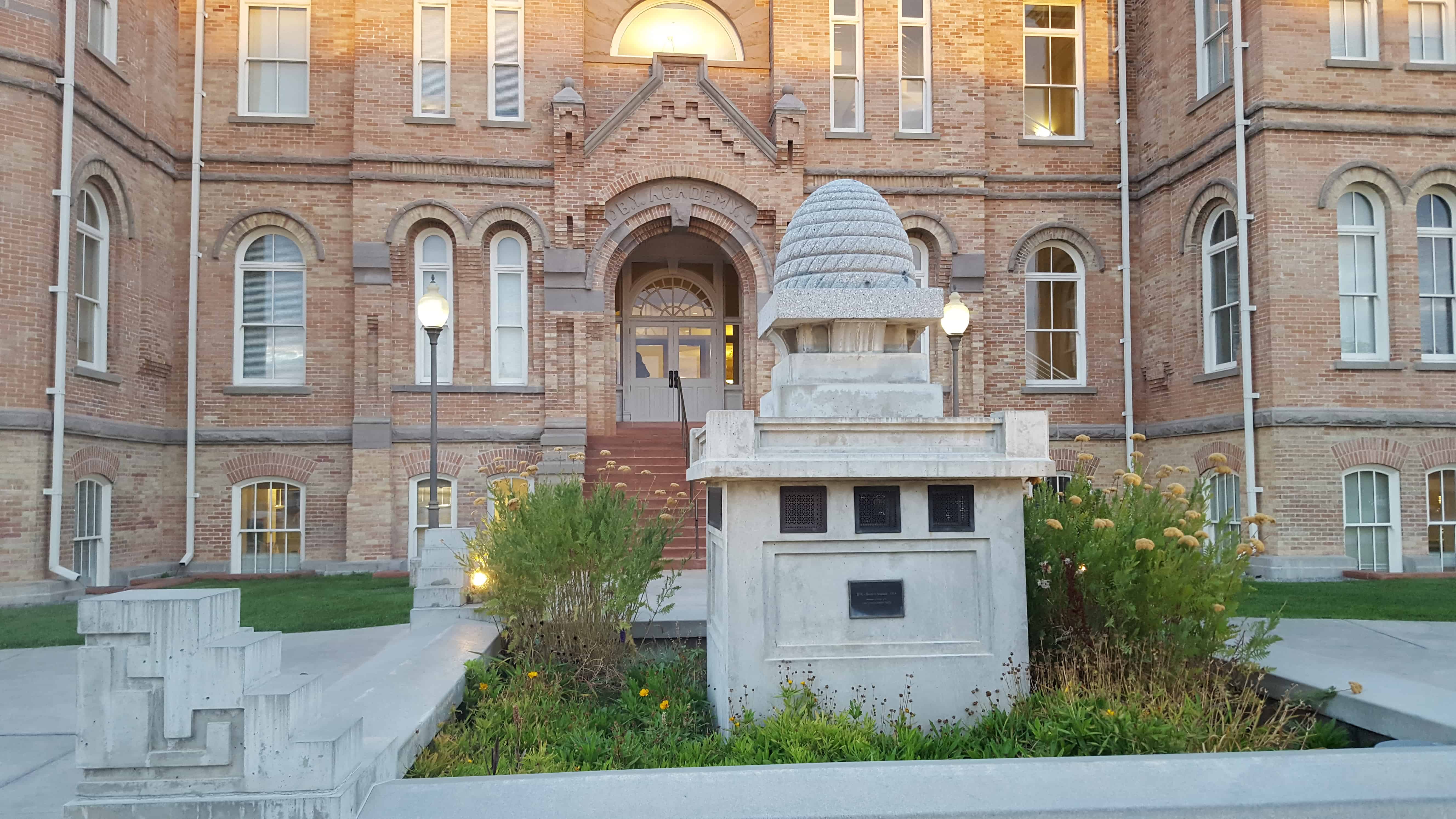
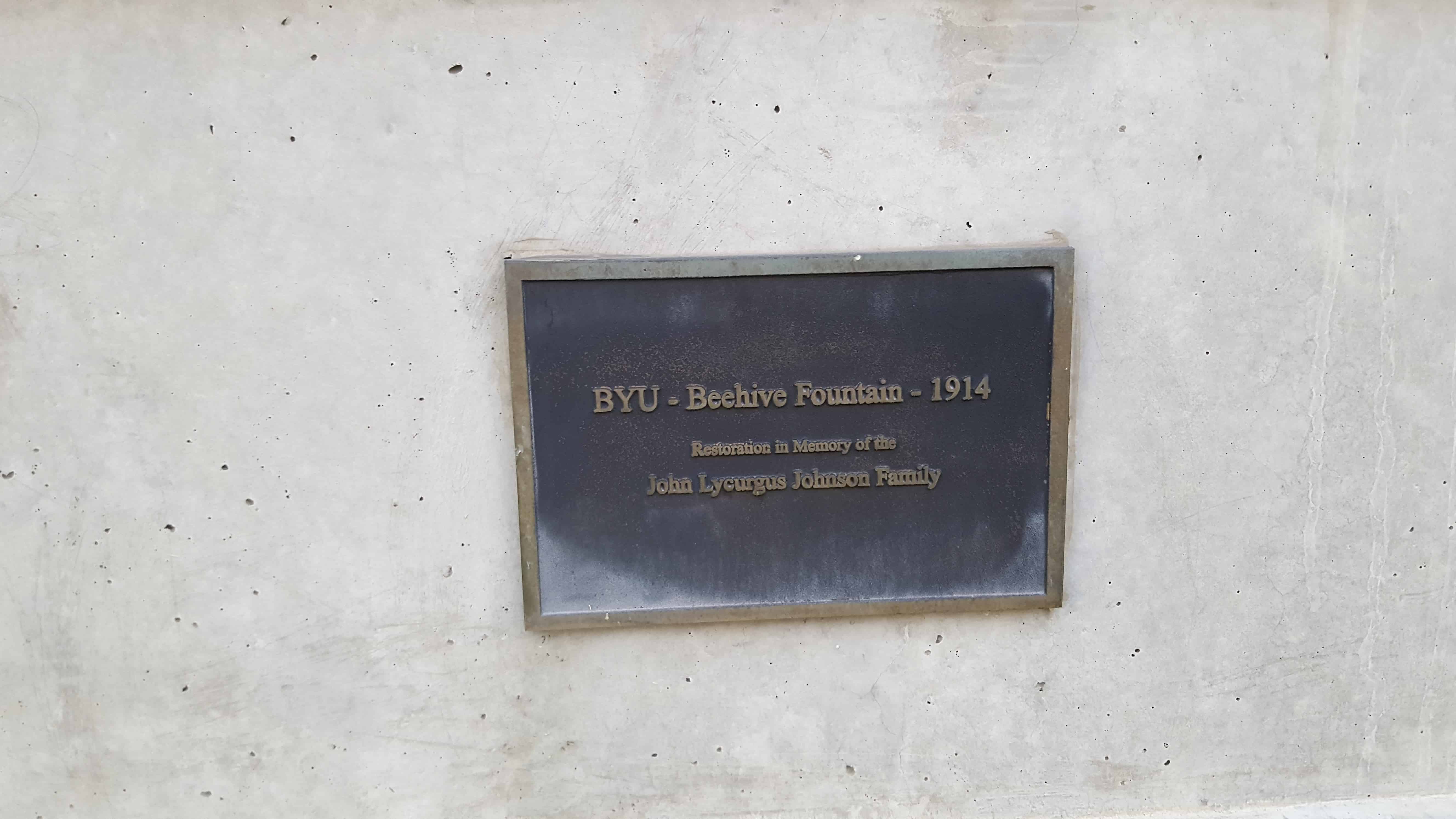
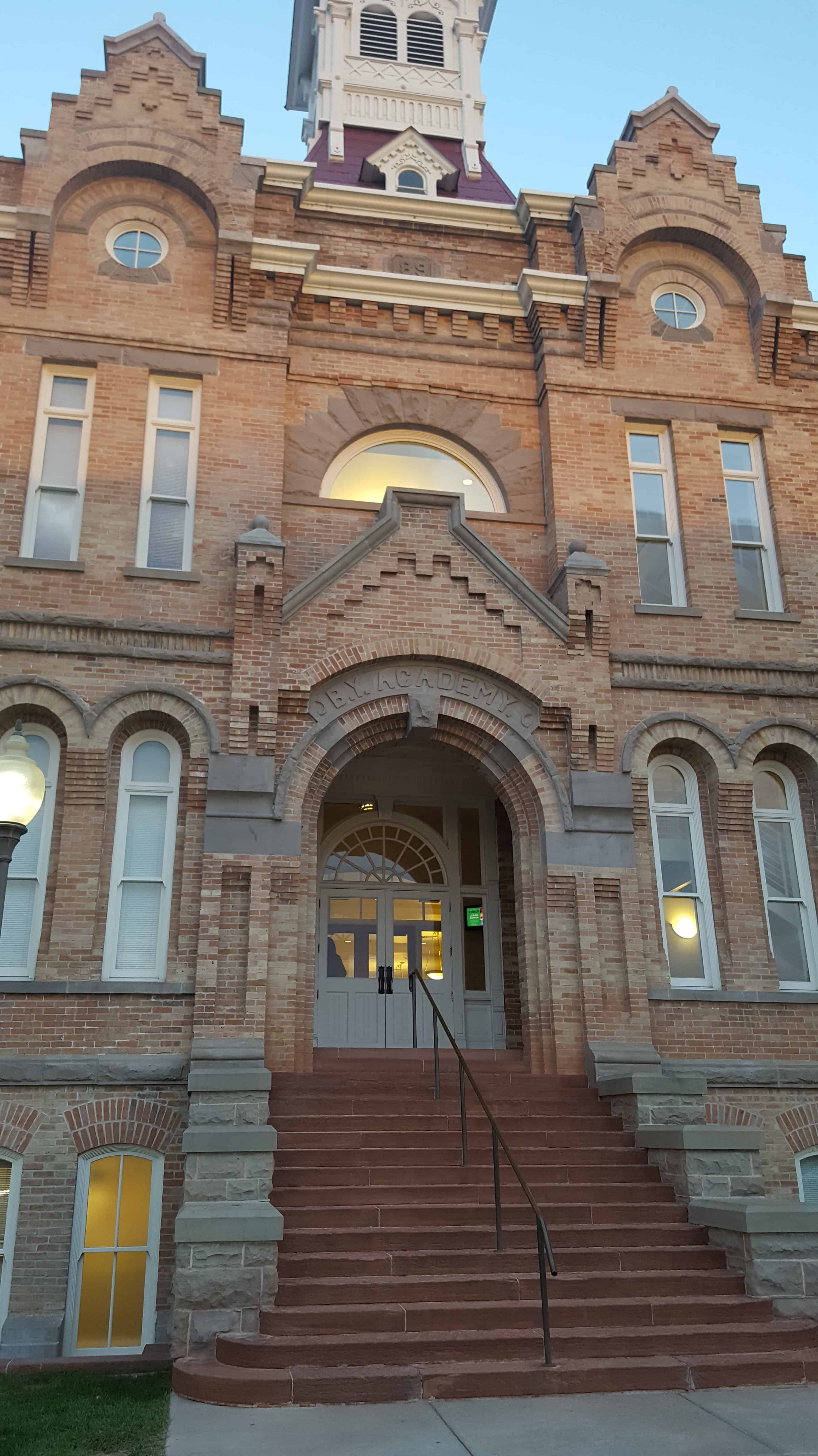
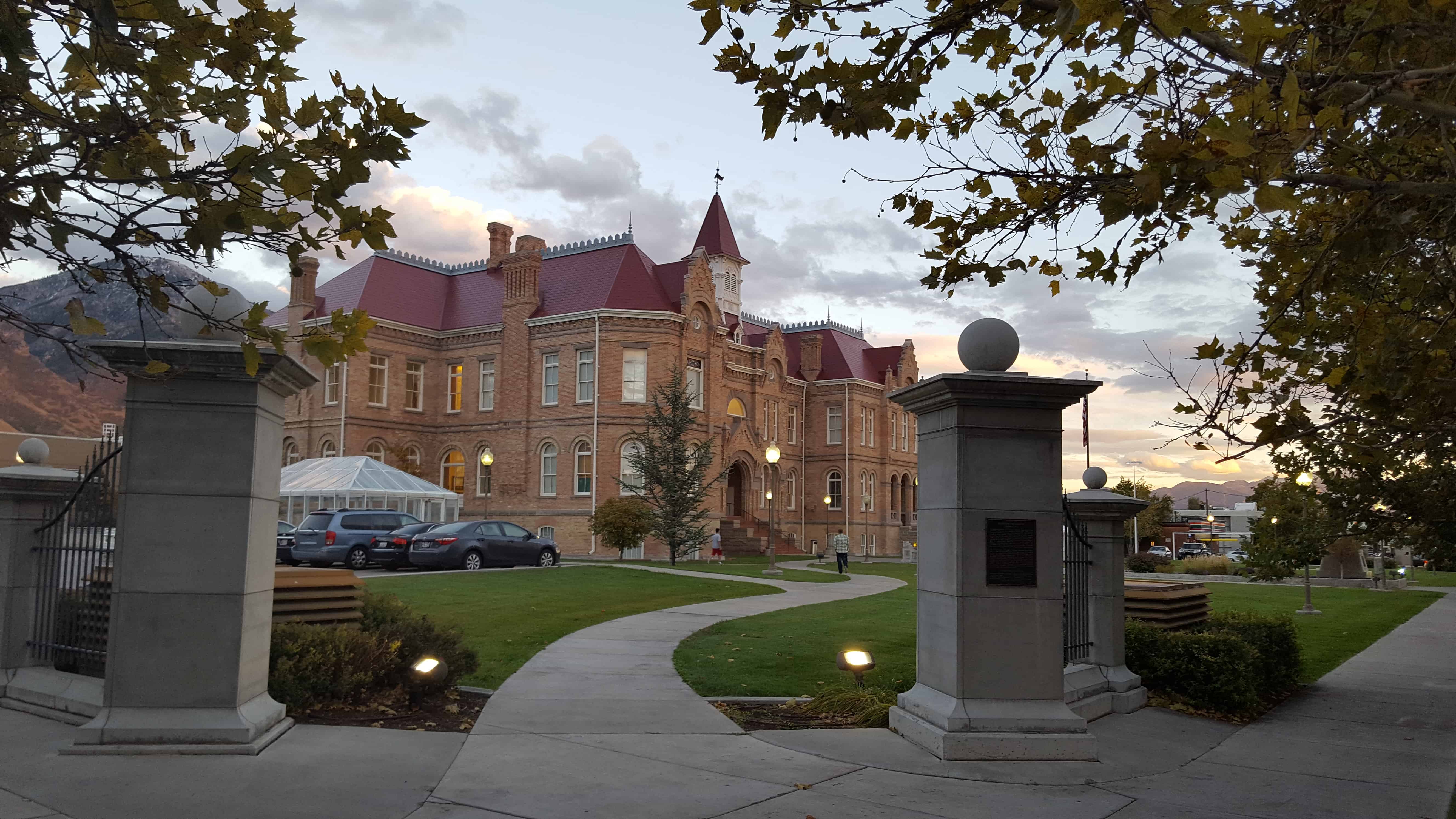
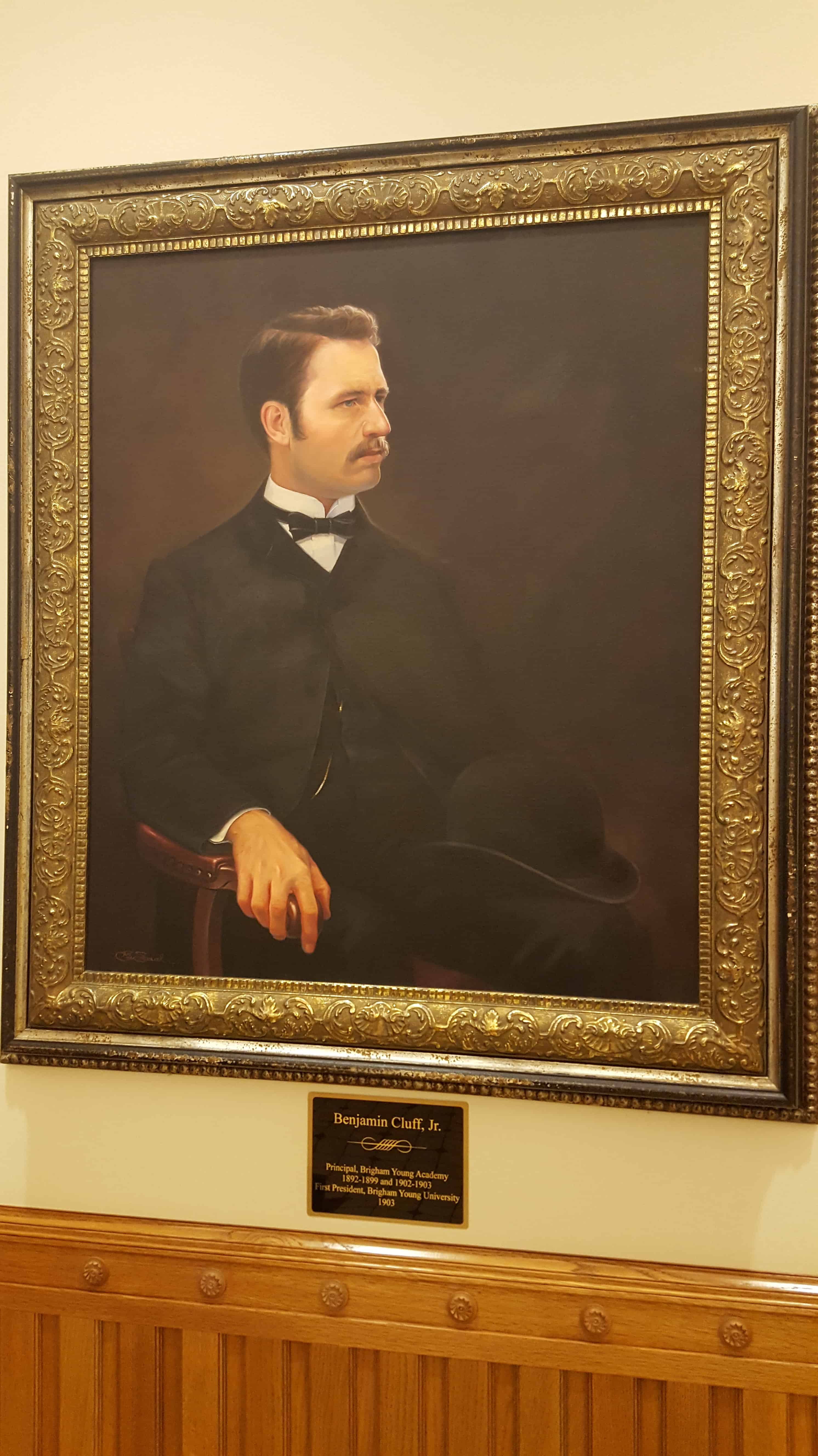
Brigham Young Academy was the predecessor of both the Brigham Young High School and Brigham Young University. The Academy was founded in 1876. The Academy was essentially a high school until 1896 when a College Department was added. In 1903, although the high school students still outnumbered the college level students, the name of the Academy was changed to Brigham Young University. The High School continued as a part of the University until the end of the 1967-1968 school year. At that time the High School was shut down permanently.
The Brigham Young Academy was one of the largest school buildings in the western Rocky Mountain region. The Principal of the Academy, Karl G. Maeser, designed the building with the help of Don Carlos Young as the architect. The Academy was located in Northern Provo. The name of the building has changed many times: in 1898, it was known as the High School Building, and in 1922 it was known as the Education Building, which it remained until 1968.
Located at 550 North University Avenue in Provo, Utah and added to the National Register of Historic Places on (#76001839) January 1, 1976.
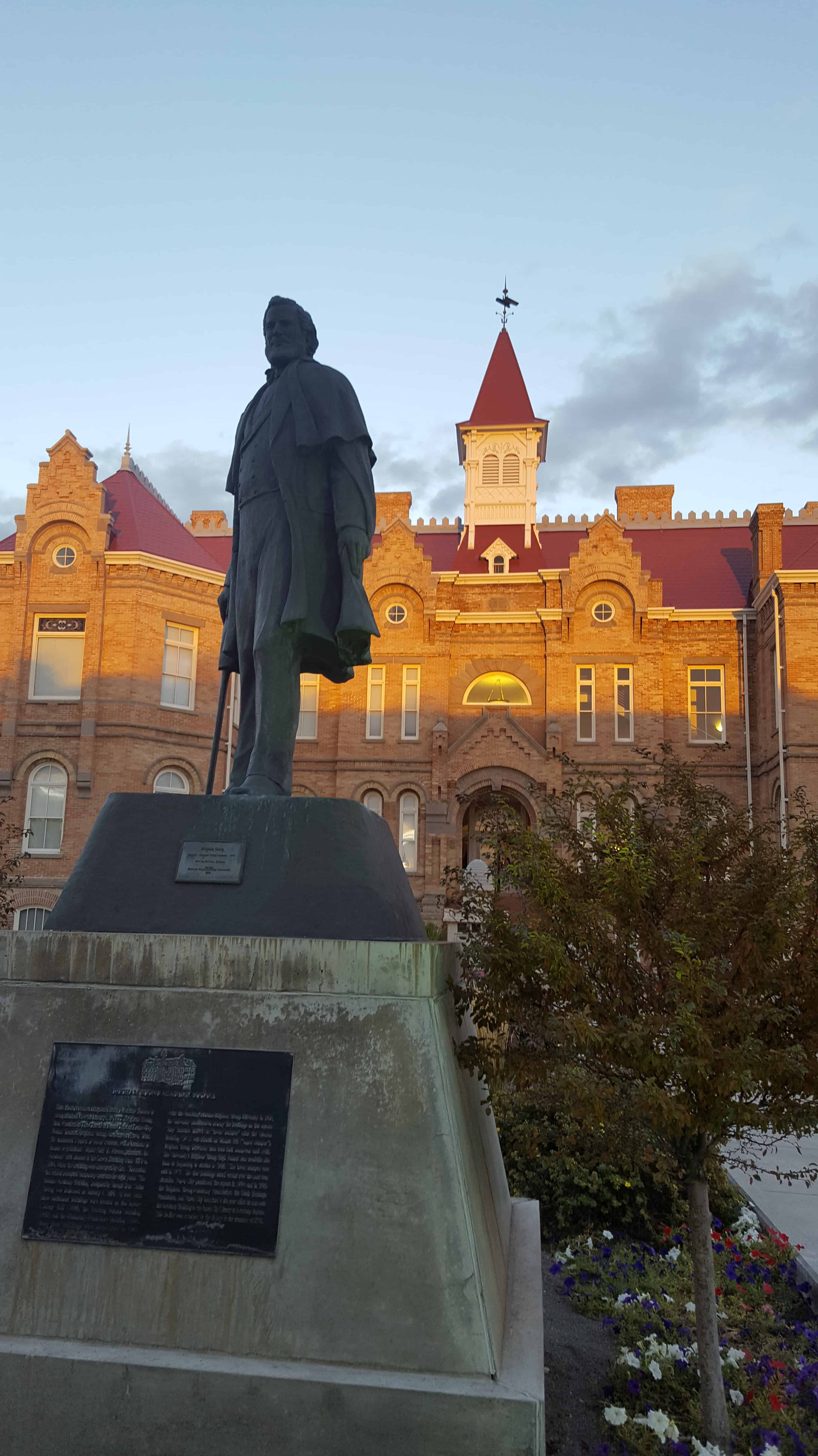
This block is named Brigham Young Academy Square in recognition of its vital history. In 1875, Brigham Young, then President of the Church of Jesus Christ of Latter-day Saints, founded Brigham Young Academy in Provo, Utah. He appointed a board of seven trustees, with Abraham O. Smoot as president. Under Karl G. Maeser, principal, the Academy held classes in the Lewis Building from 1876 to 1884, when the building was destroyed by fire. Thereafter, the school occupied temporary quarters for eight years. The historic Academy Building, designed by Joseph Don Carlos Young, was dedicated on January 4, 1892. In later years, three additional buildings were erected on this square: College Hall (1898), the Training School Building (1902), and the Missionary Preparatory Building (1904). These three buildings were demolished in 1997.
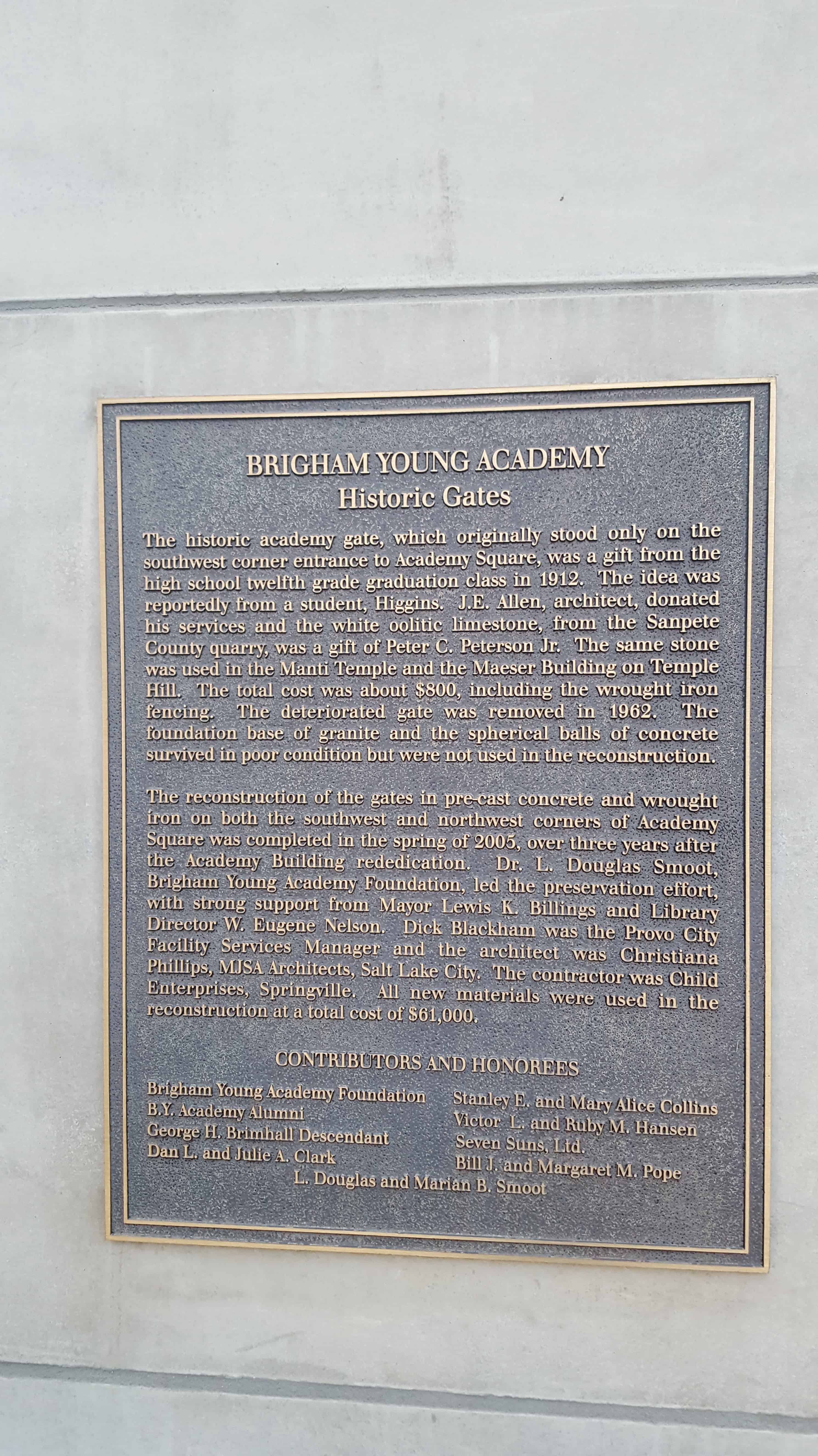
After the Academy became Brigham Young University in 1903, the University continued to occupy the buildings on this square. They became known as “lower campus” after the Maeser Building (1911) was erected on Temple Hill (“upper campus”). Brigham Young University then used both campuses until 1968. The University’s Brigham Young High School also used this site from it’s beginning to closure in 1968. The lower campus was sold in 1975. The four buildings stood vacant over the next two decades. Provo City purchased the square in 1994 and in 1995 the Brigham Young Academy Foundation, the Utah Heritage Foundation, and Provo City launched a six-year effort to renovate the Academy Buildings as the Provo City Library at Academy Square. This facility was occupied by the library in the summer of 2001.
From the nomination form of the national register:
Brigham Young Academy was created October 16, 1875, by Brigham Young as part of a chain of academies sponsored by the Mormon Church throughout Utah. The first principal was Warren N. Dusenberry who resigned after a year to practice law. Brigham Young then called Carl G. Maeser, a teacher from Germany, to be principal. Maeser was surprised by the assignment and when he went to Brigham Young for instructions the Church President gave only one admonition: “You should not teach even the alphabet or the multiplication tables without the Spirit of God. That is all. God bless you. Goodbye.”
The school met in a variety of locations before the Academy, the first structure on Lower Campus, was built. But the Academy building, and the others constructed later on the Lower Campus; site, were the first built specifically for the school. Originally the campus was, located in the country outside Provo City. Later the city grew up around the Lower Campus, indicating the importance of the university in Provo f s community life.
Over the years, the Church school system was gradually superseded by a public, state-financed system, until finally the Provo school became the only higher educational institution of the Church in Utah.
In 1897 the First Presidency assumed the primary financial responsibility. Prior to that year, the Academy had been sponsored by A,0. Smoot and “Uncle” Jesse Knight with, subsidiary contributions from other wealthy friends. In 1903 the name was changed to Brigham Young University to signify its change in purpose from church normal school to an institution with a wider scope. Today BYU is the largest private university in the country.
Theology, particularly the principles of the LDS Church, has always provided the foundation for BYU. The deed of trust indicated that “nothing shall be taught in any way conflicting with the principles of the Gospel.” This maxim is still in force today, indicating a philosophy and tradition of education found in few other institutions of higher learning.
The Lower Campus was the first permanent home of the Brigham Young Academy (later University). The original Academy Building was also one of the first, and finest, buildings built in the state expressly for higher education.
The first home of the Brigham Young Academy (founded in 1875) was the Lewis Building at 300 West and Center Street in Provo, This building burned in 1884. Immediately, Joseph Don Carlos Young, son of Brigham, was hired to draw plans for a permanent Academy Building, Excavation began in 1884. then was discontinued until 1890. The Academy Building was finished in 1891 and dedicated January 4, 1892. At the dedicatory service, Wilford Woodruff, then president of the Mormon Church (the sponsoring body then, as now, of Brigham Young University), declared that “It is the finest building in Utah erected for the education of the children.’ (Territorial Enquirer? January 4, 1892)
At the dedication, Karl G, Maeser who was retiring; as principal of the school told how Brigham Young had cone to him in a dream in 1898 and led, him through a building to a big room on the top floor where Brigham disappeared. Maeser woke up, drew what he had seen, then stored it away. When J. Don Carlos Young was commissioned architect for the building, Maeser showed him the plan. The resulting interior followed Maeser’s dream plan closely, prompting Maeser to declare, ‘When in future days people shall ask for the name of the wise designer of … the edifice, let the answer be: Brigham Young.” (BYU Archives, Lower Campus papers)
Highlights of the building included a large assembly room on the second floor where all school functions were held, for several years,, and a ventilating system which offered “cold, not, or perfumed” air. (Territorial Enquirer January 4, 1892)
Though the Academy Building could accommodate 600 students, it rapidly became , inadequate. Therefore, a campaign began for another building, Reed Smoot, later U. S. Senator, volunteered, ten friends to make contributions of $1000 each. Smoot assumed the remaining cost himself. This structure became the College Building and was connected to the Academy at the back. The Academy now housed the younger students and was renamed the High School Building.
The next project, the Training Building designed by Richard Watkins, was completed in 1902. It was originally the Church Normal School, but was funded independently with generous contributions from Jesse Knight, David Evans, Thomas Kearns and David Keith, who were all important in Utah mining circles. The second floor housed the gymnasium, probably the first educational one in the state.
The Arts Building (architect Richard Watkins) was completed in 1904. As the Missionary and Preparatory Building, the first two stories were financed with contributions from the Utah Valley stakes (dioceses) of the LDS Church. The third story was finished courtesy of Emma Lucy Gates Bowen (prominent Utah opera singer) who gave $1000 for a domestic science department in honor of her grandmother, Lucy B. Young one of Brigham’s wives. Eventually, the purpose of the building changed and was renamed the Arts Building. In 1912 a steel bridge was built connecting the third floor of the Arts with the second of the High School (Academy).
A blacksmith shop across the street north was completed in 1904 and the Women’s Gym across the street west was finished in 1912. In the early 20s, the Academy became a University and began moving to Temple Hill where it is today. As a result the High School changed function again and became the Education Building, by which name it is still known.
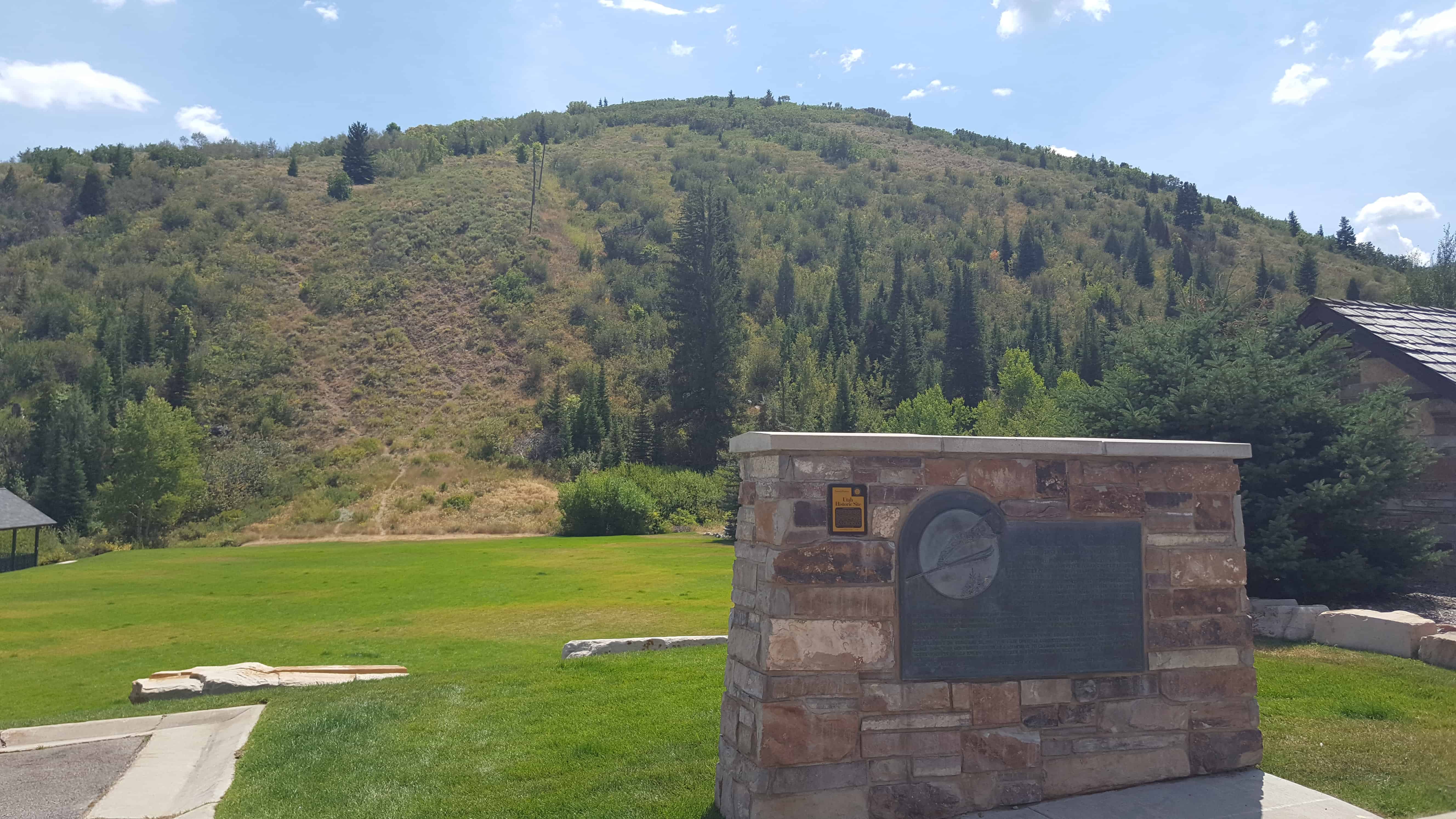
Completed in 1929, Ecker Hill became one of the premier ski jumping hills in the world during the 1930s and ’40s. National meets were held here regularly during that period, and several world records were broken on the hill by Alf Engen. The national and international fame of Ecker Hill established Utah as a prime ski center in the West and helped launch skiing as one of the state’s principal industries. After hosting the national championships in 1949, Ecker Hill’s prominence declined as larger, more professional jumping facilities were constructed both in this country and in Europe, and as downhill skiing emerged as the major attraction for ski enthusiasts. Ecker Hill was used decreasingly until the last jumps were made here in the early 1960s.
(Looking down on Ecker Hill)
In 1929, local ski-jumping enthusiasts Axel Andresen, Marhinius Strand and Peter Ecker conceived the idea of creating a world-class jumping facility at this site, then known as Rasmussen Ranch.
Through the diligent efforts of many supporters and the Rasmussen family, the jump became a reality. In a dedication ceremony on March 2, 1930, Governor George H. Dern named the hill after Ecker, then President of the Utah Ski Club.
Ecker Hill attracted amateur and professional jumpers from all over the world to compete in events that drew thousands of spectators. Alf Engen, who came to Utah from Norway in 1929 broke five world records here and became recipient of the “Skier of the Century” award.
Calmar Andresen, one of Utah’s amateur champions, lost his life here during a state tournament on February 22, 1934. The last official competition at this site was held in the early 1960’s. This monument serves as a memorial to Calmar Andresen and as a tribute to the achievements of Alf Engen and the other daring jumpers at Echer Hill.
This stone donated by Lehi Sunday Schools. Laid Sept. 14, 1901.
(etched in stone, difficult to read) Lehi ……… of the Church of Jesus Christ of Latter-day Saints erected A.D. 1901
To gain an appreciation of the Tabernacle cornerstone, one must learn of its creators. Englishman Arthur Bradder (born in 1855), at the age of thirteen began a two-year stonecutting apprenticeship which he left because of an abusive master. He then traveled about England, Wales, and France plying the skills he had learned.
Working in Liverpool, England, during 1876 Bradder was able to save enough money to transport his family to America. In Salt Lake City in 1897 he formed a partnership with his son-in-law, Joseph J. Gill. After being told there would be no stonecutting competition in Lehi, the duo moved to town and established the Lehi Stone, Marble and Granite Works (later Arthur Bradder & Company) on the northeast corner of Fourth North and First East.
The first major contract Bradder and Gill obtained was for the decorative stone on the downtown People’s Coop building (189 West Main). Presumably they also did the stone work on the New log Cabin Saloon (155 West Main), Merrihew Building (98 West Main), Ross Block (86 West Main), and the main building of the uptown People’s Coop (151 East State) all built between 1902 and 1908.
Another example of the fine stonecutting abilities of Bradder and Gill is the Lehi Pioneer Monument, on the Memorial building grounds
The above photos show the conerstone displayed at the chapel at 200 N Center St in Lehi, but it was later moved to behind the Lehi Historical Society and Archives building at 34 E 100 N. The below photos show it there.
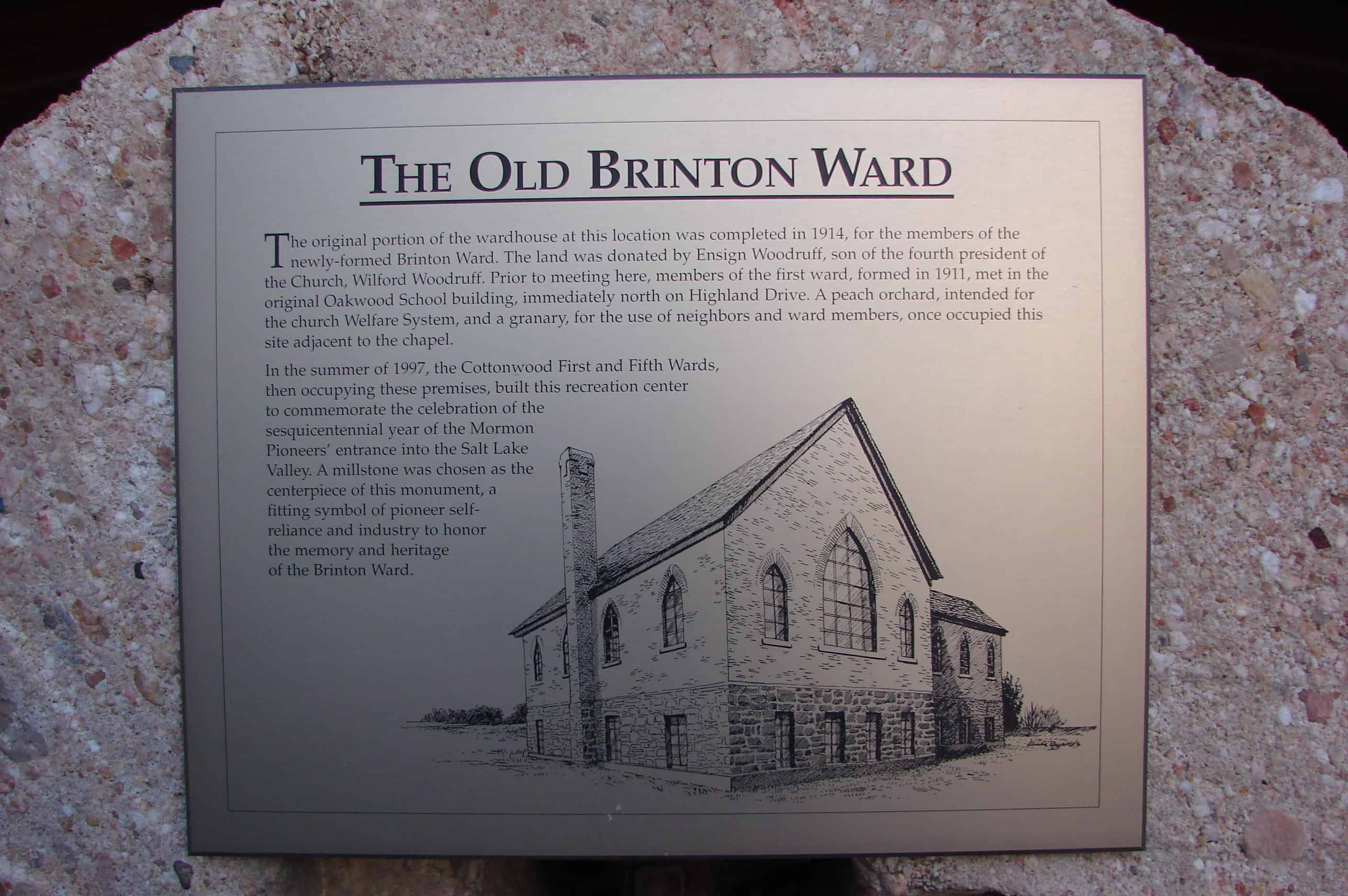
The original portion of the ward house at this location was completed in 1914, for the members of the newly-formed Brinton Ward. The land was donated by Ensign Woodruff, son of the fourth president of the Church, Wilford Woodruff. Prior to meeting here, members of the first ward, formed in 1911, met in the original Oakwood School building, immediately north on Highland Drive. A peach orchard, intended for the church Welfare System, and a granary, for the use of the neighbors and ward members, once occupied this site adnacent to the chapel.
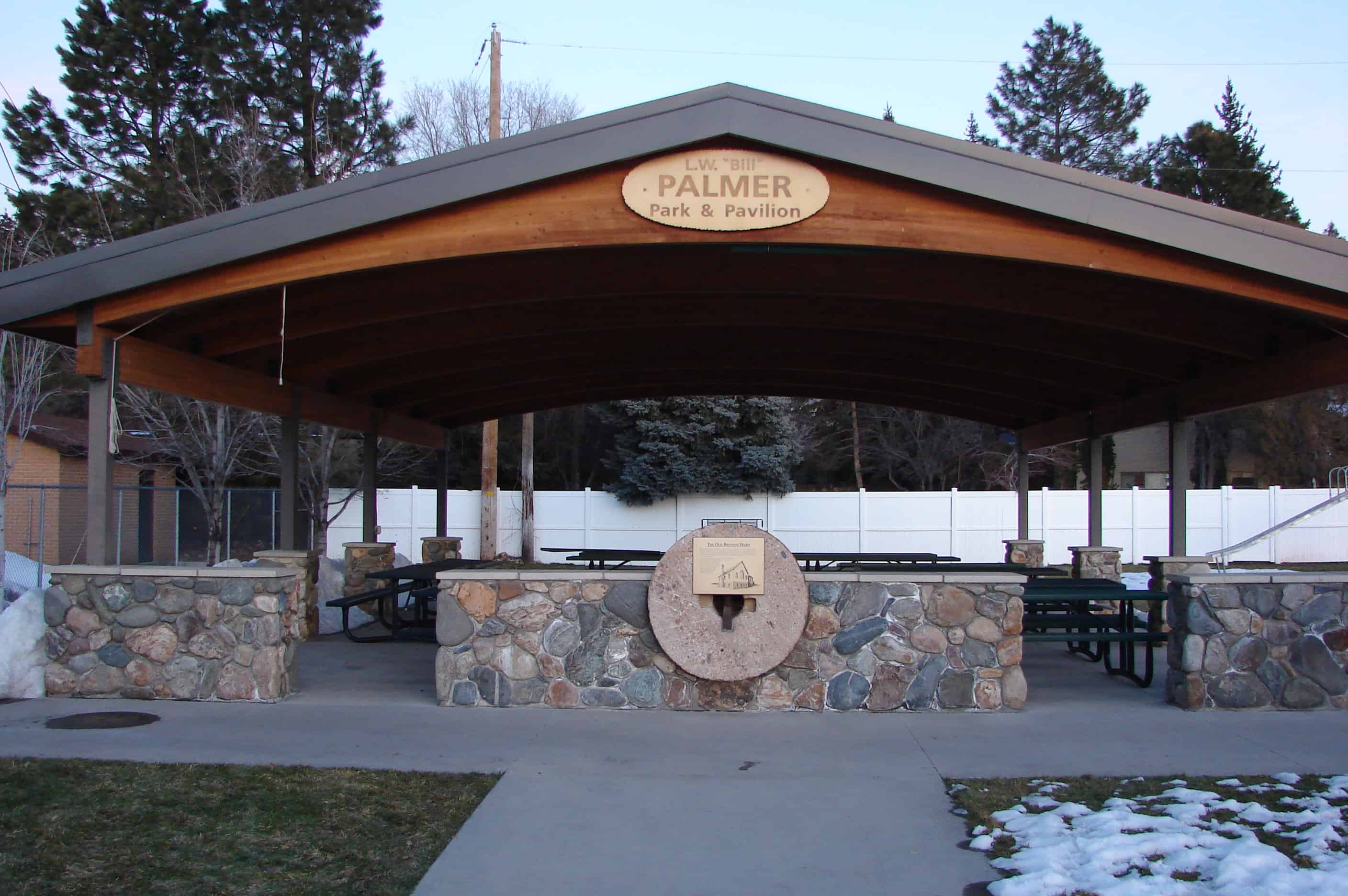
In the summer of 1997, the Cottonwood First and Fifth Wards, then occupying these premises, built this recreation center to commemorate the celebration of the sesquicentennial year of the Mormon Pioneers’ entrance into the Salt Lake Valley. A millstone was chosen as the centerpiece of this monument, a fitting symbol of pioneer self-reliance and industry to honor the memory and heritage of the Brinton Ward.
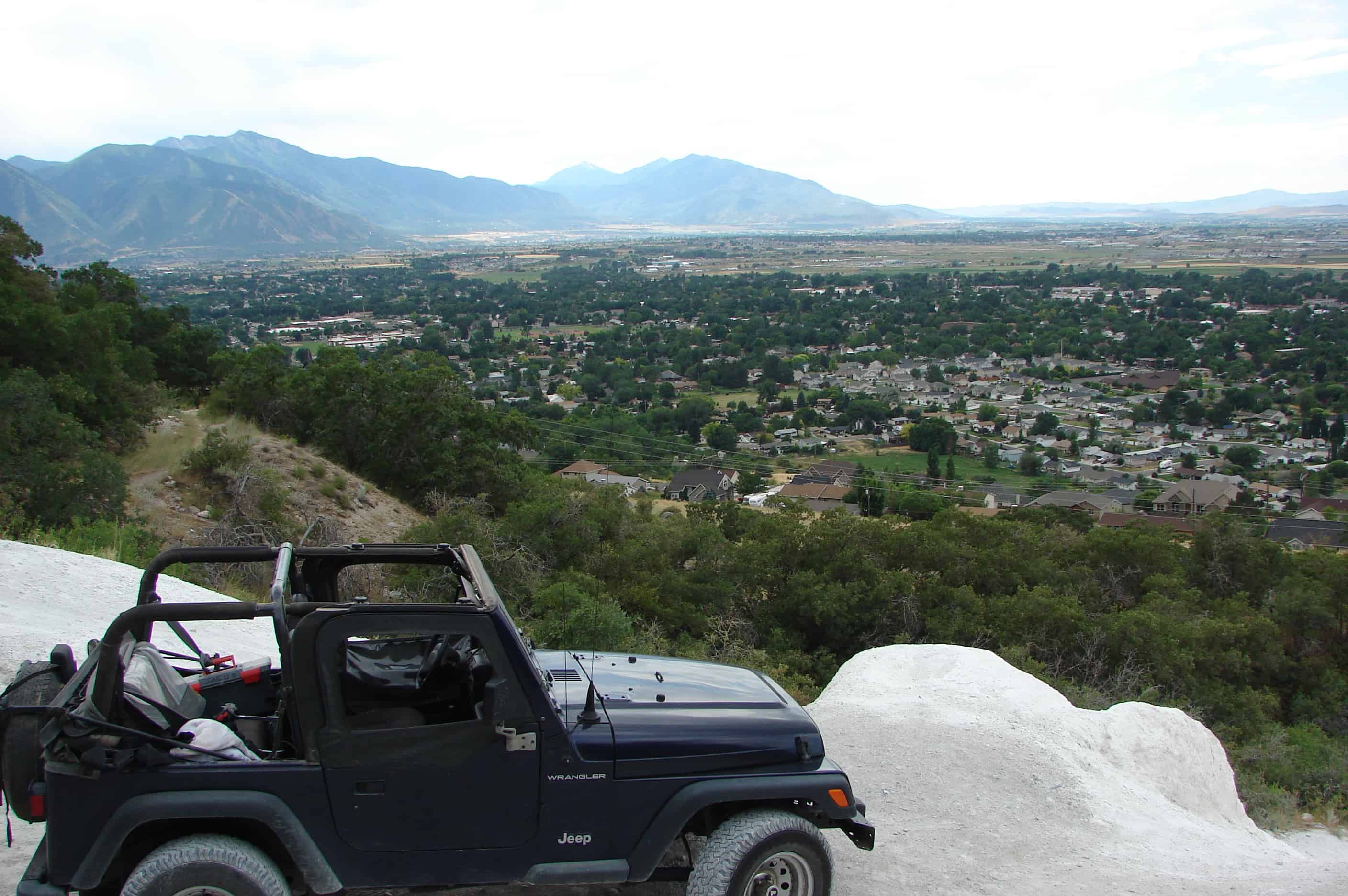
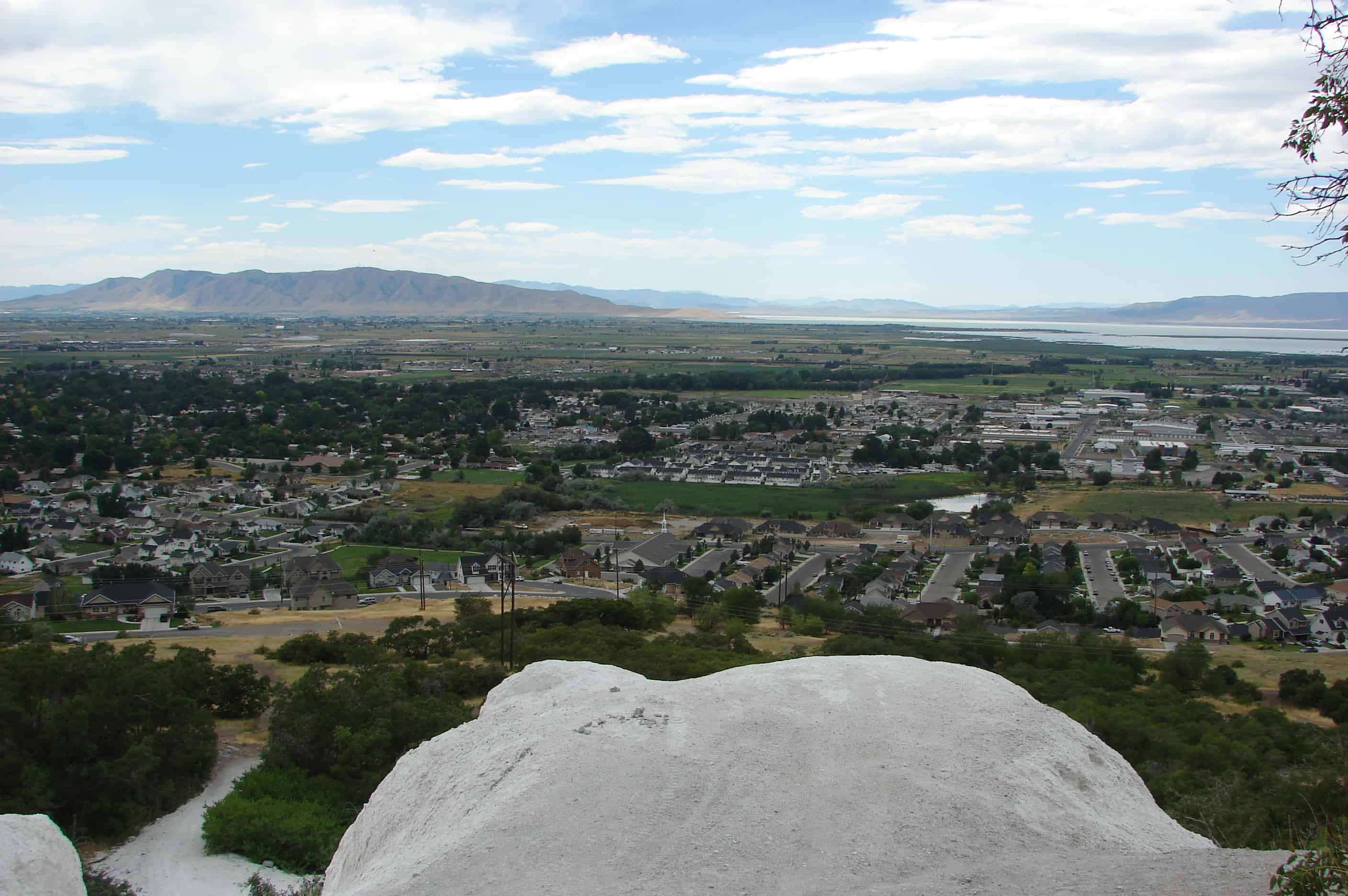
Above North Springville and South Provo are several locations with mines, white tailings and ovens. I was always told as a kid that they were lime kilns and lime mine tailings but recent research indicates that is not accurate. I have this post about the some of the ovens.