Daggett Museum
07 Tuesday Jun 2022
Posted in Uncategorized

07 Tuesday Jun 2022
Posted in Uncategorized
22 Saturday Jan 2022
Posted in Uncategorized
Tags
City Hall Buildings, DUP, museums, New Deal Funded, NRHP, Scipio, utah

Built in 1935, the Scipio Town Hall is one of over 230 public works buildings constructed in Utah under various New Deal programs during the Depression years of the 1930’s and 40’s. The types of buildings constructed included schools, county courthouses, libraries, National Guard Armories and a variety of others. The Scipio Town Hall was intended for use both as a town hall and as a meeting place for all civic and political functions in the community. Two Scipio men Will and Lew Critchley were the brick and stone masons on the building. Several years after construction, probably in the late 1940’s, the brick vestibule on the front was added. This building is a good example of the stylized classicism associated with the PWA Moderne architectural style in Utah. The building was renovated in 1986 with funds raised principally by the Round Valley Camp of the Daughters of Utah Pioneers to be used as a museum for the D.U.P. and as a Senior Citizens Center.
Located at approximately 49 North State Street in Scipio, Utah and added to the National Register of Historic Places (#88002999) on December 22, 1988.
Related:
Built in 1935, the Scipio Town Hall is part of the Public Works Buildings Thematic Resource nomination and is significant because it helps document the impact of New Deal programs in Utah, which was one of the states that the Great Depression of the 1930s most severely affected. In 1933 Utah had an unemployment rate of 36 percent, the fourth highest in the country, and for the period 1932-1940 Utah’s unemployment rate averaged 25 percent. Because the depression hit Utah so hard, federal programs were extensive in the state. Overall, per capita federal spending in Utah during the 1930s was 9th among the 48 states, and the percentage of workers on federal work projects was far above the national average. Building programs were of great importance. During the 1930s virtually every public building constructed in Utah, including county courthouses, city halls, fire stations, national guard armories, public school buildings, and a variety of others, were built under federal programs by one of several agencies, including the Civil Works Administration (CWA), the Federal Emergency Relief Administration (FERA), the National Youth Administration (NYA), the Works Progress Administration (WPA), or the Public Works Administration (PWA), and almost without exception none of the buildings would have been built when they were without the assistance of the federal government.
The Scipio Town Hall is one 233 public works buildings identified in Utah that were built during the 1930s and early 1940s. Only 130 of those 233 buildings are known to remain today and retain their historic integrity. Twenty-two city halls were built; this is one of 17 that remain. In Millard County 10 buildings were constructed, of which only 6 remain.
The Scipio Town Hall was constructed as a Works Progress Administration (WPA) project and was intended for use both as a town hall and as a meeting place for all civic and political functions in the community. Two Scipio men, Will and Lew Critchley, were the brick and stone masons on the building. Several years after the building was constructed, the town board decided to add a sloping floor and put in some theatre seats so the townsfolk could enjoy a movie every Friday and Saturday night. Also at that time the brick vestibule on the front was added. The town board continued to hold their meetings in the basement of the building for a number of years after that. The building was vacant for several years until being renovated as a senior citizen center in 1985-86.


06 Thursday Jan 2022
Posted in Uncategorized

This DUP Museum is located at 186 South 500 West in Vernal, Utah in the old tithing office.
Some of the markers/monuments here are:


21 Tuesday Dec 2021
Posted in Uncategorized
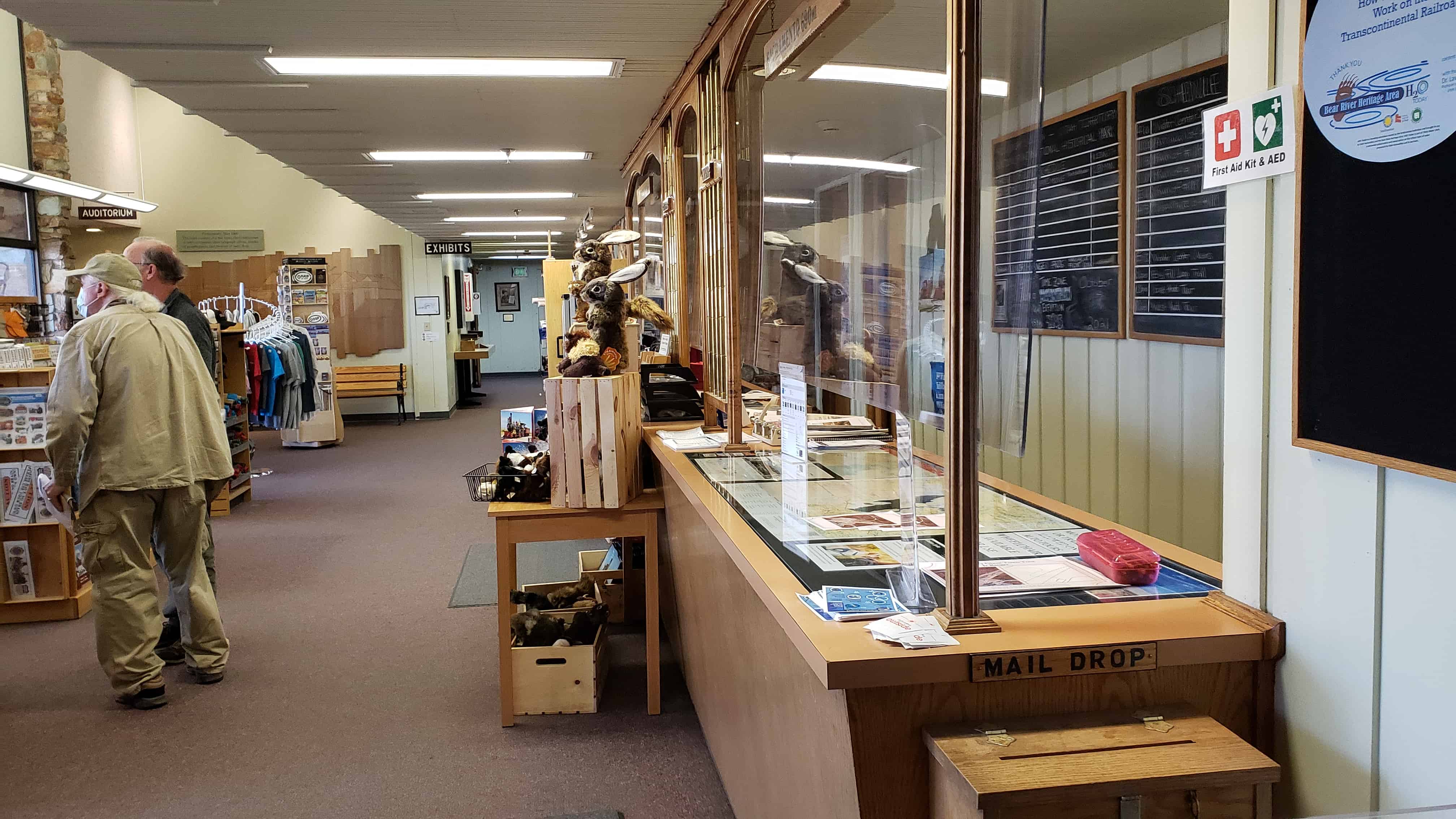
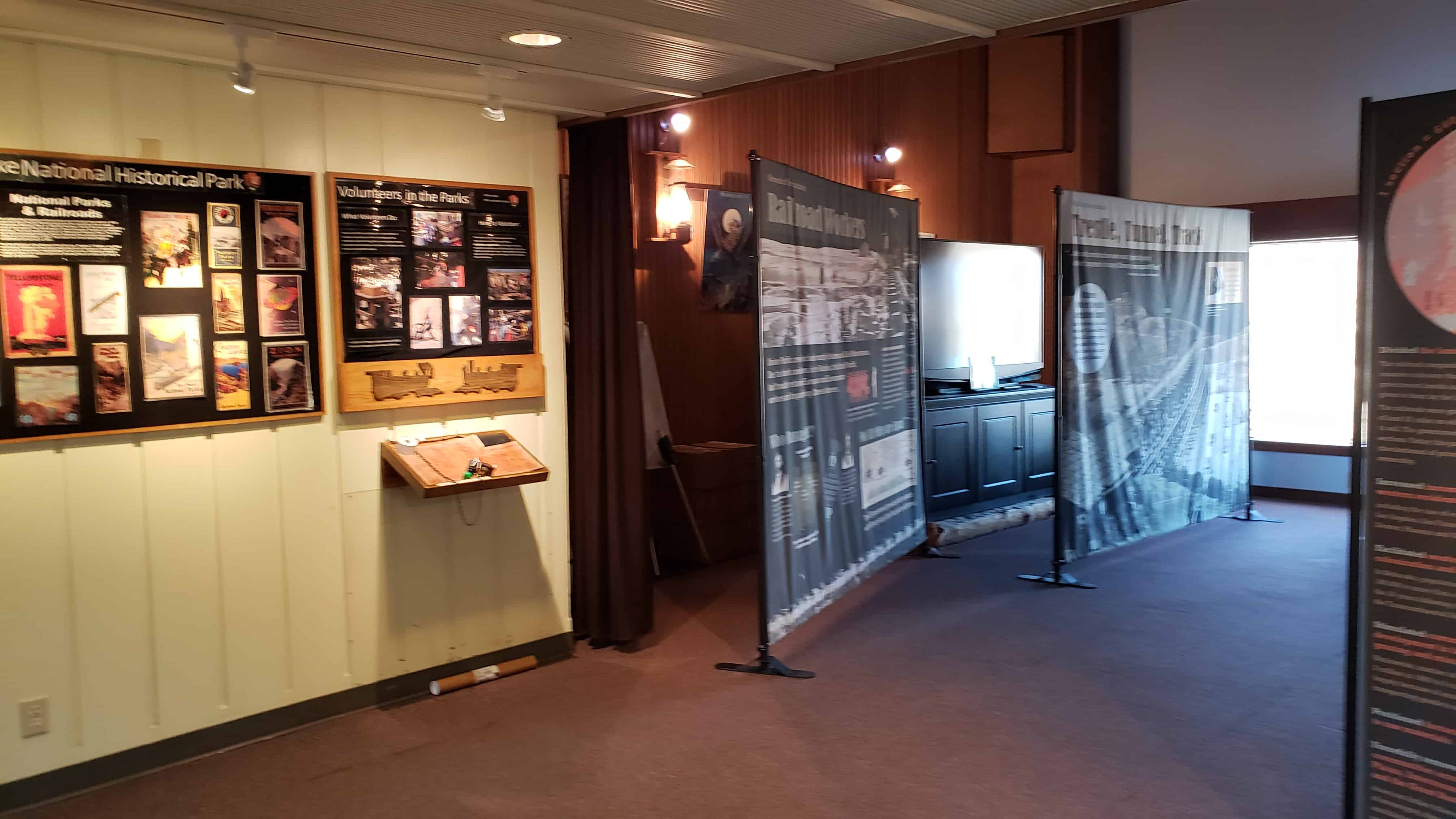
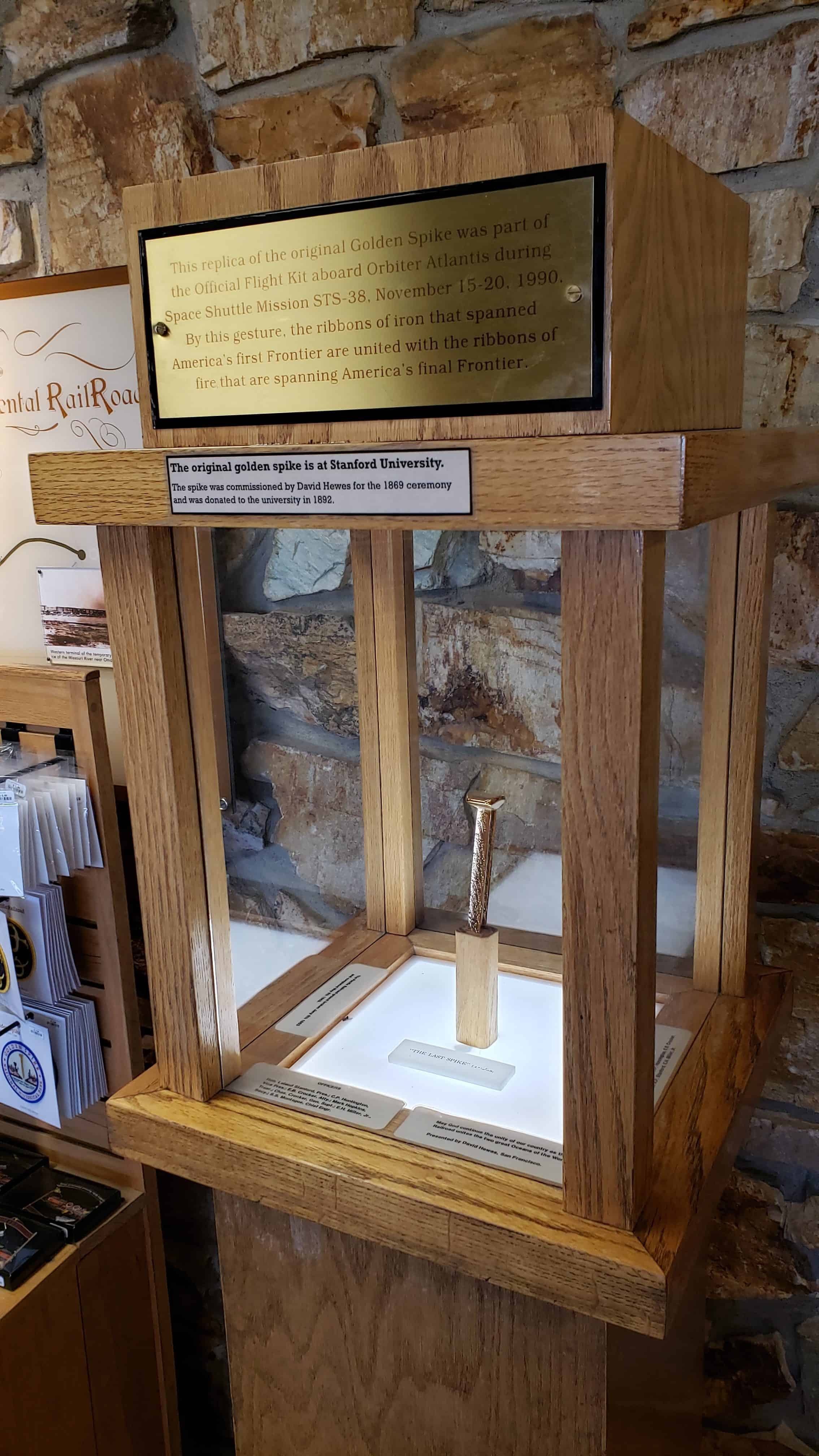
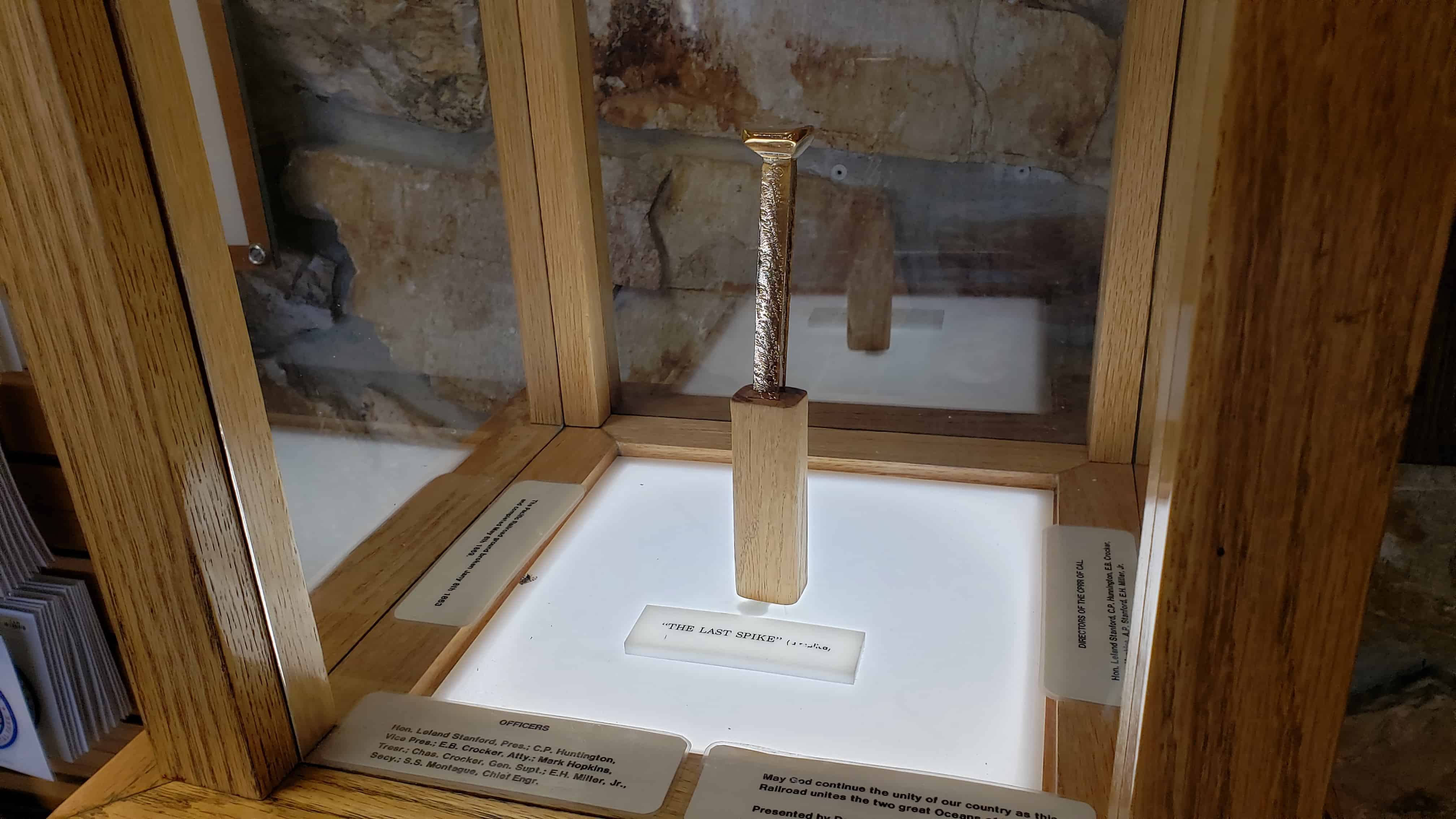
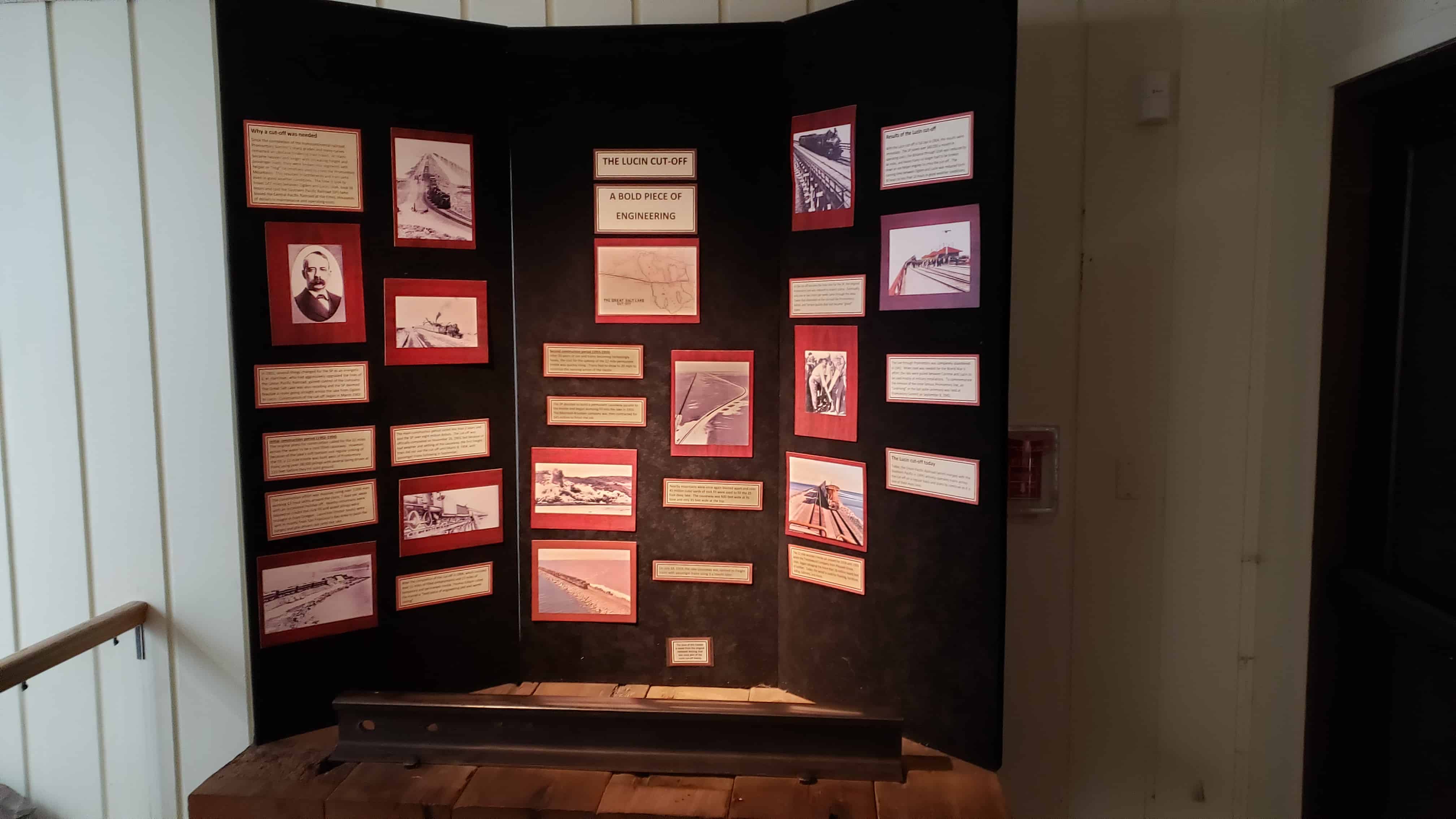
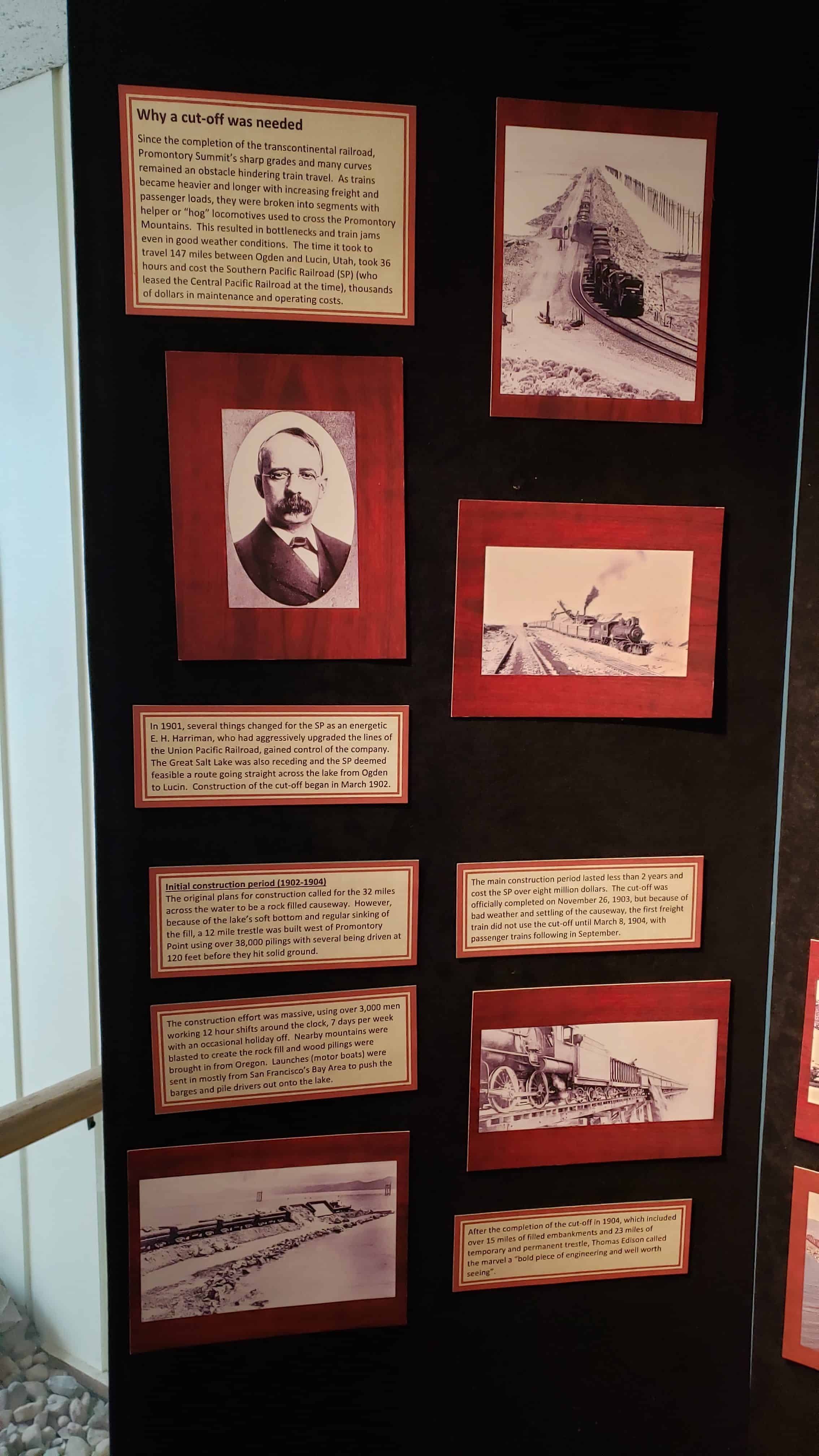
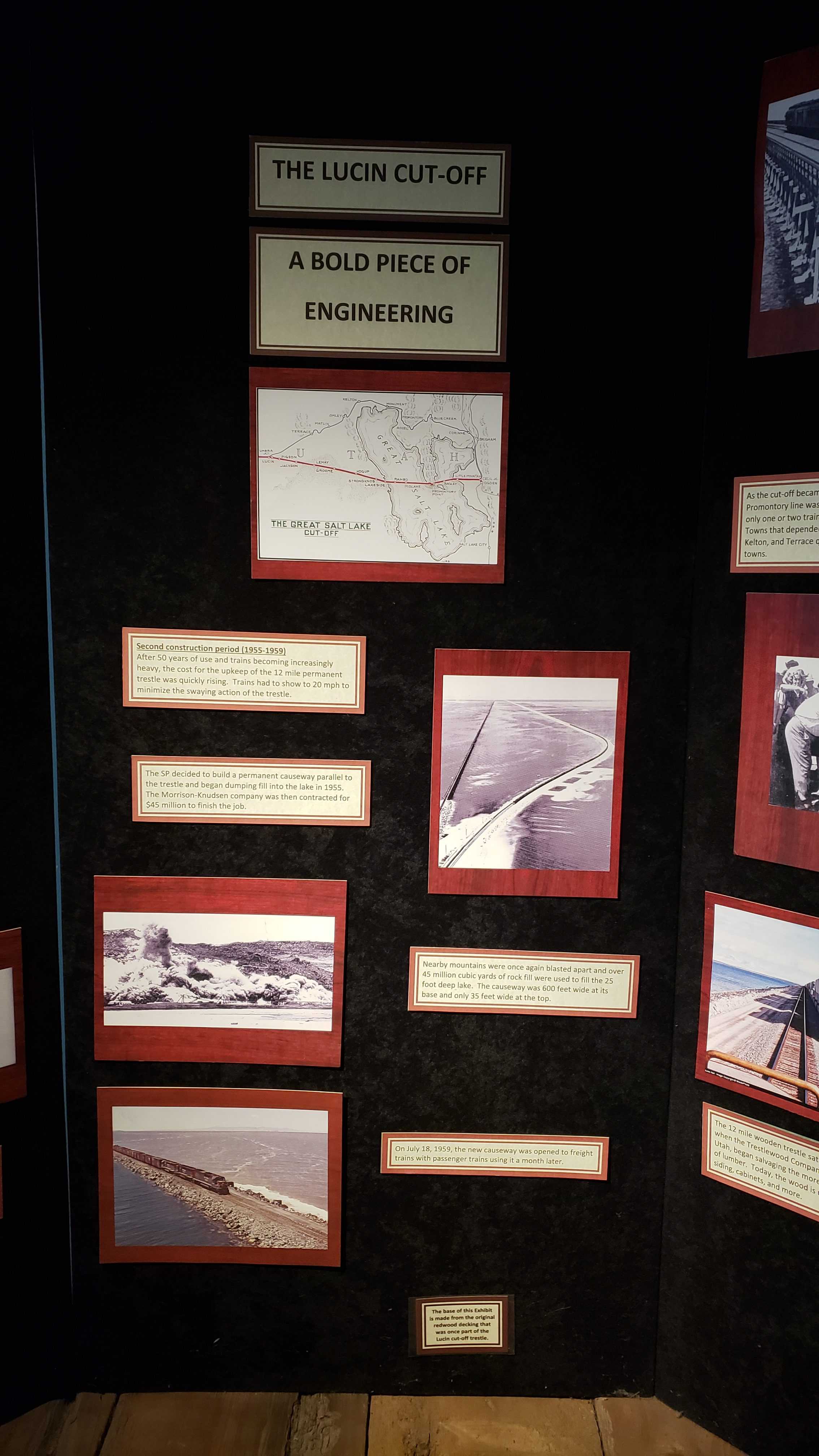
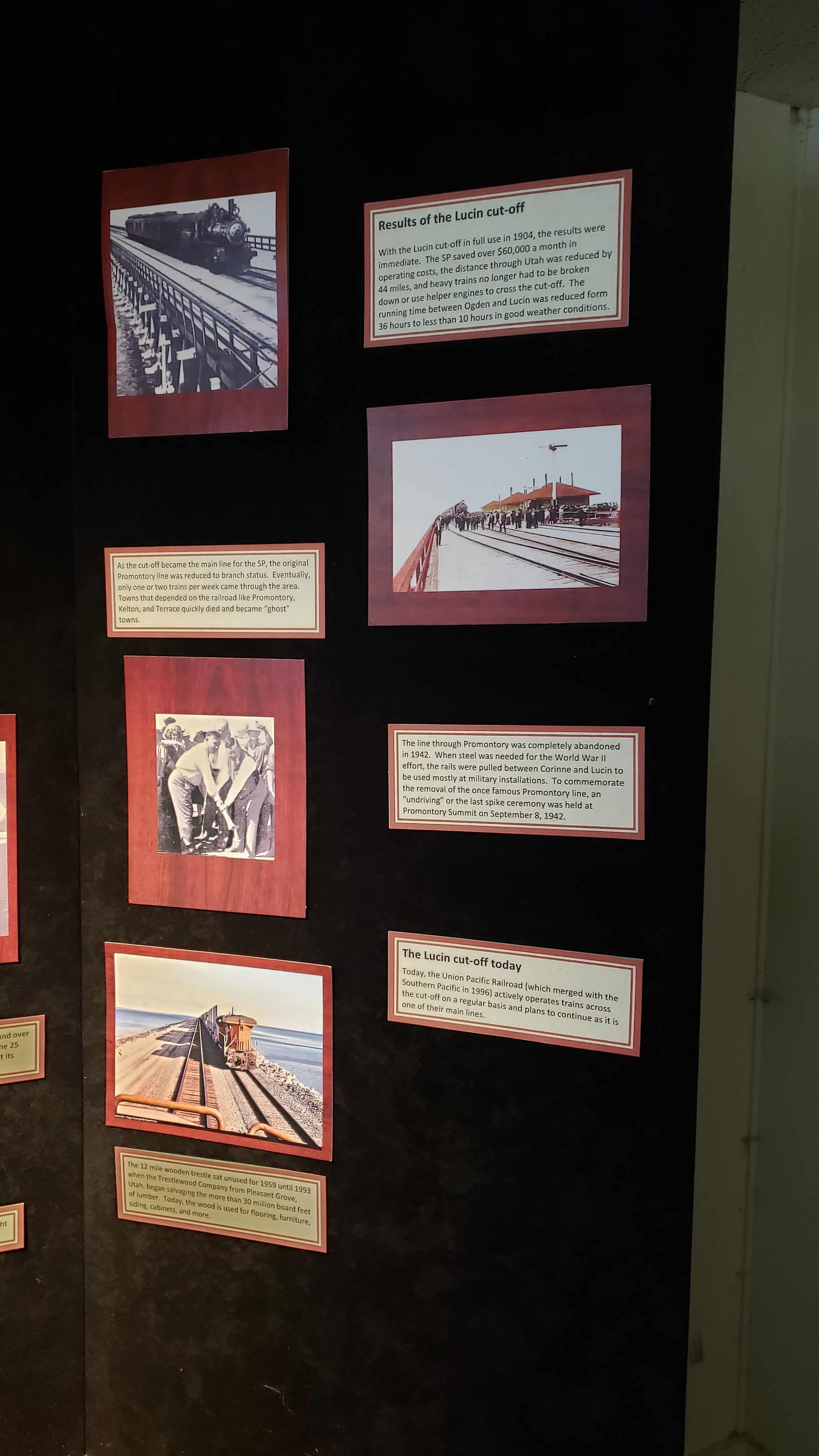
This page is for the interior of the museum/visitor center at Golden Spike National Historical Park.


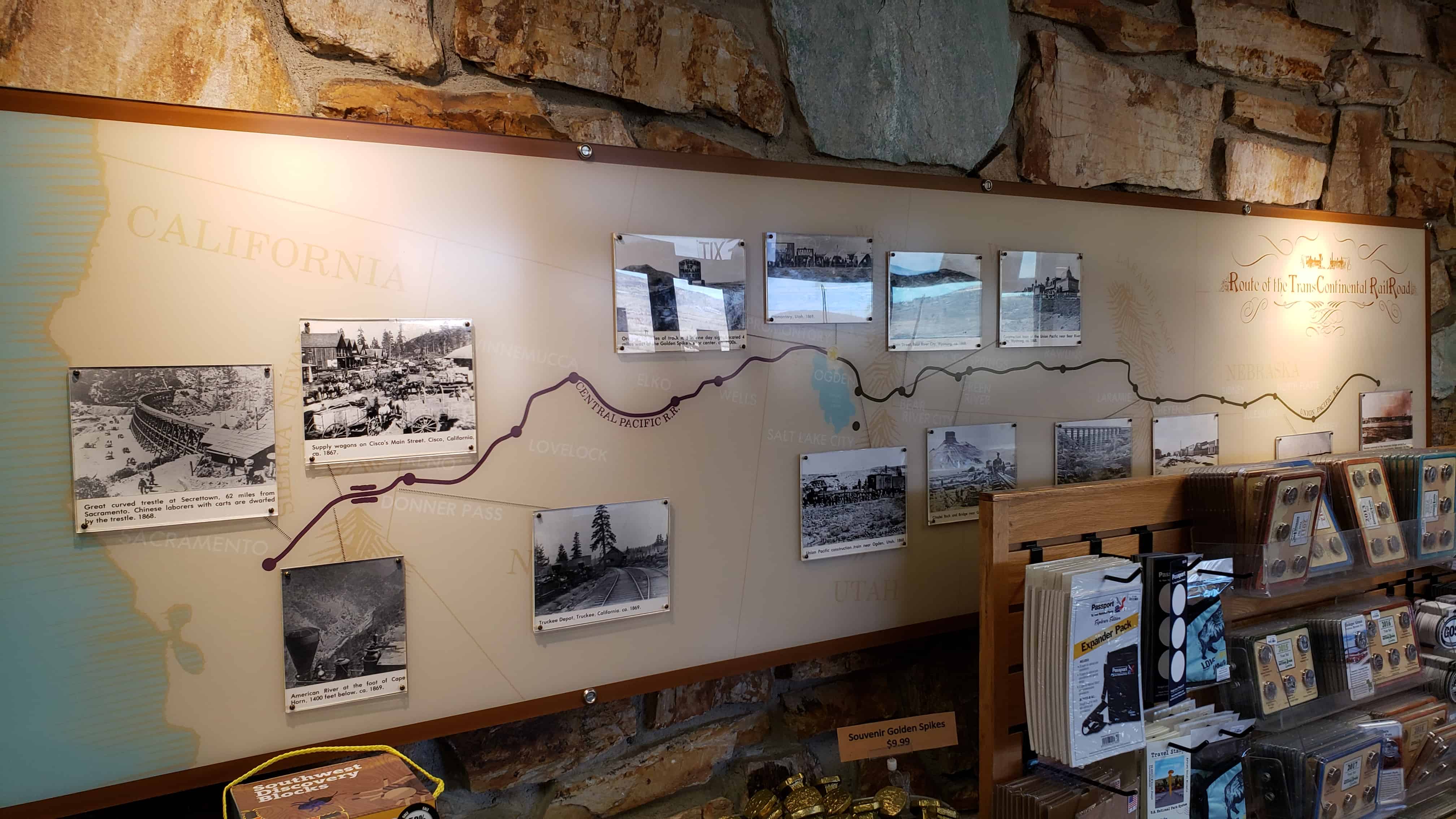
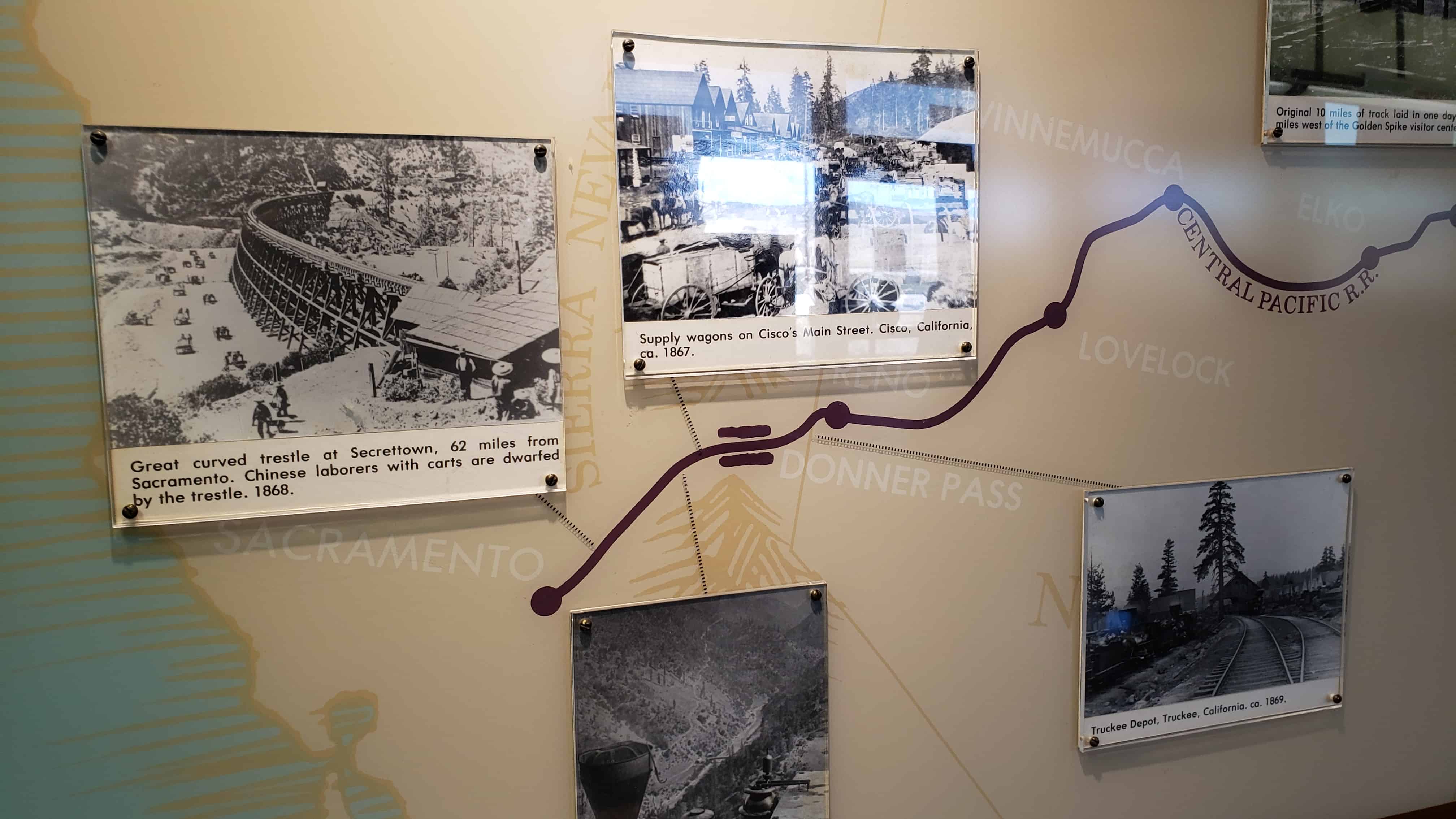
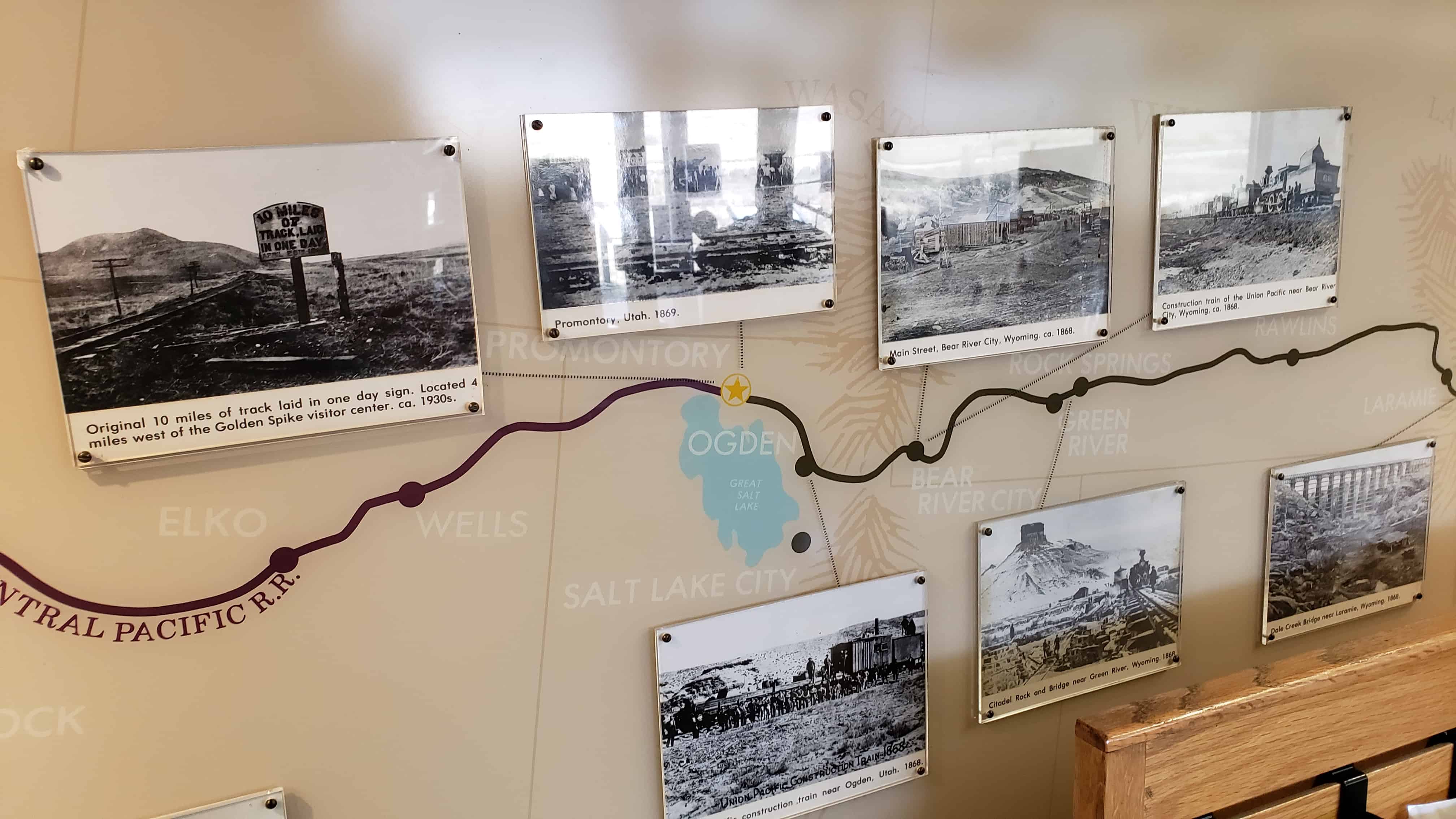
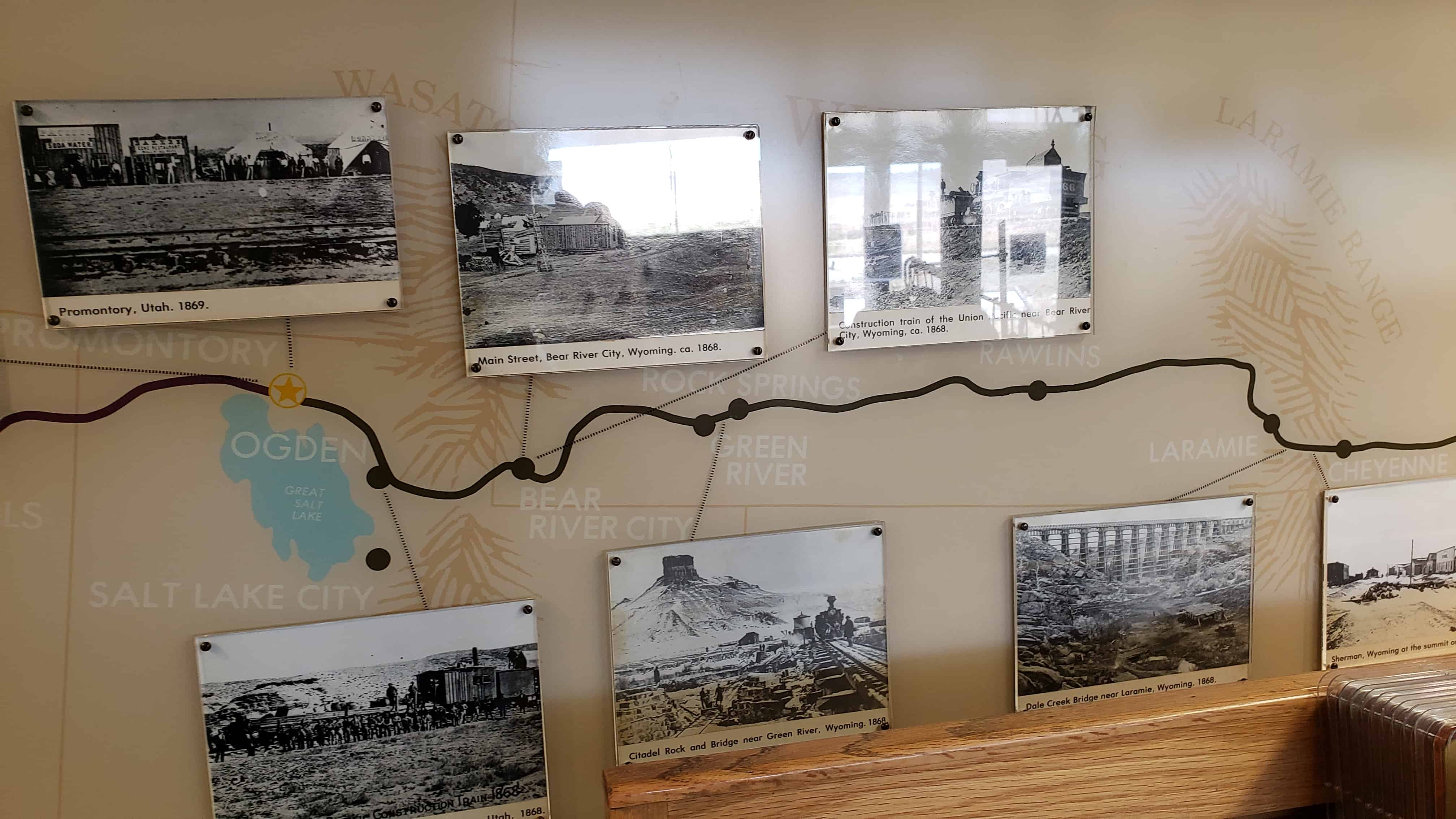
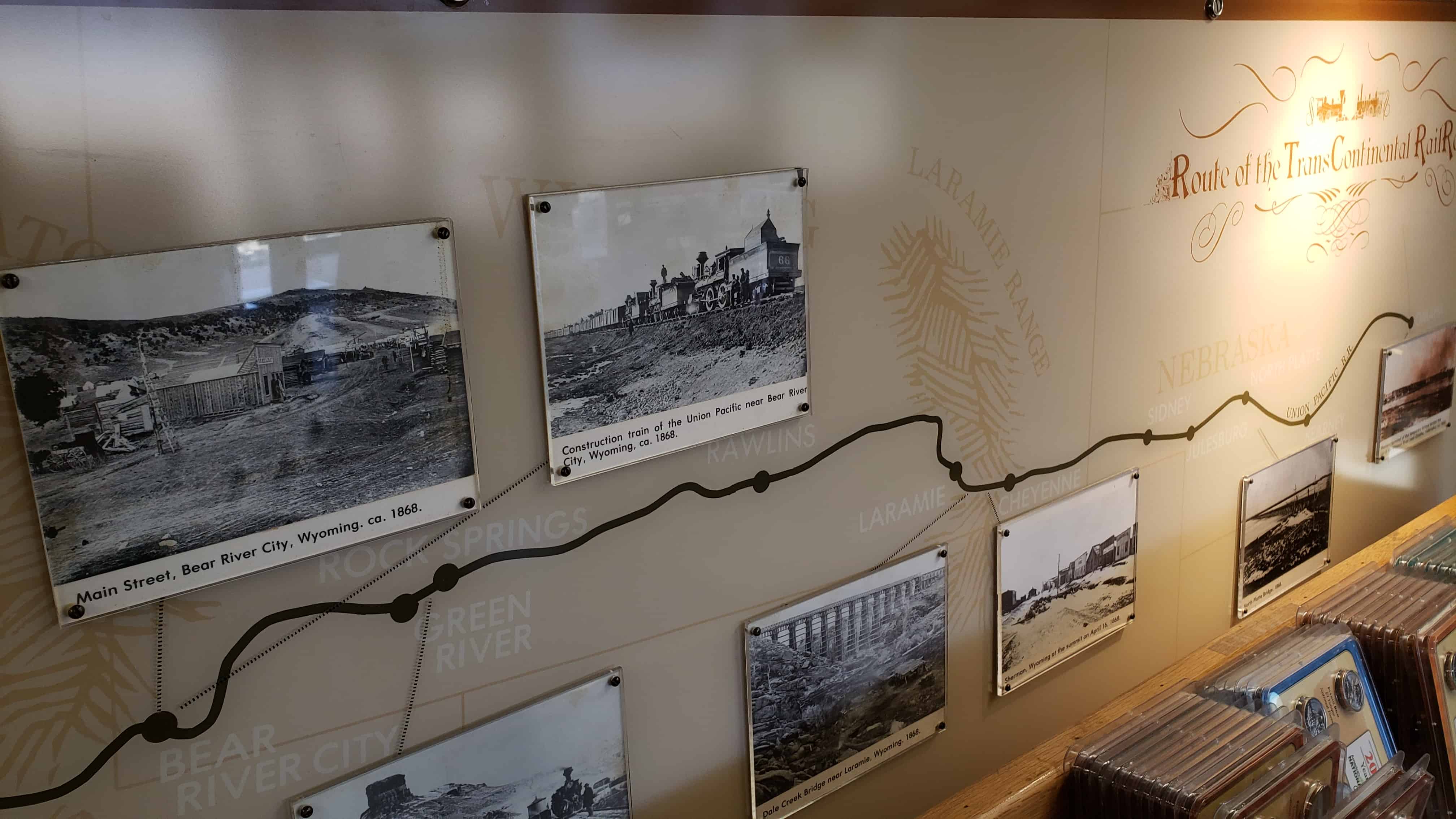
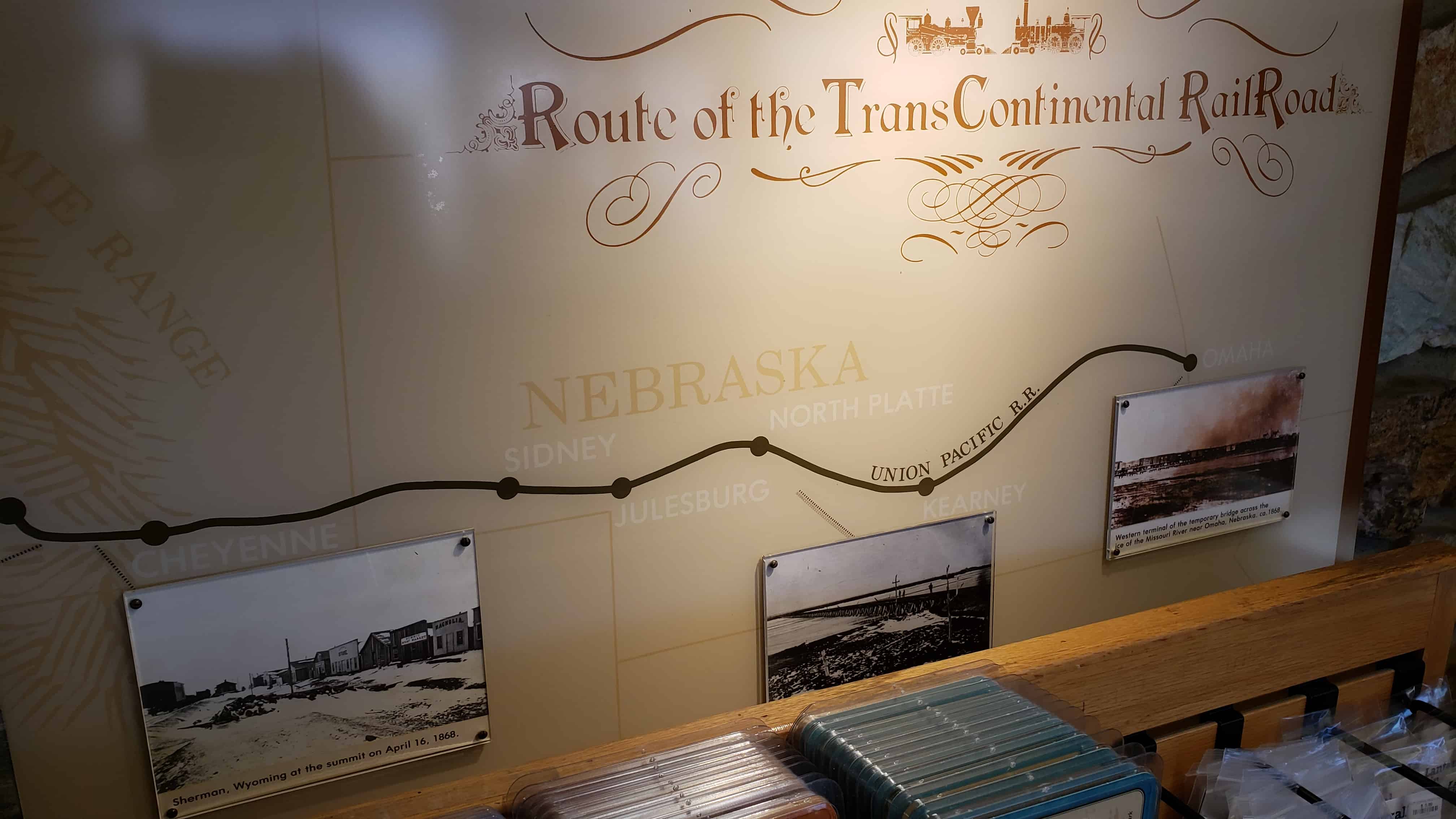
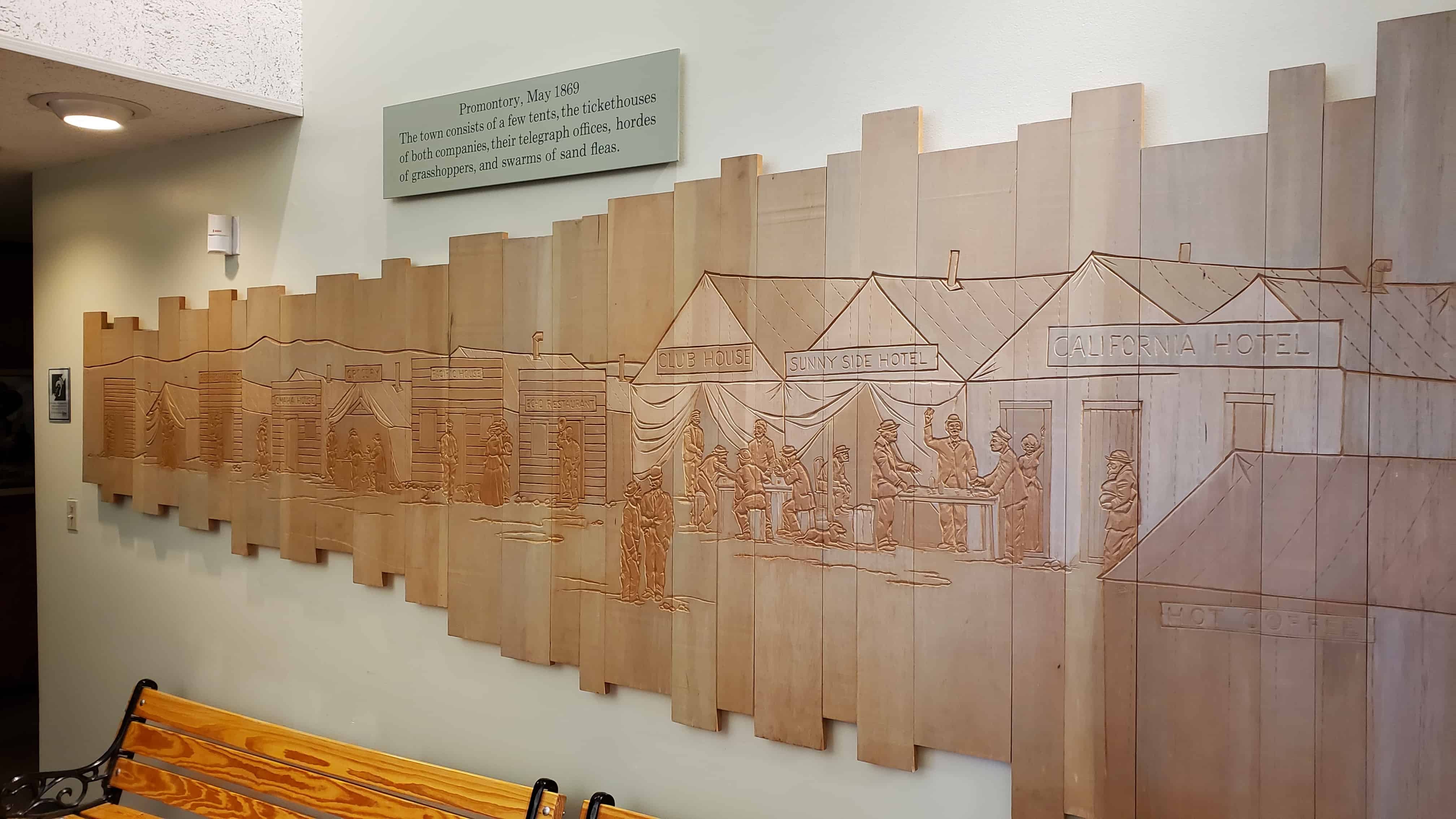
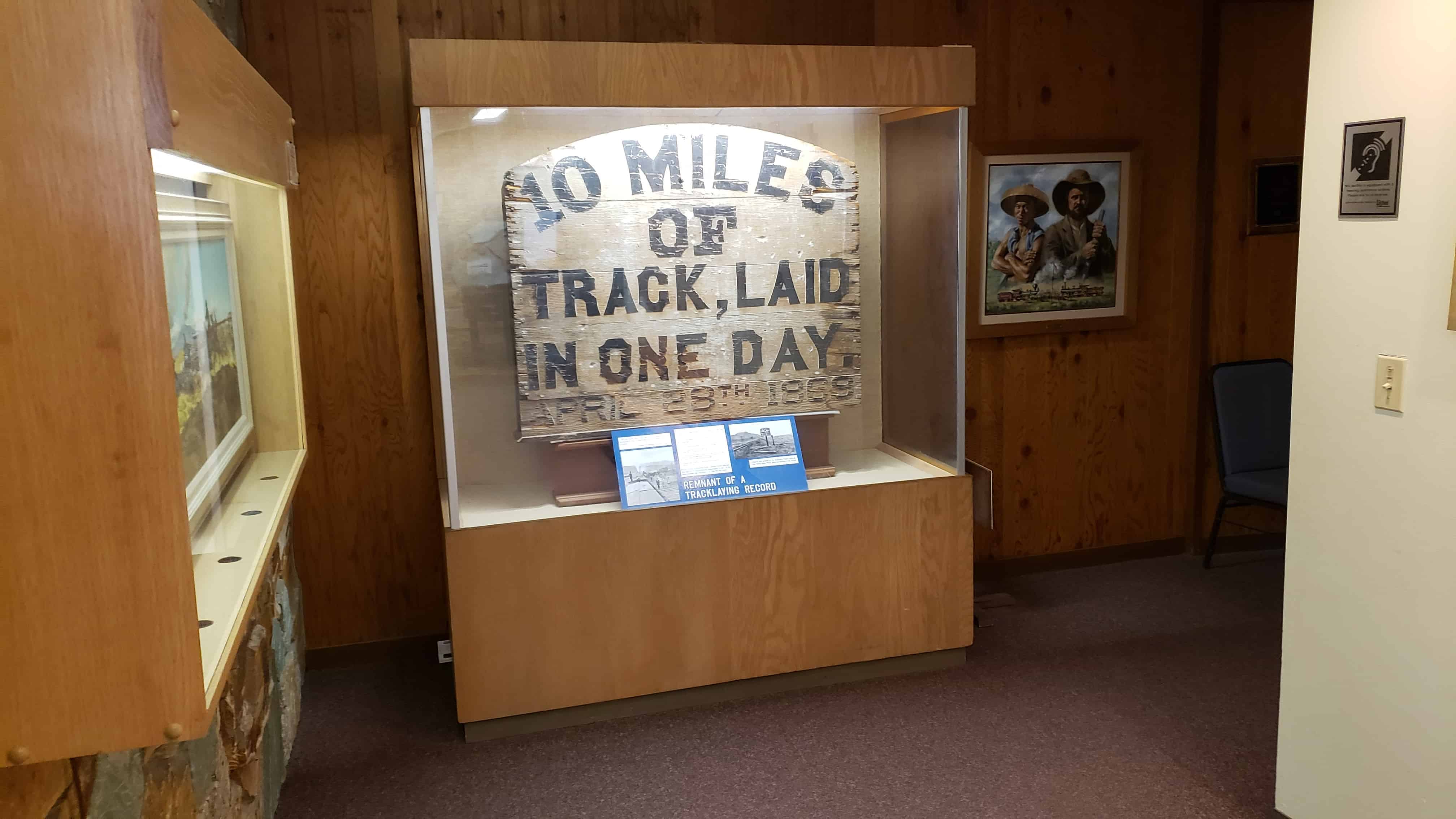
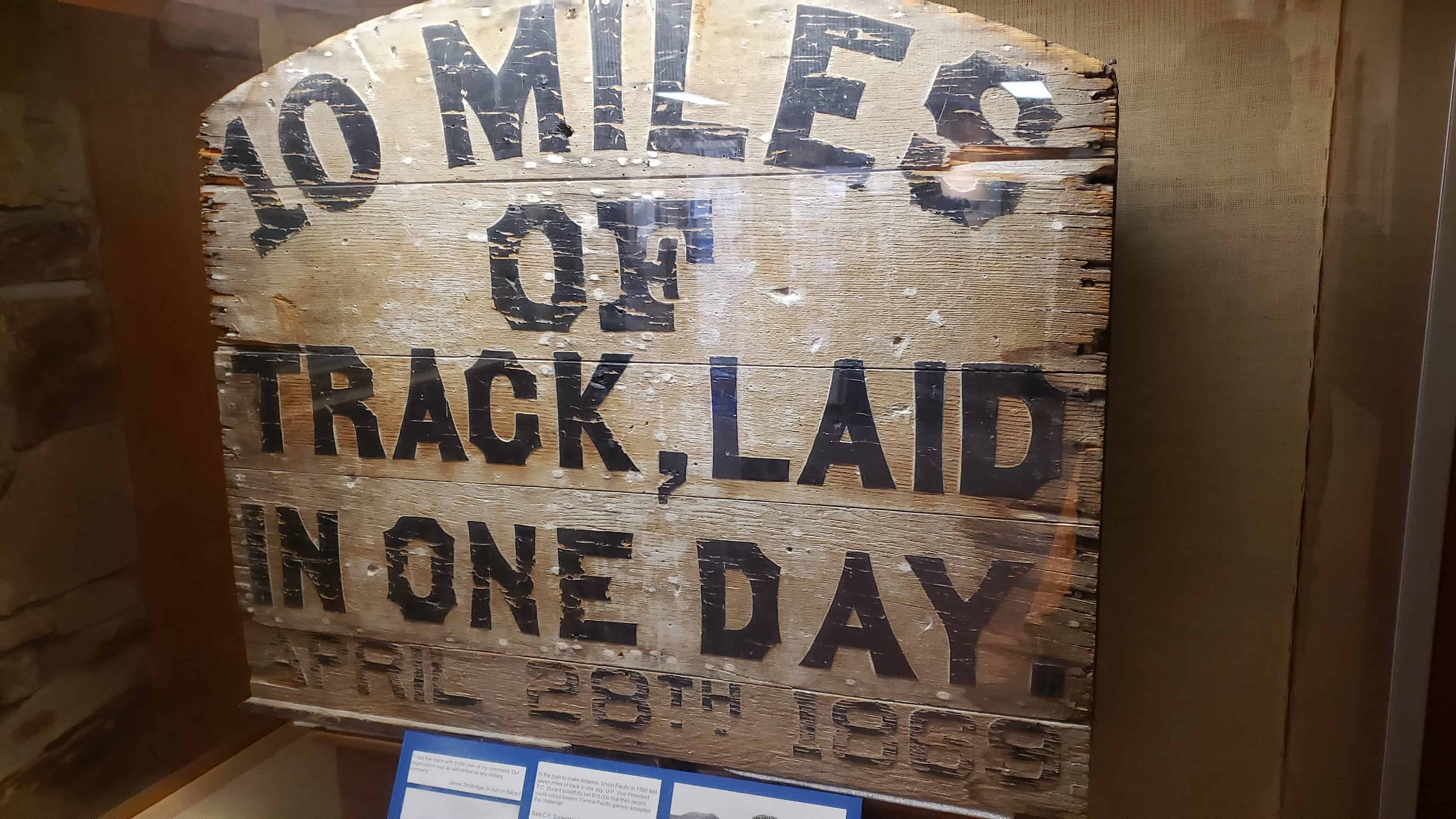
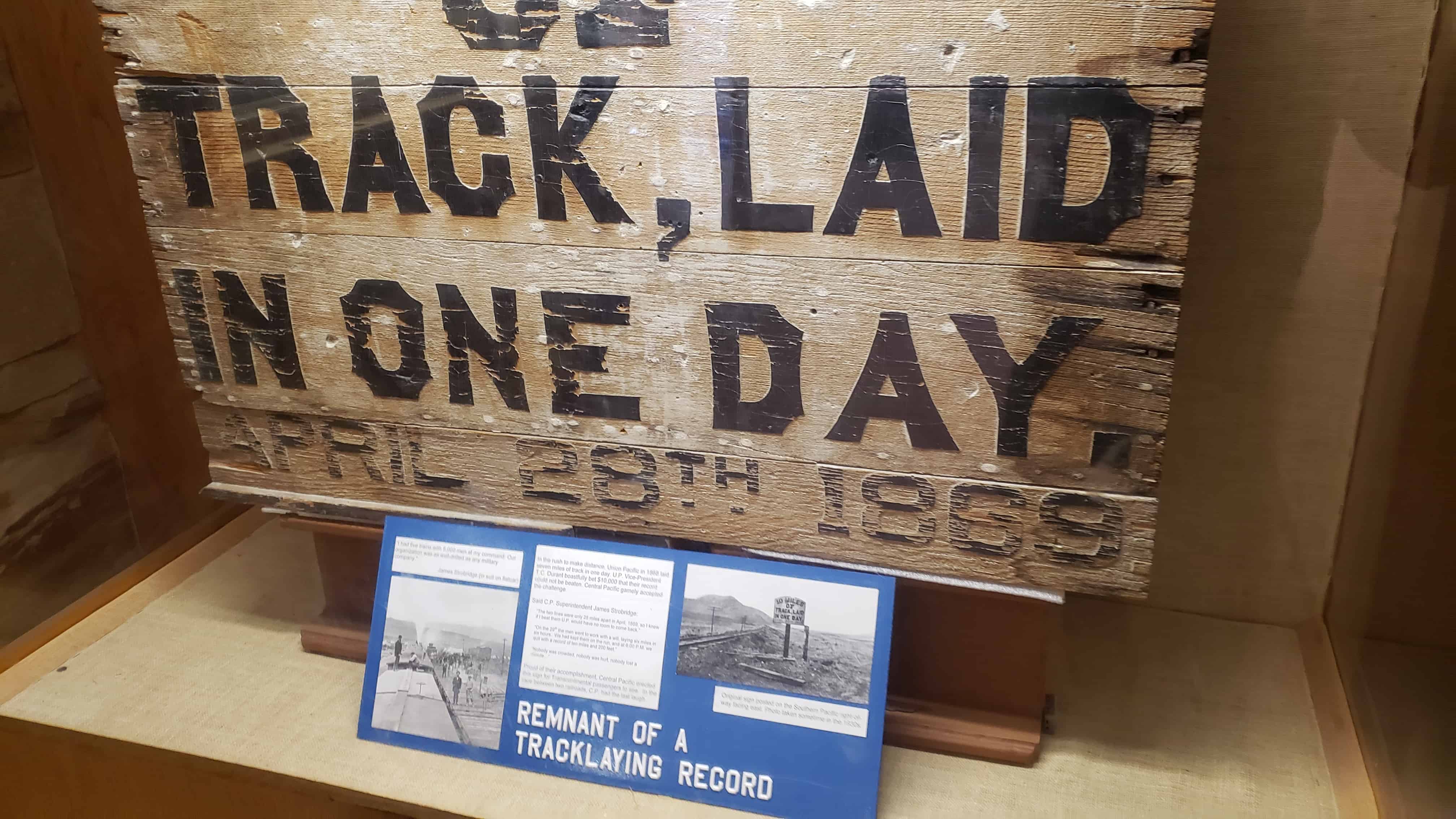
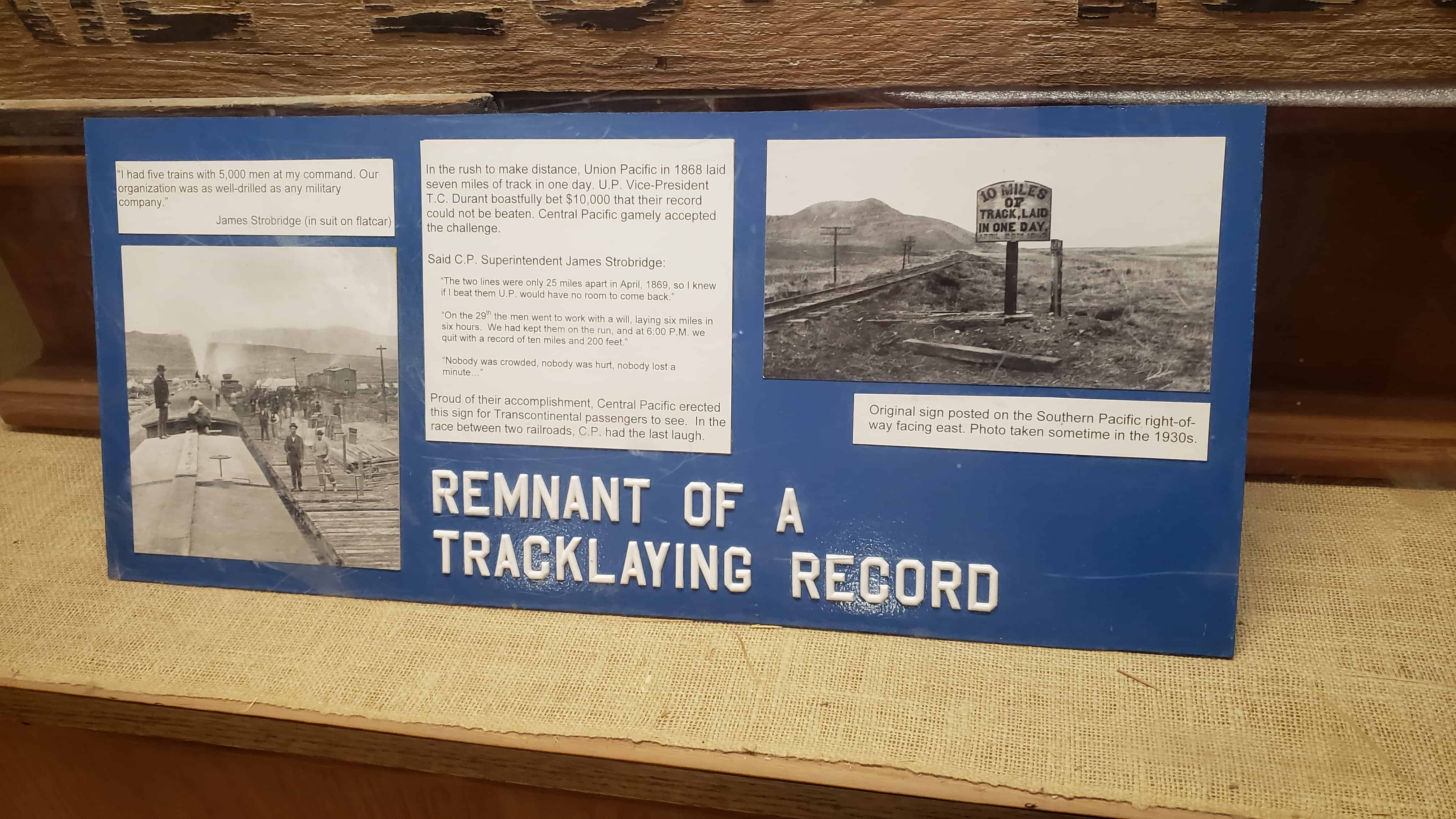

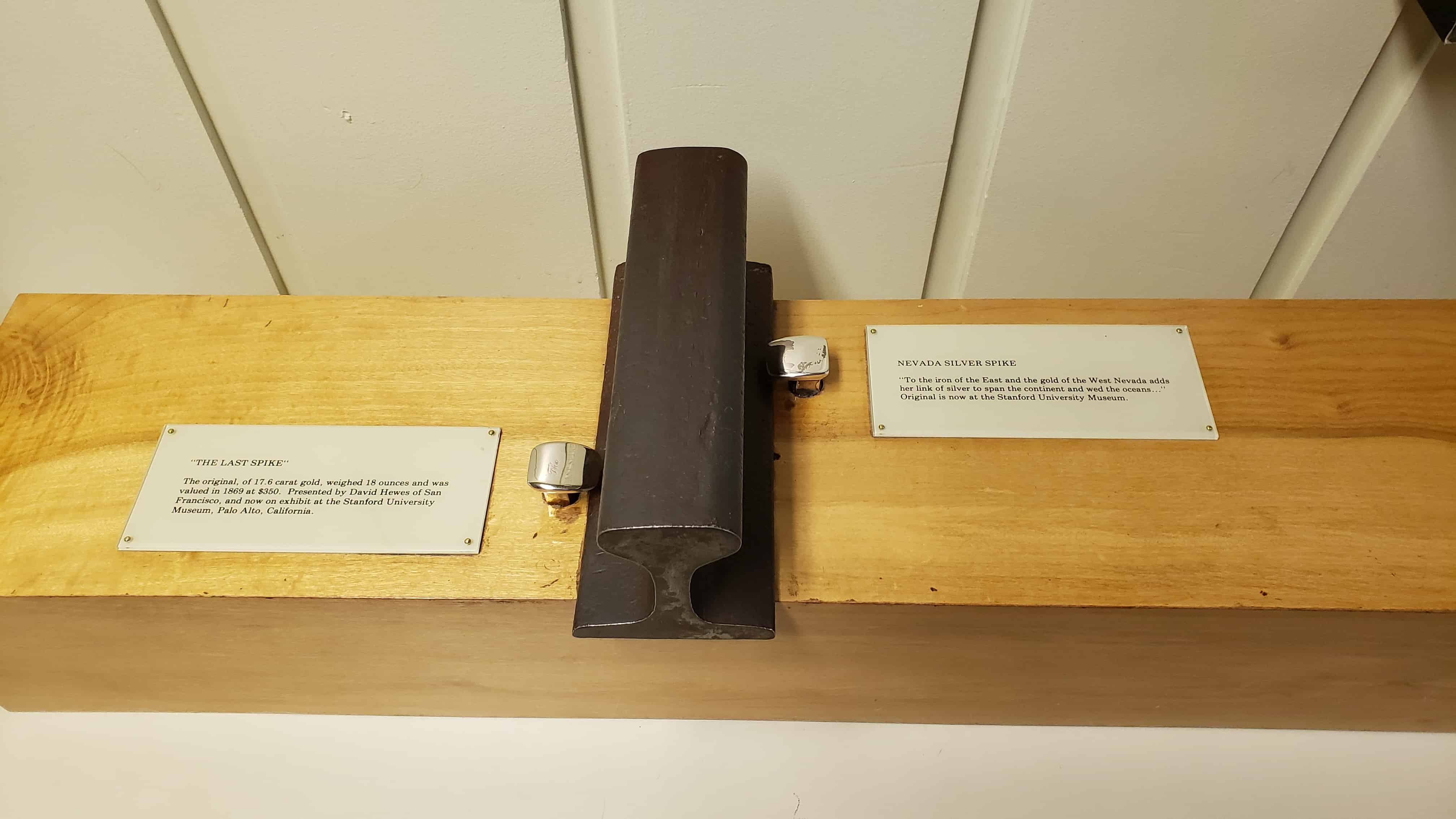
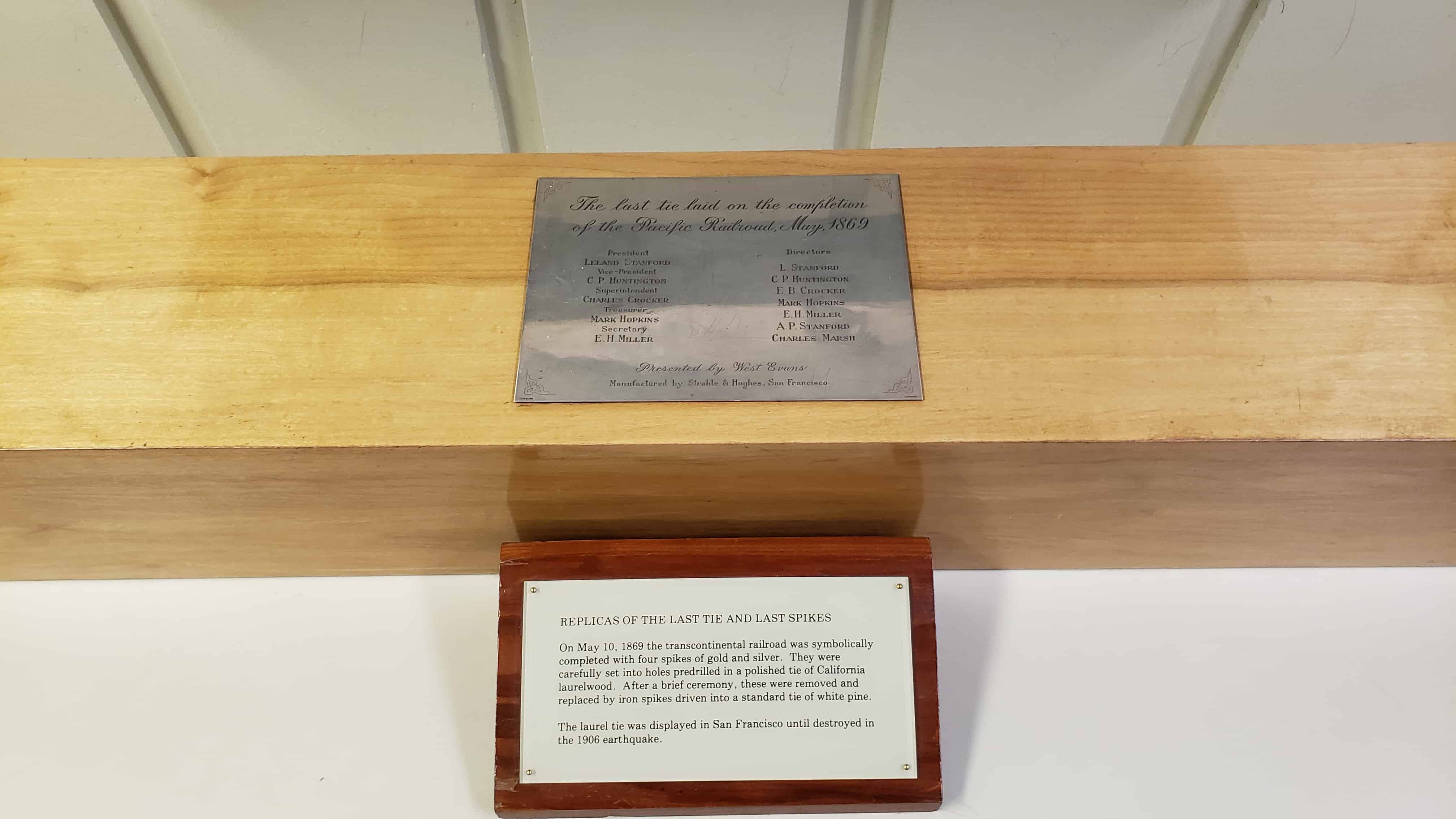
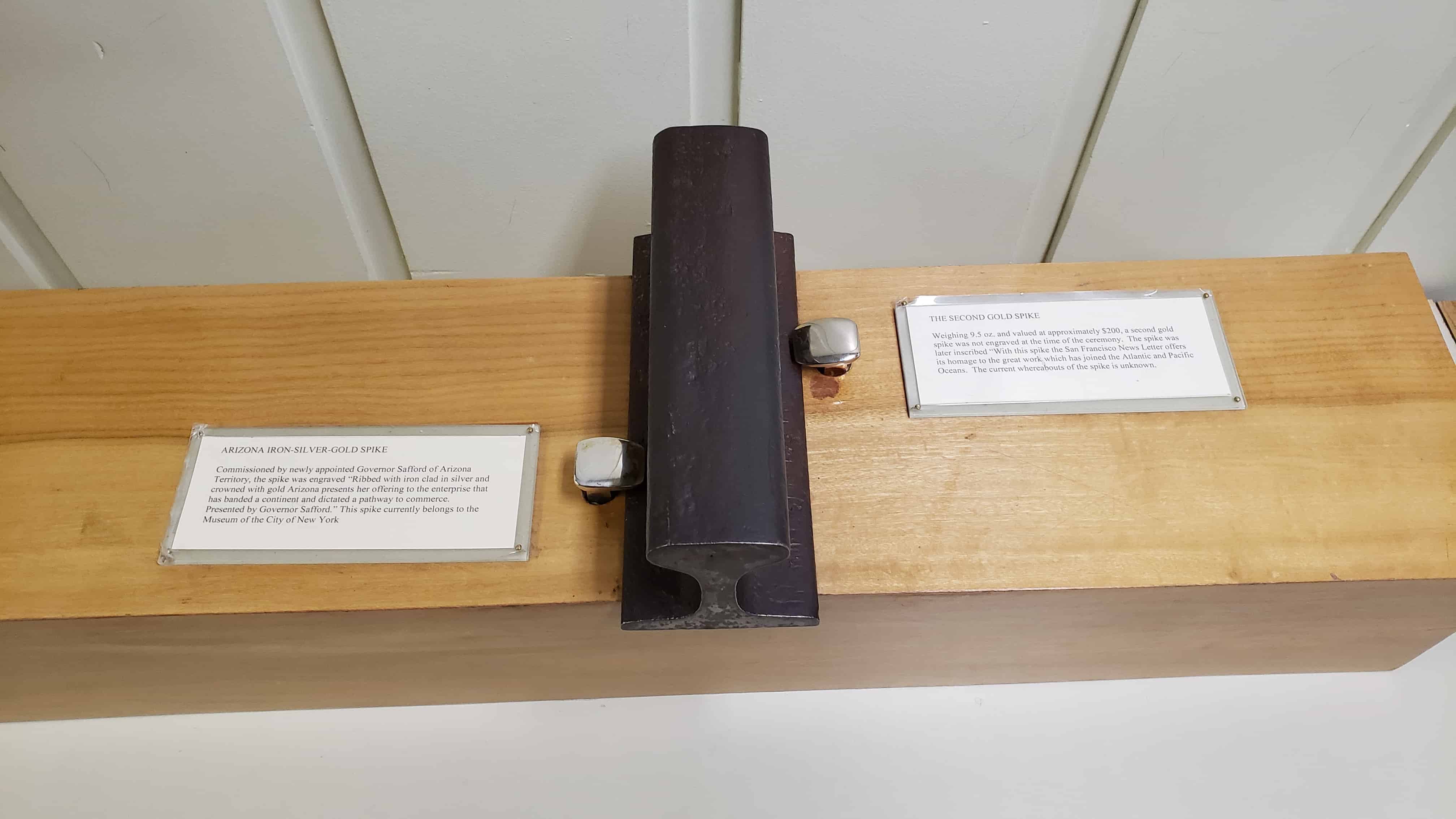
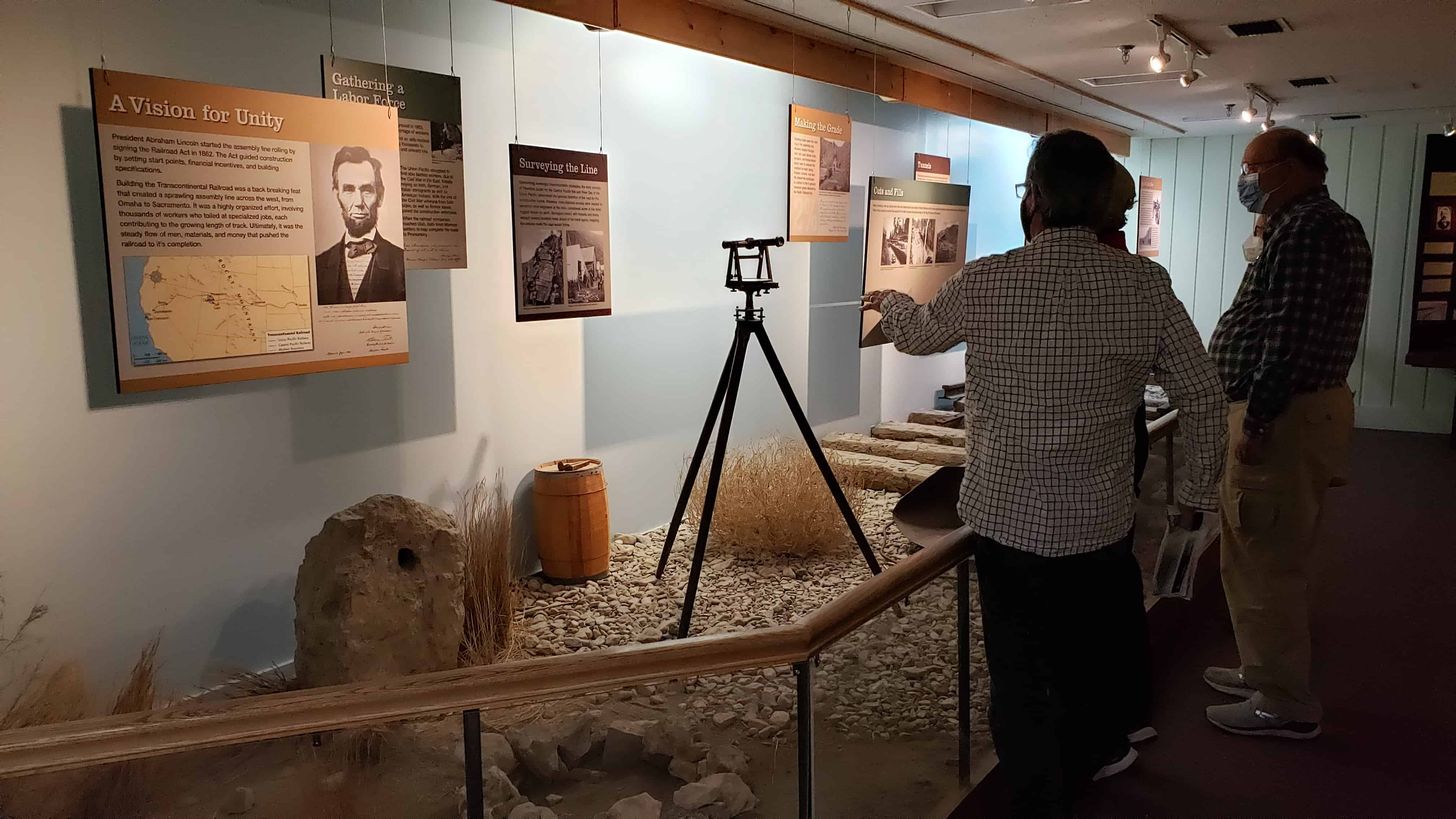
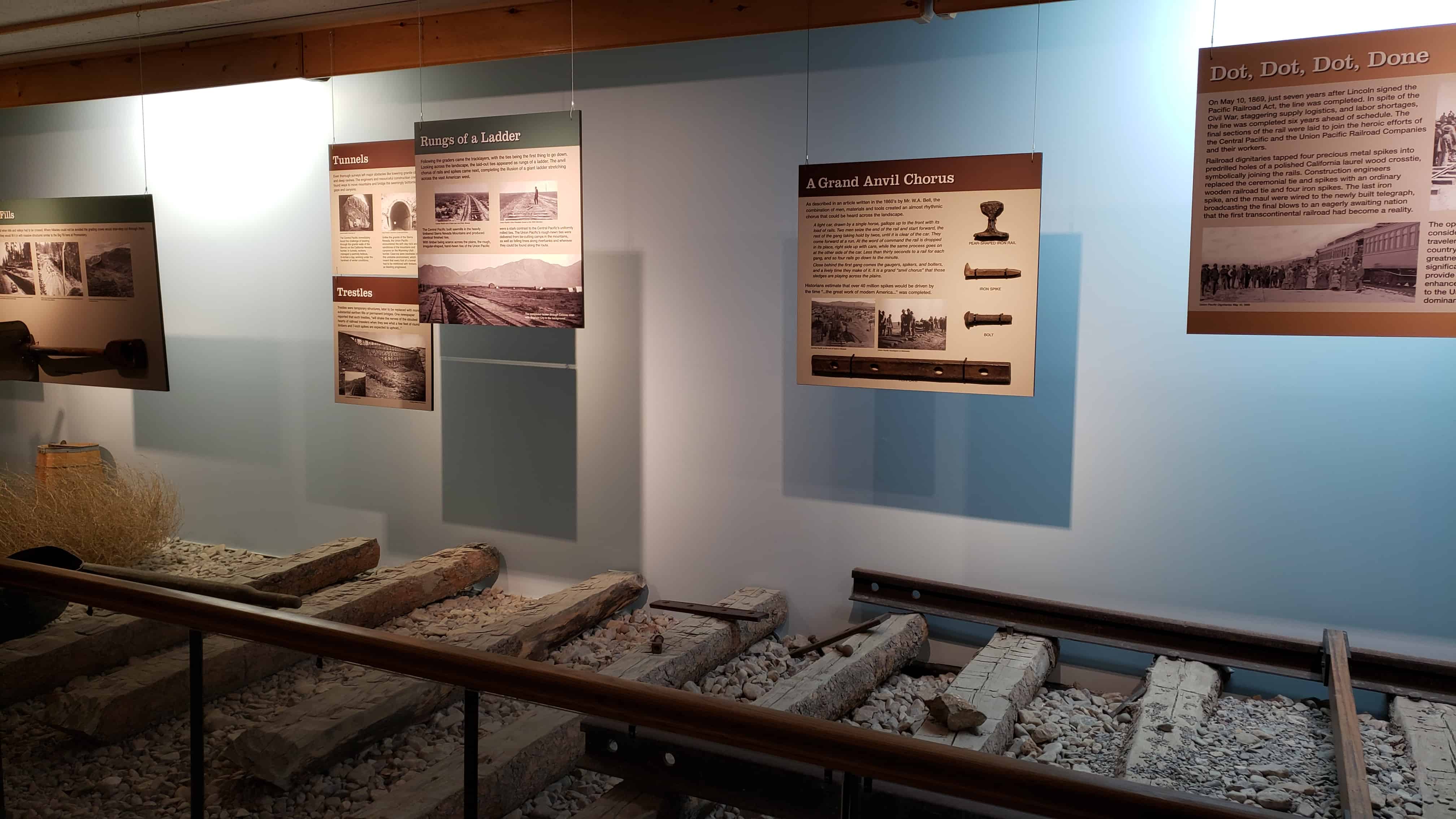
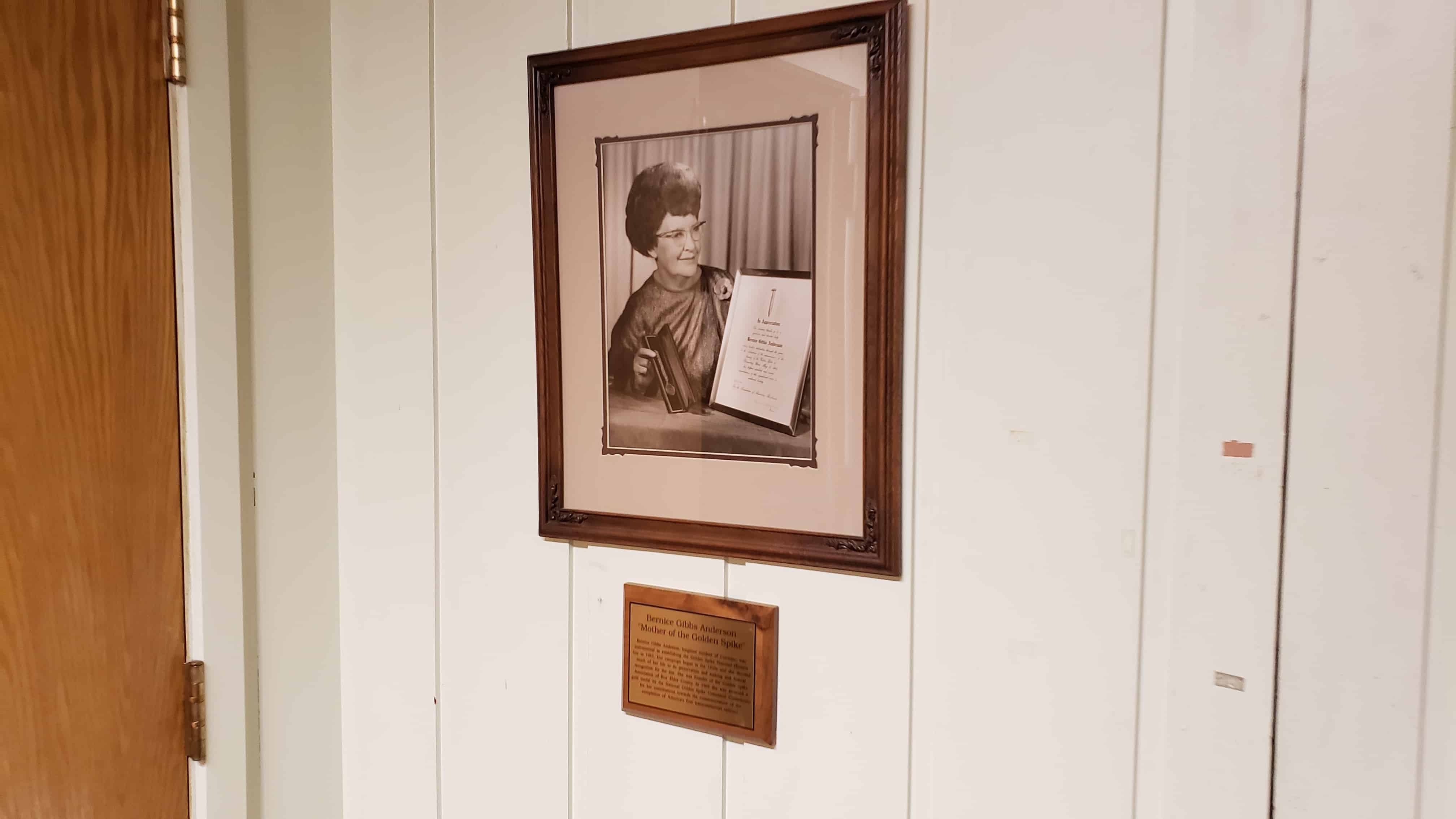
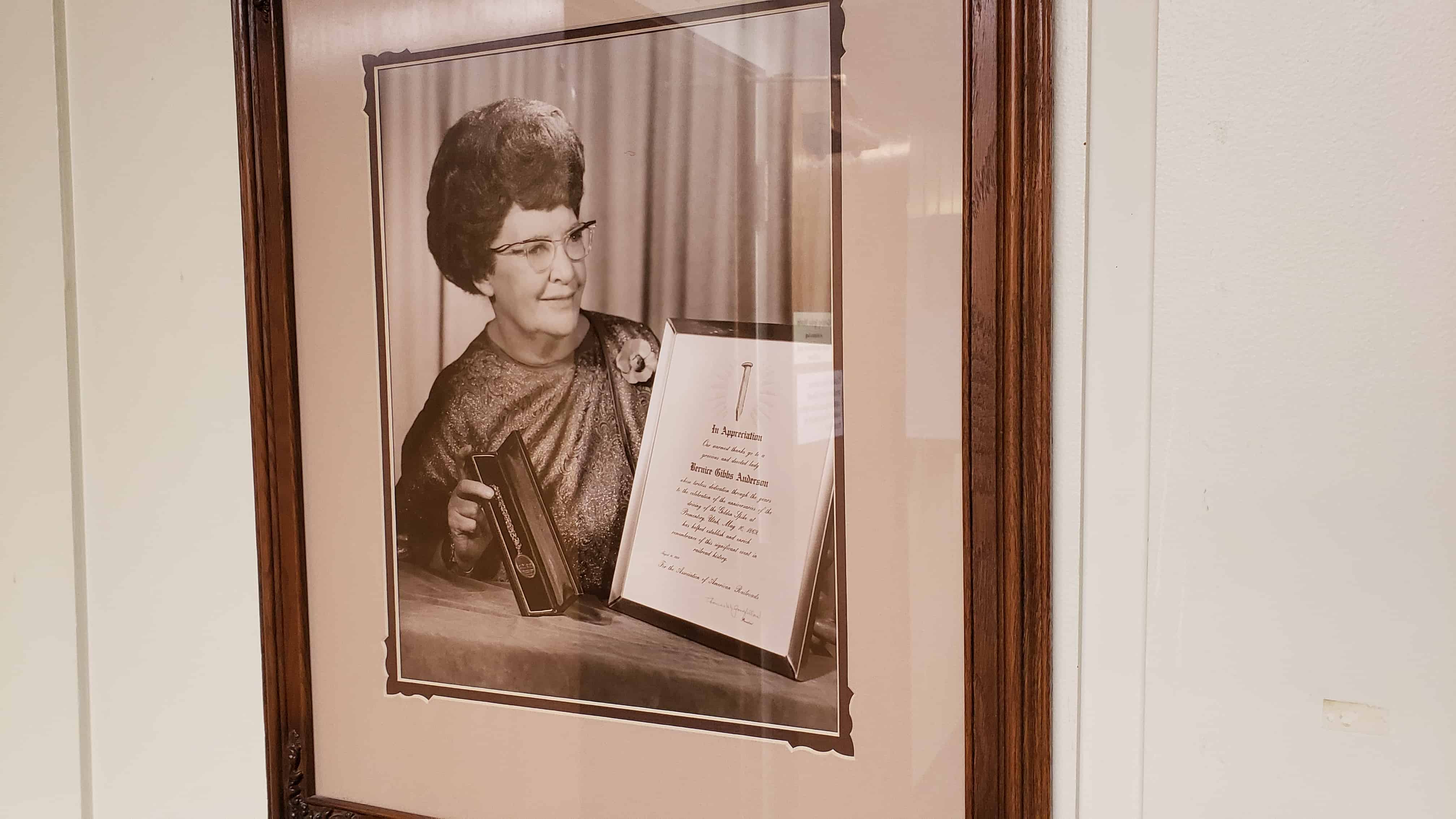
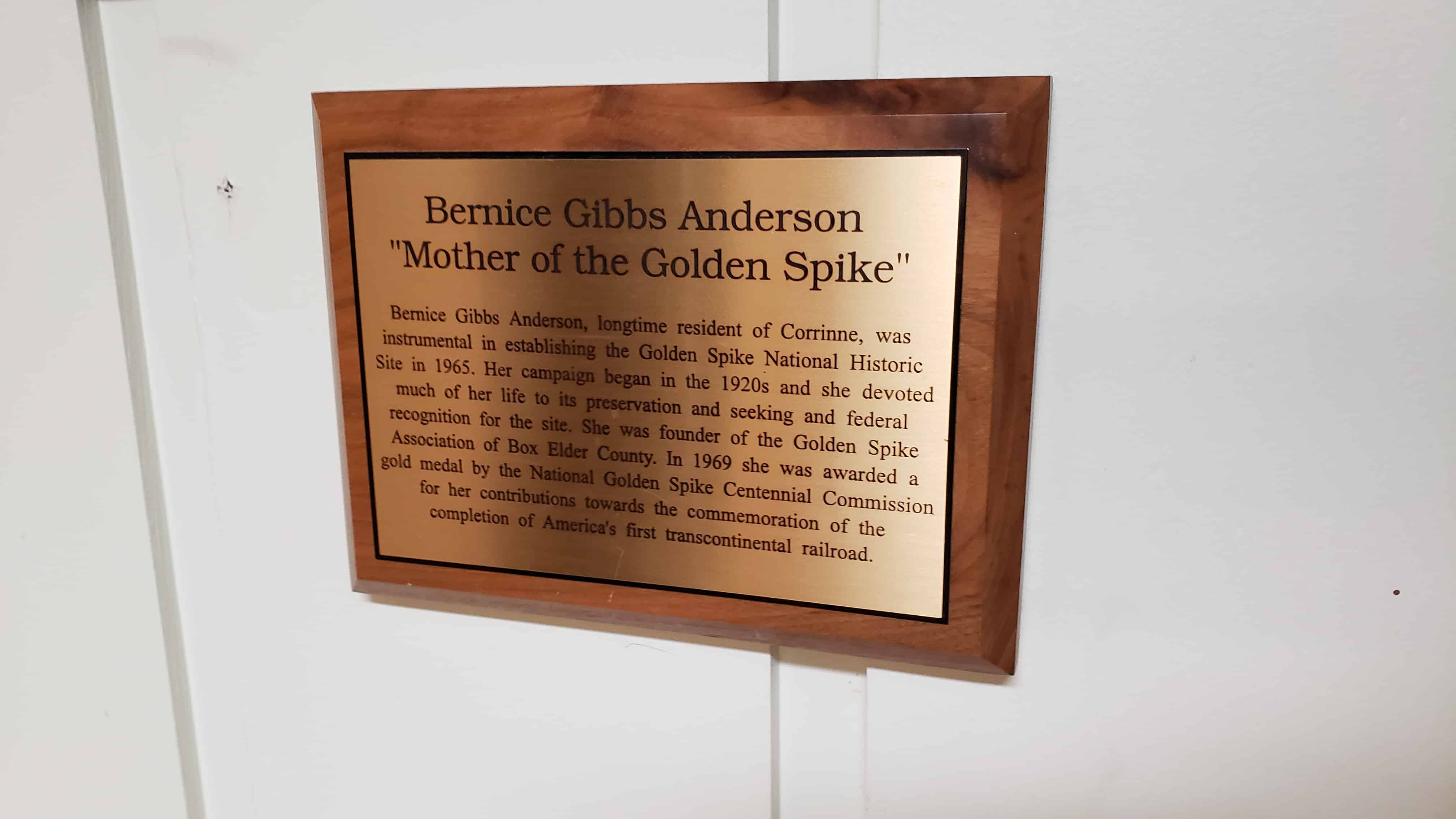
16 Thursday Dec 2021
Posted in Uncategorized
Tags


08 Monday Nov 2021
Posted in Uncategorized
Tags
Fire Houses, Historic Markers, Hospitals, Libraries, museums, Nevada, NRHP

Museum and Fire House
Library – Circa 1941
The museum building started as a library and was one of only two National Youth Administration (NYA) projects in Nevada. Volunteers finished the building when NYA funds were diverted to the war effort. Clark County operated a branch library at this site for about a year.
Hospital – Circa 1943
Due to rationing and the difficulty of travel during World War II, the building was converted to a hospital and later a medical clinic. It operated under the direction of nurse Bertha Howe until 1977.
Virgin Valley Heritage Museum – 1985
After the City incorporated in 1984, the building became City property and was converted to a museum. Mementos and artifacts from the area were generously donated by Virgin Valley residents. In 1991 the building was listed on the National Register of Historic Places.
Fire House – Circa mid-1950’s
The building northwest of the museum served as the first fire station in Mesquite and was staffed by volunteer firemen. The first fire engine was a four-wheel drive army truck donated by Nellis Air Force Base.
This is Mesquite Historic Marker #1 (see others on this page) located at 35 West Mesquite Blvd in Mesquite, Nevada.
Related:


01 Monday Nov 2021
Posted in Uncategorized

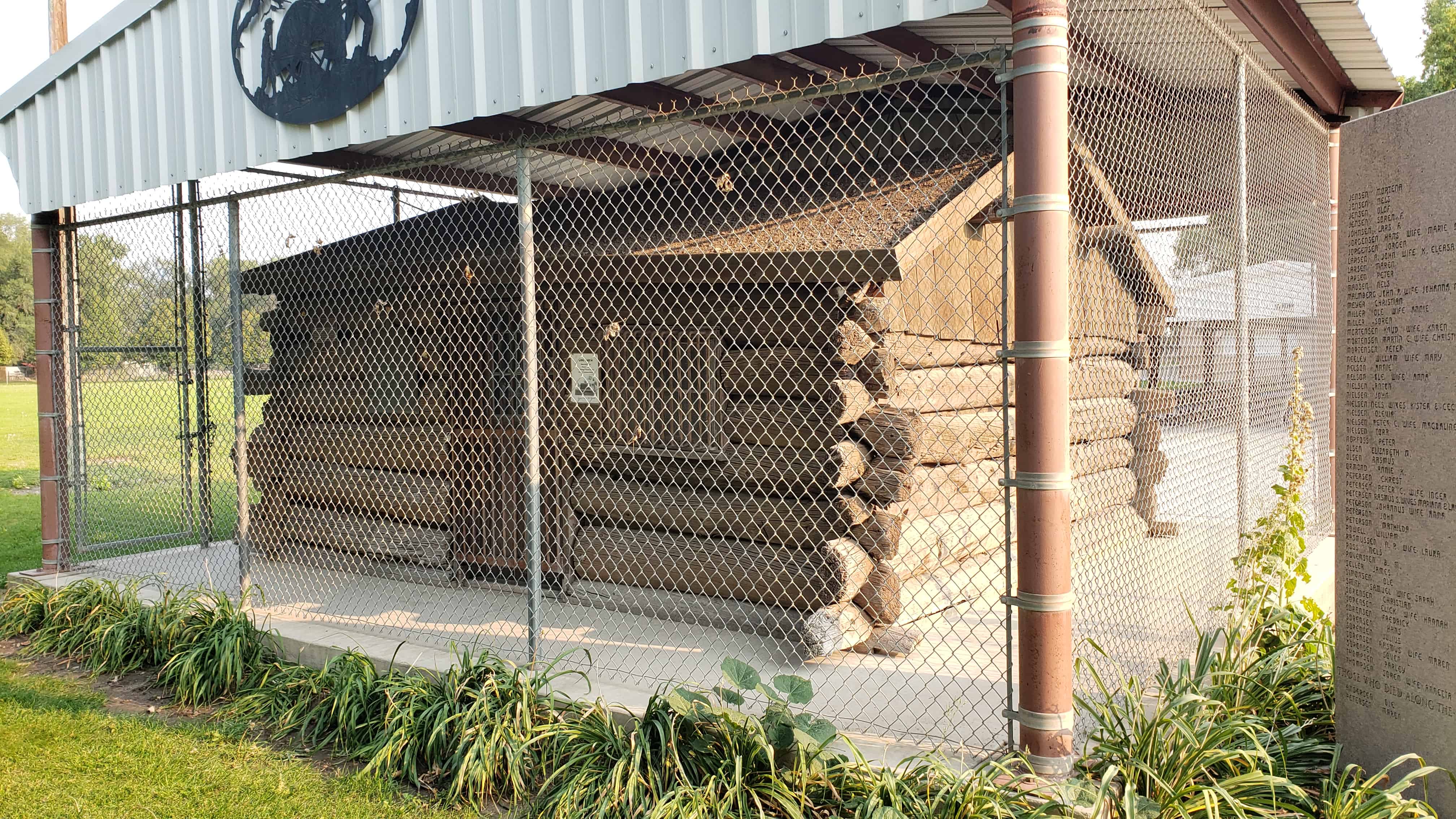
In 1866, a group of Mormon Scandinavians were called by the Latter-day Saints Church to establish this settlement and develop an irrigation project from the waters of the Malad River. Their first homes were dug-outs built in the west bank of the Bear River north of the steel bridge, which now spans the river. In the fall of 1867, they built homes in a fort for protection from the Indians. This cabin was built there by Lars C. Christensen and his wife, Christiane, handcart pioneers of 1859.
This is DUP Marker #99 located at Bear River City Park at 4549 West 5900 North in Bear River City, Utah
Related:


06 Thursday Aug 2020
Posted in Uncategorized
Tags

The Fairview Museum of History and Art
Home of the National Shrine to Love and Devotion
This page is documenting the exterior of the museum, see the link below to see the interior.
The museum consists of 2 main buildings: the 115+ year old, former school, Heritage building which contains historical collections and the works of world renown sculptor Dr. Avard T Fairbanks, and the more contemporary Horizon building which houses regional art, the Colombian Mammoth (named Spirit), historical displays, Clark Bronson bronze collection and other services.(*)
Related Posts:


16 Saturday May 2020
Posted in Uncategorized
Tags
City Hall Buildings, Historic Buildings, museums, NRHP, Sanpete County, Schools, Spring City, utah
Spring City School
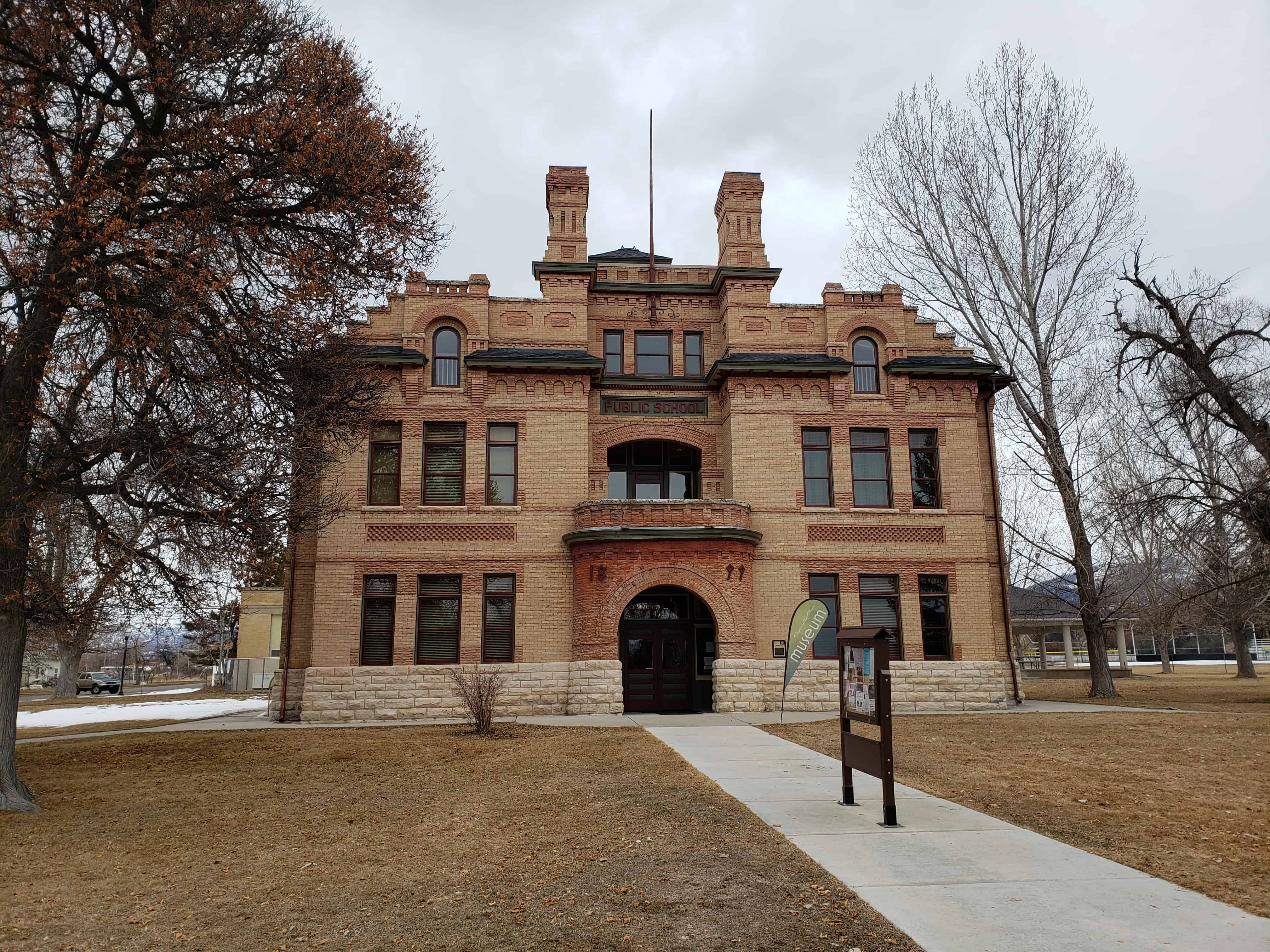
This Victorian Eclectic public school, noted for its fine brick work, was built in 1899. It was designed by noted architect Richard C. Watkins of Provo, who also designed the Spring City Meetinghouse and numerous other school buildings in Utah. The builder was Grace Brothers of Nephi. The building is laid out on an “H” plan and had 4 classrooms on each of the 2 floors. Last used as a school in 1957, citizens of the area worked from 1979 to 2017 to renovate this landmark building for the community.
(text from the plaque on the building)
Related Posts:
The school is now the city building and is located at 45 South 100 East in Spring City, Utah. It was added to the National Historic Register (#78002691) on November 14, 1978.
Until 1899 classes were held in various locations scattered throughout Spring City. In that year a public school was completed at the cost of $10,200. Half the amount was financed with a bond and the rest was financed by local citizens including Rasmus Justesen who mortgaged his sheep herd. The architect was R.C. Watkins. General contractor was Grace Brothers of Nephi, employing local labor. Brick and adobe was made in town and stone was quarried nearby.
The building was in use until 1957. In 1977 the North Sanpete School District determined that the school be demolished, but the two local Camps of Daughters of Utah Pioneers negotiated the purchase of the building for one dollar, securing its future. Historic home tours were an early means of fund-raising to keep the structure intact.
By 1987 there were enough concerns over liability that the deed was transferred to the City. Friends of Historic Spring City, a non profit organization, was formed in 1988 to develop a plan with the specific condition that no city funds would be available. Jack Brady was selected as restoration architect.
Heritage Day events, art sales, as well as donations from individuals and foundations allowed the project to proceed. A large grant and loan was secured through Spring City Corp. from the Community Impact Fund Board with The Friends of Historic Spring City being solely responsible for repayment.
Paulsen Construction, with many local tradesmen, completed the restoration in May 2017.
The Friends of Historic Spring City presented the completed building as a gift to the City and citizens as City Hall and Community Center.
(text from sanpete.com)


The Daughters of Utah Pioneers museum is also located inside the old school.


The following text is from the National Register of Historic Places nomination form in 1978:
The Spring City School, built following the transition from church-supported to public education, is one of the outstanding architectural examples of public school architecture in Utah. It is one of only three public buildings in Spring City (the others are the small City Hall, built as a school in 1893 and converted to city offices in 1900; and the imposing Spring City Tabernacle, also designed by Richard C. Watkins, architect of the 1899 school).
The 1899 school was the fourth school to be used in Spring City. A brickyard was opened in the 1880s and was still in operation and was the source for brick when the school was built. The school was built on a roughly H-shaped plan, with halls on both floors at the crossing of the H and two classrooms on each side of the H on each floor, providing one classroom for each grade.
In the fall of 1916, a new junior high school for grades seven through nine was opened behind the old school; the classroom on the northwest corner of the second floor became a library. In about 1946, following years of declining school population, the elementary grades were combined under three teachers. The library became a kitchen, and the adjacent classroom became the lunchroom. The two south rooms on the second floor were made into a stage and auditorium. Before that time school plays and activities had been held in the L.D.S. social hall (a brick building across Main Street from the L.D.S. ward house). In addition to school functions, the new auditorium was used for town meetings, dancing and educational films for the community.
A district consolidation relocated the junior high grades in Moroni in 1956, and remodeling began on the junior high building in Spring City. When that work was completed in 1959, the old brick school was closed and the elementary grades were moved into the remodeled junior high school and the old brick school was closed. During the 1960s the building was used for several years as a camper manufacturing plant, and for a time the Utah sculptor Avard Fairbanks stored some of his work there, In 1977 the local camps of the Daughters of Utah Pioneers persuaded the school board to transfer title to the building only (but not the surrounding property) to them for use as a museum.
Richard C. Watkins (1869-1941), architect of the Spring City School, was born in Bristol, England, and immigrated to Utah in 1869. Prom about 1890 to 1892 he worked as a draftsman for Richard K. A. Kletting, Utah’s most important architect for more than a generation. In 1892 Watkins began his own firm, and in association with various other architects during the next three decades was perhaps the most prolific architect in central Utah, His firm office designed about 240 schools and about 140 other buildings. In 1911 he was appointed architect for state schools. Watkins was most probably the architect for the Spring City L.D.S. Tabernacle.
!. In March, 1852, at the suggestion of Brigham Young, James Allred and several other Mormon families began settling along Canal Creek in Sanpete County in what is now the southwest part of Spring City. The following July, the Walker War with Chief Walker and the Sanpitch Indians began, and settlers at Pleasant Creek fled north to join the Allred settlement. A fort was finished in July 1853, but after continued problems with the Indians, the fort was abandoned and the townspeople moved to Manti. Although an attempt was made to resettle Spring City in the fall of 1853, it was vacated again in December. Settlers did not return until 1859.
A substantial number of Danish immigrants came to Spring City beginning in 1859. Most of the Danish settlers were tradesmen, and did not develop large livestock or produce farms. Three Danish stonemasons, Jens J. Sorensen, John Peter Carlson, and John Bohlin, were among the most important builders in the community. They helped build the ward chapel and many of the stone houses, and did much of the stone work on the Manti Temple. A one-room adobe meeting house was built soon after they arrived in Spring City, where Danish services were held until after the turn of the century. Much of the history of the town reflects the cultural influence of the large Danish population.
Spring City’s population reached a high of 1,235 in 1900, but the decline of agriculture in Sanpete County contributed to an out-migration beginning in the Twenties. Recent coal and energy developments in Emery County (east of Sanpete County) have brought some new residential construction to the town, which as ~ late as the fifties was largely unchanged from its turn of the century appearance.
Completed in 1899, the appearance of the school is largely unchanged. Deterioration has occurred around the door and window openings, but the major damage to the building is cracked or collapsed ceilings and window breakage.
The two-and-a-half story brick building is rectangular with a hipped roof. Stepped gables on the side facades balance the stepped parapet of the front façade. The Boost prominent architectural elements are the pattern brick details around the door and window openings and at the cornices. The roof for the projecting, round arch entrance canopy with recessed doors makes a second floor balcony, with the door to the balcony also recessed behind a segmental brick arch. Round arch windows in the stepped parapet break the eave line on either side of the entrance bay. The roof is capped by a small bell tower, framed by two corbelled and patterned brick chimneys.
21 Friday Feb 2020
Posted in Uncategorized
Tags
DUP, Kanosh, Millard County, museums, NRHP, Tithing Offices, utah

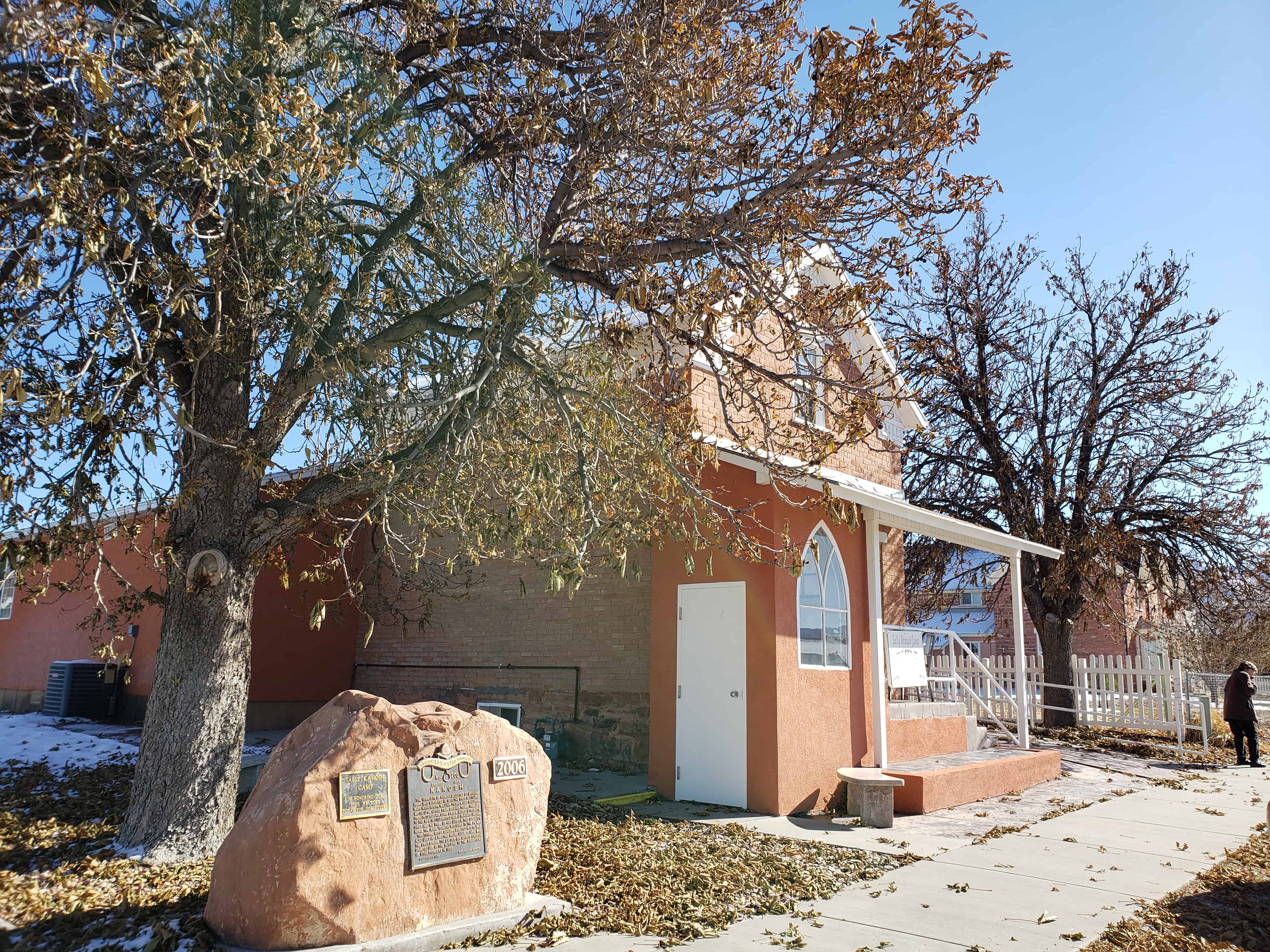
The Kanosh Tithing Office, now the Sally Kanosh Camp D.U.P. Museum.
40 North Main Street in Kanosh, Utah


Built in 1870, the Kanosh Tithing Office is historically significant as one of 28 well preserved tithing buildings in Utah that were part of the successful tithing system of The Church of Jesus Christ of Latter-day Saints (LDS or Mormon church) between the 1850s and about 1910. Tithing lots, which usually included an office and several auxiliary structures, were facilities for collecting, storing, and distributing the farm products that were donated as tithing by church members in the cash-poor agricultural communities throughout the state. Tithing offices were a vital part of almost every Mormon community, serving as local centers of trade, welfare assistance, and economic activity. They were also important as the basic units of the church-wide tithing network that was centered in Salt Lake City. In addition, the Kanosh Tithing Office is architecturally significant as one of eight extant examples of Utah’s tithing offices which were designed in the Greek Revival style. It is one of seven of those buildings which is a temple-form building. Of those seven temple-form buildings, it is one of the three best preserved examples of the type. The other two examples include the tithing offices at Escalante and Paradise. The temple-form building originated in the Greek Revival period of American building,’ and typically has its short end to the street and a pedimented gable end in imitation of monumental classical buildings. The temple-form building was the preferred building type for early religious buildings in Utah, having been brought to the area by members of The Church of Jesus Christ of Latter-day Saints after 1847. 3 Very few unaltered, well preserved examples of this building type are presently extant in Utah.
Under the direction of Culbert King, bishop of the Kanosh Ward, the Kanosh Tithing Office was built in 1870 to serve as the center for the collection and distribution of “in kind” tithing contributions from members of the Kanosh Ward of the LDS church. Typical of most other Utah towns during the nineteenth and early twentieth centuries, Kanosh was a cash-poor agricultural community, therefore tithing contributions were usually farm products, such as crops, dairy products, and livestock. By at least the 1920s, however, cash was much more plentiful and was used for tithing donations instead of the “in kind” commodities. Since the building was no longer needed for its original use, it was either left vacant or used as a meeting place by auxiliary organizations of the church for a number of years. Even when serving as a tithing office, the building was used as the first meeting place of the ward’s Mutual Improvement Association, the organization for the teenagers.
In 1952, the church granted the building to the local chapter of the Daughters of Utah Pioneers, which has used it as a meeting place and relic hall up to the present.
Related Posts: