Tags
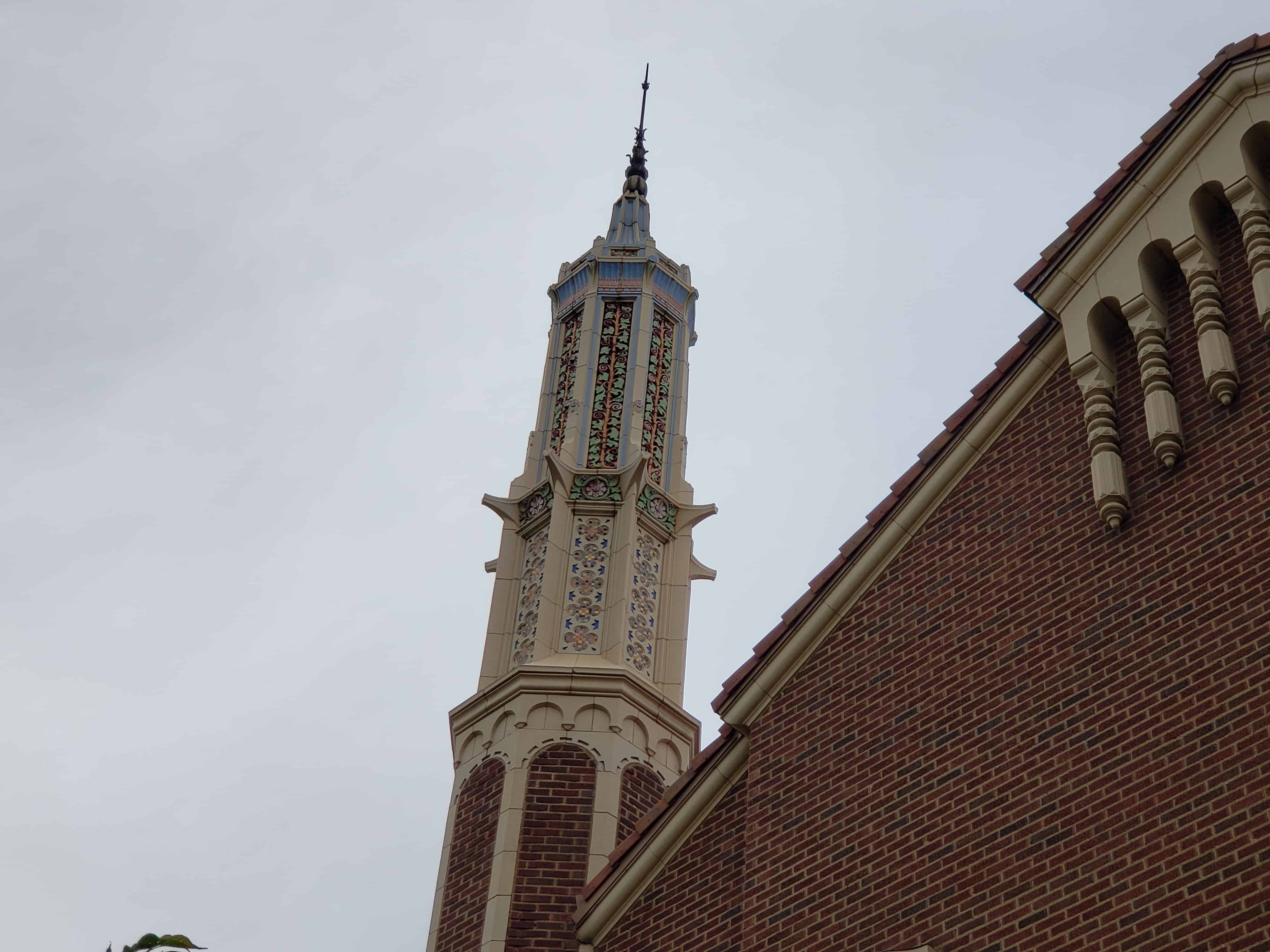
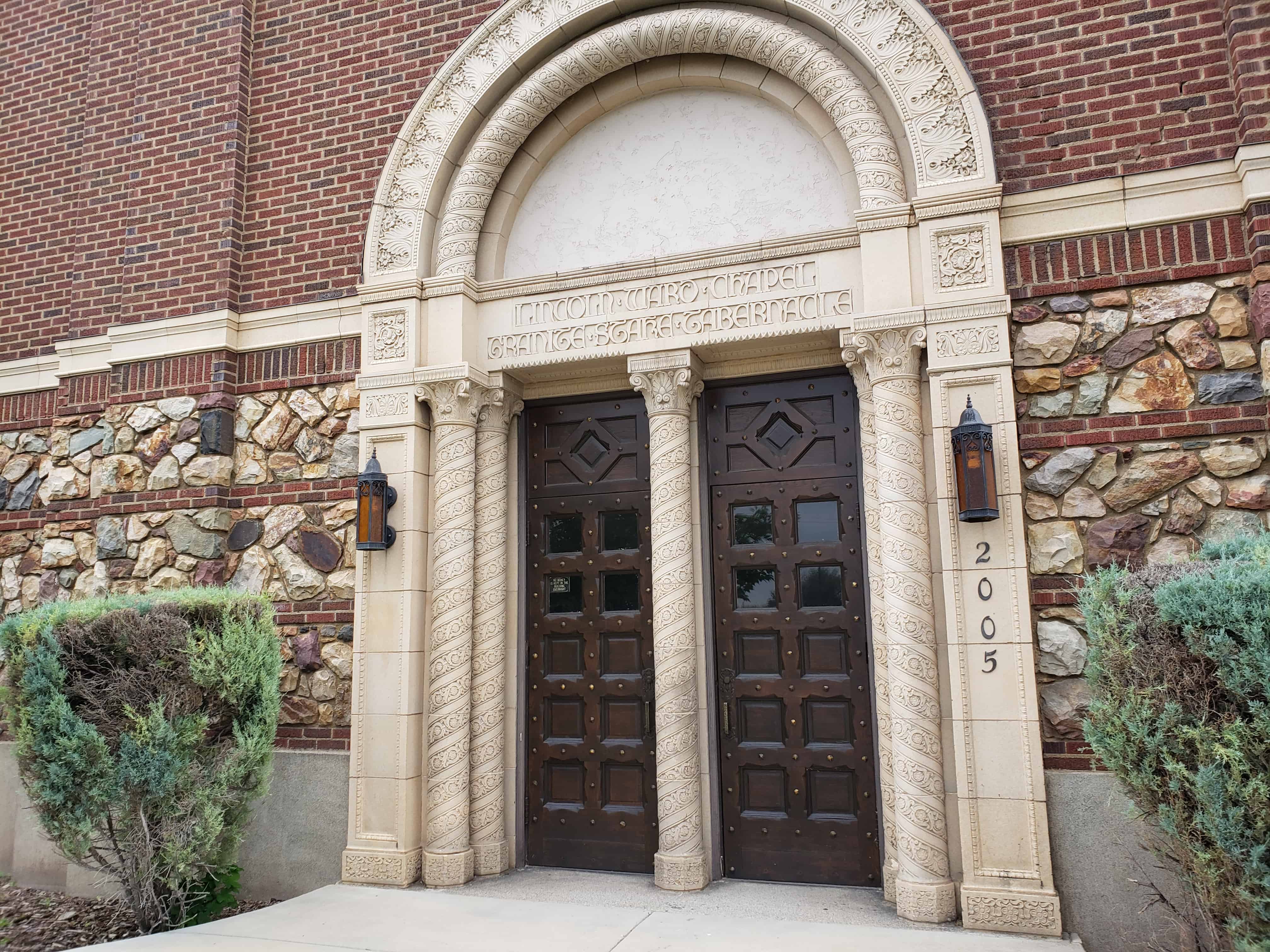
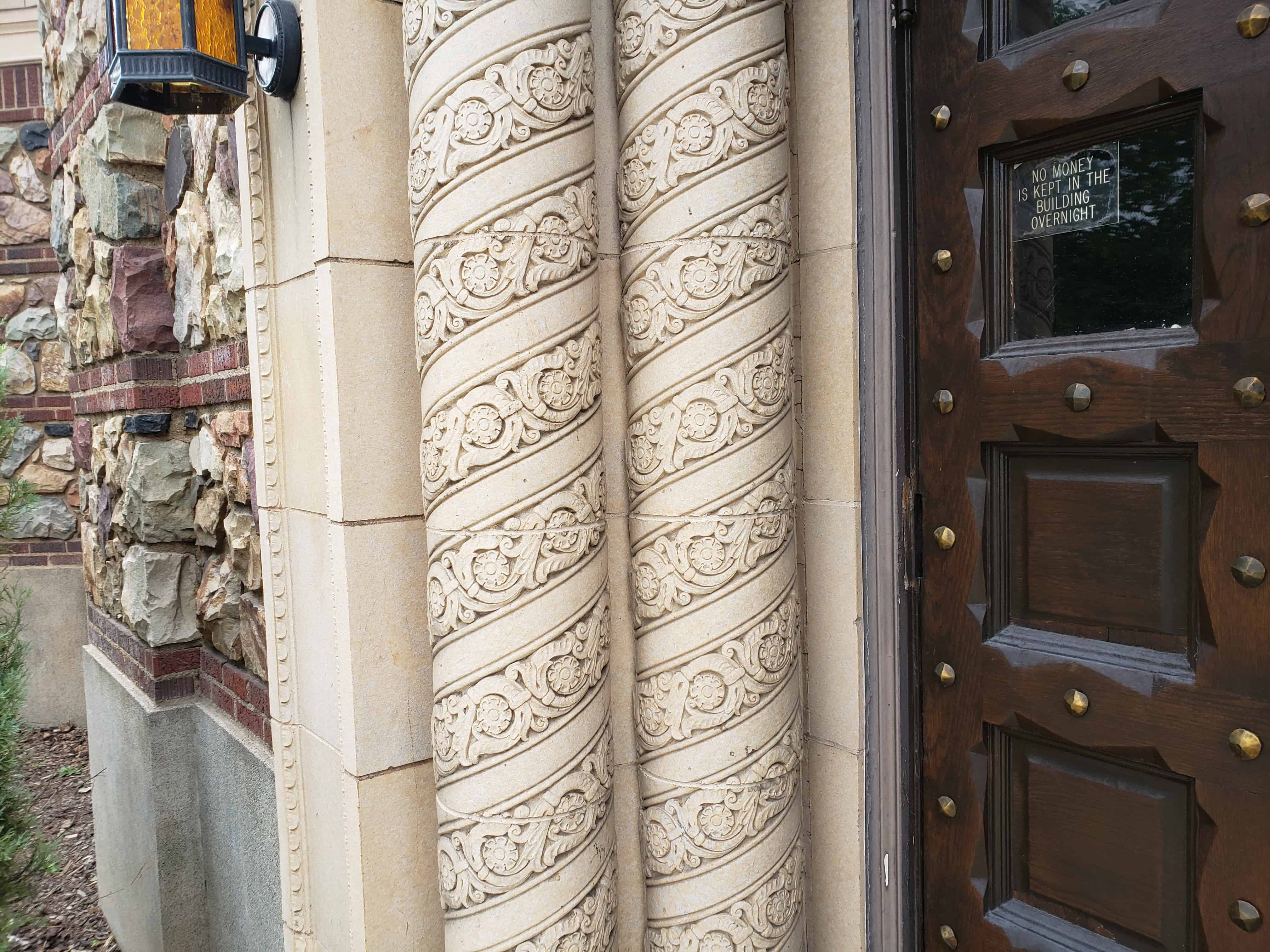
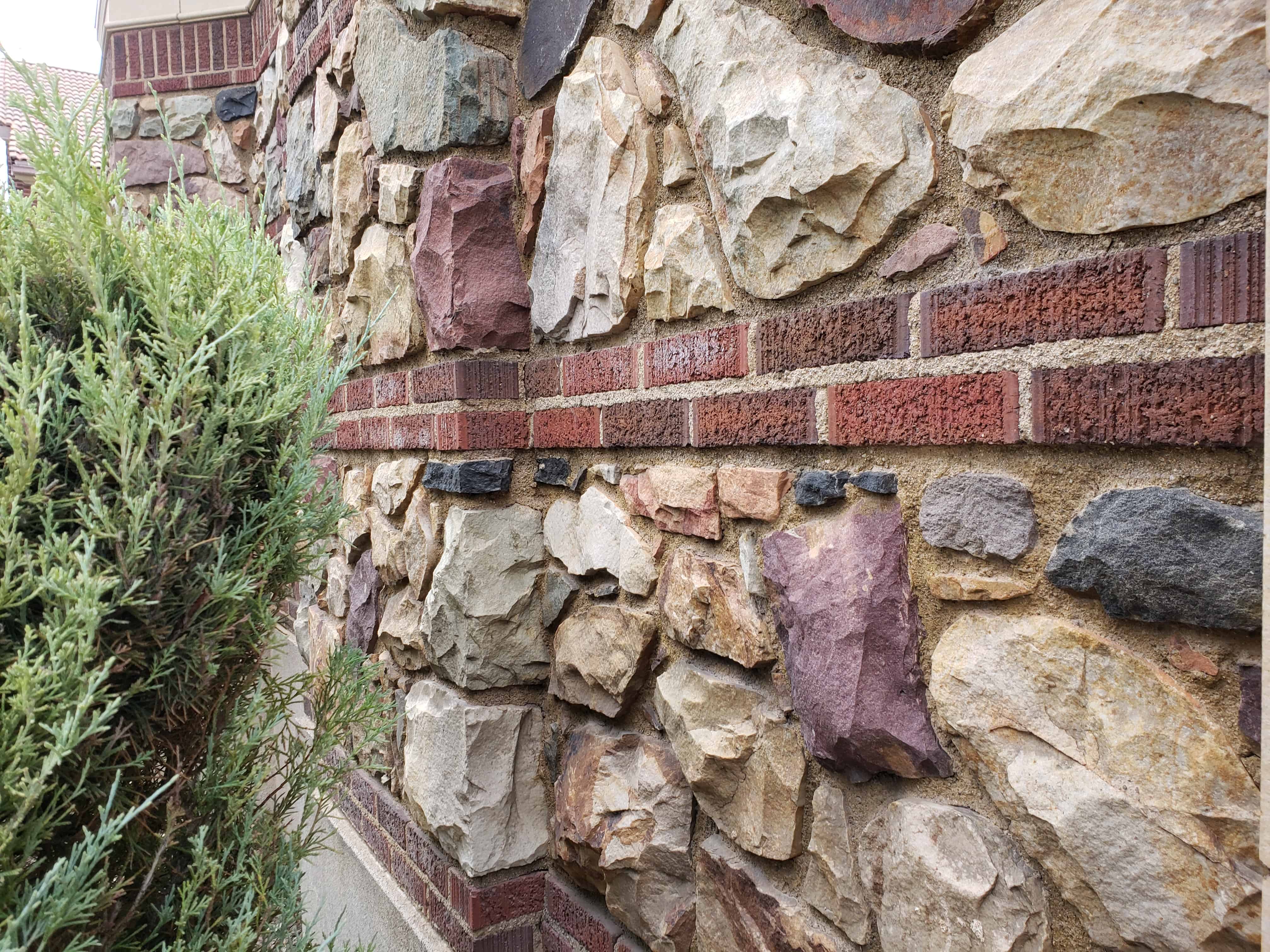
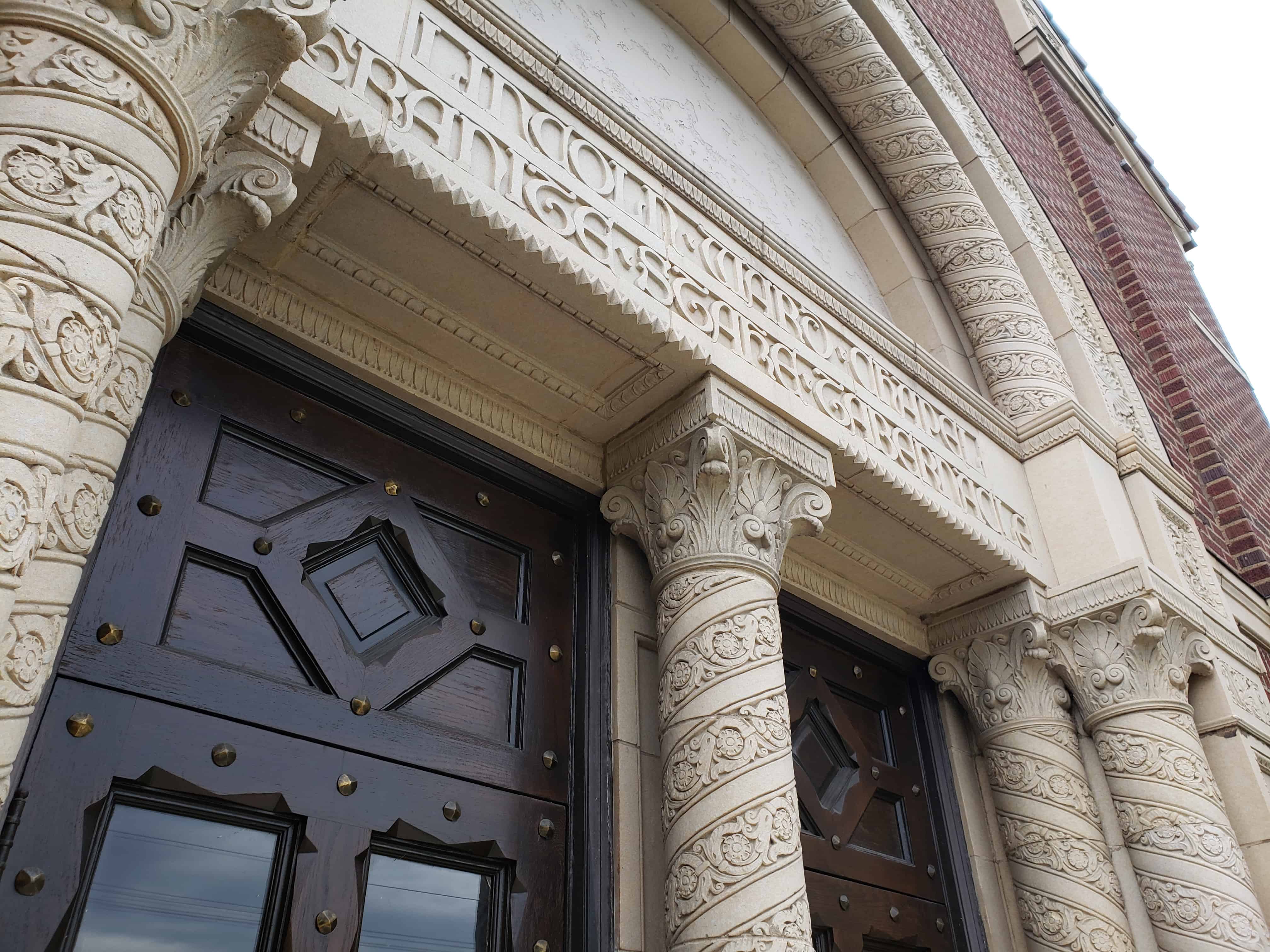
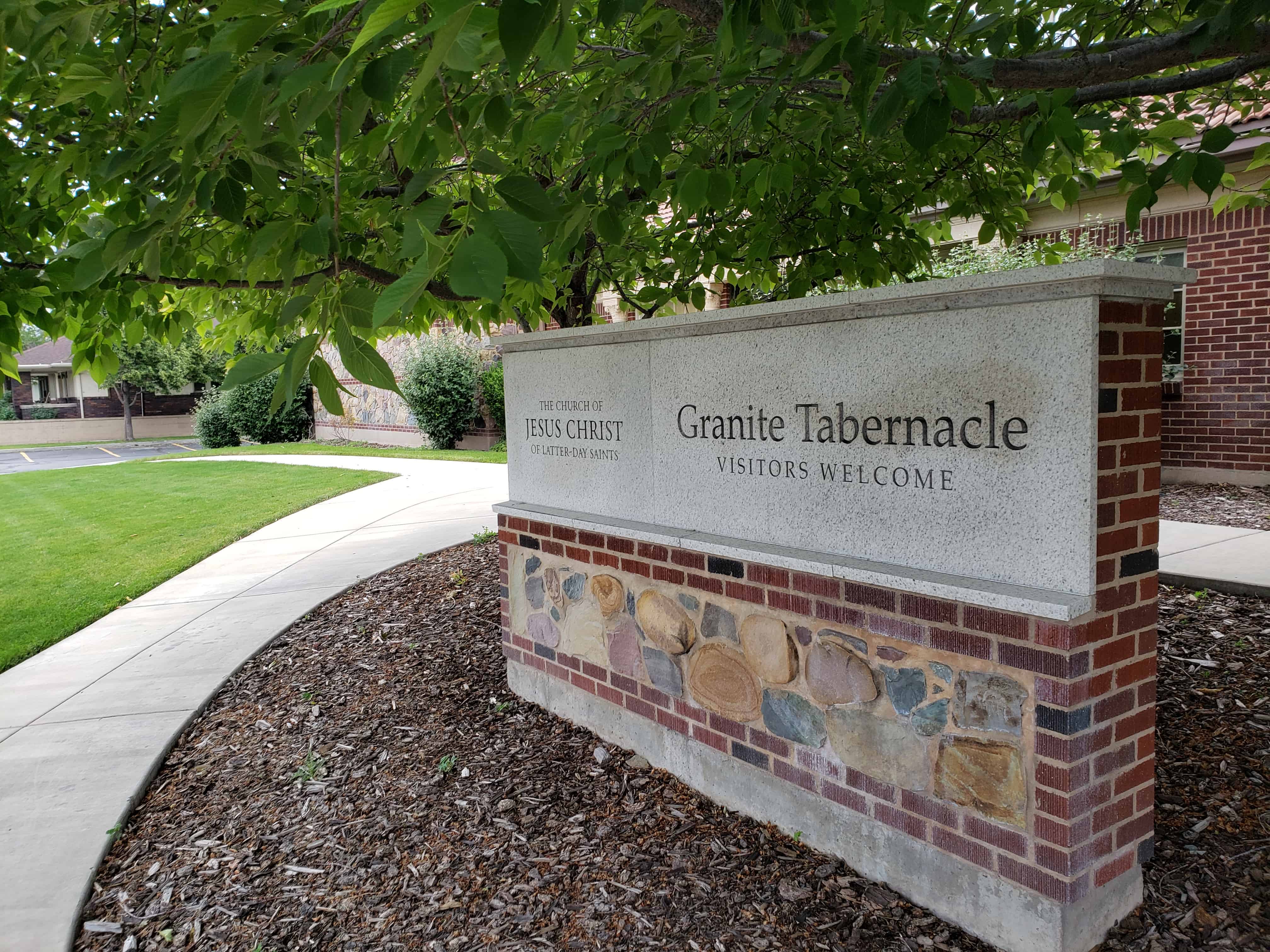
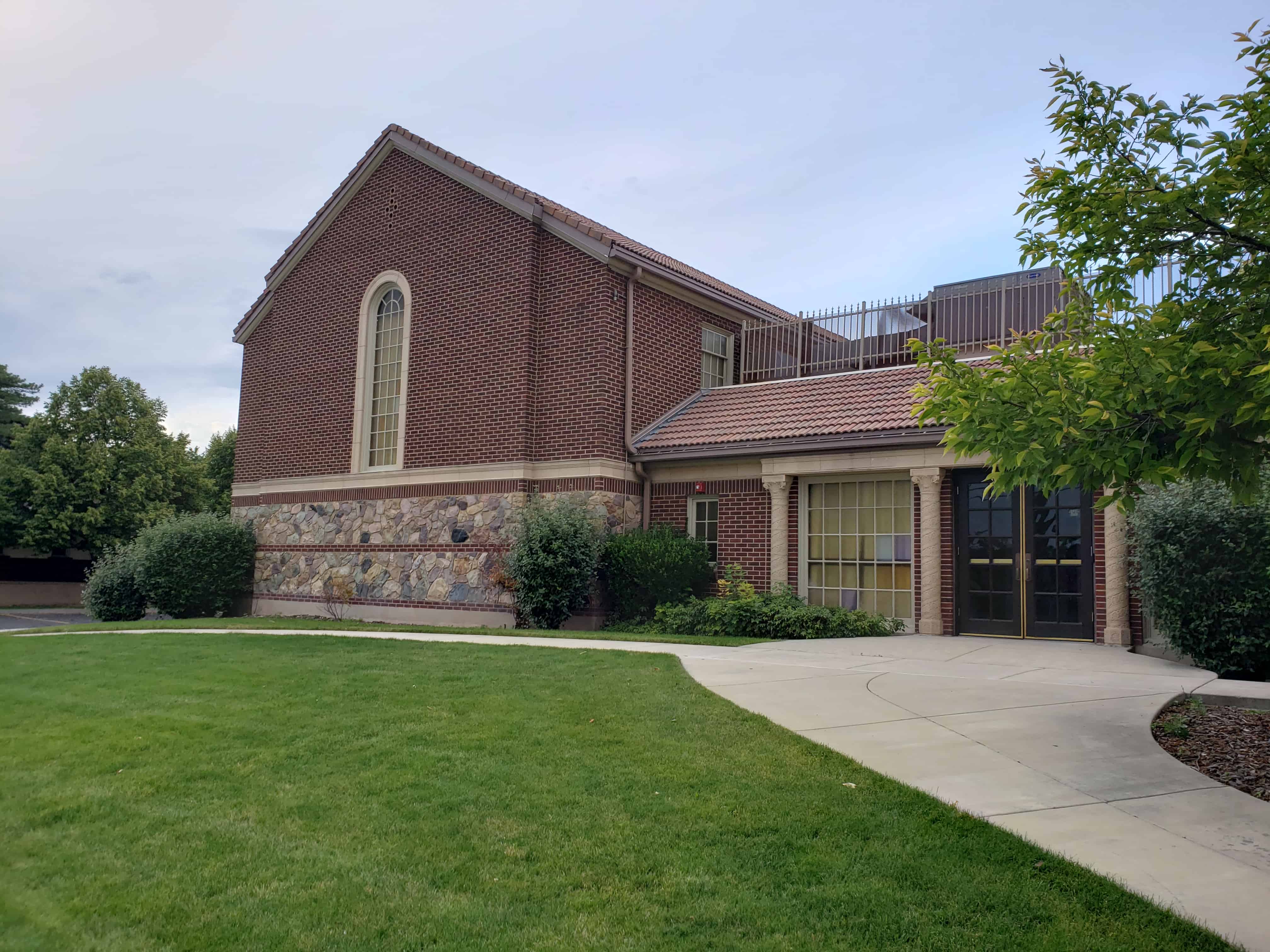
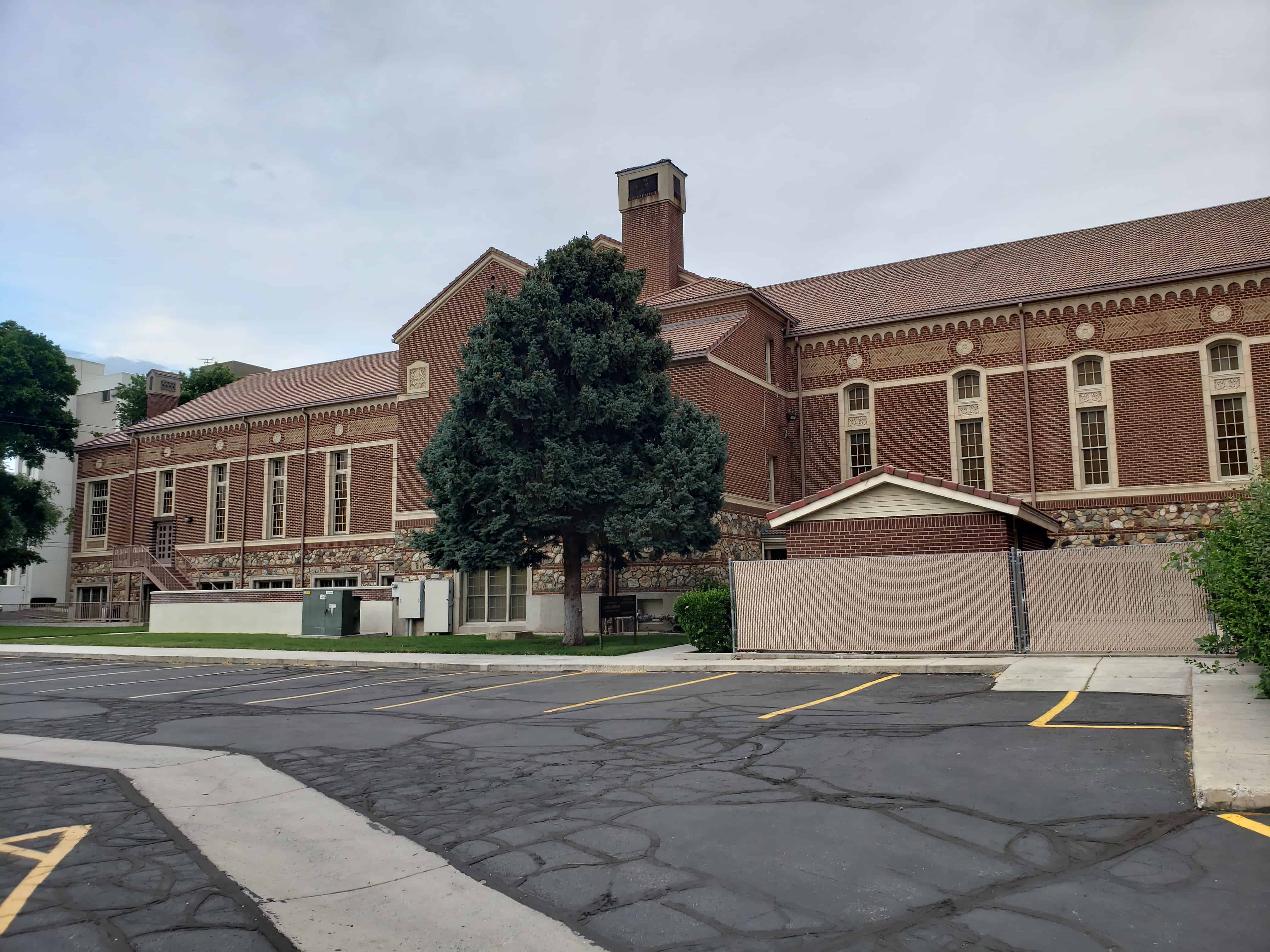
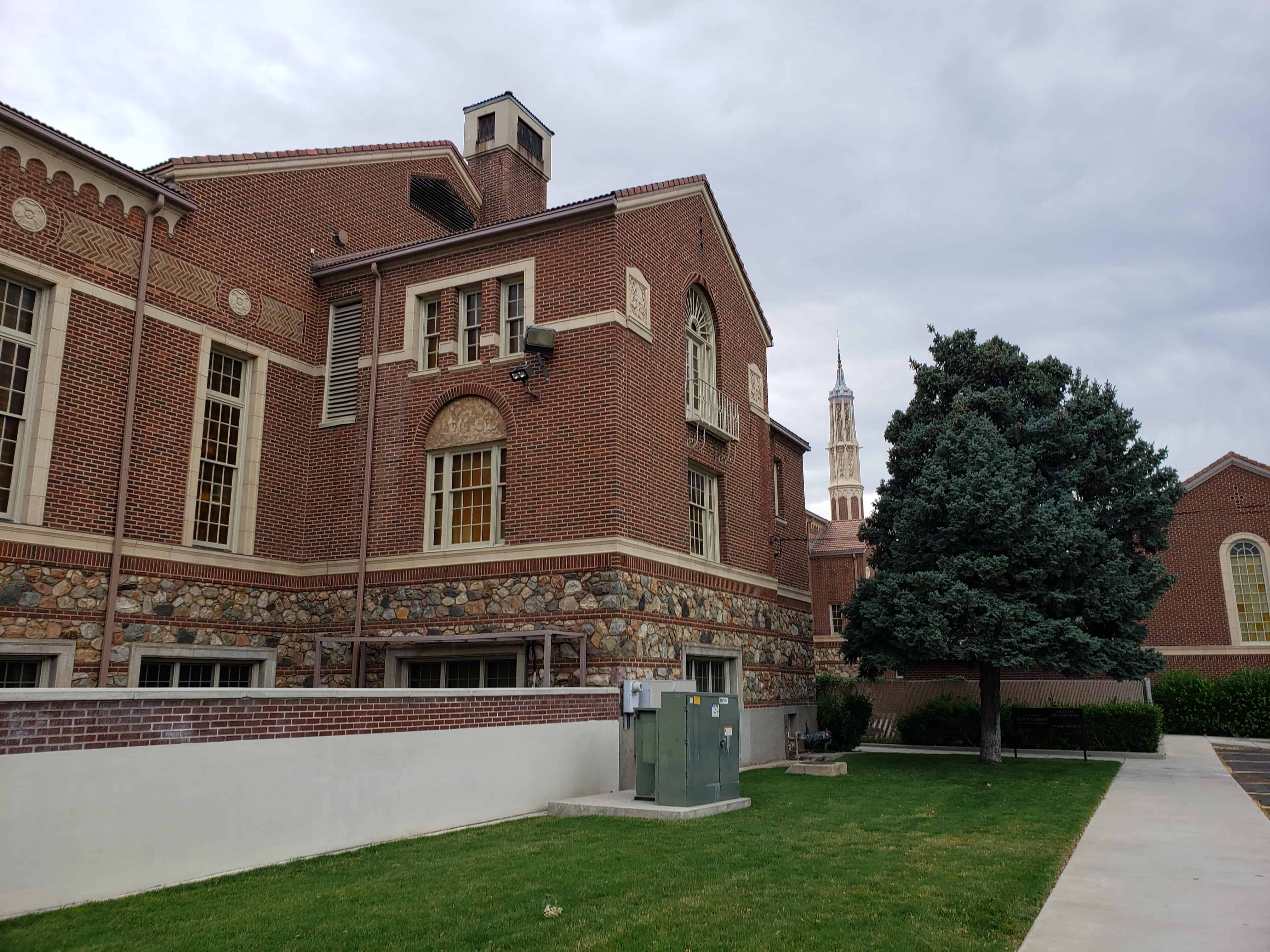
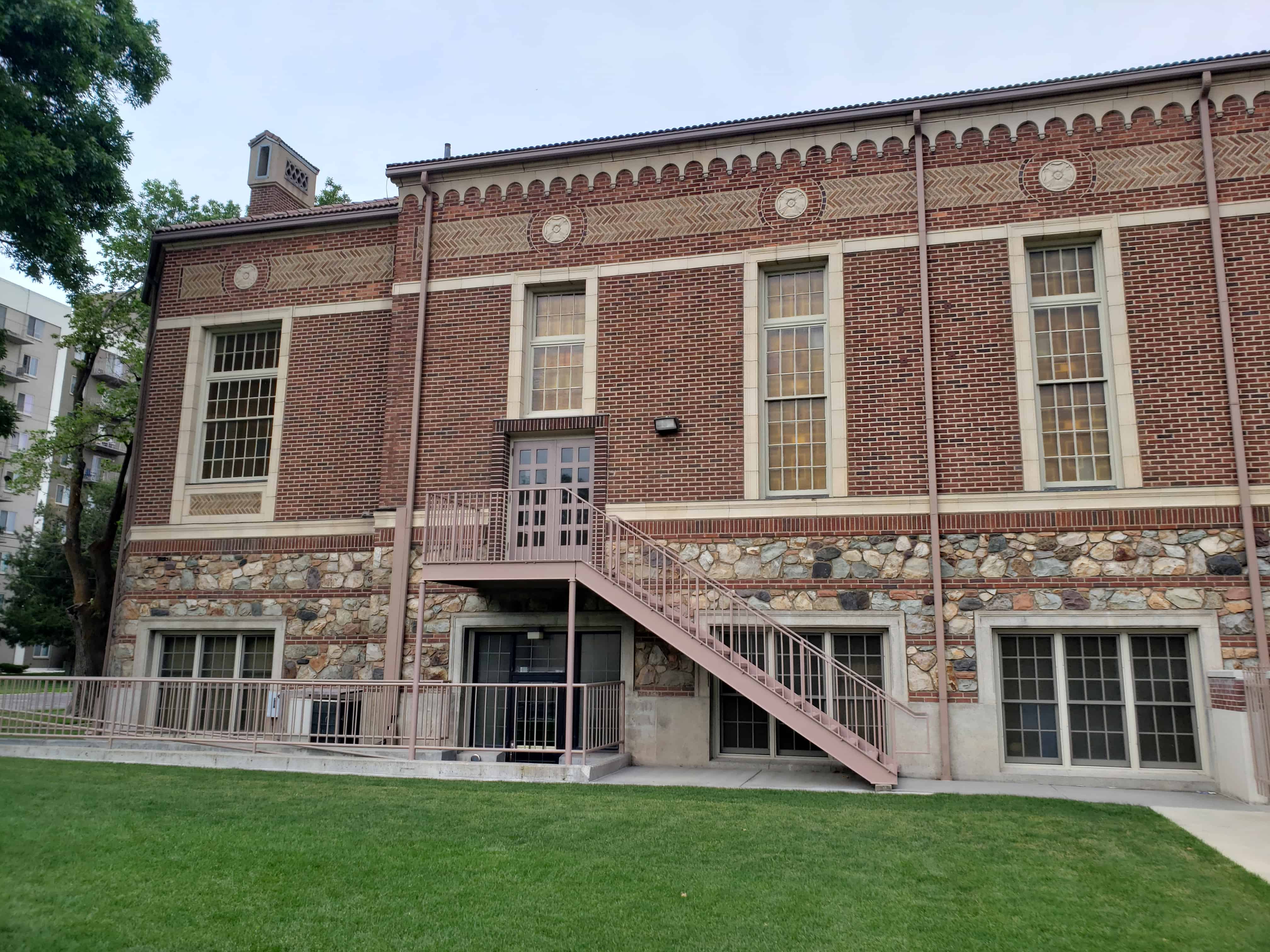
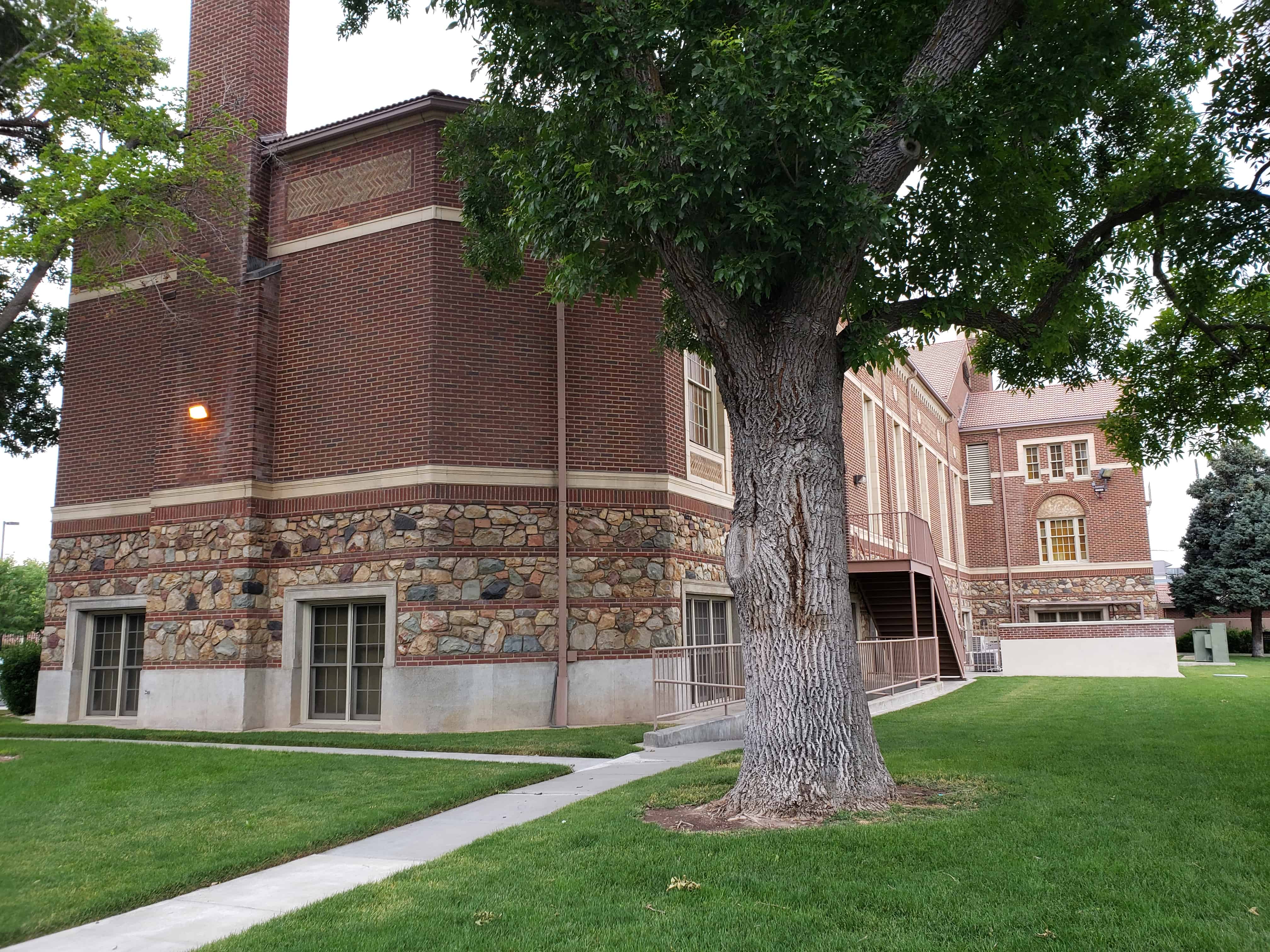
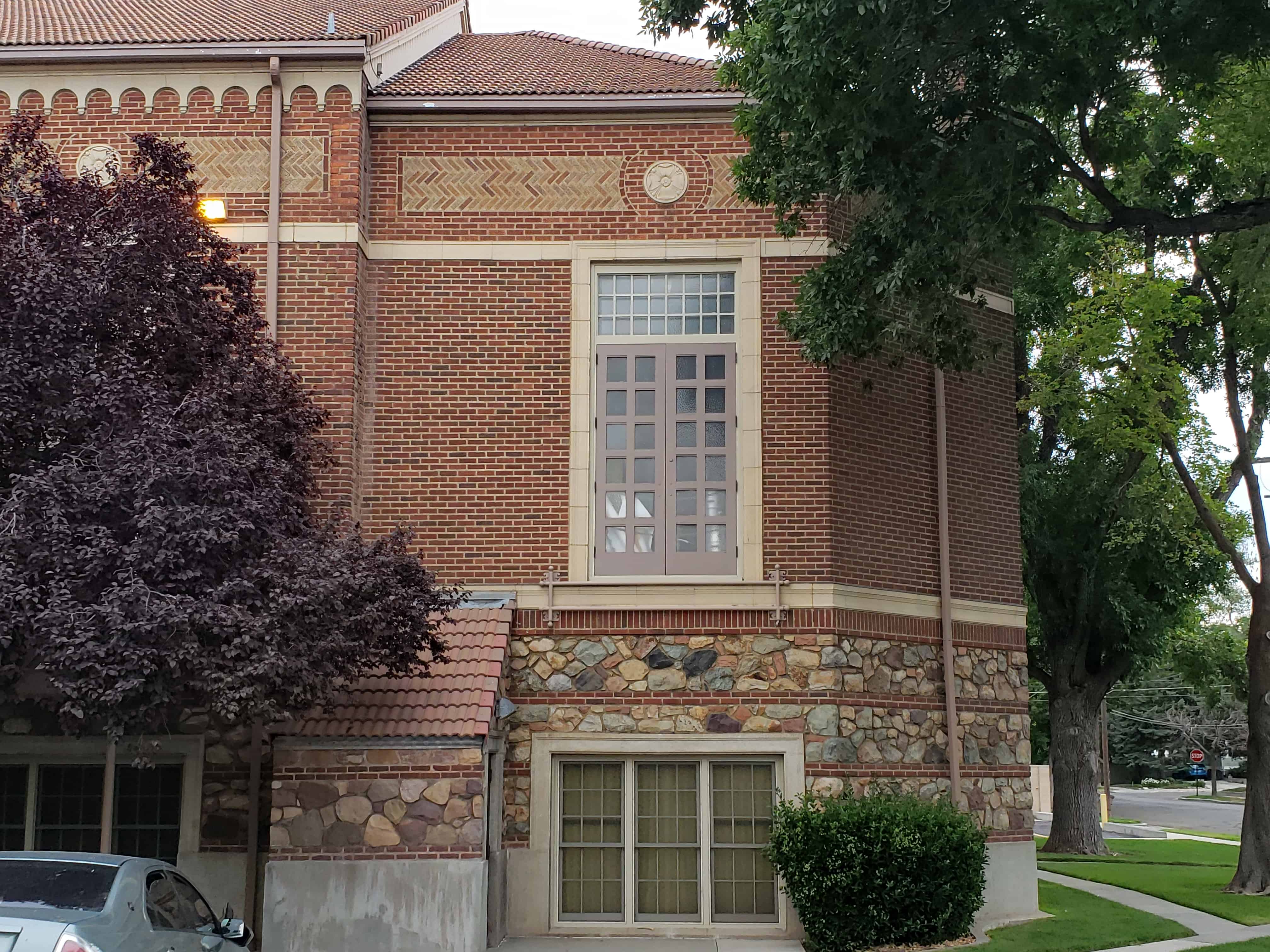
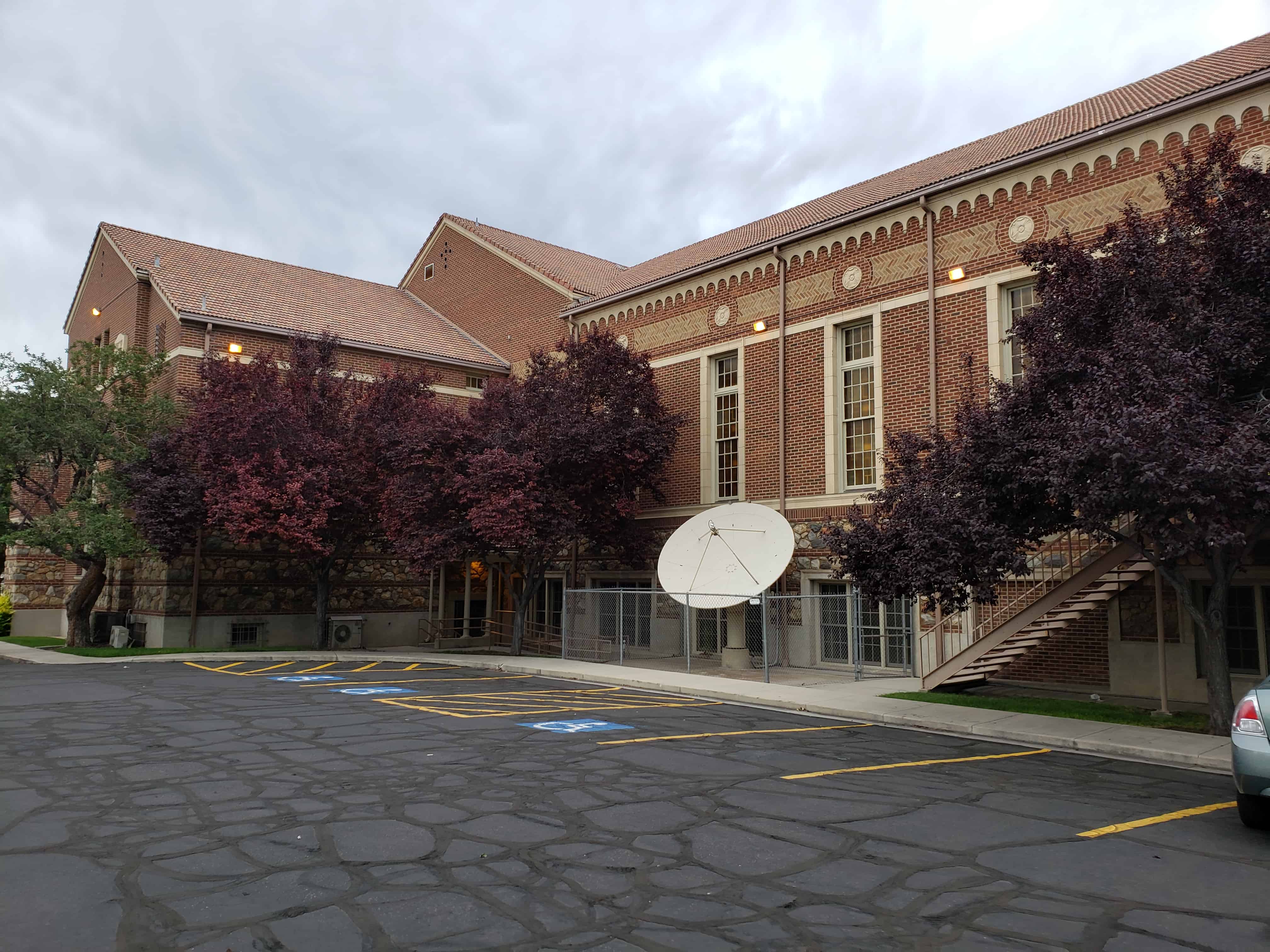
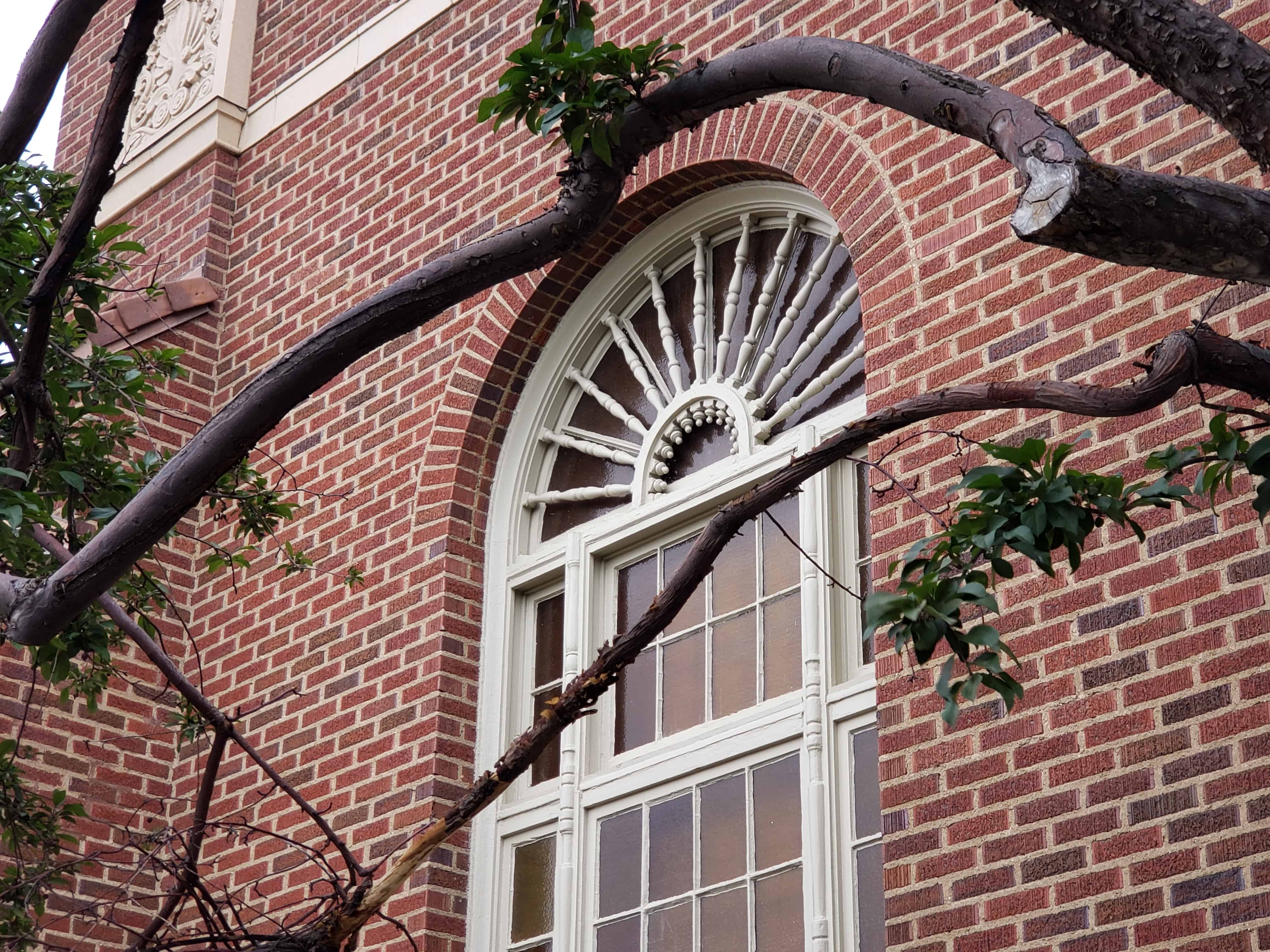
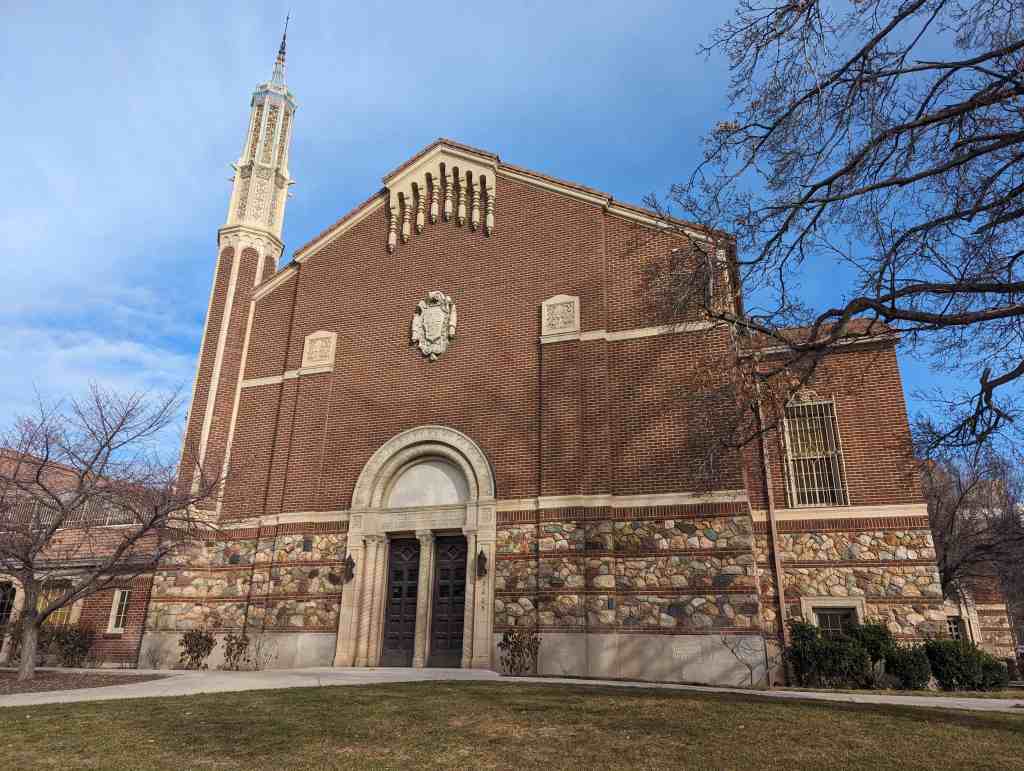
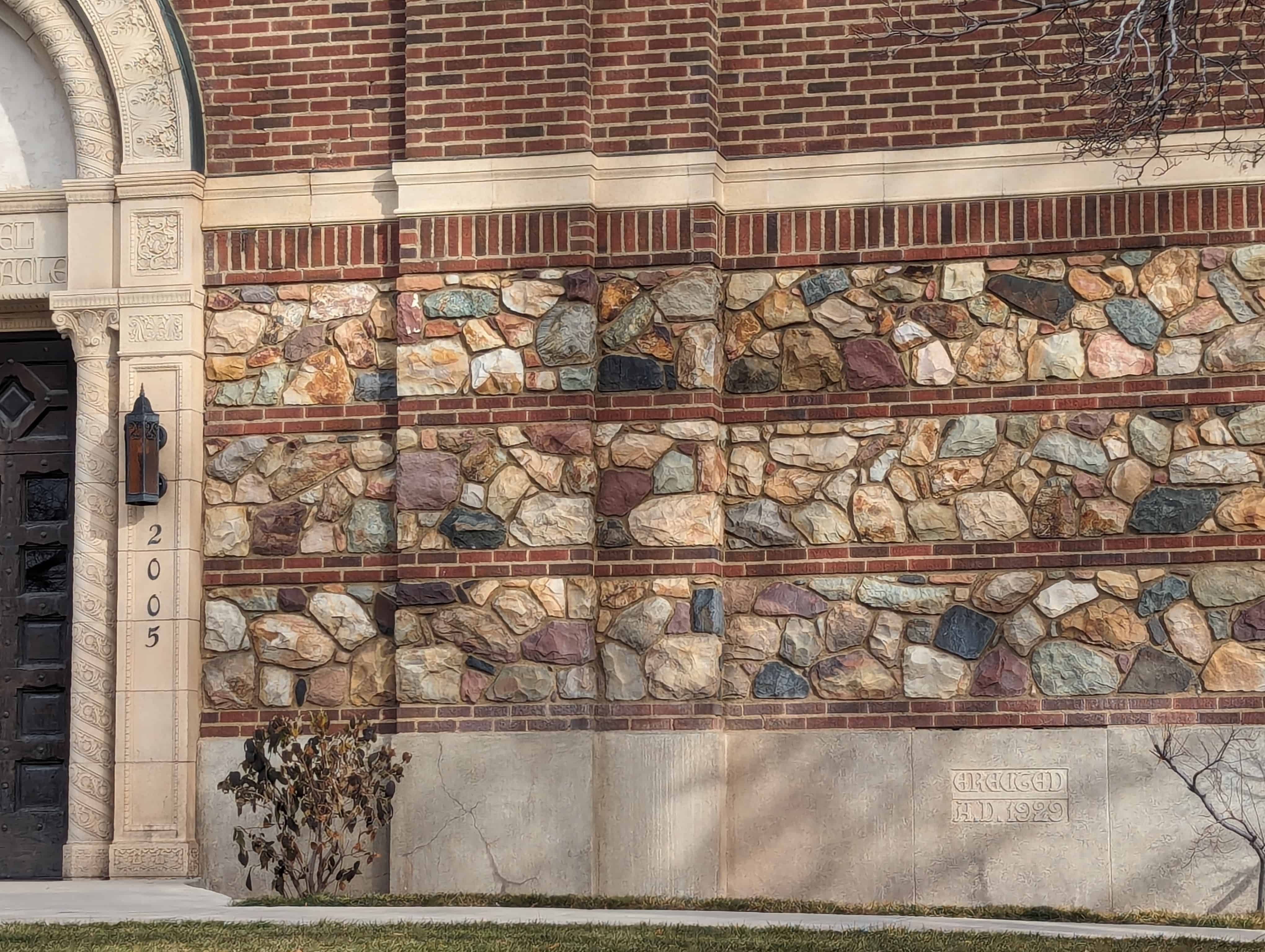
Uintah Stake Tabernacle
12 Friday Jun 2020
Posted in Uncategorized

12 Friday Jun 2020
Posted in Uncategorized
12 Tuesday May 2020
Posted in Uncategorized
Tags

This old photo (above) that I found on facebook shows the Nebo Stake Tabernacle that was previously located at 182 N Main in Payson, Utah. It was about where Central Bank and Walgreens are now. Across the street from it, on the left side of the photo you can see the old tithing office and in the background I think that is the John Dixon house.
It’s sad to see historic buildings like these go away, but to see other tithing offices and tabernacles I’ve been able to document visit these pages:
26 Thursday Sep 2019
Posted in Uncategorized

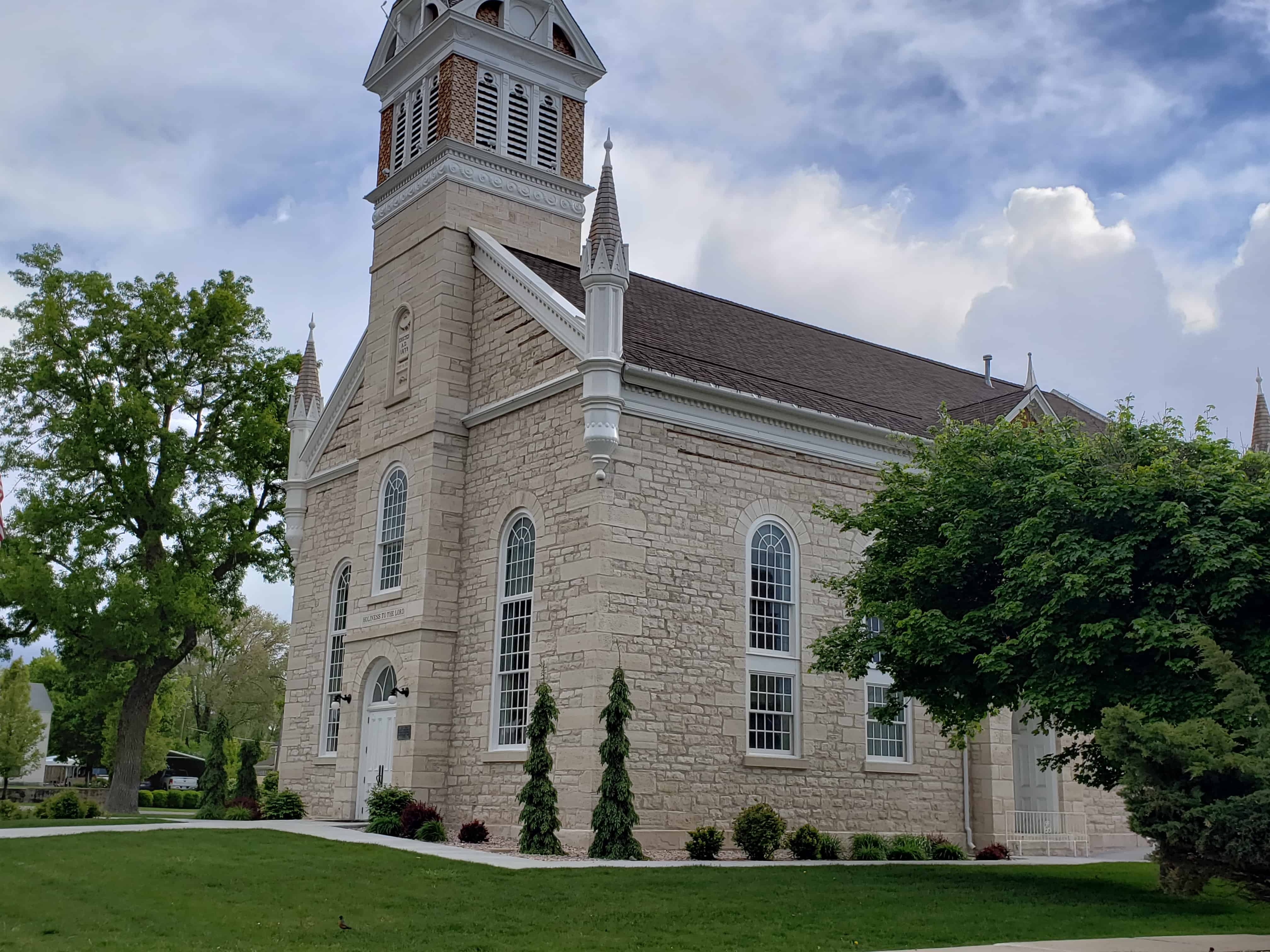
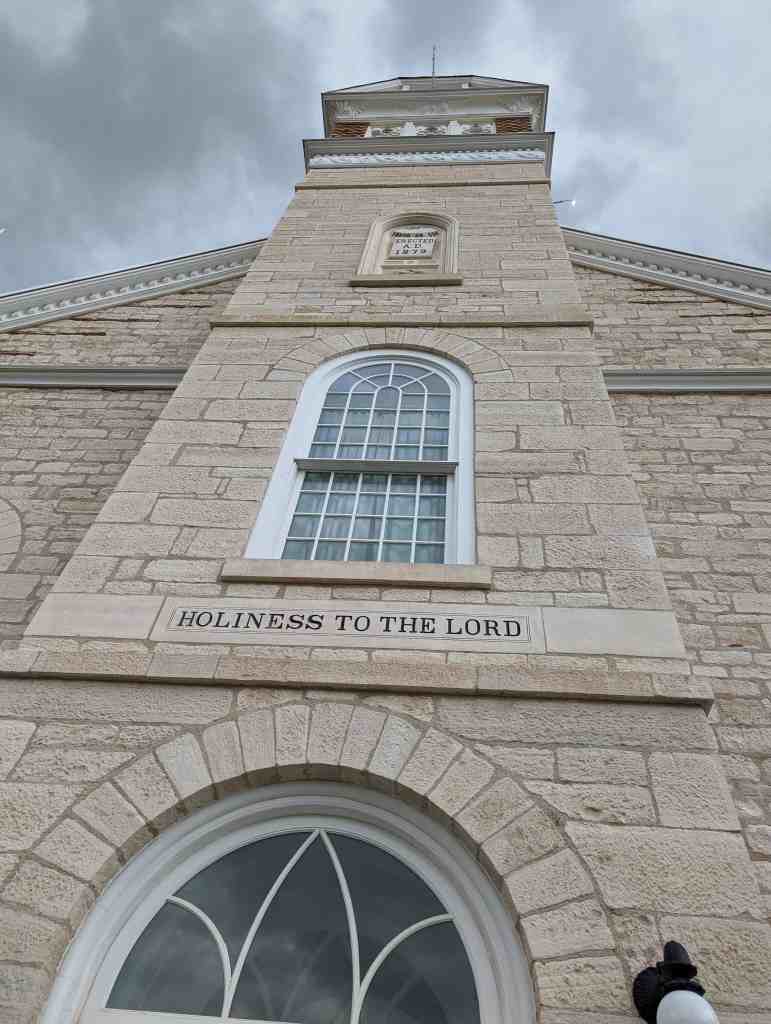
The tabernacle was designed by temple architect, William Folsom, and built in 1878-82. This church building now accommodates three LDS wards. The monumental 55 by 90 main chapel has a 30 foot high ceiling and a tall central tower topped by a Victorian steeple. All of the window and door bays are tall and round-arched. The corner pinnacles have a Gothic flair. The stonework ranges from rough to smooth cut, squared blocks. The modern addition on the west of the building has been designed to blend cohesively with the original to give a pleasing overall effect. Other remodels added an elevator. The building is still in use as LDS wards meetinghouse.(*)
Related Posts:





29 Thursday Aug 2019
Posted in Uncategorized
Tags
15 Tuesday Jan 2019
Posted in Uncategorized
Tags

Randolph Tabernacle
The Randolph Tabernacle, constructed between 1898 and 1914 by members of the Church of Jesus Christ of Latter-day Saints, is architecturally significant as the best example of Victorian Eclectic religious architecture both in the town of Randolph and in Rich County. Though its design, materials and construction were provided primarily through local efforts, the building reflects the LDS church-wide trend at that time toward more eclectic and expressive styles than those used in either previous or subsequent periods. Though not yet fully understood, that architectural trend has been described as symbolizing the concurrent shift of the LDS church from an attitude of isolationism’ to an embracing of national ideas.
The tabernacle is located at 25 South Main Street in Randolph, Utah and was listed on the National Register of Historic Places (#86000724) on April 10, 1986.

The Randolph Tabernacle is easily the most substantial and elaborate historic building in Rich County. Located in an isolated agricultural region in northeastern Utah, Rich County consists of some half dozen small towns and a population of approximately 2000. Though small in size and population, the county is a distinct region of the state. It is bordered by Idaho on the north, Wyoming on the east, and by uninhabited mountainous regions on the south and west. Ranching and farming have persisted as the principal industries in the county since its founding in the late nineteenth century. Besides the Randolph Tabernacle, there are other well preserved nineteenth and early twentieth century buildings in the county, including a number of residences, several commercial buildings, and one other church, the Laketown Ward House. Though some of those buildings were constructed in the Victorian Eclectic Style, none of them match the Randolph Tabernacle in terms of scale or architectural expression.
The Victorian Eclectic Style was one of several architectural styles used on buildings constructed for the Church of Jesus Christ of Latter-day Saints (Mormon or LDS church) during the 1890s and early 1900s. Architectural historian Alien Roberts describes those decades as the Eclectic or High-style Period of LDS church architecture, noting that “Probably no period…saw greater profusion and reaching out for new styles than the score of years from 1890 to 1910.” The use of “modern” architecture during that period has been viewed as a symbol of the Mormon church’s transition from isolationism to accommodation and unity with the rest of the country. Tangible, as opposed to symbolic, evidence of that change in attitude include the abolition of polygamy by the church in 1890, the achievement of statehood for Utah in 1896, and the replacement of Utah’s commonwealth economy with an open market capitalist system. Though there is definitely evidence that church architecture might reflect that transition, more research is necessary to fully understand and interpret that phenomenon.
The decision to begin construction of a new meetinghouse in Randolph was made on 5 July 1898, shortly after the creation of the Woodruff Stake of the LDS Church (a stake comprises several wards or congregations). The consensus of the local leadership at that time was that a “good, large meetinghouse” be built for the Randolph Ward, “a house that should be modern and large enough to accommodate people from far and near.” The idea that the building might be used as a central gathering place for conferences with the other wards and branches in the stake may have led to its being referred to as a “tabernacle,” though in reality it was simply a meetinghouse to serve the needs of the local ward. Tabernacles were constructed to serve as stake centers and were therefore usually larger and more elaborate than typical meetinghouses. This building was used for stake conferences only when it was Randolph’s turn to host the meeting, which rotated from town to town within the stake. The building’s elaborate styling may also have contributed to its tabernacle image.
The Randolph Tabernacle was constructed primarily with resources provided by members of the Randolph Ward. Local members provided approximately 82% of the $23,884.76 total cost of the building. Contributions included donated labor and materials as well as cash donations. LDS Church headquarters contributed $2000 toward the building project. The collection of money and materials for the building began as early as March 1895, but it was not until 1898 that construction actually began. The lengthy 16-year construction period can be attributed in part to the elaborate design of the building and the relatively small size of the congregation providing the funds, some 100 families.
The architect of the Randolph Tabernacle was John C. Gray, a local contractor/builder who participated in virtually every phase of the building’s construction. Gray probably designed other buildings in the area, but this is the only known example of his work to date. He later served as bishop of the Randolph Ward for 20 years (1901-1921). Gustave Nelson of Logan was the general contractor and was responsible for laying the brick and stone for the building. The brick walls were laid in 1900 and 1901, and the roof was put on in 1902. Fred Datwiler, also from Logan, was hired to plaster the interior of the building. Nearly everyone in the ward was involved in some form or another in the construction of the building. Men graded the site, cut and hauled timber from the nearby mountains, and assisted in various other construction activities, while the women helped collect donations and gathered rags to make carpeting for the new building. Samuel Brough was contracted to provide the 180,000 fired brick used in the building, and most of the lumber was taken from Green Fork and sawed at Con Andrew’s Mill. The rock and sandstone used on the building were hauled from Big Creek and Otter Creek, south of the W.T. Rex Ranch.
Though still ten years from its final completion, the building was finished to a usable degree by November 1904 when the first meeting was held in the main assembly hall. At that time Apostle George A. Smith from church headquarters “gave orders to discontinue work on the tabernacle until all debts were paid.” Work proceeded slowly but steadily over the next several years as the basement was finished for use by the auxiliaries and other interior improvements were made. The tower was completed in 1909 with Gus Nelson laying the brick and Bishop Gray adding the frame sections. The building was finally dedicated on July 26, 1914, by Apostle George Albert Smith.
The Great Depression hit the Randolph area very hard, but by 1936 the farmers had recovered enough to afford needed work on the building. The interior was remodeled and redecorated, and an amusement hall, adjacent but not attached, was built at a cost of $40,000. The basement was remodeled in 1936 and completed in 1938. The floor was raised to prevent flooding, which had plagued the building from the outset, and the original five classrooms and small assembly room were divided into several classrooms. A baptismal font and furnace were installed and the interior of the chapel was also redecorated.
Other changes were made on the building in later years. In 1977 the tabernacle received new interior furnishings, new carpet, and interior painting. The exterior trim was painted, and the roof of the tower was painted a bright blue. Due to deterioration, the original foundation was repaired in 1980 and faced with concrete.
In 1984-85 the tabernacle was thoroughly renovated. A large rear addition was built, housing classrooms, a cultural hall and offices, and the original building was sensitively refurbished. The renovation architect was Tom Jensen of Logan, Utah.

Built between 1898 and 1914, the Randolph Tabernacle is a one story brick Victorian Eclectic style building with a two story tower. The original features of the building are well preserved, though a few minor alterations have been made on both the interior and exterior, and a large one story addition was built on the rear in the early 1980s. The rear addition is a major change, but its location, scale, and massing are such that it does not significantly detract from the original building. The prominent stylistic features of the original building are virtually unaltered, therefore it retains its original integrity.
The original building is set on a rock and sandstone foundation faced with concrete, is three bays wide and four bays deep, and measures approximately 50′ x 120′. The bays are separated by false buttresses and there is a round arch opening in each of the bays. A polygonal bay is attached to the rear or west end of the building and is topped by a tent roof. The building has an irregular roof configuration. There is a gable roof oriented broadside to the street over the first side bay. The last three side bays are covered by a gablet roof that is higher than the broadside gable and extends over the broadside gable. There are fishscale shingles in each of the gable ends of the gablet roof, and there is stickwork in each of the roof gables.
The tower is attached to the front of the southernmost bay on the front of the building, and the main entrance is set into it. It is approximately one bay wide and one bay deep, two stories high, and is topped by an elaborate roof. The roof consists of a bell cast roof section that rises to a square panel that contains air vents and is accented by decorative stickwork. Above the square section projects a domed roof section that is covered with slate fishscale shingles. All other roof sections have recently been re-roofed with asphalt shingles. A small gable projects into the front of the bellcast roof, and is set over an occuli. There is decorative stickwork in that gable as in the other .gables. Round arch openings are set into three sides of the tower on both stories.
Decorative brickwork in conjunction with the almost exclusive use of round arch openings creates a decorative scheme that is particularly distinctive. Decorative brickwork includes corbelling at the roof edge, projecting false buttresses, and projecting bands of brick over the door and window openings and between the stories of the tower. Two colors of brick have been used. A warm red brick is accented by yellow brick in the pilasters, the brick corbelling at the roof edge, the bands that separate the stories of the tower, and the arches over the windows. Each of the windows is divided into three vertical panes and topped by a semicircular transom. There is leaded glass in the central vertical pane and in the transom of each window. The main entrance consists of double doors topped by a large arched transom which also has leaded glass. The original doors have been replaced by glass doors, but the change is minor.
The walls measure 19 inches thick and contain a two inch air space. There are five rooms on the interior. The chapel measures 47′ x 34* and is made distinctive by coved ceilings. The interior was restored in 1984-85. Minor replastering was done and new light fixtures were installed that are compatible with the interior decoration. The chapel still retains its original character.
Typical of Victorian Eclectic buildings, the Randolph Tabernacle features stylistic elements from the Queen Anne, Eastlake, and other Victorian era architectural styles. Prominent features of the building include the irregular massing, variety of roof types, contrasting colors of brick, decorative brickwork, patterned shingles, round arches over the windows, stickwork in the gables, and the large tower. These distinctive features are all well preserved.
An addition was made to the building in the mid-1950s, but was replaced by a new one story addition in the early 1980s. It wraps around the polygonal bay at the rear, extends around the southwest corner of the building, and projects beyond the north wall. It was built to complement the original building. The addition is constructed of a compatible red brick, and the roof line is set lower than the original building. The round arch motif was used on the section attached to the southwest corner, and other windows are clearly new windows, pairs of double hung sash windows topped by arches, but are sympathetic with the style of the original building. In 1984 restoration was begun on the original tabernacle building. The roof sections were re-shingled, and as previously mentioned, minor replastering was done on the interior. The changes do not affect the original character of the building.
08 Monday Oct 2018
Posted in Uncategorized

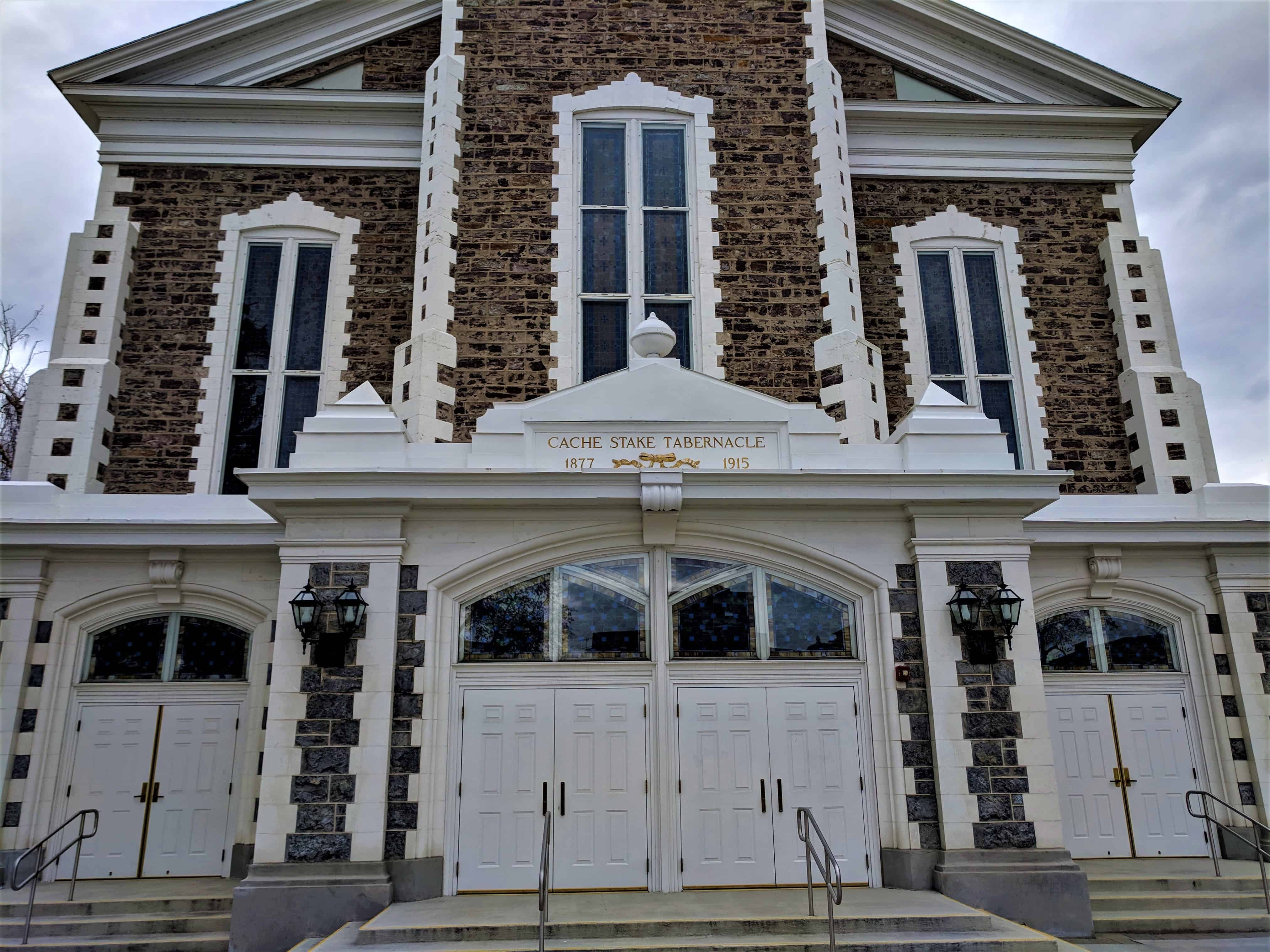
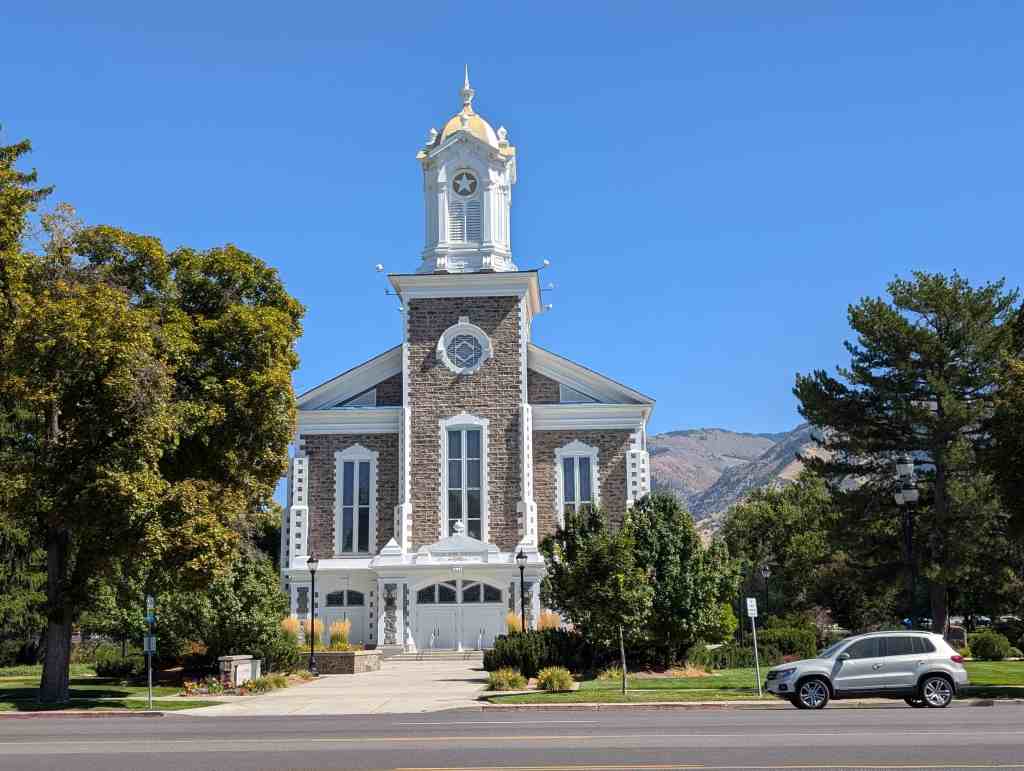
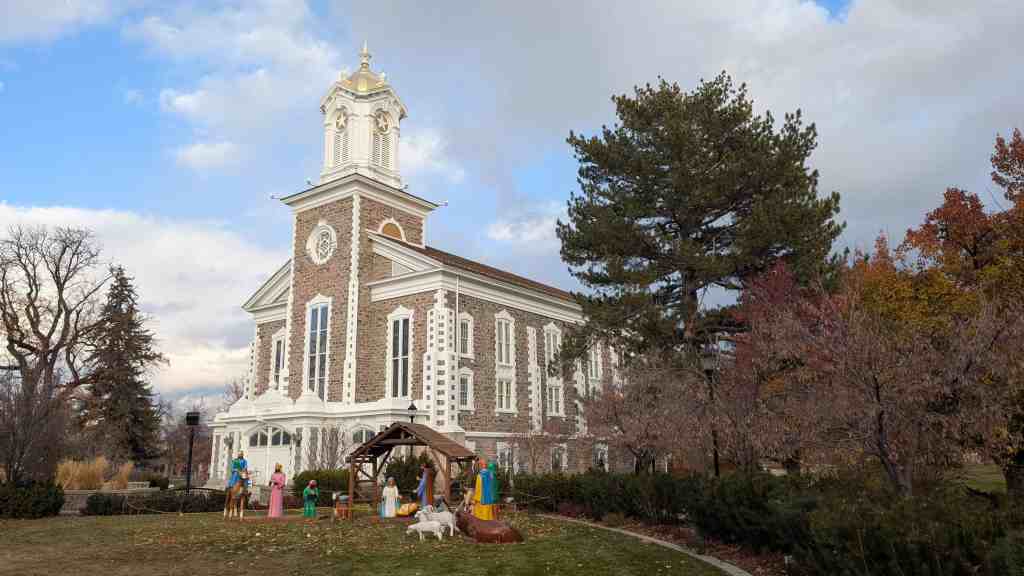
Logan Tabernacle – Cache Stake Tabernacle
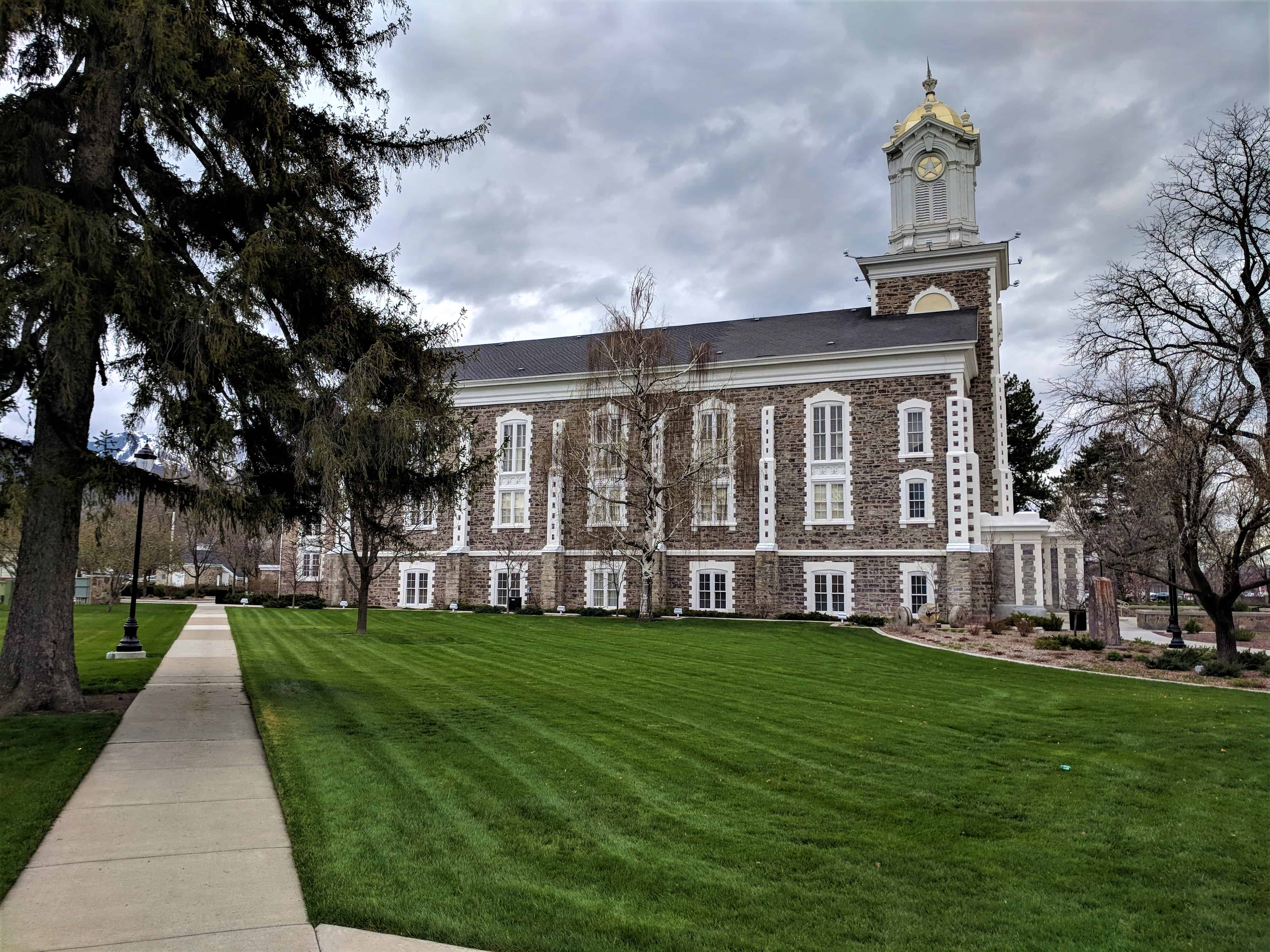
The Logan Tabernacle is a tabernacle of The Church of Jesus Christ of Latter-day Saints (LDS Church) and is located in Logan, Cache County, Utah. It is the site of many local celebrations, including the city’s annual Summerfest Arts Faire.
Several historic markers are located here, including:
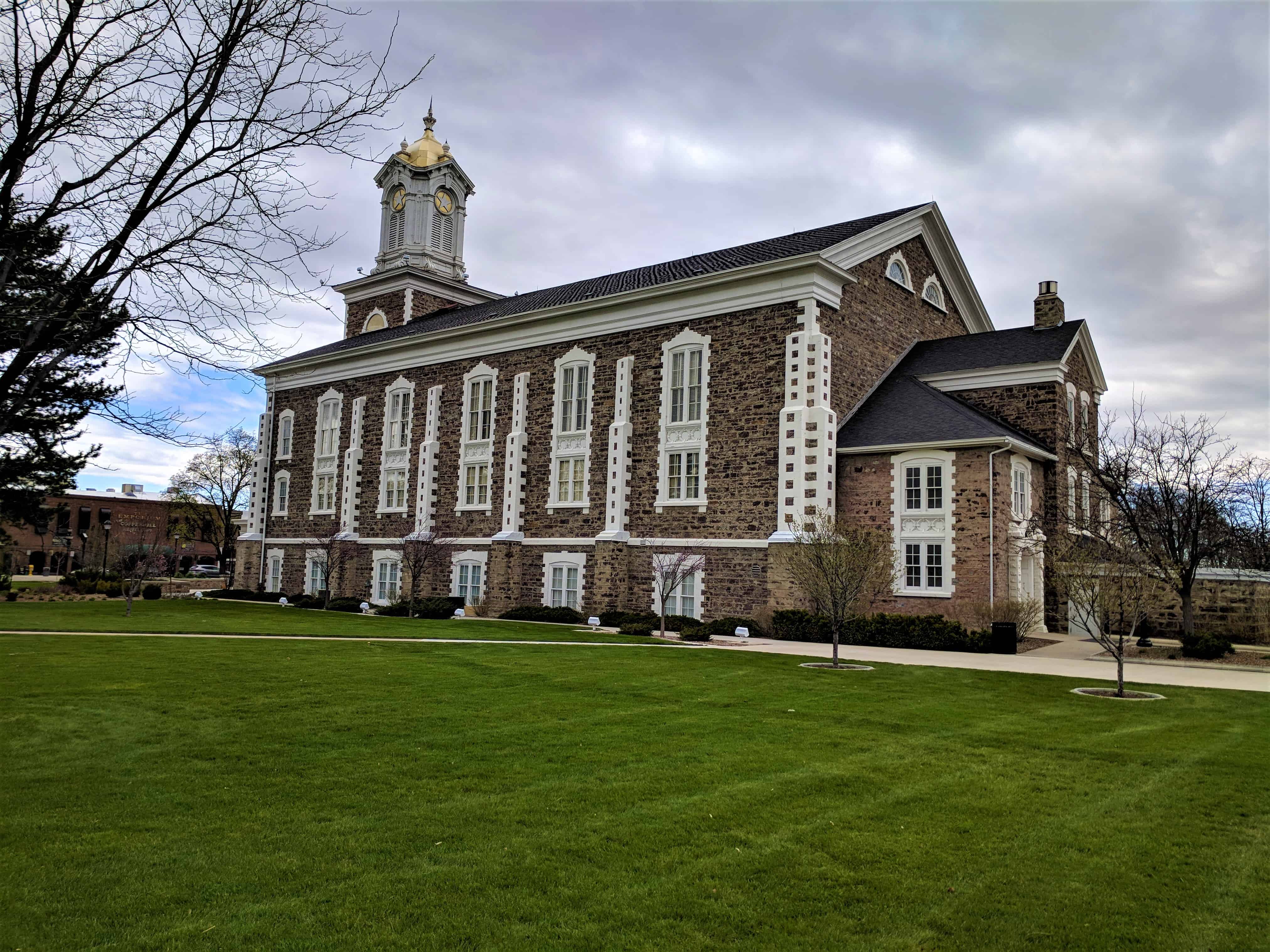
Located at 50 North Main Street in Logan, Utah and added to the National Register of Historic Places (#75001800) on October 15, 1975.

Construction work on the Logan Tabernacle began in 1864, five years after the settlement of Cache Valley. Although the tabernacle was off to a good start with 1864 meeting, the not dedicated some I75 persons subscribing a total of $26,450 at a December 7, 1864 meeting, the project lagged for several reasons and the completed tabernacle was until 1891, more than a quarter century after the work began.
The heavy increase of population in Cache Valley led to the establishment of many wards in the area with each ward having the responsibility to construct its own meetinghouse. The building of these ward chapels absorbed most of the available labor and cash. Work on the Tabernacle was also slowed because of the absence of several church officials on missionary work and the deaths of leaders, Ezra T. Benson and Peter Maughan. After 1877 and the decision to construct the Logan Temple, the tabernacle was given second priority. In 1877, Charles O. Card, Superintendent of construction of the Tabernacle, was transferred to supervise the building of the Logan Temple, and Bishop Anthon Skanchy was assigned to supervise work on the Tabernacle until its completion.
In an 1873 visit to Logan, Brigham Young advised that the original 60 foot by 106 foot foundation be torn out and enlarged to 65 feet by 130 feet. On January 1874, the basement story was dedicated. By 1878, the upper story was sufficiently complete to hold the August quarterly conference there. The present entrance and tower were built later under the direction of George Cole and in November 1891 the completed tabernacle was dedicated by President Wilford Woodruff.
The Logan tabernacle derives its significance from its architectural qualities, its function as the primary LDS meeting hall in Cache Valley and its story of twenty seven years of construction at a time of economic austerity and when the church members efforts were strained by other building projects.


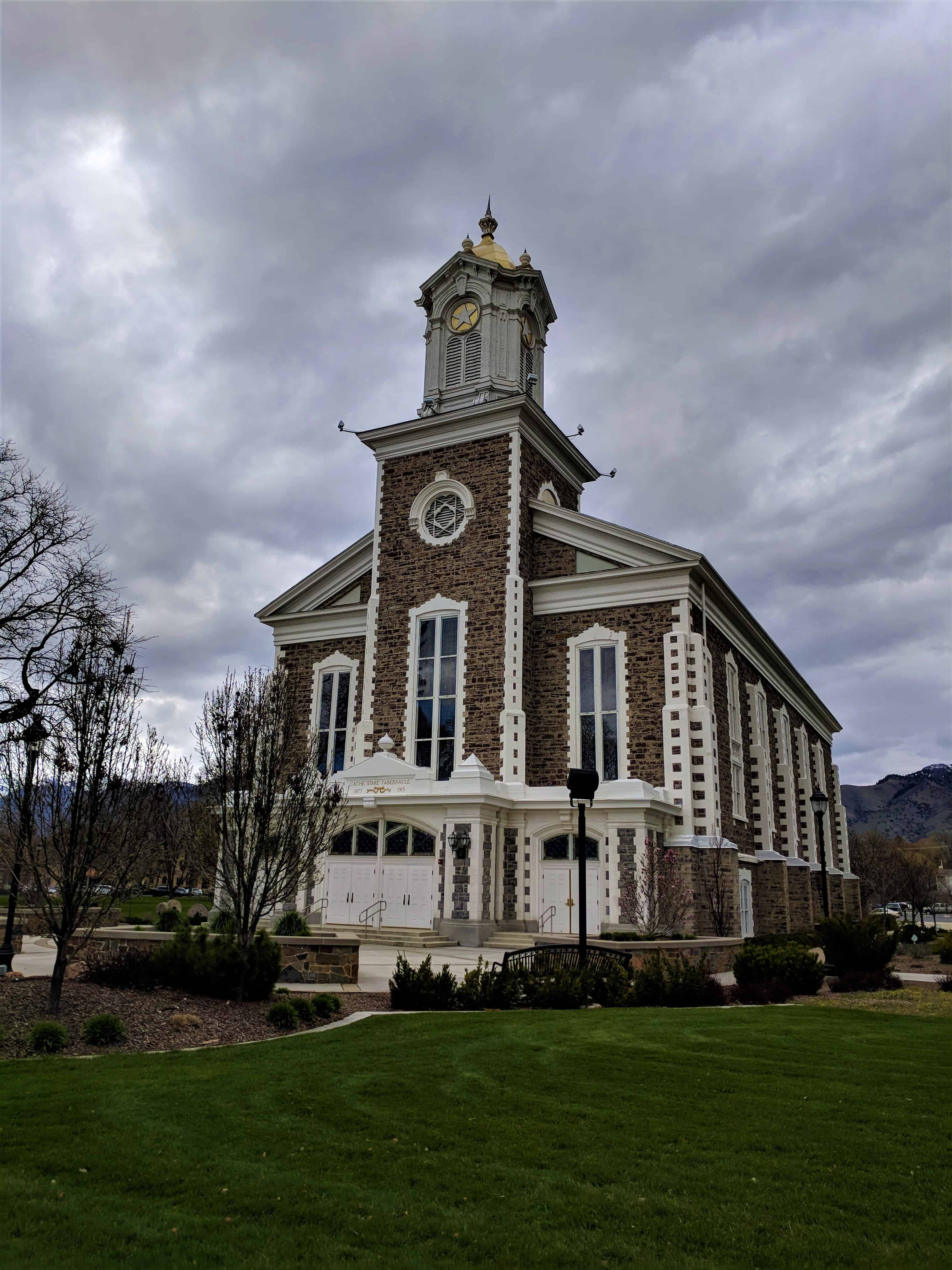
With its variant design elements, the Logan tabernacle is classically eclectic in its architectural styling. A rendering drawn prior to 1875 shows the original intention of combining Gothic, Greek, Roman, Byzantine and perhaps other classical and revival features in the building. The present edifice is very much like the building depicted in the old rendering, The dark stone tabernacle is rectangular in plan, measuring 65 x 150 feet, The height to the top of the tower is 135 feet. The upper floor consists of one room and a vestry while the basement contains eight rooms. The interior is beautifully finished with the woodworking and seats being grained, the floors carpeted and the walls and ceilings frescoed with original designs. The tabernacle is used for stake conferences and other large gatherings and will comfortably seat 4,000 people, including seating in the gallery. The building cost has been estimated at $100,000.
The general form of the tabernacle follows the usual pattern for early Mormon meetinghouses — that of a simply gabled box with an engaged central tower in the front façade. To this form is added much relief and interest through varied detailing. Features include buttresses with stone of alternating colors, quoins of white stone at the building corners and around all the window and door bays, a molded cornice with full return across the front wall and butting into the tower; a vestry which extends outward from the tower and is capped with small, stone pinnacles; soaring windows with central mullions and segmented arches; a round window with the Star of David motif within on the tower; and a wooden lantern or steeple which I is ornately milled and topped with a golden dome and several finials. While these are the dominant features, there are many others that add to the rich quality of the design.



24 Monday Sep 2018
Posted in Uncategorized
Tags
Box Elder County, Brigham City, Historic Buildings, Historic Churches, Historic Markers, SUP, Tabernacles, utah
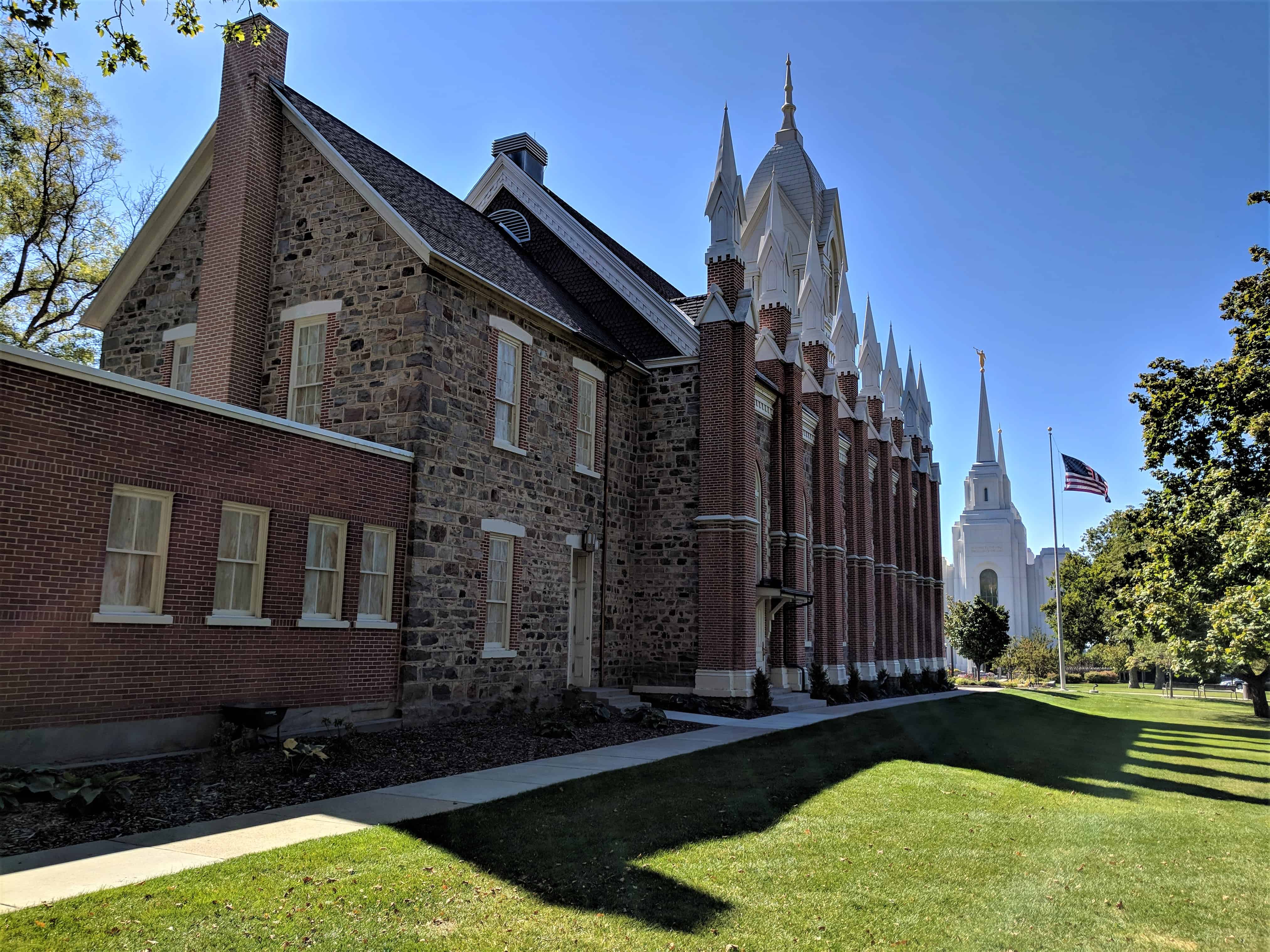
Brigham City Tabernacle
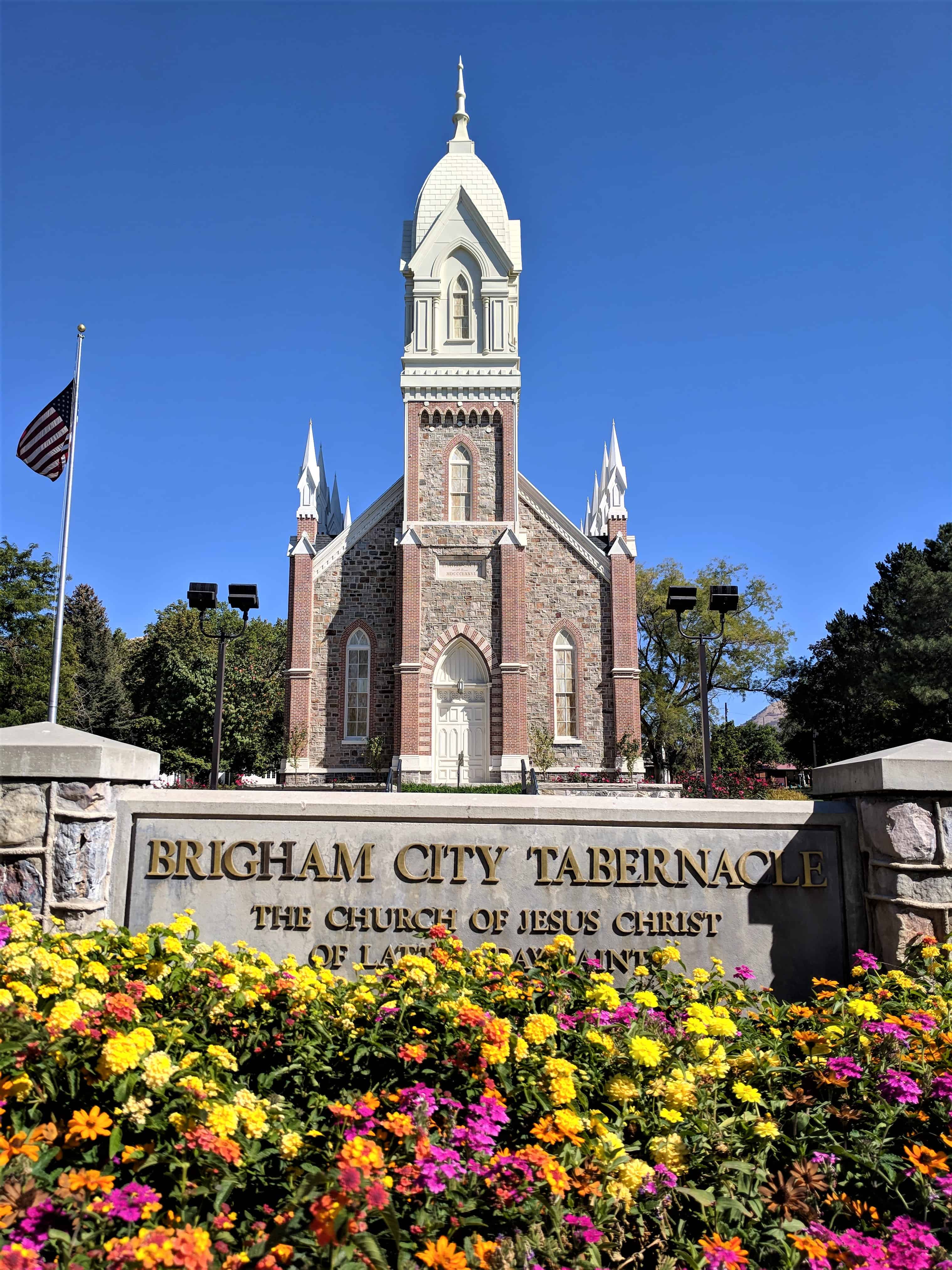
This stately building is one of the finest examples of nineteenth century Latter-day Saint architecture. For more than a century, it has served as a center of Christian worship, cultural enrichment, and community activities. Towering above the trees, it has become one of the principal landmarks of the region.
Members of the Church of Jesus Christ of Latter-day Saints settled this area in 1851, just four years after the arrival of the first pioneers in Salt Lake City. Under the leadership of Elder Lorenzo Snow of the Council of the Twelve Apostles, they built this town at the mouth of Box Elder Canyon, near traditional Shoshone Indian campgrounds and renamed it for the Church president Brigham Young. For many years they worshiped in a log meetinghouse and in the local courthouse, but in 1865 Brigham Young directed Elder Snow and other community leaders to build a tabernacle for conferences of the Box Elder Stake. The local leaders had already selected a site on the corner of Main and Forest Streets in the center of town when President Young visited the community. However, according to tradition, he led them here to “Sagebrush Hill,” the highest point on Main Street and said, “This is the spot for your Tabernacle.” The selection of this site insured that the building would be visible for many miles across the valley. President Young and his territorial surveyor Jesse W. Fox laid the cornerstones on 9 May 1865.
Construction proceeded slowly as local manpower was diverted to completing the transcontinental railroad. Work on the building resumed in earnest in 1876, mostly with donated labor. Local craftsmen used quartzite, sandstone and lumber from the nearby mountains. Women donated produce from their gardens and eggs laid on Sundays to sell for the needed cash for glass and other materials that could not be produced locally. Fourteen years after Brigham Young laid the cornerstone, the first meeting in the partially completed building took place on 27 May 1879.
As originally built, the Tabernacle was sturdy but plain in appearance. However, in 1889, a conference of the Box Elder Stake voted to “complete” the building. In the following months, a tower, a gallery, a rear vestibule, brick buttresses with decorative caps, and other improvements added to beautify the structure. Church President Wilford Woodruff dedicated the finished building 28 October 1890.
On Sunday 9 February 1896, as people began to assemble for afternoon services, a fire started in the furnace room. No one was injured but despite frantic efforts, only smoke-blackened stone walls remained an hour later. Stake President Rodger Clawson supervised reconstruction over the next thirteen months. The new Tabernacle was even finer than the old, with elegant woodwork, a distinctive gothic/revival tower and sixteen graceful pinnacles. On 21 March 1897, George Q. Cannon, First Counselor to President Woodruff, dedicated the rebuilt structure.
Throughout the following years, the people of Brigham City and neighboring towns have preserved and maintained this beloved building. In 1971, it was listed on the National Register of Historic Places, one of the first buildings in Utah to be so honored. Beginning in 1985, an extensive restoration project replaced the mechanical and electrical systems, reinforced the structure, and carefully renewed both the exterior and interior to guarantee the continued preservation of this magnificent landmark. The 106-old Tabernacle was rededicated on 12 April 1987 by Elder Boyd K. Packer of the Council of the Twelve Apostles, a native of Brigham City.

Located at 251 South Main Street in Brigham City, Utah and is #6 in the Brigham City Historic Tour and #21 of the S.U.P. historic markers. It was added to the National Register of Historic Places (#71000840) on May 14, 1971.

Box Elder Tabernacle- Built 1867-1890 Pioneer settlers used stone and wood from nearby mountains and their finest craftsmanship to built this place of worship. It was finished and dedicated in 1890. Six years later in 1896, it was gutted by fire and had to be rebuilt. The building was finished and rededicated in 1897.




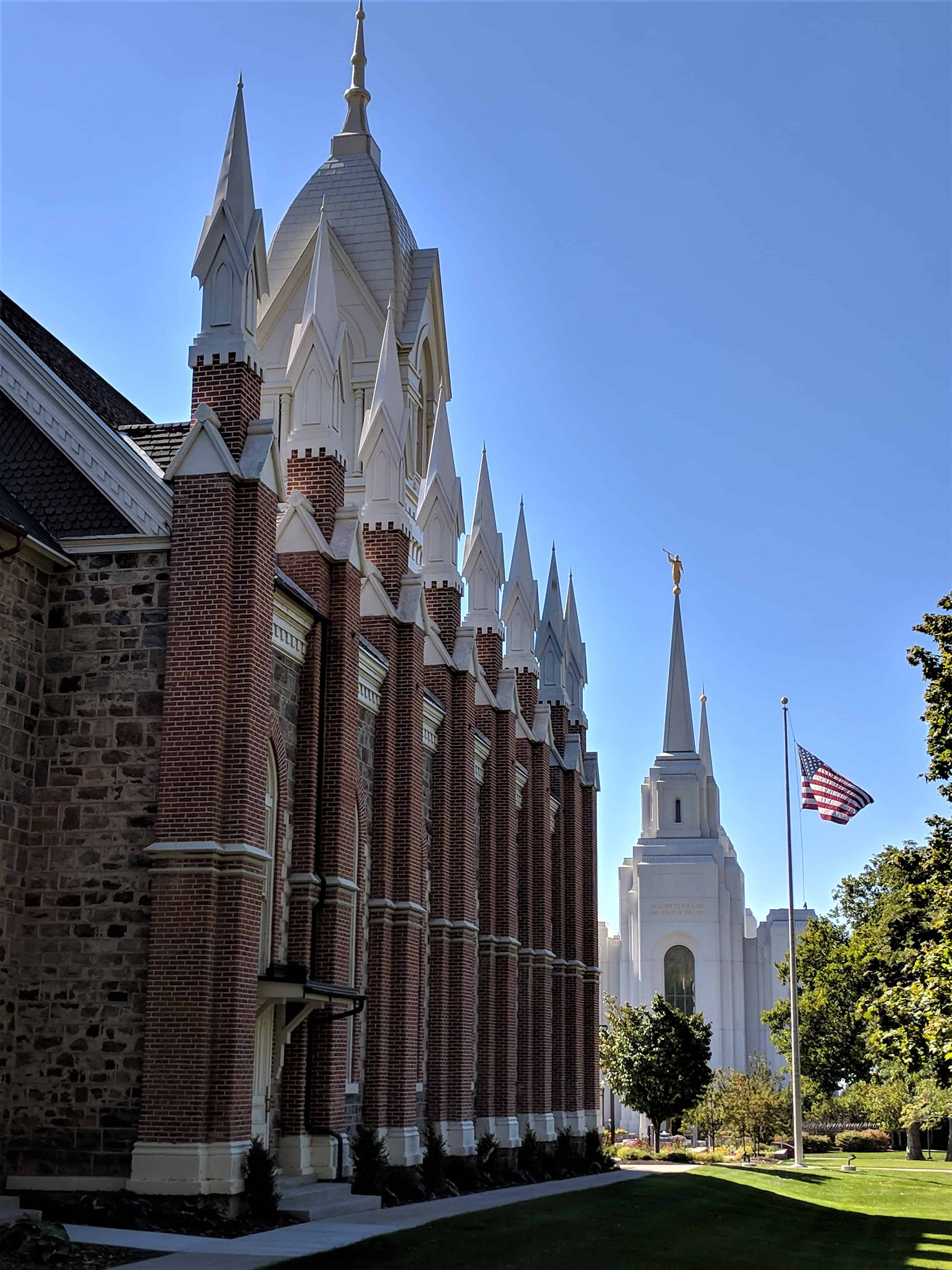


The following is from the National Historic Register’s nomination form:
During the summer of 1865, Brigham Young visited the community. When he observed men beginning an excavation, he asked its purpose. When told it was to be the site of their new tabernacle, he objected. Taking Jesse W. Fox, church surveyor with him, he located a spot on Sagebrush Hill, the back bone of the community. Actually, the site was on the crest of the alluvial fan so characteristic of many of the Mormon communities along the Wasatch front. From that spot the water ran north, south and west.
During the next 11 years rocks were hauled to the site. Construction was begun with some serious intent in 1876. By 1881, the building was sufficiently completed to hold conference in it. However, the buiIding was not finished until 1890. It was dedicated by President Wilford Woodruff October 27th of that year. The building had taken twenty-five years to build, in part because the small community was also building numerous other structures tannery, gristmills, broom factory, etc. under the cooperative arrangement of the United Order or communal economic system.
The lovely structure served well, except for the furnace. One Sunday afternoon, February 9, 1896, it burned down, leaving only the four sturdy walls standing. Stake President Charles Kelley asked architects to investigate the walls. They were declared sound. On March 27, 1896, the people voted to rebuild it. Monies were solicited from as far away as Salt Lake City. Reconstruction began immediately and by March 21, 1897, a lovely new structure was ready for dedication by Apostle George Q. Cannon.
Brigham City holds its tabernacle in high regard. It sits proudly on the crest of the hill, probably one of Utah’s most photographed buildings. Its architectural style and history mark it as one of the State’s most significant structures.
Brigham City’s first Stake President was Lorenzo Snow 1853-1877. He was succeeded by Oliver B. Snow, who served until 1888 when Rudger Clawson became president. His successor, who rebuilt the Tabernacle, was Charles Kelley. The building is still used for L.D.S. Church functions and is open to the public on a restricted basis.
The original Box Elder Stake Tabernacle was built of field stone collected nearby. The architect was probably Truman O. Angel, Jr. or his father, one of the more famous L.D.S. Church architects. The Tabernacle was 50 feet by 95 feet with a tower rising above each of the four corners. The interior when finally completed in 1890, had a gallery on the north and south walls, with the elevated speaker’s stand on the east end. Most of the lumber was hauled from nearly mountains, sawed and delivered to the site. The seating capacity was 1200.
After the building burned in 1896, it was rebuilt even more elaborately. The restoration architect is not identified. Sixteen brick buttresses were added to the exterior with steeples topping each one, A major tower was built on the front. The style has been described as neo-Sothic. Inside the building a vestibule was added, and the seating capacity increased by 400. A very simple hand-carved design goes all around the new balcony to focus the eyes on the pulpit which, with the choir seats, is now on the west end of the building.
The building has an excellent organ and modern lighting and heat. It is maintained by the Box Elder Stake L.D.S. Church.
04 Saturday Nov 2017
Posted in Uncategorized

(Above: The Meetinghouse and the Utah Stake Tabernacle as they appeared circa 1885. The baptistry is located in front of the meetinghouse.)
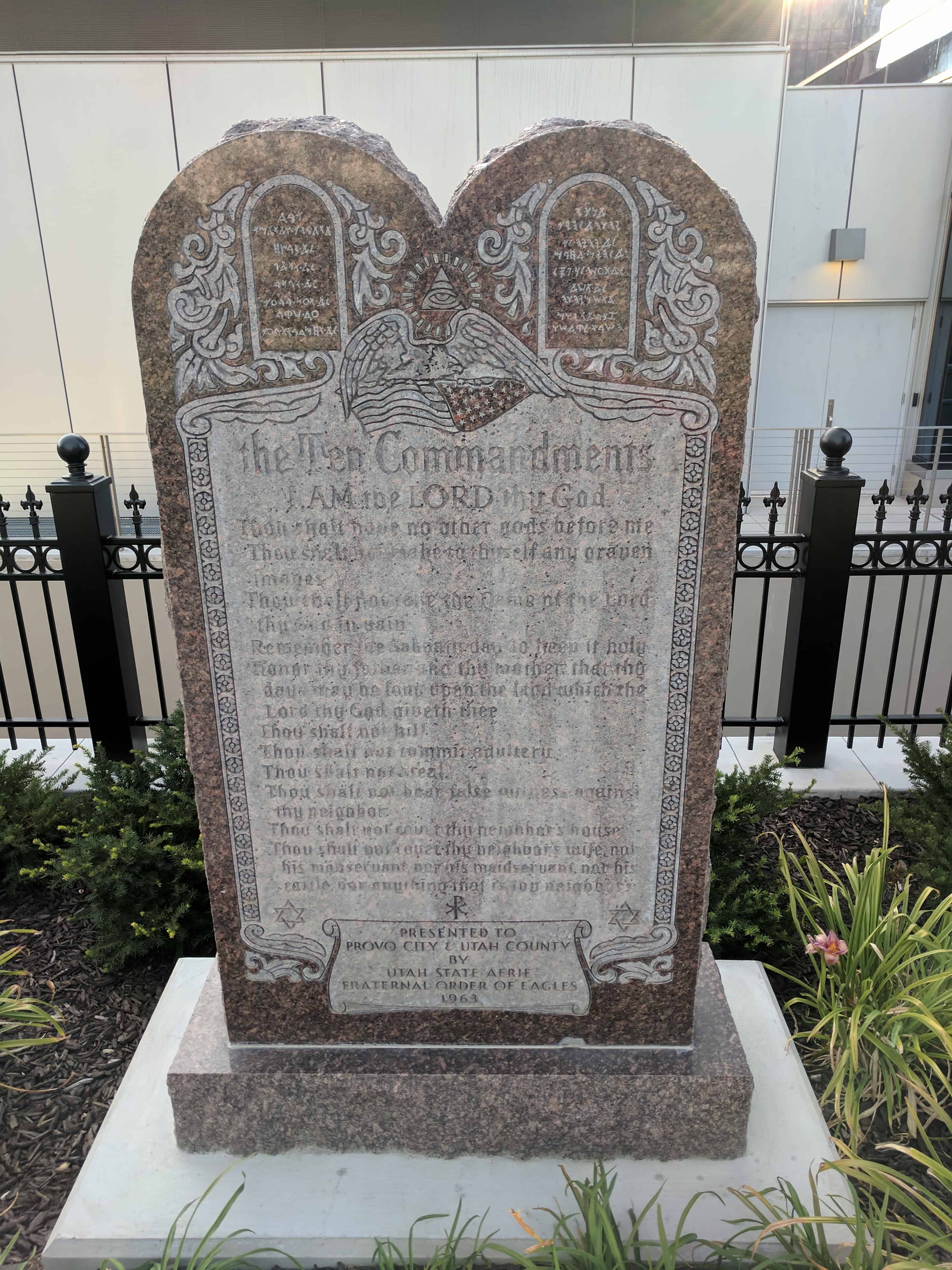
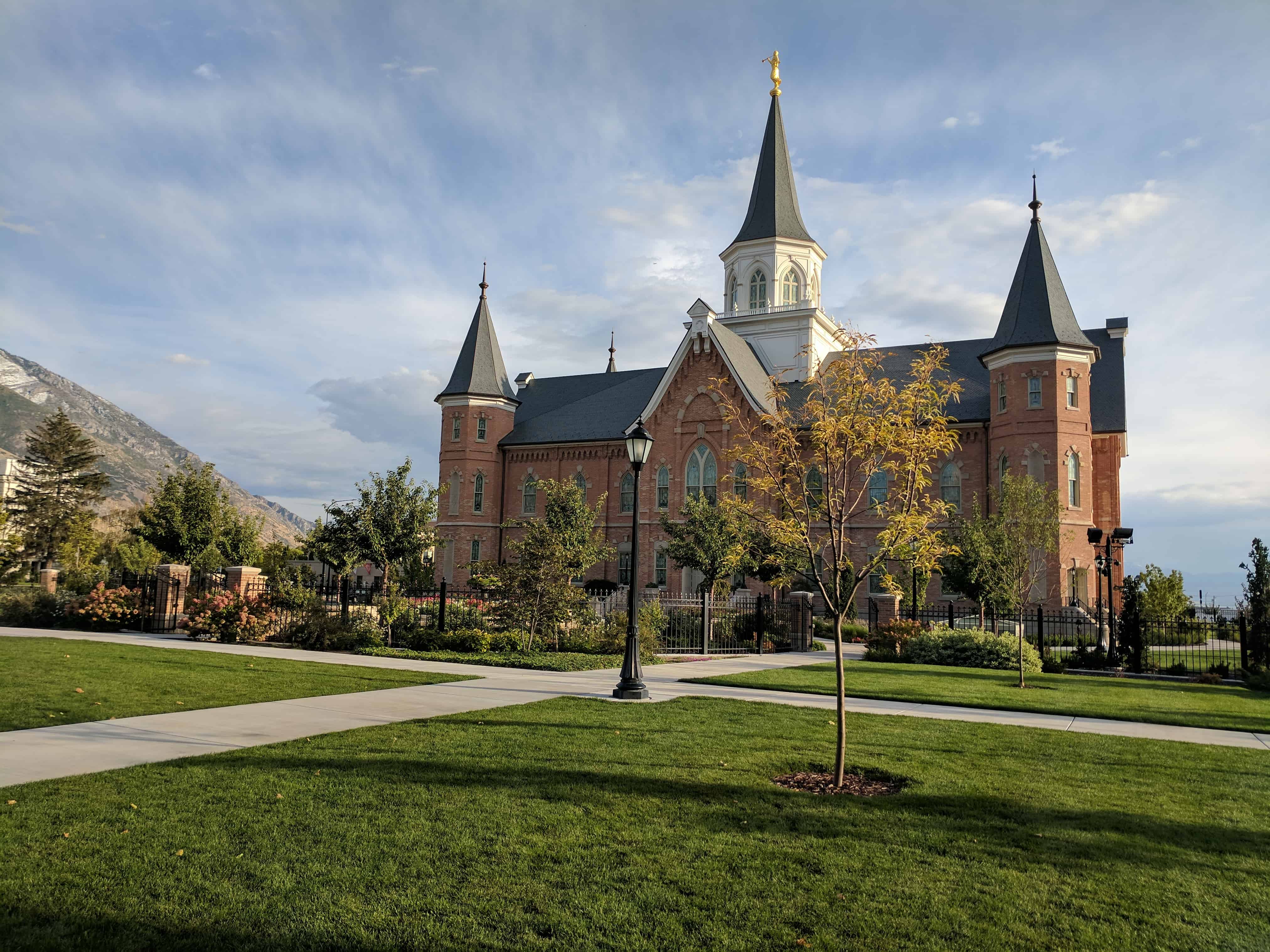
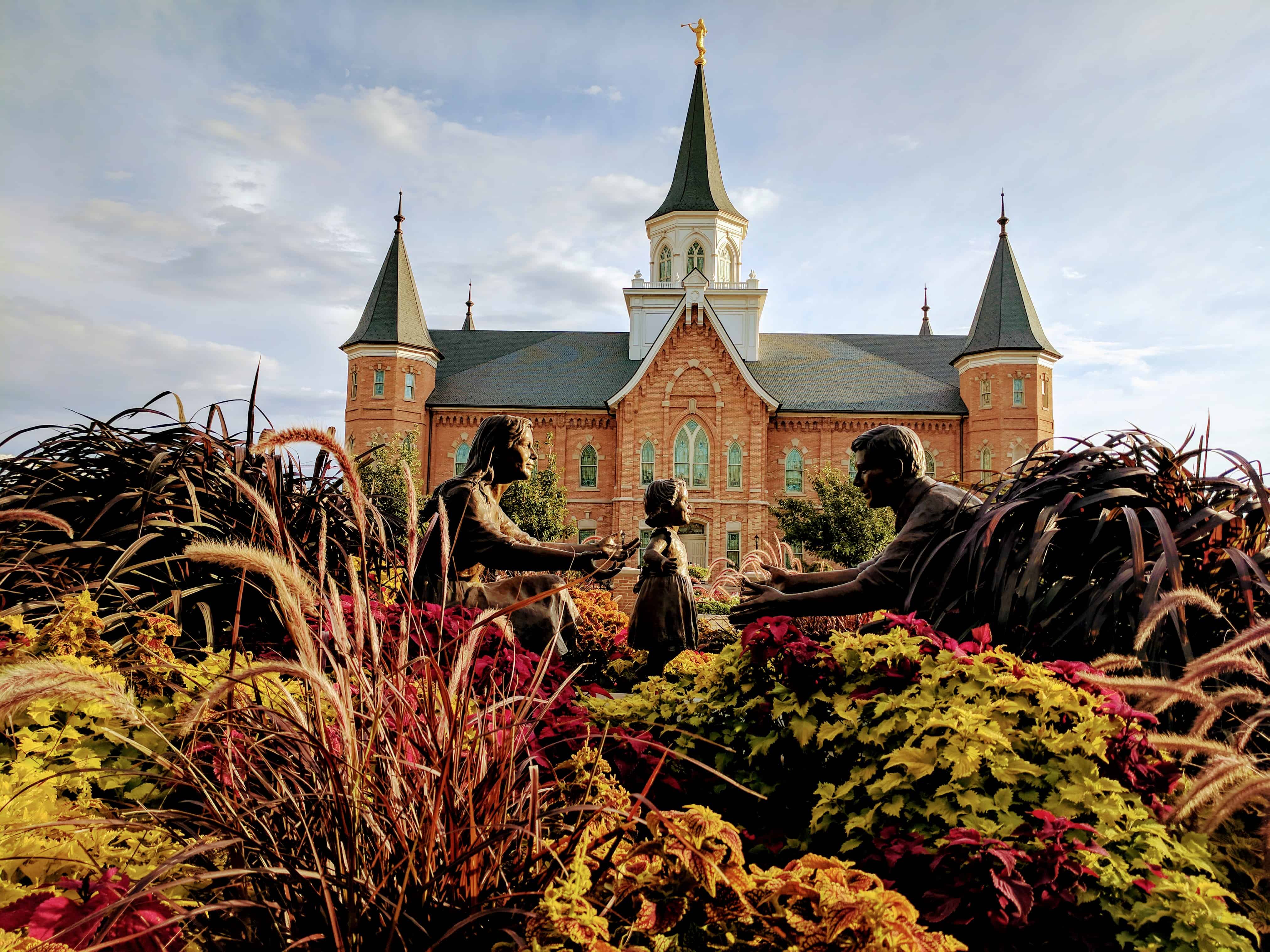
Members of The Church of Jesus Christ of Latter-day Saints have gathered on this block since the 1850s to worship and make sacred covenants. The transformation of the Utah Stake Tabernacle into the Provo City Center Temple continues this sacred heritage.
After President Brigham Young selected the site, construction began on a meetinghouse in 1856. It was designed by Church architect Truman O. Angell, and Church members worshiped in this building until it was razed in 1919. Members of the Daughters of Utah Pioneers and the Sons of Utah Pioneers preserved the lintel stone (adjacent to this marker from the original meetinghouse.
In the late 1870s, a baptistry was built to the west of the meetinghouse. Uncovered during an archaeological dig in 2012, the font reveals this site as a place where Latter-day Saints historically made sacred covenants with the Lord.
As the community outgrew the capacity of the meetinghouse, Church leaders commissioned William H. Folsom to design a new, larger structure. Initiated in 1883, construction of the Utah Stake Tabernacle ended in 1898. For more than one-hundred years the tabernacle housed worship services, community gatherings, and cultural events. Early in the morning of December 17, 2010, a fire consumed all but the outer shell of the building. Ten months later, President Thomas S. Monson announced that the building would be restored and used as a temple.
Today Church members continue to gather to this historic place. They, like their predecessors, make sacred covenants with God through the ordinances offered in the House of the Lord.
Related posts:





09 Monday Oct 2017
Posted in Uncategorized
Choosing the Site of Provo’s First Tabernacle Caused Some Controversy.
Provo constructed its first tabernacle on the northeast quarter of the block fronting on Center Street and University Avenue. Selecting its site caused a fair amount of controversy.
When Brigham Young visited Utah Valley for the first time in September, 1849, the settlers lived in Fort Utah located where I-15 crosses the Provo River today. Young explored the vast area easy of the fort and selected a site for the central square and tabernacle.
After the settlers began to leave Fort Utah in 1850, they established Fort Provo, where North Park is located today. In spite of President Young’s wishes they located their townsite five blocks west of the site Young selected. In 1852, George A. Smith selected a site for the first tabernacle on the town square, today’s Pioneer Park. Church leaders dedicated the land and broke the ground for a building designed by LDS Church architect, Truman O. Angel, who had designed the Salt Lake Temple.
Men dig a large hole, hauled in some rock for the basement wall–and then the work ended. During a special conference held in Provo in July, 1855, Brigham Young relocated the site he had selected for the tabernacle in 1849, and Heber C. Kimball ordered the congregation to fill the first hole on the public square and go to work on the new site five blocks to the east. The tabernacle was finally dedicated on August 24, 1867. After a half century of use, it was demolished during the winter of 1918/1919.
Archaeologists excavated the site of the old tabernacle and located it’s rock foundation in 2012 during construction for the Provo City Center Temple.
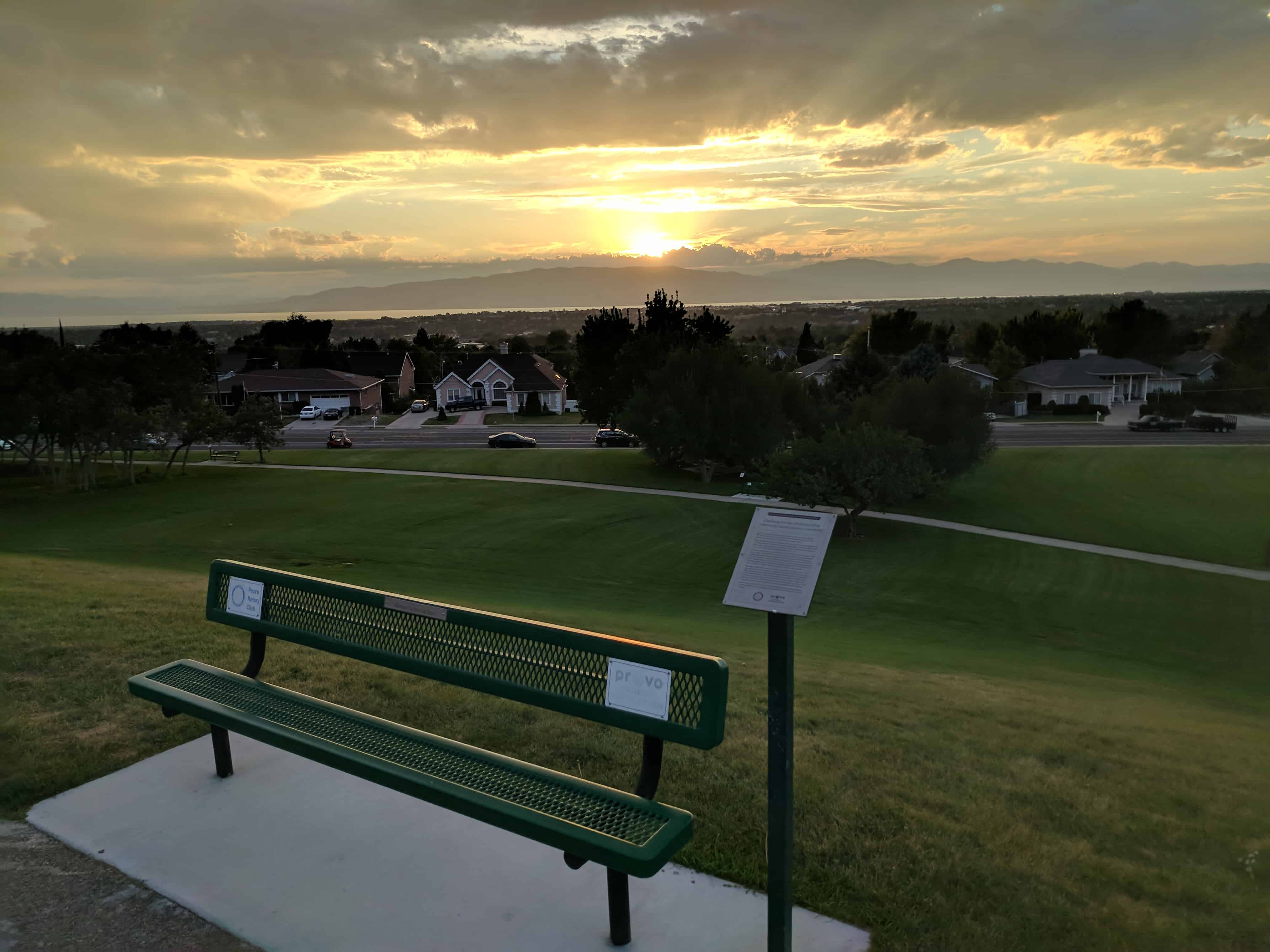
This marker is located in Rock Canyon Park in Provo, for other markers in this series click here.
Related posts:

08 Saturday Oct 2016
Posted in Uncategorized
Tags
historic, History, LDS Church, Lehi, Tabernacles, utah, utah county

This stone donated by Lehi Sunday Schools. Laid Sept. 14, 1901.
(etched in stone, difficult to read) Lehi ……… of the Church of Jesus Christ of Latter-day Saints erected A.D. 1901

To gain an appreciation of the Tabernacle cornerstone, one must learn of its creators. Englishman Arthur Bradder (born in 1855), at the age of thirteen began a two-year stonecutting apprenticeship which he left because of an abusive master. He then traveled about England, Wales, and France plying the skills he had learned.
Working in Liverpool, England, during 1876 Bradder was able to save enough money to transport his family to America. In Salt Lake City in 1897 he formed a partnership with his son-in-law, Joseph J. Gill. After being told there would be no stonecutting competition in Lehi, the duo moved to town and established the Lehi Stone, Marble and Granite Works (later Arthur Bradder & Company) on the northeast corner of Fourth North and First East.
The first major contract Bradder and Gill obtained was for the decorative stone on the downtown People’s Coop building (189 West Main). Presumably they also did the stone work on the New log Cabin Saloon (155 West Main), Merrihew Building (98 West Main), Ross Block (86 West Main), and the main building of the uptown People’s Coop (151 East State) all built between 1902 and 1908.
Another example of the fine stonecutting abilities of Bradder and Gill is the Lehi Pioneer Monument, on the Memorial building grounds
The above photos show the conerstone displayed at the chapel at 200 N Center St in Lehi, but it was later moved to behind the Lehi Historical Society and Archives building at 34 E 100 N. The below photos show it there.