I make a page for each city where all of the posts of places in that city are listed by address for those times when I need to find a post and I can remember where it was but not the name or some similar situation.
The Lakeview Tithing Office was originally constructed as a creamery by Leslie L. Bunnell in 1899. Leslie and his father, Stephen I. Bunnell, operated a successful dairy operation for a number of years, and this creamery served as the headquarters of their business, which involved making and selling cheese and butter, as well as selling milk. It was the first creamery in Lakeview, a small, unincorporated farming community located between Provo and Utah Lake. The 16’x 16′ room on the west side of the creamery served as the home for the family, which included five children, until 1904, when the adjacent house was built. Soon after that, the Bunnells sold the creamery to the Lakeview Ward of the LDS church for use as a tithing office. The west room was used as an office and the east room served as a storage area for grain and other tithing commodities. The Bunnell family bought the tithing office/creamery back around 1920 and used it for a granary. Occasionally, the west room was used as a residence the last time was during World War II, when a single man lived there for several months. Currently the building is used for storage by the Bunnells.
The Lakeview Tithing Office, built in 1899, is historically significant as one of 28 well preserved tithing buildings in Utah that were part of the successful tithing system of The Church of Jesus Christ of Latter-day Saints (LDS or Mormon church) between the 1850s and about 1910. Tithing lots, which usually included an office and several auxiliary structures, were facilities for collecting, storing, and distributing the farm products that were donated as tithing by church members in the cash-poor agricultural communities throughout the state. Tithing offices were a vital part of almost every Mormon community, serving as local centers of trade, welfare assistance, and economic activity. They were also important as the basic units of the church-wide tithing network that was centered in Salt Lake City.
The Lakeview Tithing Office is a one story brick building with a combination gable and hip roof, a stone foundation, and a false front. There is a chimney three quarters of the way down the ridge line. The false front is typical of small town commercial buildings at the turn of the century, as is the corbelling of its upper edge, the jigsaw cut decorative elements in the wooden arches over the facade openings, and the rock-faced shoulder arches over the same openings. The false front is stepped. The facade openings consist of a door centered between two windows. Behind the lower step of the false front on the east side of the building is an extension off the main block of the building. It is a rectangular room with a shed roof and rear entrance, and is situated under the eaves of the main roof. It was probably part of the original construction. According to information in a 1975 Utah Historic Sites Inventory form, it is likely that the room was used to house a boiler that powered the machinery of the creamery. The building has received no major alterations, is in fair condition and maintains its original integrity.
I stopped by to document Mountain Courtyard Suites, an apartment building in Salt Lake City that is in poor shape. I’m not sure if they’re going to fix it or knock it down but just in case I like to get photos to be able to look back on.
Originally Marshalltown, Utah and now an unincorporated area south of Washington, Utah and east of St George, Utah. In the early 1900s there was a brick factory in Marshalltown.
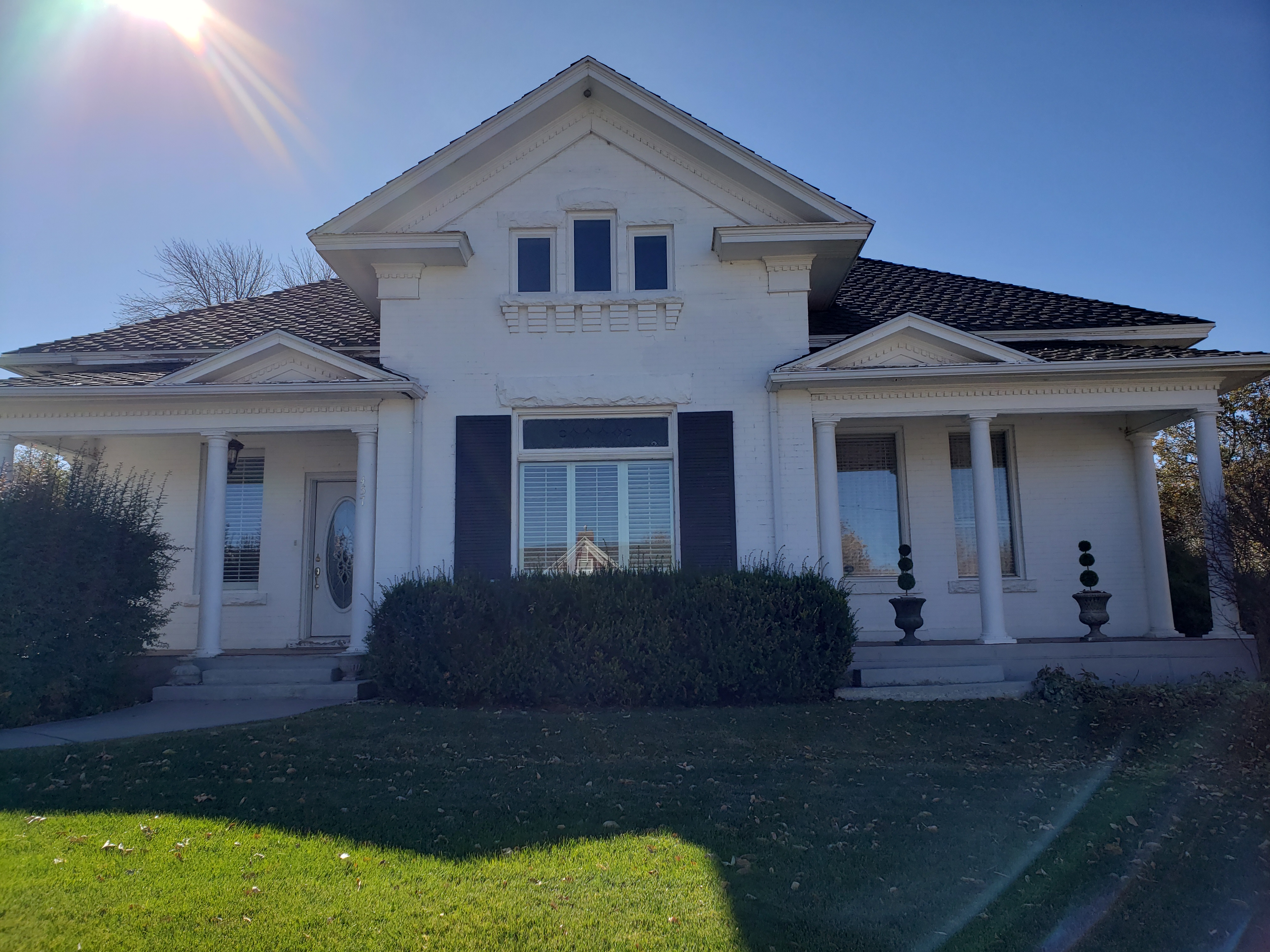
Constructed c. 1910 for James Simpson, the walls of this double-cross-wing, symmetrical home are three bricks thick. Its facade eclectically combines classical formalism and details, though it is neither fully Neo-classical nor entirely Victorian.
Builders Brandt and Jacobsen used a cement foundation filled with rock, the first in Mt. Pleasant. Locals stood around watching and speculating that it would never last, but today no cracks can be found. The second story is unfinished; the front is unchanged, except for replacing doors on the front porch with windows.
Mr. Simpson died in 1918 during the flu epidemic. Local residents, fearing the ravages of the flu, wanted nothing to do with anything that had come in contact with the disease. Simpson’s body was passed from the back bedroom through the window and laid out on the front lawn, then placed in a coffin and the lid nailed shut. Just at this time, James Monsen was passing by. Unafraid, he went into the house, took Simpson’s nine-year-old daughter Dorothy on his lap and comforted her by explaining what was happening.
In 1932 Willis N. and Louise F. Madsen Purchased the house from Simpson’s daughter Eva and added a screen porch to the back. After Willis’ death in 1932, Louise married Justus O. Seely, then the mayor of Mt. Pleasant.(*)
In May of 1857, an exploring party, under the direction of W.W. Phelps, visited this area seeking locations for future settlements. After selecting this as a place appropriate for such a settlement, he said a prayer of dedication over the area.
Phelps reported in the Deseret News: The place was dedicated, as all the earth will eventually be, for the benefit of Israel, and whoever loves there must love by faith and works in spirit and in truth, for no one else can hope to live there on any other principle.
When settlers arrived three years later in 1860, living close together was necessary for their mutual protection. initially, they built their log homes next to each other, forming a rectangular fort.
This fort was built straddling the creek, thereby providing the occupants with a fresh source of water within the confines of the fort. The creek was thereafter called Fort Creek. The location of this fort is at the present junction of Woodenshoe Lane and State Road 32.
The area to become Peoa was laid out as a town site with each settler taking a strip of land some 12 rods wide, making about 12 acres, running approximately east and west from the road toward the West Hills. (A rod is a unit of measurement 16 1/2 feet.)
On the top of each farm were two buildings lots right next to the road. As the entire town site was not used up, there was a strip on the south end that was divided into what was called “meadow claims” of about 6 acres each. These claims ran perpendicular to the original claims south from what is now Marchant Lane. After these claims were taken (one claim for each family), the portion to the west and south was called “The Undivided” and used in common by the entire community for grazing.
In 1861, Joseph Bartholomew, James Mellor and others settled here and diverted the warm creek for irrigation purposes. A branch of the Church of Jesus Christ of Latter-day Saints was organized in 1862 with Branch Young president. The name of the settlement was changed from Warm Creek to Fayette, honoring the town in New York where the church was first organized. In 1863, John E. Metcalf built the first grist mill on the stream flowing from the warm spring one mile east of this marker. He fashioned and used these mill stones. Fayette Ward was organized July -1877.
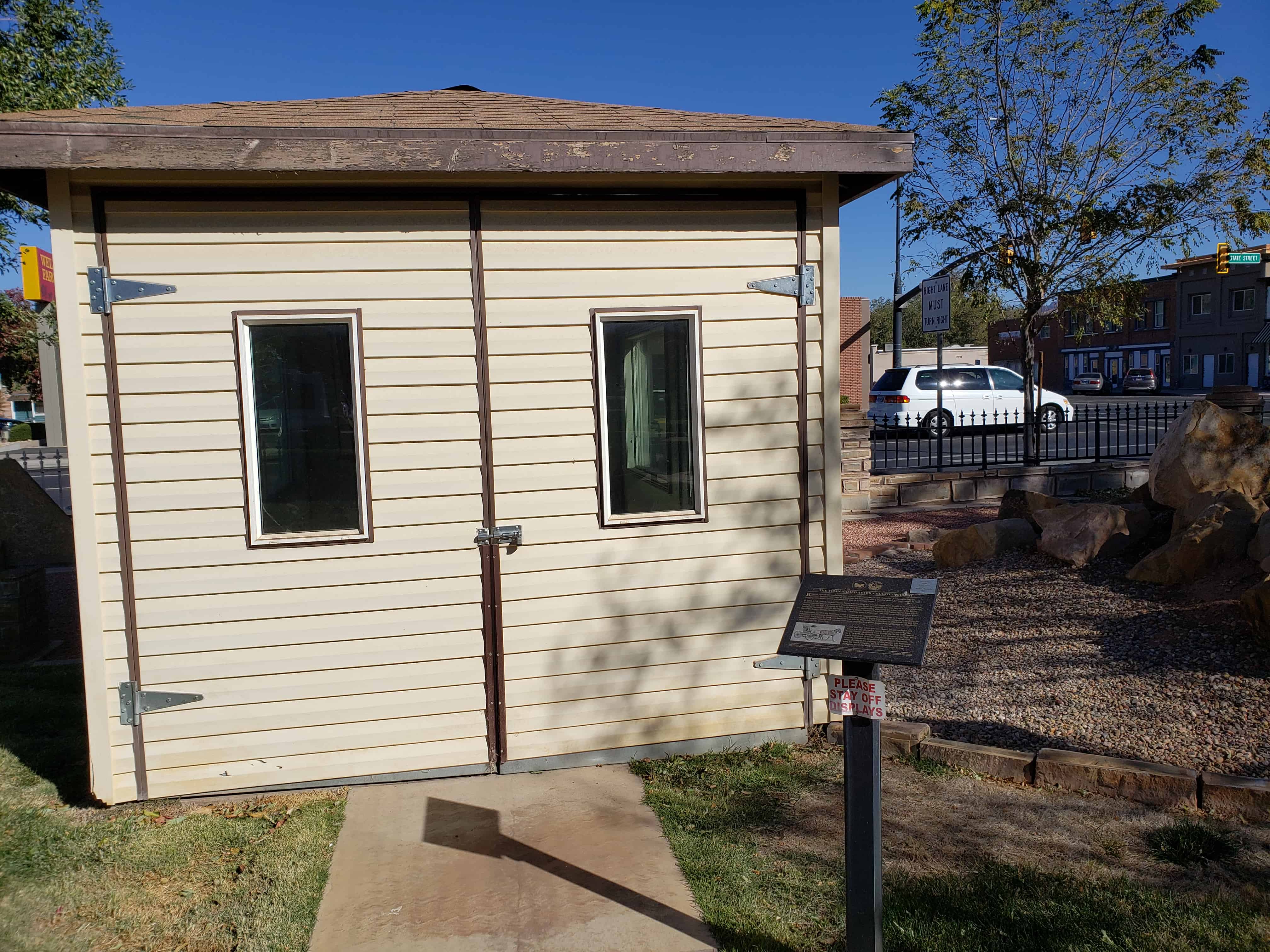
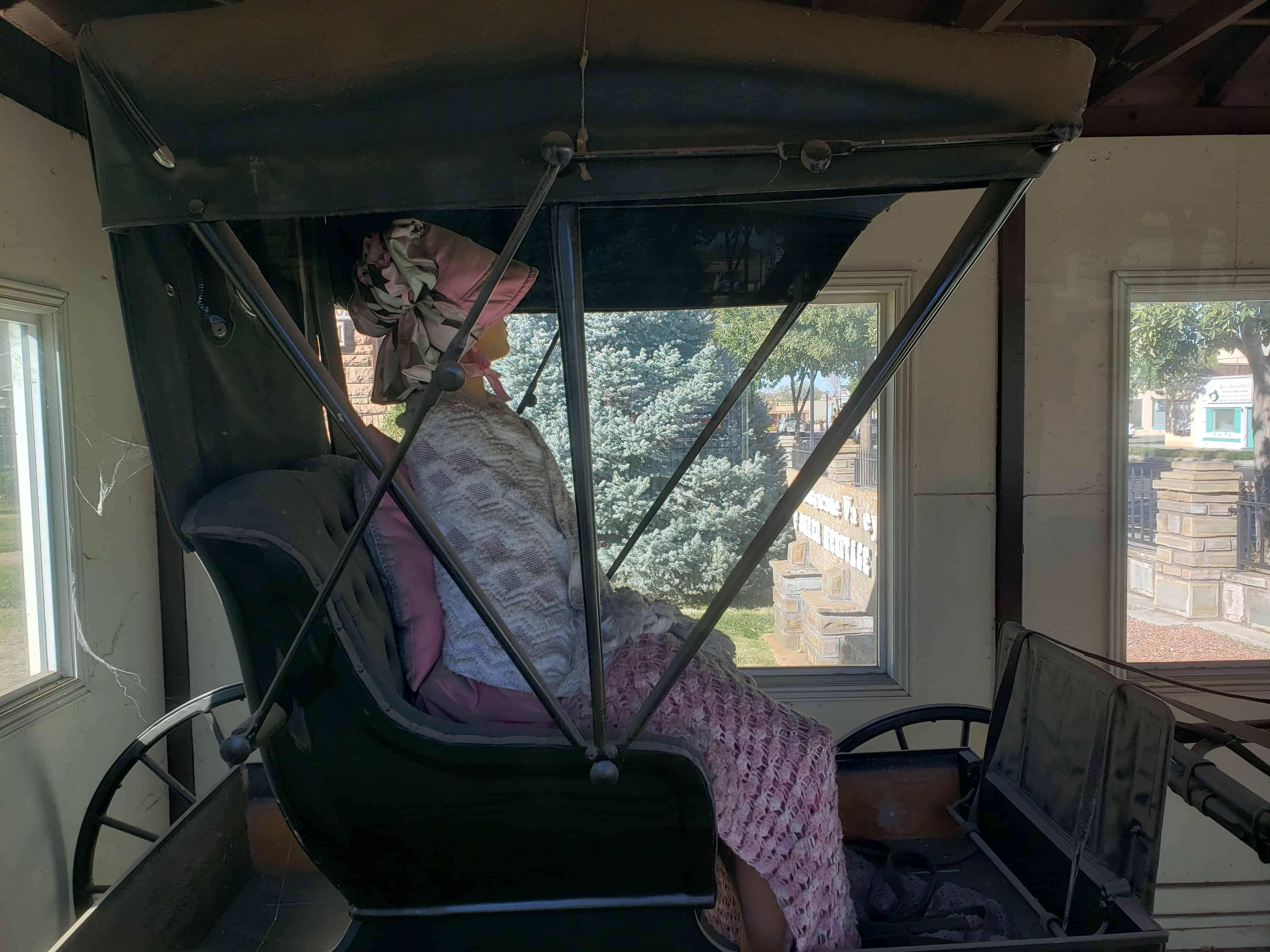
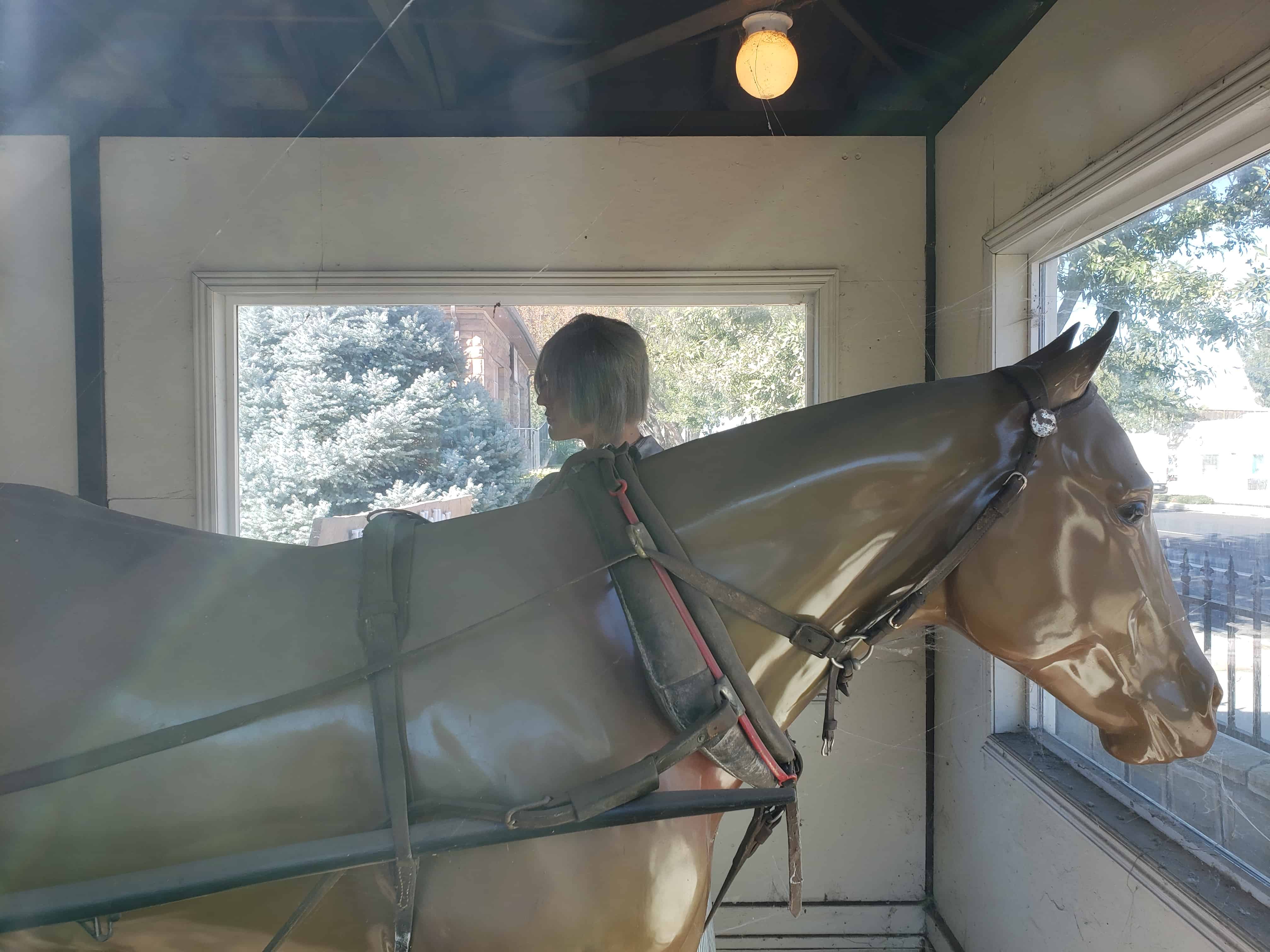
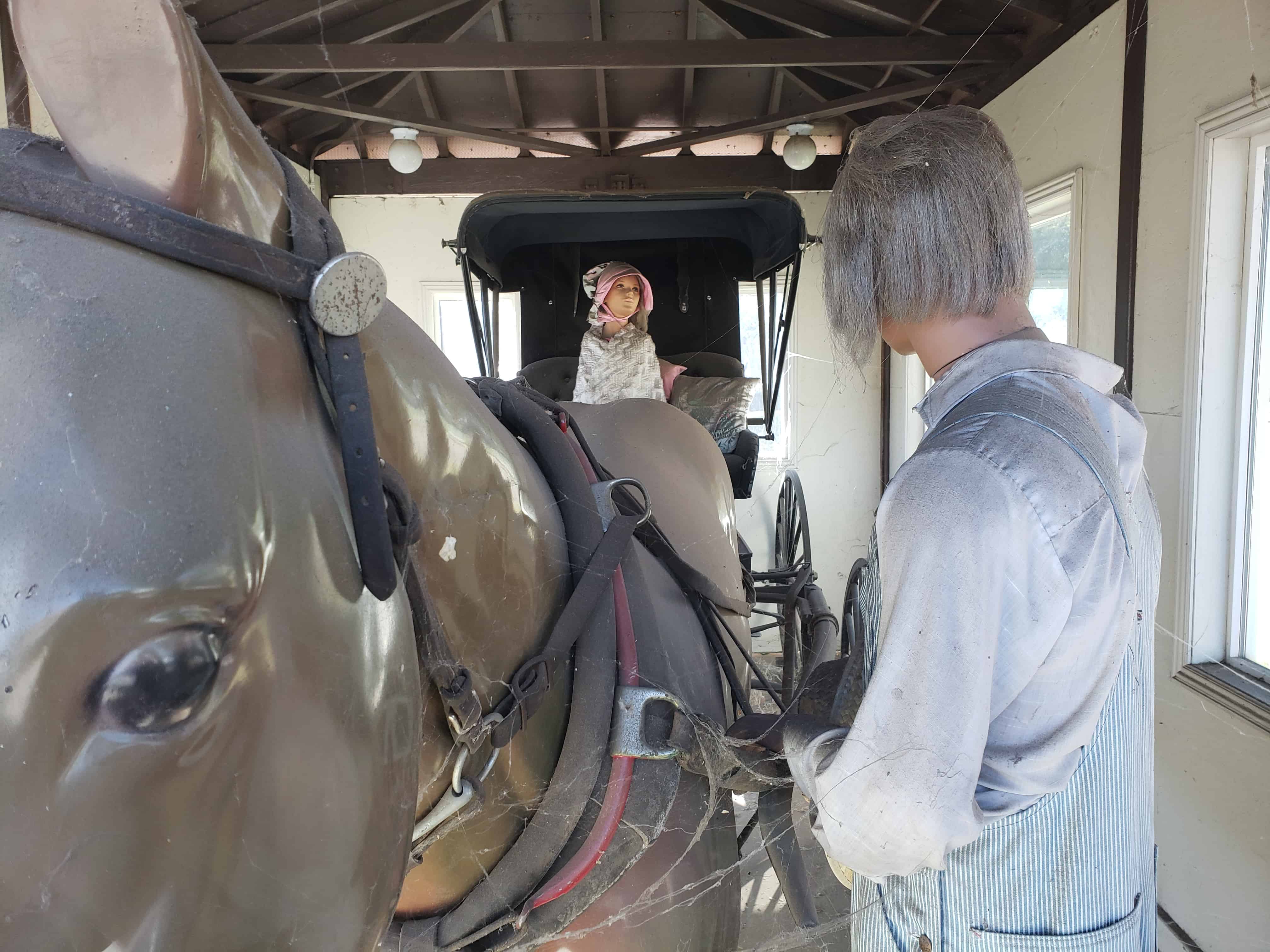
Buggies, such as the one before you, were an important part of early America. As the name implies, Doctors’ Buggies were used by physicians but they were also a popular choice for many others as well. Buggies were dearly prized and generally kept in a carriage house.
In 1863, LDS Church Apostle Erastus Snow was traveling in a similar buggy from Kanab to St. George, Utah. Accompanying him were horsemen (Nephi Johnson and David H. Cannon) who told him of an old Indian trail leading over the hill. Choosing to follow the trail, they successfully descended the other side of the hill by having the horsemen restrain the buggy with their lariats. However, a strong wind came up and blew off the top of the buggy. Erastus Snow exclaimed, “That was quite a hurricane! We will name this Hurricane Hill.”
On September 1, 1893, the Hurricane Canal Company was organized and work began on a canal around Hurricane Hill, ending at Hurricane Flat. Two thousand acres of fertile land could be irrigated by building the new canal. On August 6, 1904, a celebration was held in Hurricane, near the canal at 200 North and 300 East. About 100 people attended and watched with great excitement as water began flowing through the Hurricane Canal and onto the fertile flat.
Later that day, where you now stand, people gather in a bowery on the new town square to choose a name for the town. Names suggested were Pearl City, as the town was to be a “pearl in the desert”, Lake City, because at the time, there was a lake south of town; Chaparral, due to the bush that grew so abundantly throughout the valley; or Hurricane, after the canal company, the hill, and the flat that had used that name since the buggy incident many years before.