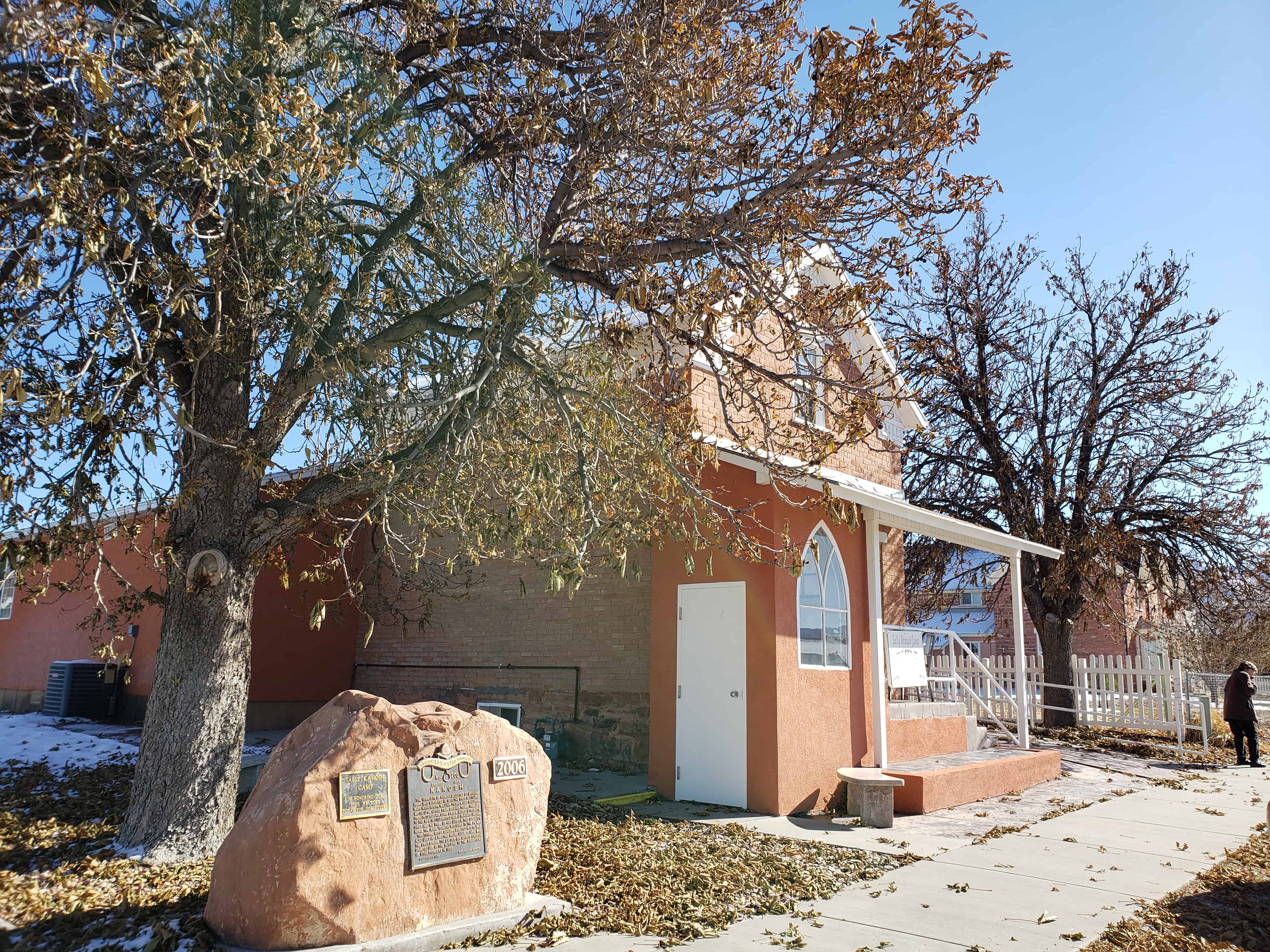
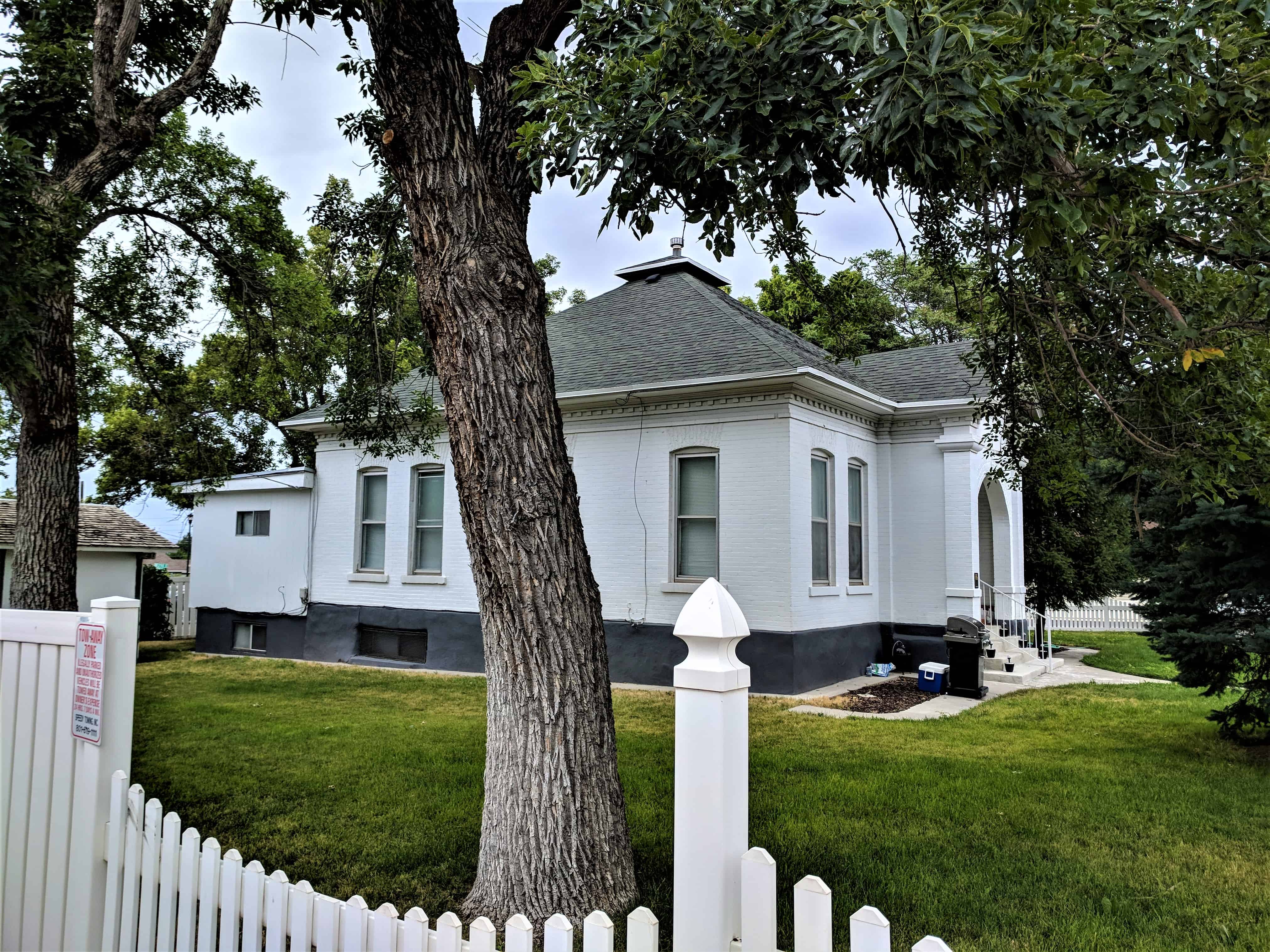
Built in 1870, the Kanosh Tithing Office is historically significant as one of 28 well preserved tithing buildings in Utah that were part of the successful tithing system of The Church of Jesus Christ of Latter-day Saints (LDS or Mormon church) between the 1850s and about 1910. Tithing lots, which usually included an office and several auxiliary structures, were facilities for collecting, storing, and distributing the farm products that were donated as tithing by church members in the cash-poor agricultural communities throughout the state. Tithing offices were a vital part of almost every Mormon community, serving as local centers of trade, welfare assistance, and economic activity. They were also important as the basic units of the church-wide tithing network that was centered in Salt Lake City. In addition, the Kanosh Tithing Office is architecturally significant as one of eight extant examples of Utah’s tithing offices which were designed in the Greek Revival style. It is one of seven of those buildings which is a temple-form building. Of those seven temple-form buildings, it is one of the three best preserved examples of the type. The other two examples include the tithing offices at Escalante and Paradise. The temple-form building originated in the Greek Revival period of American building,’ and typically has its short end to the street and a pedimented gable end in imitation of monumental classical buildings. The temple-form building was the preferred building type for early religious buildings in Utah, having been brought to the area by members of The Church of Jesus Christ of Latter-day Saints after 1847. 3 Very few unaltered, well preserved examples of this building type are presently extant in Utah.
Under the direction of Culbert King, bishop of the Kanosh Ward, the Kanosh Tithing Office was built in 1870 to serve as the center for the collection and distribution of “in kind” tithing contributions from members of the Kanosh Ward of the LDS church. Typical of most other Utah towns during the nineteenth and early twentieth centuries, Kanosh was a cash-poor agricultural community, therefore tithing contributions were usually farm products, such as crops, dairy products, and livestock. By at least the 1920s, however, cash was much more plentiful and was used for tithing donations instead of the “in kind” commodities. Since the building was no longer needed for its original use, it was either left vacant or used as a meeting place by auxiliary organizations of the church for a number of years. Even when serving as a tithing office, the building was used as the first meeting place of the ward’s Mutual Improvement Association, the organization for the teenagers.
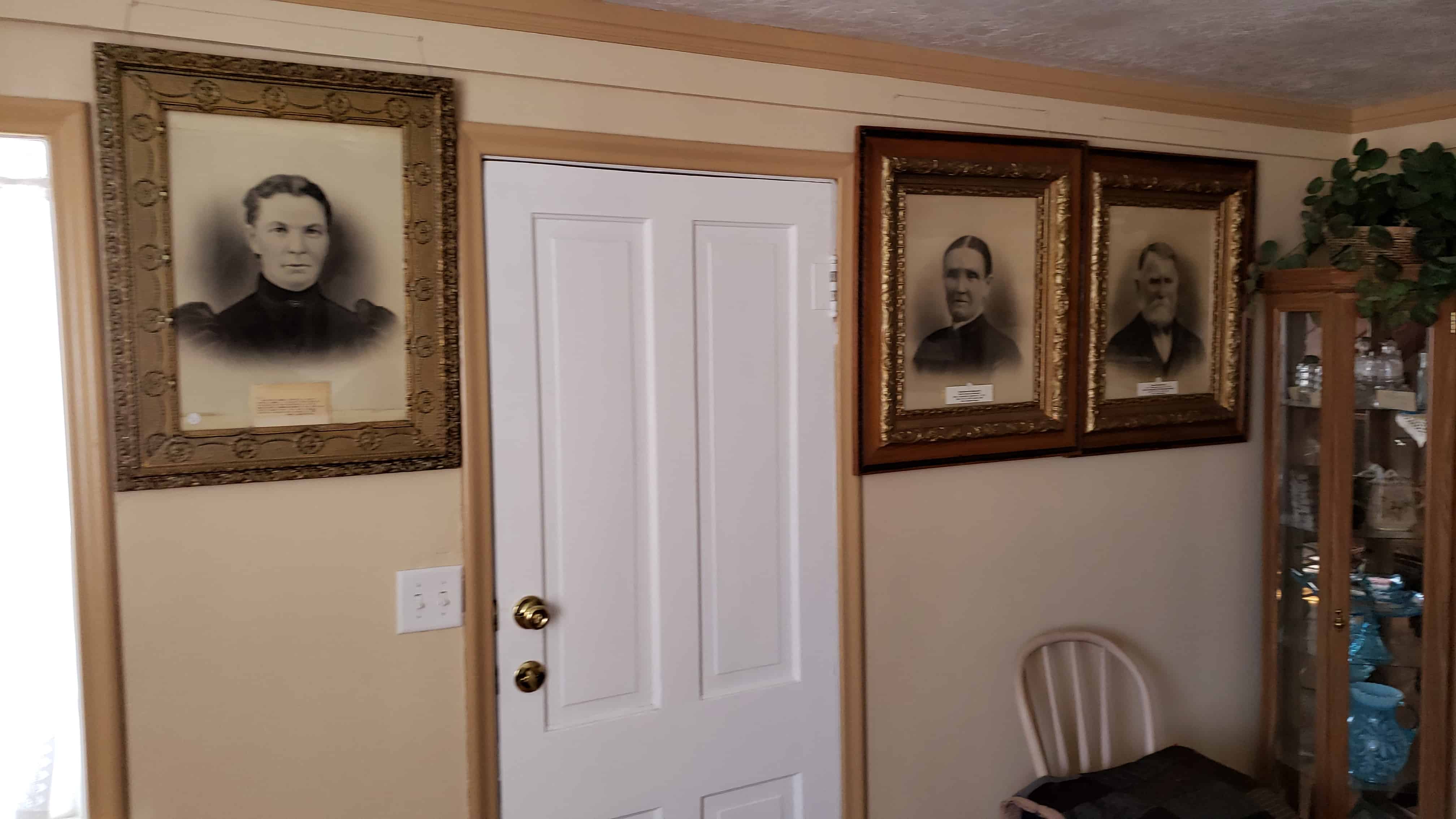
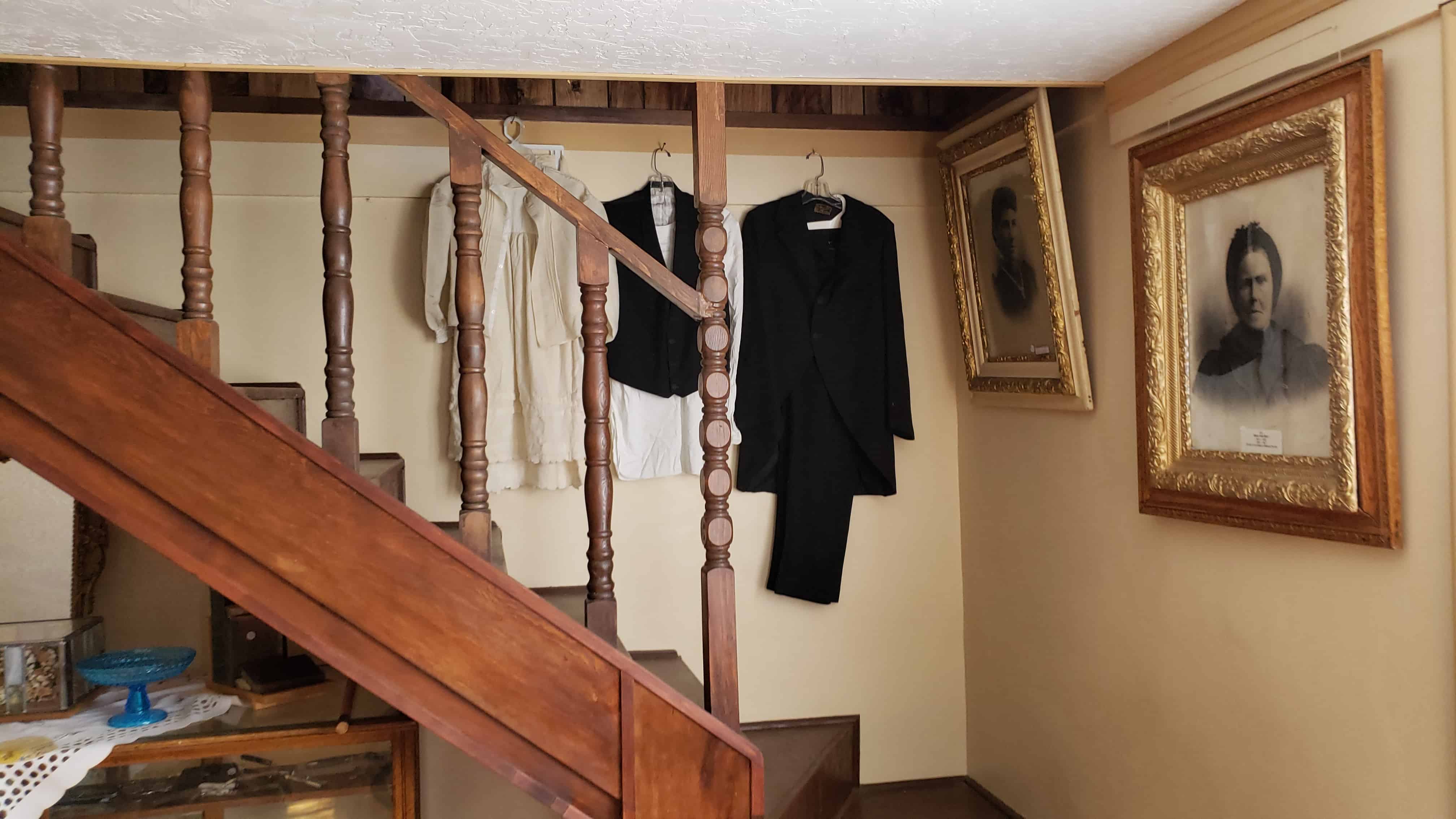
In 1952, the church granted the building to the local chapter of the Daughters of Utah Pioneers, which has used it as a meeting place and relic hall up to the present.
The Lakeview Tithing Office was originally constructed as a creamery by Leslie L. Bunnell in 1899. Leslie and his father, Stephen I. Bunnell, operated a successful dairy operation for a number of years, and this creamery served as the headquarters of their business, which involved making and selling cheese and butter, as well as selling milk. It was the first creamery in Lakeview, a small, unincorporated farming community located between Provo and Utah Lake. The 16’x 16′ room on the west side of the creamery served as the home for the family, which included five children, until 1904, when the adjacent house was built. Soon after that, the Bunnells sold the creamery to the Lakeview Ward of the LDS church for use as a tithing office. The west room was used as an office and the east room served as a storage area for grain and other tithing commodities. The Bunnell family bought the tithing office/creamery back around 1920 and used it for a granary. Occasionally, the west room was used as a residence the last time was during World War II, when a single man lived there for several months. Currently the building is used for storage by the Bunnells.
The Lakeview Tithing Office, built in 1899, is historically significant as one of 28 well preserved tithing buildings in Utah that were part of the successful tithing system of The Church of Jesus Christ of Latter-day Saints (LDS or Mormon church) between the 1850s and about 1910. Tithing lots, which usually included an office and several auxiliary structures, were facilities for collecting, storing, and distributing the farm products that were donated as tithing by church members in the cash-poor agricultural communities throughout the state. Tithing offices were a vital part of almost every Mormon community, serving as local centers of trade, welfare assistance, and economic activity. They were also important as the basic units of the church-wide tithing network that was centered in Salt Lake City.
The Lakeview Tithing Office is a one story brick building with a combination gable and hip roof, a stone foundation, and a false front. There is a chimney three quarters of the way down the ridge line. The false front is typical of small town commercial buildings at the turn of the century, as is the corbelling of its upper edge, the jigsaw cut decorative elements in the wooden arches over the facade openings, and the rock-faced shoulder arches over the same openings. The false front is stepped. The facade openings consist of a door centered between two windows. Behind the lower step of the false front on the east side of the building is an extension off the main block of the building. It is a rectangular room with a shed roof and rear entrance, and is situated under the eaves of the main roof. It was probably part of the original construction. According to information in a 1975 Utah Historic Sites Inventory form, it is likely that the room was used to house a boiler that powered the machinery of the creamery. The building has received no major alterations, is in fair condition and maintains its original integrity.
In my exploring of the Utah and neighboring states I have come across many tithing offices, tithing barns, tithing granaries and more.
The Church of Jesus Christ of Latter-day Saints (sometimes called the L.D.S. Church or the Mormons) settled a large part of the areas here and members of the church would donate 10% of their increase to the church – they would also barter for what they needed, trade grain for eggs, etc. Now the members of the church donate with money, but at the time when donations were grain, eggs, chickens, cloth and more these buildings were needed to handle all of that. (see other tithing offices on this page)
This is the Pleasant Grove Tithing Office, located at 7 South 300 East in Pleasant Grove, Utah.
Built c. 1908, the Pleasant Grove Tithing Office is historically significant as one of 28 well preserved tithing buildings in Utah that were part of the successful “in kind” tithing system of The Church of Jesus Christ of Latter-day Saints (LDS or Mormon church) between the 1850s and about 1910. Tithing lots, which usually included an office and several auxiliary structures, were facilities for collecting, storing, and distributing the farm products that were donated as tithing by church members in the cash-poor agricultural communities throughout the state. Tithing offices were a vital part of almost every Mormon community, serving as local centers of trade, welfare assistance, and economic activity. They were also important as the basic units of the church-wide tithing network that was centered in Salt Lake City.
The exact date of construction of the Pleasant Grove Tithing Office is not known, but judging from its appearance and other circumstantial evidence it was probably built about 1908. Some of the basic features of this building, its square block shape with a symmetrical facade and an arched central porch, are much like those found on the tithing offices in Manti, Panguitch, Richmond, Sandy, and Hyrum, all of which were built between 1905 and 1910. The design of those buildings was one of at least three standard tithing office plans that were developed at church headquarters around 1905 and sent out to a number of wards in the state that requested to have a new tithing office built. Those plans were perhaps the first examples of what eventually became a policy with the church – developing standard building plans at church headquarters rather than having each ward generate its own. Although the Pleasant Grove Tithing Office has a flat roof and other minor features that distinguish it from the Type No. 3 design, the similarities between the two are sufficiently strong to suggest that they were built at about the same time.
The only other indications of when the tithing office might have been built are contained in letters from the Presiding Bishopric’s Office in Salt Lake City to Bishop Swen L. Swenson of the Pleasant Grove Ward. A letter of April 9, 1908 to Bishop Swenson stated that, “You are authorized to purchase hard wood shade trees and plant them around the [tithing] lot where needed.” The letter also granted approval for the purchase of water rights for the tithing lot. Similar improvements were made to tithing lots in other towns immediately after the completion of their new tithing offices, so it is reasonable to assume that the tithing office in Pleasant Grove was constructed in late 1907 or early 1908. The building was definitely built by at least the spring of 1909 when the local bishops were granted approval to have a telephone installed in the building.
In my exploring of the Utah and neighboring states I have come across many tithing offices, tithing barns, tithing granaries and more.
The Church of Jesus Christ of Latter-day Saints (sometimes called the L.D.S. Church or the Mormons) settled a large part of the areas here and members of the church would donate 10% of their increase to the church – they would also barter for what they needed, trade grain for eggs, etc. Now the members of the church donate with money, but at the time when donations were grain, eggs, chickens, cloth and more these buildings were needed to handle all of that.
Many tithing offices were also bishop’s storehouses, my list of those can be seen here:
Utah’s tithing buildings can be divided into three major categories: those that were built prior to the turn of the century, those that were built after the turn of the century, and those that were built specifically as granaries. Within each category the style and design of the tithing offices reflect current trends in Utah architecture at the time that each tithing building was constructed. The earliest tithing offices are individualized efforts, much like the residences of the period, and contrast with the standard types of tithing offices built after the turn of the century. Stylistically the earliest tithing offices such as those at Escalante, Leeds, Kanosh, Pine Valley, Parowan, Paradise, Santaquin, and Vernal reflect the Greek Revival influence in that they generally have boxed cornices which return on the gable ends, and are temple-form buildings. Four of the eight early tithing offices were built of stone, a building material that was fairly common prior to 1890, but was used less frequently after the production of brick became firmly established. The Lewiston Tithing Office, also built just before the turn of the century, is an Italianate box, a common late nineteenth century residential house type. The Italianate box, a favored middle class house type in urban areas such as Salt Lake City and Ogden, was built only rarely in the rural areas of Utah. The tithing offices at Grouse Creek, Lakeview and Lindon were not designed in a particular style. The simple rectangular form of the Grouse Creek Tithing Office is reminiscent of the Greek Revival style, and the Lindon and Lakeview tithing offices are simple forms with common Victorian decorative elements.
Of the 13 extant tithing offices that were built specifically as tithing offices between 1905 and 1910, ten were built from two of three standard plans that were being developed by the LDS church at church headquarters. As early as the late 1880s the effect of the standardization of houses was felt in Utah as a result of the dissemination of house pattern books. Pattern books provided the prospective home owner with a variety of house designs and plans from which to choose. In Utah evidence of the influence of house pattern books is apparent in the almost exact replication of specific house types, with variations among houses of the same type occurring in predictable areas, such as porch designs, decorative details and the location of bays. The rise of the use of standard plans corresponds with the advent of building contractors, and the move away from owner-built homes. Economics favored the development and repetition of particular house types by general contractors. By the turn of the century the use of standard plans in Utah was the rule rather than the exception, and is evident in residential design. Churches, libraries, schools, and other small public buildings also reflect their influence.
Ten tithing offices built between 1905 and 1910 were designed from two of at least three standard plans that were being used, and were referred to as Type No. 2 and Type No. 3. Type No. 1 has not yet been identified. Both plan types are one story square brick buildings with low pitch pyramid roofs and coursed sandstone foundations. Type 2, which includes buildings in Fountain Green, Garland, Ephraim, Fairview, and Spring City, is characterized by an asymmetrical facade with an arched porch set into one of the front corners. The facade design of Type No. 3 is symmetrical with a centered entrance pavilion and two flanking windows. Examples of this type include the tithing offices at Sandy, Panguitch, Richmond, Manti, and Hyrum. Two doors are set inside the pavilion, each on a slight diagonal, and there is a small cupola atop each building with the exception of the tithing office at Hyrum.
The three other tithing offices built in the twentieth century are individual designs, but each reflects a major current in Utah architecture. The quasi-Neoclassical style of the Pleasant Grove Tithing Office was common to a number of small town public buildings, libraries and banks. The Prairie Style was commonly disseminated throughout Utah in a rather superficial manner as a general decorative influence on small town libraries, schools and commercial buildings. Many LDS church seminaries and several ward houses reflect Prairie Style influences, therefore it was a logical choice for the design of the moderate-sized tithing office in Richfield. The Smithfield Tithing Office is a bungalow. The bungalow was the most common residential choice in the second two decades of the twentieth century, but was not generally used for church or public buildings. Tithing office design in Utah from the beginning, however, was of a small scale comparable to and more closely tied with residential design than with the design of public and commercial buildings, therefore the choice of a residential style for the Smithfield Tithing Office is in keeping with the general tradition of tithing office design.
Only five buildings that were designed specifically as tithing granaries are extant. They can be divided into two major categories by their type of construction. Three of the granaries, those at Huntington, Oak City and Meadow, have balloon frames and an internal crib created by a wall of horizontal boards attached to the inside of a frame of 2 x 4 studs. This type of granary is commonly referred to as an “inside out” granary because the frame is most often exposed with the enclosing wall on the inside of the building. The second method of granary construction is evident in the Clarkston granary which was built of 2 x 4 inch boards stacked one on top of the other in even rows with spiked and butt-jointed corners. This construction method is referred to as “false timbering,” and although it occurs in granaries in other parts of the state, current documentation indicates that the greatest concentration of granaries of this type in Utah are in Cache County. The form of the Clarkston Granary is specific to Cache County, having a rectangular form with a porch and door on the broad side of the building, as compared with many other granaries which have no porches and have first floor doors in the gable end. The form of the Lewiston granary is identical to that of the Clarkston building, but it has a balloon frame with an exterior wall of drop siding.
The tithing offices and granaries that were built in almost every Mormon settlement between about 1850 and 1910 served not only as facilities for collecting revenue for The Church of Jesus Christ of Latter-day Saints, but also as centers of trade, social welfare, and economic activity in their communities. The tithing system consisted of local offices, regional offices, and the General Tithing Office in Salt Lake City, to which all surpluses from the other offices were forwarded. In the cash-poor Utah Territory during the nineteenth and early twentieth centuries, tithing donations were primarily “in kind” contributions consisting of agricultural products and donated labor, the dollar values of which were usually determined by administrators of the tithing program. The church used the tithing commodities for a variety of purposes, including converting them into cash to fulfill some of its own financial obligations, distributing them to the needy and the Indians, and issuing them in the form of scrip to employees of the church and workers on church public works projects in lieu of cash wages. The tithing system was the primary mechanism by which prices on goods and services were set in the individual communities and throughout the territory, thus helping create a more stable, unified economic system which differed substantially from the individualistic character of communities outside Mormon country. Twenty-eight well preserved tithing buildings have been identified in Utah.
I’ve come across photos/paintings of a few tithing offices that are now gone,
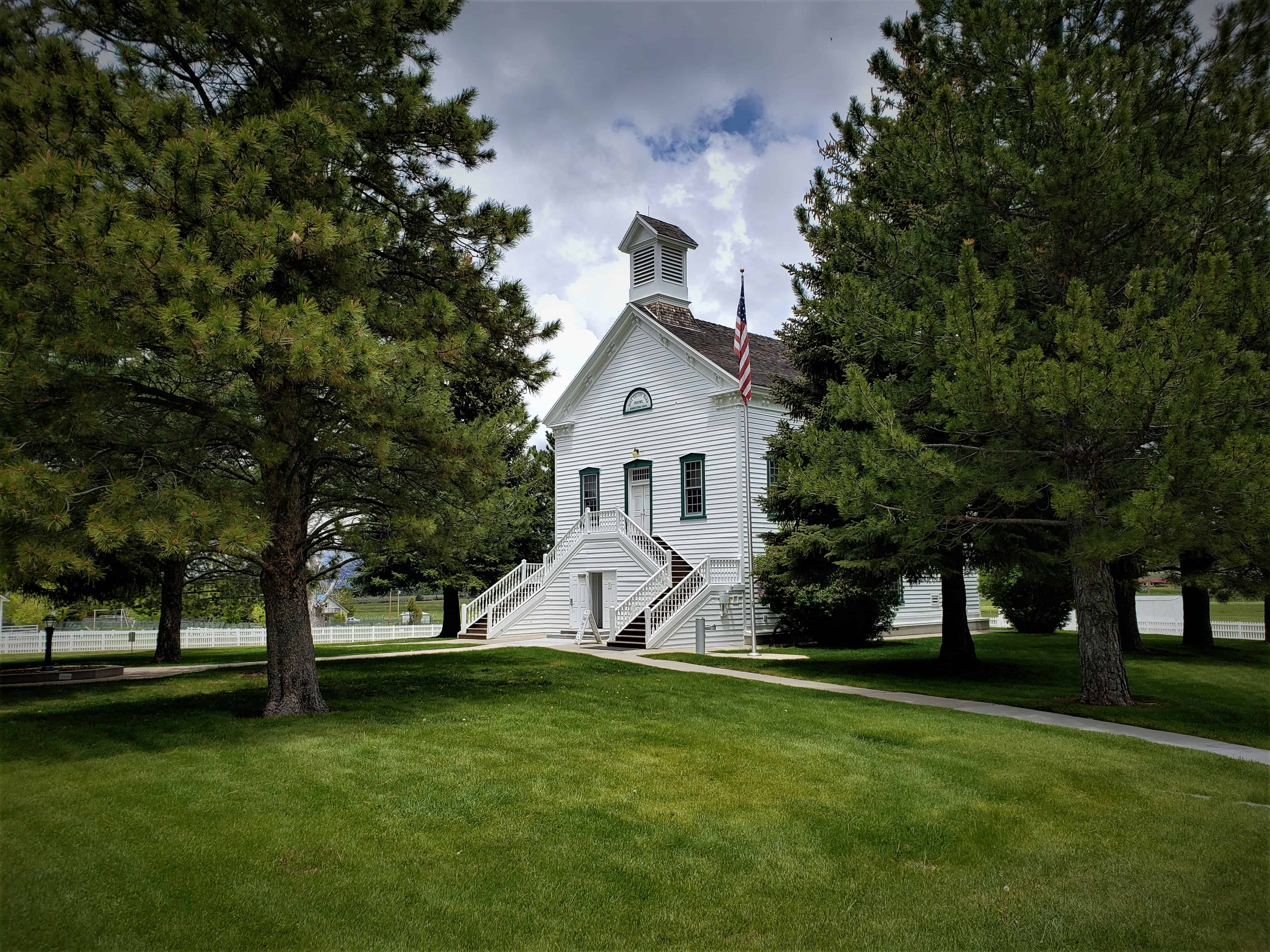
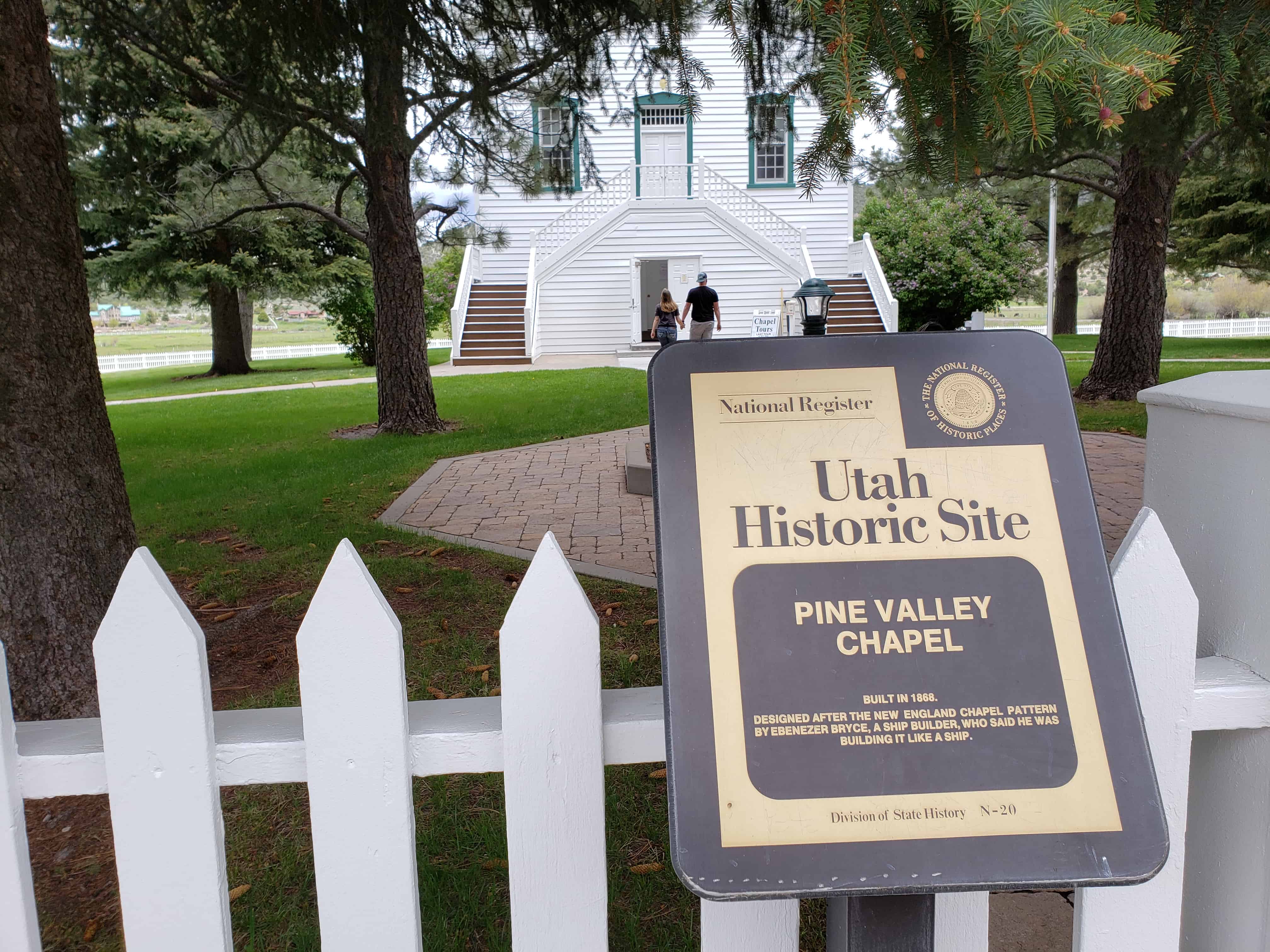
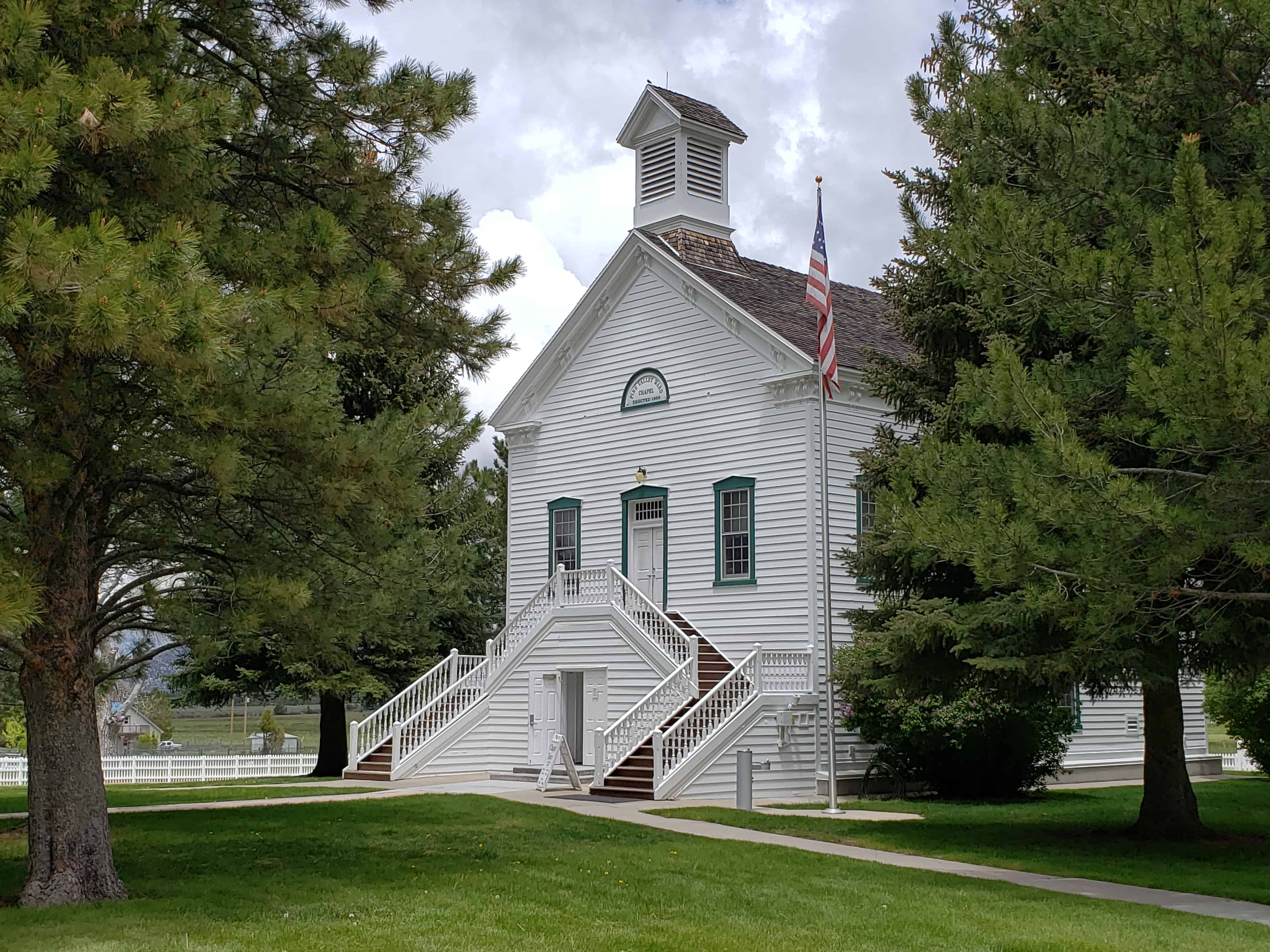
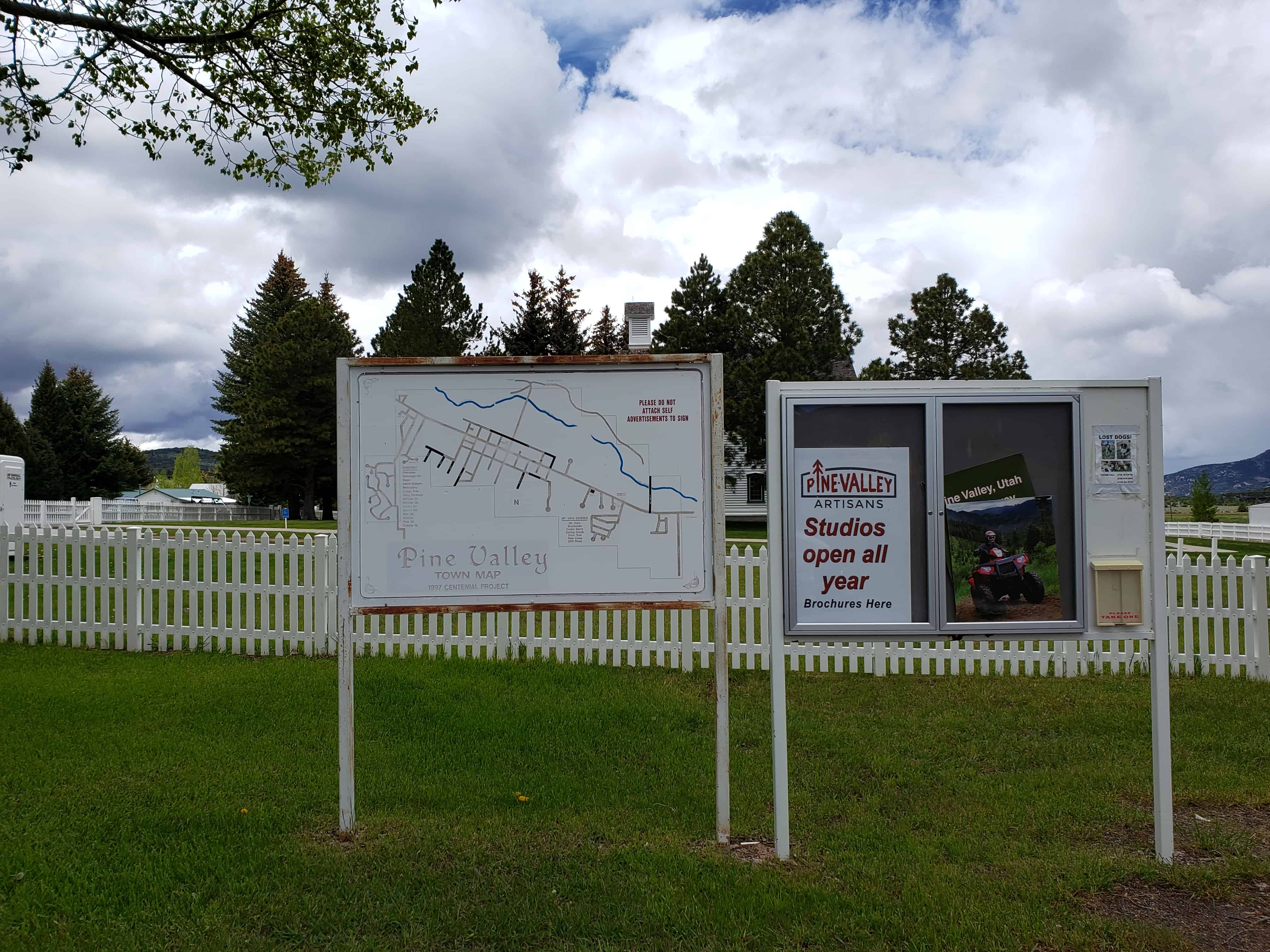
The historic Pine Valley Chapel in Pine Valley, Utah is the oldest continuously used chapel in The Church of Jesus Christ of Latter-day Saints and is a gorgeous building. Ebenezer Bryce had the job of building it and is said to have said that he didn’t know how to build a church, but he knew how to build a ship so he build it as an upside-down ship.
They have about 125 members in the branch with about 60 visitors every week who come to experience church in such a classic old building and 400-600 visitors on Memorial Day weekend’s Sunday so they hold services outside on the lawn. Tours are free and open.
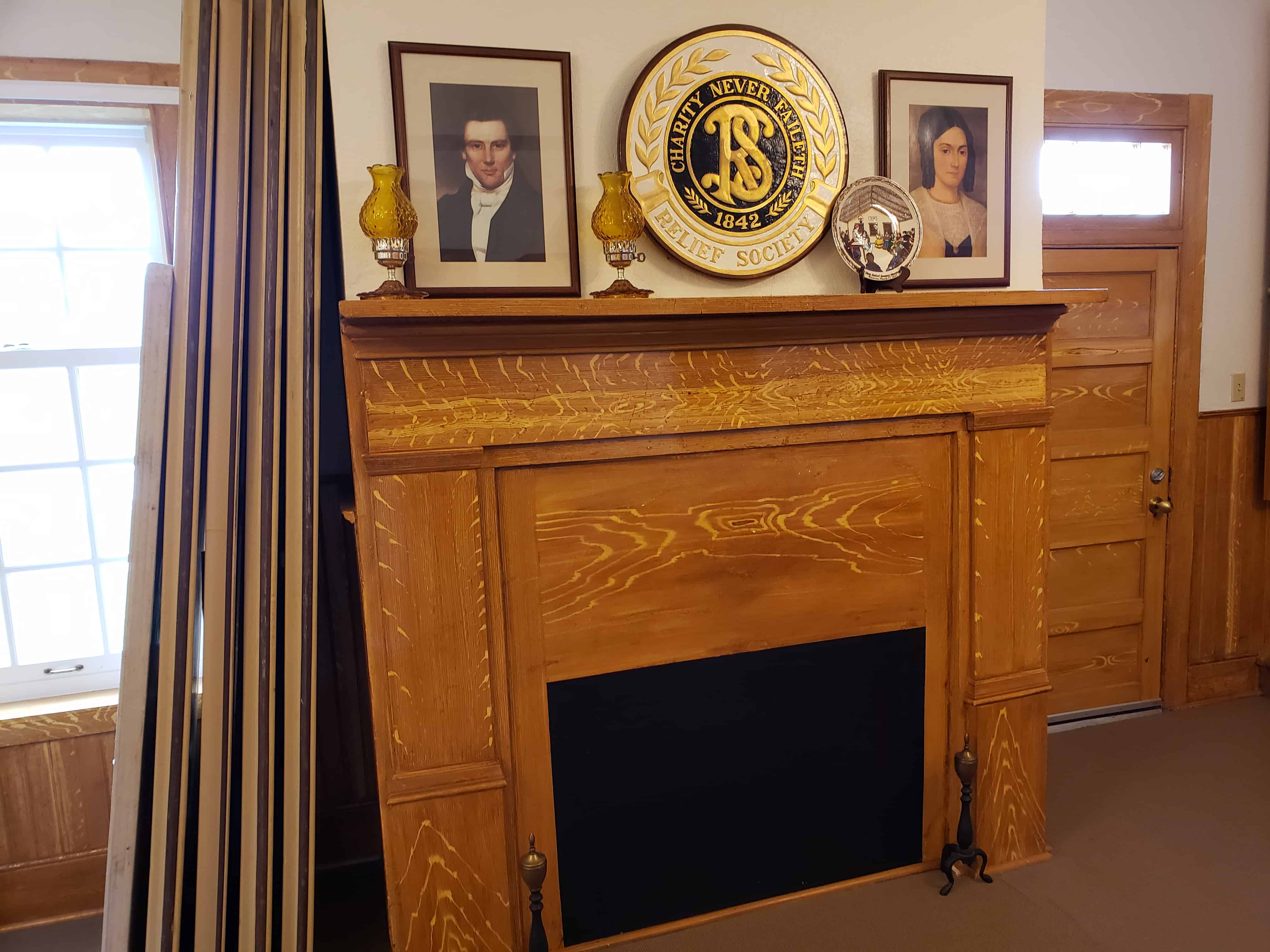
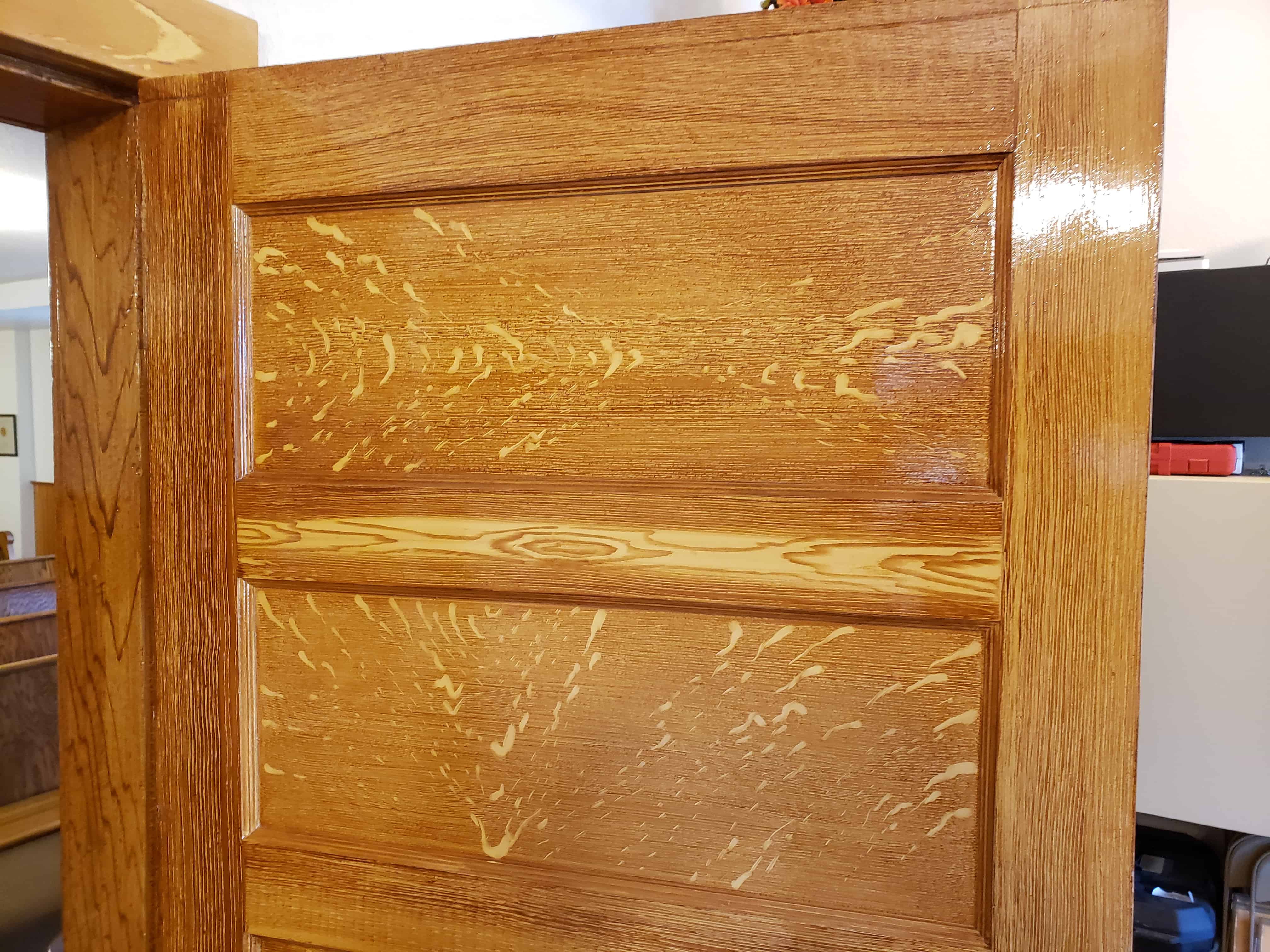
The pews and other woodwork and some cement work was painted to look like oak wood, the painter even hid his name is the grain in some of the pews.
The text below is from the nomination form (#71000859) from when the Pine Valley Chapel and Tithing Office were added to the National Historic Register on April 16, 1971:
Pine Valley was first allotted to John D. Lee a range land on which to run his livestock. However, the valley itself was discovered by Isaac Riddle who followed the trail of a straying cow from the Mormon Indian Mission at Fort Harmony, west over the mountain. He located both good range land, but even more significantly for the southern Utah settlement, excellent timber, both pine and aspen. Riddle and two partners, John Blackham and Robert Richey, purchased machinery for a saw mill and began operation in Pine Valley that fall. With expansion of the southern settlements, Washington, St. George and Santa Clara, especially, the demand for lumber increased. More families moved into Pine Valley. Some limited farming was done before 1864; however, this economic feature was secondary to livestock. Pine Valley also furnished lumber for the mines in both Pioche, Nevada and Silver Reef, Utah. Robert Gardner, one of the early expert lumber men, was asked by Joseph Ridges, organ builder, to select choice pine logs to be sent north to Salt Lake City for the Tabernacle organ’s “pipes.”
By 1868 the people of Pine Valley needed and decided to build their chapel. Ebenezer Bryce designed and supervised the construction.
Later a steam engine was brought in to supply power for the saw mills Today there is some lumbering, but the ruggedness of the lava terrain and the indiscriminate cutting of timber earlier have reduced this economic aspect of the area. It now serves as a summer home area and for recreational activities.
The general setting for the chapel has been landscaped to compliment the overall picture. Visitors are welcome at the site. The chapel is still used by the Pine Valley summer branch of the L.D.S. Church.
The tithing office also is in good repair, and sits nearby as a reminder of the close alliance between religion and the Mormon barter economy. The “Lord’s share” was given in kind and kept therein, to be meted out to the needy and for worthy projects as the Bishop so directed.
The lovely Pine Valley Chapel was designed and built in 1868 by Ebenezer Bryce, for whom the now famous Bryce’s Canyon was named. Being a ship builder from Australia, Bryce employed his earlier skills in building the church. The wood frame walls were assembled on the ground and raised into position, then joined with wooden pegs and rawhide. The frame stands independently, with the walls and petitions “hung” on the basic structure. Since Bryce built the chapel like a ship, he is reported to have claimed: “If the floods come, it will float. And if the winds blow, it may roll over but it will never crash.” The chapel was modeled after churches in New England in honor of Erastus Snow, the Apostle leading the southern colonies, and Brigham Young, church president.
Special timbers were cut from the ponderosa pine in nearby canyons to make the church. The same quality timbers had been hauled all the way to Salt Lake City to be hollowed out for pipes in the famous Mormon Tabernacle.
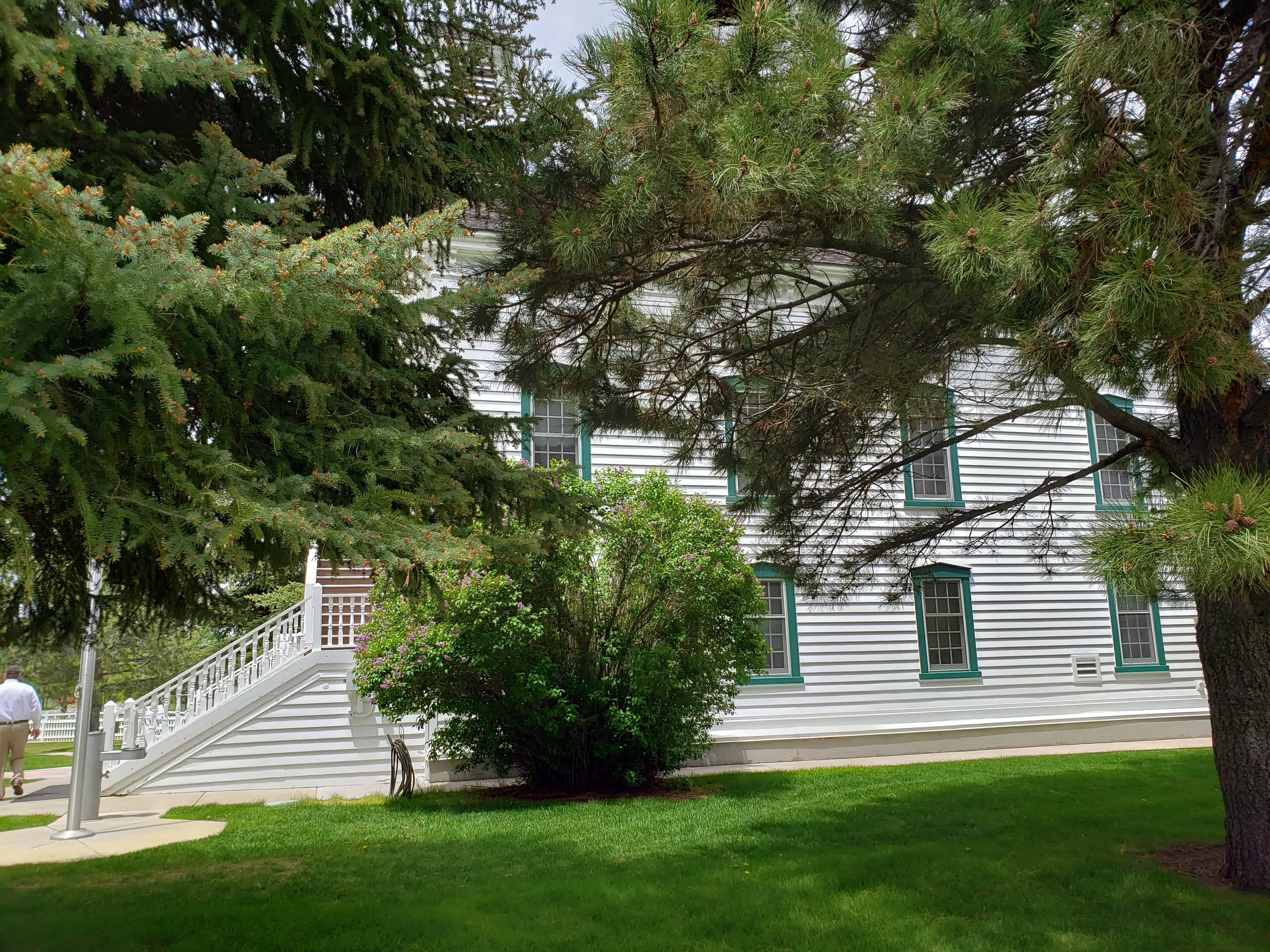
The church is two stories, with a gabled attic which contains a small “prayer room” over the stage or stand area. Below the main chapel is a basement, which originally consisted of only 2 large rooms, but has since been petitioned into smaller classrooms. The main chapel is a large room with a small stage and speaker’s area.
The structure’s over-all dimensions are 32′ 3″ by 52′ 4″, excluding the steps, which have a pair of double stair landings half way up. The original wooden stairs have been replaced with cement.
Fortunately, however, most of the structure remains as it was originally The restoration in progress at present is careful and minimal. This architectural jewel sits in a lovely mountain valley in Utah, now in continuous use for more than 100 years.
Sitting to the east of the chapel is a small tithing office, built of soft red brick in the 1880’s. The structure is only one story, 16′ by 27′. A “warehouse” door opens on the side. It has a gabled roof and unornamented cornices and eves. The flooring is 5″ pine board. Some refinishing has occurred, but the structure is original and its exterior modified very little. With the chapel, it represents very well the early Mormon Church situation.
Originally (1830) the economic order of the Mormon Church was the “law of Tithing” or ten percent of a person’s income, for the Lord, The administrator of these funds was the Presiding Bishop of the Church. Next a “Law of Consecration” was initiated in Missouri during the mid and late 1830’s, wherein everyone was asked to consecrate all his goods to the Lord. The Bishop in the area was responsible for the property and in turn returned a stewardship of property to each man and family. To this stewardship he received a permanent title, the surplus was retained by the Church to be given as needed to the worthy poor and to young adults whose family could not provide them an inheritance. Its success was limited.
Later the law of tithing was reinstituted. Such was the practice in Nauvoo and in early Utah. However, another kind of communal economic program was inaugurated, called the United Order. Its practices included a kind of cooperative stock holding in various kinds of production. Some “Orders” even had communal kitchens, etc.
However, the law of Tithing has persisted, a lesser law to devout Mormons, but a necessary “schoolmaster” to train the Saints for the higher law. Thus throughout Mormondom and especially in Utah, the tithing office was built, usually near the church, to which tithing in kind — hay, grain, potatoes, vegetables, etc. was brought and receipts issued.
Yet, further functions were served by these “storehouses.” The poor and needy were supplied from them, credit could be obtained by putting tithing in one place (Salt Lake City), and with a scrip issued, reclaim one’s needs in St. George or Pine Valley or where one happened to be going. This system had active use well into the twentieth century. Now only a few buildings remain to remind us of this barter economy which has given way to checking accounts and welfare squares.
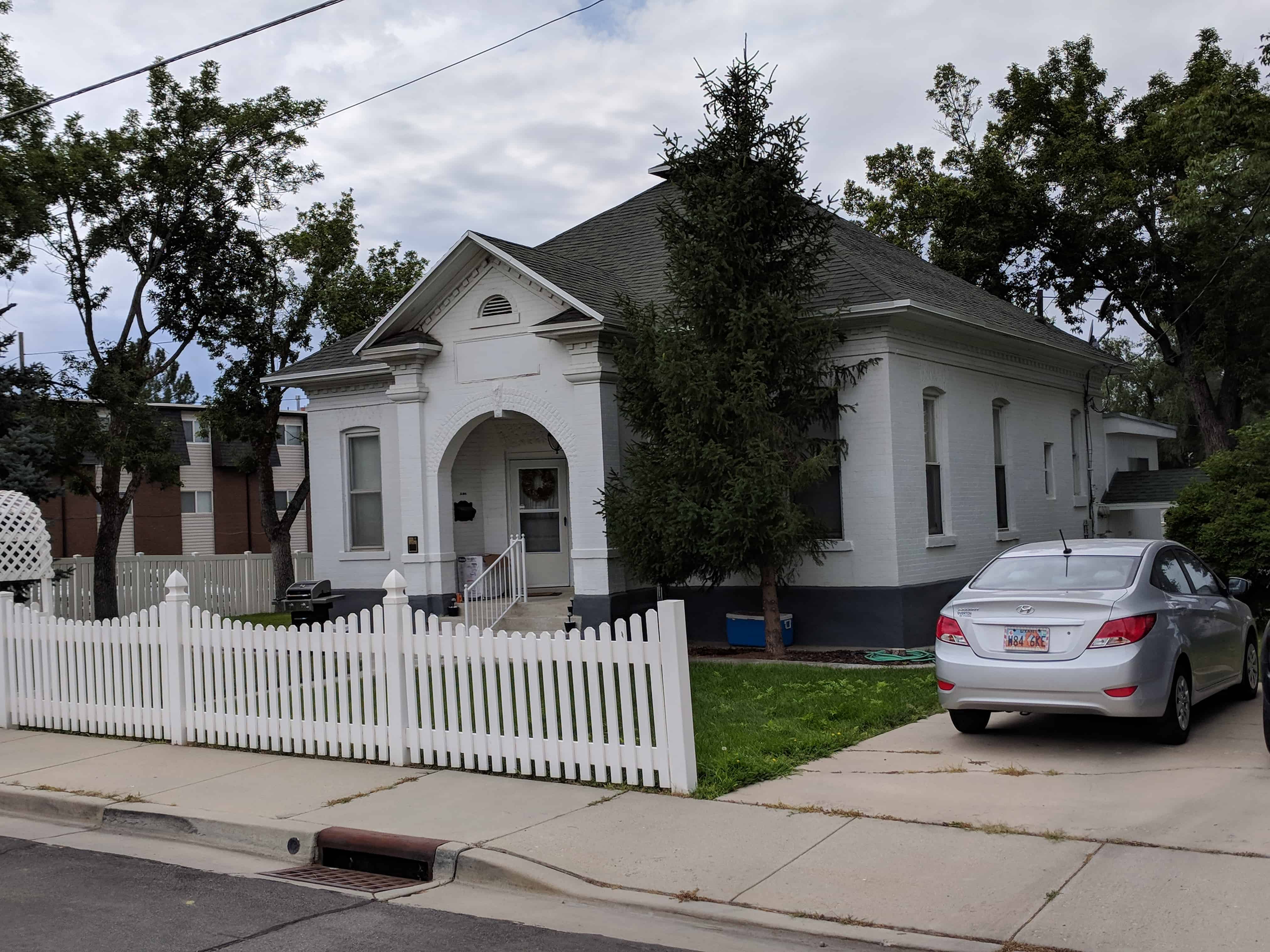
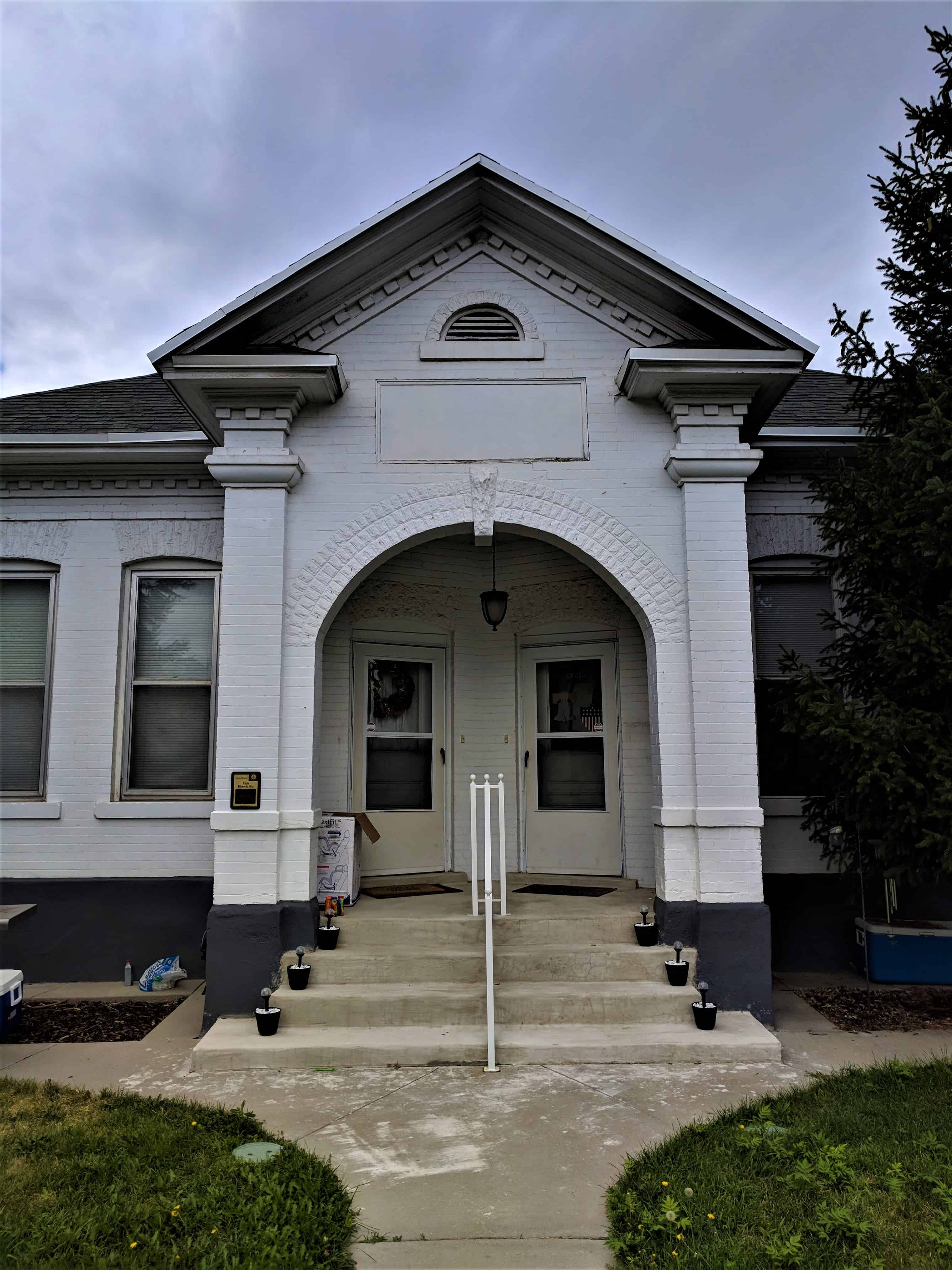
Built in 1906, the Sandy Tithing Office is one of 28 well-preserved buildings in Utah that were part of the successful “in kind” tithing system of The Church of Jesus Christ of Latter-day Saints (LDS or Mormon church) during the 1850s-1910s. Tithing offices were a vital part of almost every Mormon community, serving as local centers of trade, welfare assistance, and economic activities, and they were important as the basic units of the church-wide tithing network that centered in Salt Lake City.
Bishop William D. Kuhre was granted permission by the church to build this office and use $2000 in tithes for its construction. The building’s design was one of at least two standard plans developed at church headquarters c. 1905. Those plans were perhaps the first examples of what eventually became a policy with the LDS church for developing standard plans rather than having each ward generate its own. Other tithing offices with the same basic design as this one are seen in Manti, Richmond, Panguitch and Hyrum.
The above text is from the plaque on the home, placed in 1997. The home is located at 8844 South 280 East in the historic sandy area of Sandy, Utah