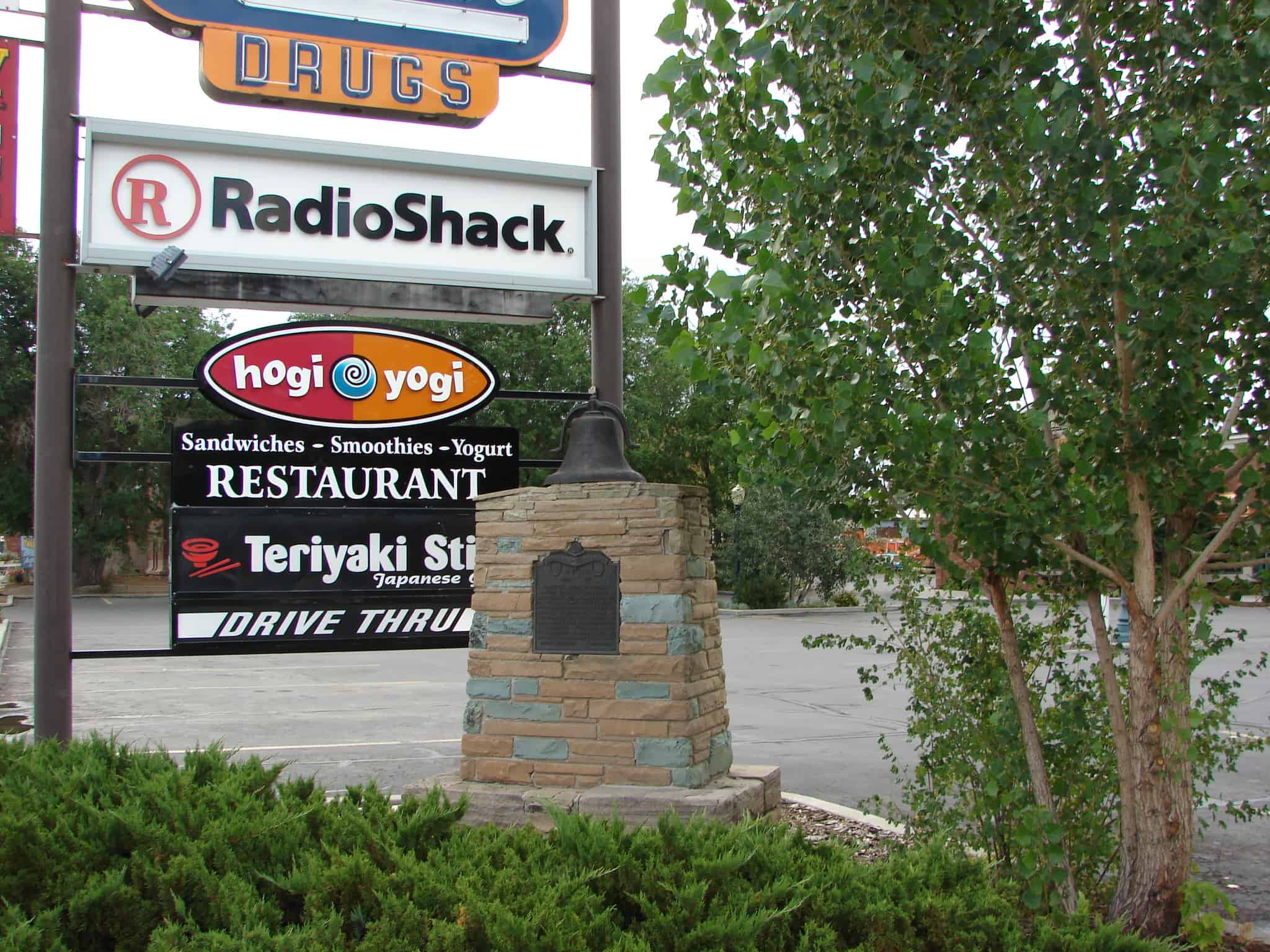
Panguitch Stake of the L.D.S. Church was organized in 1877 with James Henrie as President. In March, 1880, plans were made for a stake house with George Dodds, architect, and M.M. Steel, Sr., chairman of the building. The following men were prominent in its erection: Fredrick Judd, Samuel Worthen & Sons, W.R. Riggs, Alfred Riding, W.P. Sargent, John F. Sevy and John W. Norton. The building served the community until July, 1949, when it was condemned and torn down.
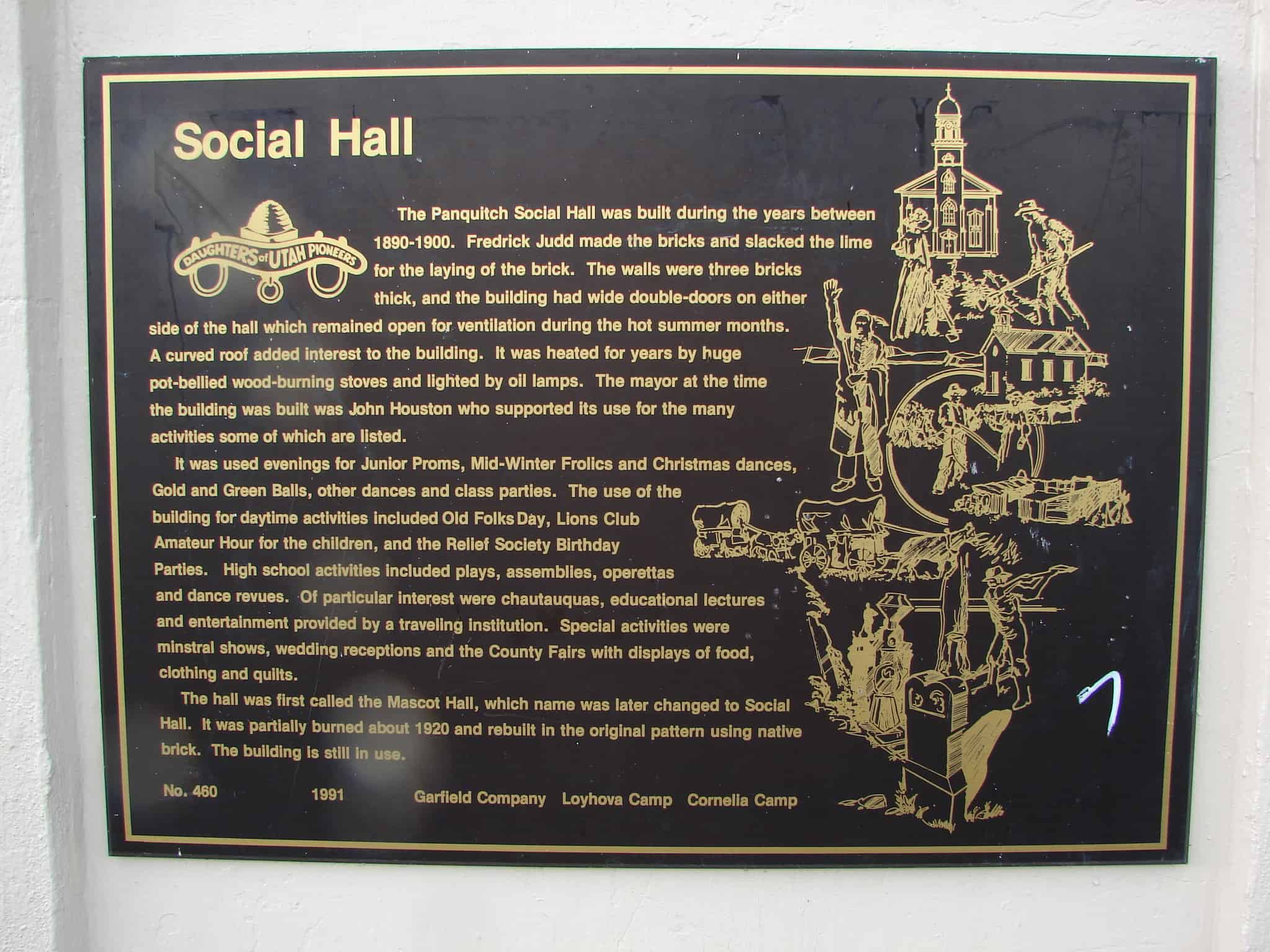
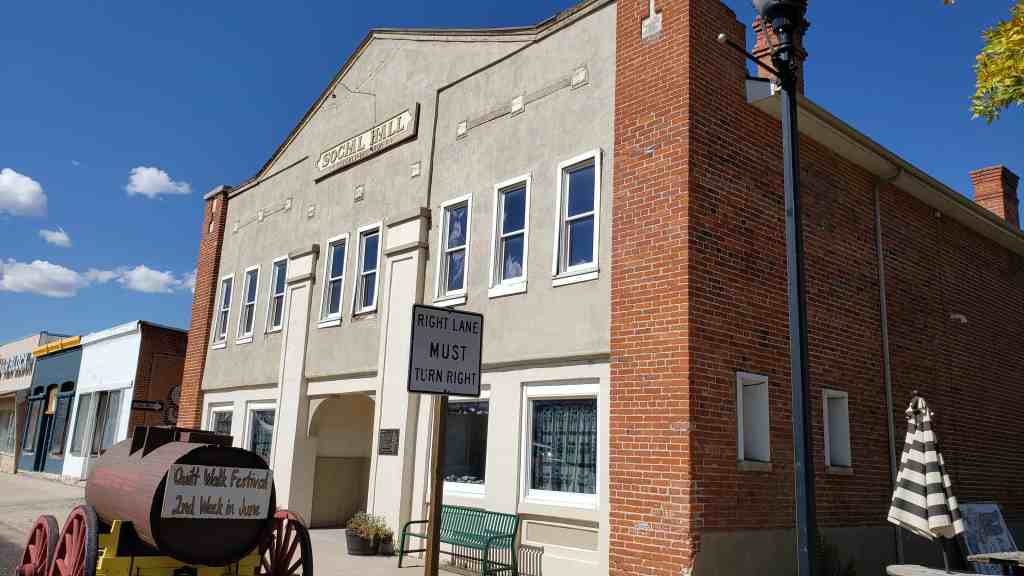
The Panguitch Social Hall was built during the years between 1890-1900. Fredrick Judd made the bricks and slacked the lime for the laying of the brick. The walls were three bricks thick, and the building had wide double-doors on either side of the hall which remained open for ventilation during the hot summer months. A curved roof added interest to the building. It was heated for years by huge pot-bellied wood-burning stoves and lighted by oil lamps. The mayor at the time the building was built was John Houston who supported its use for many activities some of which are listed.
It was used evenings for Junior Proms, Mid-Winter Frolics and Christmas dances, Gold & Green Balls, other dances and class parties. The use of the building for daytime activities included Old Folks Day, Lions Cub Amateur Hour for the children, and the Relief Society Birthday Parties. High School activities included plays, assemblies, operettas and dance revues. Of particular interest were chautaquas, educational lectures and entertainment provided by a traveling institution. Special activities were minstral shows, wedding receptions and the County Fairs with displays of food, clothing and quilts.
The hall was first called the Mascot Hall, which name was later changed to Social Hall. It was partially burned about 1920 and rebuilt in the original pattern using native brick. The building is still in use.
Timpanogos Ward of The Church of Jesus Christ of Latter-day Saints was organized November 8, 1885, at a meeting held in the log schoolhouse presided over by Presiding Bishop William B. Preston, his counselor Robert T. Burton, and Provo Stake President Abraham O. Smoot. Timpanogos, an Indian word meaning many waters, was the name given by the Indians to the entire valley as well as the beautiful mountain standing at the northeast border of the valley.
Plans were made in 1895 to erect the meetinghouse. The land for the new building was donated by Thomas Jefferson Patten, Sr., nephew of the Apostle David W. Patten. Peter Mastin Wentz, called as the first bishop, and his sons made some of the brick for the building and the adobe lining. The various hues now apparent in the restored brick face show that they were made in small batches. The style of the church with its lovely gothic windows and tower was typical of the architecture of the day. The building measured fifty-two feet by thirty-six feet. Balls of carpet rags were donated and these were placed on hand looms to make rugs that added comfort and beauty to the new chapel. Window openings were covered with quilts. The building was dedicated in 1898 and used for dances and community activities as well as for worship.
This chapel has been remodeled, renovated and added to throughout the years to accommodate members. From the original Timpanogos Ward has come a growing number of wards and stakes.
The amusement hall that was added in 1916 was not always connected, I found this these old photos on this page:
Chapel (1898) and Amusement Hall (1916)
The Timpanogos LDS Chapel is the oldest church building in Orem. It was built following the organization of the Timpanogos Ward of the Church of Jesus Christ of Latter-day Saints in 1895 on property donated by Thomas J. Patten, Sr. Before it was completely finished, it was used by the Timpanogos Drama Club for play presentations. The proceeds from the plays helped pay for completing the chapel. It was completed in 1898 and served for many years as a community center for social and civic functions as well as for church meetings. The Timpanogos chapel replaced a combination Church meetinghouse and school located just to the west of this building. The original log cabin schoolhouse continued to be used as a school building until 1900 when it was torn down and replaced by the Spencer School located further to the west of this chapel. This church has been remodeled several times but is still in use by the LDS Church for church meetings.
Timpanogos Chapel (First Orem Chapel) (440 East 800 South)
Timpanogos Chapel
The Timpanogos LDS Chapel is the oldest church building in Orem. It was built following the organization of the Timpanogos Ward of the Church of Jesus Christ of Latter-day Saints in 1895 on property donated by Thomas J. Patten, Sr. Before it was completely finished, it was used by the Timpanogos Drama Club for play presentations. The proceeds from the plays helped pay for completing the chapel. It was completed in 1898 and served for many years as a community center for social and civic functions as well as for church meetings. The Timpanogos chapel replaced a combination Church meetinghouse and school located just to the west of this building. The original log cabin schoolhouse continued to be used as a school building until 1900 when it was torn down and replaced by the Spencer School located further to the west of this chapel.
This church has been remodeled several times but is still in use by the LDS Church for church meetings.
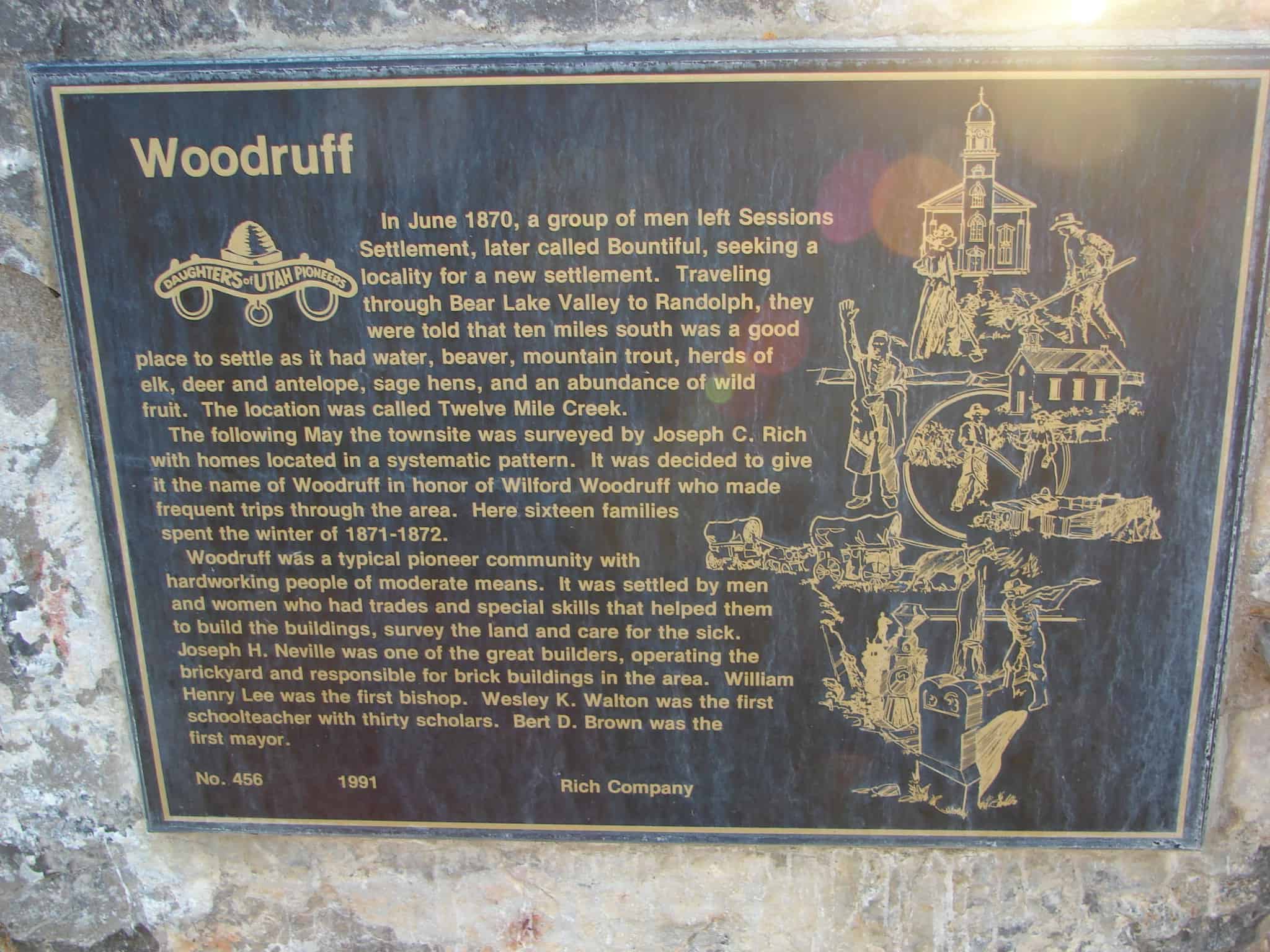
In June 1870, a group of men left Sessions Settlement, later called Bountiful, seeking a locality for a new settlement. Traveling through Bear Lake Valley to Randolph, they were told that ten miles south was a good place to settle as it had water, beaver, mountain trout, herds of elk, deer and antelope, sage hens, and an abundance of wild fruit. The location was called Twelve Mile Creek. The following May the townsite was surveyed by Joseph C. Rich with homes located in a systematic pattern. It was decided to give it the name of Woodruff in honor of Wilford Woodruff who made frequent trips through the area. Here sixteen families spent the winter of 1871-1872.
Woodruff was a typical pioneer community with hardworking people of moderate means. It was settled by men and women who had trades and special skills that helped them to build the buildings, survey the land and care for the sick. Joseph H. Neville was one of the great builders, operating the brick-yard and responsible for brick buildings in the area. William Henry Lee was the first bishop. Wesley K. Walton was the first schoolteacher with thirty scholars. Bert D. Brown was the first mayor.
The text on this page is from Daughters of Utah Pioneers historic marker #456, located at 195 South Main Street in Woodruff, Utah
In February 1873 a Branch of the Church of Jesus Christ of Latter-Day Saints was organized in Evanston by President William Budge, of Bear Lake Valley, Idaho. On May 23rd, 1873 William G. Burton was ordained Bishop. On June 24th, 1890 this ward was incorporated under the laws of the state of Wyoming and named Evanston. The board of trustees were James Brown, Thomas Parkinson, John Whittle, Frank Mills and Arthur W. Sims. In 1890, This group, with James Brown as Bishop built the first brick church in Wyoming.
The text above is from Daughters of Utah Pioneers historic marker #78, located at 645 Main Street in Evanston, Wyoming.
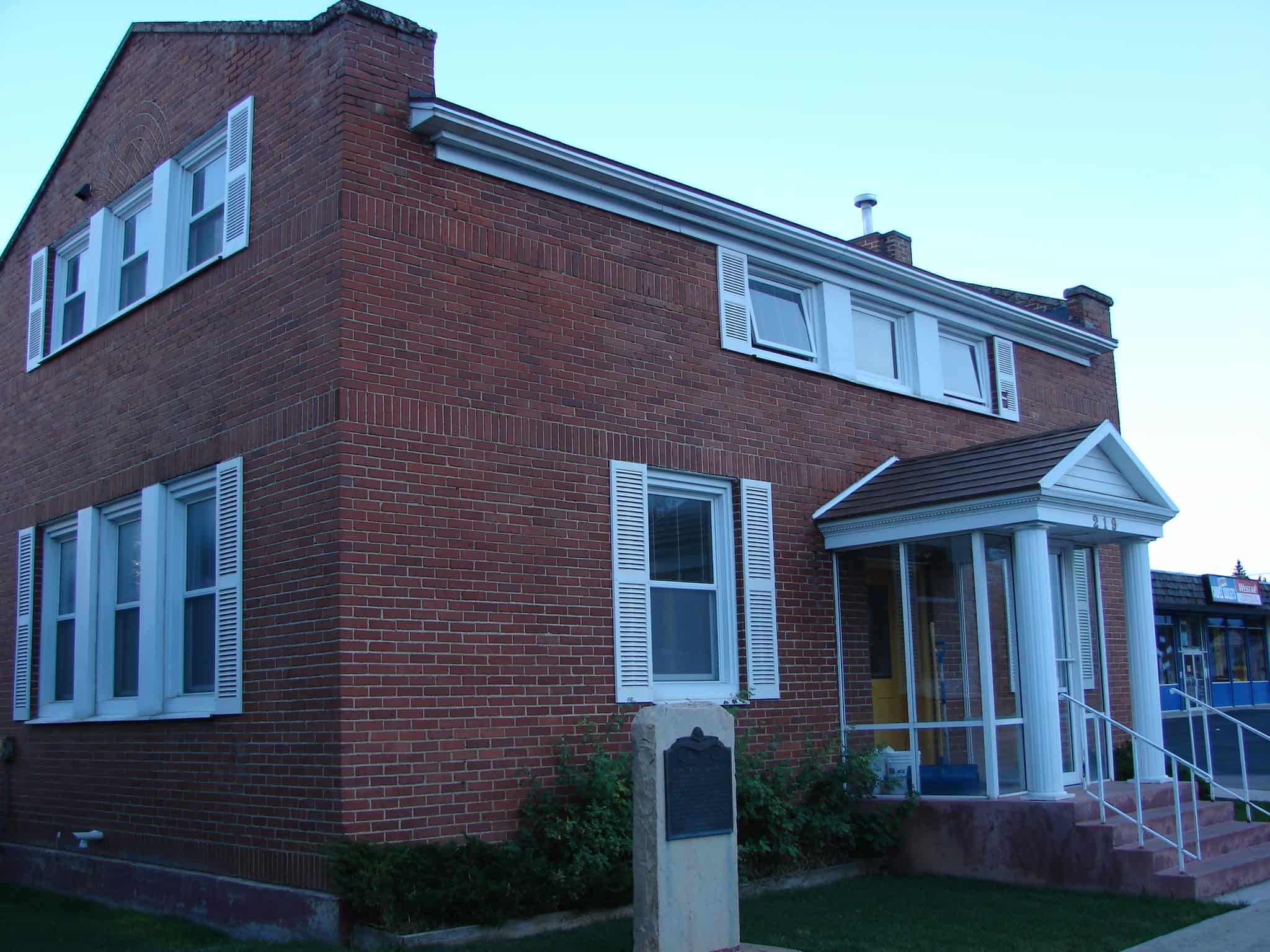
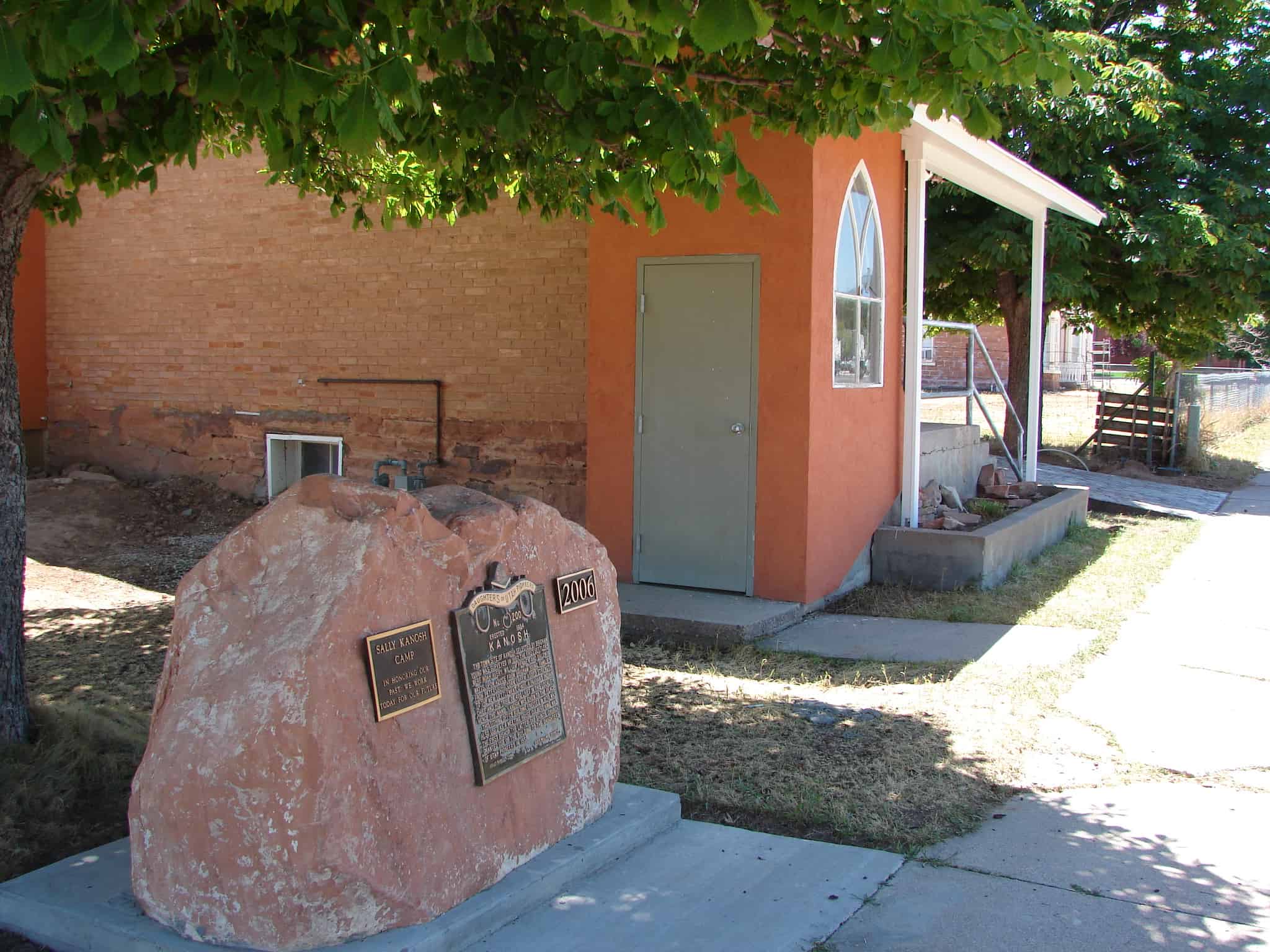
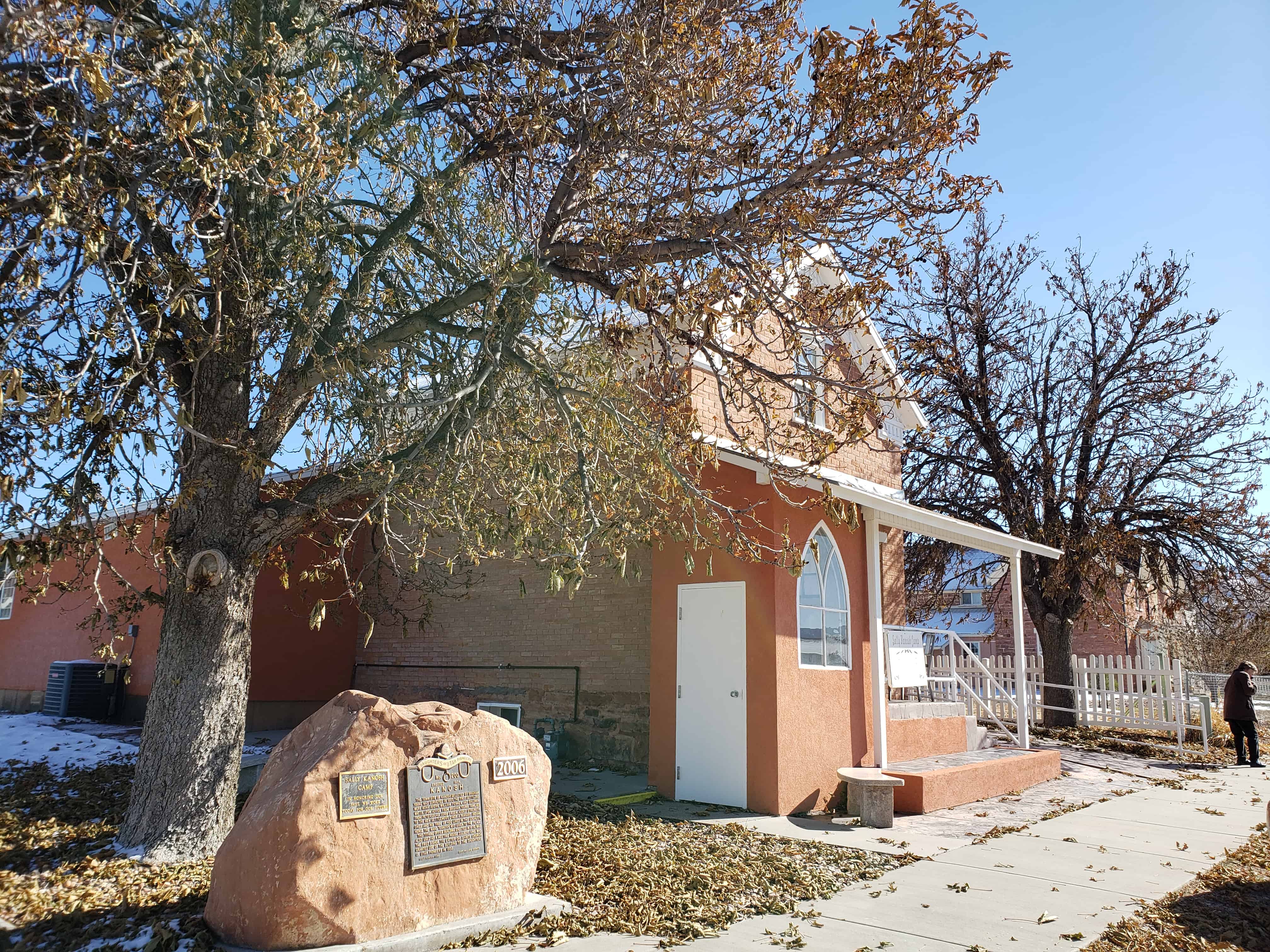
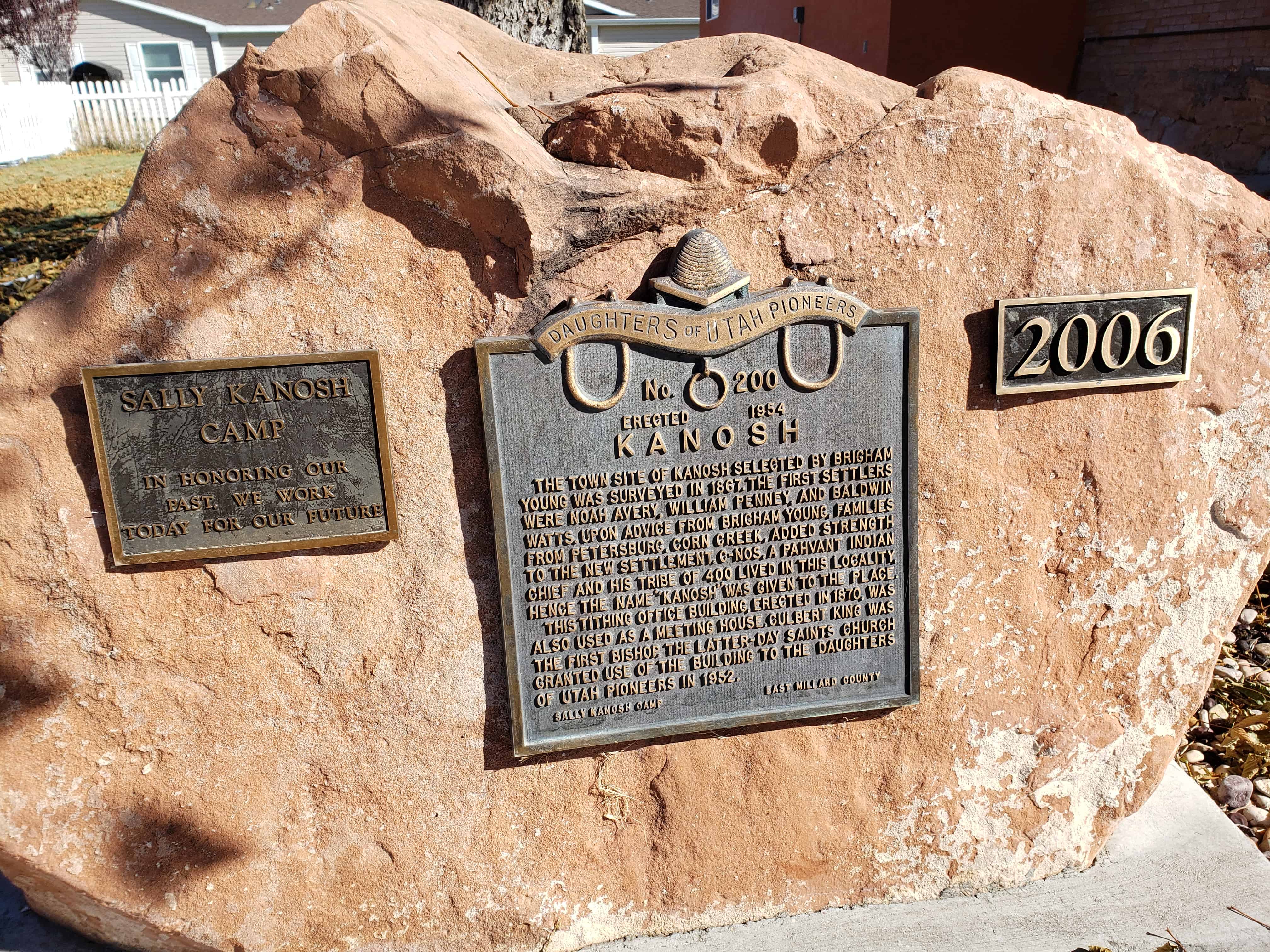
The town site of Kanosh selected by Brigham Young was surveyed in 1867. The first settlers were Noah Avery, William Penney and Baldwin Watts. Upon advice from Brigham Young, families from Petersburg, Corn Creek, added strength to the new settlement. C-Nos, a Pahvant Indian Chief and his tribe of 400 lived in this locality, hence the name “Kanosh” was given to the place. This tithing office building, erected in 1870, was also used as a meeting house. Culbert King was the first bishop. The Latter-day Saints Church granted use of the building to the Daughters of Utah Pioneers in 1952.
The text above is from Daughter’s of Utah Pioneers Marker #200, located at the tithing office at 40 North Main Street in Kanosh, Utah.
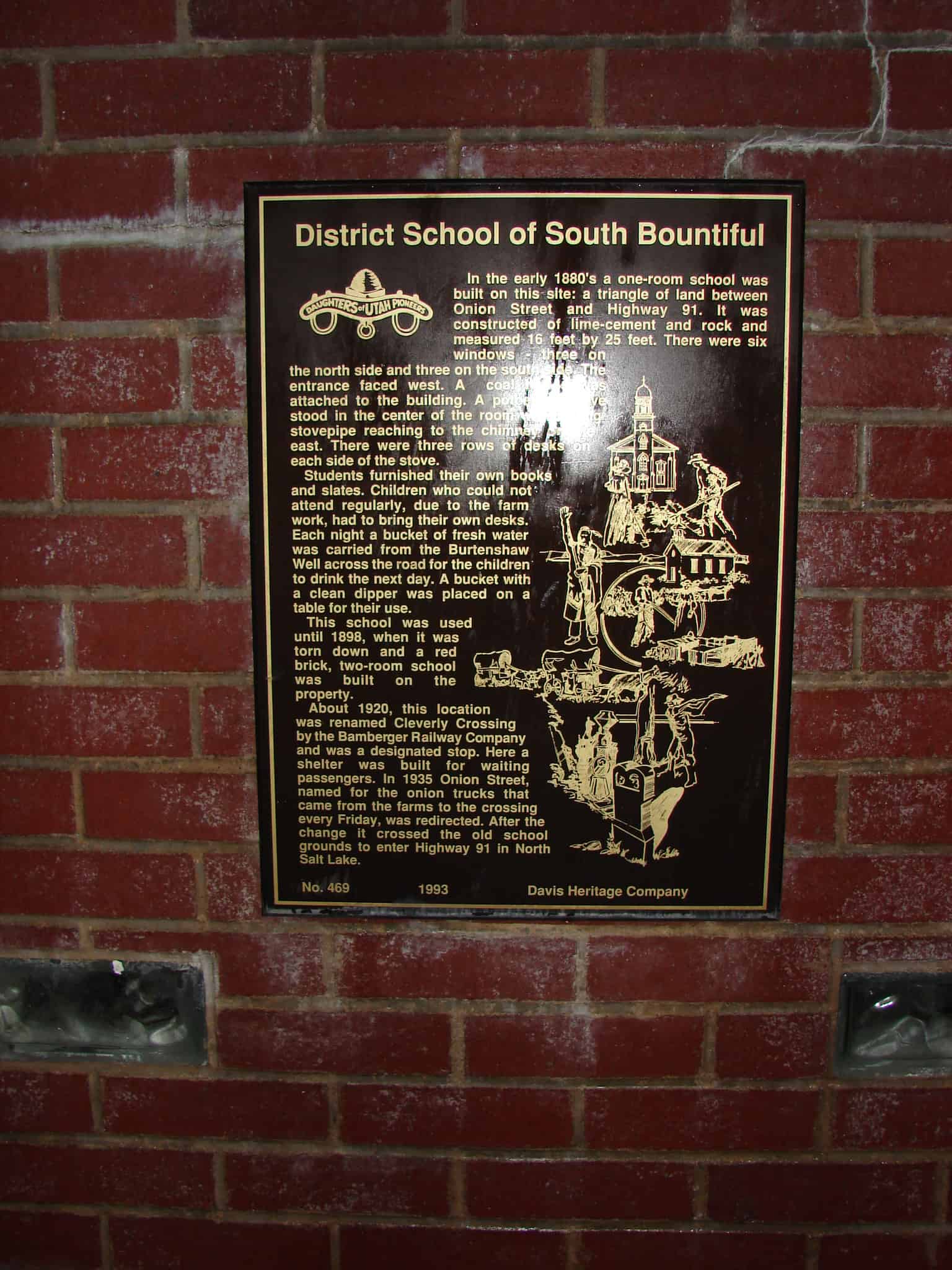
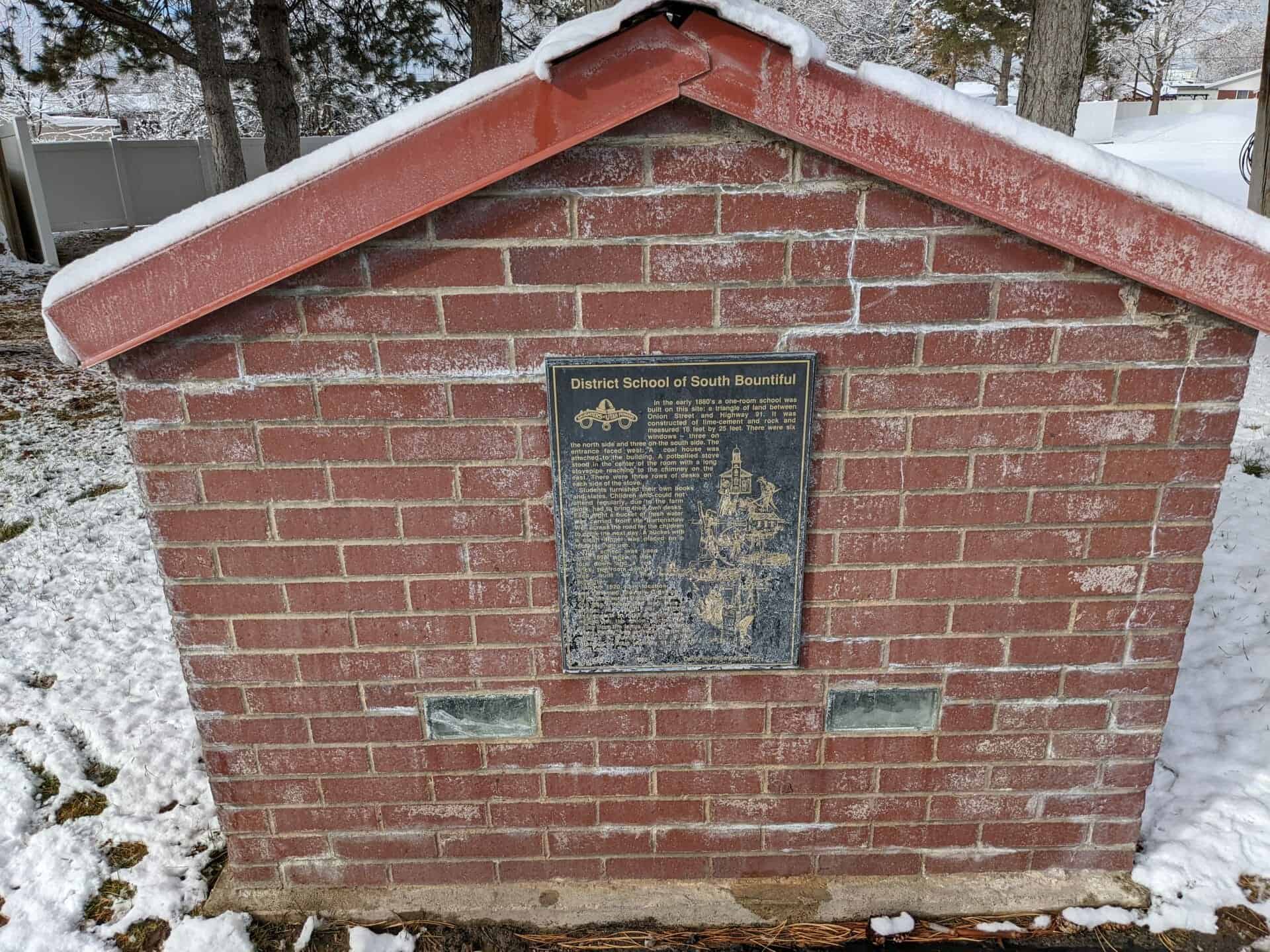
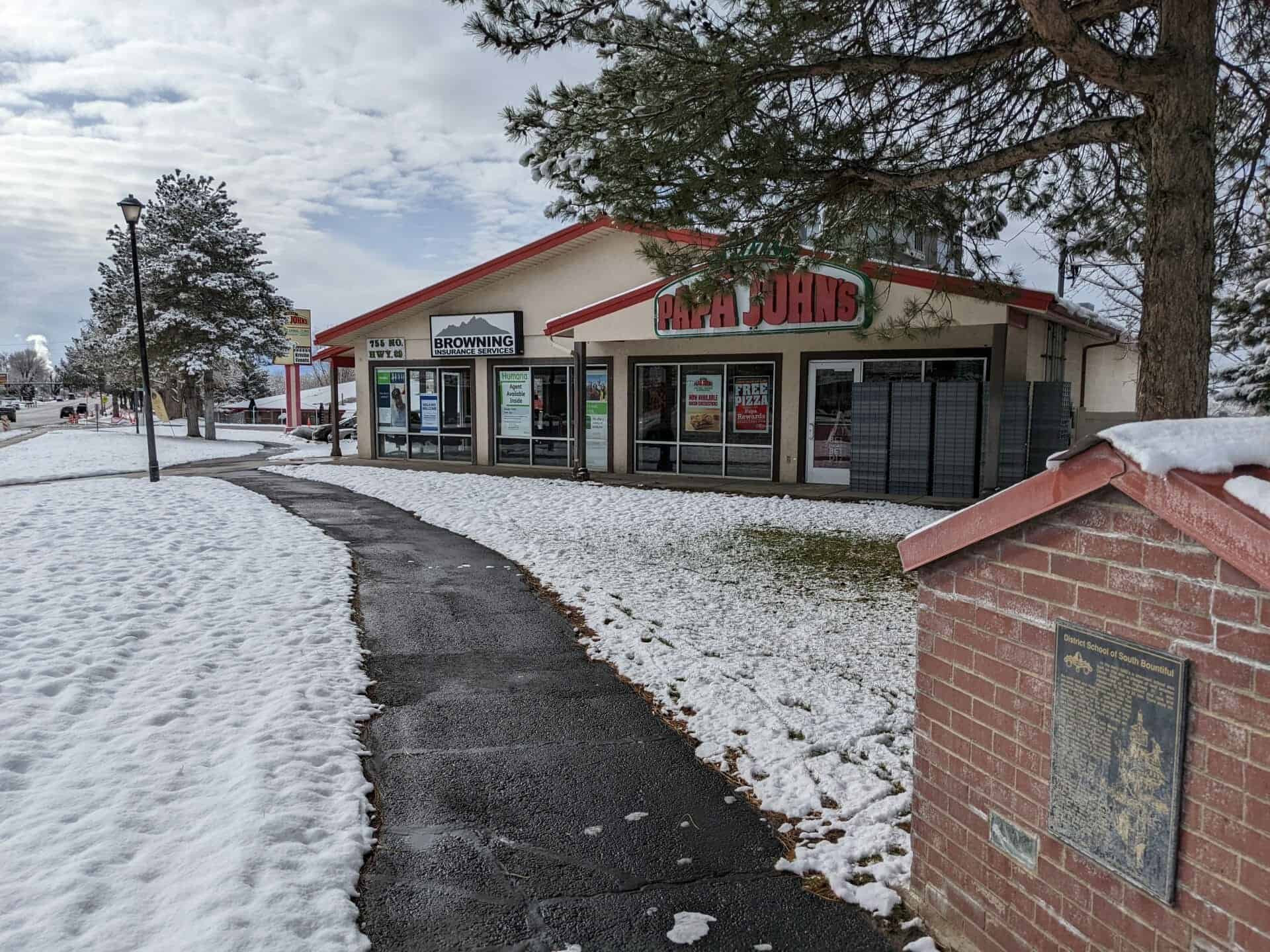
In the early 1800′s a one-room school was built on this site: a triangle of land between Onion Street and Highway 91. It was constructed of lime-cement and rock and measured 16 feet by 25 feet. There were six windows – three on the north side and three on the south side. The entrance faced west. A coal house was attached to the building. A potbellied stove stood in the center of the room with a long stovepipe reaching to the chimney on the east. There were three rows of desks on each side of the stove. Students furnished their own books and slates. Children who could not attend regularly, due to the farm work, had to bring their own desks. Each night a bucket of fresh water was carried from the Burtenshaw Well across the road for the children to drink the next day. A bucket with a clean dipper was placed on a table for their use. This school was used until 1898, when it was torn down and a red brick, two-room school was built on the property. About 1920, this location was renamed Cleverly Crossing by the Bamberger Railway Company and was a designated stop. Here a shelter was built for waiting passengers. In 1935 Onion Street, named for the onion trucks that came from the farms to the crossing every Friday, was redirected. After the change it crossed the old school grounds to enter Highway 91 in North Salt Lake.
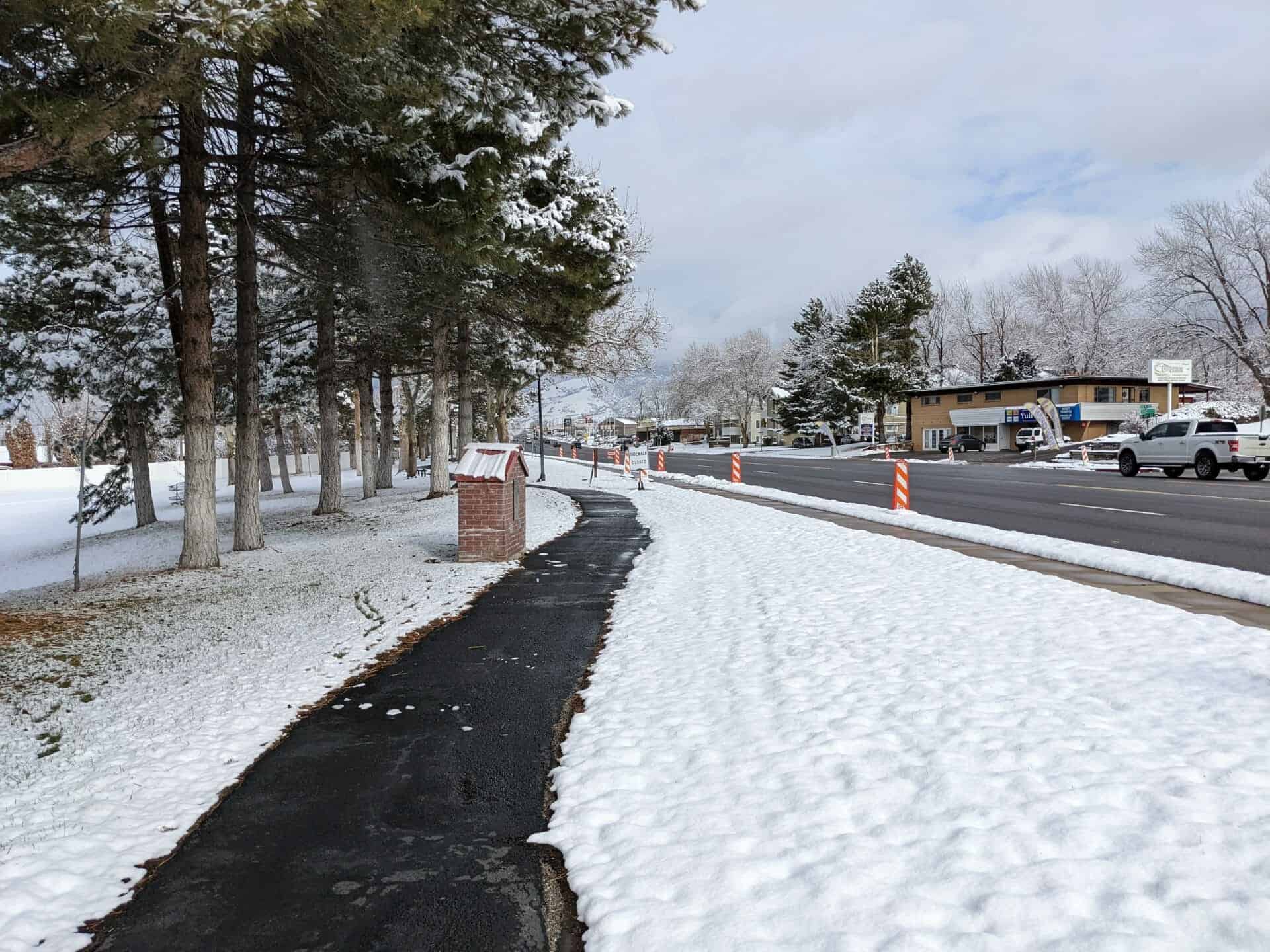
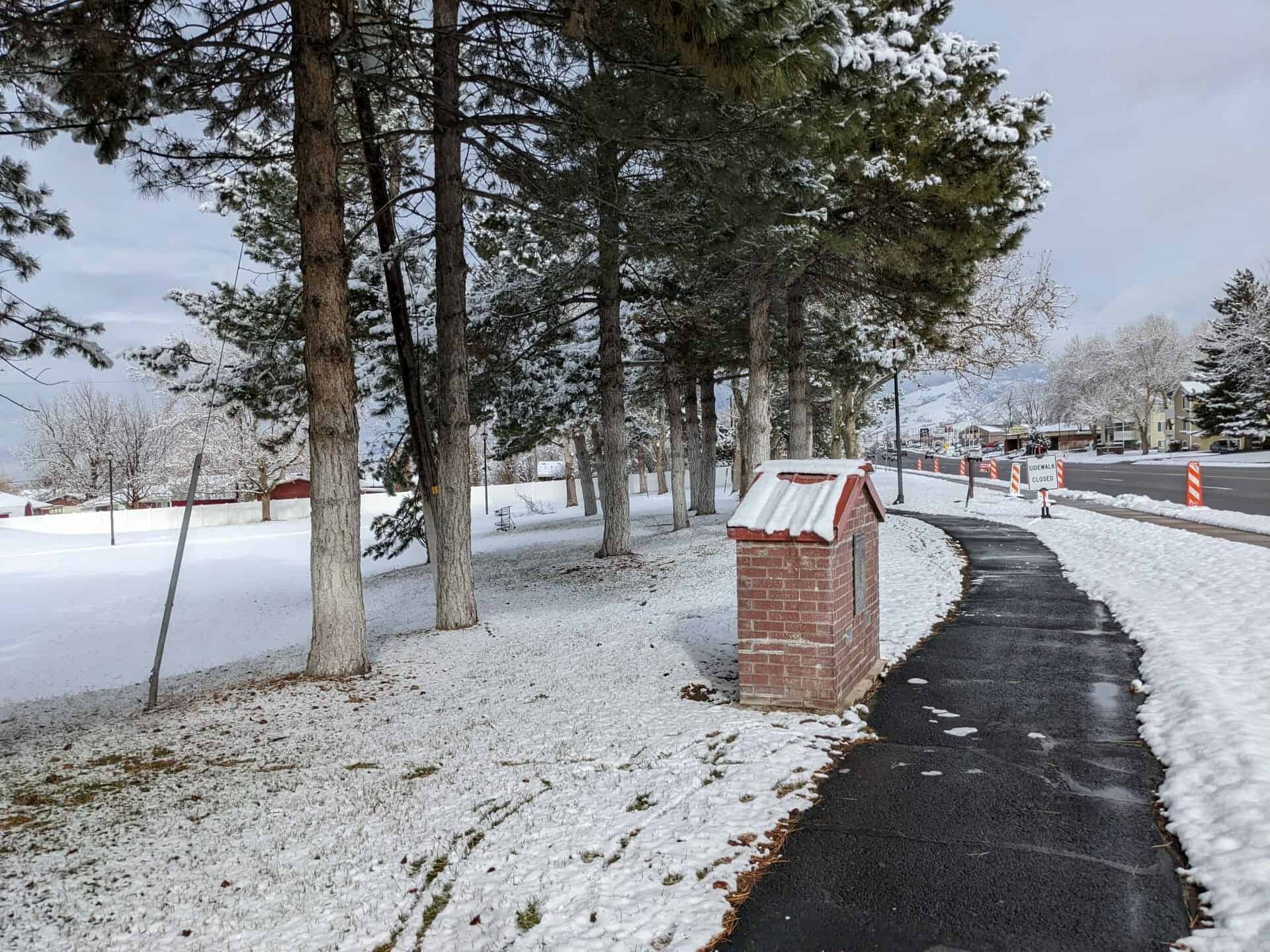
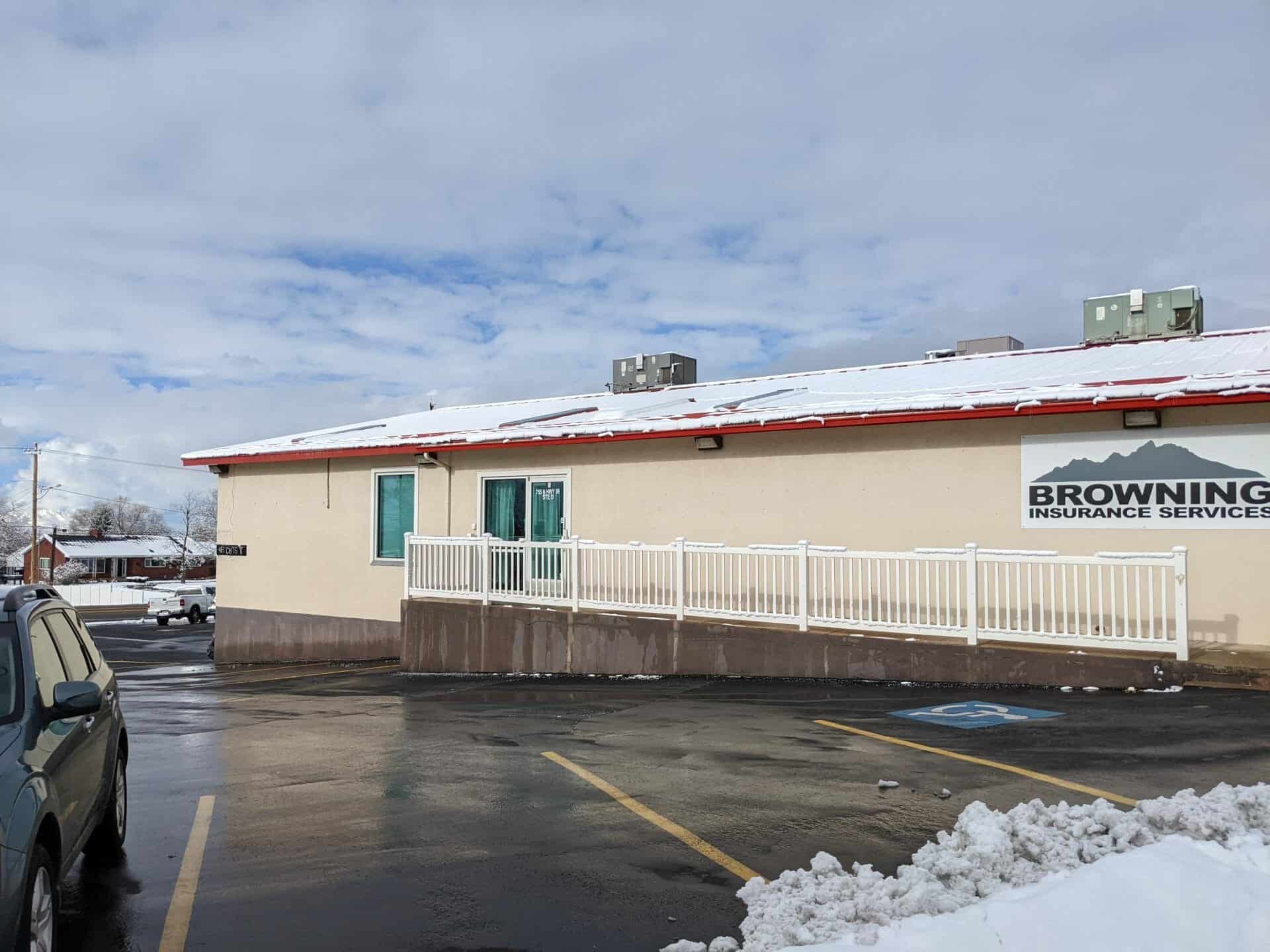
This historic marker is #469 of the Daughters of Utah Pioneers markers and is located at 755 North Highway 89 in North Salt Lake, Utah
In 1854, at Fort Ephraim, an Indian, Tabiona, gave President Brigham Young a black rock, saying “Heap burn.” Two Welsh coal miners, John Rees and John Price, were sent with the Indian to located the coal vein, which was found in Coal Canyon about 1 mile south and 1/4 mile west of this marker. Until 1860, Welsh pioneers were directed to settle near coal bed (Wales) to develop the mines. In 1872, twelve coke ovens were built, and in 1875, a branch railroad line was built from Nephi to ship the coal to market. It carried U.S. mail for all Sanpete County.
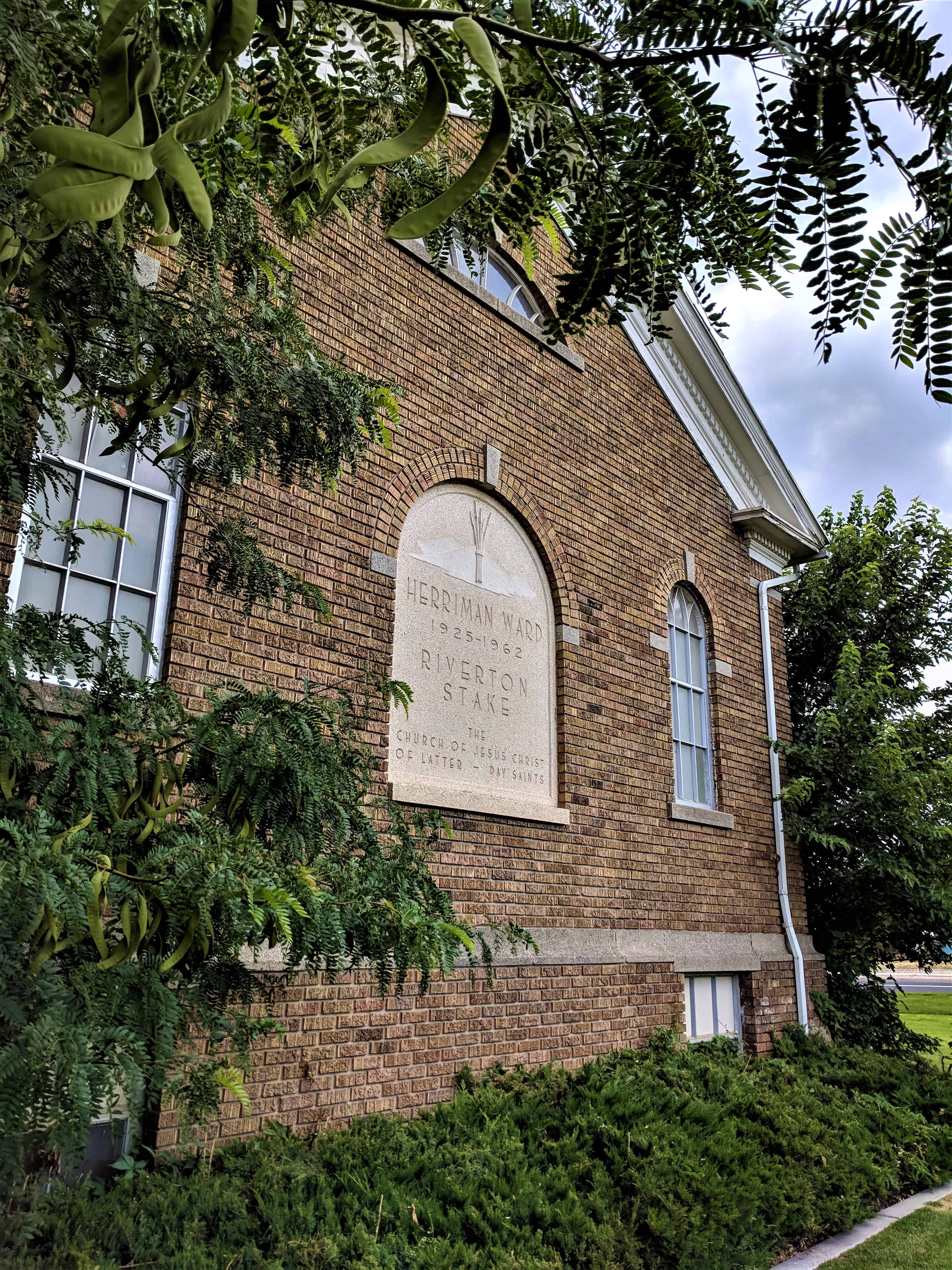
Herriman was settled in 1851 by the families of Henry Herriman, Thomas Butterfield and John J. Stocking. In 1853 Brigham Young called twenty families to strengthen the settlement. Henry Herriman was chosen the first presiding elder of the L.D.S. Church and meetings were held in a log structure inside the fort. On this site 1879, a rock building, 40′ x 60′, with walls 18″ thick was constructed, under the direction of Ensign I. Stocking, from rocks chiseled by hand, and lumber brought from Butterfield Canyon. A large potbellied stove furnished the heat while kerosene lamps provided light. A wood carved pulpit with red velvet covered top, was placed in the enter of the platform.