Built in 1935-36, the Boulder Elementary School is part of the Public o Works Buildings Thematic Resources nomination and is significant because it w helps document the impact of New Deal programs in Utah, which was one of the states that the Great Depression of the 1930s most severely affected. In 1933 Utah had an unemployment rate of 36 percent, the fourth highest in the country, and for the period 1932-1940 Utah’s unemployment rate averaged 25 percent. Because the depression hit Utah so hard, federal programs were extensive in the state. Overall, per capita federal spending in Utah during the 1930s was 9th among the 48 states, and the percentage of workers on federal work projects was far above the national average. Building programs were of great importance. During the 1930s virtually every public building constructed in Utah, including county courthouses, city halls, fire stations, national guard armories, public school buildings, and a variety of others, were built under federal programs by one of several agencies, including the Civil Works Administration (CWA), the Federal Emergency Relief Administration (FERA), the National Youth Administration (NYA), the Works Progress Administration (WPA), or the Public Works Administration (PWA), and almost without exception none of the buildings would have been built when they were without the assistance of the federal government.
Boulder Elementary School is located in 351 North 100 East in Boulder, Utah and was added to the National Register of Historic Places (#85000805) on April 1, 1985.
The Boulder Elementary School is one of 233 public works buildings identified in Utah that were built during the 1930s and early 1940s. Only 130 of the 233 buildings are known to remain today and retain their historic integrity. Of the 233, 107 were public school buildings and 55 of them remain. This is one of 43 elementary schools built, 19 of which remain. In Garfield County 7 buildings were constructed; 5 are left. The Boulder Elementary School was built in 1935 and 1936. Construction began in September of 1935 and was completed in the early spring of 1936. It was a Works Progress Administration (WPA) project. Superintendent of construction was Arthur McNelly of Escalante.
This is a one-story frame school building displaying the blending of classical and moderne elements that characterizes the PWA-sponsored architecture in Utah. It has a hipped roof over a basic rectangular plan. There is a projecting gabled porch on the front that contains a recessed entrance and small flanking windows. A long hipped roof extension on the rear appears to be original. The siding consists of narrow, 4″ clapboards and there is a plain cornice and frieze under the overhanging eaves. Classical motifs dominate the front entrance porch in the form of cornice returns, a pedimented head over the recessed doorway, and a transom above the door itself. The formality of the porch is broken by a zig-zag belt course that circles the building and gives it a sense of the abstract geometric quality associated with the moderne movement. The building remains in excellent original condition.
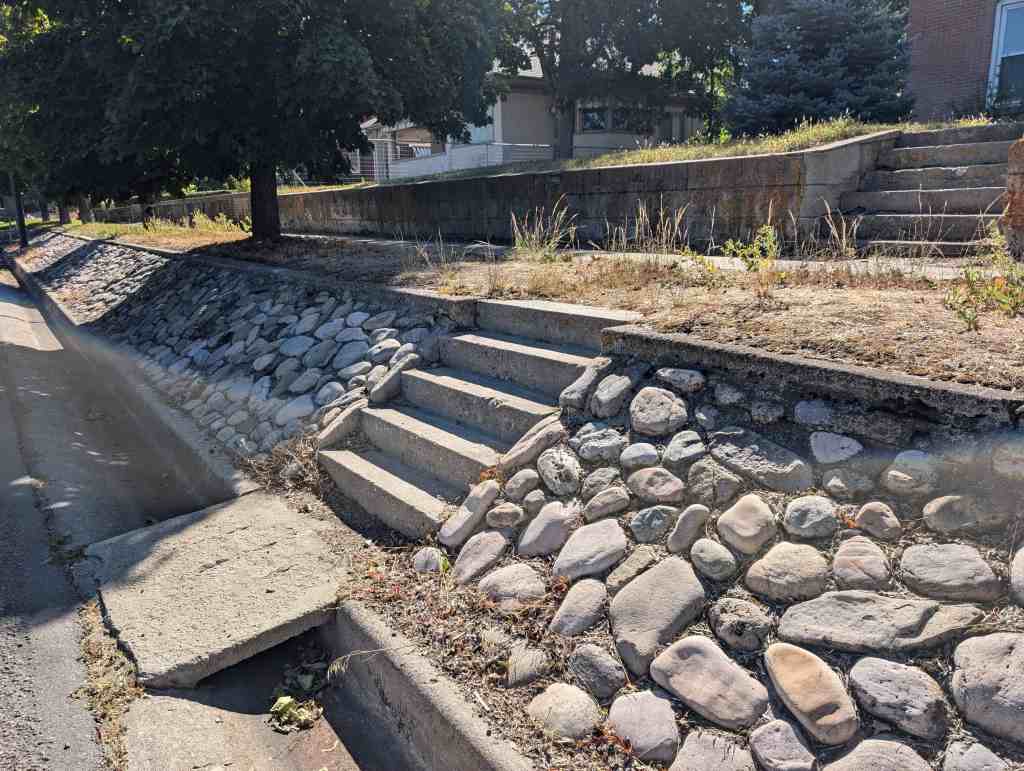
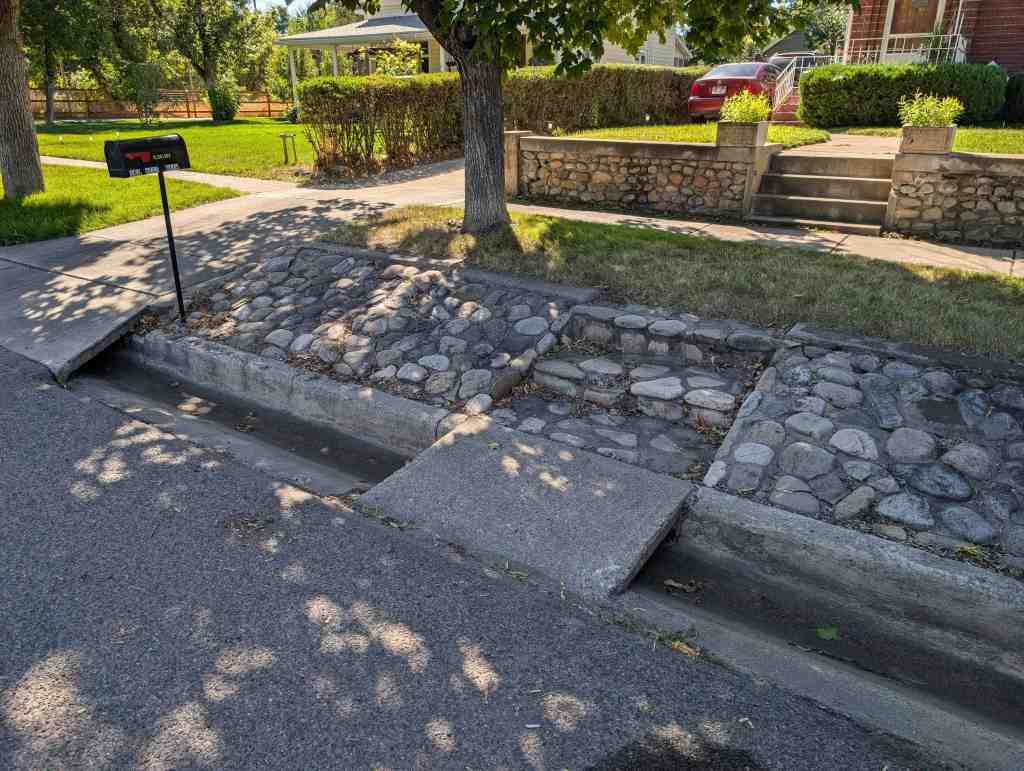
During the 1930s and 1940s, the Public Works Administration provided many projects all over our nation to provide employment for the people. In 1941–1943, Hyrum City took advantage of the opportunity to improve our Main Street and the cemetery under the PWA project. The PWA furnished all expenses and labor, the CCC boys did most of the ordinary work under the jurisdiction of the mayor and city council. The streets were oiled and on Main Street, curb and gutters were installed and the special rock walls were laid. T. W. Petersen hauled all the rock in his truck from Blacksmith Fork Canyon.
200 West to 100 West and 200 East to 300 East Main Street in Hyrum, Utah
Tent Chapel and School, circa 1899. When Mormon settlers came to Mesquite Flats in 1894, they designed the southeast corner of this block as the Public Square. It was a place where the community gathered for many events. At this site a tent was set up circa 1899 for use as a chapel and a school. It was 16′ x 16′ with no windows, no heat, a dirt floor, and only logs to sit on.
Block School, circa 1922.
The Block School, so-named because it was made of cement block, had four classrooms and an auditorium. It stood on the southeast corner of the block until it was replaced with a new campus in the 1960’s. The Church of Jesus Christ of Latter-Day Saints rented the schoolhouse for meetings and gatherings for several years.
Gymnasium, circa 1938.
This red brick gymnasium was built adjacent to the Block School and became the center of recreation for the community. The gymnasium was placed on the National Register of Historic Places in 1992. It represents Italian Renaissance REvival style architecture. Construction of the gymnasium was funded through the federal Public Works Administration (WPA) program.
This is Mesquite Historic Marker #9 (see others on this page) located at 51 East 100 North in Mesquite, Nevada.
The Mesquite High School Gymnasium was added to the National Register of Historic Places (#92000119) on March 10, 1992.
From the national register’s nomination form: The Mesquite High School Gymnasium is significant under Criteria C in the area of significance of Architecture. Built in the Italian Renaissance Revival Style, it is representative of the historic context “Schoolhouse Architecture in Southern Nevada’s Fifth Supervision District, 1870 to 1942.” It is significant as an example of its style as well as its rare use of terra cotta and tinted concrete brick. The Mesquite Gymnasium is illustrative of the School Support Building property type, and possesses the characteristics of that type in terms of its historic use, which reflected the expanding educational curriculums of the 1930s, and its functional design, which incorporated a central gymnasium with classrooms on the perimeter. The building is representative of the Custom Architecturally Designed Schoolhouse property type as well. It embodies the characteristics of that type in terms of the formality of its style, and the special attention paid to the spatial organization of the building’s uses.
School support buildings were important components of the expanding role of education that occurred beginning in the early 20th Century. Their function and necessary large size often required designs and methods of construction quite different from traditional school buildings. Almost always designed by architects, and usually in the formal styles, the school support building became symbolic, not only of educational reform, but also of community stature.
Funded by the federal Public Works Administration (PWA), the Mesquite Gymnasium was designed by Salt Lake City architect Miles E. Miller, and built by Salzner-Thompson, contractors. Miller also designed gymnasiums in the nearby towns of Bunkerville (1939) and Overton (1938) under the PWA program. The Mesquite Gymnasium exemplifies the public architecture sponsored by the federal relief programs of the Depression era. The federal government promoted subdued or minimal versions of the traditional styles associated with public buildings. Those styles were mostly drawn from Italian Renaissance or classical examples. They also promoted the use of modern, fireproof materials, particularly concrete and steel.
The design of the Mesquite Gymnasium illustrates that preference through its incorporation of elements of the Italian Renaissance Revival Style in a simple, straightforward manner. Stylistic features of the Mesquite Gymnasium that typify the Italian Renaissance Revival model are strict attention to symmetry at the principal façade, a division of the façade into three primary bays, and classical detailing of the cornice, entry frontispiece, pilasters, and doorways. The gymnasium entrance bay is designed with a pair of fluted classical pilasters flanking each side of the recessed, round arch doorway. The pilasters terminate at an ornate entablature and cornice that extends the length of the facade. Those elements are built of tan terra cotta. Although a common architectural product, its application on Southern Nevada school buildings is rare. The stylized frieze at the gymnasium eave is also decorated with terra cotta, in the form of medallions.
Aside from the application of terra cotta ornamentation and symmetry of the building, the design makes little additional reference to classical architecture. The balance of the gymnasium’s design is, however, in keeping with the concepts of minimalism, simplicity, and use of modern materials, as promoted by the federal government. Windows along the front of the building, which shed light into classrooms, are organized in groups of five and are tall, steel sash awning windows. Other windows are symmetrically located and also constructed of steel. Tall, arched windows along the rear wall of the gymnasium, now infilled, were also constructed of steel sash.
The use of brick-size, red-tinted concrete masonry units is regionally rare, but reflects the desire to use modern fireproof materials that simulated traditional clay brick. Although briefly popular during the 1920s and 1930s, the use of concrete brick was not economical and was soon replaced with larger concrete block, which required less material to manufacture and less labor to erect. The masonry work at the gymnasium is well detailed, with stepped back reveals at the building corners, and soldier courses at the water table and as a decorative band along the upper walls of the lesser facades.
The significance of the Federal Building/Post Office in Las Vegas rests upon the building’s intrinsic and representational values on a local level to the city. These values lie in two areas: architecture and politics/government. Architecturally, the building is representative of the eclectic revivalism which distinguished most public buildings designed by the Treasury Department’s Supervising Architect’s office in the 1920s and 1930s. Although it may not have succeeded in its intended role as an exemplar of good taste to be imitated by subsequent private structures (the most famous of which, of course, are the amazingly profligate casinos), the building is the most refined of Las Vegas Depression-era architecture. It is a well-preserved and locally prominent example of its genre – a medium-scale public building of the early thirties. The Federal Building also represents the city’s part of an extensive federal building program initiated in the late 1920s by the Hoover administration – the forerunner to Roosevelt’s Public Works Administration. Like the immense Boulder Dam project, under construction at the same time, this building presented a locally prominent symbol of the presence of the federal government, and as the first federal building erected in Las Vegas, it is a source of pride for the city and a locally prominent landmark.
The building was added to the National Historic Register (#83001108) on February 10, 1983, it is located at 300 Stewart Avenue in Las Vegas, Nevada and is now home to the Mob Museum.
Although the Federal Building completed in 1933 was the first civil federal structure erected in Las Vegas by the Treasury Department, it was not the first building put up specifically to house the postal facility. The 1933 building was preceded only four years by another. Actually, boosting for a federal building had begun two decades earlier in 1911 with the hope that Congress would include Las Vegas among the hundreds of communities across the country to receive post offices and courthouses. The government at the time was engaged in a fifteen-year construction binge which had begun around the turn of the century; however, increasingly vociferous criticism of porkbarrel politics dampened the enthusiasm in Congress for new building projects, and by the mid-1910s the program was halted. Las Vegas did not receive its building.
The Federal Building/Post Office (originally called the U.S. Post Office and Courthouse; called Federal Building in this nomination) is situated within the sprawling urban setting of the desert city of Las Vegas. The building is located on the north side of Stewart Avenue on a site which is, atypically, not a corner site; it is centered on third-Street (almost – see Addendum, Item 8) with a vista down the street intended to be grandiose. Located in a six-block Civic Center just north of the central business district, the Federal Building sits among several city buildings, including the ten-story new City Hall to the east. Four blocks south are the Clark County Courthouse and the more recent Federal Courthouse. The Federal Building is surrounded by paved parking lots: public lots to the east, west and south and a parking/loading area behind the building to the north. To the southwest is the Lady Luck Casino Dealer’s School, a single-story structure with stucco walls and a red tile roof; beside that to the west is the six-story concrete Binion’s Horseshoe Casino parking garage, and beside that is the Del Webb’s Mint parking garage, also six stories.
The building is faced south-southwest toward Stewart Street and is set back from the sidewalk in a small grassed lawn as is typical for a federal building of the period. Most of this lawn in the front has been taken up by the wide granite stair which ascends from the sidewalk to the raised first floor level and by the concrete handicapped ramp west of the central stair. Trees have been planted alongside the building on its front and two sides, set within the small grassy areas which remain, and site furniture consists of the handrails for the stairs and ramps.
The Federal Building itself is massed as a great three story block, 119’10” wide by 76’0″ deep. The front façade features a central colonnade flanked on both sides by massive end bays. This enframed block configuration – central colonnade or arcade anchored on both sides by symmetrical solid corner elements – is an arrangement developed in 18th century France and adapted by American government and private architects in the late 19th and early 20th centuries for a wide variety of public and institutional buildings. The neoclassical arrangement took on several appearances as the architects varied the scale, proportion and detailing, but at its core it represented the type of classicism favored by the Treasury Department as appropriate for federal architecture. The building also displays the classical vertical hierarchy of base, body and cap – the base formed by the raised foundation, the body by the brick walls and great colonnade and the cap by the entablature and parapet. The building represents mainline, albeit eclectic, neoclassicism with its large flat-sided Ionic columns, formal loggia (since altered), classical moulded and dentiled entablature and Georgian balustraded parapet. It is typical of the hundreds of similar structures designed by the Supervising Architect’s office of the Treasury, but the refinement of proportions, details and use of materials and the building’s size distinguish the Las Vegas Federal Building as a regionally important example of the style.
The building is covered with a flat concrete slab roof, with composition roofing over; the roof is bordered with a parapet, a Georgian Revival element made up of terra cotta components. Classified as a fireproof structure, it is supported by a structural steel frame which holds pan type concrete floor and roof slabs. All of the four facades are organized with typical neoclassical symmetry, with the front and sides featuring the prominent colonnades. These are the focal points for the building, made up of terra cotta parts which give stylistic distinction to what would otherwise be a plain brick box. The front colonnade has eight massive columns, the sides six. Each column is engaged by the wall behind, flat-sided and fluted, with Ionic capital, compound moulded base and plain plinth. The front colonnade is set within a terra cotta-faced bay which projects slightly from the end bays; the side colonnades are flush with the wall, with no projection, and all three colonnades are placed in the second and third floors, a design device which gives the building a more imposing countenance. The first floor is faced with flat terra cotta panels, punctuated by simply framed windows on the east and west facades and by a six-bay arcade on the south (front). This arcade was originally open, leading into a shallow loggia which in turn enters into the main lobby, but the openings have since been infilled with aluminum window/doors to create an entry vestibule. The rear façade is dominated by the large first-floor loading dock with cantilevered metal canopy over. The dock extends the width of a central bay which projects several feet beyond the flanking symmetrical sides. Centered in this bay are three large Georgian windows with a smaller window on each side. Like the front and sides, the rear features terra cotta siding on the first floor level, with brick on the second and third floors.
The building title is mounted in the entablature over the colonnade on the front. Originally “United States Post Office” in attached metal letters, the original title has been moved to one side several feet to allow the addition of “Federal Building-.” The building’s cornerstone, laid in a 1931 ceremony, is located in the foundation at the southeast corner and is inscribed:
A. W. Mellon Secretary of the Treasury James A. Wetmore Acting Supervising Architect 1931
An article printed in the Las Vegas Evening Review announcing the November 1932 opening of the Post Office described the original layout of the first floor of the facility:
There are 11 windows in the new postoffice room, but all of them will not be used, (Postmaster) Ryerse explained. There will be two general delivery windows, a stamp window, postal savings and registered mail, and money order windows. The parcel post window, for incoming and outgoing parcel post will have ample space to handle all of the parcel post needs of Las Vegas.
In the rear of the building there is a large loading platform which is separate from the workingroom of the postoffice proper, and in the west wing of the basement a large storeroom has been set aside for the use of the postoffice.
One of the features of the new postoffice is a “swing room” for the mail carriers, a recreation room equipped with comfortable chairs, reading tables, and a shower bath, for the mail carriers while waiting for mail distribution.
The windows discussed in the article were situated around a central U-shaped main public lobby, entered from the front loggia. The lobby and other first floor spaces have undergone some change since the building’s opening, but the public spaces have retained a degree of integrity. The lobby has been divided into two smaller spaces by a contemporary aluminum window wall, and the west two postal windows have been removed to create more room for additional post office boxes (the east three windows remain). East of the lobby are the offices of the Postmaster and Assistant Postmaster, with the attendant hallway, vault and toilet; these remain as original. West of the lobby is the main stair to the second floor, an elevator and money order registry office (the office has been removed also to make room for additional post office boxes). The main workroom and mailing vestibule and platform are situated behind (to the north of) the lobby and remain in original configuration. Although altered somewhat by the addition of a suspended ceiling and some new wall finishes, the main lobby still features many of its original components, including: the terrazzo floor with brass strip inlay and marble borders, travertine walls and pilasters, decorative ironwork for the elevator surround and original iron writing tables. The stair to the second floor features marble treads set in a steel frame, plaster walls, terrazzo landings and decorative iron balustrade. The main workroom has its original plaster walls and ceiling with the inspector’s gallery overhead.
The second and third floors are organized as series of office or court spaces lined along single U-shaped hallways. The heart of the building – and its most impressive space – is the courtroom centered on the north wall of the second floor. After the District Court moved from the building, this room was subdivided into a smaller court space for the Tax Court and an office space. The cut-down Tax Court still has many of the original courtroom elements, including travetine walls and pilaster shafts, stylized pilaster capitals and crown ornamentation made of terra cotta, coffered ceiling with decoratively cast plaster beams, marble wall base and oak furniture. The axis of the courtroom has been shifted from east-west, with the judge’s bench centered on the east wall, to north-south with the bench on the north wall. The space has been altered in other ways: the addition of suspended ceiling between the plaster beams, carpeting, covering over of the north wall windows (no natural light now enters the room), addition of contemporary light fixtures and registers and – most unfortunate of all – painting of the polychrome terra cotta capitals and frieze ornaments. The upper story halls are in original condition, with terrazzo floors, plaster walls and ceilings with a moulded plaster crown and pilaster caps and dark oak doors and frames. Second and third story offices have undergone some change, primarily in the form of carpeting and suspended ceilings.
The Federal Building/U.S. Post Office is sited facing south within the six-block Civic Center just north of the central business district of Las Vegas. Set back from the sidewalk within a small grassed lawn, it is massed as a great three-story block – a brick box with terra cotta trim set upon a raised foundation. The building represents mainline, albeit eclectic, neoclassicism with its large flat-sided Ionic colonnades, formal loggia, classical moulded and dentiled entablature and Georgian balustraded parapet; it also displays the classical vertical hierarchy of base, body and cap, the base formed by the terra cotta sided first floor, the body by the upper story brick walls and great colonnades and the cap by the entablature and expressed parapet. The building has been maintained well, and the exterior appears today in almost original condition. The interior has undergone changes to accommodate the changing needs since its construction, but the changes have been made with some sensitivity, and the original character of the public spaces is retained. As a regionally important example of neoclassical public architecture, the Federal Building is one of the city’s major historic buildings. It is a prominent landmark – the most refined and best preserved of Las Vegas’ Depression-era architecture.
Hopes for a new building were renewed in December 1923 with the announcement that the city was included in a public buildings appropriation in Washington. Local boosting for the building continued into the next year, and on 28 June 1924 the Las Vegas Age ran a lengthy argument for the proposed structure. Entitled “Public Building is Necessary to Meet Growth of Las Vegas,” the article stated:
The room and equipment provided for the Las Vegas postoffice have long been inadequate. Within the last few months additional room and five hundred additional boxes have been provided for the office, but these are now being used nearly to the limit of capacity. With only a slight increase in the present business the enlarged quarters will be found inadequate and the public again obliged to suffer the inconveniences which were so annoying for several years…
The present city proper was founded in the month of May 1905, by people who moved into it from the Original Townsite of Las Vegas, Nevada, which was generally known as the “construction camp” during the building of the railroad, and by people who came from every State in the Union; pioneers they were, but of a type who came to stay and build a city…
There are no government buildings erected in the southern part of the State; yet the City of Las Vegas and the County of Clark have never failed to meet the call of the United States Government for any requirement demanded… With a population of 4500 people, and with the population steadily increasing,and with no possibility of its growth being stopped or even retarded, we feel that we are entitled to proper postoffice facilities for the handling of United States mail by having an up-to-date Federal postoffice building.
However, Congress had not approved any authorization for new construction since the end of the earlier boom in 1913 and in 1924 was in no mood for new public buildings. The bill was defeated and with it the city’s post office. It would not be until five years later, in 1929, that Las Vegas would receive its first post office building, erected not by the government but by a local businessman/ contractor, P.O. Sullivan. Sullivan completed the building, a single-story brick structure, in June of that year, and it immediately opened as the city’s post office. In a community grateful for any building, Sullivan’s post office was well received. Reported the Age on 4 June:
The new postoffice opened for business yesterday morning at Second and Carson, and Las Vegans are becoming accustomed to the increased convenience made possible by the new structure and new equipment. The building, erected and owned by P.J. Sullivan, serves a long-felt need of the community it is agreed by all, and its opening has long been looked forward to by the community and postoffice workers alike.
The government had signed a five-year lease and had installed some $20,000 of new equipment in the building, but even before the new facility was opened the Treasury Department had already begun the search for a site for its new federal building. District Engineer Arthur Newman was dispatched to Las Vegas in August 1924 to assess several sites which had been offered for the building. Newman told city officials that $20,000 had been appropriated for site acquisition but nothing had yet been set aside for building construction, adding, “Other localities are crying out for federal buildings, and competition for federal building money is keen in Washington. Las Vegas is fortunate in having friends in the U.S. senate and in the house who are close in the confidence of the administration and whose efforts have resulted in placing this city on the building program for this year.” Newman’s visit sparked another round of boosting for a new building. Again, the Age:
The need of Las Vegas for a federal building to house the post office as well as the administration officials of the Boulder Dam work and other governmental departments such as the United States court, U.S. Marshall’s office, Commissioner, etc., all of which will need quarters in Vegas, has been recognized by the departments and Congress…
There are hundreds of cities in the United States with claims for a federal building just as good as ours, in some cases, perhaps, better. Congressmen, senators and business men are every day exerting pressure in favor of their own projects and any valid excuse for delay in the Las Vegas project would be decidedly to the advantage of some other city.
For several years the work of securing recognition in our needs and desires has been under way. It was not easy to convince the men in power at Washington of the merit of our cause.
Now that our project is approved and on the program for immediate construction, it is to be hoped that no sectional controversies will arise. We each have our individual preferences. It may be that this site or that site will better serve our own particular interests. And whatever site is selected will not suit all of us.
Newman’s veiled warning that the city could again lose its chance at a federal building if a site could not be secured quickly had its effect on city officials. A parcel of land that Las Vegas had been holding to build a city park was offered to the Treasury official, and it was accepted only after the city gave assurance that the site and adjacent streets would be improved. With a site secured, the Supervising Architect’s office of the Treasury began to design the building.
The Federal Building planned for Las Vegas was in reality part of an enormous construction program undertaken by Congress and the Hoover administration in the late 1920s and early 1930s. During this period some 1300 new civil federal buildings were erected across the country, nearly doubling the number under the aegis of the Treasury Department. The program was initiated in 1926 – the first such federal initiative for public building construction since 1913 – with a Congressional authorization of $165 million over a period of eleven years. The authorization was increased by $125 million in 1928 and, with the Depression worsening, by $330 million in 1930 and 1931. The total appropriation, including revenues from the sale of so-called obsolete structures which added $69 million, hovered at $700 million. According to Lois Craig in The Federal Presence: “In terms of establishing the image of the United States government, this program was the most important undertaken since the first few decades under the Constitution.”
The massive construction effort was designed to serve three functions. First, it represented fiscal pragmatism and was calculated to reduce the rising rental costs incurred by the growing number of federal agencies in leased space. The program also afforded Congress an opportunity to distribute political presents in the form of post offices and courthouses, a type of logrolling it historically has found hard to resist. Finally, under the deepening shadow of the Depression, the building program was in the later years also a make-work program, intended to provide jobs for the local unemployed. A predecessor to the myriad New Deal programs (Roosevelt took office as the Las Vegas Federal Building was nearing completion), Hoover’s building program was later absorbed within the Public Works Administration.
This renewed activity rekindled long dormant animosities between the Supervising Architect’s (SA) office in the Treasury Department and private architects, represented by the American Institute of Architects. The AIA, protective of a membership beleaguered by the Depression, objected loudly to in-house design of federal buildings by the SA’s office, which had increased its staff from 432 in 1929 to 750 in 1932. A 1931 Resolution of the AIA Board of Directors proclaimed:
We believe that the country is entitled to the services of the best architectural talent available, and that the concentration of so large a volume of work as the present appropriations provide, into the hands of a single Government bureau, must inevitably tend to produce stereotyped, mediocre and uninspiring results.
Architects railed against the SA repeatedly in the trade periodicals; American Architect was particularly fervent in its criticism, regularly publishing articles like “Government Architects Cannot Create Beauty” and “The Time Has Come for Government to Get Out of the Architecture Business.” A counterattack was printed in the April 1933 Federal Architect, a magazine sympathetic to the SA:
The ethics of the profession has certainly taken a jolt when the architects of the country on letterheads of their A.I.A. Chapters blacken without investigation the work of other architects’ offices with the naïve and frank admission that it is for the purpose of getting architectural commissions for themselves.
The Federal Architectural offices are weaned and reared on criticism. If they use material A, delegations appear to lambaste them for not using material B. Or vice versa. If they face the building north, a newspaper crusade develops because it was not faced south. The bitter attacks of private architects are, therefore, merely the regular order… But one could have wished that architects would have stood by architects.
Although the Public Buildings Acts of 1926 and 1930 granted the Treasury Department the option to commission private architects for federal projects for the first time since the repeal of the Tarnsey Act in 1911, the Hoover administration used their services sparingly, and the fusillades continued throughout the early 1930s.
There were stylistic differences as well. At one extreme was the SA’s office, which continued to advocate classicism as the appropriate symbolic expression for public buildings. The SA executed hundreds of buildings of varying scales with classical facades and detailing during the twenties and thirties. James A. Wetmore was the Acting Supervising Architect from 1915 to 1933. A graduate of the Georgetown University Law School, Wetmore was not himself an architect, the reason for the “Acting” before his title; stylistic direction for the office was given by the Superintendent of the Architectural Division Louis A. Simon, a stylistic traditionalist who later succeeded Wetmore as Supervising Architect – the Treasury’s last. At the other end of the spectrum were a number of architects in the avant garde of the private sector. Embracing the tenets of the emerging Art Deco and Moderne styles (and a decade later the International style), these architects designed public buildings relatively unembellished by ornamentation and austere when compared with their classical predecessors. Between the two extremes, architects designed with a wide range of stylistic expression, combining new forms with borrowed revivalist or vernacular forms or motifs or somehow compromising between the classical and modern trends to create what is today termed “starved classicism.”
The construction drawings completed by the SA for the Las Vegas Federal Building in early 1931 showed a building that was, typical for that office, mainstream neoclassicism. A rendering of the front elevation appeared in a September 1931 article in Architectural Forum magazine by Assistant Secretary of the Treasury Ferry K. Heath. On 22 July 1931, bids for construction of the building were opened in Washington. It appeared that Murch Brothers of Saint Louis had submitted the lowest proposal with a bid of $247,000. However, the bid of Plains Construction Company from Pampa, Texas arrived several days later, reportedly help up in the mail. Plains’ bid, $10,000 below that of Murch Brothers, was accepted by the Treasury Department. Ever mindful of the cheapest bid, the government awarded the construction contract to an unproved contractor, although Murch Brothers had already built several federal buildings in cities all over the country. The city eagerly awaited construction of its long-awaited building, as the Evening Review-Journal reported on 1 August 1931:
Contract for construction of the new federal building to be erected at Las Vegas, was awarded this morning to the Plains Construction company at Pampas, Texas, on a bid of $237,000, it was announced by officials of the treasury department.
The building as designed, will be a three story structure with full basement of brick and terra cotta construction – one of the finest of the smaller postoffices now being built, treasury department officials declared.
Construction commenced soon after, but problems began to crop up. In September 1931 it was discovered that the building under construction was 32′ off-center from Third Street. With the excavation completed and foundations begun, Treasury officials decided to accept the building in its existing location, although as site inspector T.J. Williams stated: “If the building was erected according to the first plan, it would certainly make a much better appearance, as it would set nearer to the center!ine of the city park and show up from the present business district as being at the end of North Third Street.” As construction continued through the winter, more problems came up. Finally, on February 1932 Plains’ contract was terminated when it was discovered that the company’s owner, J.O. Pearson, had forged the signatures of the sureties for his bond. The Salt Lake City and Dallas offices of the FBI were called in to investigate the irregularities, and a Grand Jury was convened in Amarillo on 2 May 1932 to consider criminal charges against Pearson. As the court case continued in Texas and subcontractors for Plains began to file claims against the government (which were rejected), the project was rebid by the Treasury Department; on 22 July the contract for construction of the remainder of the building was awarded to Rosen and Fischel, Inc. of Chicago. This new company had been the lowest of nineteen bidders with a proposal of $220,553. Construction was begun soon thereafter and continued without further report of incident through the rest of the year and into 1933. In September postal officials began preparing for the move into the new building; it was made two months later as the new Federal Building was opened for business on November 27.
The operational history of the Federal Building has, unsurprisingly, consisted of the daily activities of the occupant agencies. Today it still houses the post office on the main floor, although the facility has been demoted from main office to station status with the construction of the new building in 1967. The second floor is occupied by the U.S. Tax Court (in the original District courtroom), the U.S. Army Recruiting Center and offices of the Bureau of Land Management; the third floor houses the offices of the Small Business Administration. Although the Federal Building at Las Vegas is not quite fifty years old, its shortfall is so minor as to be almost moot. The building is an important structure for the city, both architecturally and historically; a pivotal building in the central business district, it is a local landmark for Las Vegas – the first federal building erected in the city and a well-executed and -preserved example of 20th century neoclassical architecture.
Built in 1937, the Helper Civic Auditorium was designed by Salt Lake City architects Carl W. Scott and George W. Welch. The building is an excellent example of Art Moderne style also known as “Streamline Moderne.” The style was popular in the 1930s particularly in public buildings. The auditorium features Art Moderne elements such as the flat roof emphasized by concrete coping and coursing, smooth masonry with curved corners, glass block, and pilasters with abstracted capitals.
The Helper Civic Auditorium is part of the Utah Public Works Administration (PWA) and Works Progress Administration (WPA) Buildings Thematic Nomination. The building is significant because it helps document the impact of New Deal programs in Utah during the Great Depression. The Helper Civic Auditorium was one of 226 buildings (two of which were auditoriums) constructed in Utah during the 1930s and early 1940s under the WPA and other New Deal programs. Of those 226 buildings, 130 are still standing. On a local level the construction of the building was a boost to Helper’s economy by providing much needed jobs and funds through the purchase of building materials.
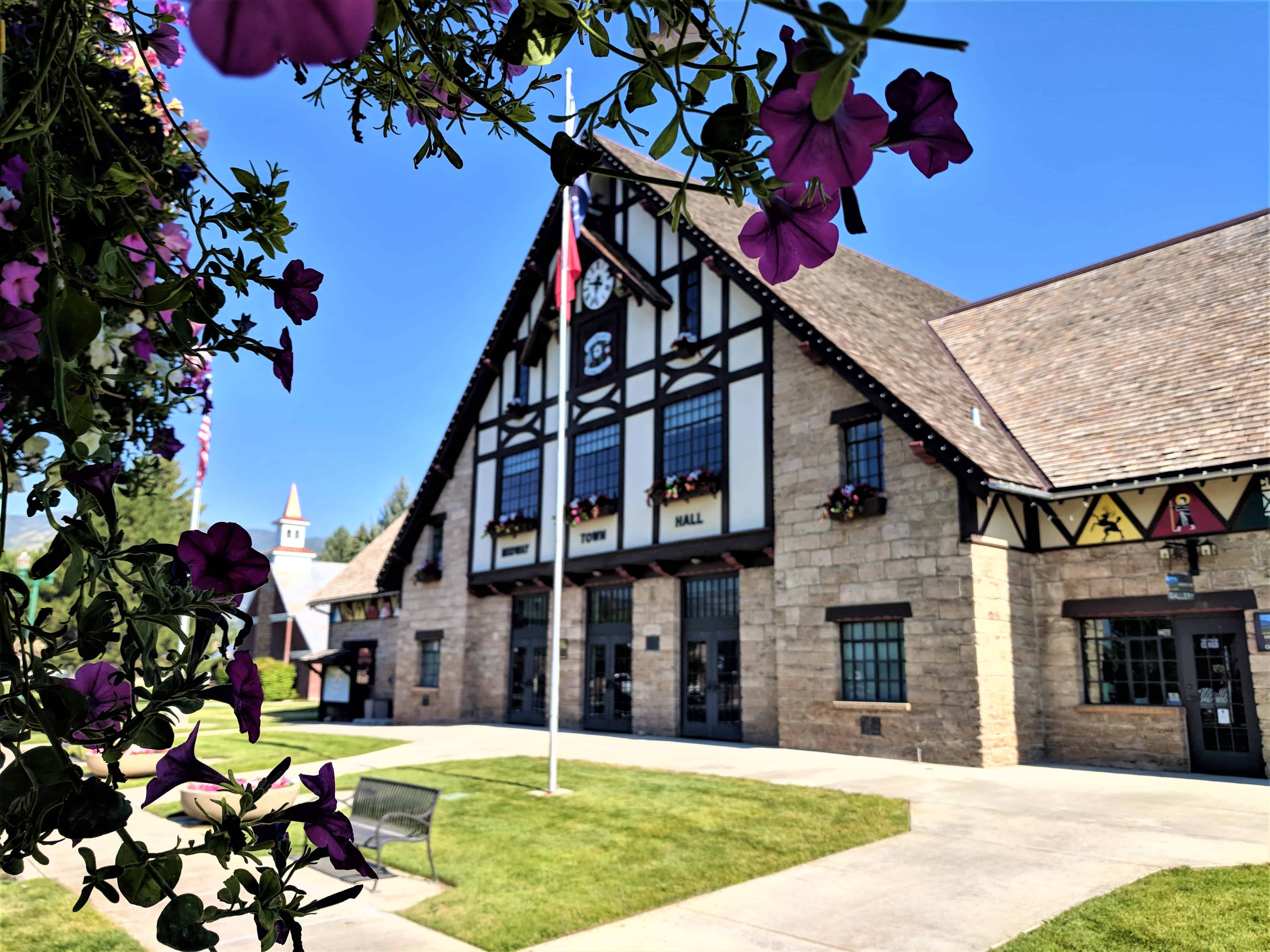
This historic building was built as Pleasant Grove City Hall as one of the many New Deal Funded projects in Utah between 1938 and 1940. It had the jail downstairs and is now a sign company.
Built in 1938-40, this two-story city government building was financed with money obtained through the Federal Works Project Administration. This WPA Moderne style was often built during the 1930s financed by the Federal Government. Native Soft-rock was salvaged from Clark Hall, the building it replaced, sawed into blocks, and reused in the city hall. Other stone was taken from the hills northeast of town. The Soft-rock building is stuccoed. This building shows the modern streamline design of that period, and is void of ornamentation.*
Public Works Buildings Thematic Resource nomination and is significant because it helps document the impact of New Deal programs in Utah, which was one of the states that the Great Depression of the 1930s most severely affected. In 1933 Utah had an unemployment rate of 36 percent, the fourth highest in the country, and for the period 1932-1940 Utah’s unemployment rate averaged 25 percent. Because the depression hit Utah so hard, federal programs were extensive in the state. Overall, per capita federal spending in Utah during the 1930s was 9th among the 48 states, and the percentage of workers on federal work projects was far above the national average. Building programs were of great importance. During the 1930s virtually every public building constructed in Utah, including county courthouses, city halls, fire stations, national guard armories, public school buildings, and a variety of others, were built under federal programs by one of several agencies, including the Civil Works Administration (CWA), the Federal Emergency Relief Administration (FERA), the National Youth Administration (NYA), the Works Progress Administration (WPA), or the Public Works Administration (PWA), and almost without exception none of the buildings would have been built when they were without the assistance of the federal government.
Related Posts:
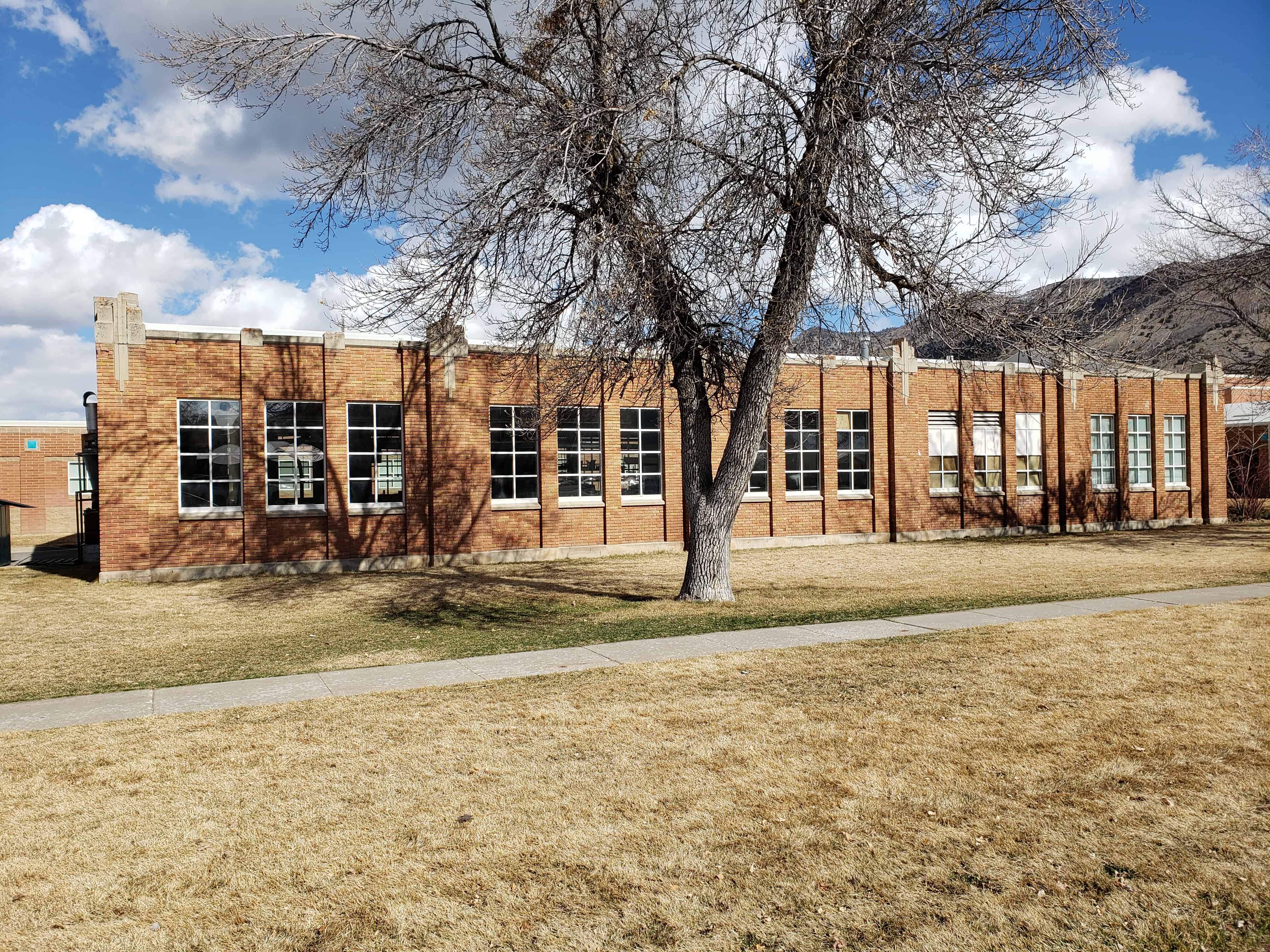
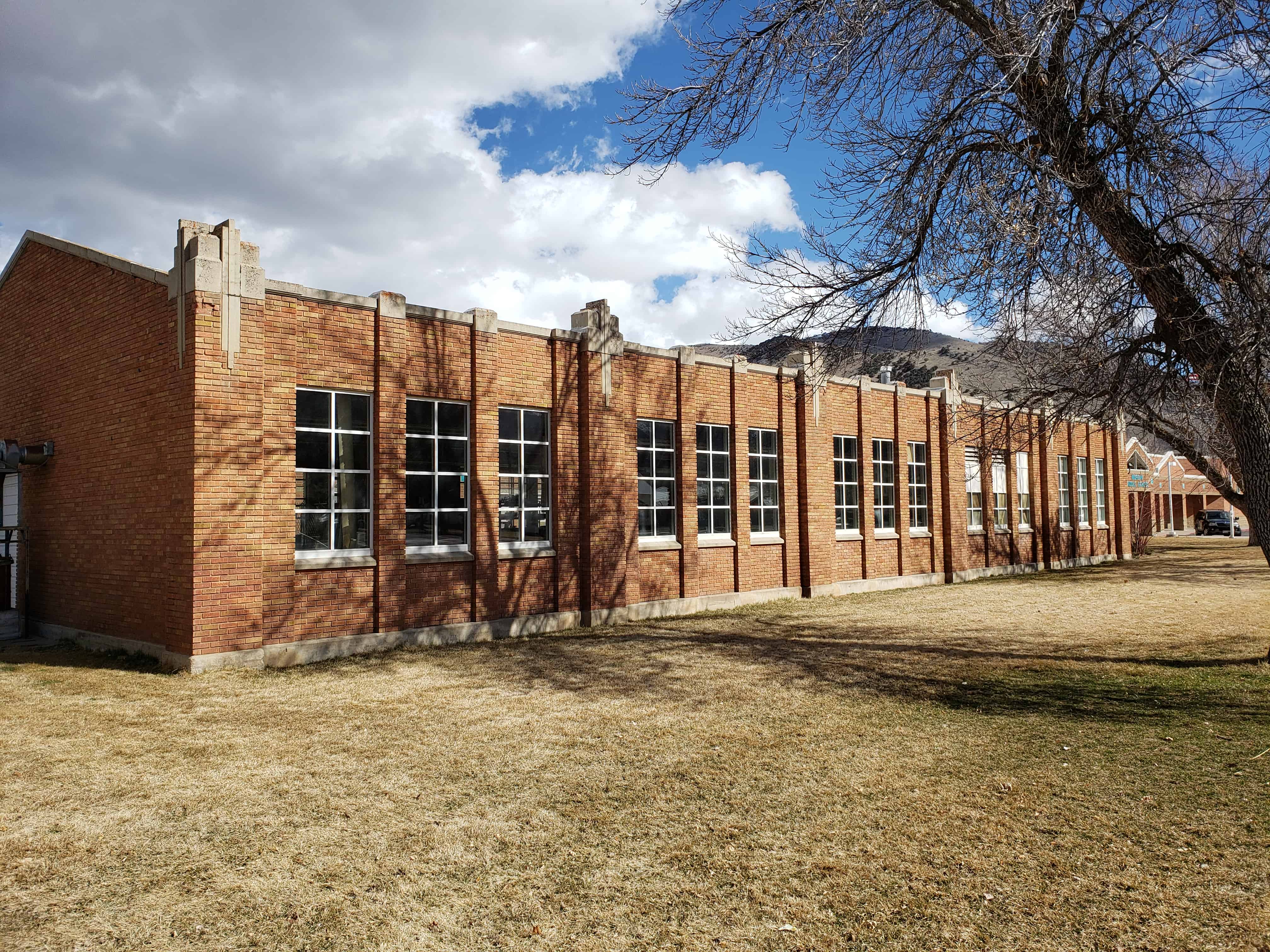
Located at 20 North 100 East in Morgan, Utah and added to the National Register of Historic Places (NRHP # 86000738) on April 9, 1986.
The Morgan High School Mechanical Arts Building is one of 232 buildings constructed in Utah during the 1930s and early 1940s under the Works Progress Administration (WPA) and other New Deal programs. Of those 232 buildings, 133 are still standing and are eligible for nomination to the National Register of Historic Places. Of the 232, 104 of them were public school buildings; 51 of them remain. In Morgan County 4 buildings were constructed, 2 of them are left.
This building was constructed in 1936 as part of a $155,000 Public Works Administration (PWA) building program in the Morgan County School District. Also included in the program was the construction of the Morgan Elementary School and extensive remodeling at Morgan High School. Though a new high school was built one block east of this site, this building is still in use by the Morgan Middle School.
The architects of the building are not known for certain, but it is likely that they were Scott & Welch of Salt Lake City, who are known to have designed the nearby elementary school, which was constructed at the same time in virtually the same style.
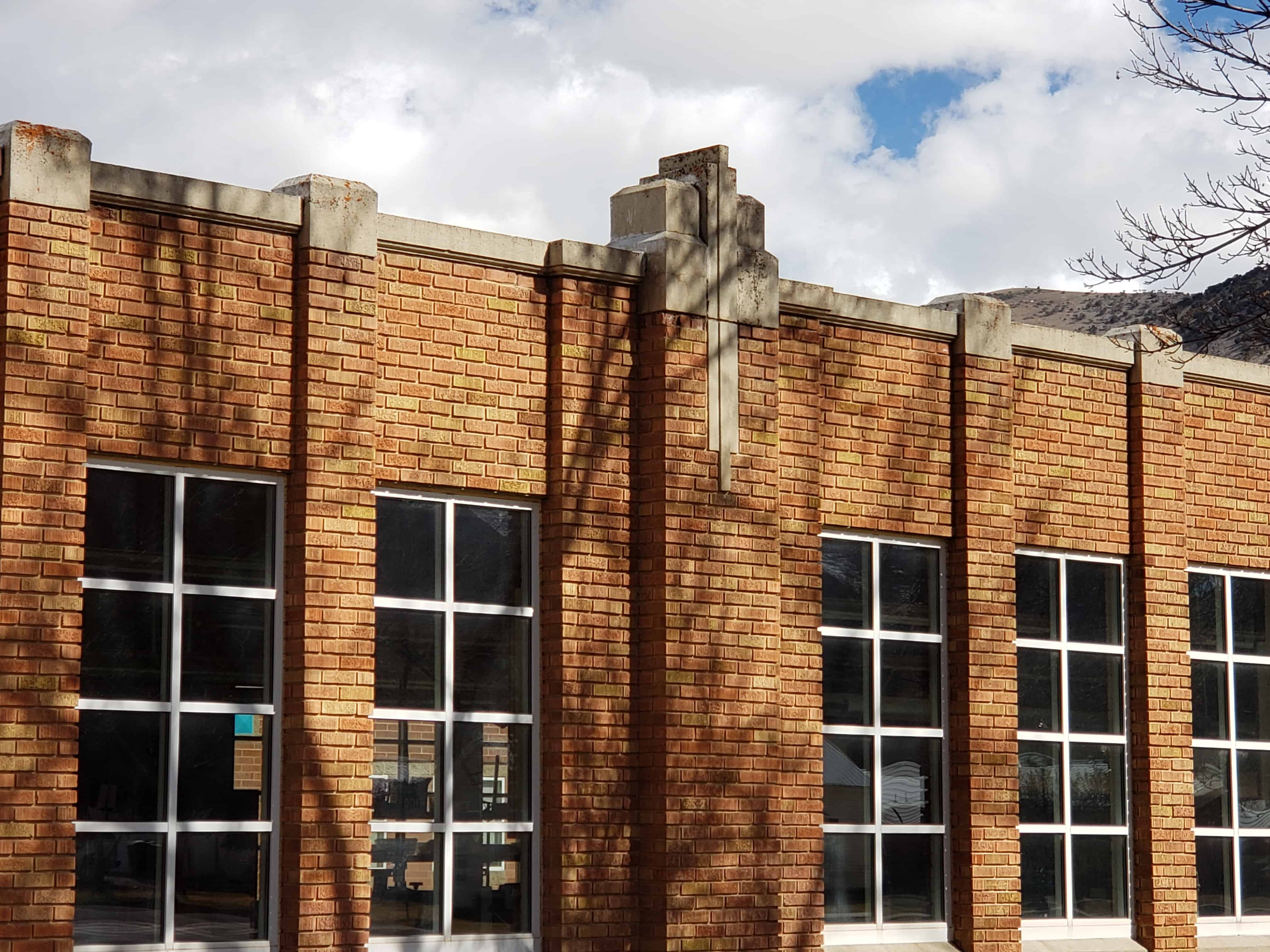
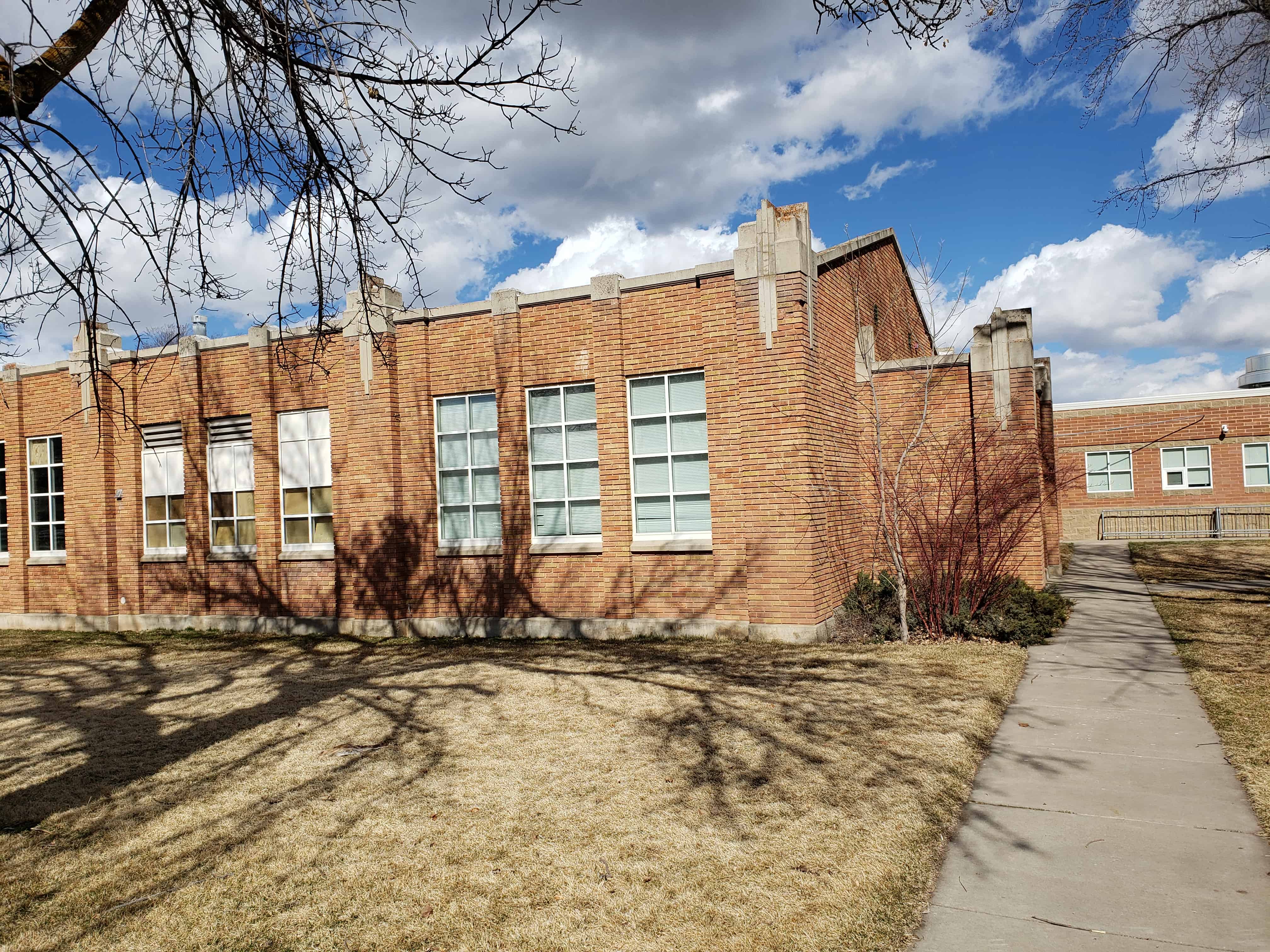
The Morgan High School Mechanical Arts Building is a one-story brick building that is constructed in the Art Deco style. It has a gable roof with a surrounding parapet wall. The building has a rectangular plan and there are no major extensions or additions. A projecting entrance vestibule is located on the narrow east end of the building. There are two doors along the north side of the building, and a doorway and garage entrance at the rear or west end. The walls have been broken up into vertical panels by low relief pilasters. The stylized geometric capitals on these pilasters are made of concrete and project upward through the coping at the edge of the roof, giving the building a crenelated appearance. The building remains in good original condition and there have been no major alterations on the exterior.
The Bonnyview School was one of Murray’s schools, a couple of the New Deal Funded Projects in Utah were related to the school, one to expand the school which is now demolished and another to build the rock walls that are still seen on the otherwise empty property.
I have loved driving by and seeing those rock walls, being reminded of the history.
The location is 4984 S Commerce Drive in Murray, Utah
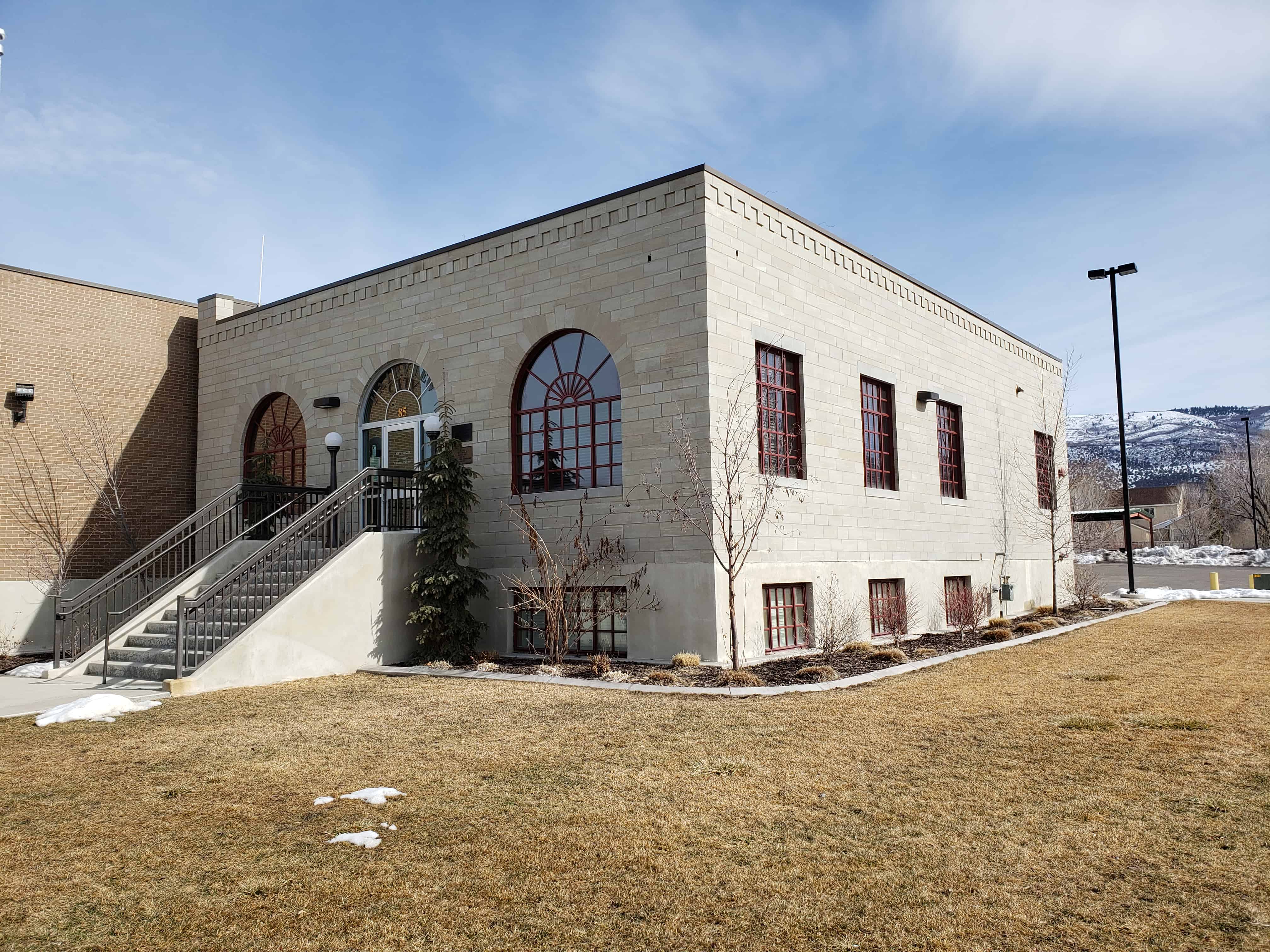
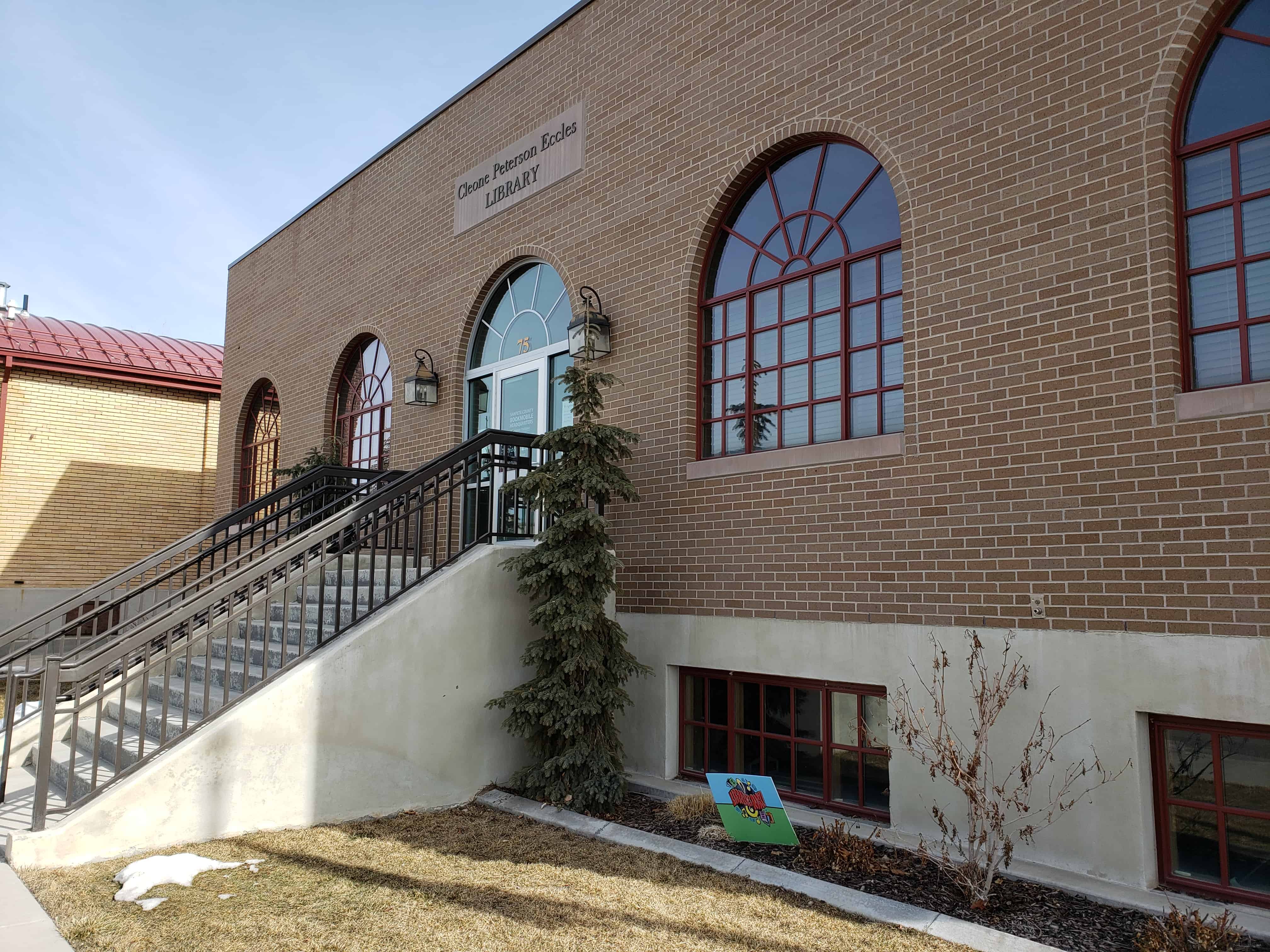
Built in 1936, the Fairview City Hall is part of the Public Works Buildings Thematic Resource nomination and is significant because it helps document the impact of New Deal programs in Utah, which was one of the states that the Great Depression of the 1930s most severely affected. In 1933 Utah had an unemployment rate of 36 percent, the fourth highest in the country, and for the period 1932-1940 Utah’s unemployment rate averaged 25 percent. Because the depression hit Utah so hard, federal programs were extensive in the state. Overall, per capita federal spending in Utah during the 1930s was 9th among the 48 states, and the percentage of workers on federal work projects was far above the national average. Building programs were of great importance. During the 1930s virtually every public building constructed in Utah, including county courthouses, city halls, fire stations, national guard armories, public school buildings, and a variety of others, were built under federal programs by one of several agencies, including the Civil Works Administration (CWA), the Federal Emergency Relief Administration (FERA), the National Youth Administration (NYA), the Works Progress Administration (WPA), or the Public Works Administration (PWA), and almost without exception none of the buildings would have been built when they were without the assistance of the federal government.
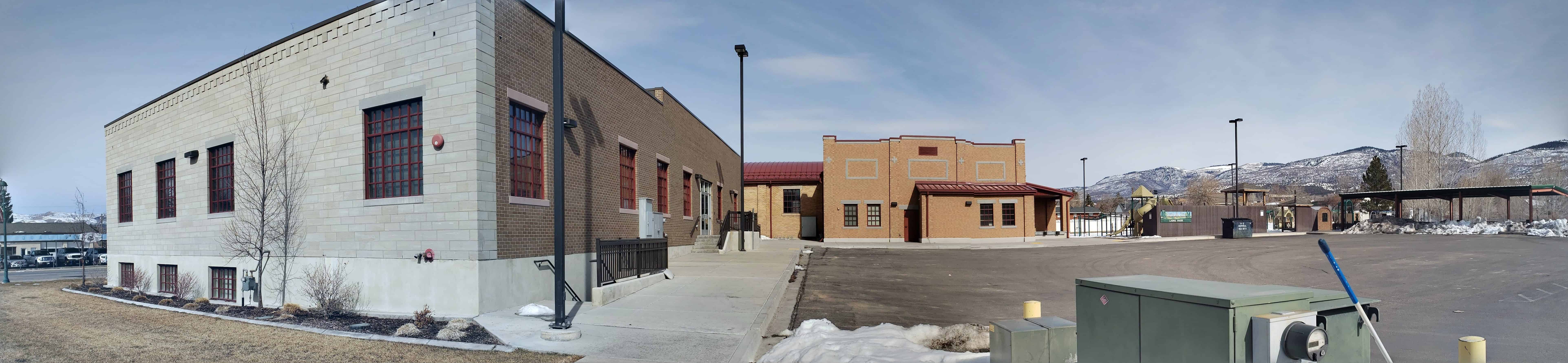
I was reading here that apparently it was demolished and then the some stone was used to rebuild it exactly the same from the exterior, with updated interiors.
The Fairview City Hall is one of 232 buildings constructed in Utah during the 1930s and early 1940s under the Works Progress Administration (WPA) and other New Deal programs. Of those 232 buildings, 133 are still standing and are eligible for nomination to the National Register of Historic Places. This is one of 22 city halls built, 19 of which are still standing. In Sanpete County 17 buildings were constructed, 13 of which remain.
The local newspaper recorded the construction of the building as follows. “Work has just begun on the new Fairview City Hall and library to be built at Fairview as a government aid project.
“It will be a two-story building and will be constructed of sawed native rock, known as blue sandstone. The building will be erected on Main Street on the corner lot south of the amusement hall and will have accommodations for city hall, library, jail, Legion hall, kitchen and serving room and two rest rooms. “Thirteen men will be employed during January and 20 from then until June when it is expected the project will be completed, said Oscar Amundsen, foremen. “The plans for the building were drawn by Hugh Anderson of Fairview. $10,000 was appropriated for the building but this amount is not enough to complete the project, stated Mr. Amundsen “‘ Little is known about the construction careers of Oscar Amundsen and Hugh Anderson. This building has continued to the present to serve as the city hall and library for the town of Fairview. ” – Mt Pleasant Pyramid, Jan 31, 1936, p.1.
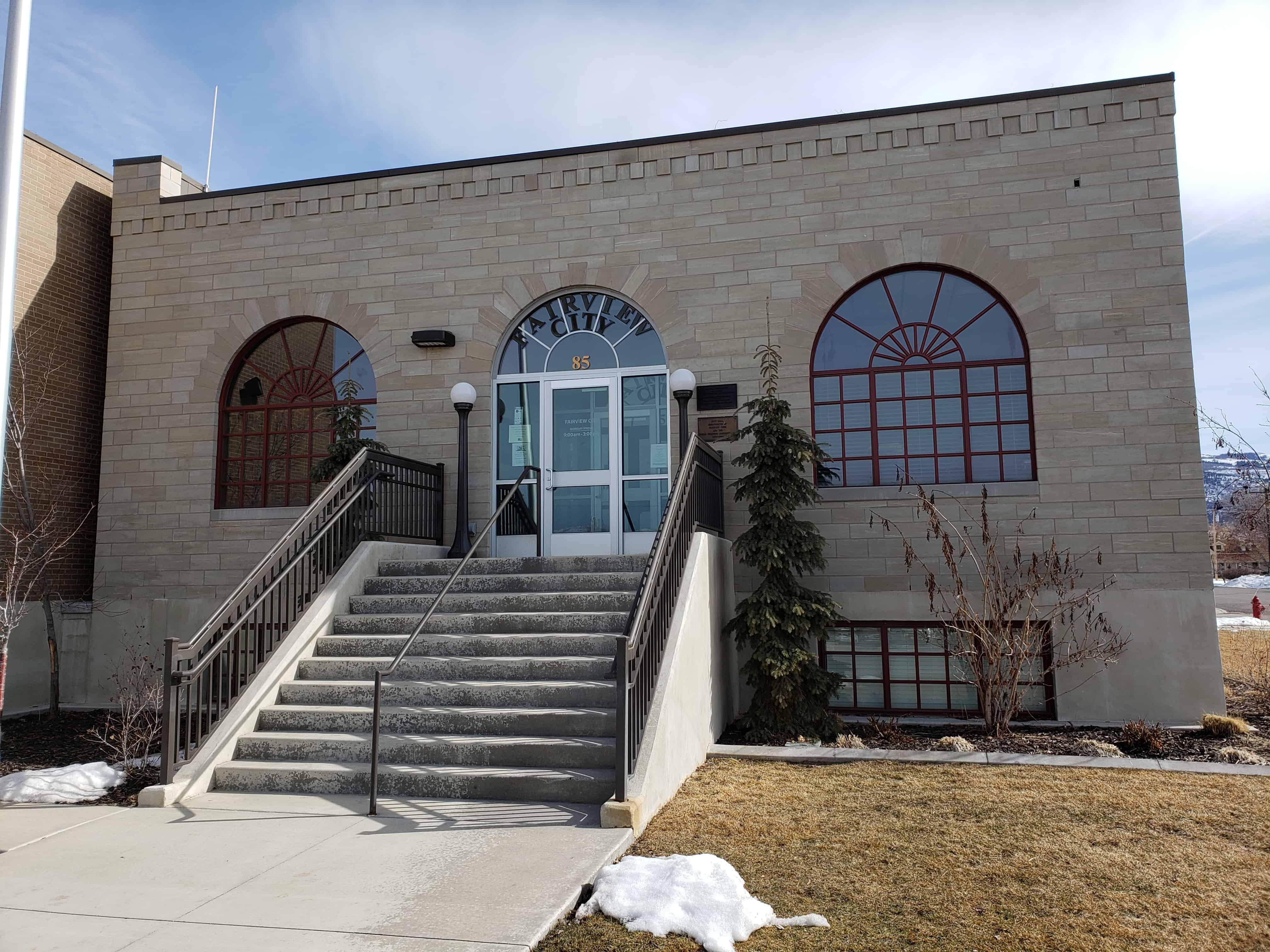
The Fairview City Hall, built in 1936, is a one-story stone building with a basically square plan, a raised basement, and a flat roof. There have been no major alterations made to the building.
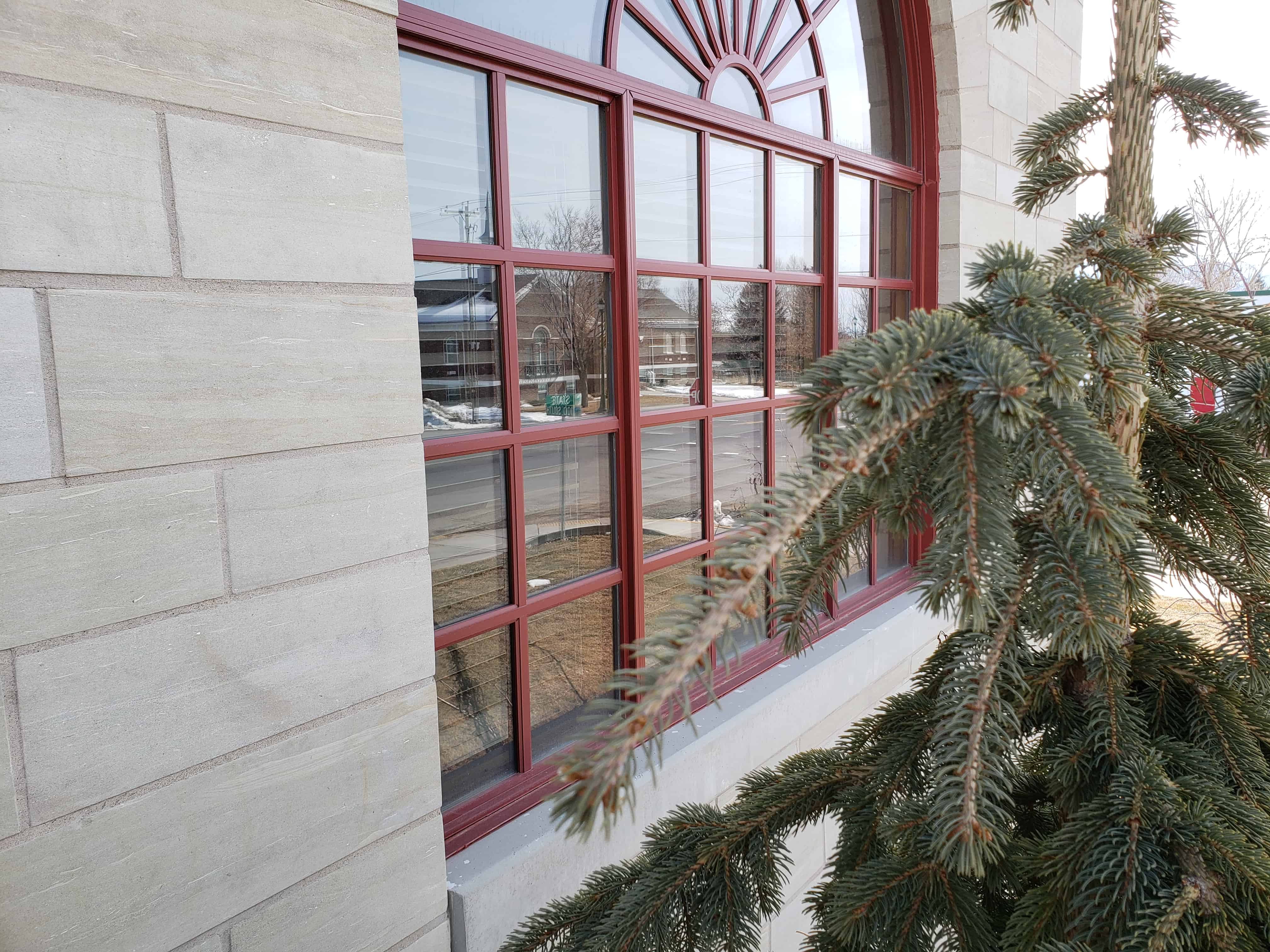
This building represents an excellent example of the stark, abstract classicism associated with the PWA Moderne architectural style in Utah. The principal facade is symmetrically divided into three bays. The central bay is narrower and contains the front door, while the flanking bays have slightly wider windows on both the main and basement levels. The windows are Palladian-inspired and tripartite, and are topped by elliptical fanlights. A similar arch is found over the front entrance. Openings on the sides and rear are simple rectangles. The building is constructed of the local oolite limestone, finely dressed to a smooth ashlar surface. A band of low-relief dentils run beneath the cement coping at the edge of the roof. A very small concrete block addition was built on the rear of the building at an unknown date. Because of its small scale and its location at the rear, that addition does not affect the historical integrity of the building.
The Great depression was extremely hard on Utah, federal agencies gave funding as part of the New Deal for projects to keep people working.
I’ve seen the number of new deal funded buildings/projects in Utah reported usually as 232 but also as 233 and 226 but personally I’ve counted 377.
Below are listed the WPA (Works Progress Administration), PWA (Public Works Administration), CCC (Civilian Conservation Corps) and other New Deal projects I’ve found and documented.
American Fork Training School (14 bldgs.) Elig., Part Doc. 5 dormitories, 2 parole cottages, superintendent’s residence, auditorium, custodial building, school building, dairy barn, employees building, shop building.
The text below is taken from the nomination form for the national historic register listing (#64000871):
The buildings included in the Public Works Buildings Thematic Resources nomination are significant because they help document the impact of New Deal programs in Utah, which was one of the states that the Great Depression of the 1930s most severely affected. In 1933 Utah had a unemployment rate of 36 percent, the fourth highest in the country, and for the period 1932-1940 Utah’s unemployment rate averaged 25 percent. Because the depression hit Utah so hard, federal programs were extensive in the state. Overall, per capita federal spending in Utah during the 1930s was 9th among the 48 states, and the percentage of workers on federal work projects was far above the national average. Building programs were of great importance. During the 1930s virtually every public buildings constructed in Utah, including County courthouses, city halls, fire stations, national guard armories, public school buildings, and a variety of others, were built under federal programs by one of several agencies, including the Civil Works Administration (CWA), the Federal Emergency Relief Administration (FERA), the National Youth Administration (MYA), the Works Progress Administration (WPA), or the Public Works Administration (PWA). Almost without exception none of the buildings would have been built when they were without the assistance of the federal government. Only 33 of the 130 potentially eligible public works buildings currently meet the 50-year requirement for National Register listing, therefore they are the only ones being nominated at this time. Nine public works buildings have previously been either listed in the National Register or determined eligible.
During the decade of the 1930s the United States experienced the most serious economic disaster in its history, and Utah was seriously affected. Every generation before 1930 had experienced a time of mass unemployment. Often it happened several times in one person’s lifetime. Usually the slide into the pit was steep and the climb out slow. But the depression that began in 1929 was different. It came harder and faster; it engulfed a larger part of the population; it 1 aster longer; and it did far more and far worse damage than any before or since. Men groped for superlatives to express the meaning and impact of the crisis. Writer Edmund Wilson compared it to an earthquake. Former governor of New York, Alfred E. Smith, said that the depression was equivalent to war, while Supreme Court Justice Louis D. Brandeis declared that it was worse than war. All agreed with Philip La Follette, governor, of Wisconsin, that “we are in the midst of the greatest domestic crisis since the Civil War.”
The chain reaction of unemployment spread slowly. At first those in marginal jobs were hit hardest while those in better jobs moved downward. In time, However, millions who had never been unemployed for any length of time were jobless and unable to find work. In 1929 3 million people in the United States were without work; by 1933 the total was 16 million. In 1939 10 million people were still unemployed. Based on a study of 31,159 jobless men, a Pennsylvania commission reported that the typical unemployed person in that state was 36 years old, native-born, physically fit, and with a good previous work record. A study in Utah found that people employed on Works Progress Administration (WPA) projects had essentially the same kinds of characteristics.
In Utah at the beginning of 1930 a total of 8,700 people out of a work force of 170,000 were unemployed. In 1931 unemployment in the state rose to over 36,000 and in 1932 it reached 61,500. That was 35 percent of the workforce, more than 1 of every 3 workers, and the fourth highest unemployment rate in the nation. Between 1932 and 1940 the unemployment rate never fell below 20 percent, and for the period as a whole it averaged 26 percent. Income per person fell sharply as a result of the decline in employment and the reduction in wages for those who had jobs. In 1929 annual per capita income in Utah was $537. By 1932 it had dropped to half that, $276, and in 1940 had risen to only $480. By March 1933 more than 161,000 people in Utah 32 percent of the population were receiving all or part of their food, clothing, shelter, and other necessities from government relief funds.
To some the solution seemed to be a return to the farm, but the economic dry rot of the 1930s afflicted the countryside as well as the city. Between 1929 and 1932 gross farm income in the United States fell by more than half, to a point lower than it had been for 40 years. Season after season individual farmers suffered from the miserably low prices they received for their products, and it made little difference whether they were Alabama cotton growers, Iowa hog farmers, Wisconsin dairy producers, California citrus ranchers, or Utah sheepmen. All of them considered themselves lucky if they could sell their products for enough to meet their costs of production. By 1932 the farm prices of crops in Utah had decreased to 60 percent of the 1926-1931 average and the price of livestock to 48 percent. Overall farm income had declined by 50 percent.
me had declined by 50 percent. Faced with a depression of unprecedented proportions, the people of the United States finally turned to the federal government for help. The problems of industrial capitalism had proven too heavy for individuals, private charities, or local governments to handle. The federal government responded with the New Deal, a barrage of government programs designed to provide relief and jobs, and also to reform the economic system in way that would prevent future depressions.
The Great Depression changed the American people’s conception of the proper role of government in the economy. Buffered and bewildered by the depression, Americans abandoned once and for all the doctrine of laissezfaire. The previous conviction had been that depressions were inevitable, natural disasters, like dust storms, that occurred periodically and about which nothing could be done. In 1931, for example, President Herbert Hoover criticized those who “have confidence that by some device we can legislate ourselves out of a world-wide depression. Such views are as accurate as the belief that we can exorcise a Caribbean hurricane.” Hoover’s views, however, were soon rejected. From the experience of the depression, people came to believe that something could and should be done when economic disaster struck and that the federal government was the one to do it.
Almost everything the federal government did during the depression era made inroads into the hitherto private preserves of business and the individual.
The federal government subsidized farmers, guaranteed bank deposits, provided unemployment compensation and social security payments, subsidized the arts and low-income housing, and assisted labor unions in organizing. Most of those new measures survived the period of the crisis to take their place as fundamental elements in the structure of American life. In fact, much of what is taken for granted today as the legitimate function of government and the social responsibility of business began only with the legislation of the 1930s.
Because the depression hit Utah so hard, federal programs in the state were extensive. Between 1933 and 1939 federal agencies spent nearly $300 million in federal assistance in Utah. That, to the total spent in many other states, was not a high absolute amount but it was 15 times more money than the amount of federal taxes that Utahns sent to Washington during the same period, and overall per capita federal spending in Utah was 9th among the 48 states. Utah, for example, ranked 1st in per capita expenditures from the Home Owners Loan Corporation, second in the amount of benefits per capita from the Social Security Administration, 5th in National Youth Administration (NYA) expenditures per capita, 8th in Federal Emergency Relief Administration (FERA) expenditures per capita, and 18th in Works Progress Administration (WPA) expenditures per capita.
Among the myriad of New Deal agencies established were ones that provided relief to individuals. It was of two kinds: direct relief, that is the provision of food, clothing, medical care, and other services and commodities; and work relief, that is employment on government public works projects for those people unable to find employment in the private sector.
There were 6 main agencies that provided work relief: the Civil Works Administration (CWA); the Federal Emergency Relief Administration (FERA); the Public Works Administration (PWA); the Works Progress Administration (WPA); the National Youth Administration (NYA); and the Civilian Conservation Corps (CCC). With the exception of the CCC, all of these agencies undertook the construction of new buildings (as well as the remodeling of old ones) as part of the work they carried out.
The CWA was the New Deal’s first work relief program. Established in November 1933, it lasted only 5 months but during that time employed more than 4 million people, undertook 400,000 projects nationwide, and spent $1 billion. It undertook a variety of projects including the construction or improvement of roads and highways, schools, parks, playgrounds, swimming pools, airports, waterways, in short the kind of construction projects that subsequent New Deal agencies would typically be involved in.
In Utah the CWA employed more than 20,000 people during its few months of existence and spent $5.2 million.
The FERA succeeded the CWA. It had both a works division and a direct relief division and was funded jointly by the federal government and by each individual state. In Utah a special session of the legislature in August 1933 established a 2 percent general sales tax to provide state funds for the FERA (known in Utah as the Utah Emergency Relief Administration, or UERA). It existed from the spring of 1934, when it succeeded the CWA, to the fall of 1935. During that time the federal government provided about 90 percent of its funding and the state of Utah about 10 percent.
To be eligible for funding a project had to be of “a public character and of economic or social benefit to the general public or to publicly-owned institutions.” Projects uncompleted by the CWA were taken over by the FERA and carried to completion and subsequent projects included the range that CWA projects had, from construction of public buildings to building water supply reservoirs.
With the establishment of the WPA in 1935 the projects of the FERA were transferred to it. The longest-lasting and most extensive New Deal relief program, in Utah and the rest of the nation, it continued until 1943. In addition to a construction or “Works” division, the WPA had a vast array of programs: art; music; writer’s; historical, cultural records surveys and inventories; adult education; recreation; library services, clerical assistance; public administration; surveys and investigations; clothing; commodity distribution; food preservation, gardening; school lunch; health; and child protection.
In Utah the Works Division undertook a variety of projects. It constructed nearly 5,000 miles of new roads and highways and repaired another 2,000 miles. It built or improved 13,700 bridges and culverts, 30 parks, 161 playgrounds and athletic fields, and 23 swimming pools. It built 421 new buildings or additions to existing buildings and remodeled or “improved” 746 more.
The peak of WPA employment in Utah was in the fall of 1936 when more than 17,000 Utahns were at work on WPA projects. Average WPA employment for the life of the agency was about 12,000.
The PWA was established in 1933 to stimulate industry and put men back to work by constructing public buildings, bridges, and other heavy and durable facilities and helping state and local governments in building their own public works. During most of the time it was in existence, from 1933 to 1939, projects were financed by a 45 percent grant from PWA funds with the remaining 55 percent of the cost supplied by the local applying agency. In some instances PWA not only advanced 45 percent of the cost by outright grant but loaned the applicant part of the remainder of the cost as well. During its lifetime the PWA spent more than $6 billion and employed 4 million people on over 34,000 projects. The estimate is that it built more than 70 percent of the new educational buildings in the United States during the 1930s and 35 percent of the hospitals and other public health facilities.
The NYA was established in 1935 to provide jobs for young people between the ages of 16 and 25 both in and out of school. From 1935 to 1939 the NYA program in Utah expended $540,000 of which about half was spent for work projects to employ out-of-school youth and the other half for jobs to employ high school and college students. Mainly high school students were employed in such jobs as clerical work for principals and teachers, supervision of playground activities, assistance in libraries and cafeterias, and repair of classroom equipment. College students worked in college offices, libraries, museums, assisted professors with research, graded papers, and were employed in the care and keeping of campus grounds. The NYA undertook only a small building program in Utah, mainly of modest buildings. Under it fewer than half a dozen new buildings were constructed and 2 or 3 that many old ones were remodeled.
The result of this activity by these federal agencies was for more than a decade, throughout the 1930s and into the 1940s, virtually every public building constructed in Utah was done so under federal government programs. Those buildings included a diverse group: college and university gymnasiums, dormitories, administration buildings, and classrooms; elementary and high school buildings; buildings for various state agencies including the School for the Deaf and Blind, the State Training School for retarded citizens, the State Tuberculosis Sanitarium, the State Industrial School, and the State Mental Hospital; National Guard Armories; county courthouses; city and town halls; civic auditoriums; community recreation centers; libraries; fire stations; police stations; and miscellaneous buildings such as a city golf course club house and girl and boy scout cabins.
The buildings included in this nomination are significant, then, because they document in a clear, even dramatic way the impact the Great Depression and the relief agencies of the New Deal had in Utah.
February 1986 – Following is a revised statement of significance that justifies the exceptional significance of the resources included in this thematic nomination.
The buildings included in the Public Works Buildings Thematic Resources nomination are significant because they help document the impact of New Deal programs in Utah, which was one of the states most severely affected by the Great Depression. In 1933 Utah had an unemployment rate of 36 percent, the fourth highest in the country, and for the period 1932-1940 Utah’s unemployment rate averaged 25 percent. Because the depression hit Utah so hard, federal programs were extensive in the state. Overall, per capita federal spending in Utah during the 1930s was 9th among the 48 states, and the percentage of workers on federal work projects was far above the national average. Building programs were of great importance. They offered not only temporary work relief, but also provided long-term benefits to the communities and the state in the form of improved public facilities, including county courthouses, city halls, libraries, national guard armories, public school buildings, and a variety of others. During the 1930s virtually every public building constructed in Utah was built under federal programs by one of several agencies, including the Civil Works Administration (CWA), the Federal Emergency Relief Administration (FERA), the National Youth Administration (NYA), the Works Progress Administration (WPA), or the Public Works Administration (PWA). Almost without exception none of the buildings would have been built when they were without the assistance of the federal government. Over 230 public works buildings were constructed in Utah between 1933 and 1943 as part of the federal relief effort. Oust over half of those buildings remain standing and well preserved, and though many of them are less than 50 years old they are considered eligible for listing in the National Register because of the exceptionally significant role of federal public works building projects in Utah’s history.