• About JacobBarlow.com
  • Cemeteries in Utah
  • D.U.P. Markers
  • Doors
  • Exploring Utah Email List
  • Geocaching
  • Historic Marker Map
  • Links
  • Movie/TV Show Filming Locations
  • Oldest in Utah
  • Other Travels
  • Photos Then and Now
  • S.U.P. Markers
  • U.P.T.L.A. Markers
  • Utah Cities and Places.
  • Utah Homes for Sale
  • Utah Treasure Hunt

JacobBarlow.com

~ Exploring with Jacob Barlow

JacobBarlow.com

Tag Archives: Salt Lake City

Z.C.M.I.

08 Thursday Feb 2018

Posted by Jacob Barlow in Uncategorized

≈ 4 Comments

Tags

Co-op, Historic Buildings, LDS Church, Salt Lake City, Salt Lake County, utah, Z.C.M.I.

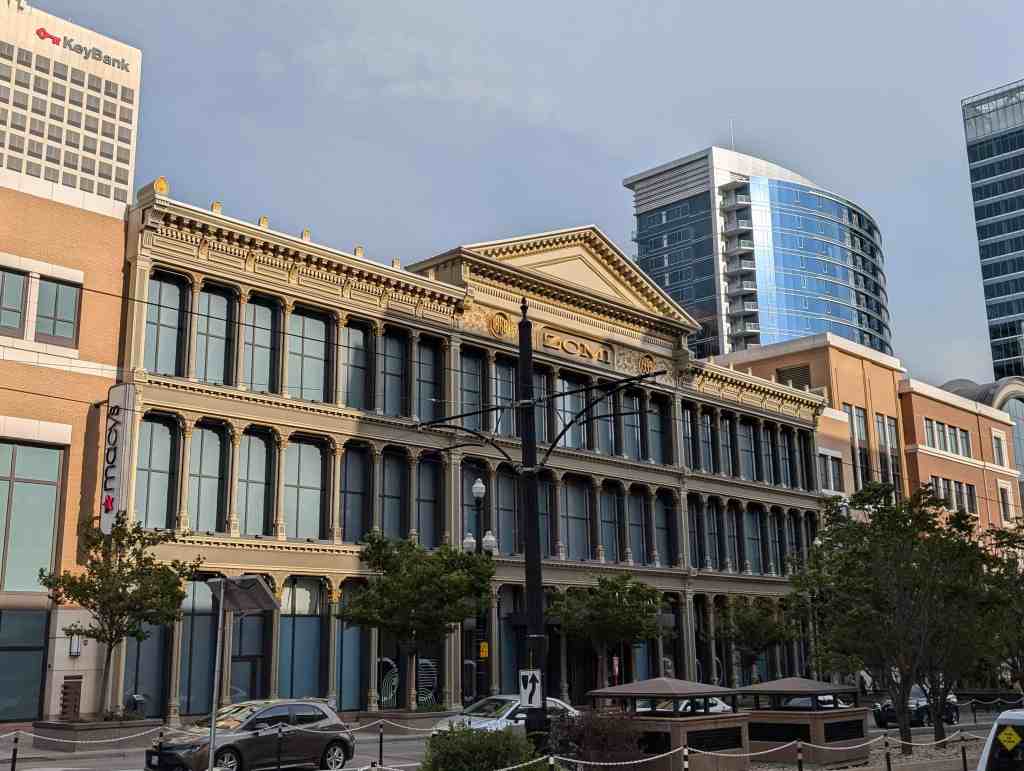
2017-12-02 15.07.44

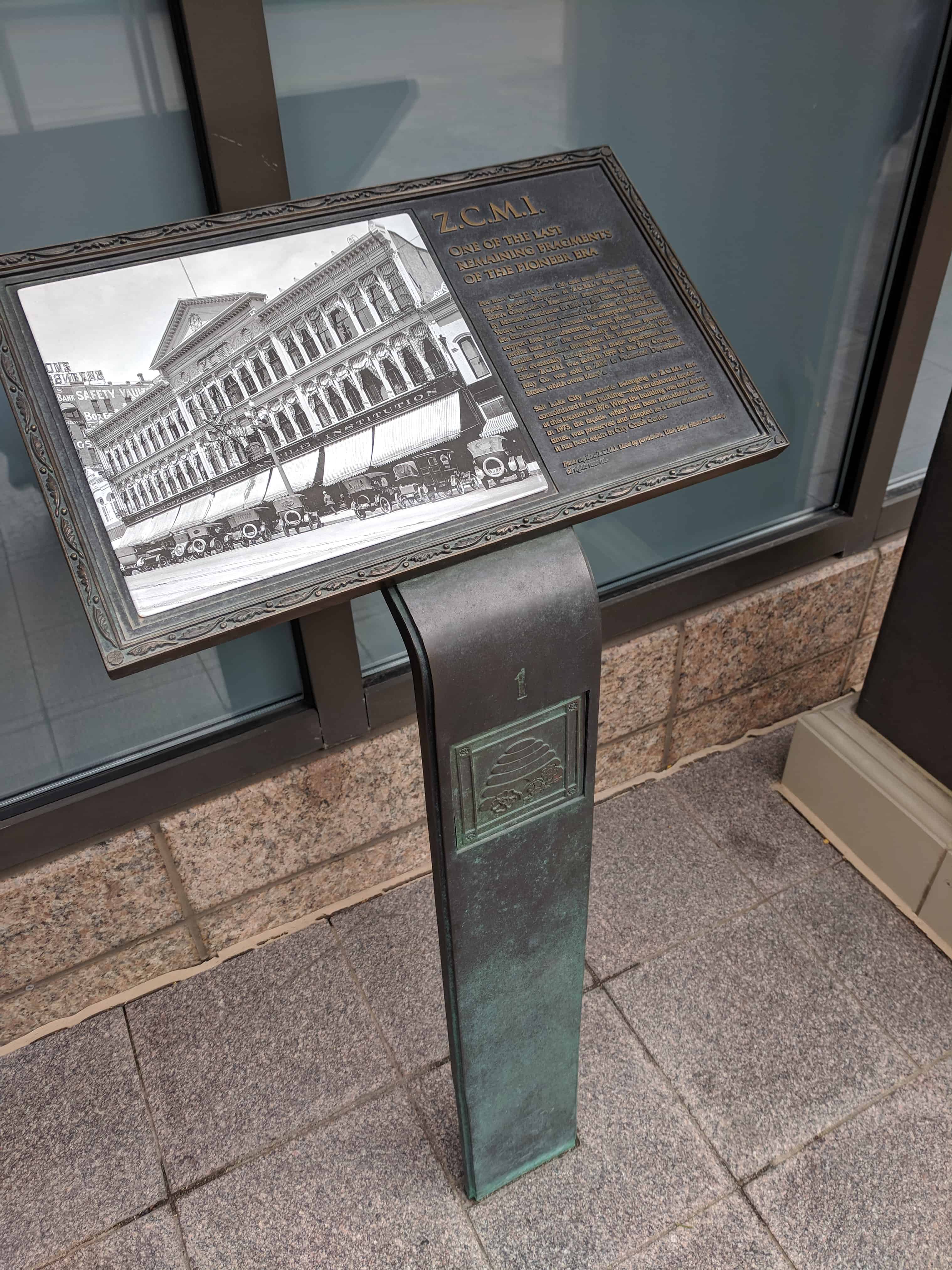
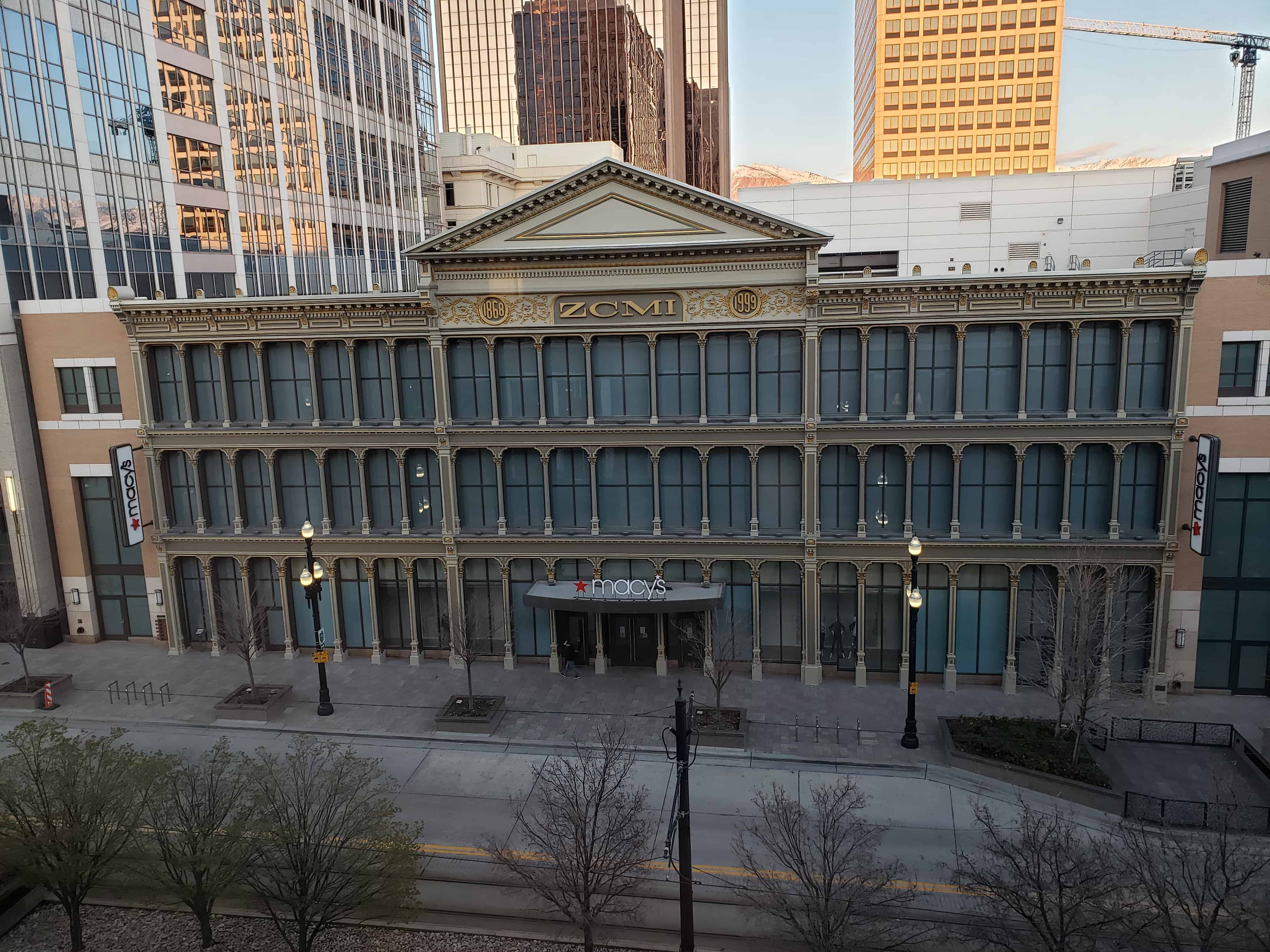
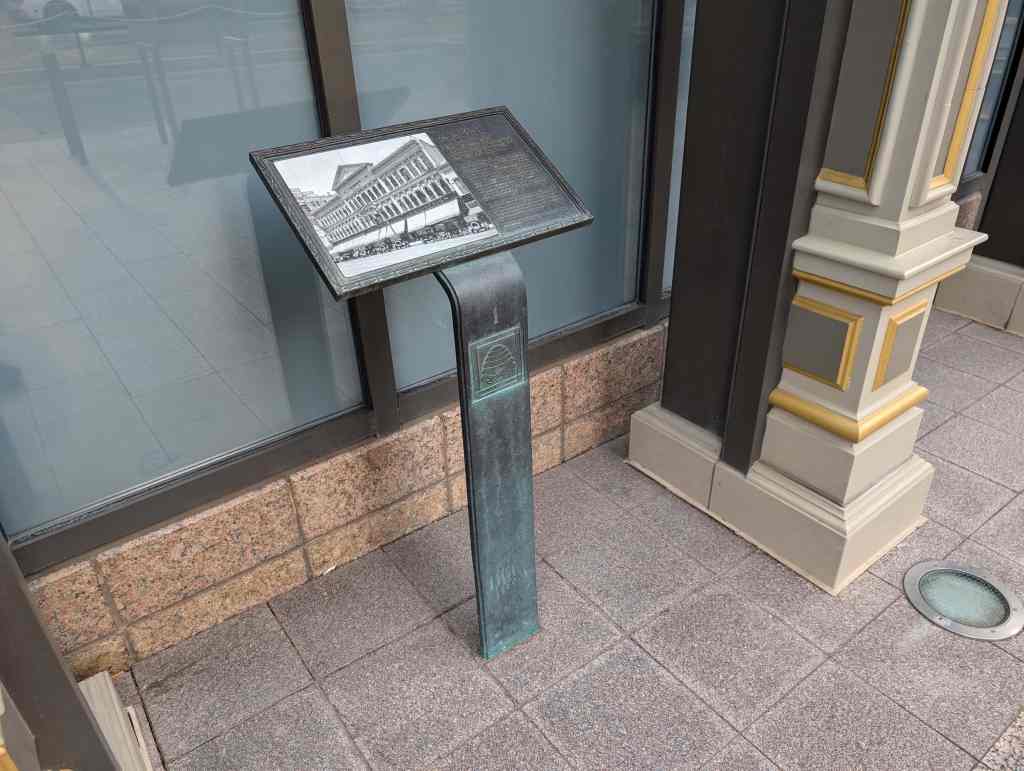
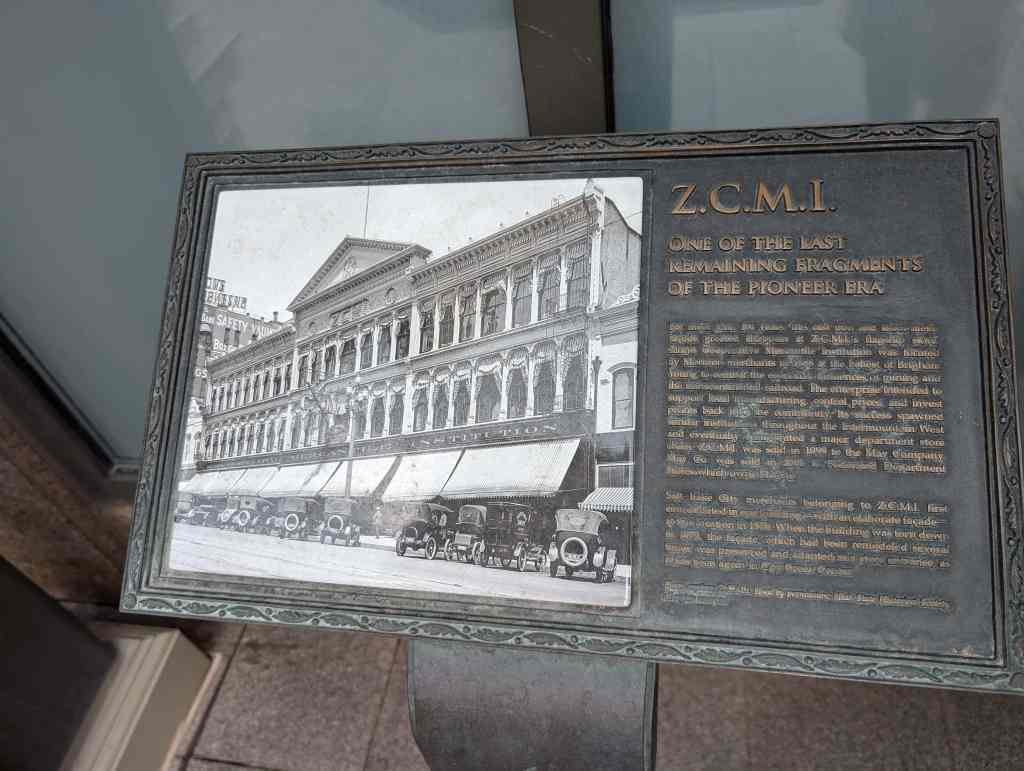
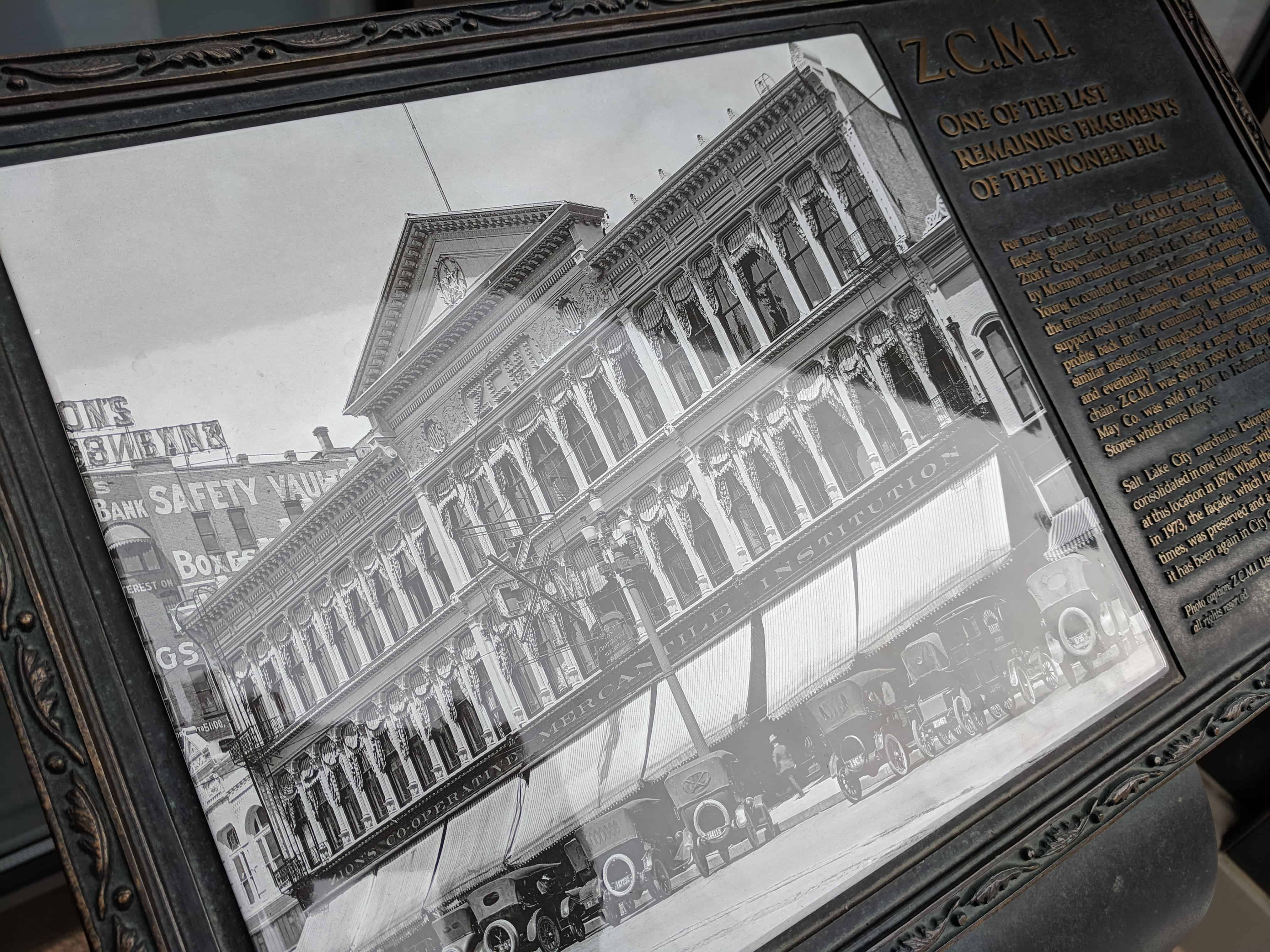
Z.C.M.I. – One of the last remaining fragments of the pioneer era

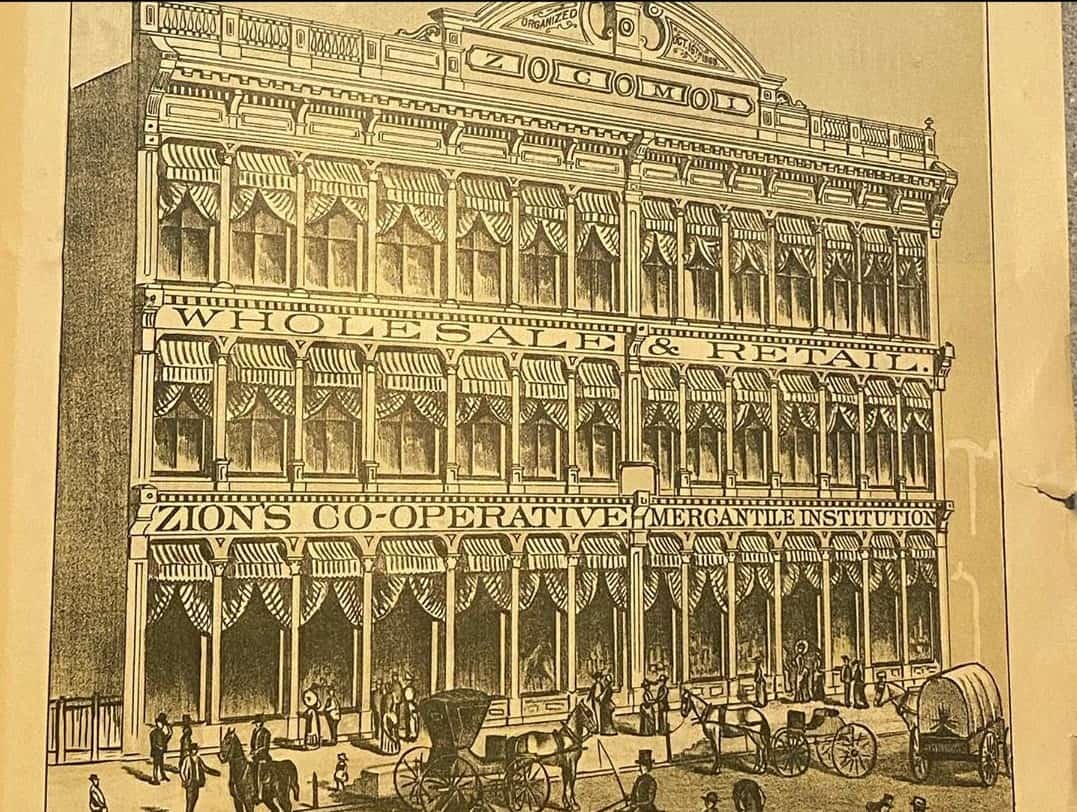
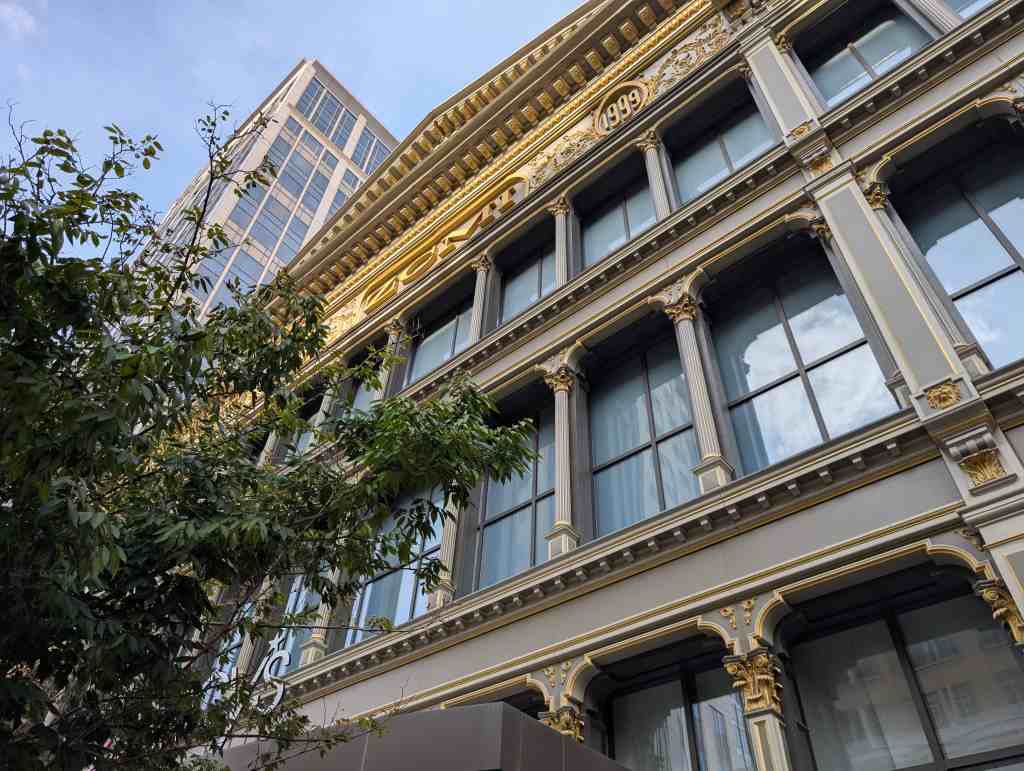
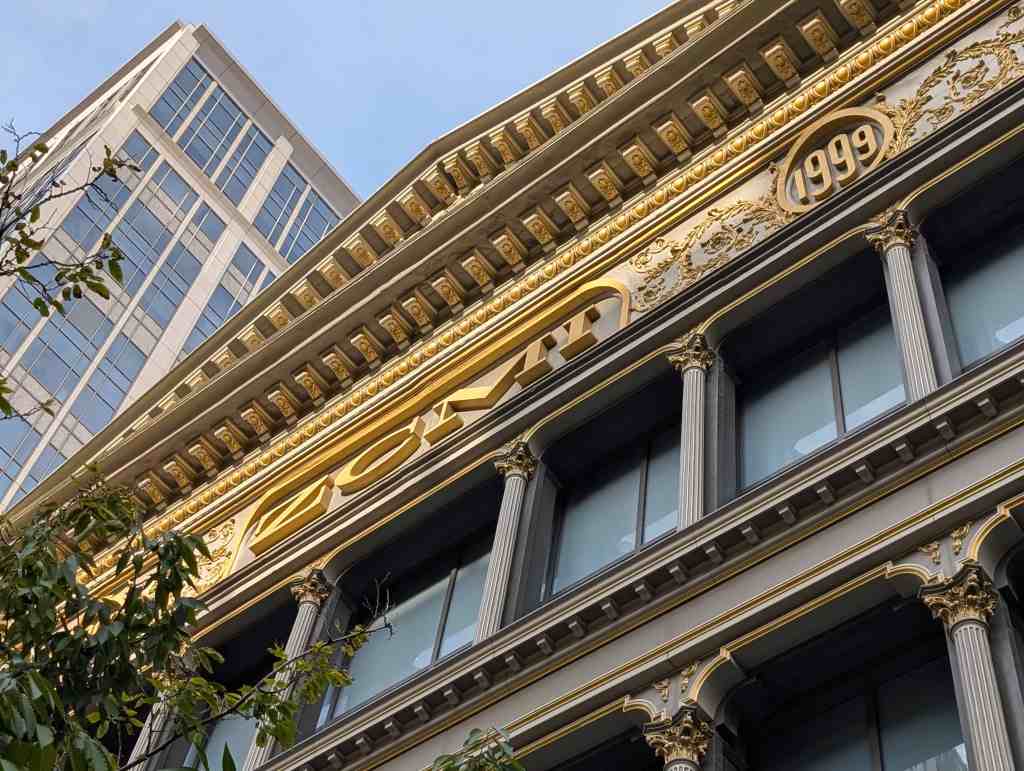
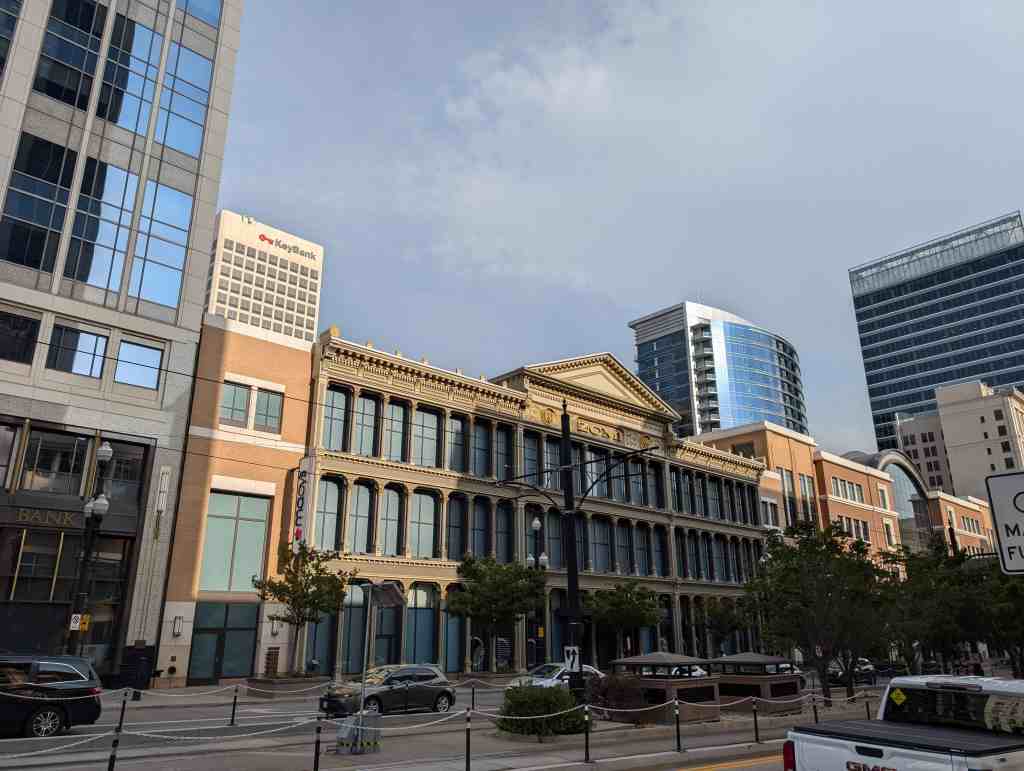
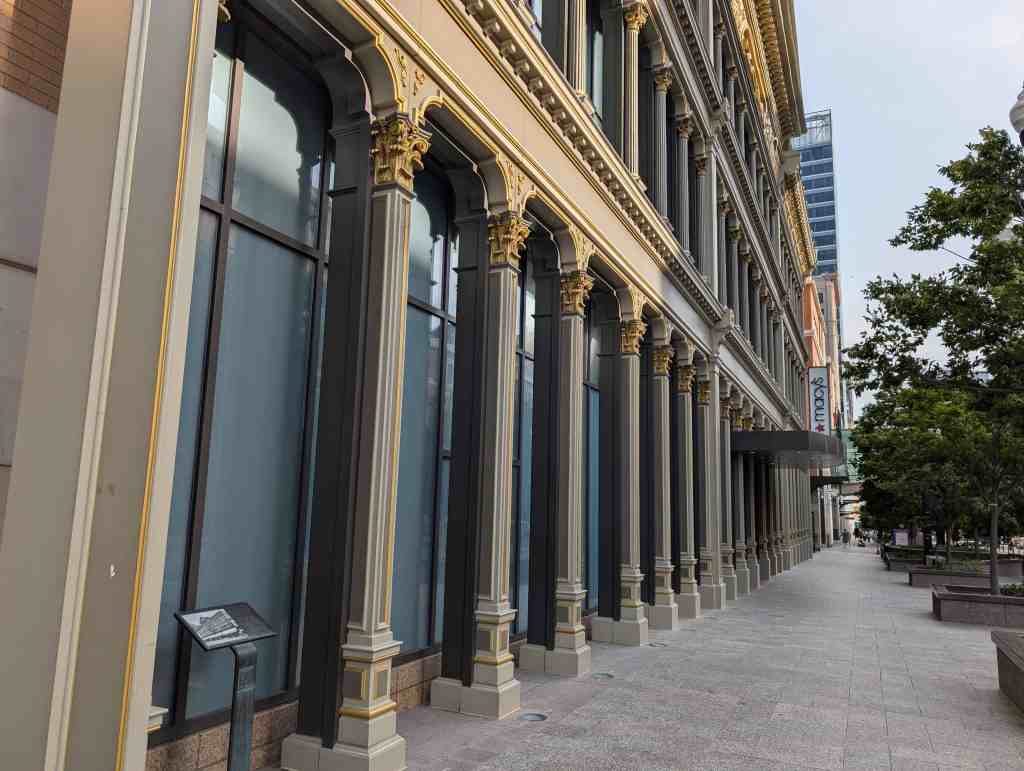
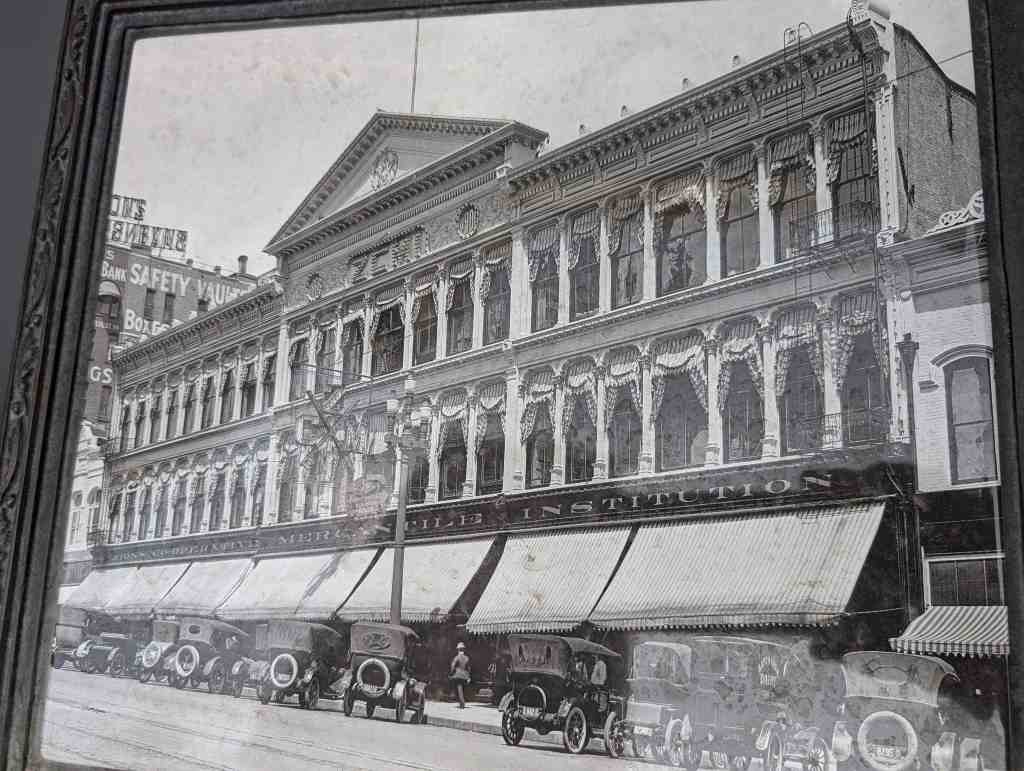
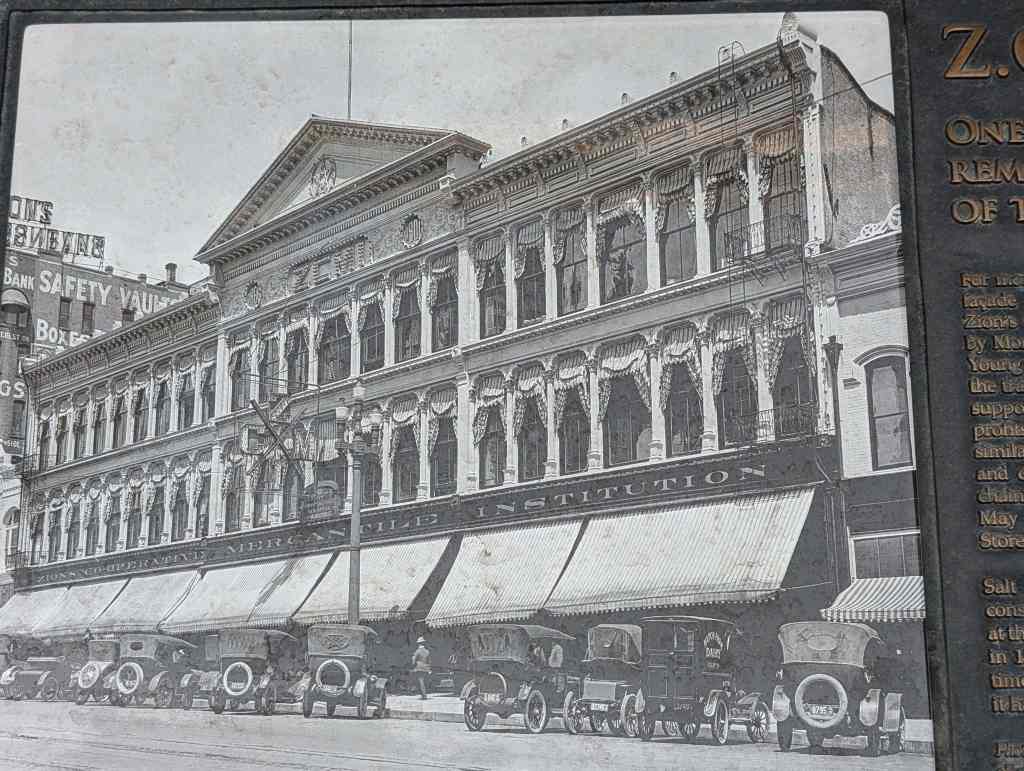
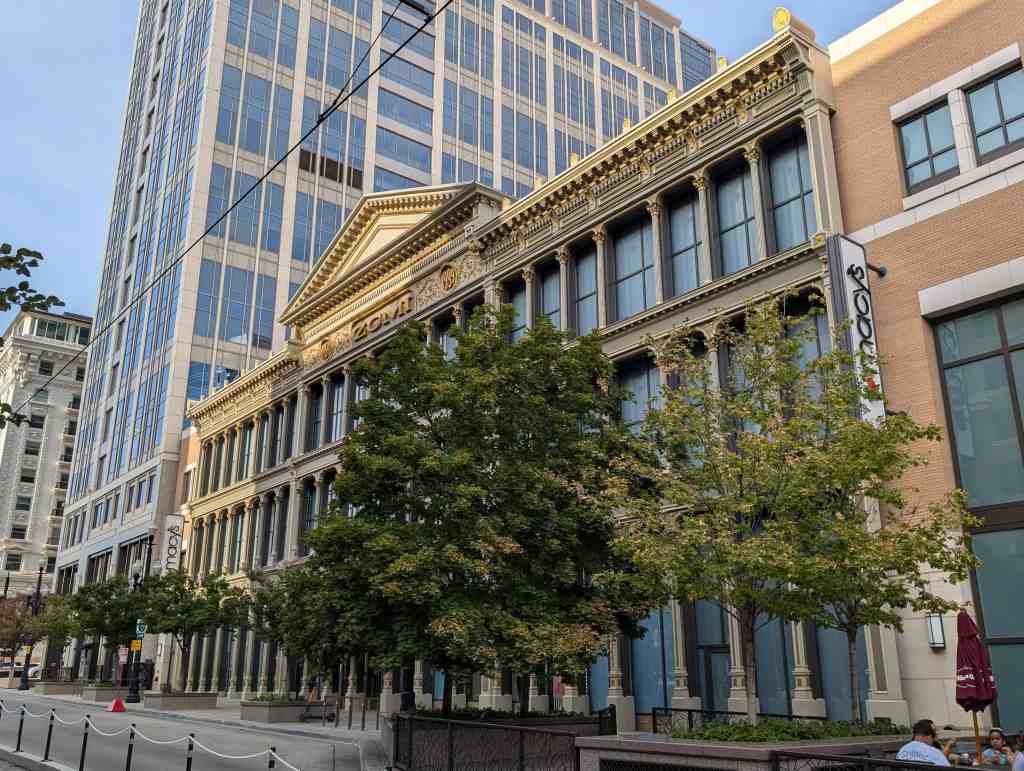
For more than 100 years, this cast iron and sheet metal facade greeted shoppers at Z.C.M.I.’s flagship store.  Zion’s Cooperative Mercantile Institution was formed by Mormon merchants in 1868 at the behest of Brigham Young to combat the economic influences of mining and the transcontinental railroad.  The enterprise intended to support local manufacturing, control prices, and invest profits back into the community.  Its success spawned similar institutions throughout the Intermountain West and eventually inaugurated a major department store chain.  Z.C.M.I. was sold in 1999 to May Company.  May Co. was sold in 2005 to Federated Department Stores which owns Macy’s.

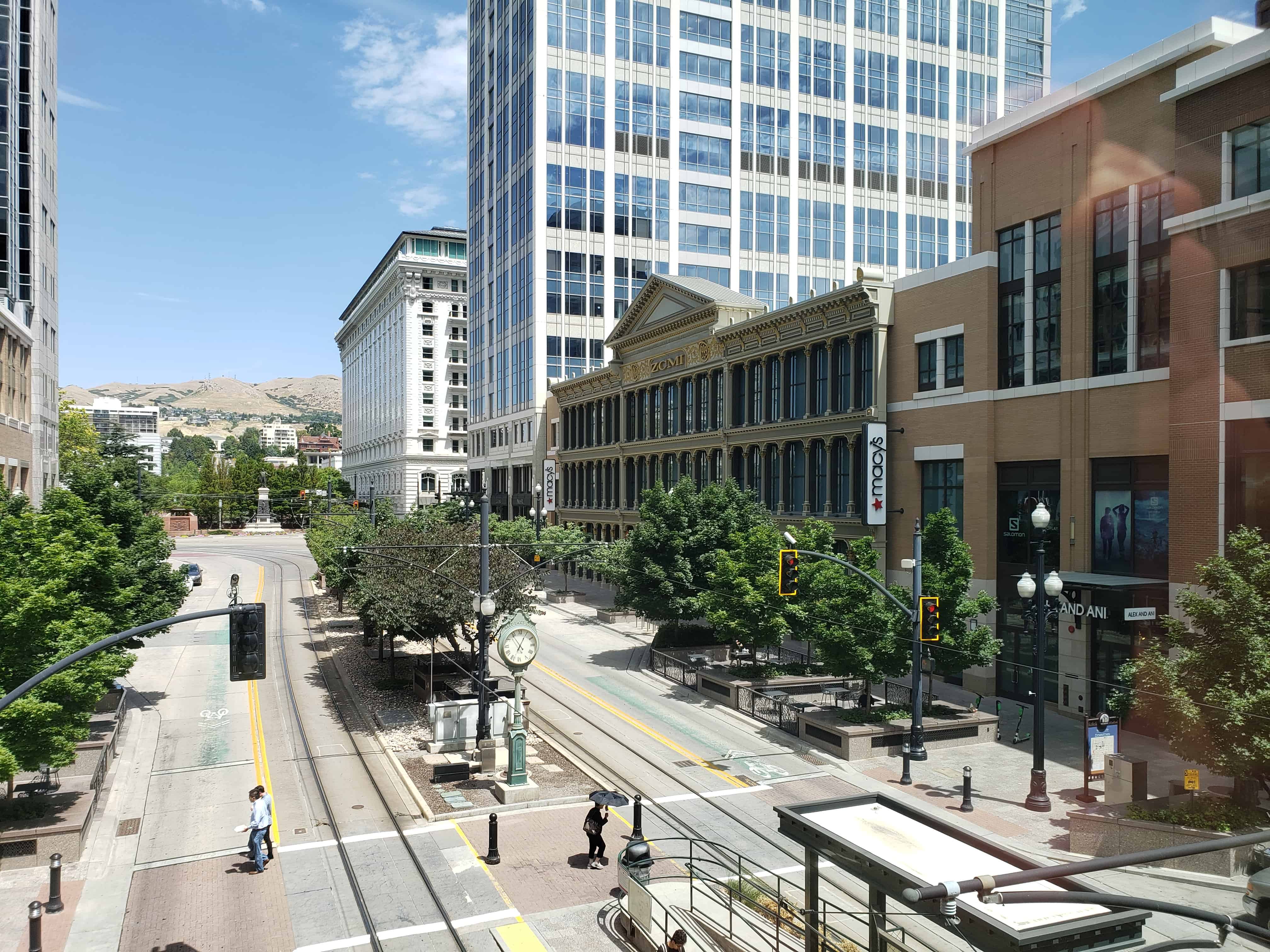
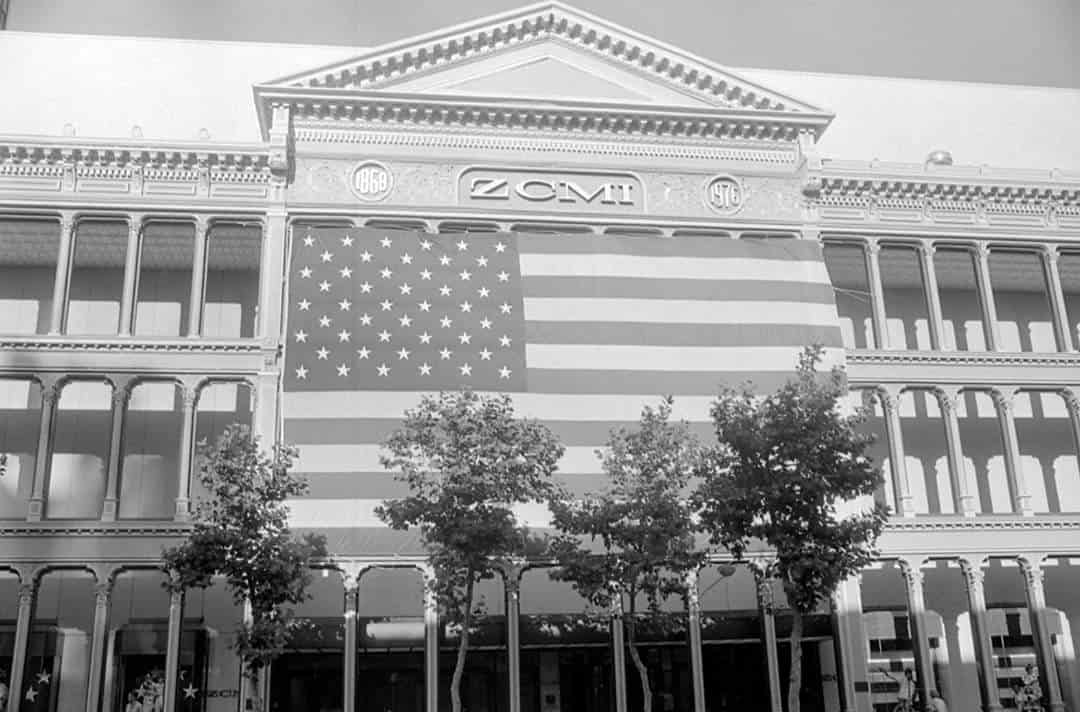
Salt Lake City merchants belonging to Z.C.M.I. first consolidated in one building – with an elaborate facade – at this location in 1876.  When the building was torn down in 1973, the facade, which had been remodeled several times, was preserved and adapted as a store entrance, as it has been again in City Creek Center.

Related posts:

  • Historic Buildings in Salt Lake City
  • Z.C.M.I.

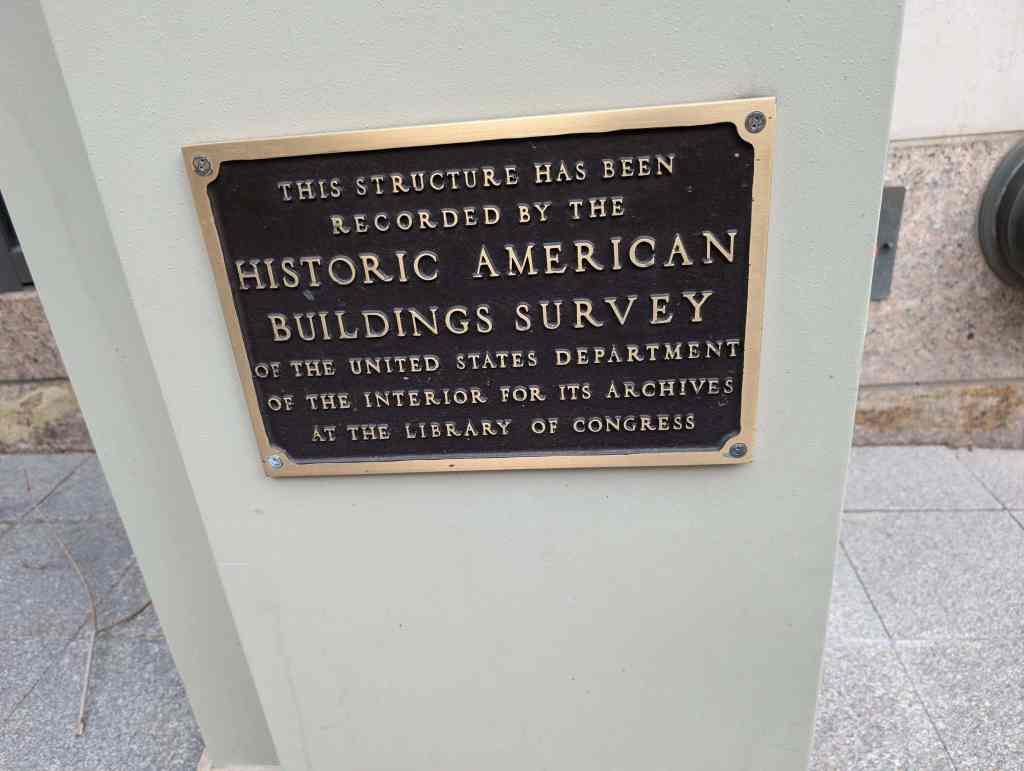
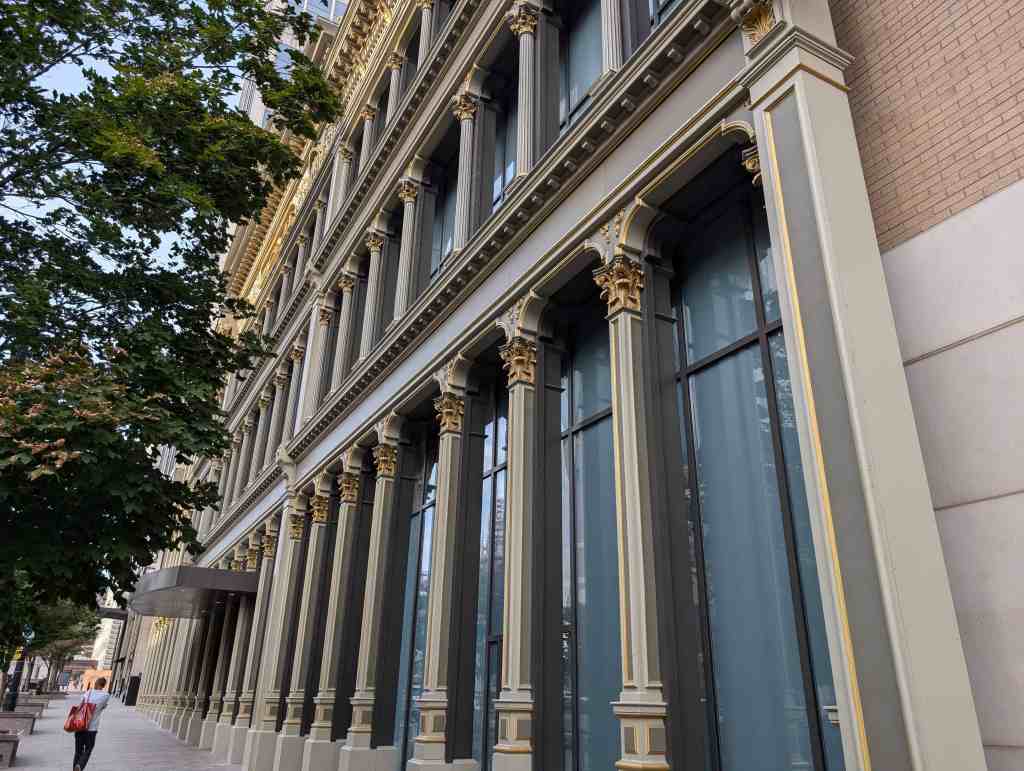
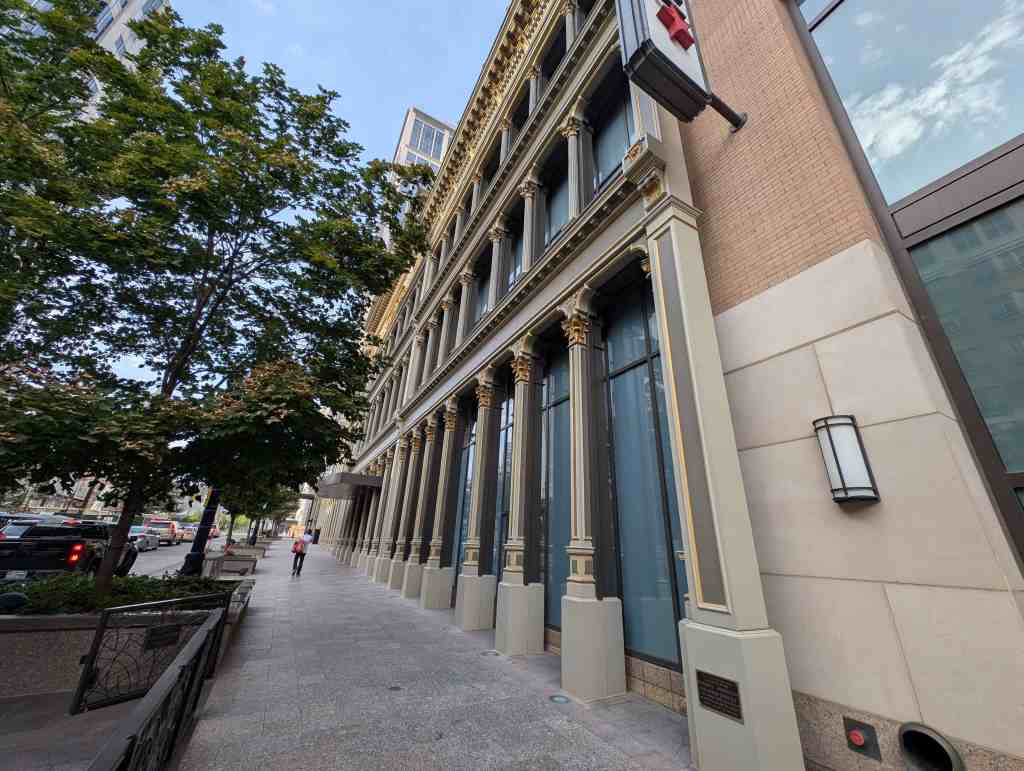
The historic Cast Iron Front at 15 South Main Street in the Downtown neighborhood of Salt Lake City was listed on the National Register of Historic Places on September 22, 1970 (#70000632)
2017-12-02 15.00.38
2017-12-02 15.00.56
2017-12-02 15.00.21
2017-12-02 15.00.28
2017-12-02 15.01.08
2017-12-02 15.00.32
2017-12-02 15.01.26

The “Zions Cooperative Mercantile Association” was formed in 1868. Before 1880 one-hundred-fifty branch stores reached into twenty-four counties and one-hundred-twenty-six towns and cities.

On April 10, 1875 a committee was chosen to select a site for a new building in Salt Lake City, and the present site on “East South Temple” (now called Main Street) was selected. The land was purchased from Brigham Young for $30,000.00. The building, which is reputed to be the first department store in America, was completed in March, 1876 and opened for business on April 1, 1876. The cost was $136,544.00. The architects were William H. Folsom and Obed Taylor. The structure is significant because of its unusually well-maintained historic store front of cast iron.

The original Z.C.M.I. building had a frontage of fifty feet by a depth of 318 feet; three stories high, plus a full basement. The whole interior was chiefly lighted by sky lights.

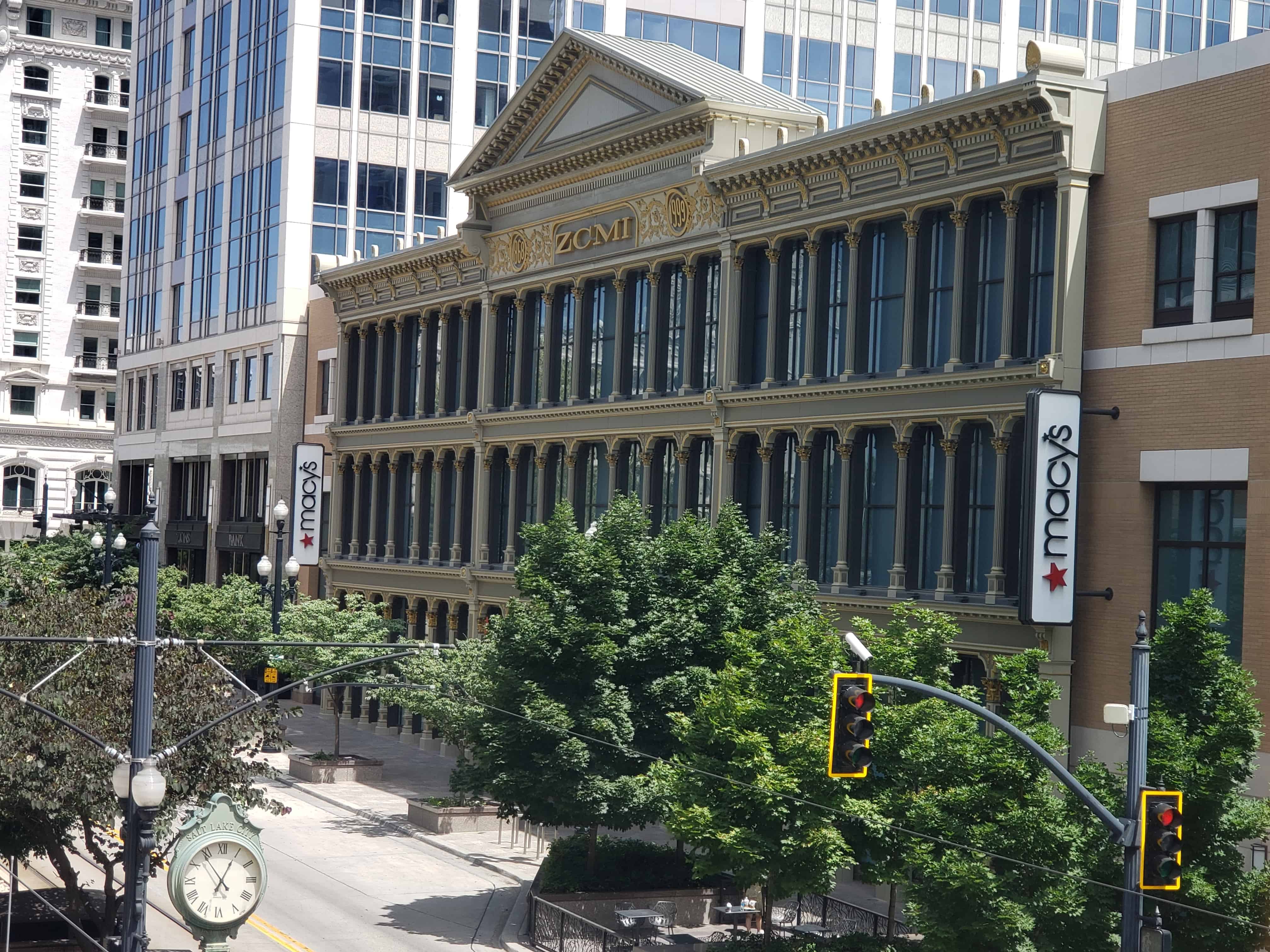
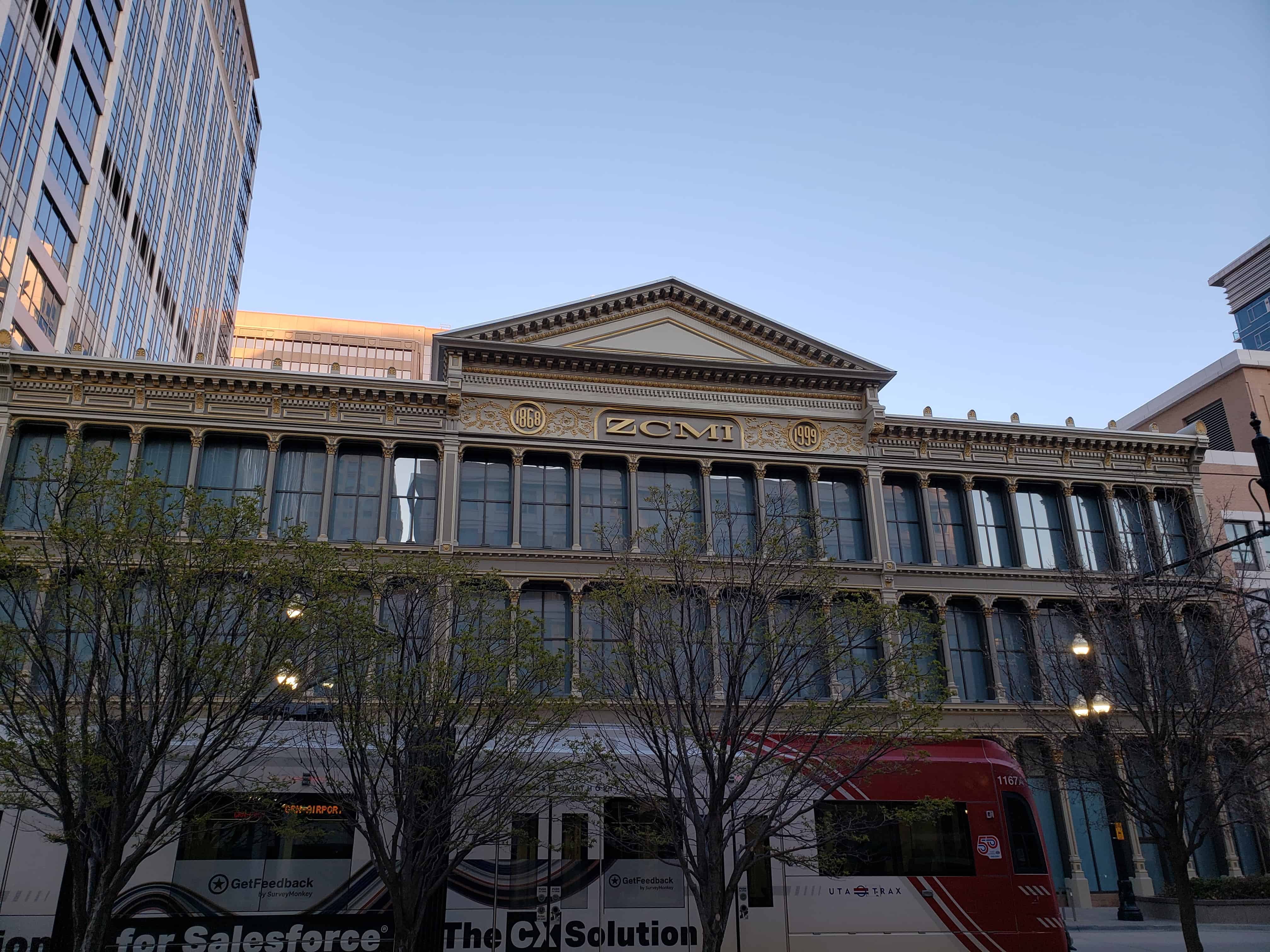
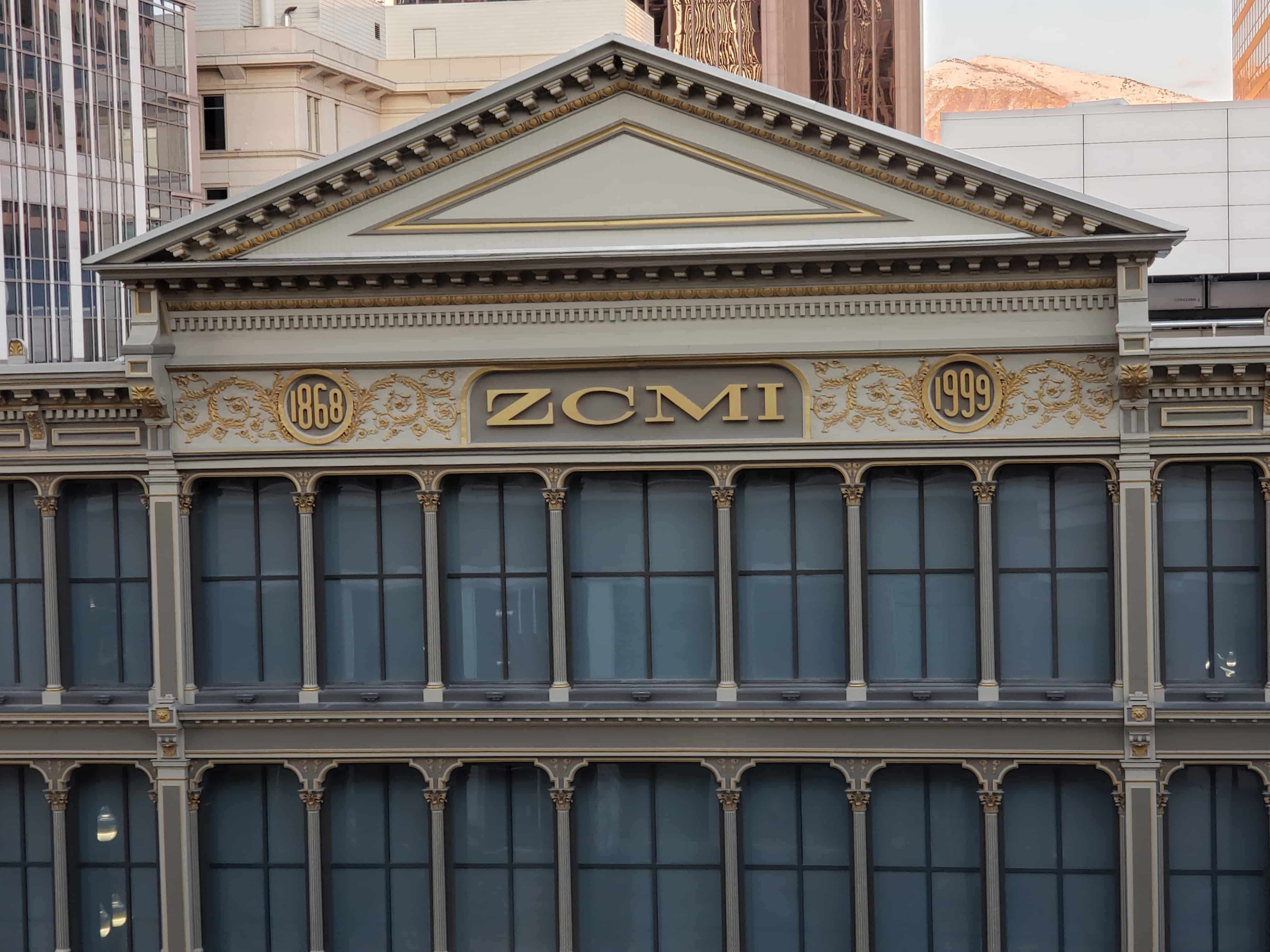
The store front Is a window wall of three matching sections built at three different times. Rows of Corinthian columns divide the windows, These columns are of cast iron In the center (1876) and south (1880) portions but of heavy stamped sheet metal in the north (1901) portion. There is a modillion cornice at each level and also in the rake of the pediment. The top cornice has brackets aligned with the columns below and a row of dentils under the modillions, which are larger than those of the cornices below and
ornamented with an acanthus leaf. Under the pediment is a frieze which extends across the center portion of the storefront. It contains large letters ‘ZCMI’ balanced on each side with circular frames containing the date of founding, 1868, on the left and the date of the pediment construction, 1901, on the right. The rest of the frieze contains a connecting vine and leaf pattern. Above the top cornice antefixes project in alignment with the columns below. They are typical of much of the ornament which is of light sheet metal formed over wood.

The windows are double hung wood sash 2/2 glazed with obscure glass. Upper corners of sash and frame are rounded. These windows are extremely large, 11 feet in height and varying in width from 4 feet to 7 feet. They are covered with insect screens of modern louvered mesh in frames which match the windows behind.

The columns are painted black, other ornament and moldings are white and background planes are gray.

The first floor level which once had a columnar treatment like that above now has large show windows with wide spaced supports and is spanned by heavy steel beams.”

As the width of the store front grew the design of the cornice and pediment was changed. Below the marquee and behind the façade there has been frequent modernization, but some of the varnished pine poles remain as structural columns along with much of the original stamped metal ceiling. The store plans extensive remodeling and addition; however, the original cast iron façade will remain.
Council House

31 Wednesday Jan 2018

Posted by Jacob Barlow in Uncategorized

≈ 1 Comment

Tags

Historic Buildings, Historic Markers, Salt Lake City, Salt Lake County, utah

2017-12-02 15.08.42

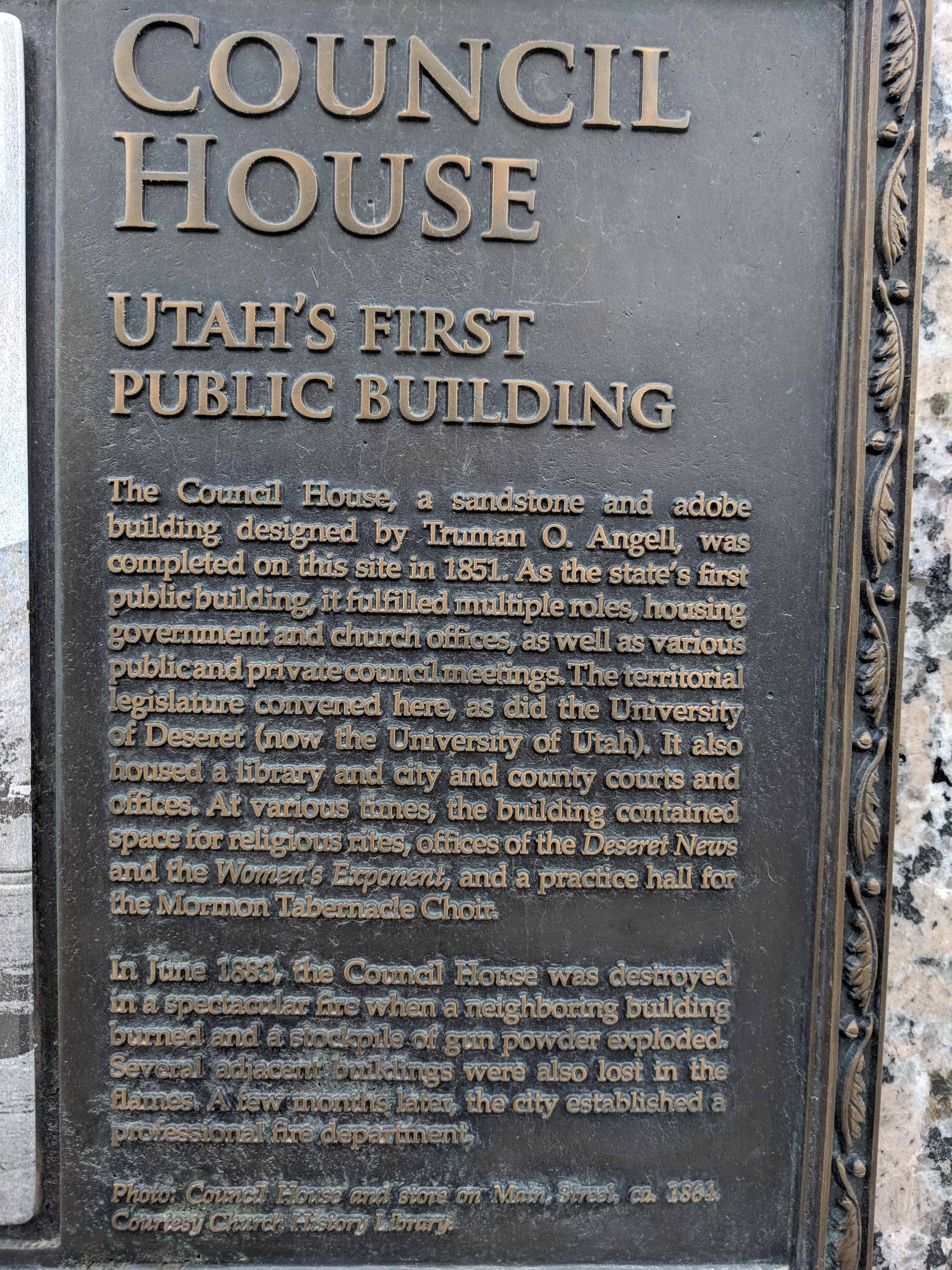
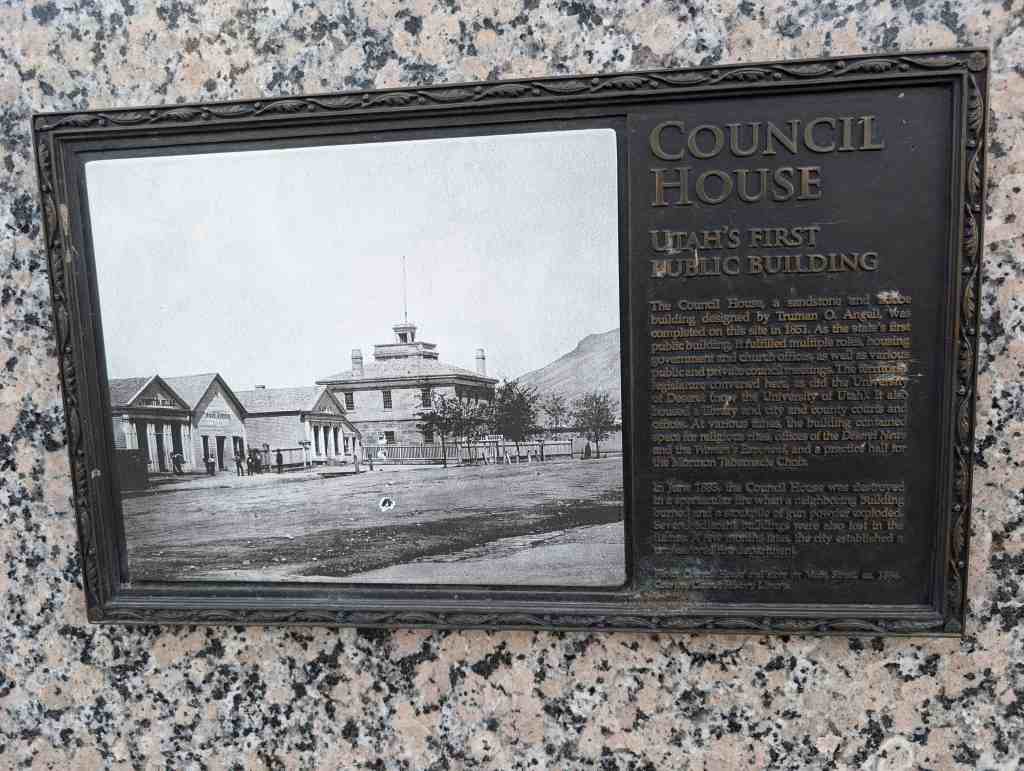
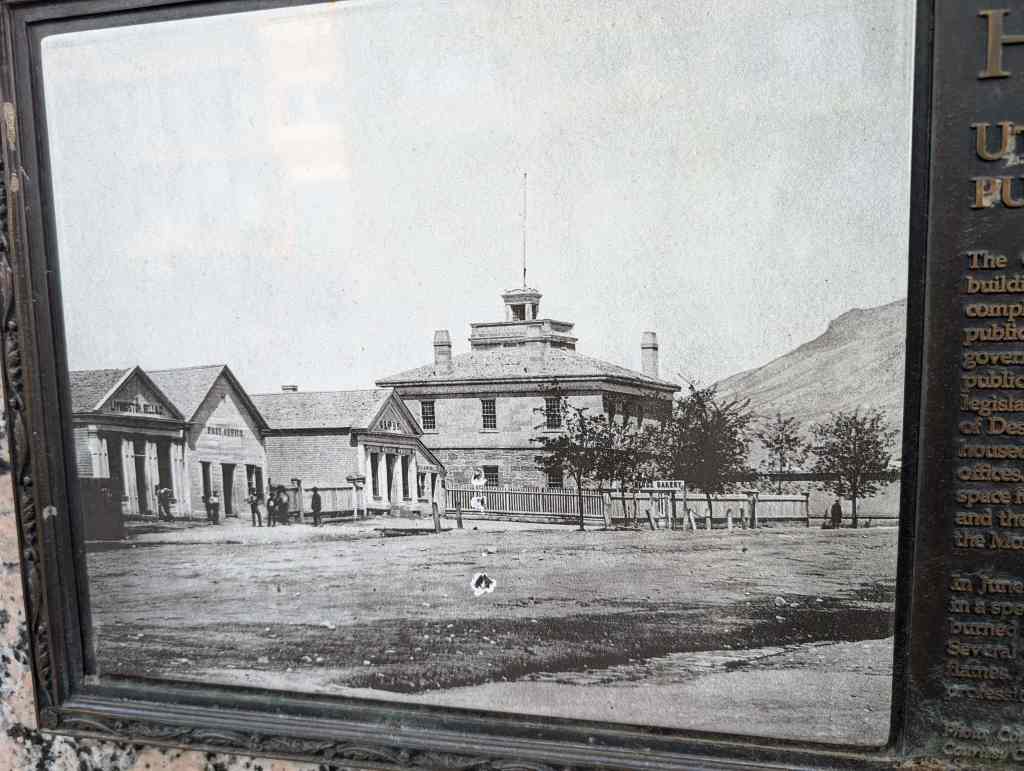
Council House – Utah’s First Public Building

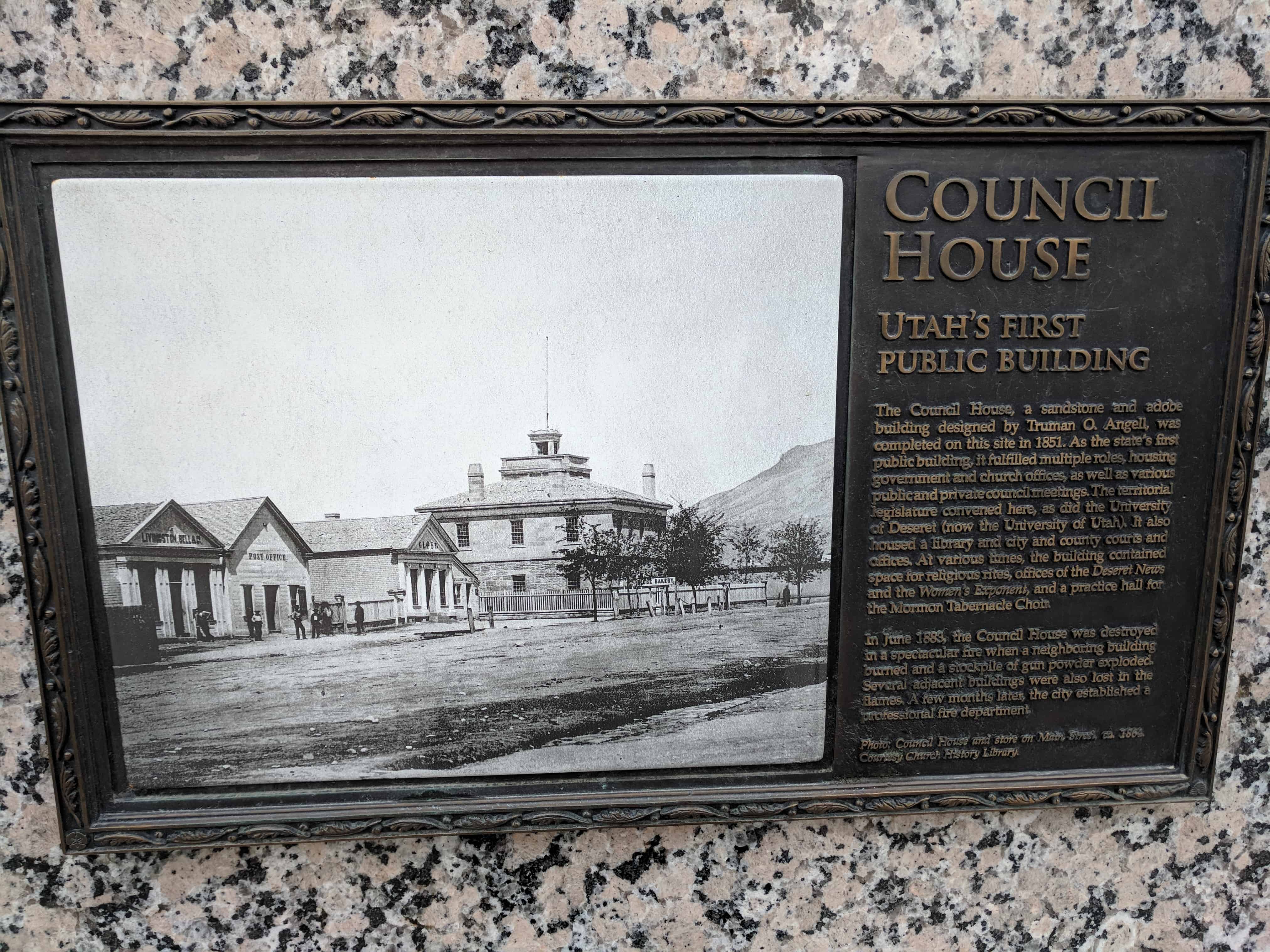
The Council House, a sandstone and adobe building designed by Truman O. Angell, was completed on this site in 1851.  As the state’s first public building, it fulfilled multiple roles, housing government and church offices, as well as various public and private council meetings.  The territorial legislature convened here, as did the University of Deseret (now the University of Utah).  It also housed a library and city and county courts and offices.  At various times, the building contained space for religious rites, offices of the Deseret News and the Women’s Exponent, and a practice hall for the Mormon Tabernacle Choir.

In June 1883, the Council House was destroyed in a spectacular fire when a neighboring building burned and a stockpile of fun powder exploded.  Several adjacent buildings were also lost of the flames.  A few months later, the city established a professional fire department.

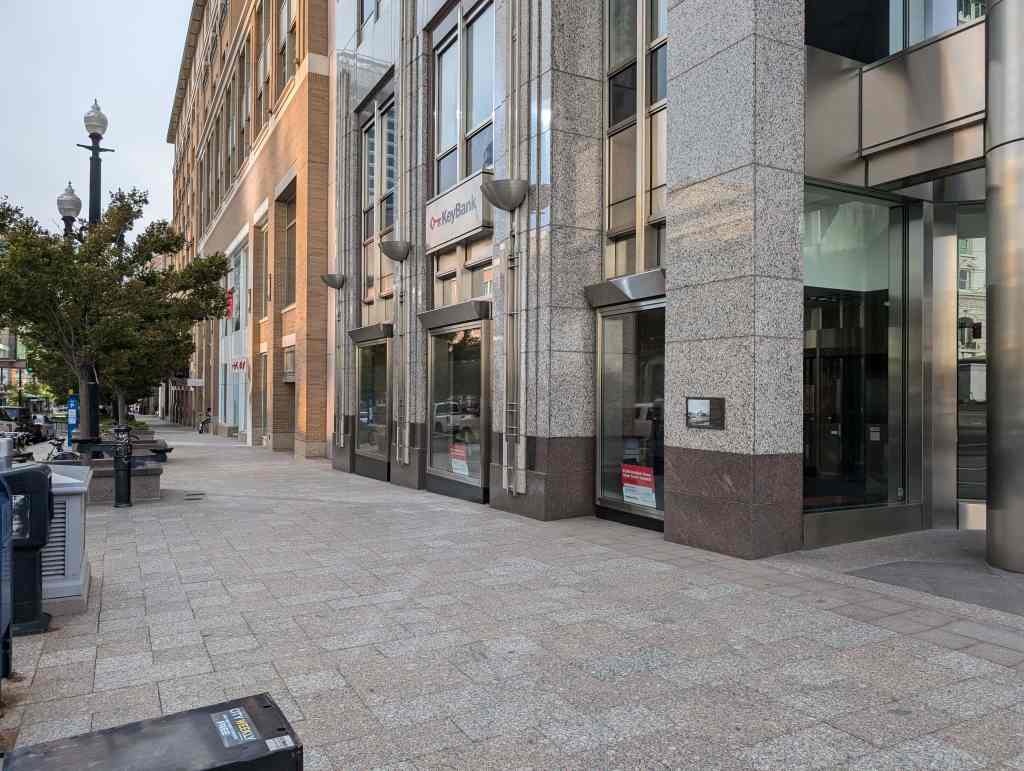
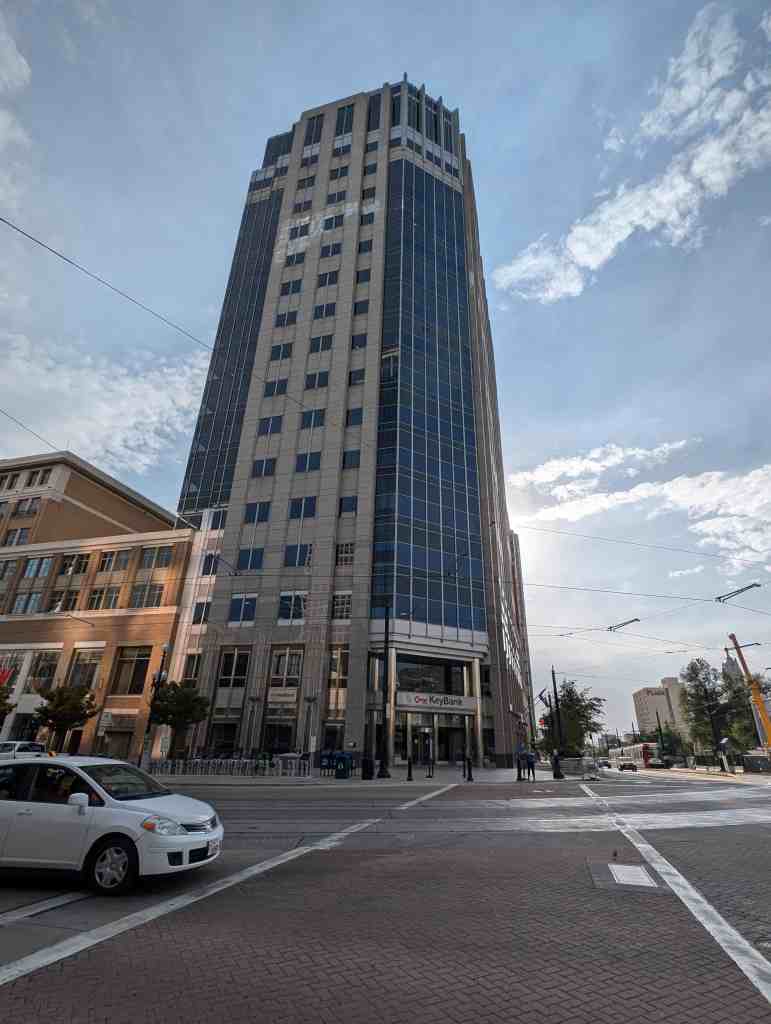
Key Bank is now located at this location. (15 West South Temple in Salt Lake City, Utah )

2017-12-02 15.00.09

2017-12-02 15.08.30

2017-12-02 15.08.45

2017-12-02 15.08.48

Zions First Nation Bank

29 Monday Jan 2018

Posted by Jacob Barlow in Uncategorized

≈ 4 Comments

Tags

Banks, Downtown SLC, Historic Buildings, Salt Lake City, Salt Lake County, utah

2017-12-02 15.08.13

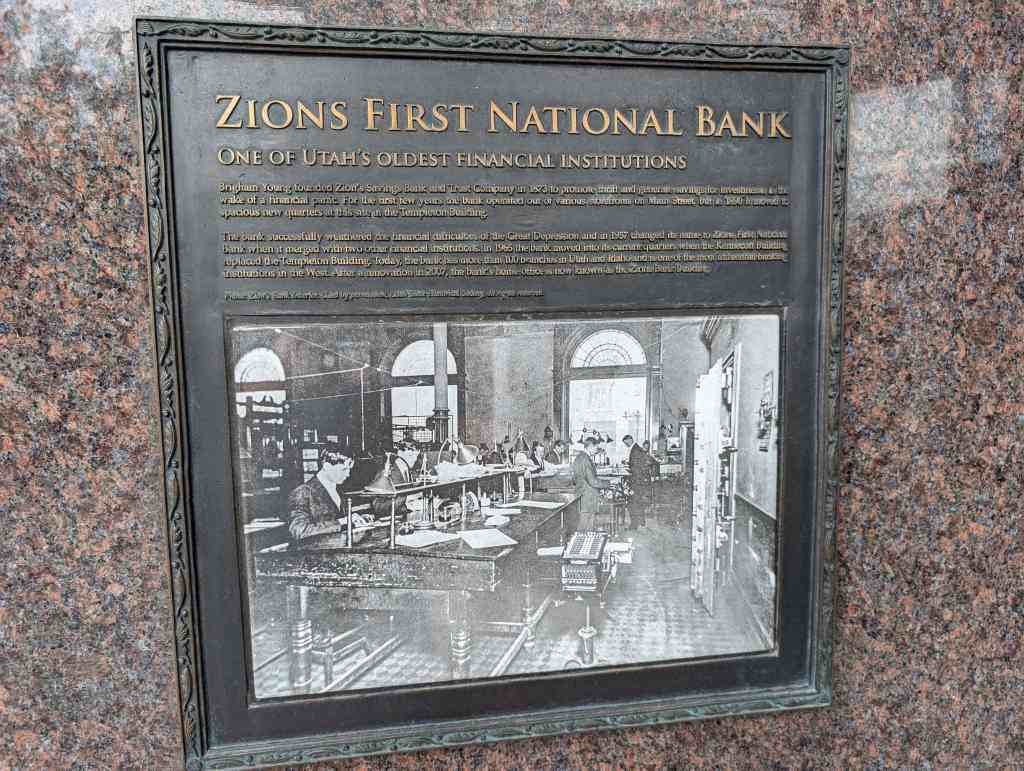
Zions First Nation Bank
One of Utah’s Oldest Financial Institutions

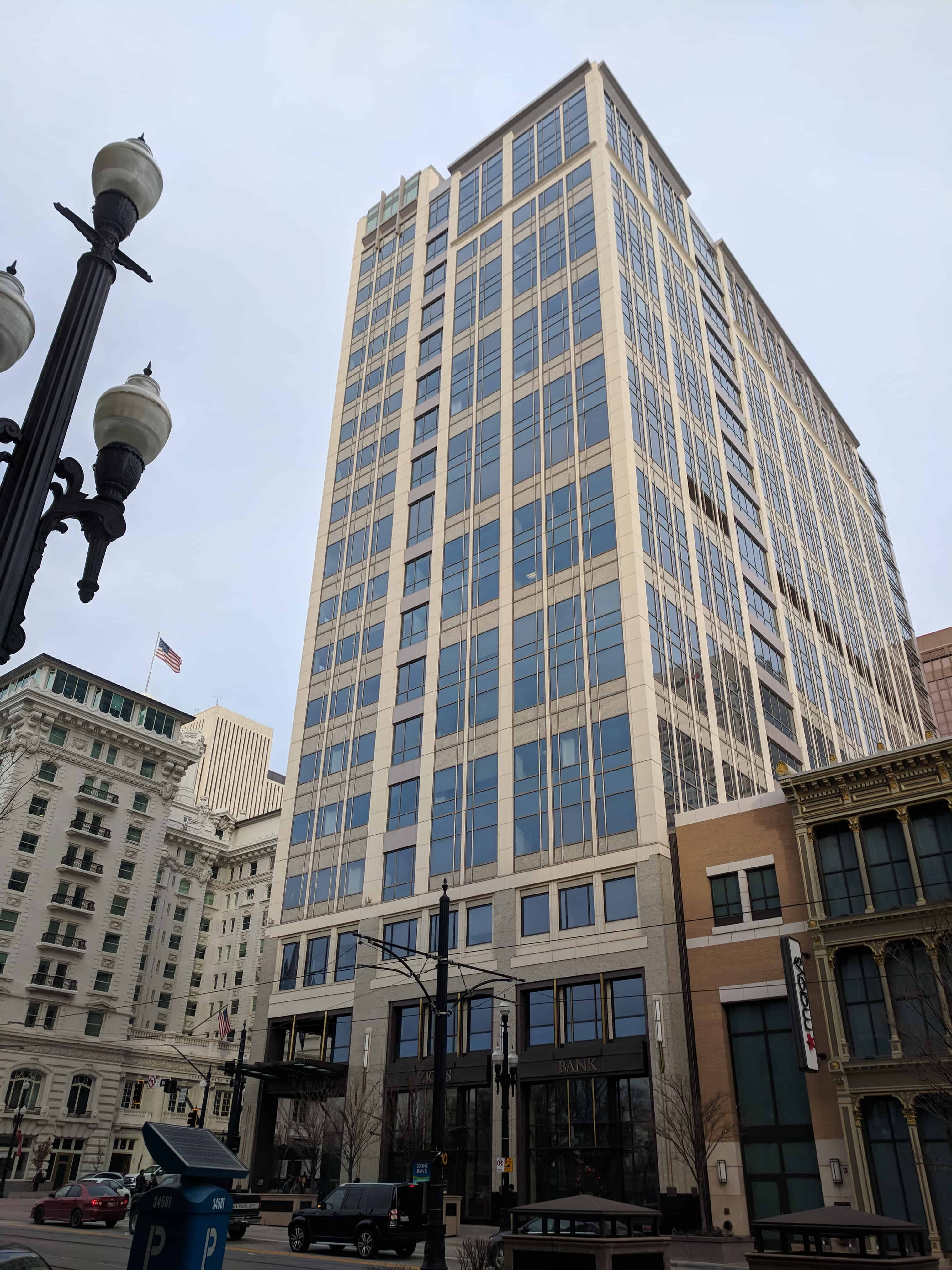
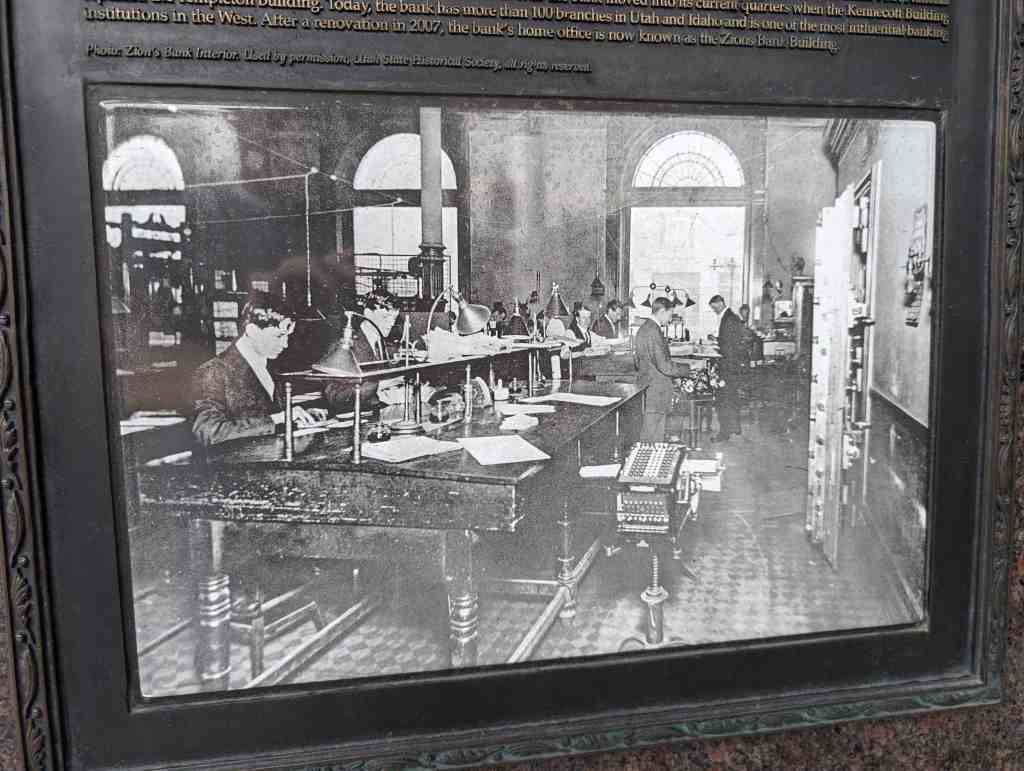
Brigham Young founded Zion’s Savings Bank and Trust Company in 1873 to promote thrift and generate savings for investments in the wake of financial panic.  For the first few years the bank operated out of various storefronts on Main Street, but in 1890 it moved to spacious new quarters at this site in the Templeton Building.
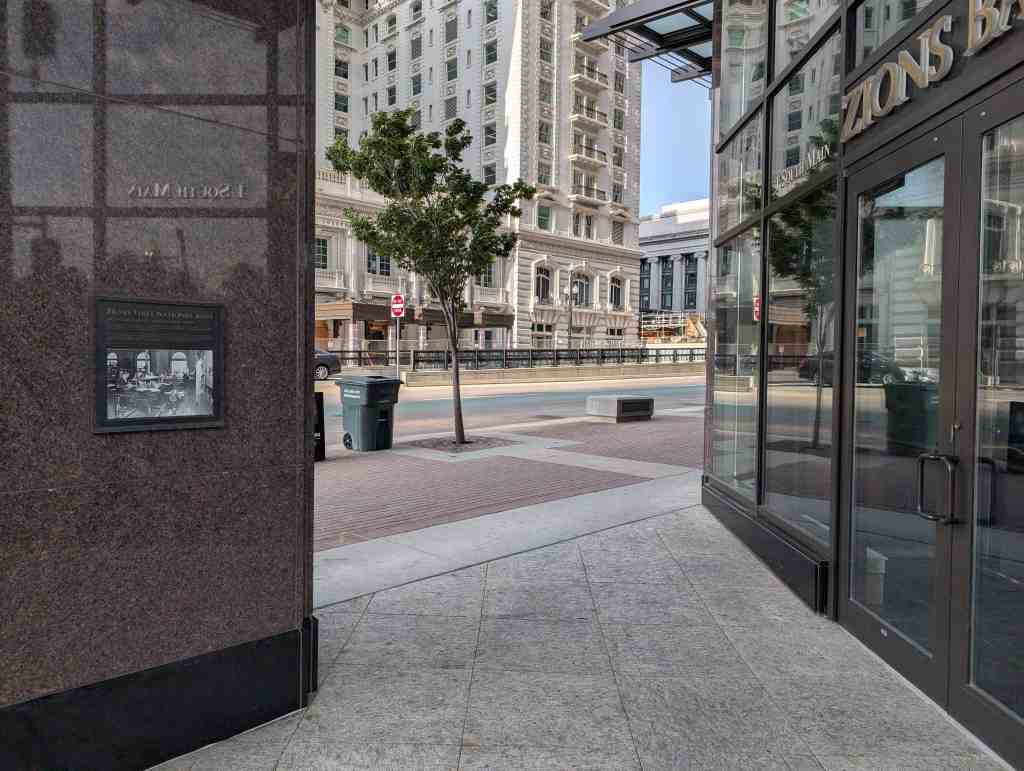
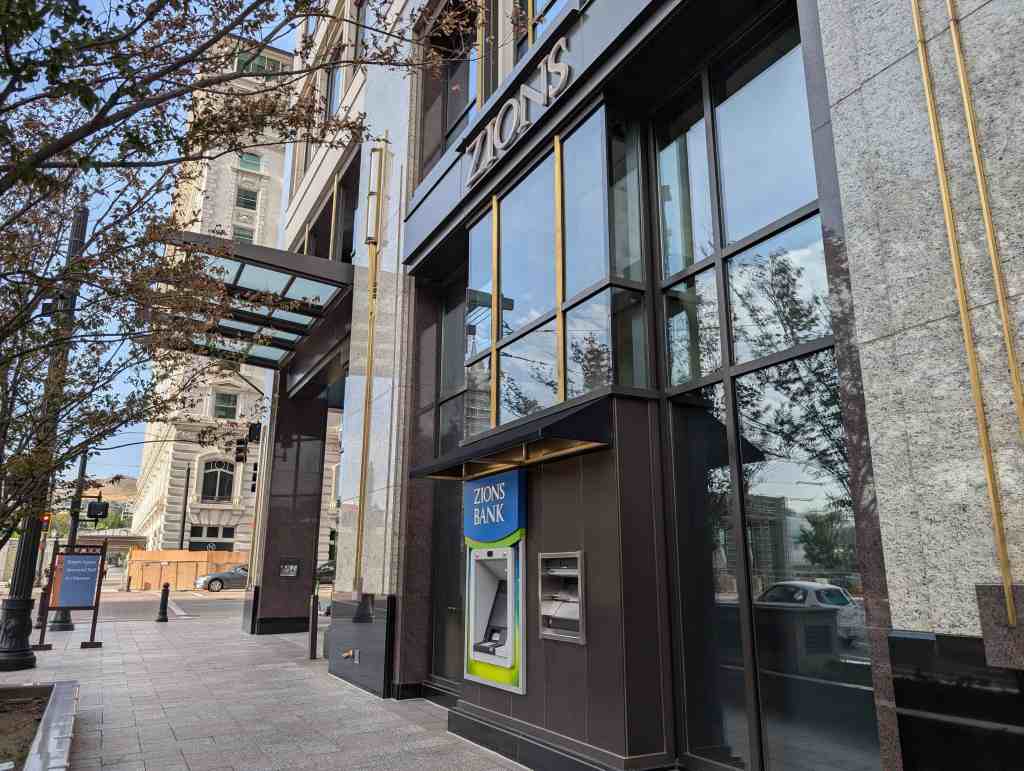
The bank successfully weathered the financial difficulties of the Great Depression and in 1957 changed its name to Zions First National Bank when it merged with two other financial institutions.  In 1965 the bank moved into its current quarters when the Kennecott Building replaced the Templeton Building.  Today, the bank has more than 100 branches in Utah and Idaho and is one of the most influential banking institutions in the West.  After a renovation in 2007, the bank’s home office is now known as the Zions Bank Building.

Located at 1 South Main Street in Salt Lake City, Utah at the site of the old Templeton Building.

2017-12-02 14.59.45

2017-12-02 14.59.43

2017-12-02 14.59.30

2017-12-02 14.59.24

2017-12-02 14.59.28

Historic Buildings in Salt Lake City

29 Monday Jan 2018

Posted by Jacob Barlow in Uncategorized

≈ 12 Comments

Tags

Historic Buildings, Salt Lake City, Salt Lake County, utah

A list of the historic homes in Salt Lake City that I’ve come across.

  • Separate page for historic sites in the Avenues
  • Alta Club Building
  • Bell Wines Apartments
  • Bennett Glass and Paint Company and Kimball Block
  • Bertolini Block
  • B’nai Israel Temple
  • Boston Building
  • Capitol Theatre
  • Central Warehouse Building
  • Chapman Branch Library
  • Citizens’ Investment Building
  • Commercial Club Building
  • Council House
  • Cramer House and Floral Shop
  • Daft Block
  • Deseret Bank Building
  • Eagles Club Building
  • Eagle Emporium Building
  • Felt Building
  • Hansen Planetarium & First Library
  • Herald Building
  • High Schools – South High School – East High School – West High School – Salt Lake High School
  • Hollywood Apartments
  • Hotel Monaco
  • Hotel Plandome
  • Hotel Victor
  • Ivanhoe Apartments
  • Judge Building
  • Karrick Block
  • Kearns Building
  • Kearns – St. Ann’s Orphanage / School
  • Lincoln Arms Apartments
  • Livingston & Kinkead Store
  • Masonic Temple
  • McIntyre Building
  • Mountain States Telephone & Telegraph Building
  • New Grand Hotel
  • Newhouse Realty Building
  • Old City Hall, Now Known As Council Hall
  • Peery Hotel and the first Jewish House of Worship
  • Salt Lake City and County Building
  • Salt Lake High School
  • Salt Lake Stock & Mining Exchange
  • State Capitol
  • Templeton Building
  • Tracy Loan and Trust Company
  • Tribune Building
  • Trolley Square
  • Union Pacific Depot
  • Utah Light and Railway Co. Car Barns
  • Utah Museum of Contemporary Art
  • Utah Power – Southeast Substation
  • Walker Center
  • Wasatch Springs Plunge
  • Zions First Nation Bank
  • Z.C.M.I.

Historic Churches in Salt Lake City

15 Monday Jan 2018

Posted by Jacob Barlow in Uncategorized

≈ 11 Comments

Tags

Churches, Historic Buildings, LDS Church, Salt Lake City, Salt Lake County, utah

2018-03-11 17.54.24

A list of the historic church buildings in Salt Lake City that I’ve come across.

  • The 2nd Ward Chapel
  • The 5th Ward Chapel
  • The 8th Ward Chapel
  • The 10th Ward Chapel
  • The 12th Ward Chapel
  • The 15th Ward Chapel
  • The 18th Ward Chapel
  • The 19th Ward Chapel
  • The 20th Ward Chapel
  • The 23rd Ward Chapel
  • The 24th Ward Chapel
  • The 28th Ward Chapel
  • The 31st Ward Chapel
  • The 34th Ward Chapel
  • Belvedere Ward Chapel
  • B’nai Israel Temple
  • Capitol Hill Ward Chapel
  • Cathedral of the Madeleine
  • First Baptist Church
  • First Church of Christ, Scientist
  • First Presbyterian Church of Salt Lake City
  • First United Methodist Church
  • Forest Dale Chapel
  • Historic Garden Park Ward
  • Holy Cross Chapel
  • Holy Trinity Greek Orthodox Church
  • Immanuel Baptist Church
  • Liberty Ward Chapel
  • Mount Tabor Lutheran Church
  • Nibley Park Ward
  • Saints Peter and Paul Orthodox Church – Congregation Montefiore Synagogue
  • St. Mark’s Episcopal Cathedral
  • Trinity African Methodist Episcopal Church
  • The Winder Ward Chapel (The Old Meeting House)
  • Zion Evangelical Lutheran Church

McKean House

15 Monday Jan 2018

Posted by Jacob Barlow in Uncategorized

≈ 2 Comments

Tags

Historic Homes, Salt Lake City, Salt Lake County, utah

IMG_20180113_151437_340

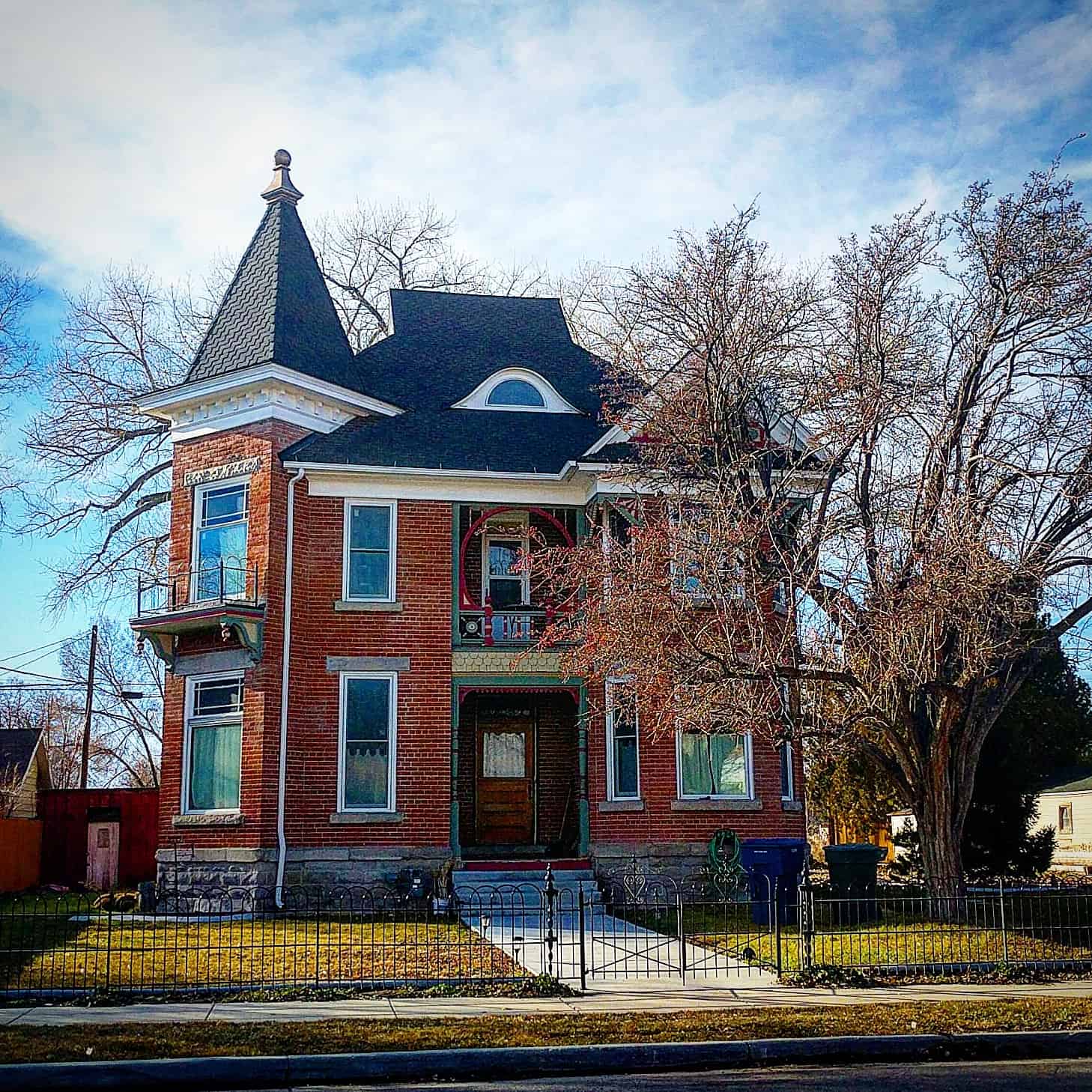
This house stood out to me as a gorgeous example of the historic homes in the area.

I haven’t found much info on the property yet but thought it was worth being added to the collection of historic homes in Salt Lake.

Update:
I’ve since found out that the home was built in 1896 and has been used as a filming location for Touched by an Angel and Benji: Off the Leash! (2004).

Located at 403 North 1300 West in the Fairpark Neighborhood in Salt Lake City, Utah.

_cfimg3765172961707088354
McKean House and Orchard

From Preservation Utah‘s Fairpark Homes Tour:
Built around 1895 for Theodore and Sophia Jane Lane McKean, this home housed their large family – nine children, plus five more Sophia later raised from Theodore’s second wife, who passed away young. Theodore, a livestock raiser and state stock inspector, earned awards for his animals and served as
LDS bishop (1902–1910), known for his generosity. Sophia led the Relief Society for 25 years, often hosting meetings at the house. The couple lived in the home until their deaths in 1934 and 1942.

Architecturally, the McKean House is a prime example of Victorian Eclectic style and undoubtedly the most elaborate example in the neighborhood. It has an exuberance that is a hallmark of the style, including asymmetry, an angled corner bay and tower, bracketed awnings and cornices, an “eyebrow” roof window, a decorative porch, and a finial. The borrow and mix approach central to the Victorian Eclectic is evident in the Queen Anne and Eastlake influences, which appear in the colored glass window panels, bulls-eye gable decoration, and sunburst eave brackets.

Despite its elaborate design, more typical of the Avenues, the McKeans chose to build here in Fairpark – likely for the large plot needed for Theodore’s livestock and their deep family roots in the neighborhood. They had both grown up in the neighborhood and were children of pioneers who settled in the area quite early. Several of their children remained in the area, continuing the family’s multi-generational presence. The McKeans were also an example of families who both lived and carried on their business in the neighborhood.

Joseph Smith Memorial Building

12 Friday Jan 2018

Posted by Jacob Barlow in Uncategorized

≈ 3 Comments

Tags

Historic Buildings, LDS Church, NRHP, Salt Lake City, Salt Lake County, Temple Square, utah

2017-12-02 15.09.49

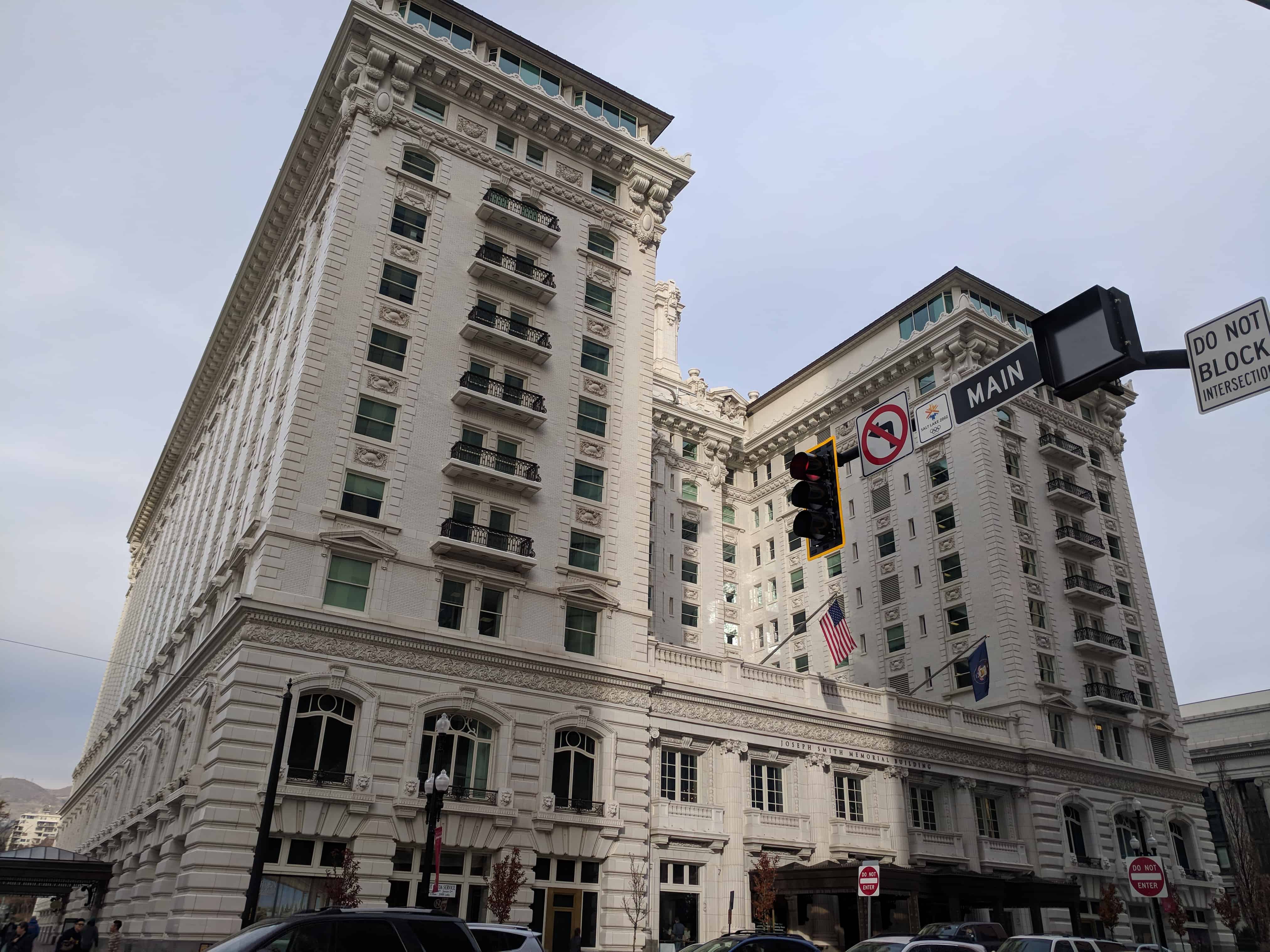
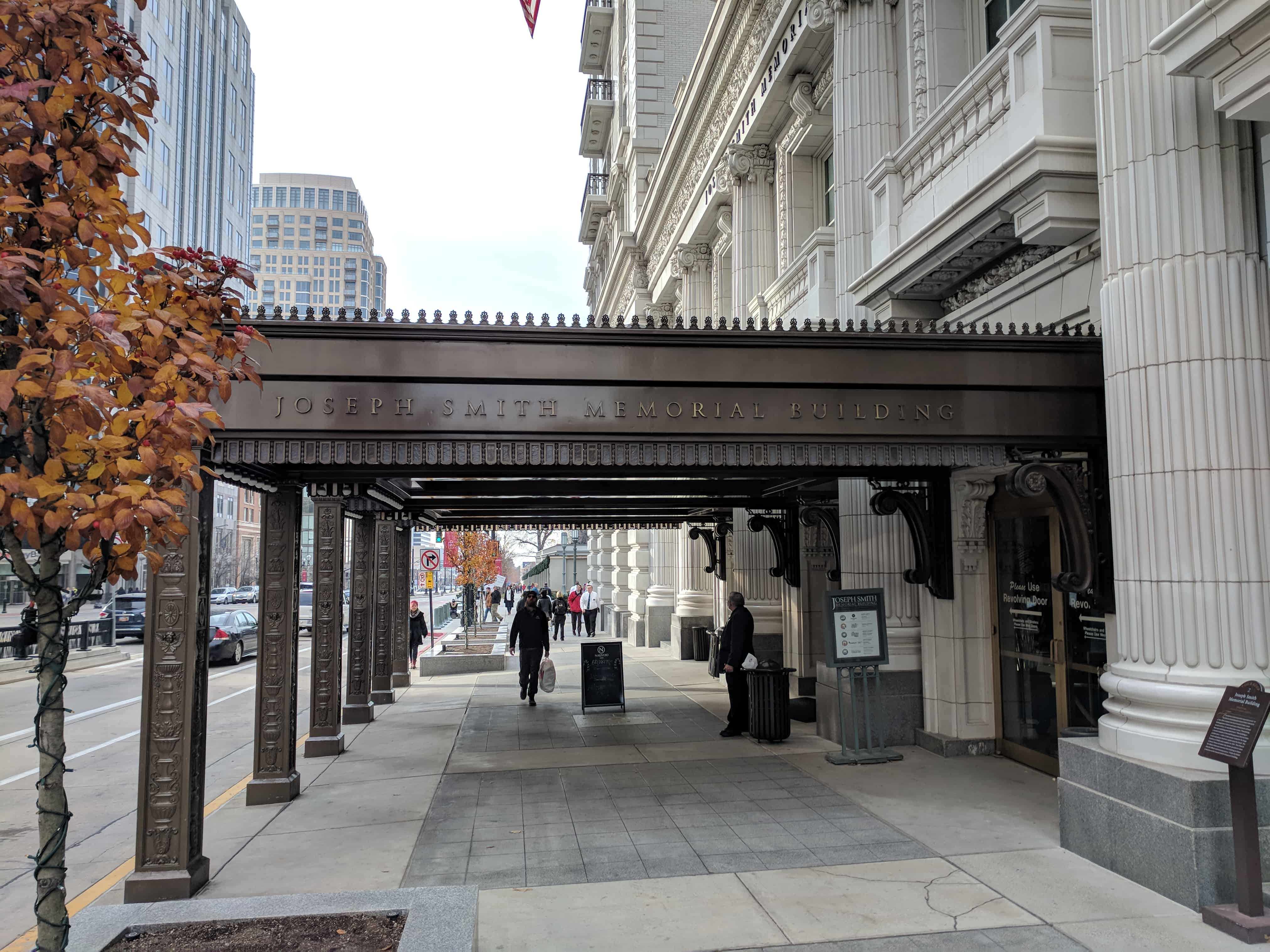
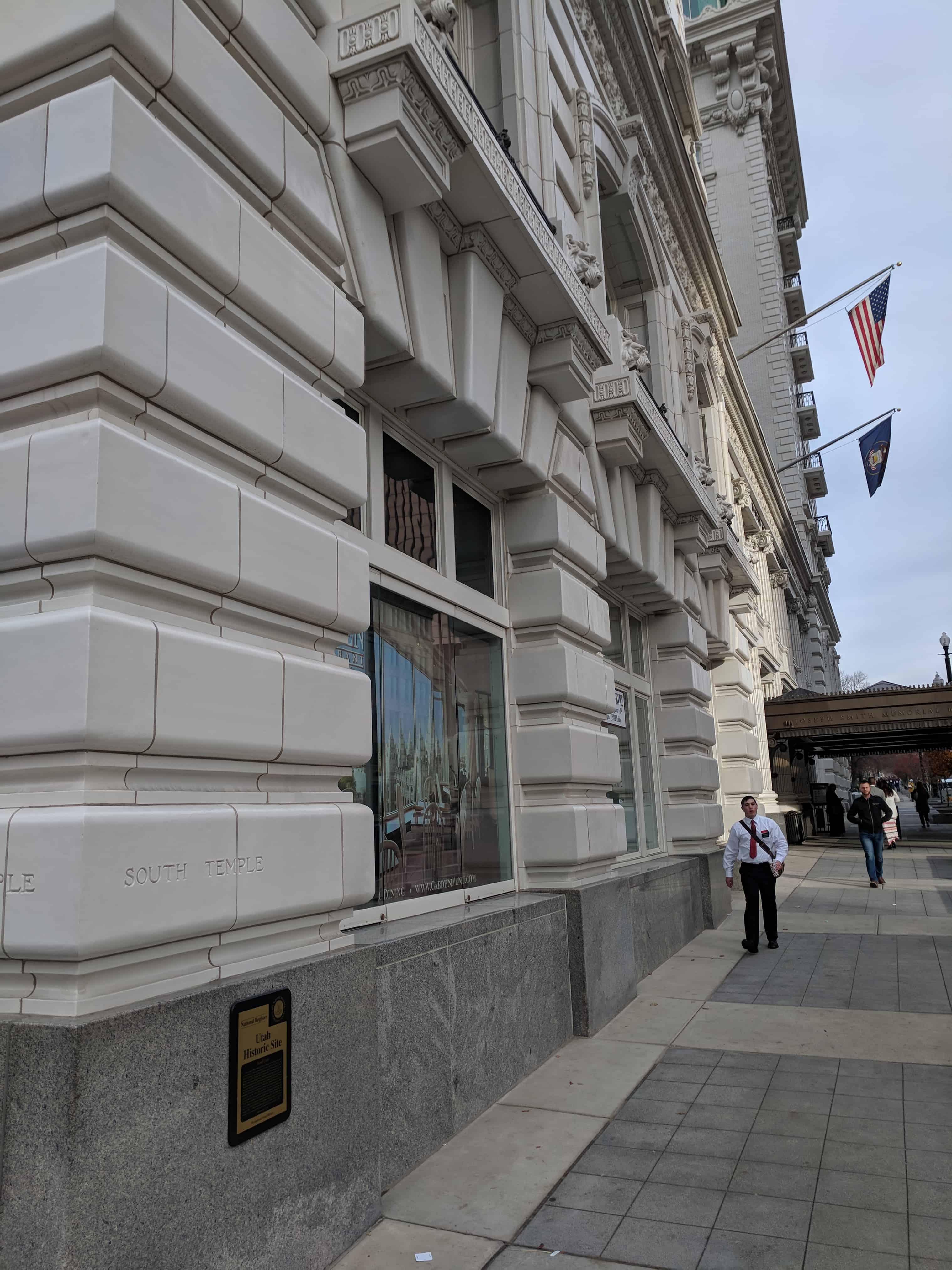
The Joseph Smith Memorial Building, originally called the Hotel Utah, is named in honor of Joseph Smith, the founder of the Latter Day Saint movement. It is located on the corner of Main Street and South Temple, on Temple Square in Salt Lake City. It is now a social center with three restaurants: The Roof Restaurant, The Garden Restaurant and The Nauvoo Cafe. It is also a venue for events complete with 13 banquet rooms, catering services, event coordinators and a full-service floral department – Flowers Squared. Several levels of the building also serve as administrative offices for The Church of Jesus Christ of Latter-day Saints (LDS Church) departments such as FamilySearch. On January 3, 1978, it was added to the National Register of Historic Places as the Hotel Utah.(*)

2017-12-02 14.59.05
2017-12-02 14.47.05
2017-12-02 14.47.07
2017-12-02 14.47.51
2017-12-02 14.47.55
2017-12-02 14.48.14
2017-12-02 14.48.46
2017-12-02 14.48.56
2017-12-02 14.55.42
2017-12-02 14.47.14

Tourstop 2 in the Salt Lake City Tour says:

Joseph Smith Memorial Building – Hotel Utah – 1909-1911, Parkinson & Bergstrom

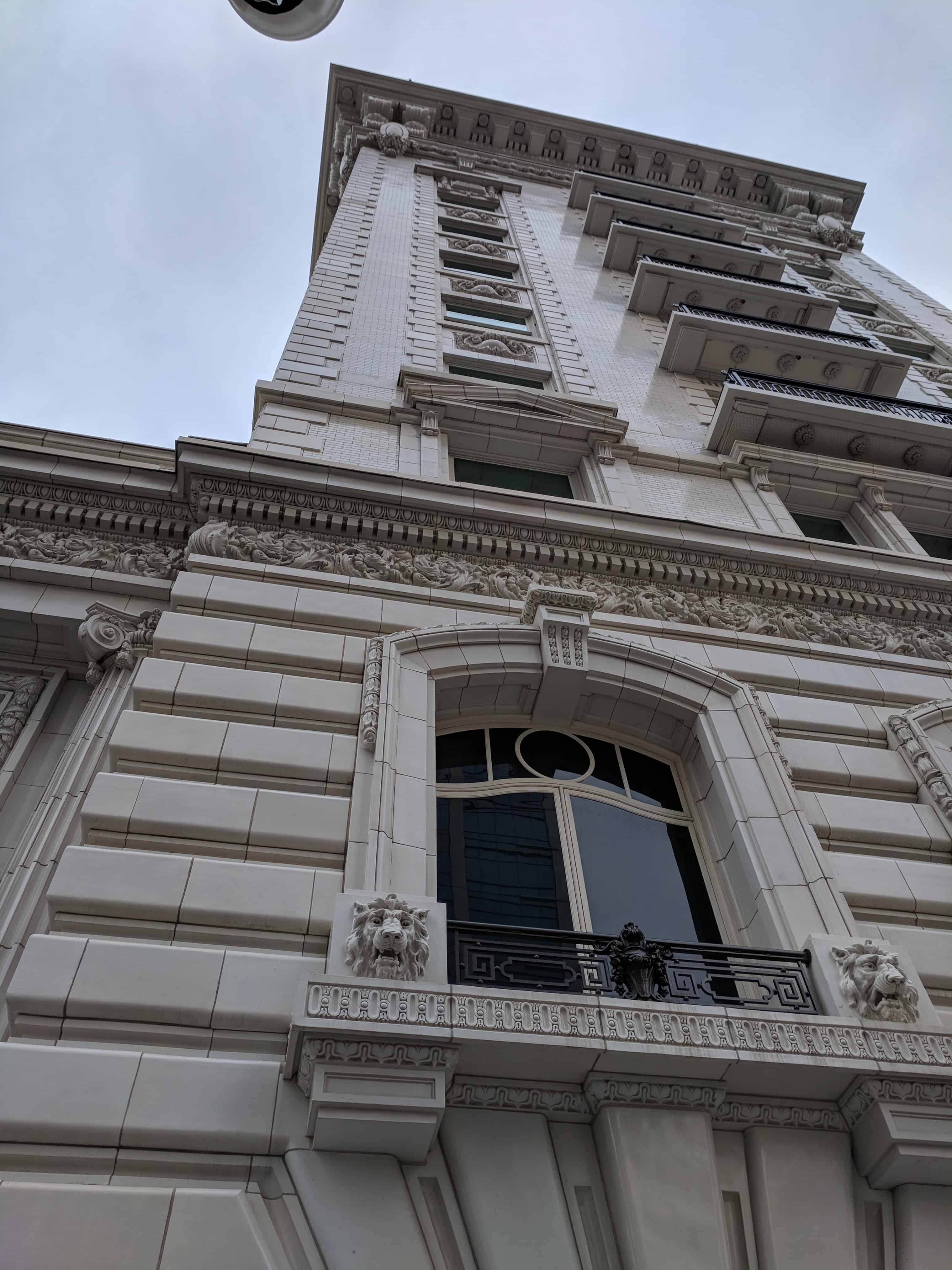
The Hotel Utah was the “Grand Dame” of hotels in the intermountain west.  For most of the 20th century the hotel hosted Utah’s most distinguished visitors and was a focal point of local social activity.  As one historian wrote, “Everything that was anything was held there.”  The building is a lavish example of Second Renaissance Revival Style architecture – with a Utah touch.  Look for the huge brick and plaster beehive cupola atop the hotel.  The Beehive is Utah’s state symbol.  In 1987, The Church of Jesus Christ of Latter-day Saints decided to close the Hotel Utah and renovate the building to house church offices and meeting spaces.  Today the hotel is known as the Joseph Smith Memorial Building.

2017-12-02 14.47.21
2017-12-02 14.58.25

The Utah Historic Site plaque says:

Hotel Utah

The corner of Main Street and South Temple has long been important in Utah history.  Prior to construction of the Hotel Utah from 1909 to 1911, the general tithing office of the LDS Church, a bishop’s storehouse, and the Deseret News printing plant all were located on the site.

Work on the Second Renaissance Revival style hotel, designed by the Los Angeles architectural firm of Parkinson and Bergstrom, began in June 1909. Two years later, on June 9, 1911, the Hotel Utah opened for business. While the LDS Church was the primary stockholder, many Mormon and non-Mormon community and business leaders also purchased stock in the effort to provide the city with a first-class hotel.

The ten-story building has a concrete and steel structure and is covered with white glazed terra cotta and brick. Various additions and remodelings have occurred throughout the years, including a substantial expansion to the north and modifications to the roof-top dining facilities.

The building ceased operations as a hotel in August 1987. A major remodeling and adaptive reuse project to accommodate both community and church functions was completed in 1993.

Leaning into the Light

12 Friday Jan 2018

Posted by Jacob Barlow in Uncategorized

≈ Leave a comment

Tags

Salt Lake City, Salt Lake County, SUP, utah

2017-12-02 14.54.31

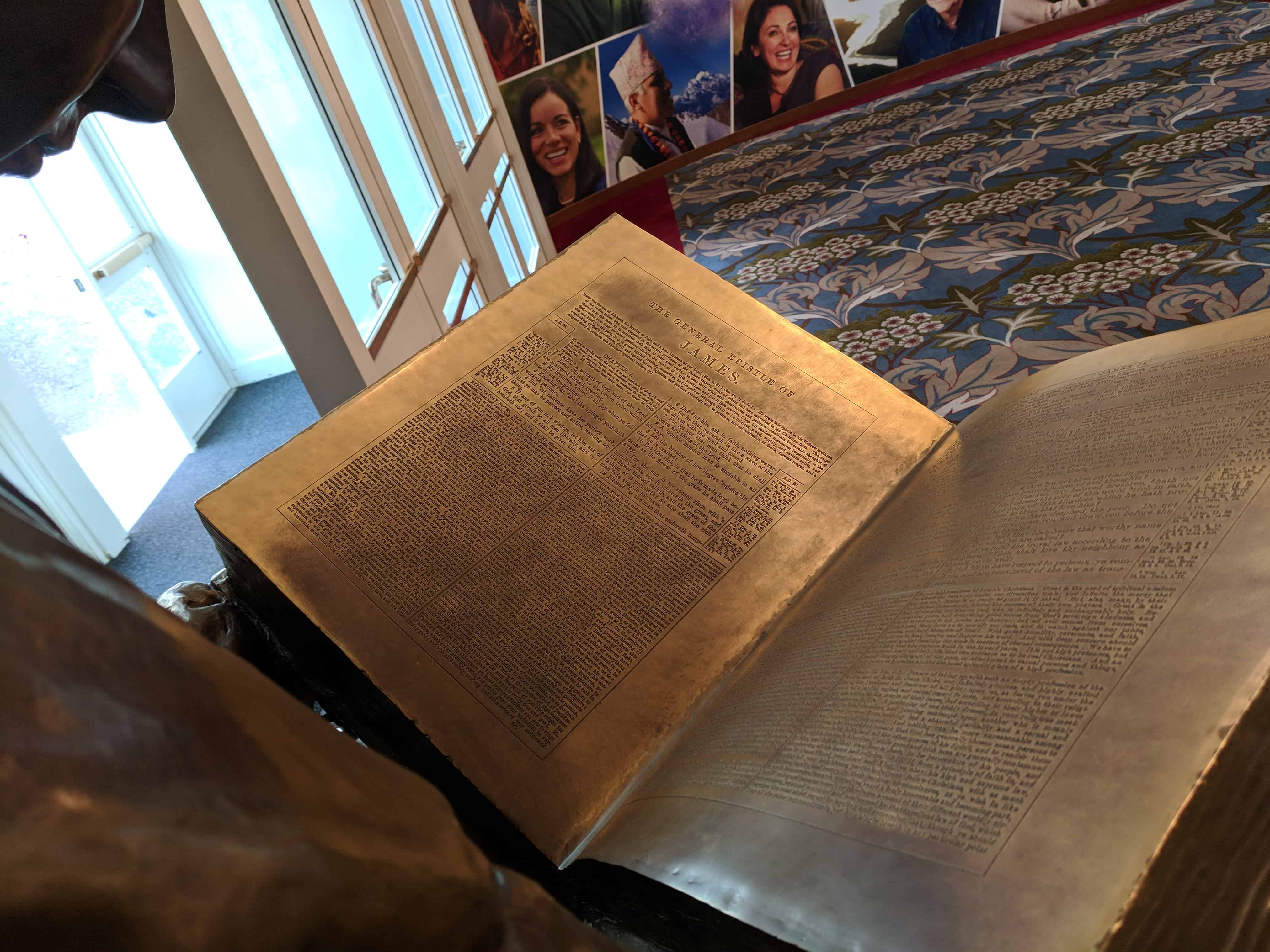
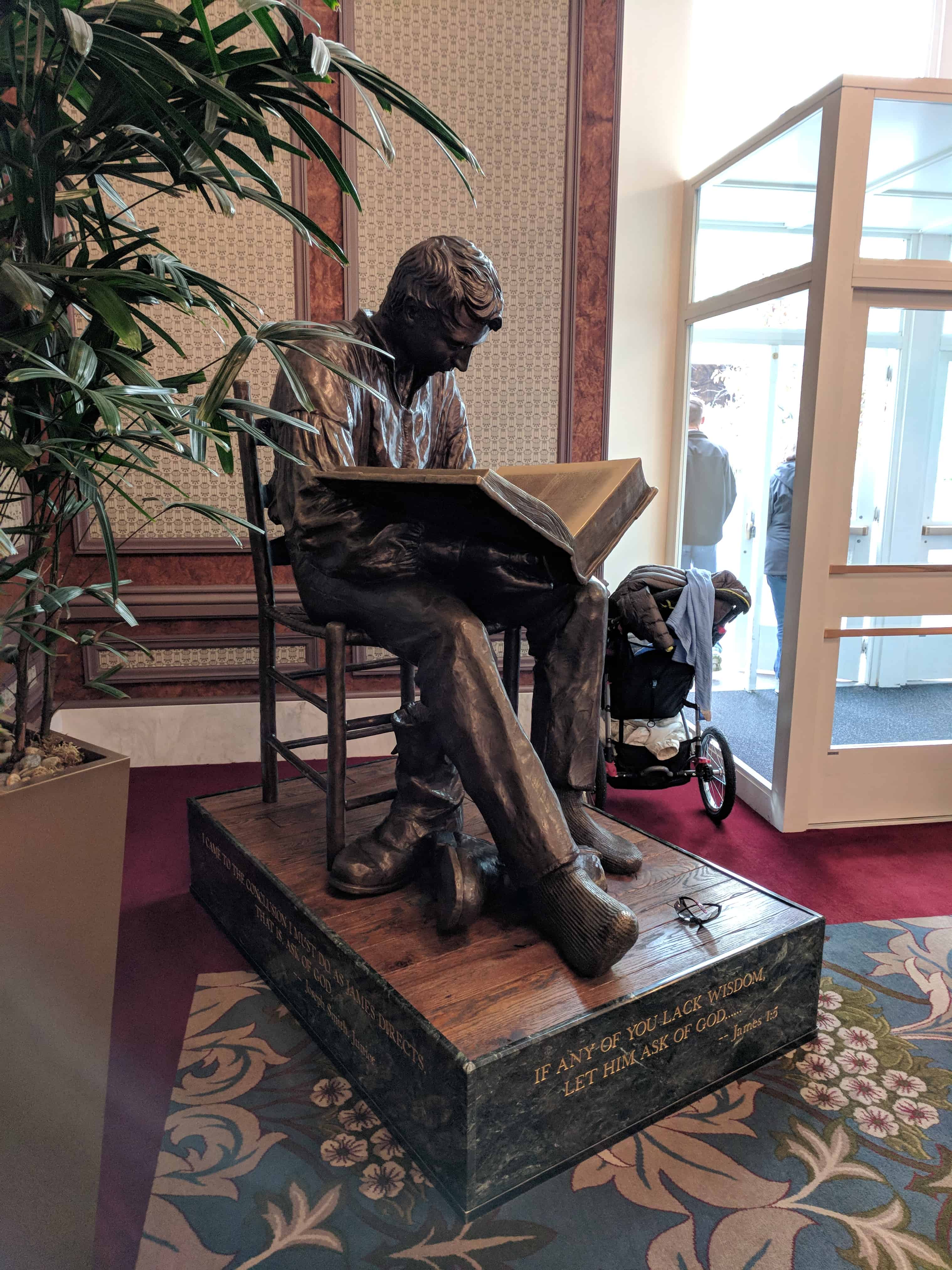
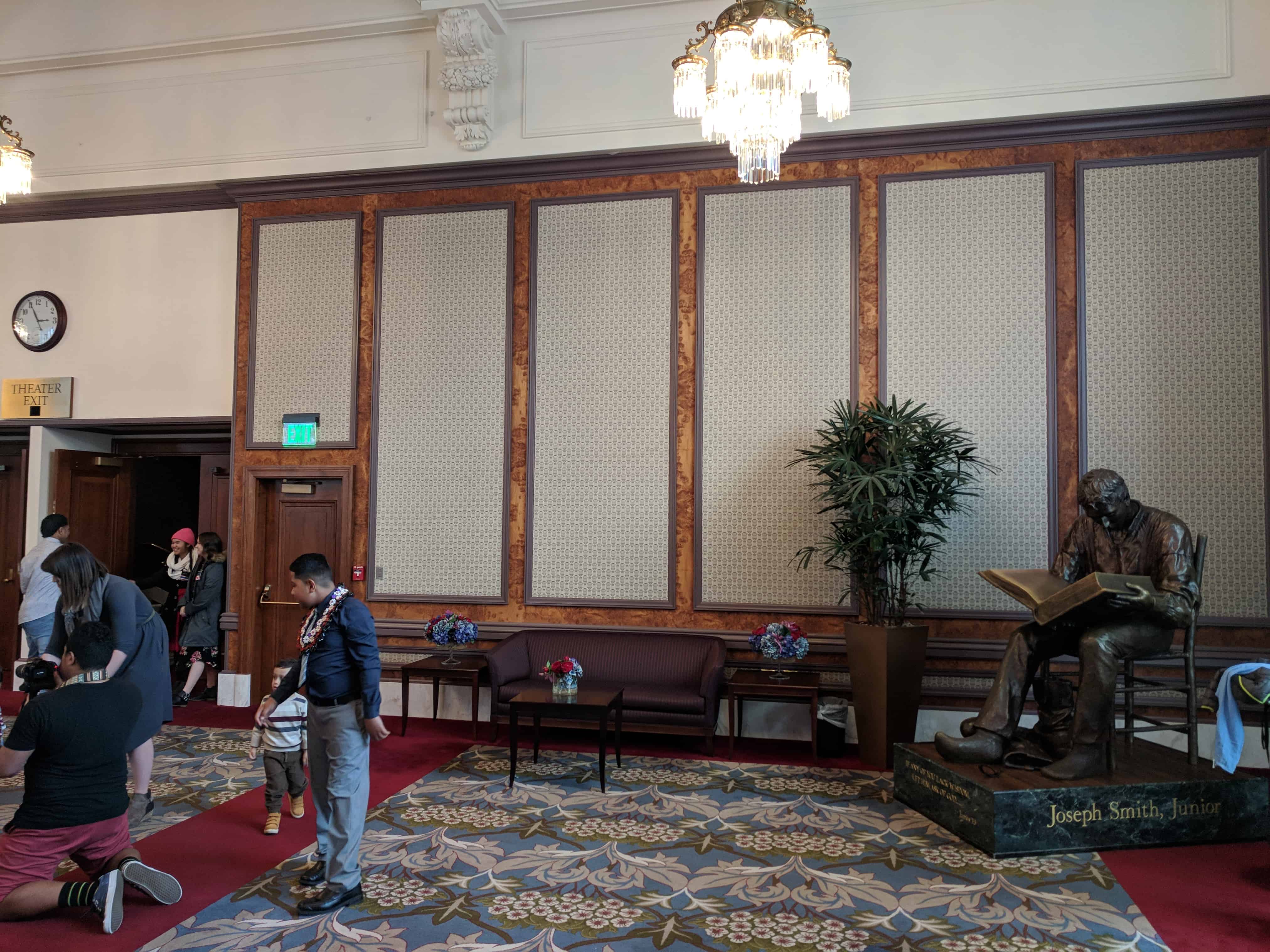
“Leaning into the Light,” Joseph Smith, the Boy – Statue

This is S.U.P. #192 – see the full list here.

Location: Joseph Smith Memorial Building, Main St. and South Temple Street, Theater exit area
The National Society of the Sons of Utah Pioneers
If any of you lack wisdom, let him ask of God… James 1:5
Joseph Smith, Junior

2017-12-02 14.55.28

2017-12-02 14.55.16

2017-12-02 14.55.04

2017-12-02 14.54.54

2017-12-02 14.54.45

2017-12-02 14.54.37

2017-12-02 14.54.31

2017-12-02 14.53.17

2017-12-02 14.52.58

2017-12-02 14.52.52


LDS Church Administration Building

31 Sunday Dec 2017

Posted by Jacob Barlow in Uncategorized

≈ 1 Comment

Tags

LDS Church, Salt Lake City, Salt Lake County, Temple Square, utah

2017-12-02 15.11.38

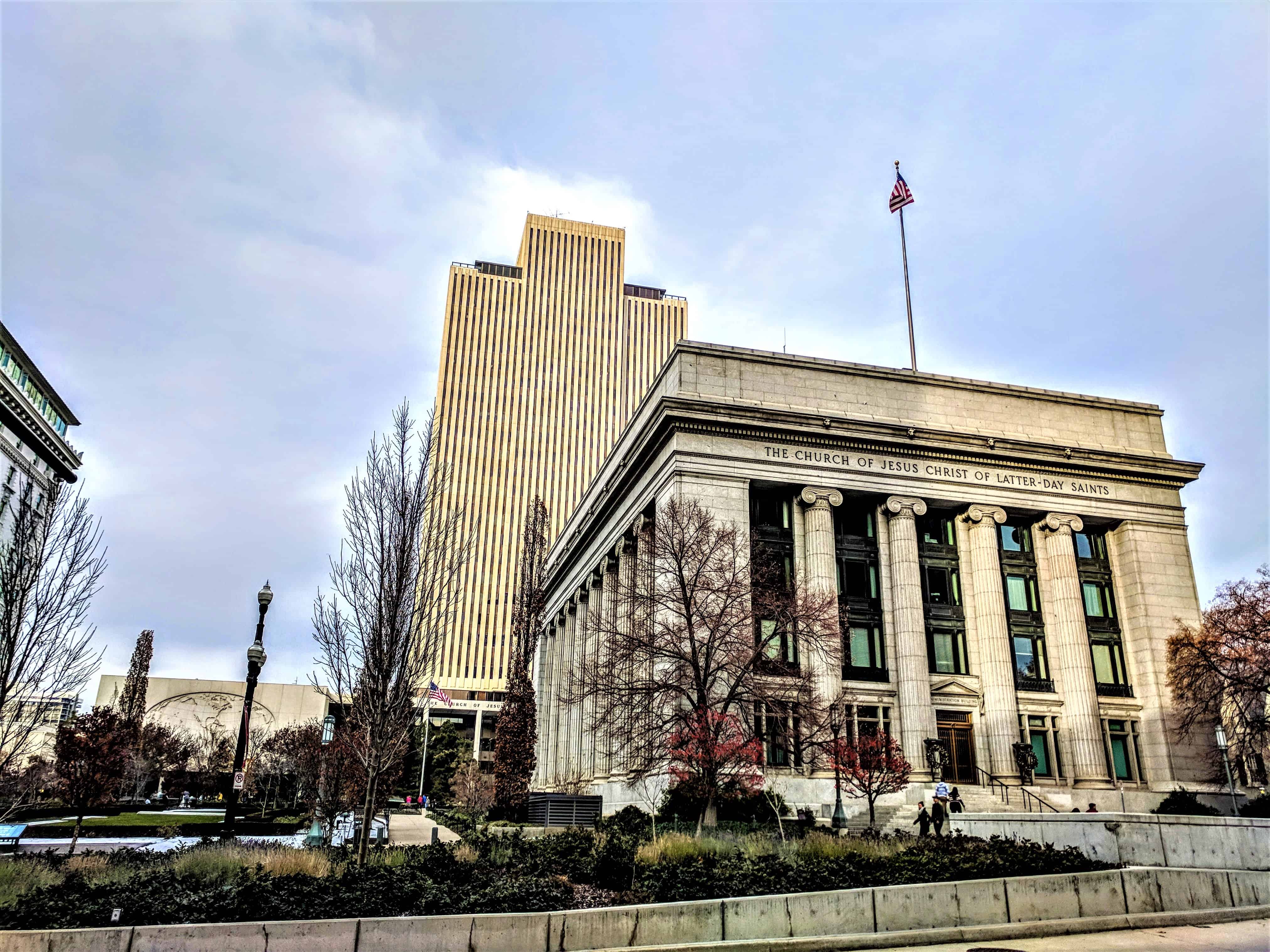
LDS Church Administration Building.

The Church of Jesus Christ of Latter-day Saints constructed this building between 1914 and 1917 to serve as its headquarters.  Prior to its completion, the office of the Church President was located just to the east between Brigham Young’s Lion House and Beehive House.  Today the Administration Building houses the offices of the Church’s First Presidency and other church leaders.  This building is an excellent example of Neoclassical Style architecture.  The 24 iconic pilasters which surround the exterior are made of solid granite.  This granite, as well as that which covers the rest of the steel and concrete structure, was taken from the same quarry as the stone used to build the Salt Lake Temple.

Located at 47 East South Temple in Salt Lake City, Utah

Related:

  • A. E. Tourssen Motor Company Photo Shoot (100 Year Car Tour)
2017-12-02 14.45.50
2017-12-02 14.46.08

Dudler’s Inn

28 Thursday Dec 2017

Posted by Jacob Barlow in Uncategorized

≈ Leave a comment

Tags

Historic Markers, Salt Lake City, Salt Lake County, SUP, utah

  • 2017-10-22 17.39.51

Dudler’s Inn (see Dudler’s Wine Cellar)

Perhaps one of the longest living and prominent residents of the area known as Parley’s Hallow, now officially Parley’s Historic Nature Preserve, was Joseph Dudler. About 1864, he settled in this location. Here he built his home. It was two stories, thirty-six by fifty-six feet in size, with rock foundation walls, the narrow front facing south, and the rest of the first floor dug into the side of the valley. The remains of the rock wall, east of the still existing foundation stones of the original building, is a continuation of the front wall of the lower floor of his Inn. The story above was frame with vertical siding, and it was here that the “Rooms To Let,” dining, and kitchen spaces were provided.

As business improved, in 1870, he built a brewery to the rear and west of the Inn. To provide further for this, he built an addition to the Inn itself, continuing the rock foundations further north sixteen feet with an adobe instead of frame upper story. In addition, he continued the lower floor north, only four feet further in the ground, with what has been called the “Wine Cellar.” Still there, it was a rock-walled room, underground, about fifteen-and-a-half feet wide and twenty feet long with ten-foot high, domed, rock ceiling. It is an ideal place for keeping things cool.

His irrigation water supply was brought to the site in a ditch from Parley’s Canyon Creek, but for drinking water he used a spring on the property northeast of the Inn location which is still flowing.

Dudler operated a saloon or two in town as well as the Inn, and in 1892, added a similar business in Park City where he also continued in the brewing and saloon business. He kept the farm and brewery area going in Parley’s Hallow until his death in October of 1897. His descendants continued using the Inn as a residence, referring to it as the “homestead” until it was destroyed by fire, the work of vandals, the night of the 17th of October, 1952.

This is SUP Marker #75, to see the other SUP Markers visit this page.  This marker is located in Parley’s Historic Nature Park along with 4 others (listed on the park’s page).

  • 2017-10-22 17.40.00
← Older posts
Newer posts →

Follow Jacob

Follow Jacob

Blog Stats

  • 2,047,781 hits

Social and Other Links

BarlowLinks.com

Recent Posts

  • Old Farmers Co-Op Building
  • Fort Douglas Officers Club
  • Israel and Elizabeth Haven Barlow
  • Anson Call
  • Jane Elizabeth Manning

Archives


Loading Comments...