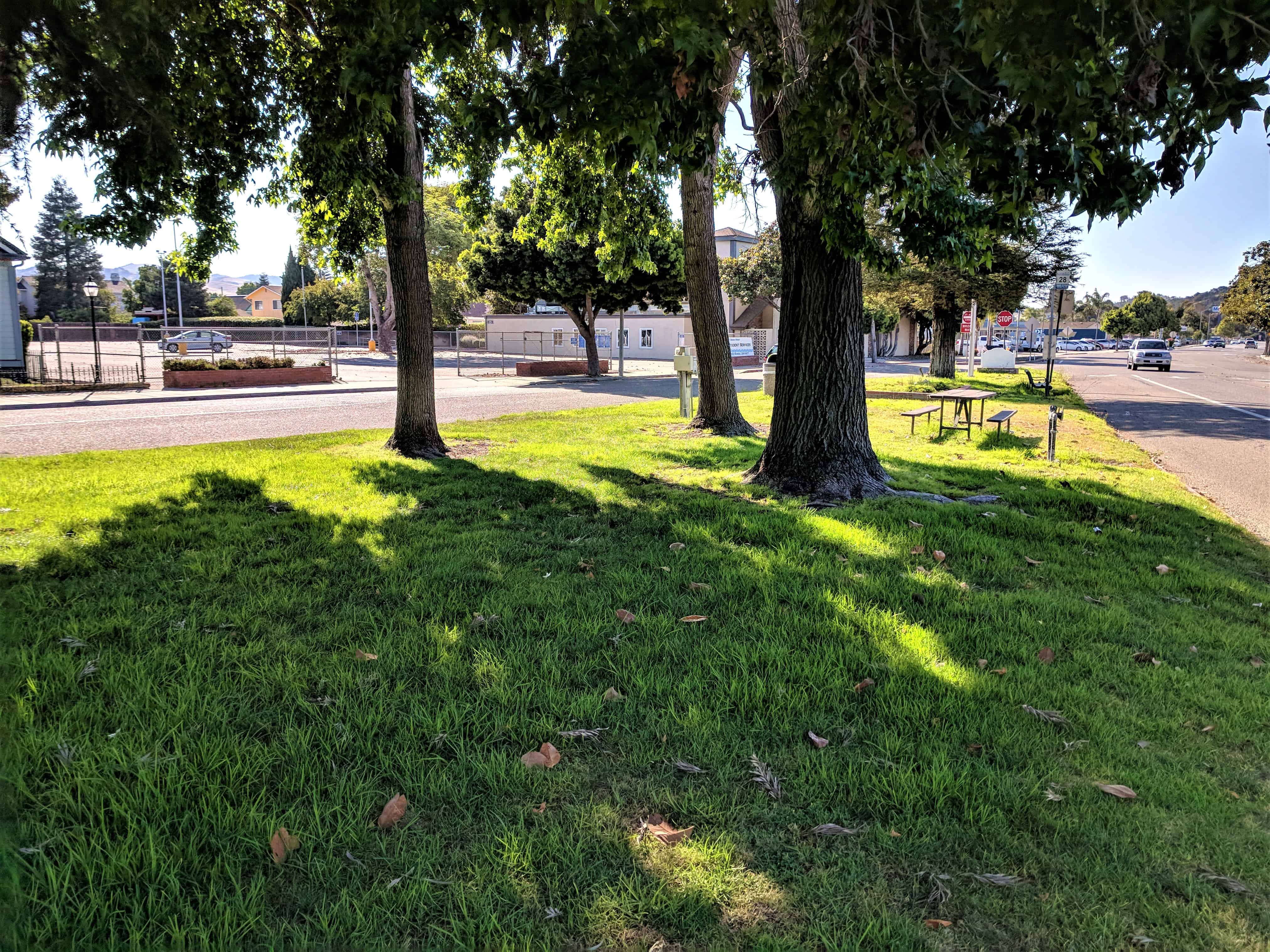
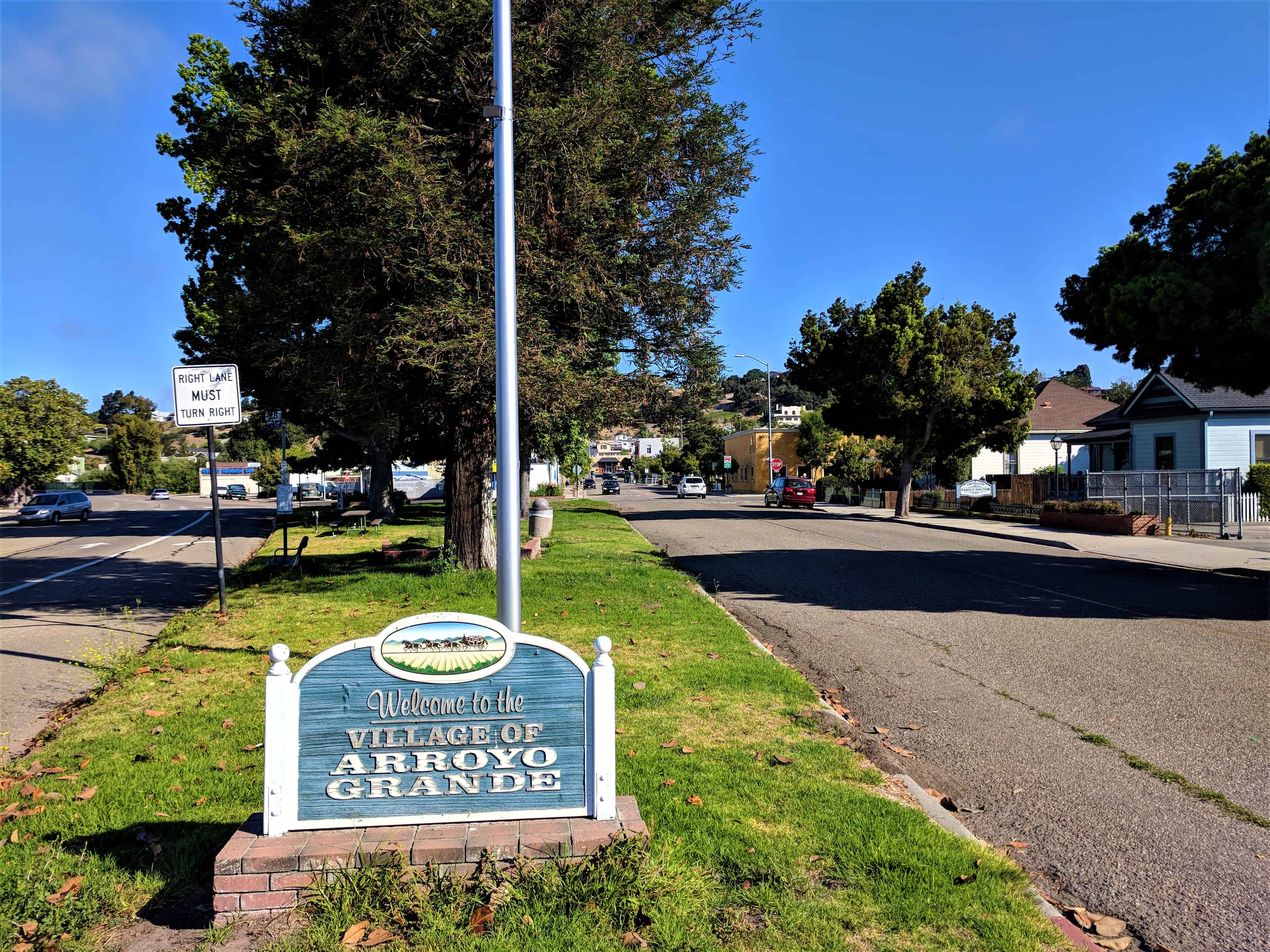
Located in Arroyo Grande, California. Hart-Collett Firefighters Memorial Park commemorates the City of Arroyo Grande being served by its Volunteer Fire Department since 1892. Men and women have given of their time and energy, placed themselves in harm’s way, and responded to the “bell” at all hours of the day and night.
Fire suppression, fire prevention, community education, medical air, rescue and extrication, hazardous materials recovery, and assisting neighboring communities are some of their many contributions.
This park is dedicated in honor and memory of all Arroyo Grande Volunteer Firefighters, past, present, and future.
Chief Harry Hart, 1911-1959, Served for 30 years as Firefighter and Chief
Chief Bob Collett, 1939-1993, Served for 30 years as Firefighter, Engineer, Captain and Assistant Chief
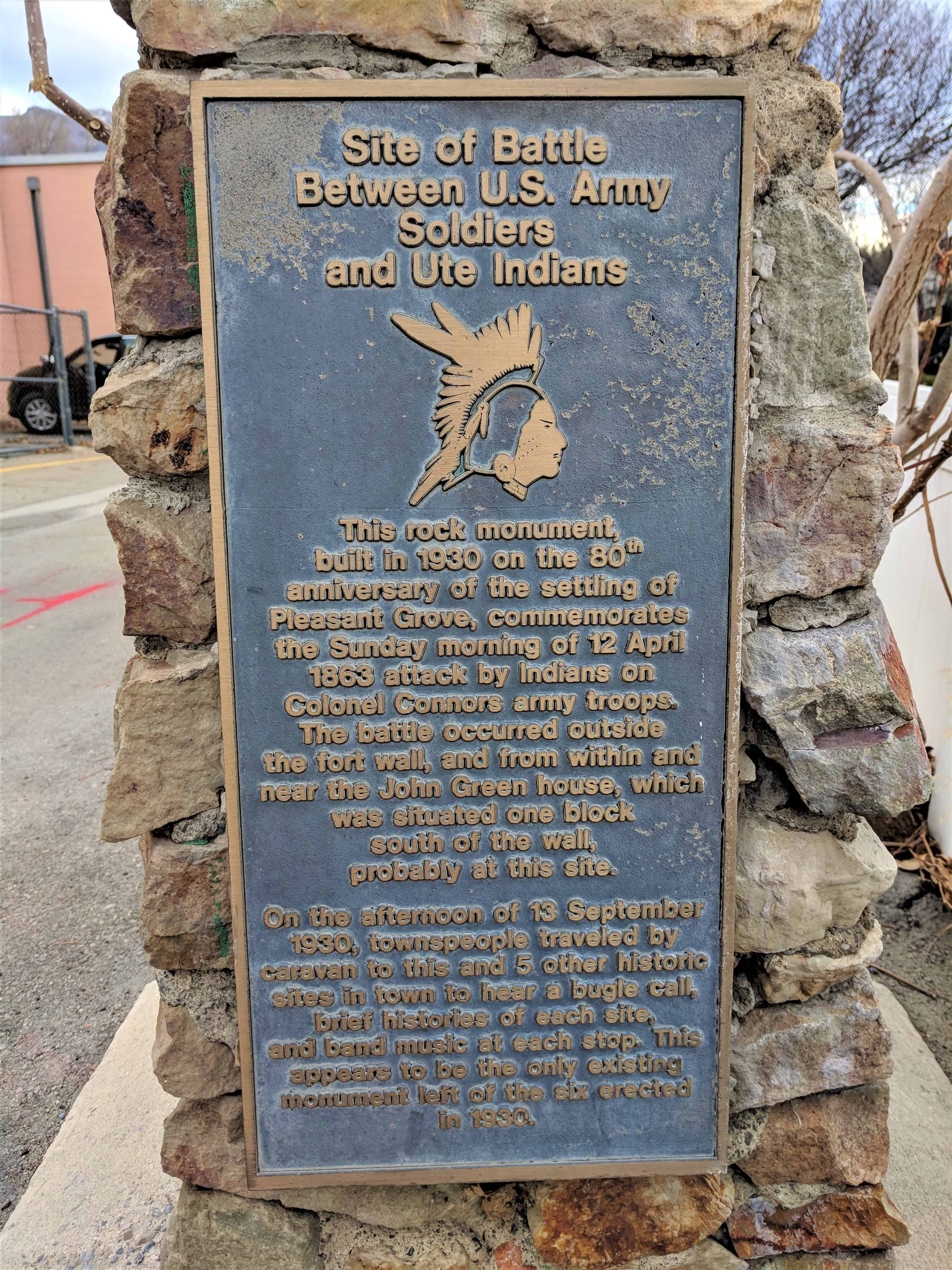
This rock monument, built in 1930 on the 80th anniversary of the settling of Pleasant Grove, commemorates the Sunday morning of 12 April 1863 attack by Indians on Colonel Conners army troops. The battle occured outside the fort wall, and from within and near the John Green house, which was situated one block south of the wall, probably at this site.
On the afternoon of 13 September 1930, townspeople traveled by caravan to this and 5 other historic sites in town to hear a bugle call, brief histories of each site and band music at each stop. This appears to be the only existing monument left of the six erected in 1930.
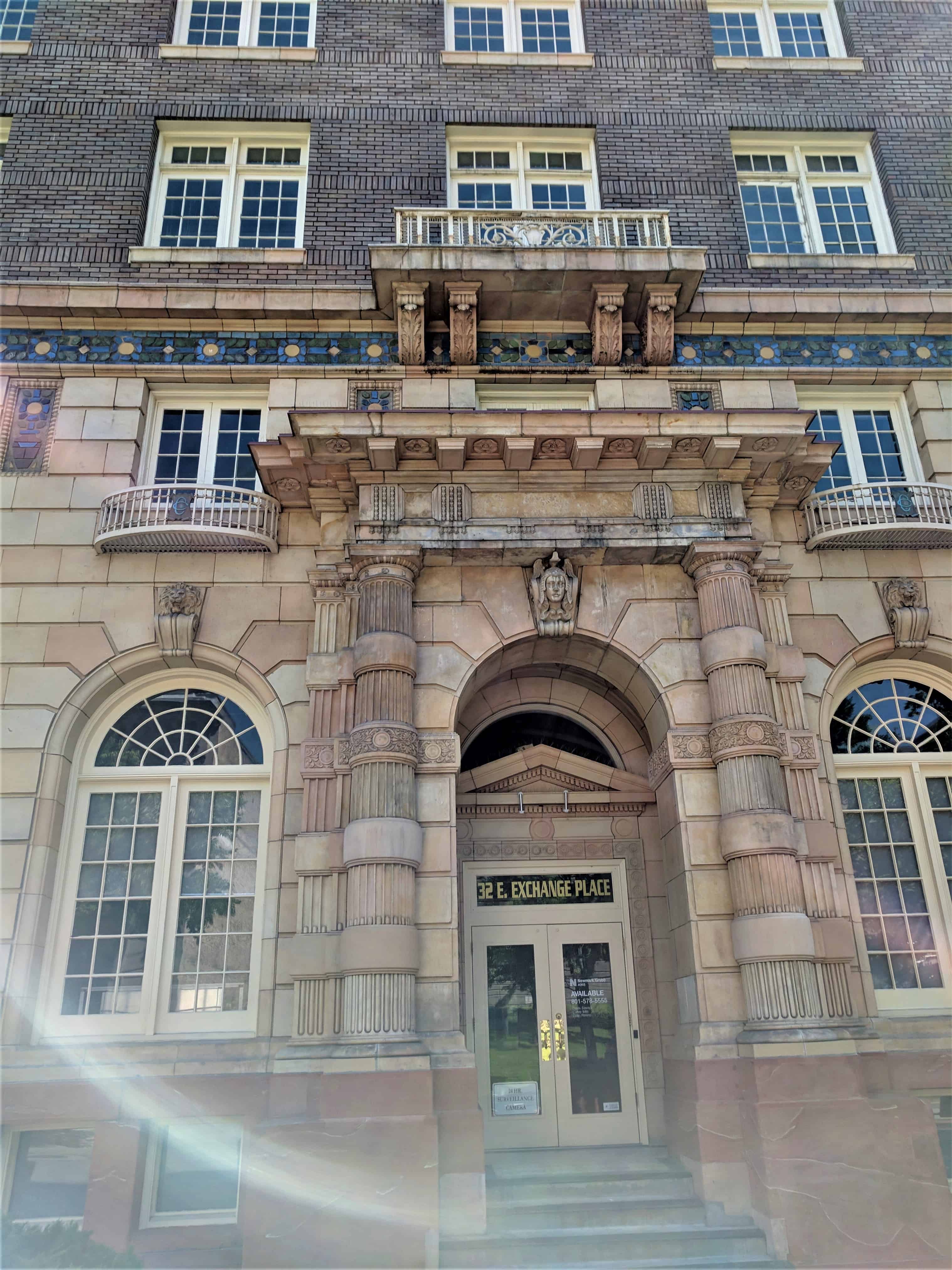
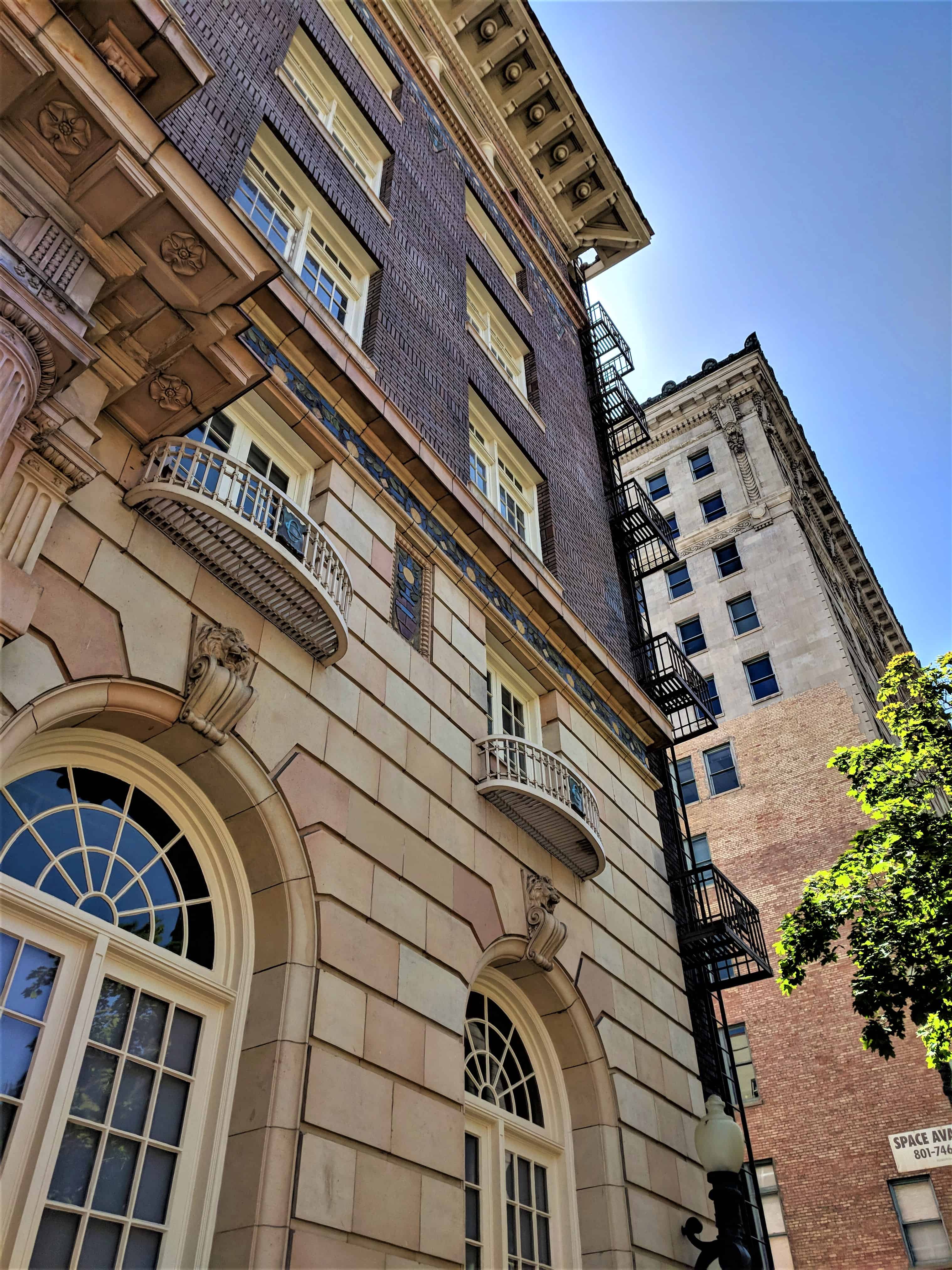
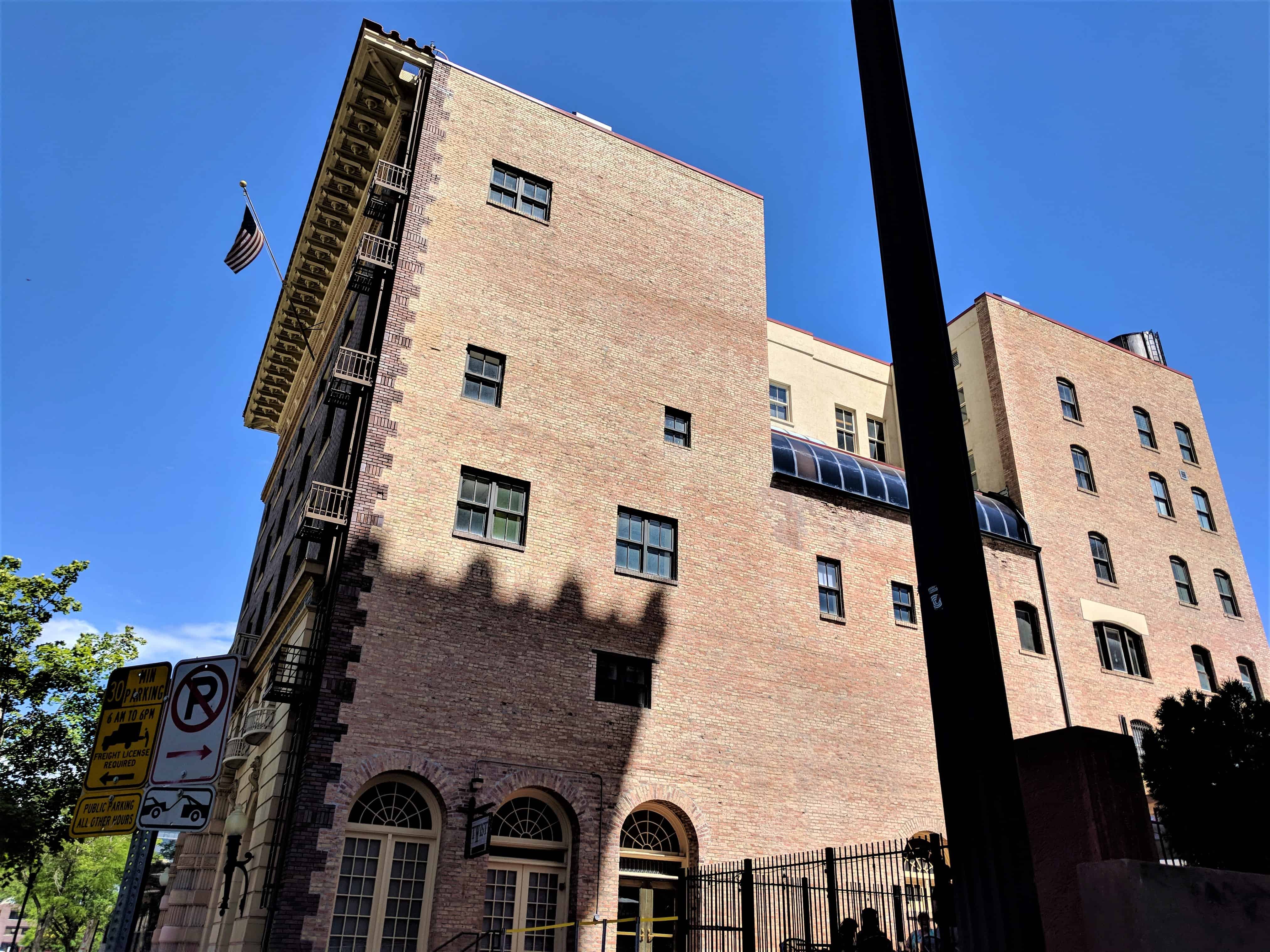
Mining magnate Samuel Newhouse donated this site to the Commercial Club as part of his plan to strengthen the non-Mormon south downtown. The Commercial Club was organized by Salt Lake City businessmen in 1902 to attract new businesses to city. This building was constructed as a luxurious gathering place for the club’s members. It once contained a swimming pool, banquet rooms, and game rooms. The loggia on the sixth floor and balconies on the third floor are typical of the Second Renaissance Revival style. Its polychromatic terra-cotta, inlaid mosaic tiles, and copper cornice make the Commercial Club one of the most colorful buildings in the city.
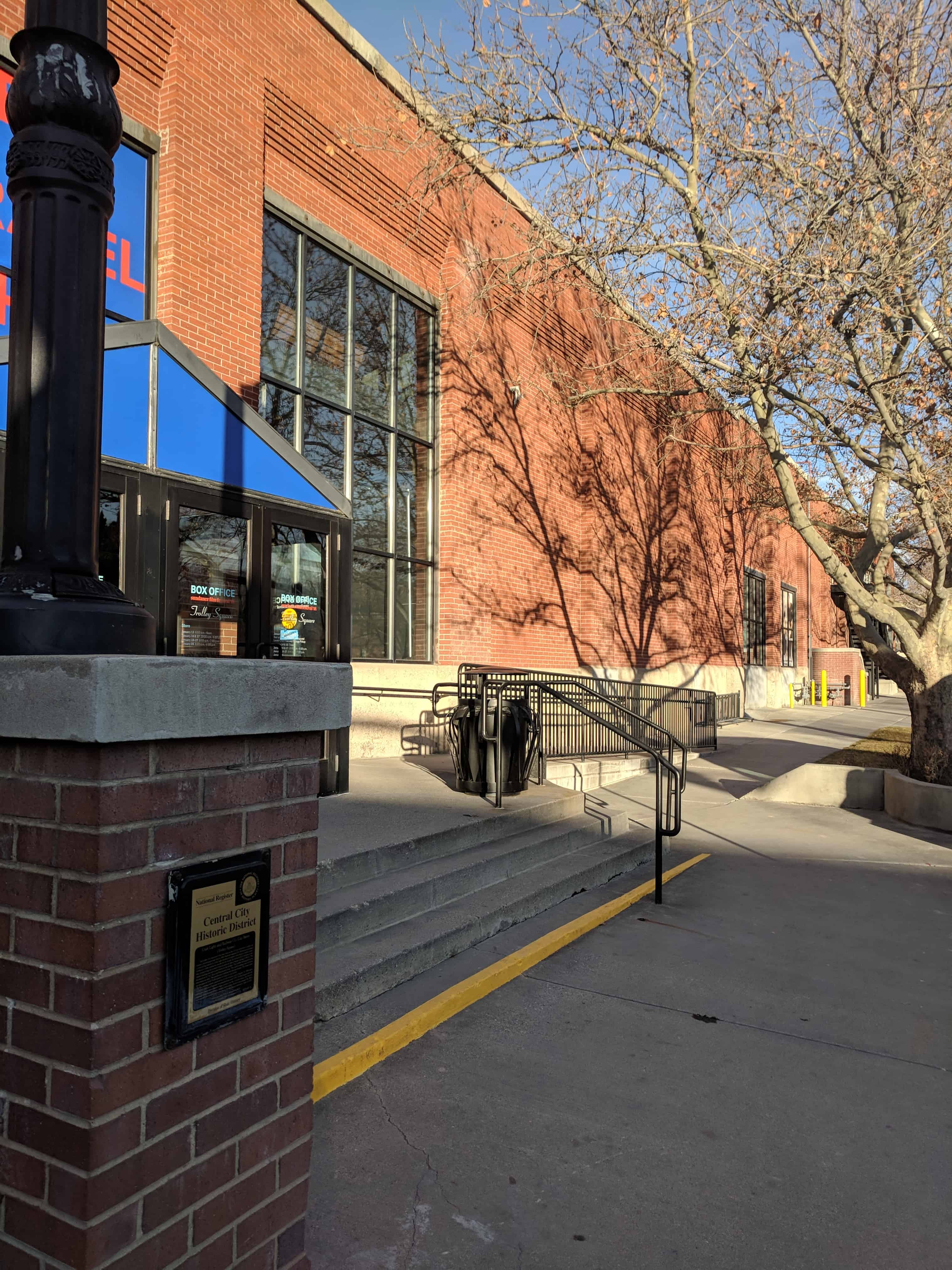
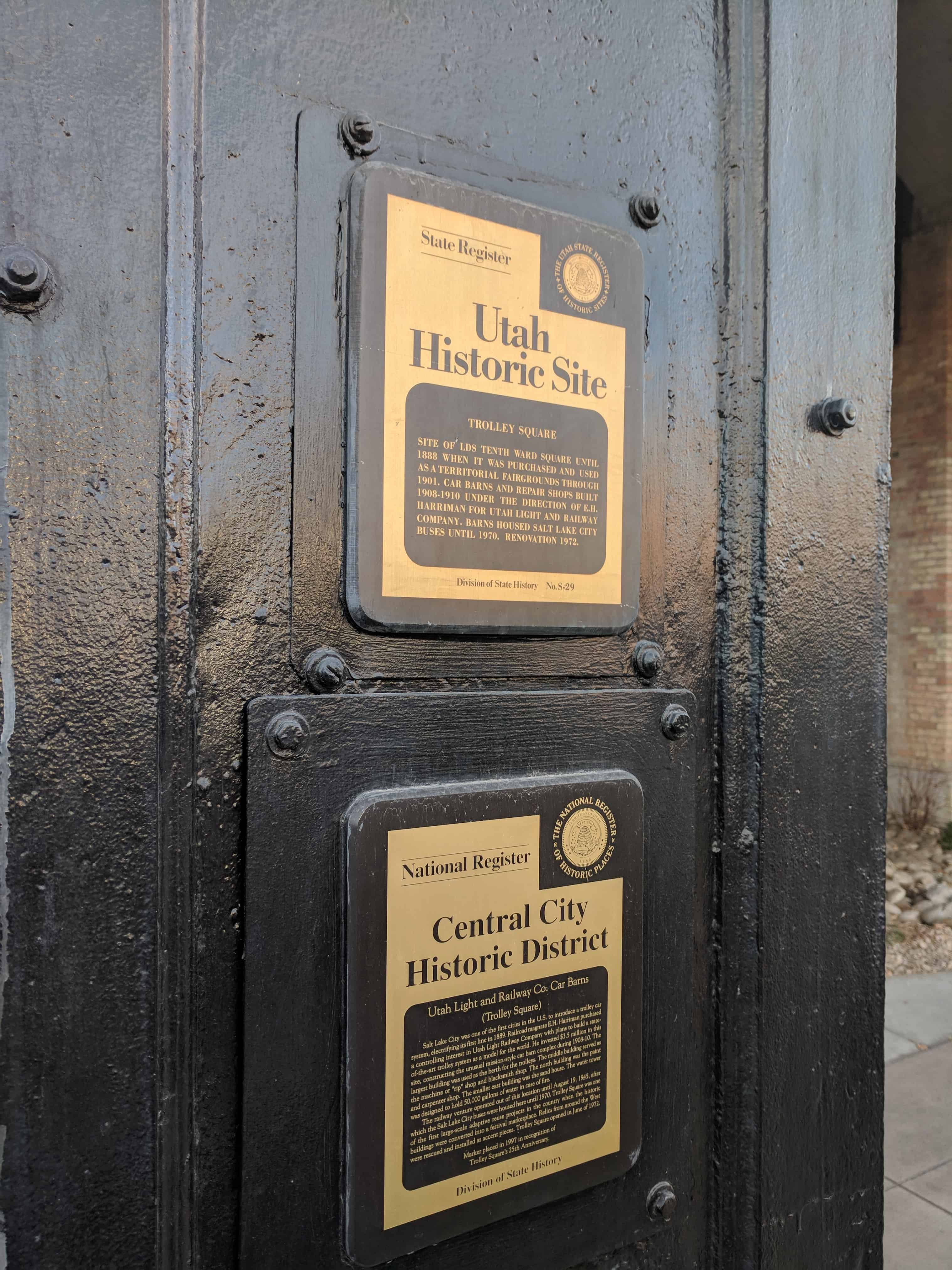
Site of LDS Tenth Ward Square until 1888 when it was purchased and used as a territorial fairgrounds through 1901. Car Barns and Repair shops built 1908-1910 under the direction of E.H. Harriman for Utah Light and Railway Company. Barns housed Salt Lake City Buses until 1970. Renovation 1972.
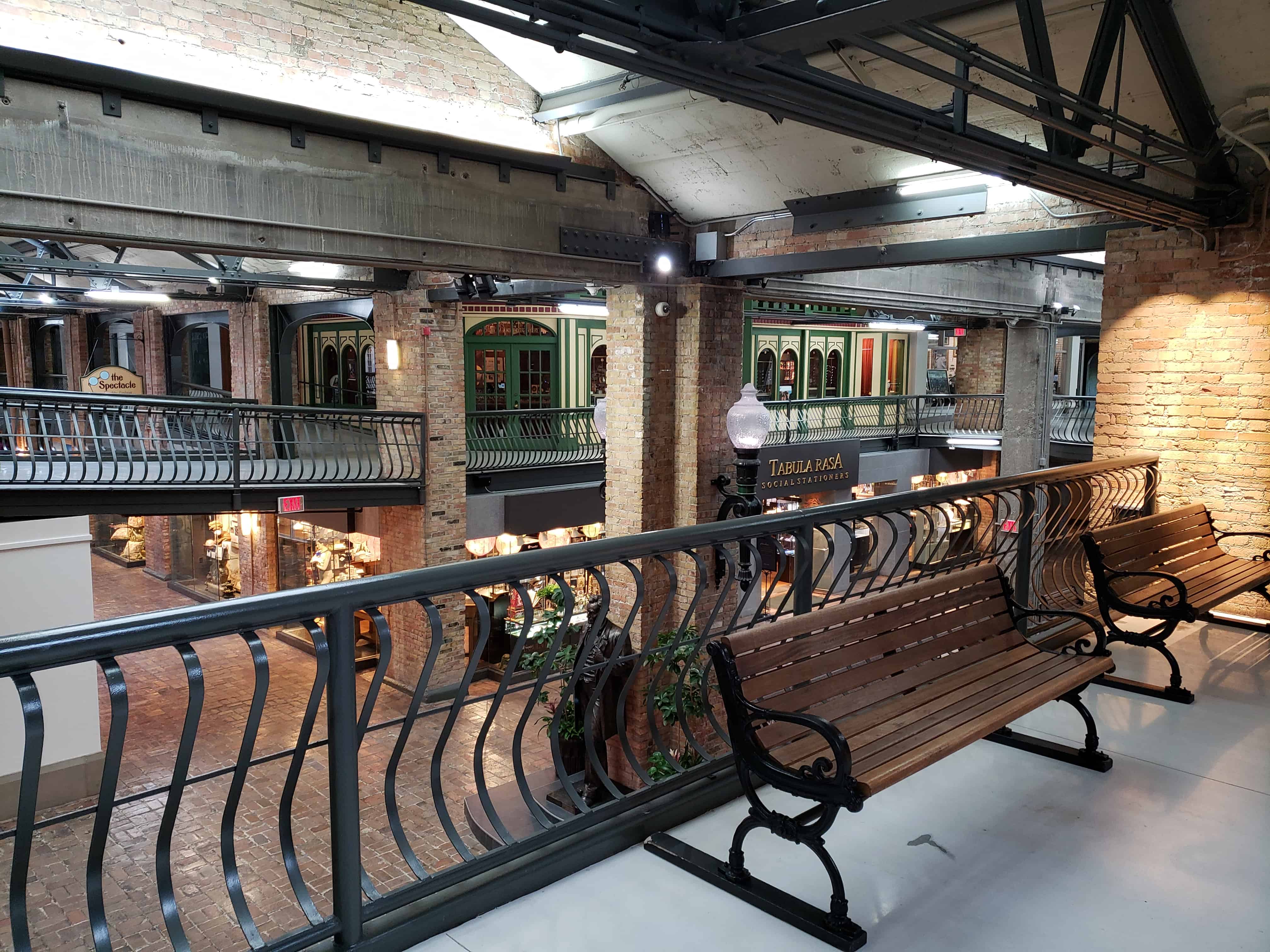
Salt Lake City was one of the first cities in the U.S. to introduce a trolley car system, electrifying its first line in 1889. Railroad magnate E.H. Harriman purchased a controlling interest in Utah Light Railway Company with plans to build a state-of-the-art trolley system as a model for the world. He invested $3.5 million in this site, constructing the unusual mission-style car barn complex during 1908-10. The largest building was used as the berth for the trolleys. The middle building served as a machine or “rip” shop and blacksmith shop. The north building was the paint and carpenter shop. The smaller east building was the sand house. The water tower was designed to hold 50,000 gallons of water in case of fire.
The railway venture operated out of this location until August 19, 1945, after which the Salt Lake City buses were housed here until 1970. Trolley Square was one of the first large-scale adaptive reuse projects in the country when the historic buildings were converted into a festival marketplace. Relics from around the West were rescued and installed as accent pieces. Trolley Square opened in June of 1972.
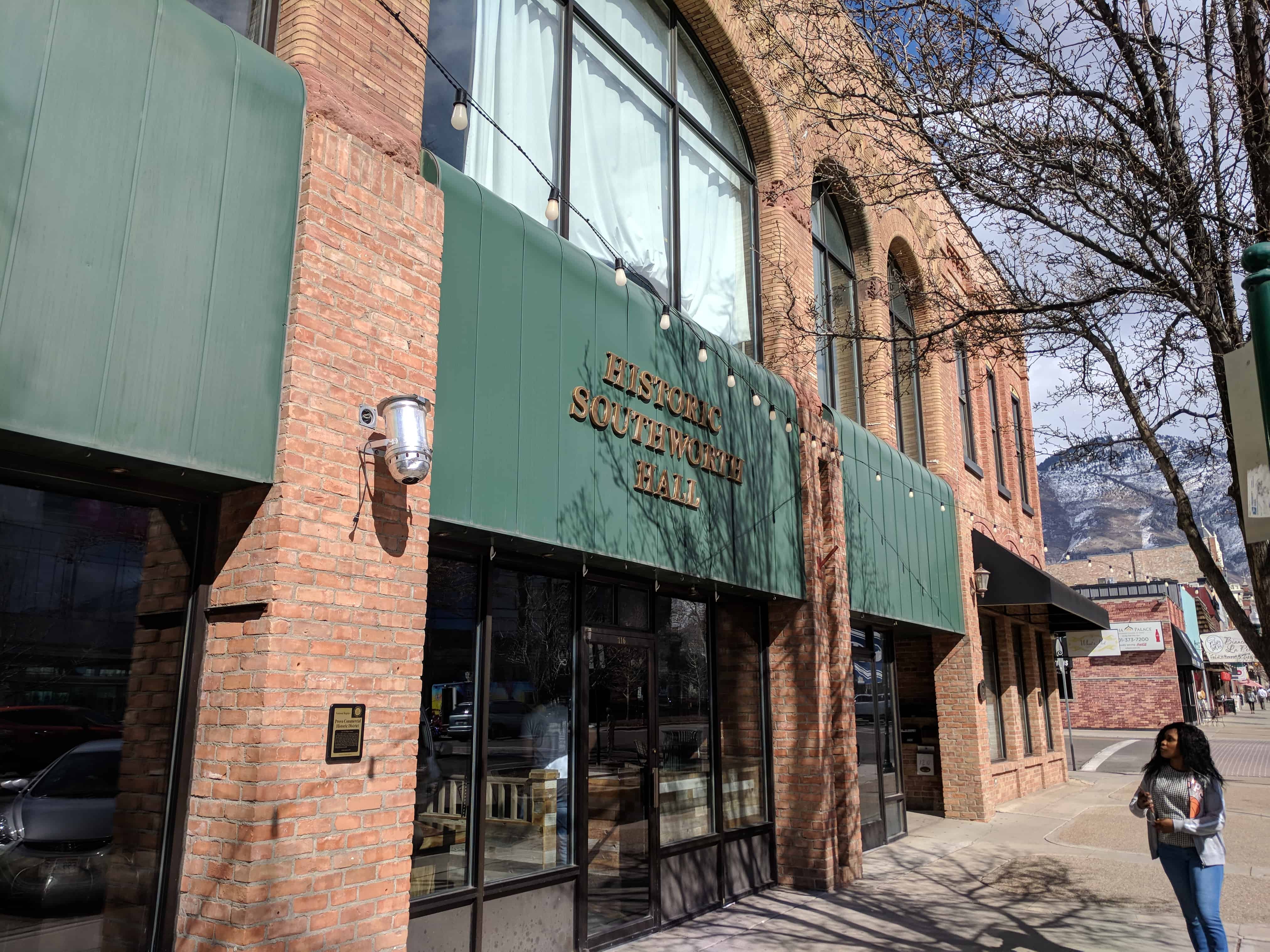
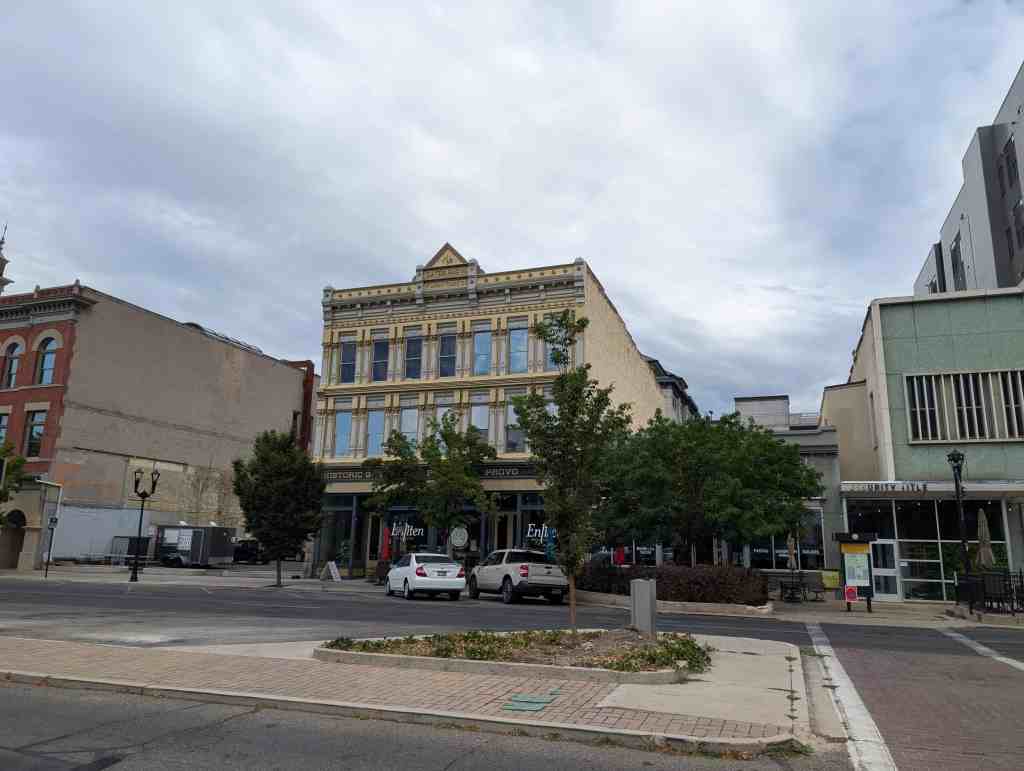
Located at 104 West Center Street in Provo, Utah, this historic building stands out and catches my eye when I’m nearby.
R. Spencer Hines, a pharmacist who made his money in the Tintic mines, constructed this building in 1885 as a drug store and saloon (The Palace) and rebuilt it to its present shape in 1890. Hines was a member of the Independent Order of Odd Fellows (I.O.O.F.), the first fraternal order formed in Provo, an organization which utilized the second floor of this building during 1890-93. In 1893 the second floor was rebuilt to create a rooming house. The drug store continued in operation and eventually became known as Hedquist Drug Store, Ivan’s Drug, Stone Drug, Sanitary Cafe, Cozy Cafe and Provo Pharmacy. Restaurants, such as the Vienna Cafe, have operated in the former saloon area.
The backside of the buildings at 104 West Center Street in downtown Provo are cool looking too, I like the old ghost sign for Provo Pharmacy on the north side.
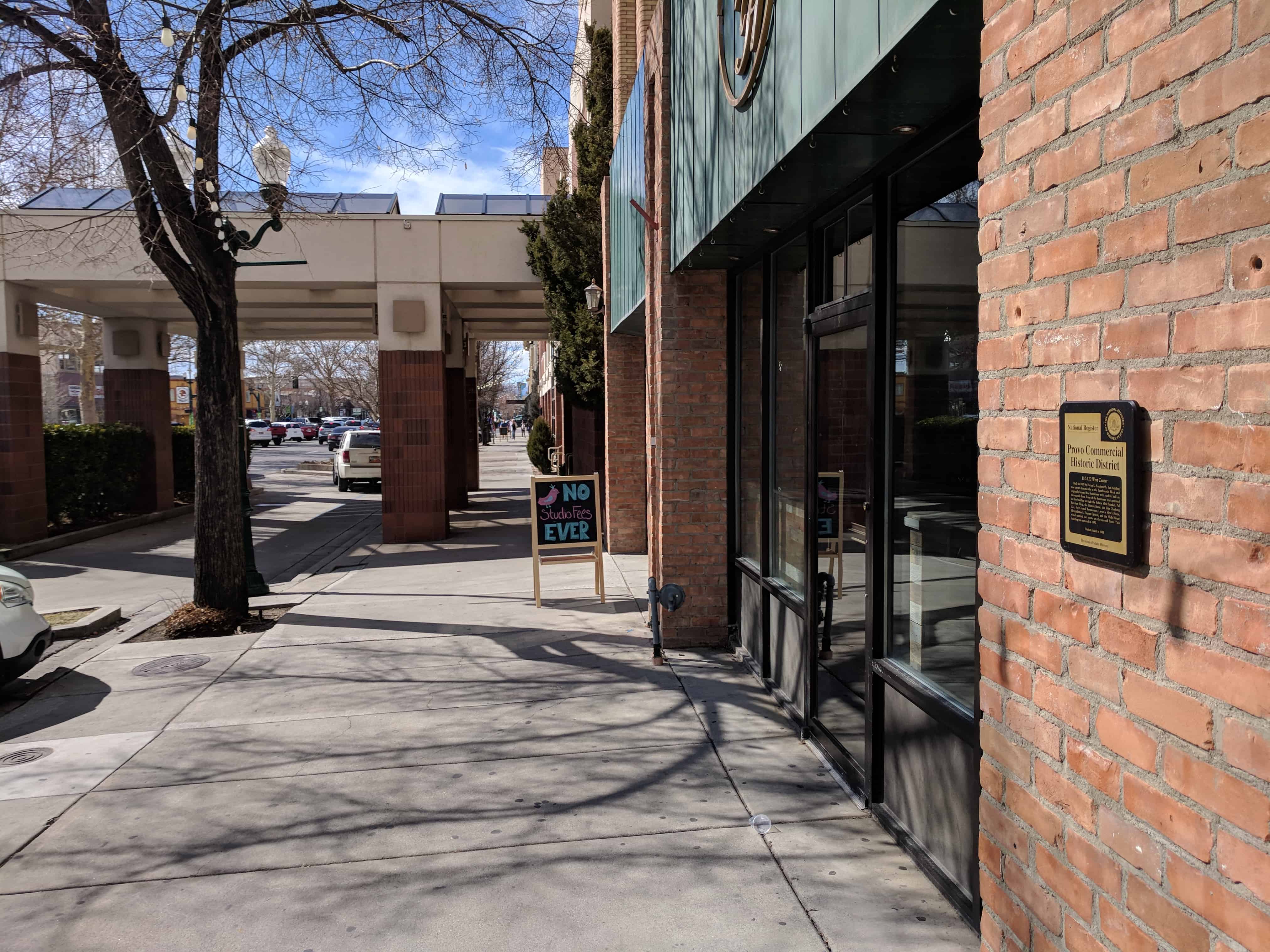
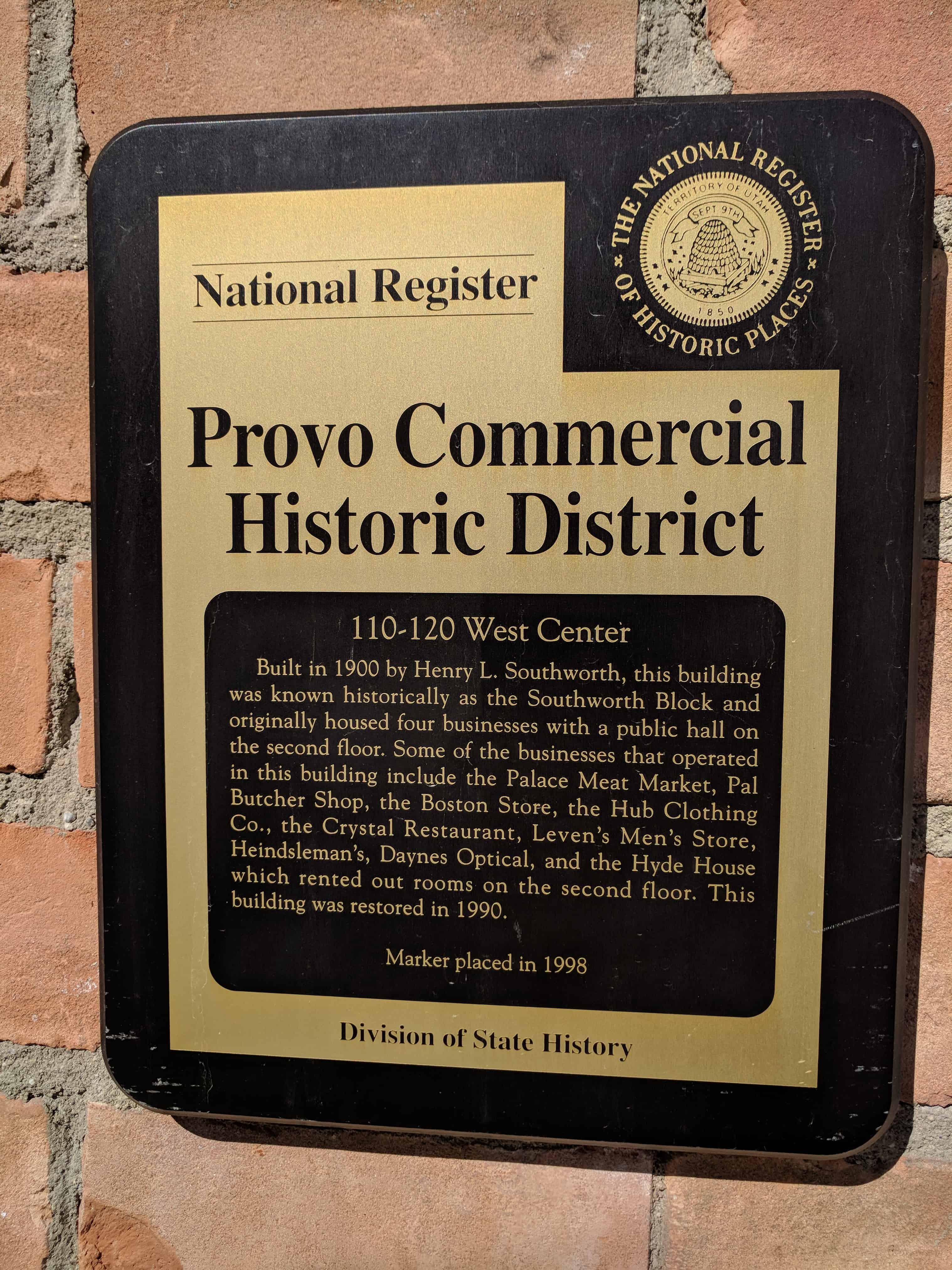
Located at 110-120 West Center Street in Provo, Utah, this historic building was built in 1900 by Henry L. Southworth, this building was known historically as the Southworth Block and originally housed four businesses with a public hall on the second floor. Some of the businesses that operated in the building include the Palace Meat Market, Pal Butcher Shop, the Boston Store, the Hub Clothing Co., the Crystal Restaurant, Leven’s Men’s Store, Heindsleman’s, Daynes Optical, and the Hyde House which rented out rooms on the second floor. This building was restored in 1990.
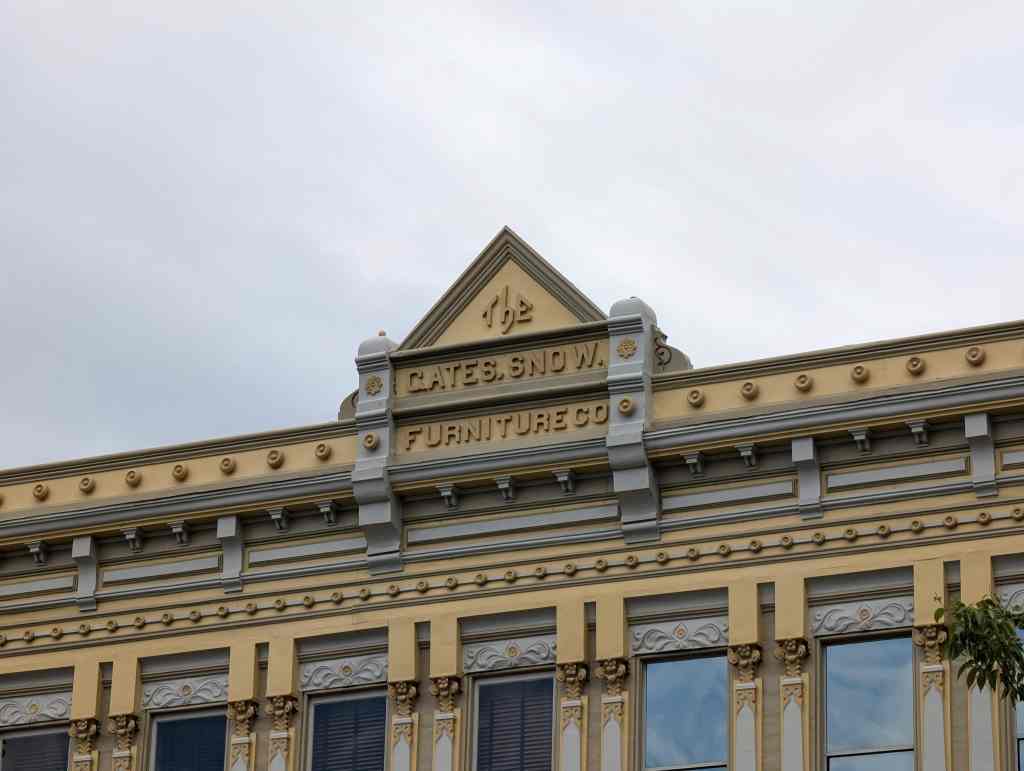
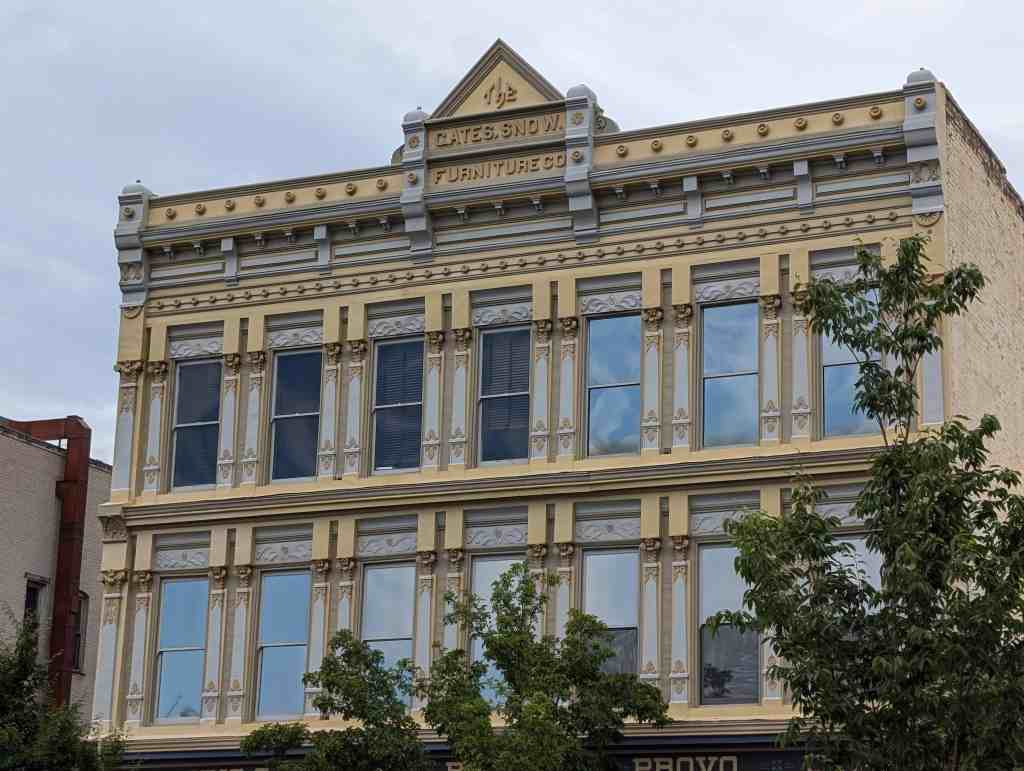
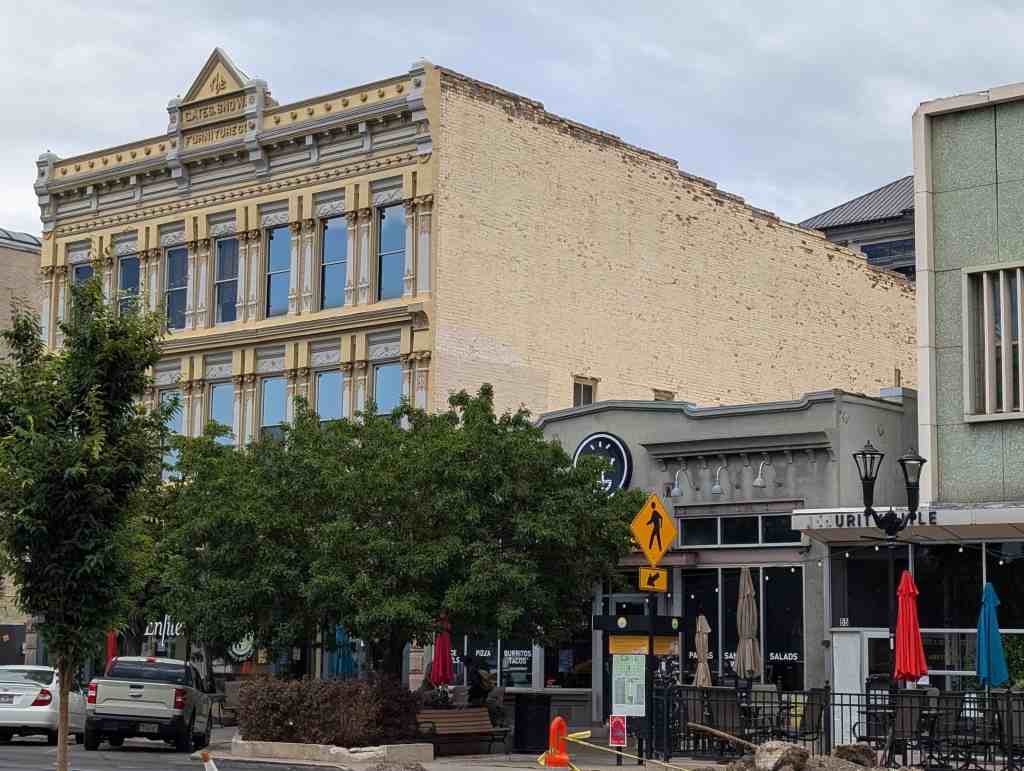
The historic Gates-Snow Building on Provo Center Street.
When Provo residents wanted to buy furniture in the 1880s and 1890s, they had two large choices—Snow Brothers and Taylor Brothers. In December 1886 the Salt Lake Daily Herald announced, “The large and varied stock of furniture . . . at the store . . . seems to indicate that the firm does a large business or else there is some capital unwisely invested. . . . The entire stock of goods . . . might be regarded as one immense display of useful and substantial articles suitable for holiday presents.” In 1887 the newspaper declared, “There appears to be just enough competition” between the Snows and the Taylors. In 1889 the Snow Brothers expanded their store and moved from the first floor the Academy boarding house to the old Factory store across the street from the courthouse. They added a story to the building.
In May 1889 the Salt Lake newspaper declared, “Snow Brothers, the furniture deals, are now established in their new quarters—prouder than ever.” The next year Snow added J. F. Gates as a partner. The new company tore down the existing building and completed a three story building. The paper bragged that it could be expanded to a five story building. The construction of glass and iron resembled the Culmer block in Salt Lake City. According to the Daily Enquirer, “The business of this firm has been rapidly increasing during the past year, making a new building a necessity.” The business’ success did not last.
In 1890 a depression hit Provo, Utah, and the rest of the United States. The impressive building was completed in October 1890. By April 1891 the store was going out of business. According to the Daily Enquirer, “Owing to the stringency in business circles, the Gates-Snow Furniture Company has decided at least temporarily to suspend business and rent their large building.” The owners planned to rent the bottom floor as two stores, the second floor as offices, and the third floor for lodge rooms. Business picked up though, and the December 25, 1892 Provo Herald declared, “J. F. Gates . . . is a business man of merit and conducts a large and growing furniture establishment.” Part of the building was still rented.
The county fair opened offices on the second floor in 1897. In 1898 Jesse Knight purchased the building for $3,600. In 1902 Gates and Snow dissolved their furniture partnership, and M. Snow continued to sell furniture. Gates and Snow continued to operate an insurance business. The Gates-Snow building housed several businesses over the years. In 1901 the Skelton Publishing Company moved from the building to a new one on Academy Avenue. William M. Roylance also had an office there and purchased the building in 1905. Judge M. M. Kellogg, the judge of the juvenile court, established there that year. The corner, according to the Salt Lake Tribune, became “the busiest section of Provo” when the Independent Telephone Company moved into the Gates-Snow building and the Western Union and Rocky Mountain Bell Telephone Company planned offices nearby.
In the 1890s walking by the Gates-Snow building could be a “shocking” experience. According to the Daily Enquirer, the steel front “was strongly charged with electricity . . . on account of defective wiring.” As a result, “a great many persons standing on the wet ground and coming in contact with the building received an electric shock. The defect was soon remedied.” The next year a small fire broke out in the lumber coal bin. Someone had started a bonfire to burn papers. However, “the fire was extinguished in a few minutes. The loss was slight.” -Research by D. Robert Carter