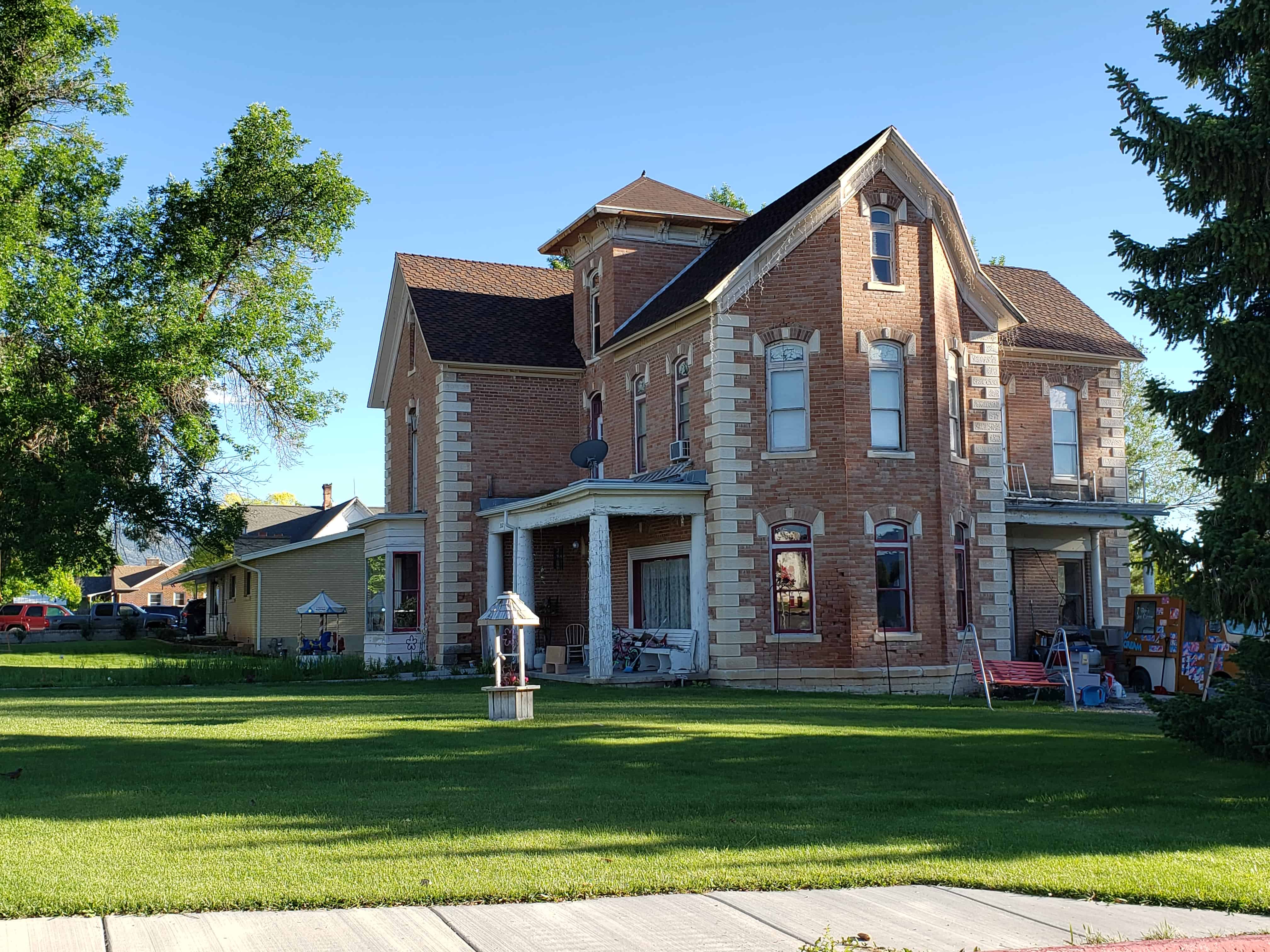
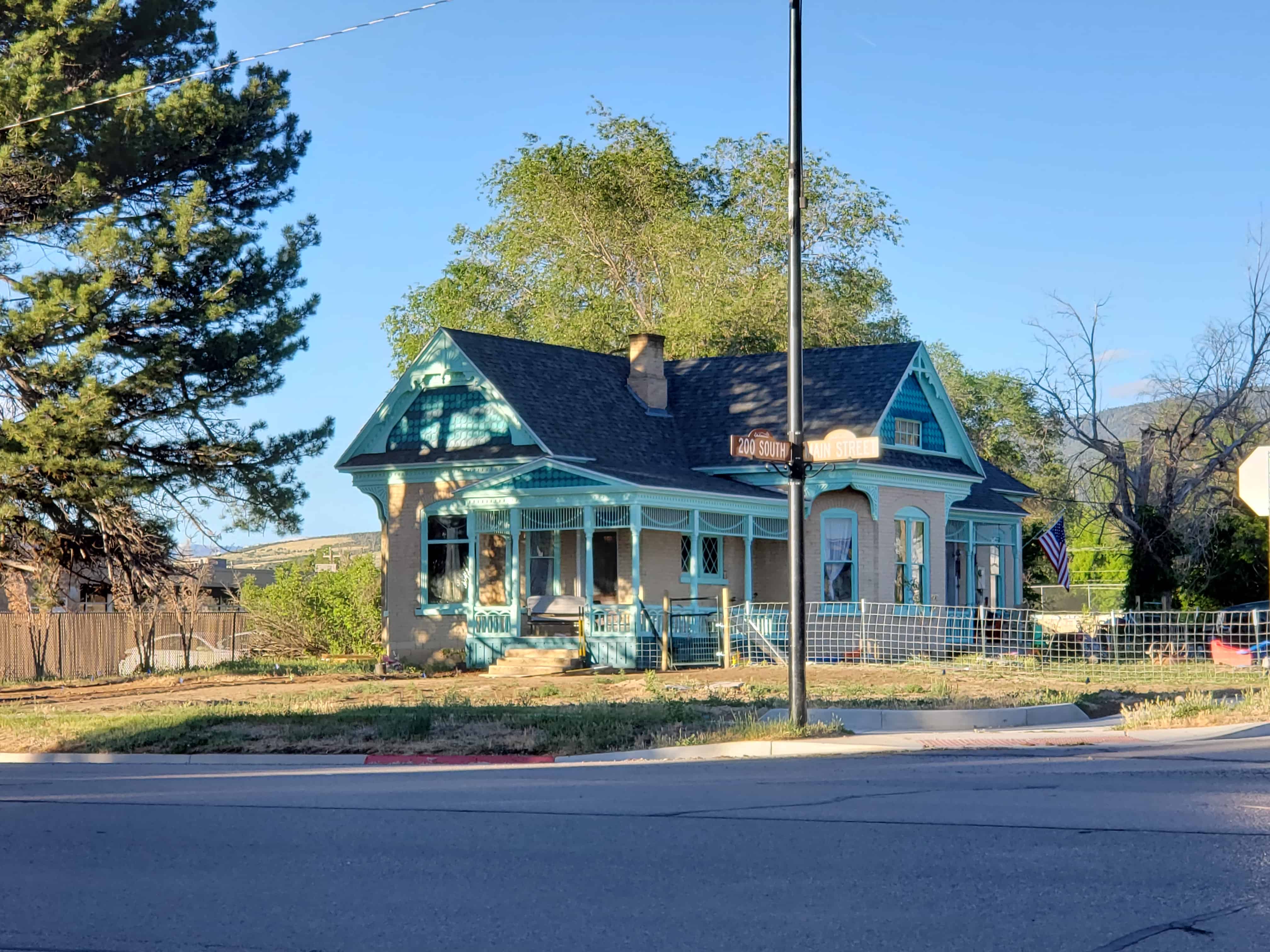
This fine Queen Anne style house was constructed in 1897 for John Dorius, Jr., a prominent local businessman. The son of a Danish immigrant farmer, John Dorius pieced together a successful career in farming, freighting, and merchandising in Ephraim during the 1880s and 1890s before moving his business to Salt Lake City in 1905. In scale, massing, and decorative detail, the Dorius House is a noteworthy expression of the Queen Anne design principals and remains one of the most outstanding examples of this important architectural style outside the major urban areas of Salt Lake City and Ogden. The barn in back of the house, built about the same time as the house, represents an excellent example of European craftsmanship which came to Sanpete Valley as part of the Mormon colonization.
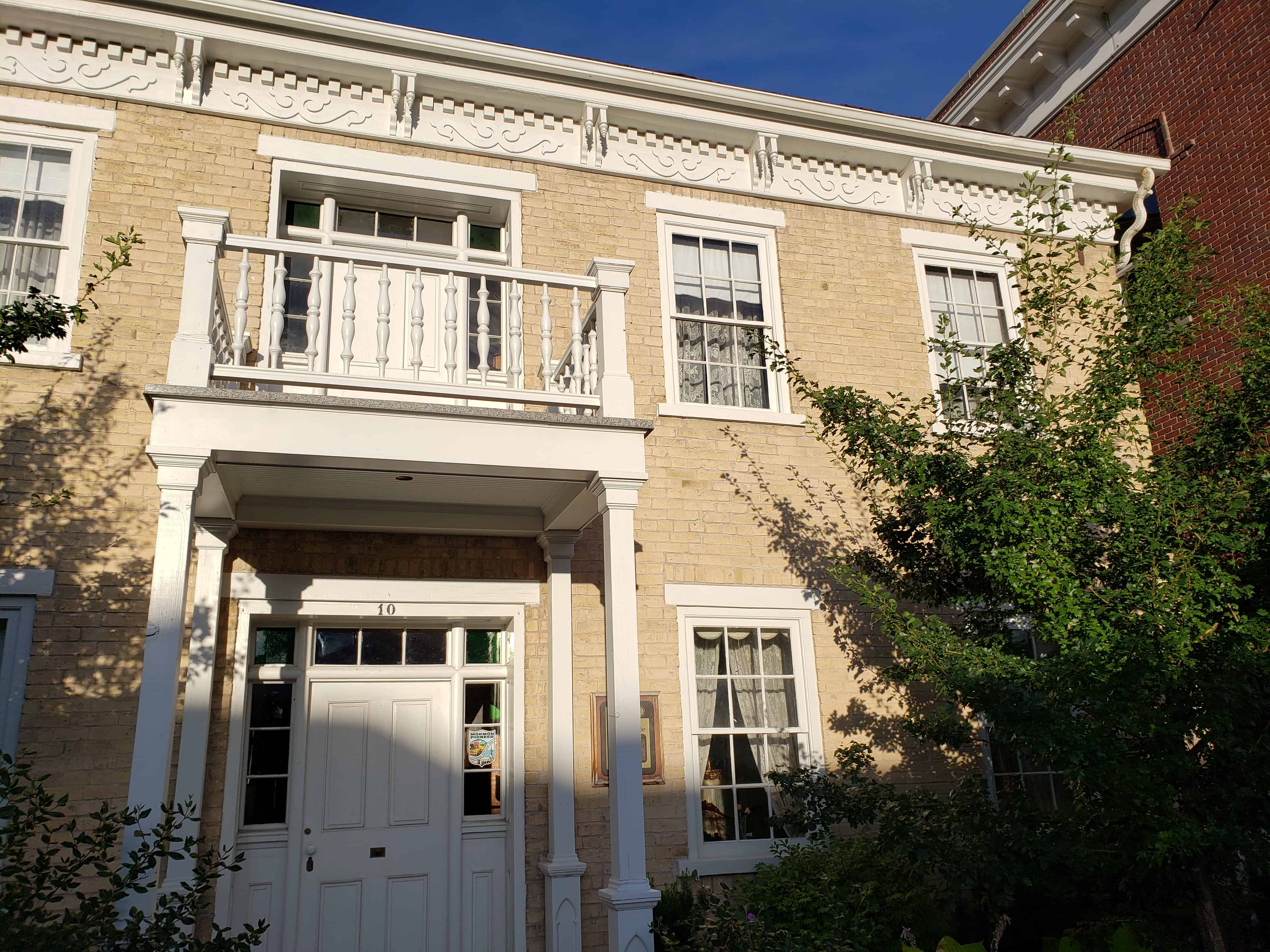
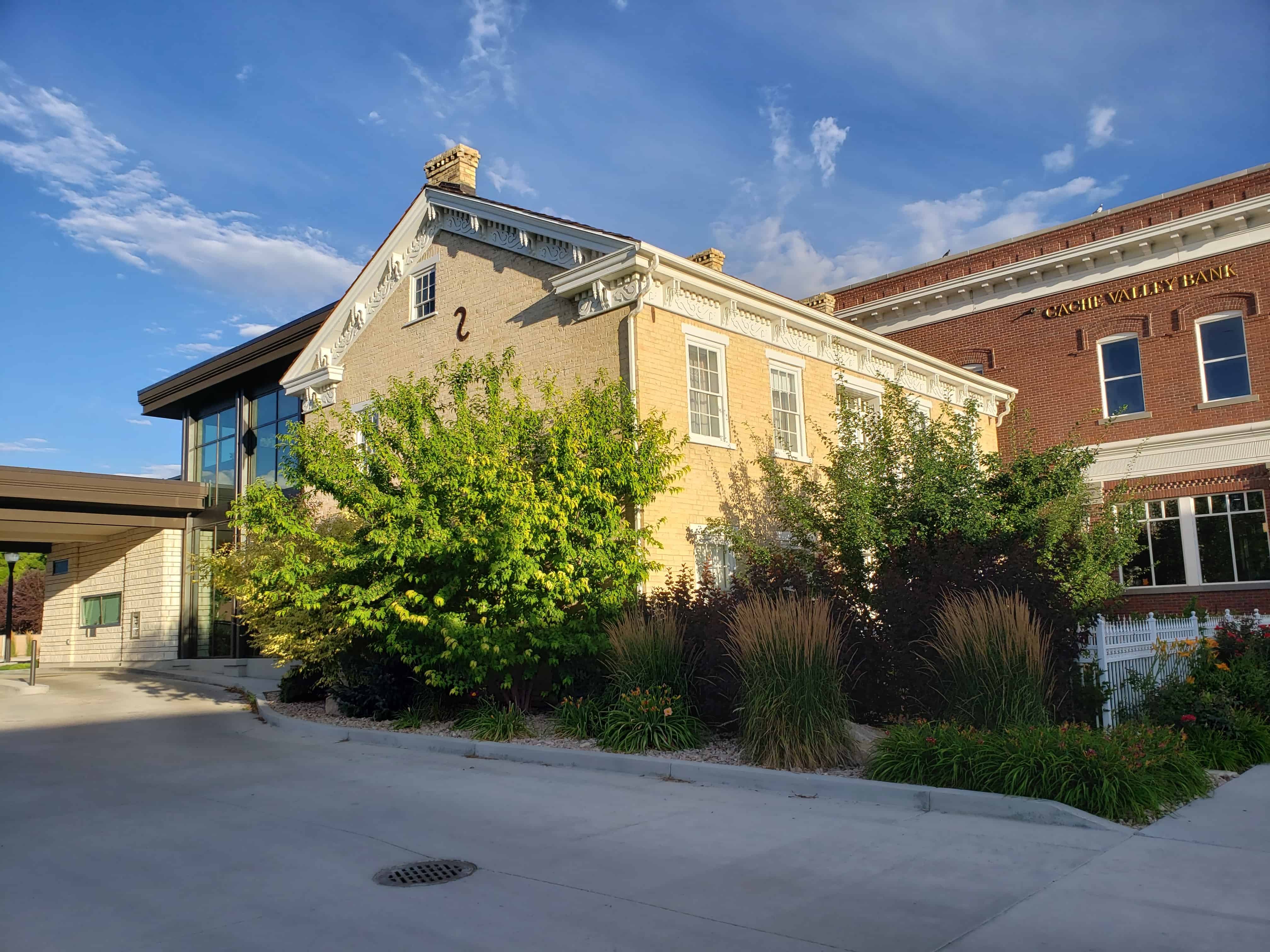
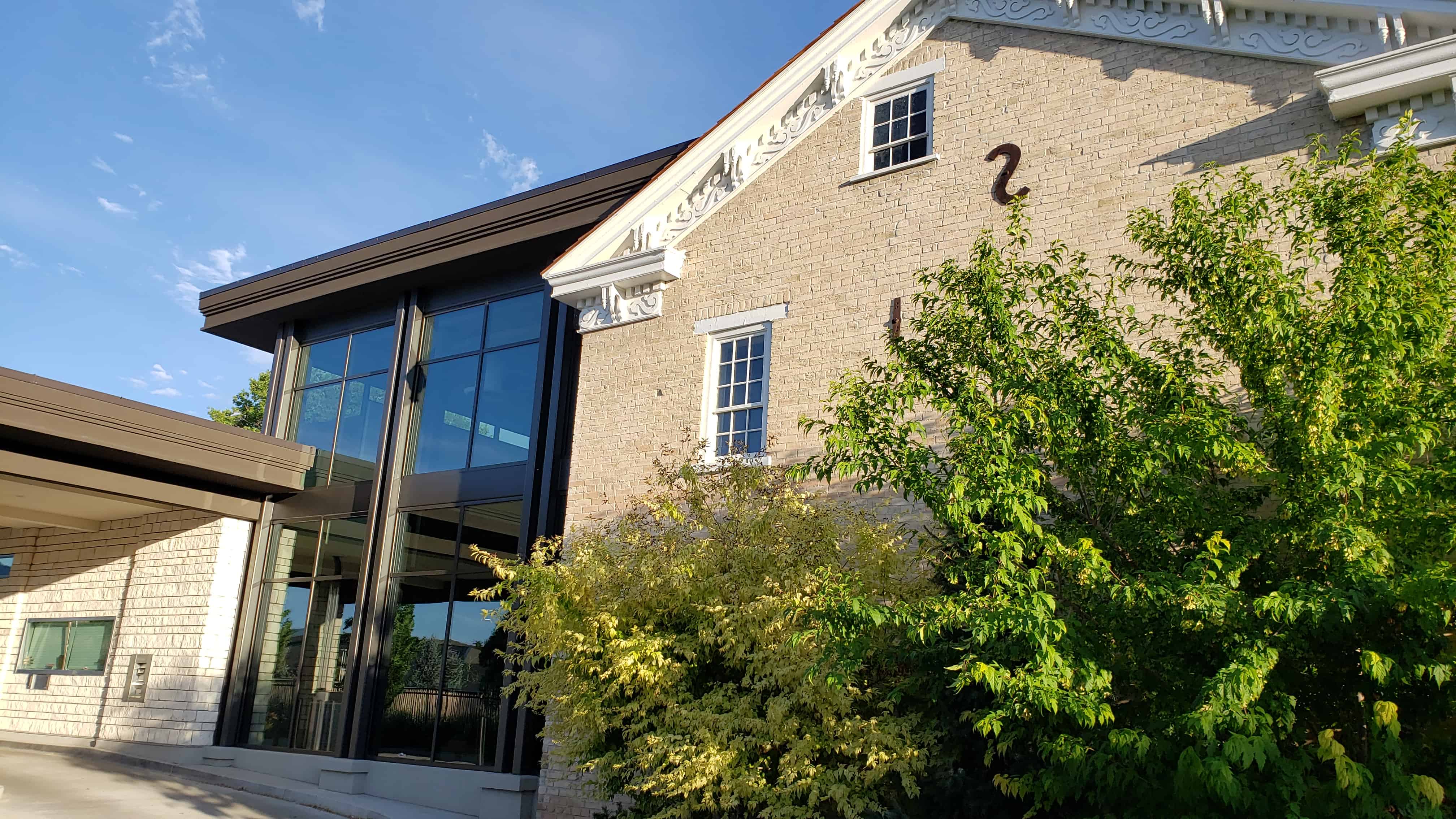
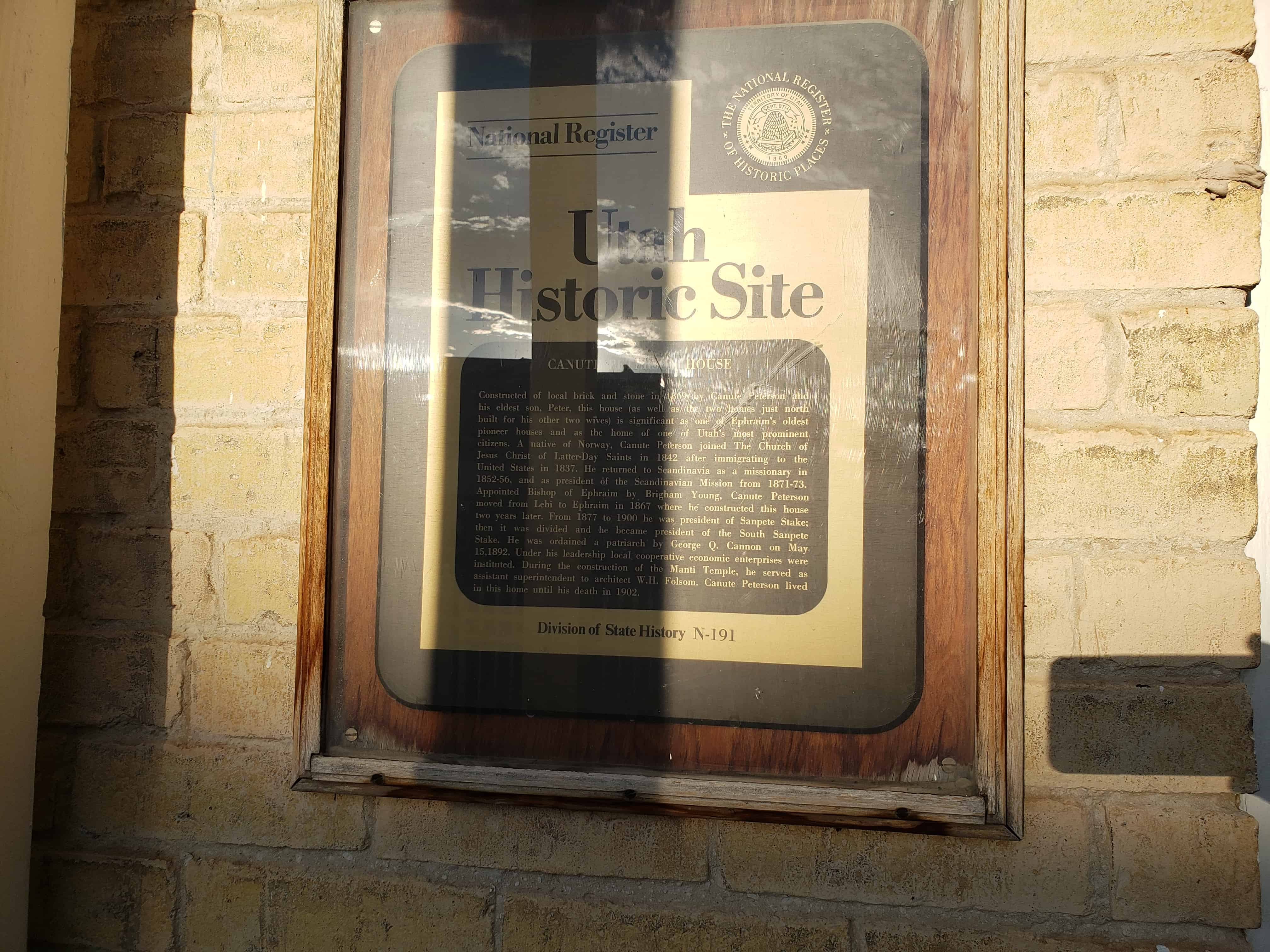
Constructed of local brick and stone in 1869 by Canute Peterson and his eldest son, Peter, this house (as well as the two homes just north built for his other two wives) is significant as one of Ephraim’s oldest pioneer homes and as the home of one of Utah’s most prominent citizens. A native of Norway, Canute Peterson joined The Church of Jesus Christ of Latter-Day Saints in 1842 after immigrating to the United States in 1837. He returned to Scandinavia as a missionary in 1852-56, and as a president of the Scandinavian Mission from 1871-73. Appointed Bishop of Ephraim by Brigham Young, Canute Peterson moved from Lehi to Ephraim in 1867 where he constructed this house two years later. From 1877 to 1900 he was president of Sanpete Stake; then it was divided and he became president of the South Sanpete Stake. He was ordained a patriarch by George Q. Cannon on May 15, 1892. Under his leadership local cooperative economic enterprises were instituted. During the construction of the Manti Temple, he served as assistant superintendent to architect W.H. Folsom, Canute Peterson lived in this home until his death in 1902.
The Canute Peterson House is located at 10 North Main Street in Ephraim, Utah and was added to the National Historic Register (#78002689) on July 17, 1978.
One of the first Scandinavians to join the Church of Jesus Christ of Latter-day Saints, Canute Peterson, played a leading role in the conversion of many of his countrymen to Mormonism. He served three separate missions spanning a total of eight years in the Scandinavian countries. On his three return trips to Utah he guided hundreds of Scandinavian converts to Utah and as President of Sanpete Stake, to which the majority of Scandinavian converts went, he was responsible for their temporal and spiritual welfare after reaching the Mormon Zion.
During his tenure as stake president, the Manti Temple was constructed and the educational institution which became Snow College was established. A man who was well respected in the community, he was described as “. . .a man who blesses and is blessed; who loves and is loved; who respects and is respected, . . .”
A Utah pioneer of 1849, Canute Peterson devoted his life to the development of Utah and the growth of his church. The home, constructed by him and his oldest son in 1869, is a well preserved and fitting symbol, to a man whose role in Utah history is of significance.
Canute Peterson,, who constructed his Ephraim house in 1869, was born May 13, 1824, in Bids Fjord,” ‘Hardanger, Norway.” At the-age of thirteen he emigrated with his parents to America in 1837 and settled in La Salle country, Illinois, with a large group of Norwegian Quakers who were among the first emigrants “from Norway to the United States. They were known as “Sloopers” because they had sailed to America in a small sloop which they had purchased. Canute’s father, Peter, found earning a living on the Illinois frontier extremely difficult. Within eight months of their arrival, he was suddenly taken ill and died. Canute, left to care for himself, his mother, and pay off a $400 emigration debt, hired himself out by the month to farmers in the area. In 1842 he and his mother joined the Mormon church and became part of an active branch of approximately 100 Norwegian converts. After a visit to Nauvoo, Illinois, in October 1844, he was asked to serve as a missionary among the Norwegian emigrants in Wisconsin. Returning to his house in the spring of 1845 he continued his work on the surrounding farms.
Because of his invalid mother, Canute did not join the 1846-47 westward migration following the Mormon expulsion from Nauvoo. However, following her death in June 1848, he began making preparations for the journey to Utah and the following April he left La Salle, Illinois, in company with twenty-one other Norwegian Mormons for Utah. While enroute to Utah he married his first wife, Sara Ann Nelson on July 2, 1849.
Apparently Canute had hoped to settle near Salt Lake City, but when it appeared that all of the good farm land had already been claimed he and five other men accepted the assignment to help establish the community of Lehi in the north end of Utah Valley.
During the winter of 1850-51, Canute constructed a log cabin at Lehi and in the spring of 1851 he moved his family to the new home. A little over a year later Canute was given a new assignment by Brigham Young. In September 1852 he left his pregnant wife and two-year old son Peter for a four year proselyting mission to the Scandinavian countries. After working in Denmark, he went to Norway where he was the first Mormon missionary to work in Christiania (now Olso), the capital of Norway. While in Norway, he visited his birthplace and met many of the relatives who he had not seen for seventeen years. The mission was extremely difficult. Mobs threatened the Mormons with violence and on more than one occasion Canute was forced to defend himself with an iron rod or flee a city and hide in the woods. The police offered no protection and the Mormons were forced to take great precautions to avoid imprisonment for their missionary work. However, converts were made and when Canute Peterson left Liverpool, England on December 12, 1855, to return home, of the 512 Scandinavian converts for whom he was responsible, 46 were Norwegian. The company reached Salt Lake City September 20, 1856. Among the Norwegian converts escorted by Canute to Utah was Gertrude Maria Rolf son, a twenty-seven year old native of Christiania. On November 7, 1857, Canute took her as his second wife.
Upon returning to Lehi, Canute spent the next several years developing his farm and adding new rooms to his log house. In 1863 Canute was made a counselor to Bishop David Evans. During the period, several children were tarn to Sara and Maria. In February 1864, Canute was asked to return to Norway and serve a two year mission. During the nine years since his first mission, the Norwegians had grown more tolerant of the Mormons and the missionary work proceeded with greater success and fewer threats from mobs and the police. Returning to Utah in 1866, Canute once again married one of the Norwegian converts, the twenty-two year old Charlotte Amelia Extram, on February 2, 1867.
Later in 1867 Brigham Young asked Canute to leave his Lehi home and move south to Ephraim where he was to serve as Bishop. The assignment was of special importance because of the Black Hawk War which centered in the Sanpete area around Ephraim. During the peace negotiations, several of the Indian chiefs visited the Canute Peterson home in Ephraim and partook of food prepared by Bishop Peterson’s wives.
In 1869 the present home was constructed by Canute and his eldest son Peter. It was made of brick and stone hauled by Peter from a nearby quarry. With the increase of children from his three wives and the action by the Federal Government against the polygamous Mormons, Canute decided to build separate houses for the families of his second and third wives. A home was built for Maria north of the 1869 home occupied by Sara and here family. North of Maria’s home a house was constructed for Charlotte and her family.
Thetwo homes were probably constructed after 1872 when Canute returned from his third mission to Scandinavia. In 1870 he was called by Brigham Young to serve as President of the Scandinavian Mission. Prior to his departure, Canute had played a leading role in the establishment of the cooperative system an economic system instituted by Brigham Young in the face of the approaching railroad which was designed to encourage home industry, home trade, and a lack of depending upon non-Mormon merchants. Contemporary reports in the Deseret News indicate the role of Canute Peterson in the cooperative movement.
“It would be gratifying to you to see the beautiful and resurrected town of Ephraim, and its Gabriel, Bishop Peterson, who spoke, and the dry bones of Ephraim have lived again. All the people have again partaken of the vivifying influence of cooperation, and all are alive to the importance of sustaining themselves in the several towns. Wisely and correctly they attribute cheap goods to cooperation, and correctly the children have learned that they should sustain the Parent, and buy only of her who gave cheap merchandise.”
“A very strong effort is being made to establish a cooperative woolen factory for the county; its cost for machinery $10,000. The building will, of course, be commensurate, Bishop Peterson is urging its claims upon the good people of Sanpete and a better advocate could not possibly be found. In this city the sense and spirit of cooperation is not dead, for tanning, shoe-making, etc., are urged upon the people and they are not slow to hearken and obey. Should these projects meet with the success they merit, it will soon be an anomaly to see a Sanpitcher hauling his produce to Salt Lake.”
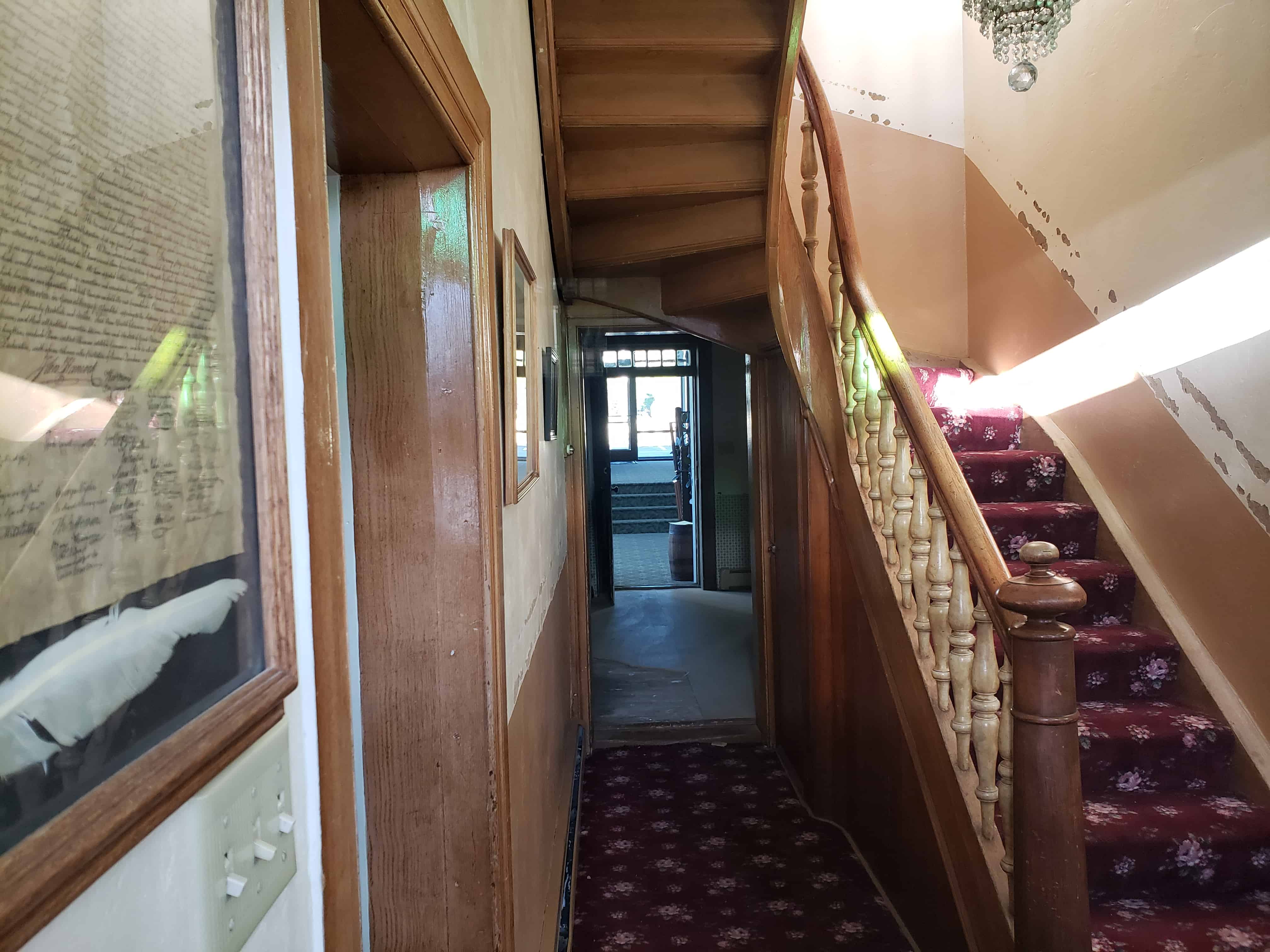
Four years after his return to Ephraim from his service as President of the Scandinavian Mission, Canute Peterson was chosen as president of Sanpete Stake in 1877. His ecclesiastical duties included general supervisor of the communities in Sanpete Valley. He occupied this position until 1900 when Sanpete Stake was divided. At that time, he was asked to continue as President of the South Sanpete Stake. His tenure as Stake President occurred during a time of critical djrportance to the MDrmon church. During the 1880’s the Federal government increased its efforts to rid Utah of polygamy. As a polygamist and local leader of the Mormons, Canute Peterson felt greatly threatened by the government’s efforts. Hiding places, known as “polygamy pits,” were built in the floors of his house. The home served as a refuge for other church leaders who were on the run to avoid arrest by Federal marshals. On one occasion, Canute Peterson was arrested on charges of unlawful cohabitation and his three wives were ordered to testify against him. However, following the trial held in the home of Judge Jacob Johnson in Spring City, Peterson was allowed to go free.
As stake president, the two most monumental activities in which Canute Peterson engaged were the erection of the Manti Temple (a National Register site) and the establishment of Snow Academy. The cornerstones for the Manti Temple were laid on April 14, 1879. Canute Peterson was given the honor of offering the dedicatory prayer on the northwest cornerstone. Nine years later when the structure was completed in May 1888, he participated as a speaker at the dedication. During the years of construction, he was responsible to insure that men, supplies, equipment and money were provided to carry out the project.
Anxious to provide Mormons in Sanpete Valley with an excellent church-oriented education, Peterson was one of the leaders in the establishment of the Sanpete Stake Academy. Organized in 1888, the Academy first met in the Relief Society Room located in the second story of the Ephraim United Order cooperative building, (a National Register site). Originally designed to meet only the immediate local need for education, by the late 1890’s Canute Peterson and other community leaders saw the need to expand the school and seek to bring in students from outside the Sanpete area. Recordingly, Canute Peterson and other leading Sanpete citizens petitioned the First Presidency of the LDS Church for permission to erect a new, larger school building. The permission was granted and in recognition of his help and in an effort to secure a new name for the School which would de-emphasize its Sanpete location while encouraging students from outside the area to attend, Canute Peterson asked church President Lorenzo Snow for permission to name the school “Lorenzo Snow Academy.” President Snow declined the honor of having the school naited for himself but did suggest the school might be named Snow Academy in honor of both himself and his brother, Erastus. Canute Peterson readily accepted the change.
In August 1900, Canute Peterson began dictating his autobiography to his daughter, Carrie Peterson Tanner. The narrative was rich with detail and excitement, however, he was only able to cover the period through 1854 before he died. While attending the October 1901 General Conference of the Church in Salt Lake City in October 1901, the seventy-two year old Peterson caught a cold which left him in poor health until his death a year later on October 14, 1902.
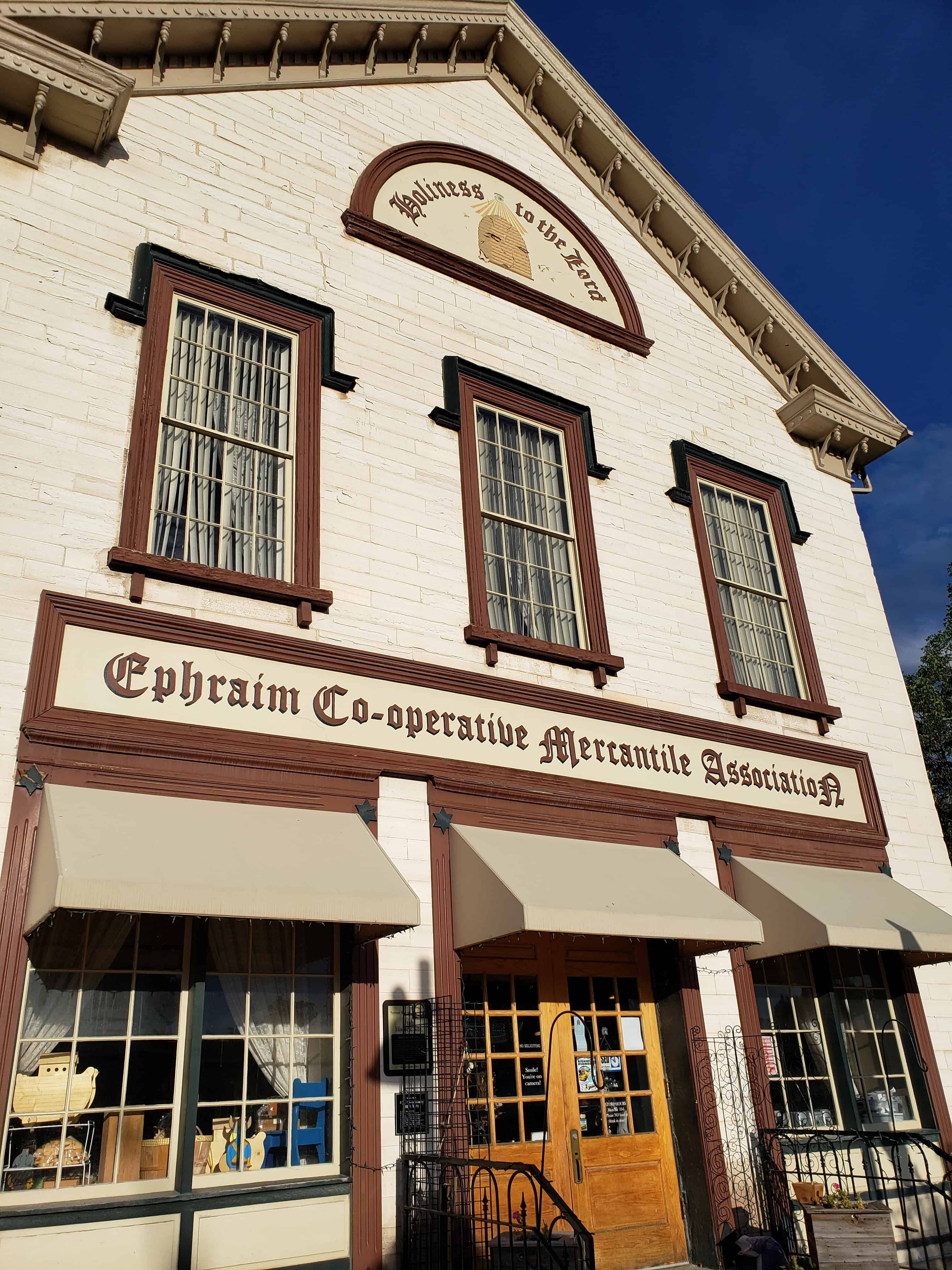
Constructed in 1871-72 of local oolitic limestone, this Greek Revival style building is one of the remaining examples of the more than 120 cooperative mercantiles that were established by the LDS church between 1868 and 1878. The first floor was a strong part of Ephraim’s economy beginning as a co-op, then as a United Order store, later used for farm implement sales, a car repair garage, and finally as part of Ephraim Roller Mill when a new addition connected it to the Relief Society granary to the south. That use continued into the 1950s, then, after decades of neglect, the building was restored in 1989-90. The second floor also served many purposes including a social hall, theater, Relief Society hall, and the first home of Sanpete Stake Academy, predecessor of Snow College when it began in 1888.
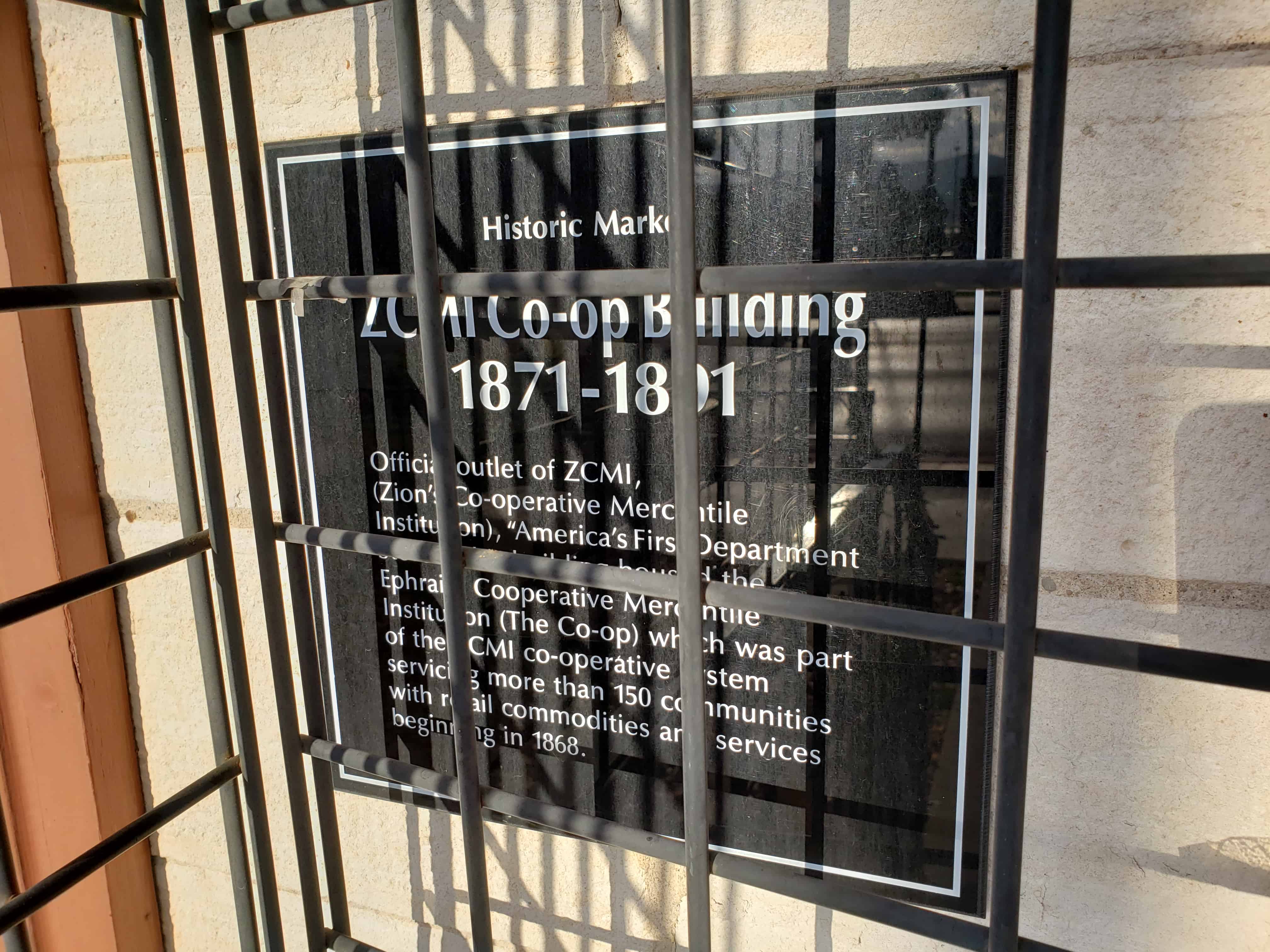
ZCMI Co-Op Building 1871-1891
Official outlet of ZCMI (Zion’s Co-operative Mercantile Institution), “America’s First Department Store”. This building housed the Ephraim Cooperative Mercantile Institution (The Cop-op) which was part of the ZCMI co-operative system servicing more than 150 communities in the intermountain area with retail commodities and services beginning in 1868.
The Ephraim United Order Cooperative Building is located at 96 North Main Street in Ephraim, Utah and was added to the National Historic Register (#73001862) March 20, 1973.
In the late 1860’s Mormon communities were faced with the challenge of an ever increasing number of “gentile merchants” settling in Zion. The coming of the railroad in 1869 threatened to enslave the Mormons with an economic bondage that had not been possible before. In response to these challenges church officials developed plans which culminated in the cooperative movement. The basic philosophy of this movement was that Latter-day Saints should not trade with “outsiders” but instead with local cooperative establishments which would be supplied by a “Parent Institution.”
The first step in the cooperative movement was the organization of the Parent Store in Salt Lake City, Zion’s Co-operative Mercantile Institution, on October 24, 1868. Within the next ten years more than 150 local cooperatives were founded.
Perhaps the best remaining example of a local cooperative store is the old Ephraim United Order Go-operative Building. Construction on the building began in 1871 and was completed in 1872. The building was constructed of Sanpete oolitic limestone and its front had two distinguishing features which branded it as a co-op store. The name “Ephraim U. O. Mercantile Institution” and a beehive encircled by the words, “Holiness to the Lord.” Signs for the parent establishment in Salt Lake City contained the inscription “Holiness to the Lord.” Nearly all of the local co-op stores used the name “Cooperative Mercantile Institution” in association with the name of the location.
The cooperative movement, as symbolized by the Ephraim Cooperative Building, was an important part of the Mormon story. According to Leonard Arrington, prominent Mormon historian, “Cooperation, it was believed, would increase production, cut down costs, and make possible a superior organization of resources. It was also calculated to heighten the spirit of unity and ‘temporal oneness’ of the Saints and promote the kind of brotherhood without which the Kingdom could not be built.” (Leonard Arrington, Great Basin Kingdom, p. 309.)
The cooperative store occupied the first floor of the two-story structure. The second floor was constructed as a recreation hall and as a Relief Society meeting hall. Dances and parties were held in the second story. The building became not only an economic but also a social center for the community.
In 1888 plans were made for the establishment of the Sanpete Stake Academy. Funds were not available for the construction of a building and so the Relief Society Hall above the Co-op store was secured. Furniture and equipment were purchased and on November 5, 1888 the Sanpete Stake Academy was opened. The hall was used by the Sanpete Stake Academy until about 1900. In 1902 the name Sanpete Stake Academy was changed to the Snow Academy. This was in turn changed to Snow Normal College in 1917. As the first home of the school which be came Snow College, the old Co-operative Building is also of important historical significance.
This building is a Neo-Classical style and was built before 1905. H.P. Larson owned it and he sold it to D.W. Anderson in 1910. It has been the Anderson Drug Store ever since. If you have time walk inside and note the original ceiling and the two old signs on the back wall.(*)
Spring City was first known as “Allred Settlement”. The original settlers in 1852 were under the leadership of James Allred and most of them were his family members. When an LDS ward was organized there in 1853, Ruben W. Allred was appointed the first bishop. The settlement was abandoned in the summer of 1853 because of ongoing conflict with the indigenous people of the area, the Ute people, including San Pitch Utes (Sanpete county derives its name from the San Pitch Utes). The village was reestablished as “Springtown” in 1859 by William Black, George Black and Joseph S. Black. Christen G. Larsen was made bishop of a new LDS ward in 1860. Beginning in 1853, the Allred family and other church leaders had begun to encourage Danish immigrants to settle in Sanpete County, and, particularly after the community was reestablished in 1859, to join the Allred Settlement. By the mid-1860s locals referred to the north side of town as “Little Copenhagen” or “Little Denmark”. Spring City was also a site of fighting during the Black Hawk War.(*)
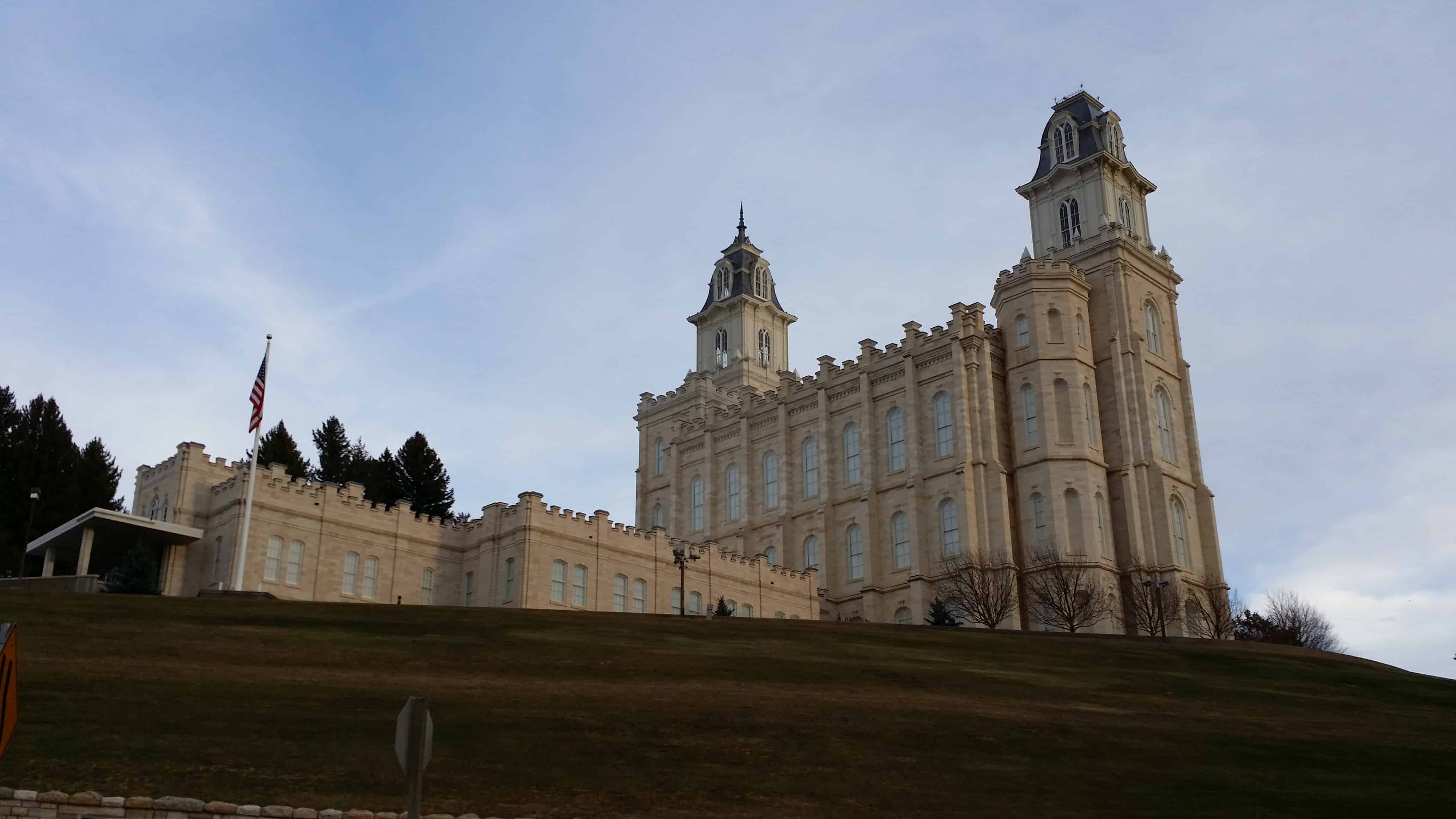
Manti was one of the first communities settled in what was to become Utah. Chief Wakara (or Walker), a Ute Tribe leader, invited Brigham Young to send pioneers to the area to teach his people the techniques of successful farming. In 1849, Brigham Young dispatched a company of about 225 settlers, consisting of several families, to the Sanpitch (now Sanpete) Valley. Under the direction of Isaac Morley and George Washington Bradley, the settlers arrived at the present location of Manti in November. They endured a severe winter by living in temporary shelters dug into the south side of the hill on which the Manti Temple now stands. Brigham Young named the new community Manti, after a city mentioned in the Book of Mormon. Manti was incorporated in 1851. The first mayor of Manti was Dan Jones. Manti served as a hub city for the settlement of other communities in the valley.
Relations with the local Native Americans deteriorated rapidly and the Walker War soon ensued. The war consisted primarily of various raids conducted by the Native Americans against Mormon outposts in Central and Southern Utah. The Walker War ended in the mid-1850s in an understanding negotiated between Brigham Young and Wakara. Shortly thereafter, Welcome Chapman and Wakara oversaw the baptism of scores of Wakara’s tribe members. Although immediate hostilities ended, none of the underlying conflicts were resolved.
In 1865 Utah’s Black Hawk War erupted when an incident between a Manti resident and a young chieftain exploded into open warfare between the Mormon settlers and the local Native Americans. Forts were built in Manti and other nearby communities. Smaller settlements in the area were temporarily abandoned for the duration of the war. In the fall of 1867, Chief Black Hawk made peace with the settlers, but sporadic violence occurred until 1872 when federal troops finally intervened. Many Mormon settlers who fought and died in the wars are buried in the Manti Cemetery. Most of the Utes were eventually relocated to the Uintah and Ouray Indian Reservation in Eastern Utah.
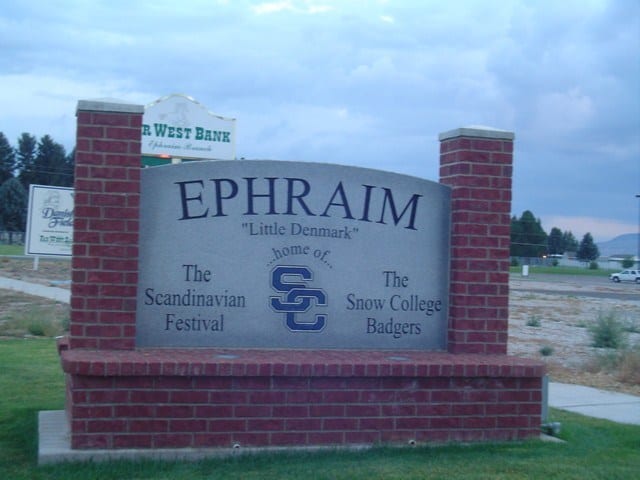
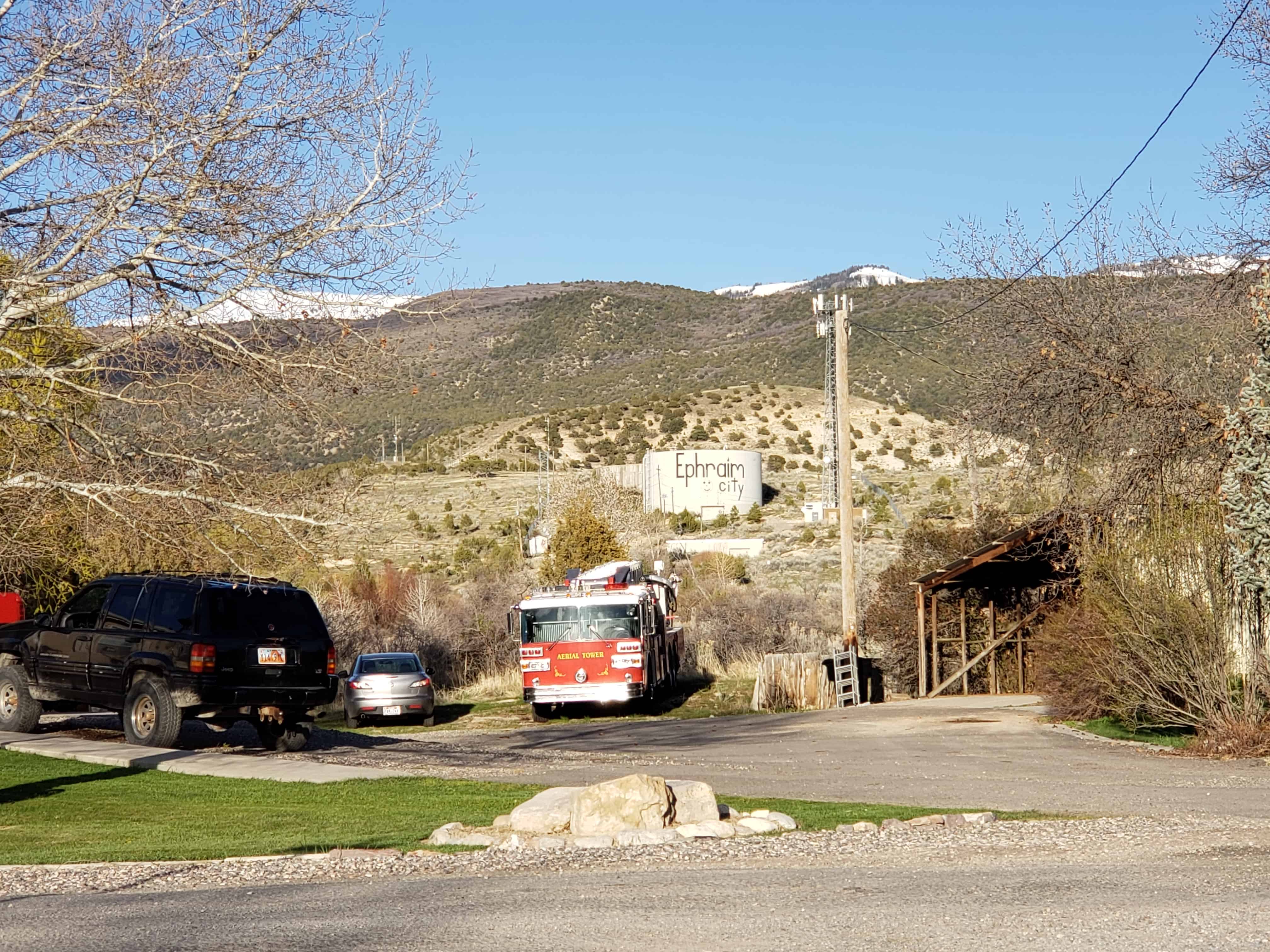
Ephraim was founded in 1854. Located directly opposite a Native American settlement, Ephraim served as Sanpete County’s most important fort through the end of the Black Hawk War in 1868, which is also the year the city incorporated. The presence of the fort drew diverse settlers to the city, and by 1880 the city was nearly 90% Scandinavian. Although the city’s initial growth was based on the fort and later on agriculture, more recently its growth can be attributed primarily to the presence of Snow College. Ephraim surpassed Manti as the largest city in the county during the 1960 Census and has since surpassed 6,135.
President Brigham Young, in 1876, gave the Relief Society sisters an assignment to store wheat for a time of need. This historic, oolite limestone building was constructed as a granary in response to this concept. Pioneer women and children followed the threshers to glean wheat leavings. They sold handmade items and Sunday eggs – eggs laid on Sunday – to purchase wheat to fill the bins. Wheat was given to the bishop for the needy, and grain was given to farmers for seed with a repayment of five bushels for each four bushels given.
Relief Society Wheat and flour were contributed to San Francisco after the earthquake in 1906 and to China during the famine in 1907.
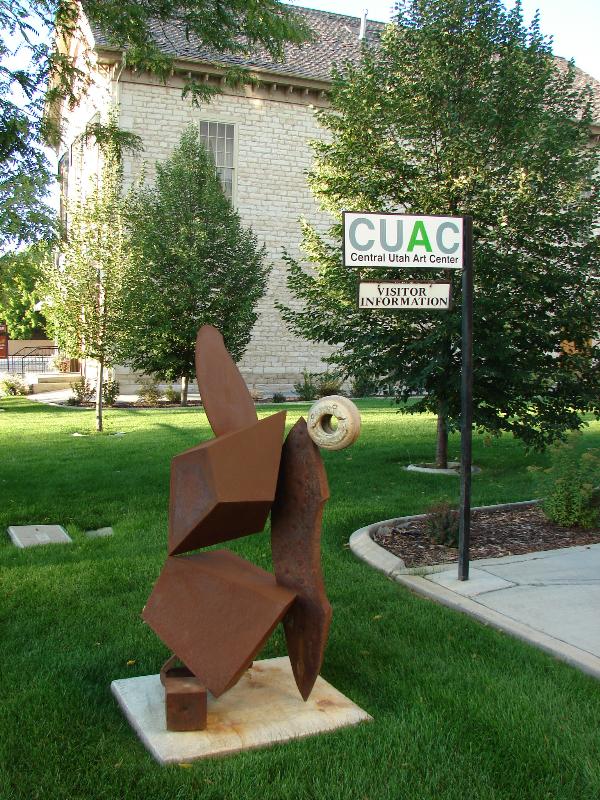
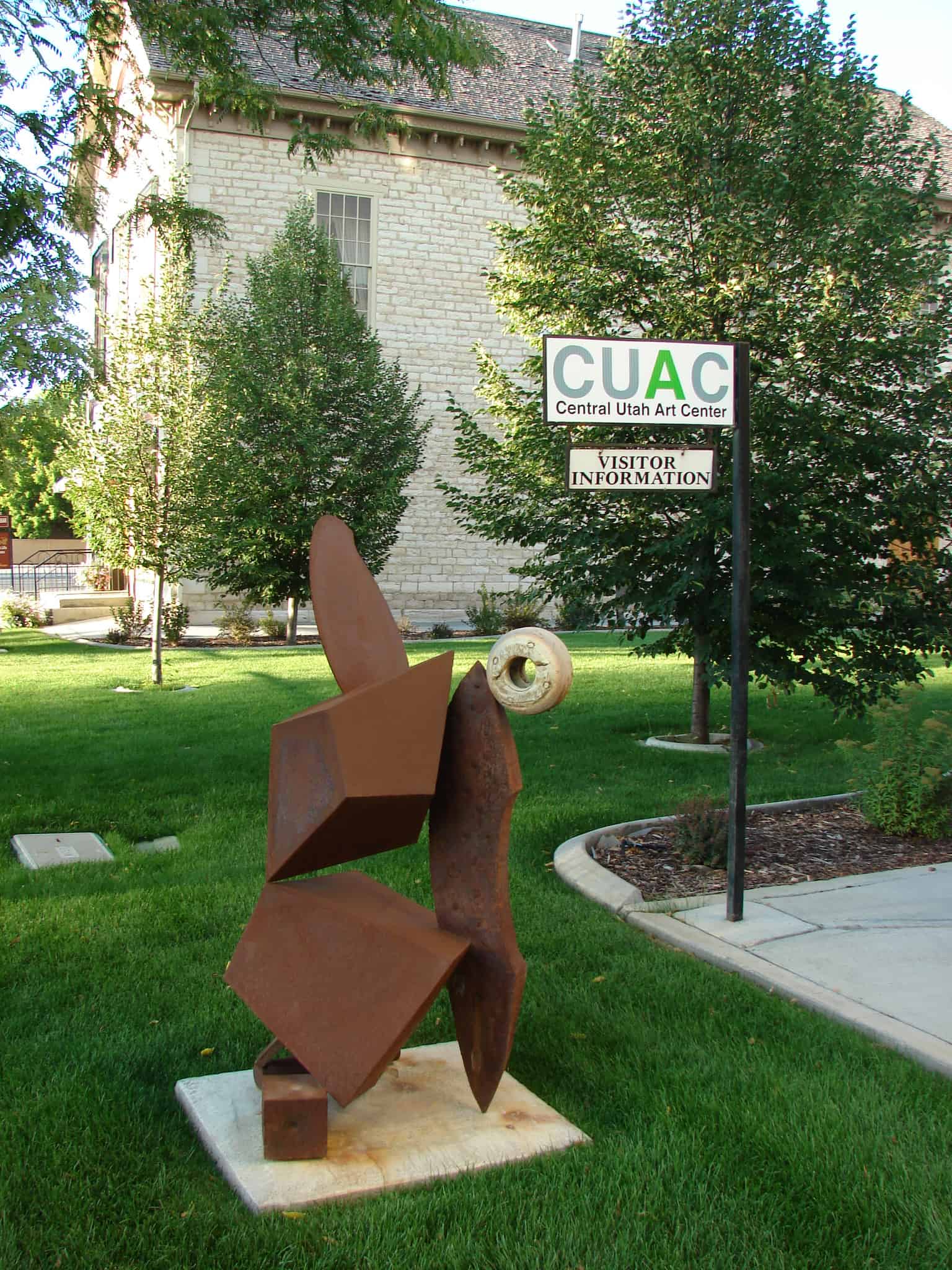
In 1915, the granary was converted to a flour mill that functioned for forty years. In 1969, the granary and adjoining cooperative store were threatened with demolition but were preserved through valiant community efforts. The granary interior was completely reconstructed into The Central Utah Art Center in 1990.