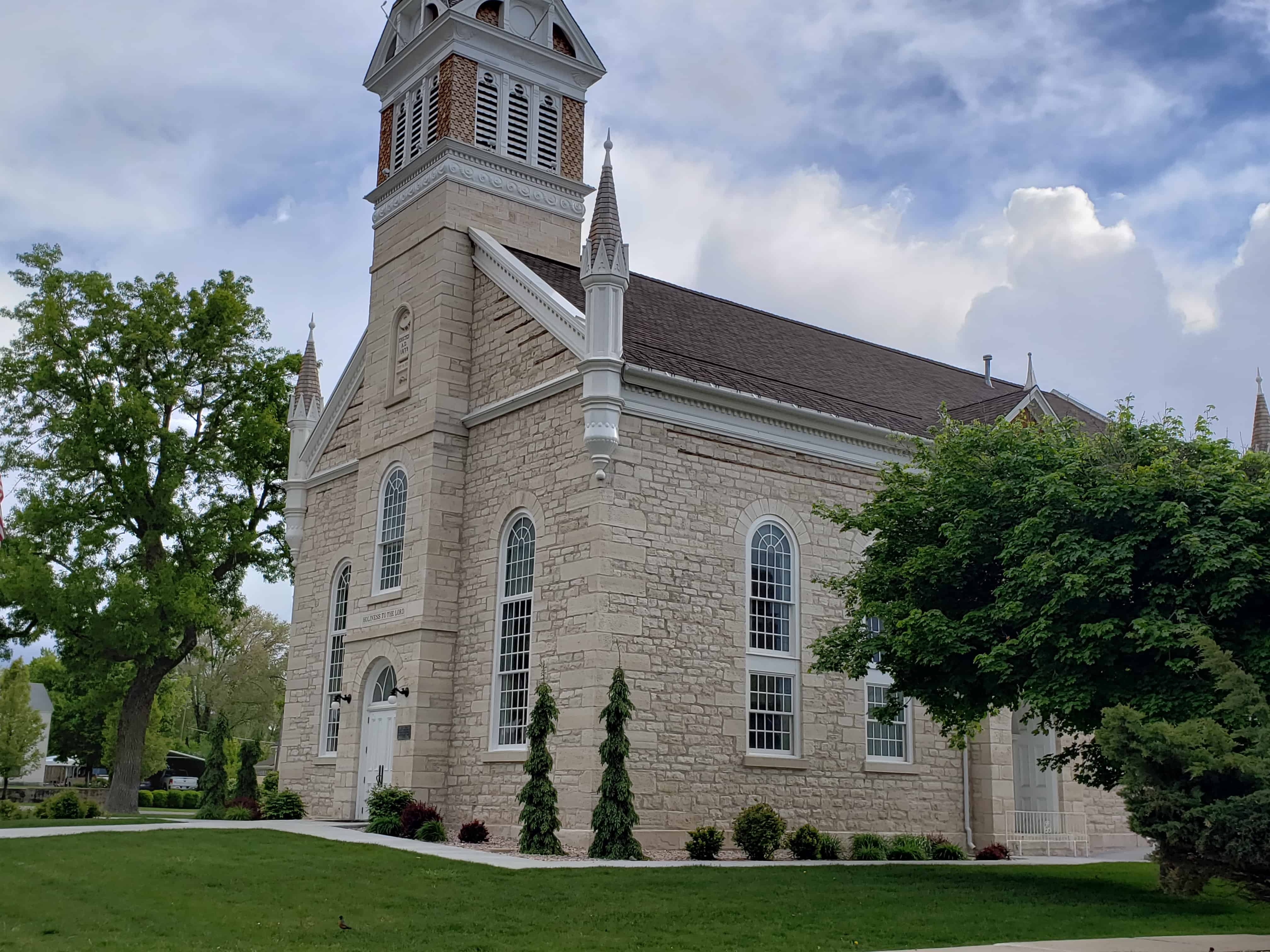
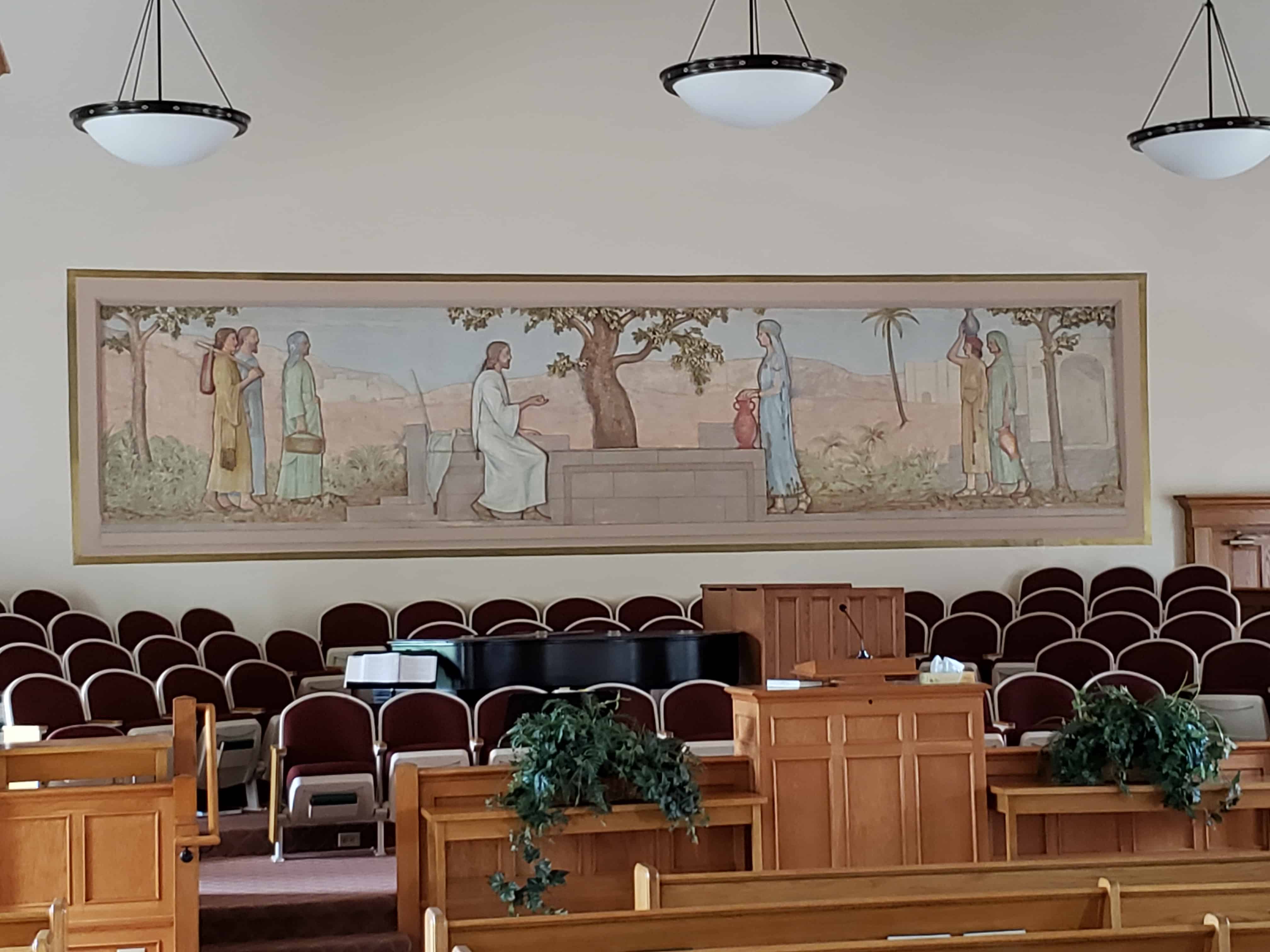
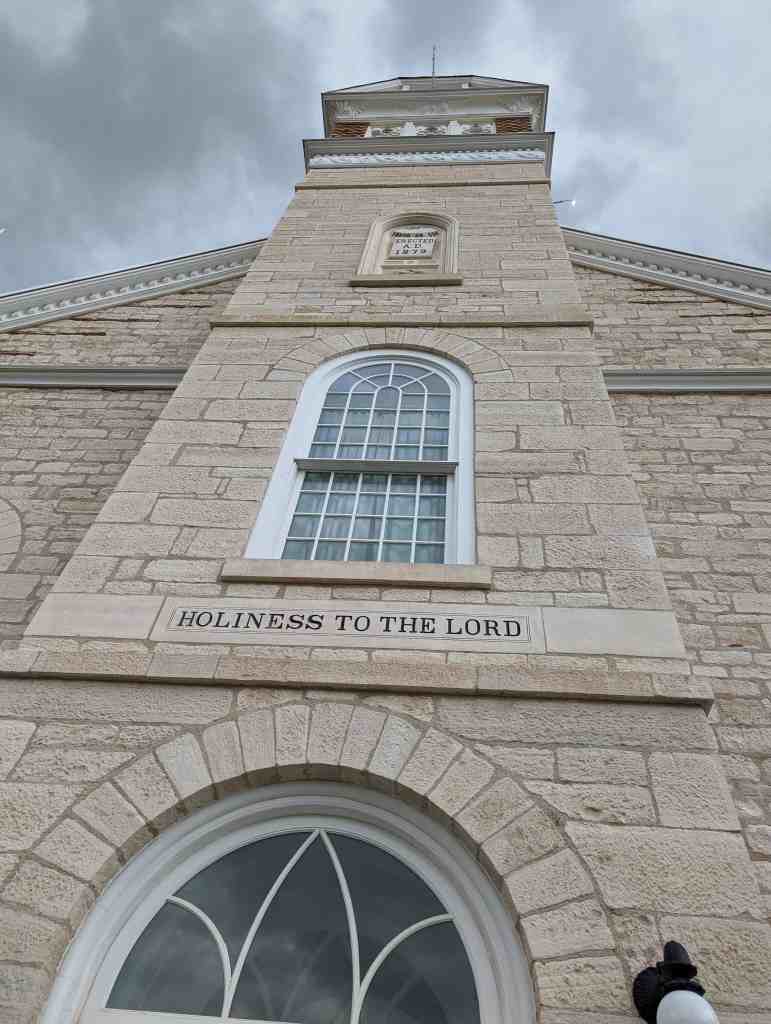
The tabernacle was designed by temple architect, William Folsom, and built in 1878-82. This church building now accommodates three LDS wards. The monumental 55 by 90 main chapel has a 30 foot high ceiling and a tall central tower topped by a Victorian steeple. All of the window and door bays are tall and round-arched. The corner pinnacles have a Gothic flair. The stonework ranges from rough to smooth cut, squared blocks. The modern addition on the west of the building has been designed to blend cohesively with the original to give a pleasing overall effect. Other remodels added an elevator. The building is still in use as LDS wards meetinghouse.(*)
Located at 191 North Main St in Manti, Utah this is one of the oldest remaining city hall buildings in the state of Utah.
Designed by A.E. Merriam this building was constructed between 1873-1882. It is an excellent example of the Italianate style rarely found outside Salt Lake City. Fine Italianate details such as box-like massing, low-pitched hipped roof, columned portico and decorative bracketed eaves make it the only surviving example of the style in public structure in Sanpete County.
The plan has four equal size rooms on each floor, with a central passageway staircase. Under the stucco lies finely tooled limestone. It is hoped that the exterior will one day be restored to its historic appearance. The construction costs total about $1,100.
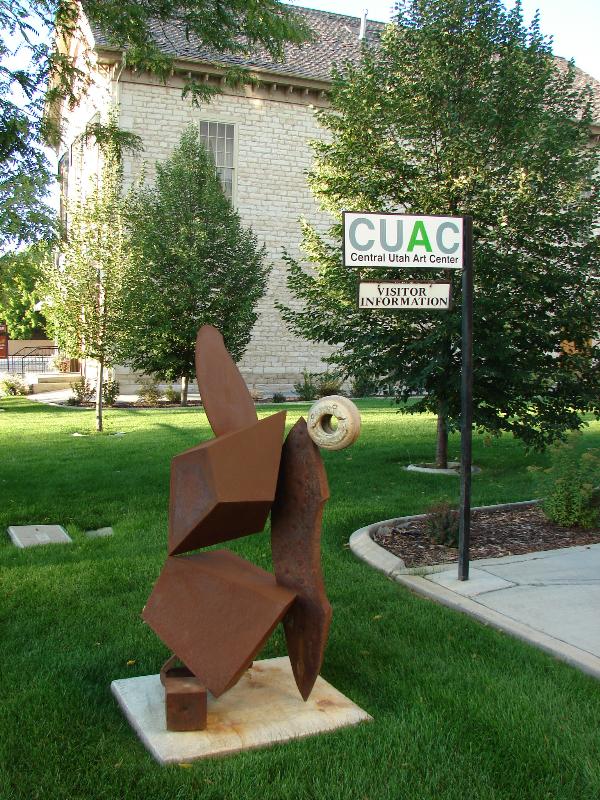
The building is now used as a Manti Museum, Social Hall, and office of Sanpete County Economic Development & Travel and Tourism and houses a visitor’s information center.
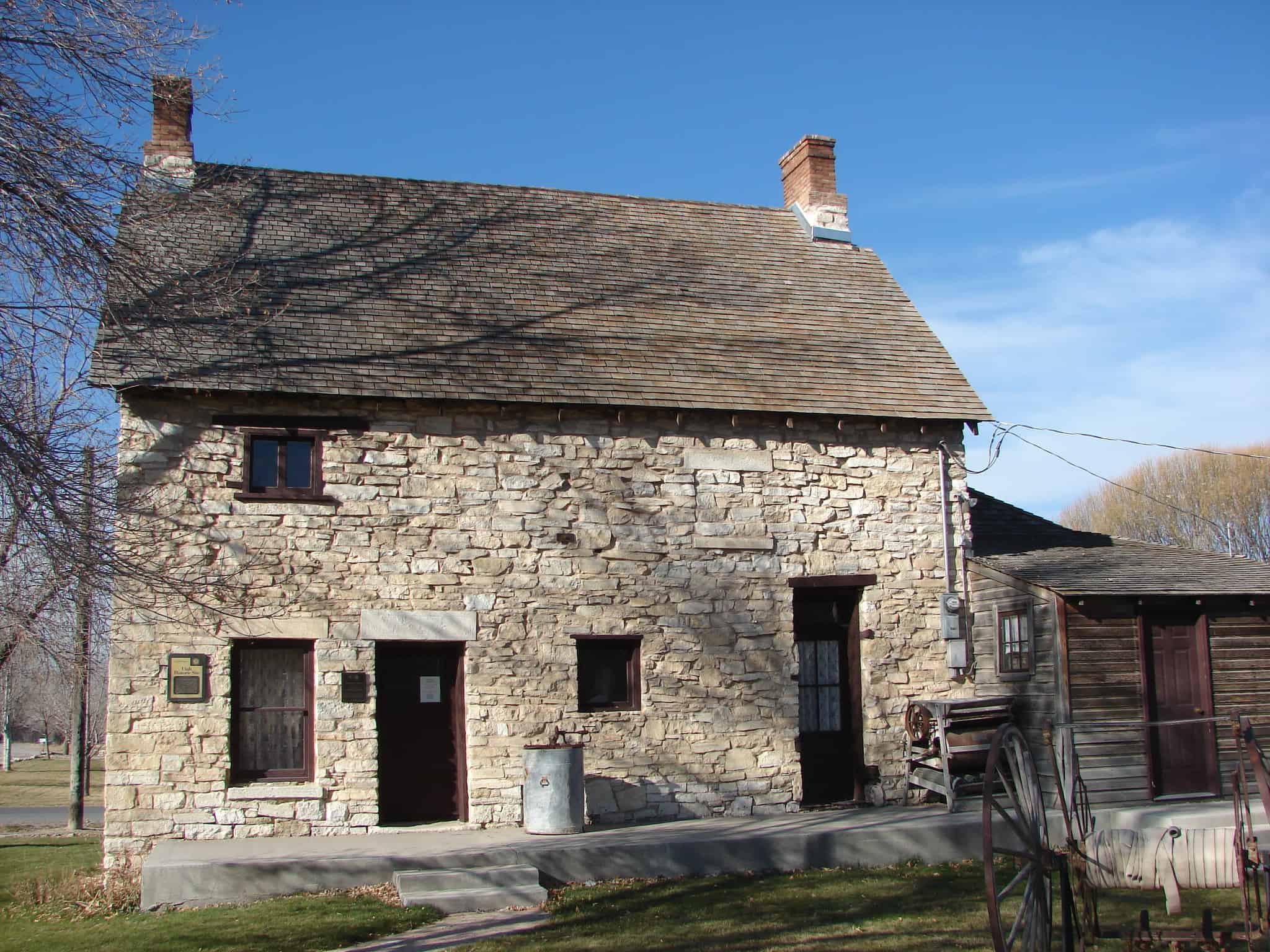
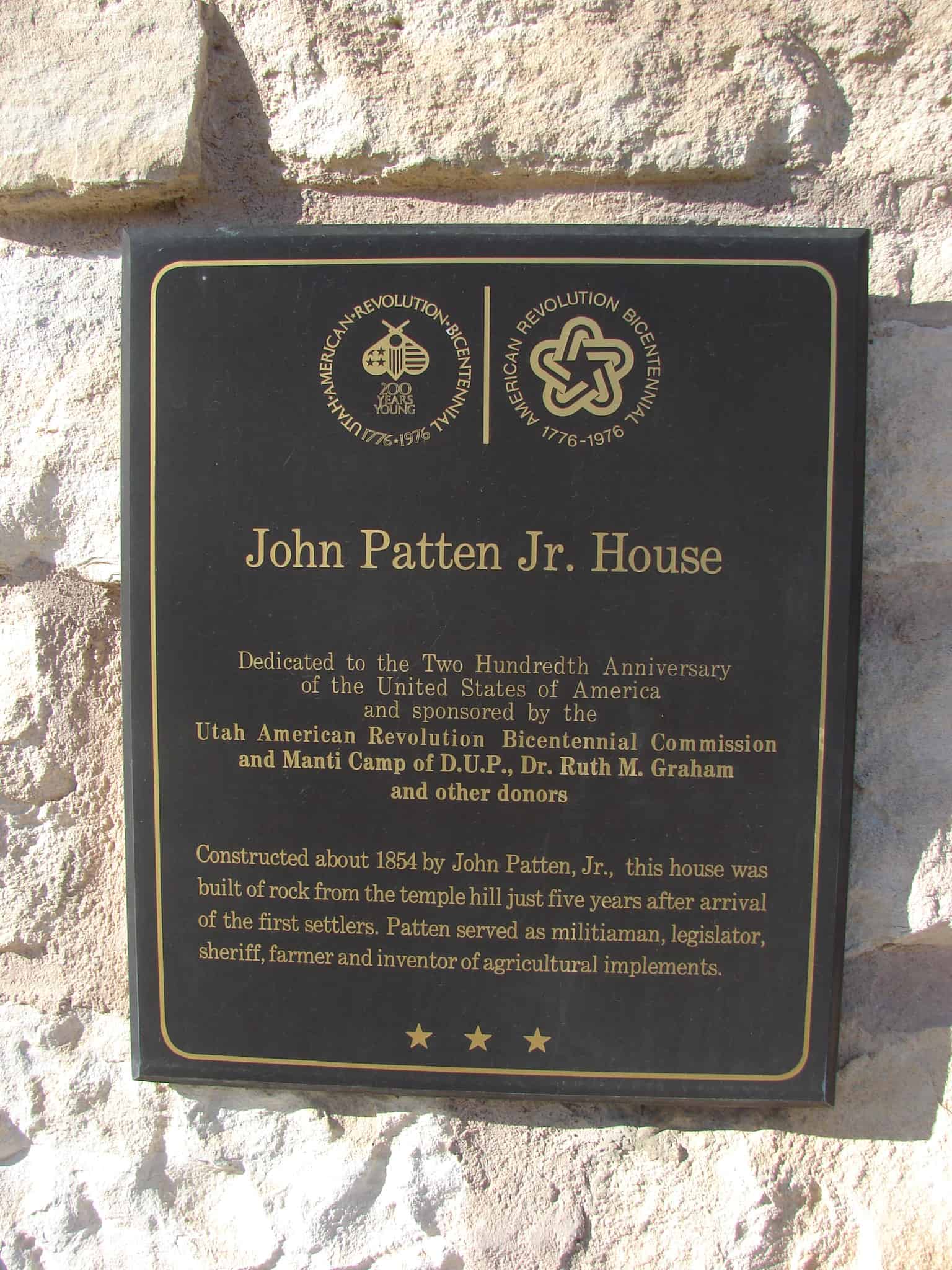
John Patten Jr. House Dedicated to the Two Hundredth Anniversary of the United States of America and sponsored by the Utah American Revolution Bicentennial Commission and Manti Camp of D.U.P, Dr. Ruth M. Graham and other donors Constructed about 1854 by John Patton, Jr., this house was built of rock from the temple hill just five years after arrival of the first settlers. Patton served as militiaman, legislator, sheriff, farmer and inventor of agricultural implements.
The John Patten House was constructed c.1854 of limestone. John Patten came to Utah in 1850 and settled in Manti. He was active in community affairs serving as a representative to the Utah Territorial Legislature, Sheriff of Sanpete County and a member of the City Council. The vernacular style house is an excellent example of early pioneer stone construction in Utah. The house was acquired May 23, 1976 with the assistance of a grant from the Utah Bicentennial Commission and the help of Dr. Ruth Graham, a descendant of John Patten.
The John Patten House is located at 84 West 300 North in Manti, Utah and was added to the National Historic Register on (#77001315) August 22, 1977.
The two-story limestone home built by John Patten, Jr., c. 1854 is a well-preserved example of early vernacular Mormon architecture in Utah. Patten played a prominent role in the settlement of Manti, established in 1849 as one of the earliest of approximately 400 colonies in the “Mormon Corridor.”
John Patten was born in Fairplay, Green County, Indiana, June 20, 1825. His family was among the earliest converts to the Church of Jesus Christ of Latter-day Saints (Mormon Church). As John grew up, he experienced the many persecutions of the Mormons in Missouri and in 1839 was among those to sign a covenant of protection and removal, authored by Brigham Young in response to an order of extermination by General Clark of Missouri. Patten came to Utah in 18SO and located in Manti, one of Utah’s oldest cities, where he assisted in building the first fort in 1852. He took an active part in the Walker and Black Hawk wars and was one of three witnesses to receive a treaty of peace and deed to Sanpete County from Arapine, Chief of the Ute Indians, May, 1855. Patten was prominent in civic activities, serving as a representative to the Territorial Legislature, Sheriff of the county and member of the City Council. He was married in Manti to Candace Smith who later died, leaving two sons and three daughters. He was married again to Emily, a widow and sister of his first wife. She had three sons and two daughters.
Patten was a farmer by occupation. He built the Patten Reservoir and Patten Ditch, an irrigation system still in use which runs water to farmland five miles north of Manti. Somewhat of an inventor, Patten is credited with constructing the first “go-devil,” a device used to lay off furrows for irrigation flow in farm fields. As a sideline, he also tried to develop a “perpetual motion” machine.
John Patten built his two-story limestone home c. 1854 after living next to the oolitic limestone quarry for a few years. The vernacular style home represents the earliest and most primative form of stone masonry construction in pioneer Utah. The walls of the home were laid in coursed rubble using crude mud mortar, most of which has washed away. Local residents call this mode of construction “dry wall.” The two-overtwo plan with dirt floor cellar also documents a typical early Mormon pioneer plan type. Although some alterations and small additions of brick and wood have been made, the John Patten Home is basically well-preserved. The home was lived in continuously until 1975 when it became a museum for the Daughters of the Utah Pioneers.
Spring City was first known as “Allred Settlement”. The original settlers in 1852 were under the leadership of James Allred and most of them were his family members. When an LDS ward was organized there in 1853, Ruben W. Allred was appointed the first bishop. The settlement was abandoned in the summer of 1853 because of ongoing conflict with the indigenous people of the area, the Ute people, including San Pitch Utes (Sanpete county derives its name from the San Pitch Utes). The village was reestablished as “Springtown” in 1859 by William Black, George Black and Joseph S. Black. Christen G. Larsen was made bishop of a new LDS ward in 1860. Beginning in 1853, the Allred family and other church leaders had begun to encourage Danish immigrants to settle in Sanpete County, and, particularly after the community was reestablished in 1859, to join the Allred Settlement. By the mid-1860s locals referred to the north side of town as “Little Copenhagen” or “Little Denmark”. Spring City was also a site of fighting during the Black Hawk War.(*)
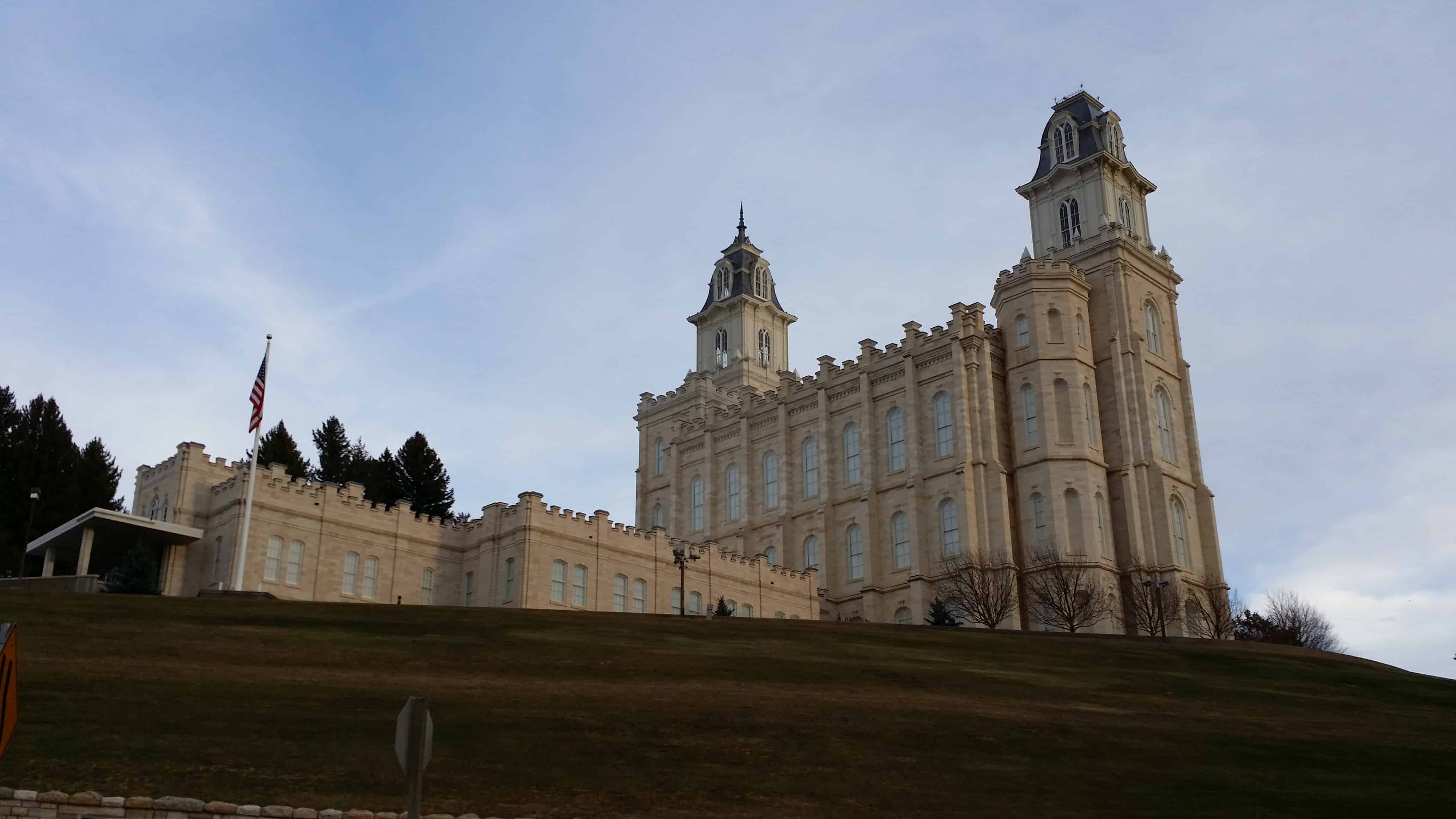
The Manti Utah Temple (formerly the Manti Temple) is the fifth constructed temple of The Church of Jesus Christ of Latter-day Saints (LDS Church). Located in the city of Manti, Utah, it was the third LDS temple built west of the Mississippi River, after the Mormons’ trek westward. (The St. George and Logan Utah temples preceded it.)
Located at 200 East 510 North in Manti, Utah and added to the National Historic Register (#71000854) on August 12, 1971.
Architect was William H. Folsom. The building, with its unique setting is undoubtedly one of the finest examples of Mormon Temple architecture to be found anywhere.
The temple, with its base eighty feet above the highway, holds a commanding position over Manti and the surrounding valley. The sloping lawns, brilliant flowers, and wide variety of trees and shrubs were made possible by hauling enough soil to cover the stone base.
The temple is 171 feet long and 95 feet wide. It is built of local oolitic limestone of a warm cream color. The towers on each end are topped by bell-shaped roofs which are influenced by Victorian architectural fashions The front of the Temple is on the east as with all Mormon Temples and the rear fronts the highway. The interior is striking in its simple elegance. Hardware, woodwork with its graceful arches, heavy doors and finely cut mouldings, and decorating all indicate skilled workmanship. In the basement is a baptismal font resting on the backs of twelve cast life-size oxen. The main floors are occupied for the most part by ceremonial rooms. An assembly room fills the entire upper floor. It was here in 1888 that fifteen hundred members of the Church met to dedicate the building. In the two west corner towers are spiral staircases, extending from the basement to the roof. Engineers and architects have acclaimed them as remarkable pieces of workmanship. In each case the center Is open, without any supporting column and the walnut railings and balusters, winding up through five stories, form a symmetrical coil, perfectly plumb from top to bottom. The building is used continuously and is in an excellent state of repair.
Alterations have been minimal. The annex was built along with the original structure. It was remodeled and added to (on the west and north) in 1956-58.
Manti was one of the first communities settled in what was to become Utah. Chief Wakara (or Walker), a Ute Tribe leader, invited Brigham Young to send pioneers to the area to teach his people the techniques of successful farming. In 1849, Brigham Young dispatched a company of about 225 settlers, consisting of several families, to the Sanpitch (now Sanpete) Valley. Under the direction of Isaac Morley and George Washington Bradley, the settlers arrived at the present location of Manti in November. They endured a severe winter by living in temporary shelters dug into the south side of the hill on which the Manti Temple now stands. Brigham Young named the new community Manti, after a city mentioned in the Book of Mormon. Manti was incorporated in 1851. The first mayor of Manti was Dan Jones. Manti served as a hub city for the settlement of other communities in the valley.
Relations with the local Native Americans deteriorated rapidly and the Walker War soon ensued. The war consisted primarily of various raids conducted by the Native Americans against Mormon outposts in Central and Southern Utah. The Walker War ended in the mid-1850s in an understanding negotiated between Brigham Young and Wakara. Shortly thereafter, Welcome Chapman and Wakara oversaw the baptism of scores of Wakara’s tribe members. Although immediate hostilities ended, none of the underlying conflicts were resolved.
In 1865 Utah’s Black Hawk War erupted when an incident between a Manti resident and a young chieftain exploded into open warfare between the Mormon settlers and the local Native Americans. Forts were built in Manti and other nearby communities. Smaller settlements in the area were temporarily abandoned for the duration of the war. In the fall of 1867, Chief Black Hawk made peace with the settlers, but sporadic violence occurred until 1872 when federal troops finally intervened. Many Mormon settlers who fought and died in the wars are buried in the Manti Cemetery. Most of the Utes were eventually relocated to the Uintah and Ouray Indian Reservation in Eastern Utah.
Chester was founded by David Candland. In the beginning the town was named Canal Creek after the waterway from which the community received its water. Candland then changed the name to Chesterfield after his hometown in England; it was later reduced to Chester.
This community (like several others) claims to be the closest to the geographic center of Utah.
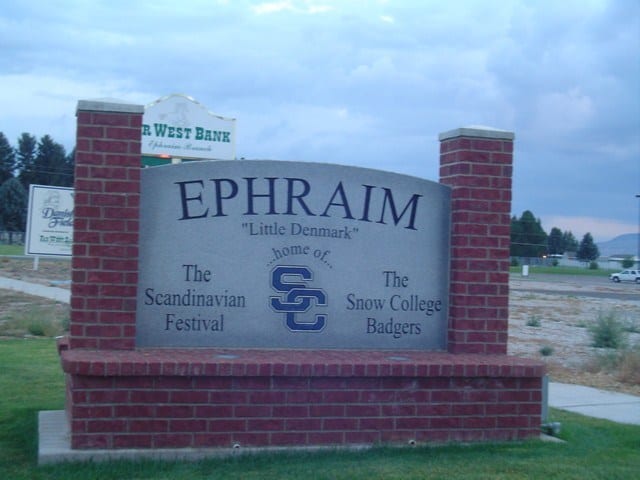
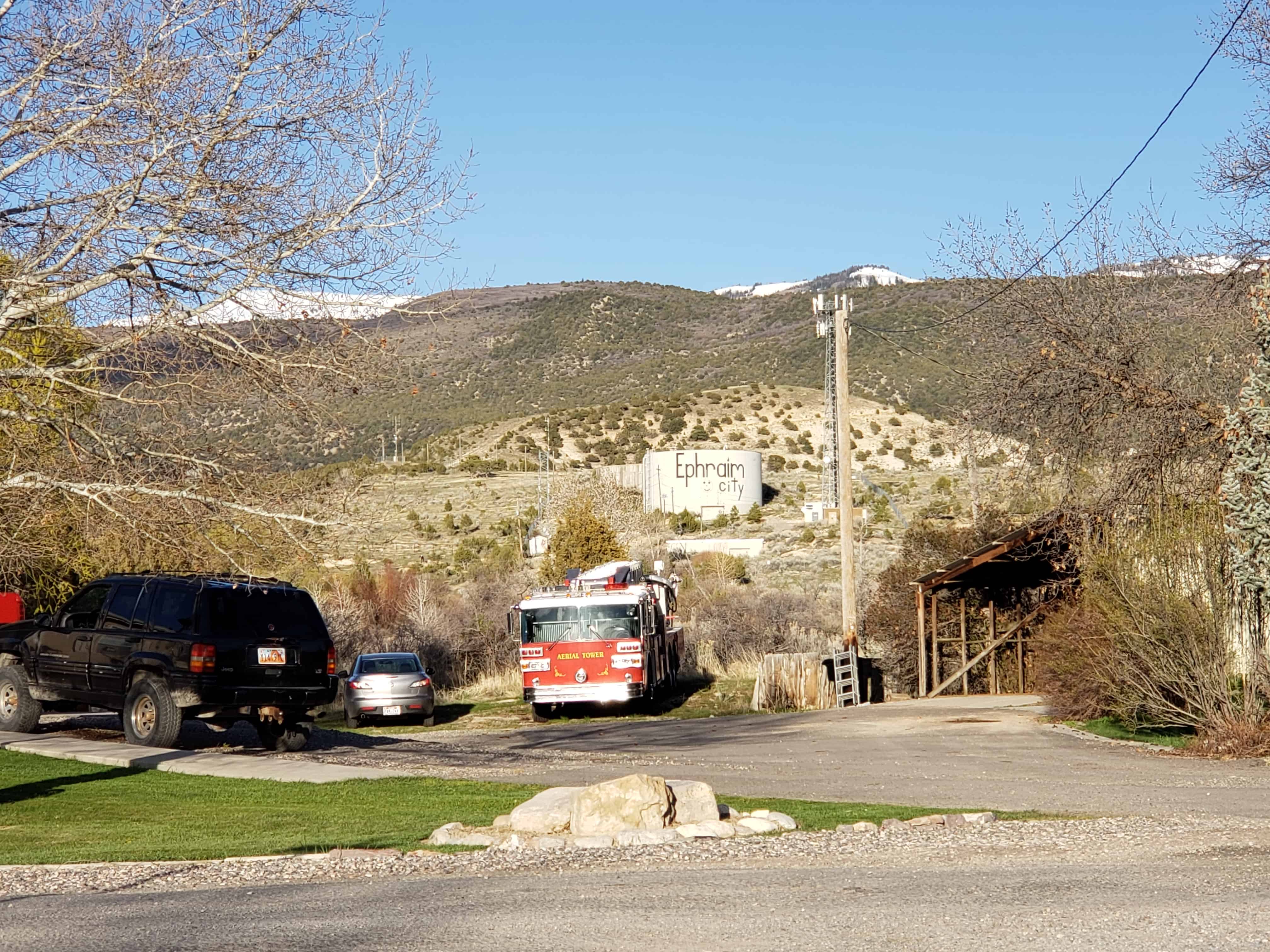
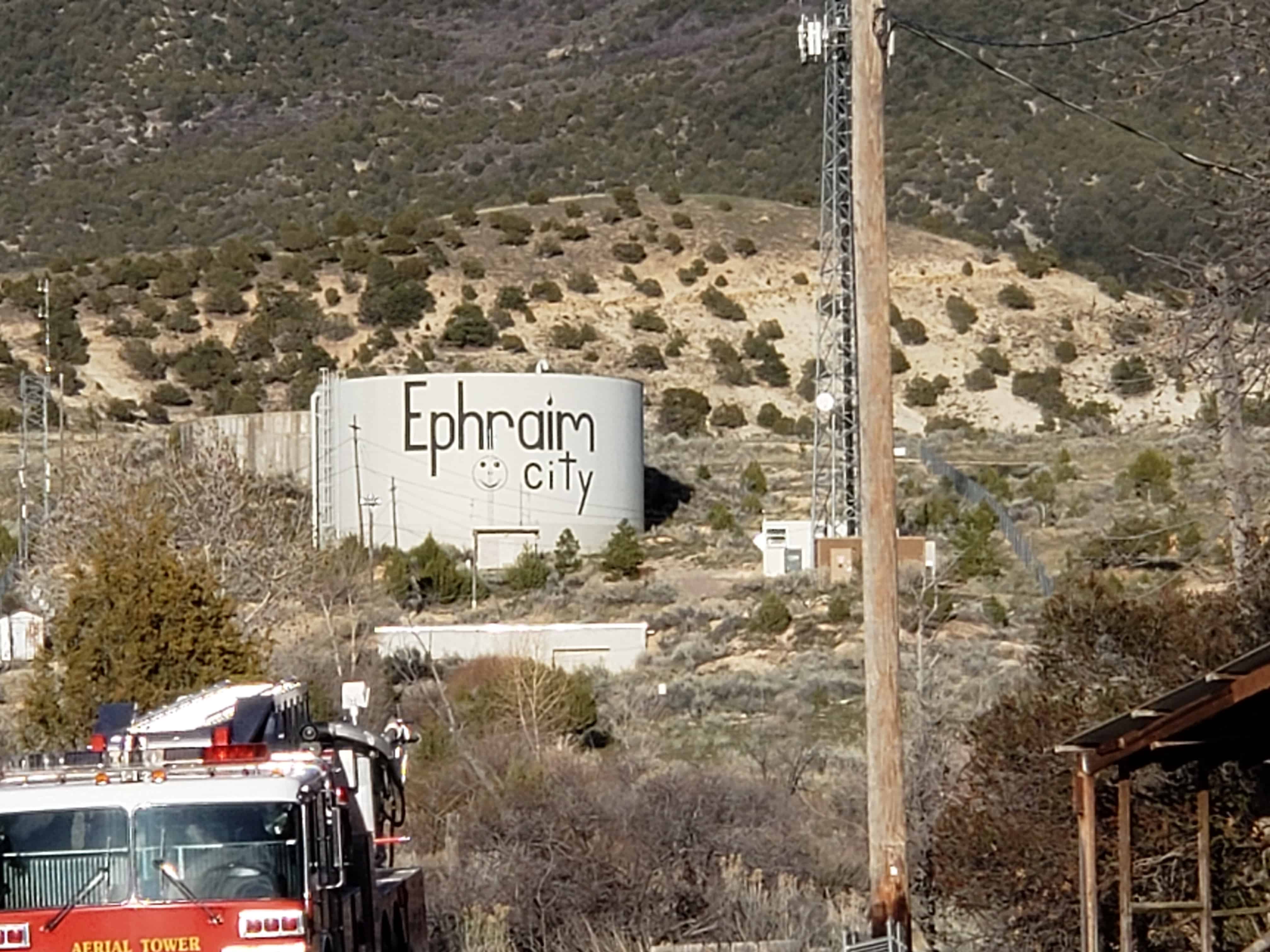
Ephraim was founded in 1854. Located directly opposite a Native American settlement, Ephraim served as Sanpete County’s most important fort through the end of the Black Hawk War in 1868, which is also the year the city incorporated. The presence of the fort drew diverse settlers to the city, and by 1880 the city was nearly 90% Scandinavian. Although the city’s initial growth was based on the fort and later on agriculture, more recently its growth can be attributed primarily to the presence of Snow College. Ephraim surpassed Manti as the largest city in the county during the 1960 Census and has since surpassed 6,135.