The Dog Chase Part 2 – The Sandlot Filming Location
15 Thursday Aug 2019
Posted in Uncategorized

15 Thursday Aug 2019
Posted in Uncategorized
13 Tuesday Aug 2019
Posted in Uncategorized
Tags
9th and 9th Neighborhood, historic, Historic Homes, NRHP, Salt Lake City, Salt Lake County, utah

The Best-Cannon house is an excellent example of a Queen Anne Victorian cottage in Salt Lake City. It was designed by the firm of Monheim, Bird and Proudfoot, architects for the Salt Lake City and County Building, and built in 1893 by W.A. Wright for Elliot M.S. Best and his family. Best, an agent for the Morse Coe Shoe Company, built the west addition in 1897 for a cost of $85 as a dance studio for his daughter. The Bests lived here until 1906 when Angus M. Cannon, Jr., and his wife, Kate Lynch, bought the house.
Located at 1146 S 900 E in Salt Lake.
Related Posts:


11 Sunday Aug 2019
Posted in Uncategorized
Tags
Malls, Orem, utah, utah county

Now called University Place, the University Mall is in Orem, Utah.
Also check out these great photos by Chris Sirrine
https://flickr.com/photos/146541409@N08/sets/72157709617717686
Related Posts:


09 Friday Aug 2019
Posted in Uncategorized
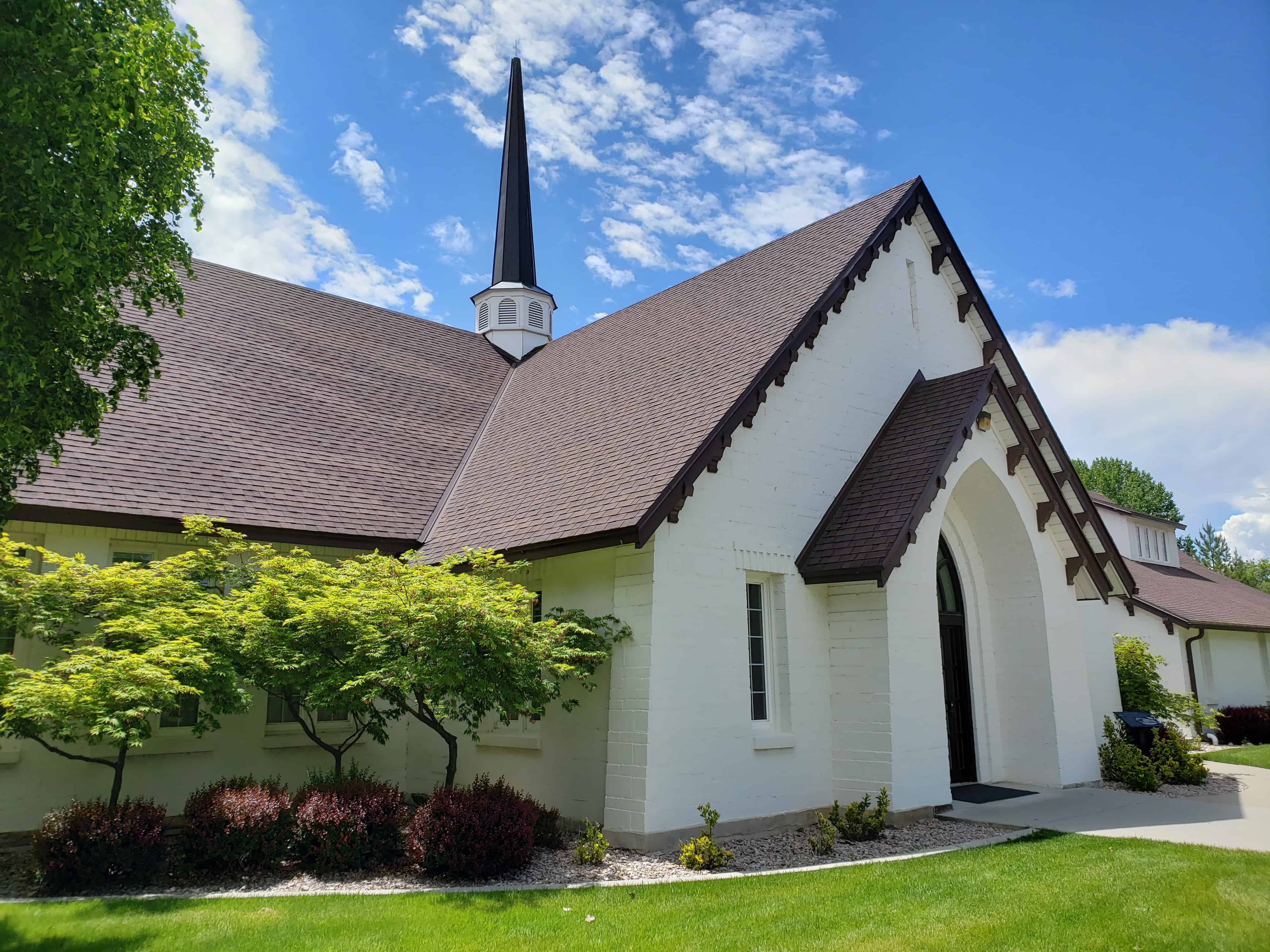
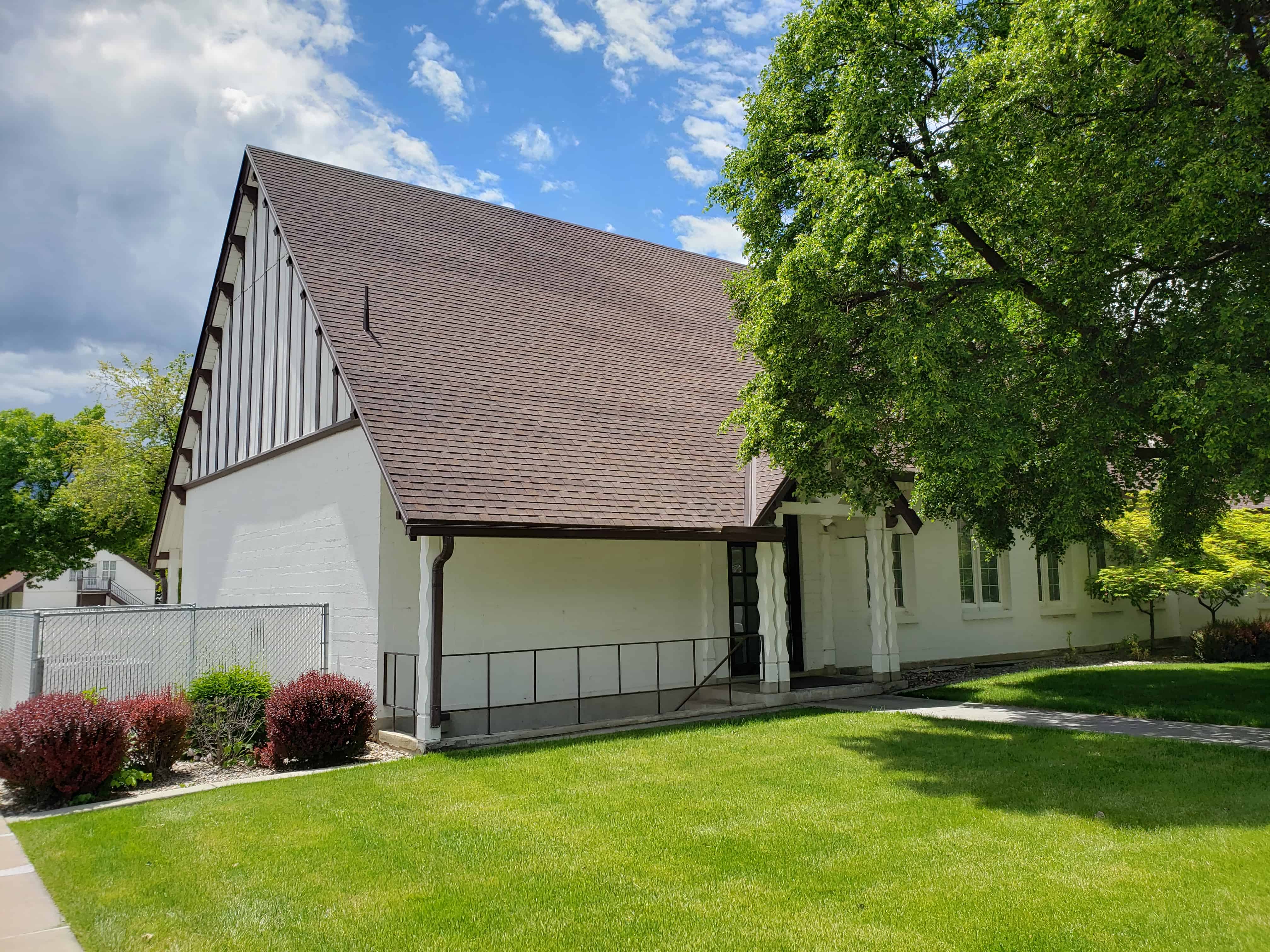
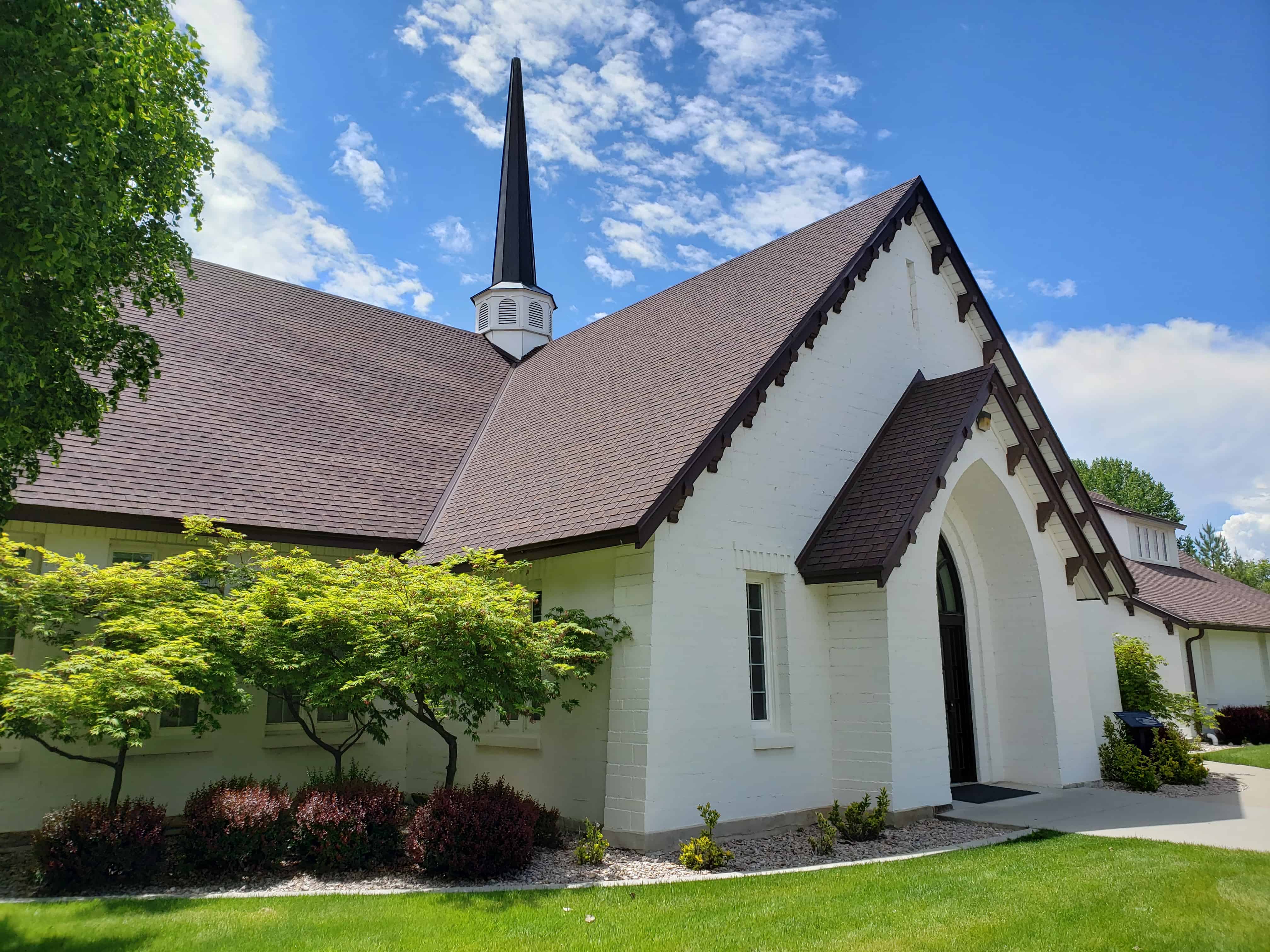
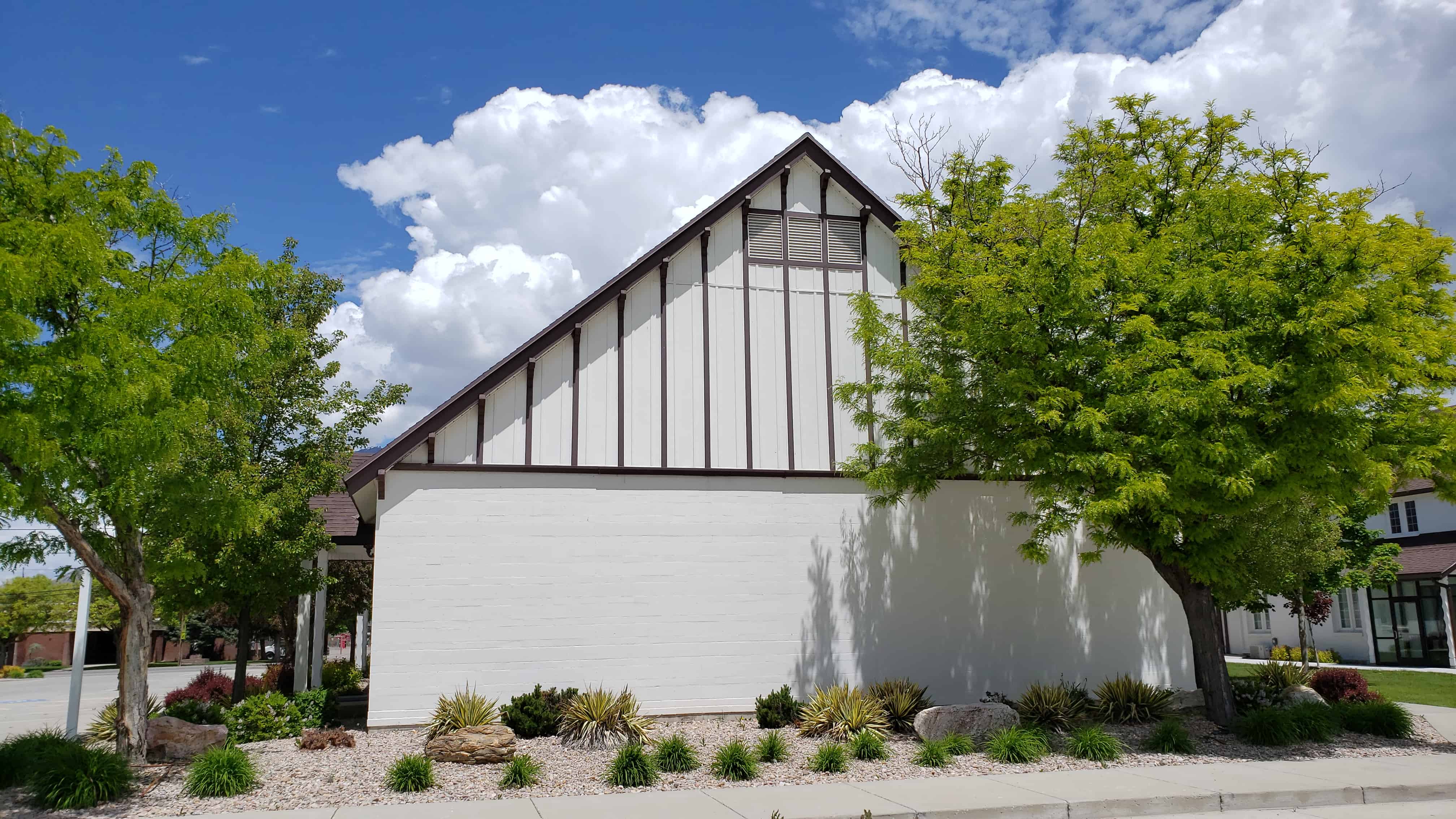
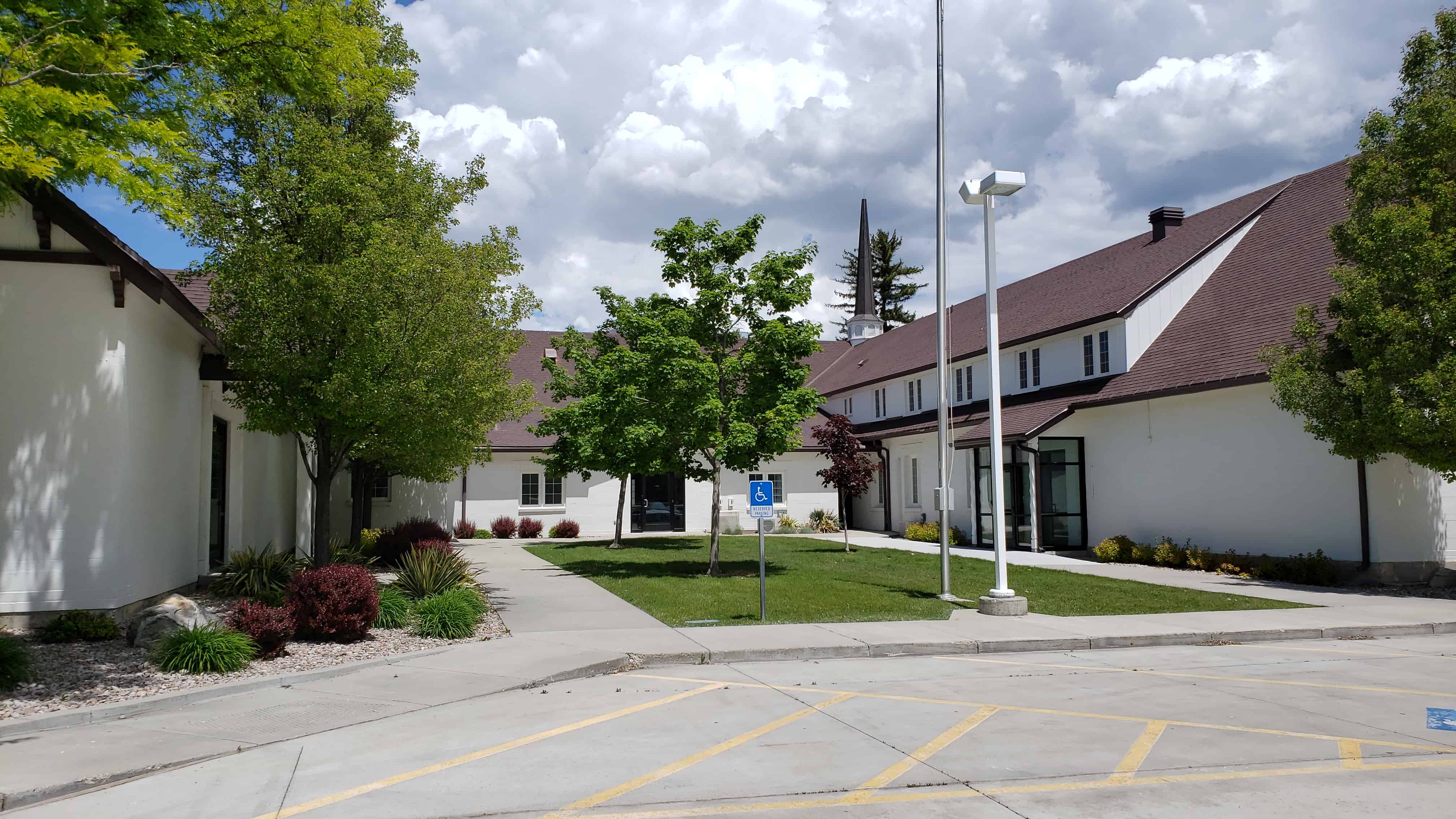
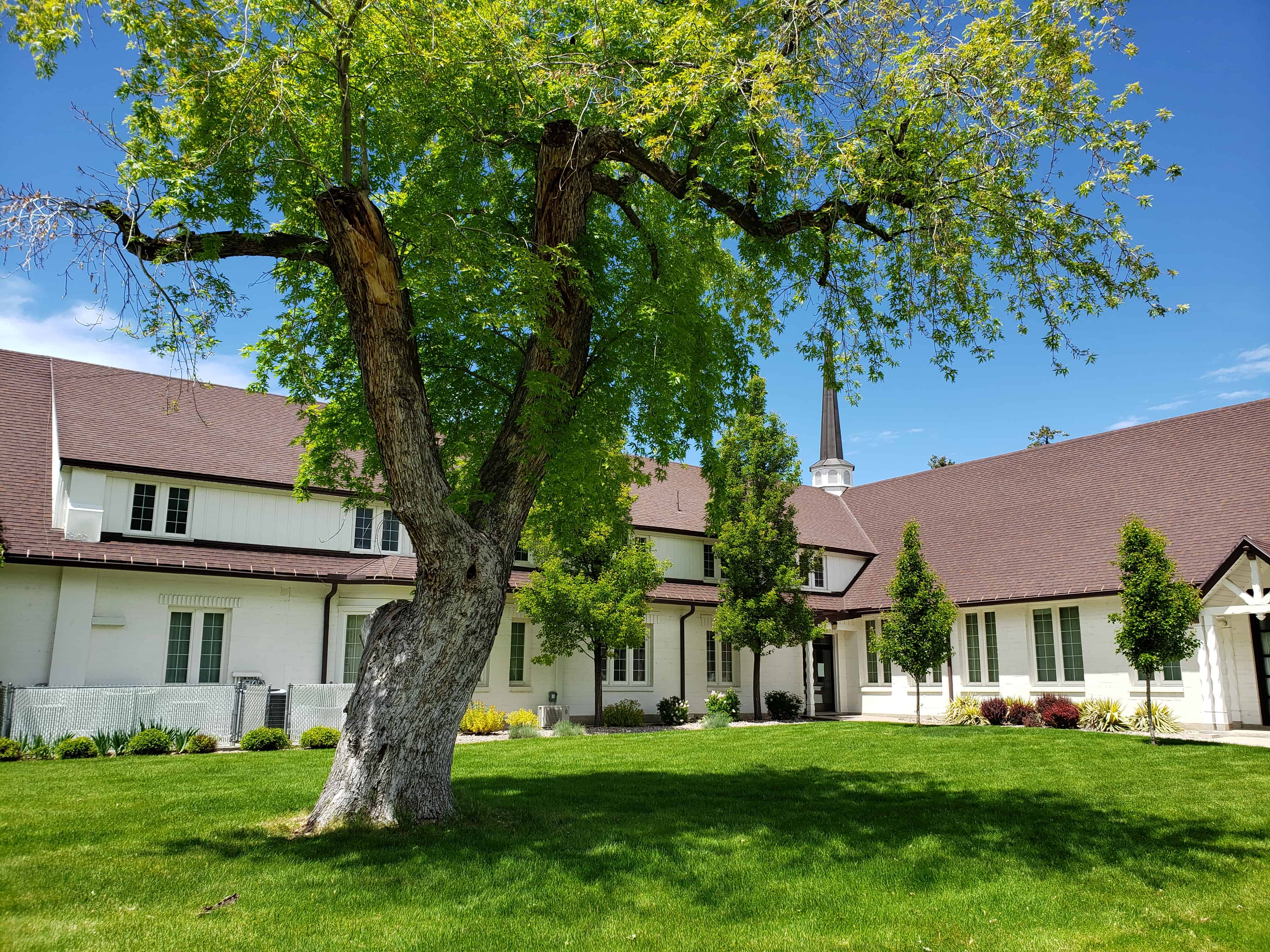
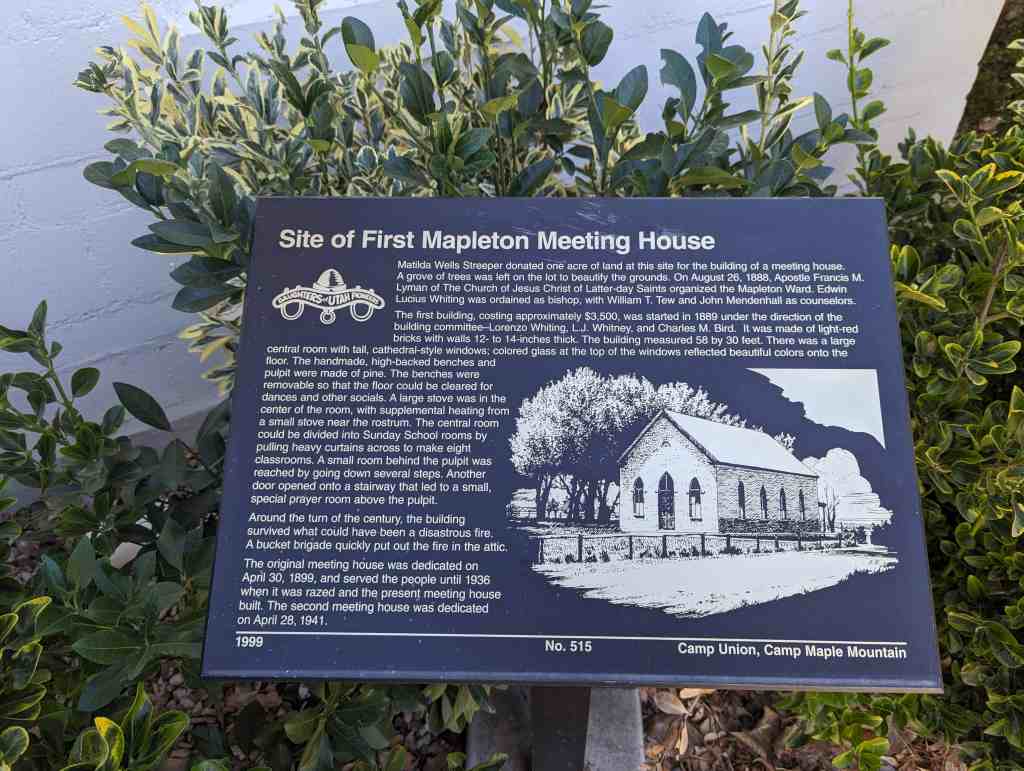
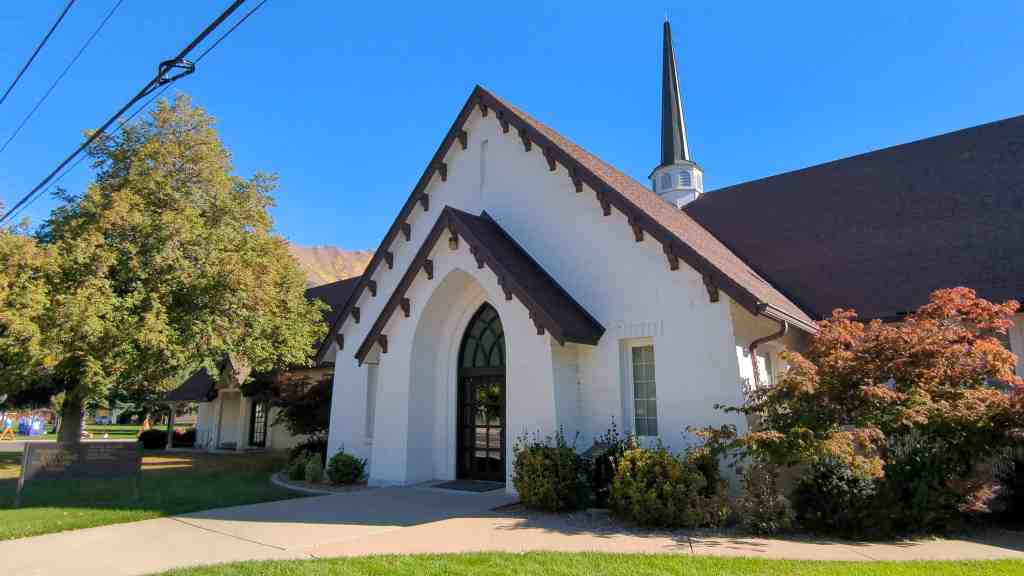
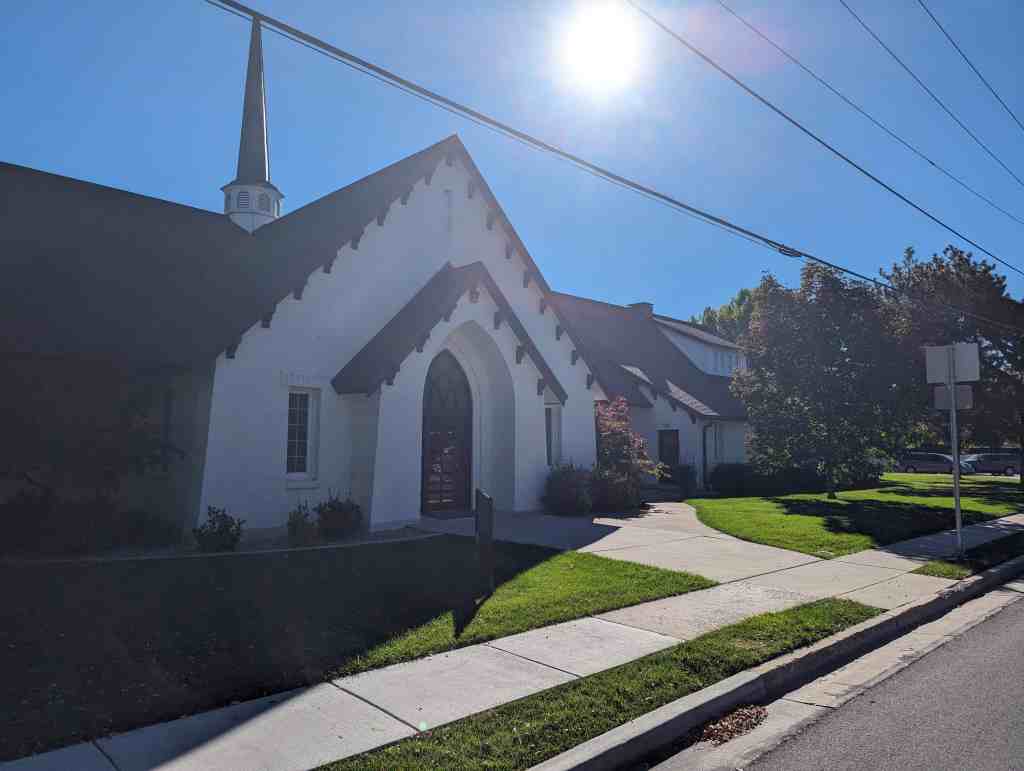
Built in 1936 and dedicated in 1941 on the site of Mapleton’s first Meetinghouse, the white church is possibly the most iconic thing in Mapleton, Utah.
In January of 1933 Frank M. Jenson was installed as Bishop of Mapleton LDS 1st Ward. Soon after the ward got busy and began to tear down the old meeting house. By 1936 a new building was given a work receipt that could be exchanged for food. Progress was slow and steady, but by September 30, 1937 the walls were up and the roof nearly completed. By late 1938 most of the inside work was completed.
The new building had an amusement hall, chapel, relief society quarters, heating plant, baptismal font, and classrooms. The benches and pulpit were made from black walnut trees that movable panel that separated the amusement hall from the chapel. It could be opened to increase the seating capacity of the chapel for large meetings. Finally, A. Leo Harmer reported that all the debts were paid off and the work was completed on the new meeting house. Elder Charles A. Callis of the Quorum of Twelve Apostles of the LDS Church came to Mapleton on Sunday, April 27, 1941, and formally dedicated the new edifice. The building cost was $34,000 plus many hours of donated labor.
Information taken from the “History of Mapleton”
By Ralf Kay Harmer & Wendell B. Johnson
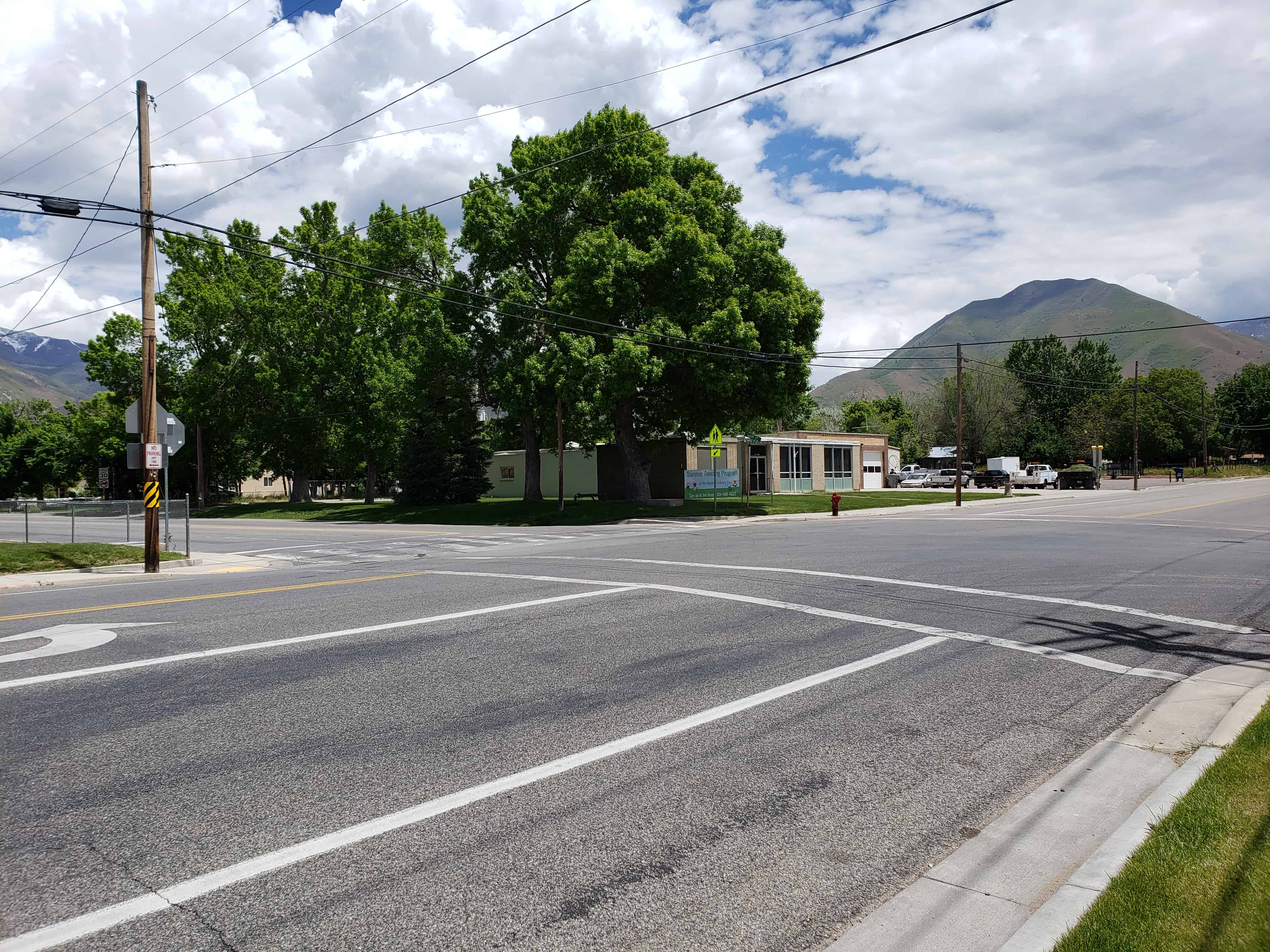
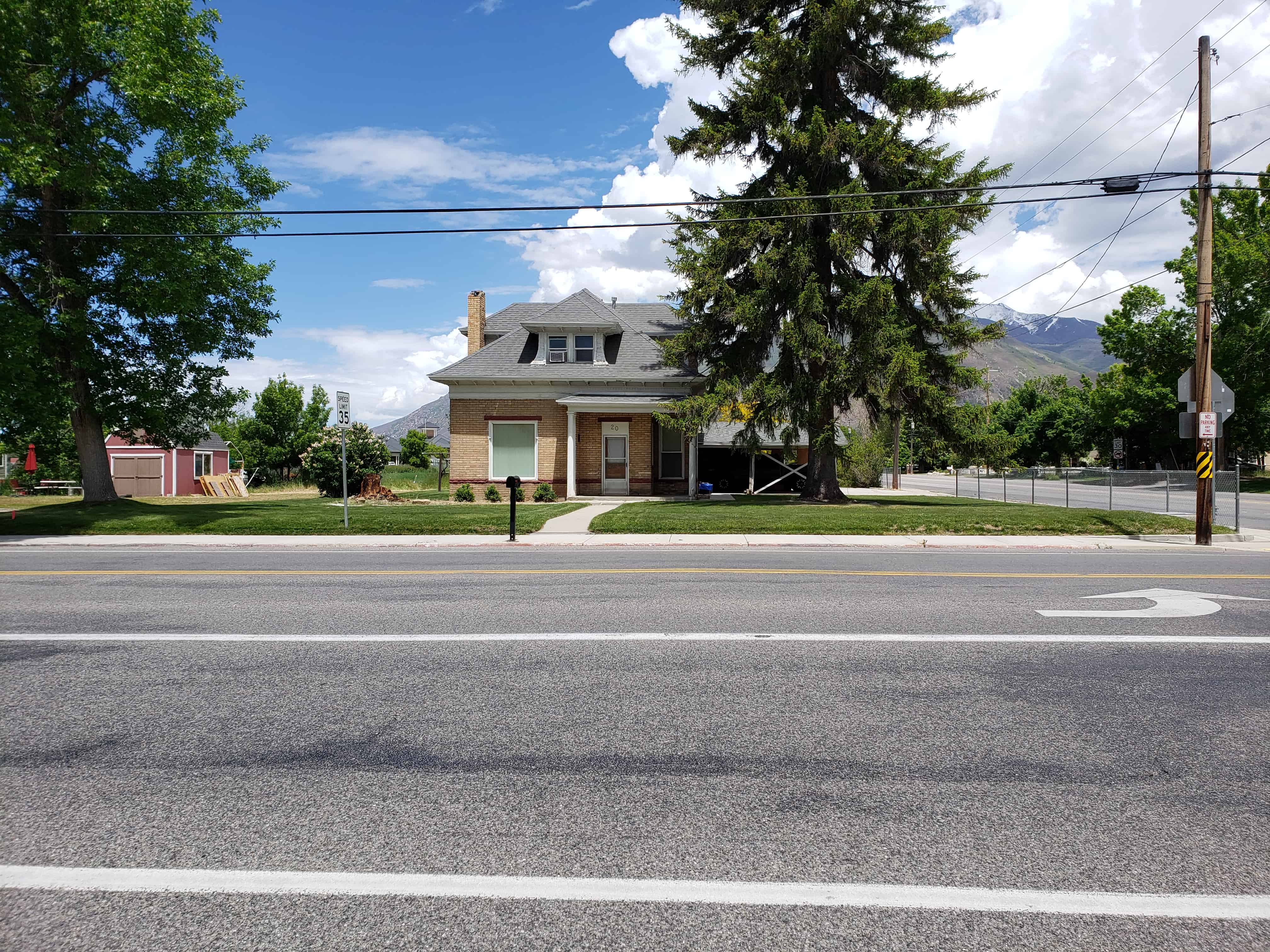
The chapel is located at 31 West Maple Street in Mapleton, Utah
Related Posts:
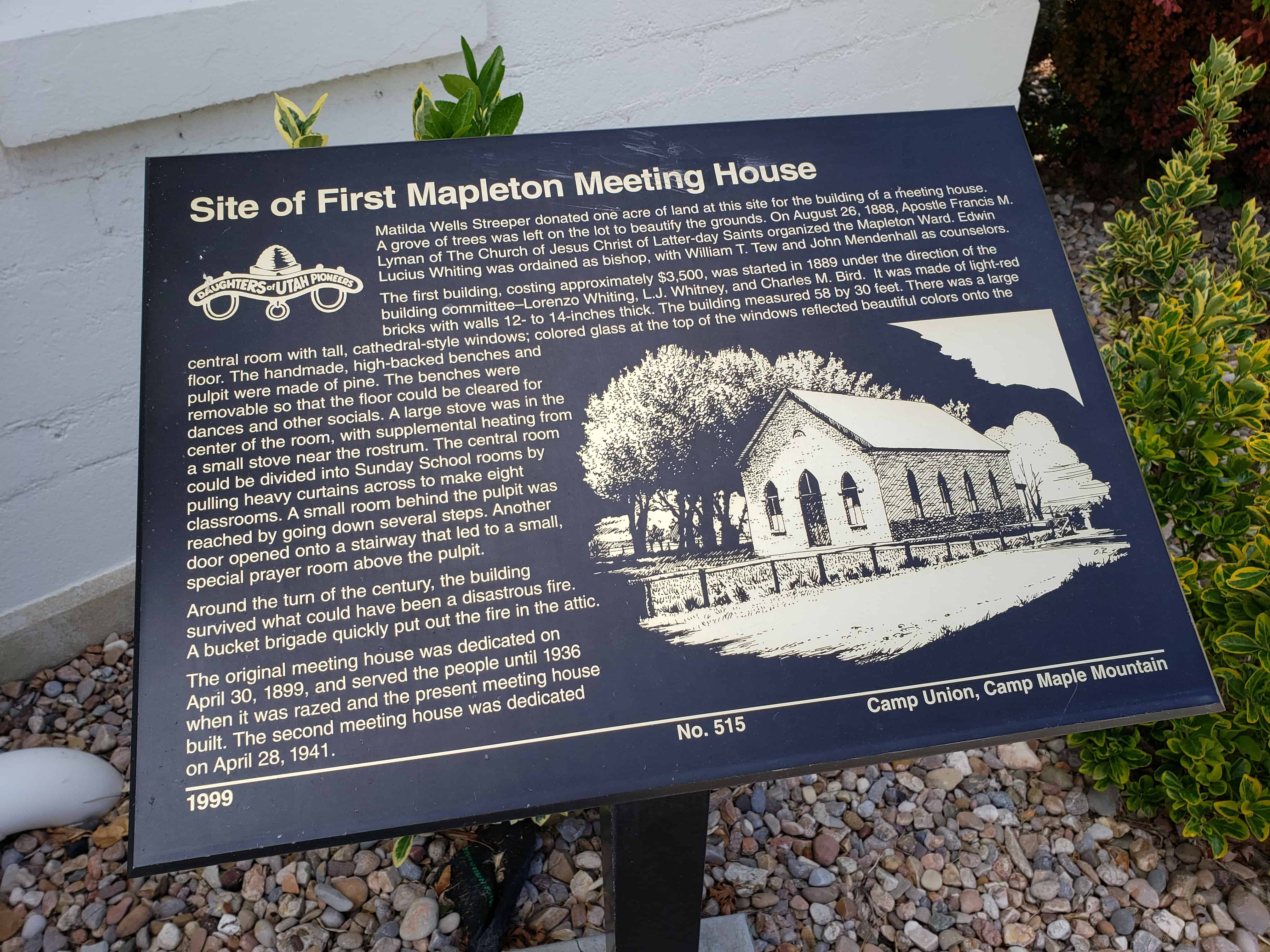
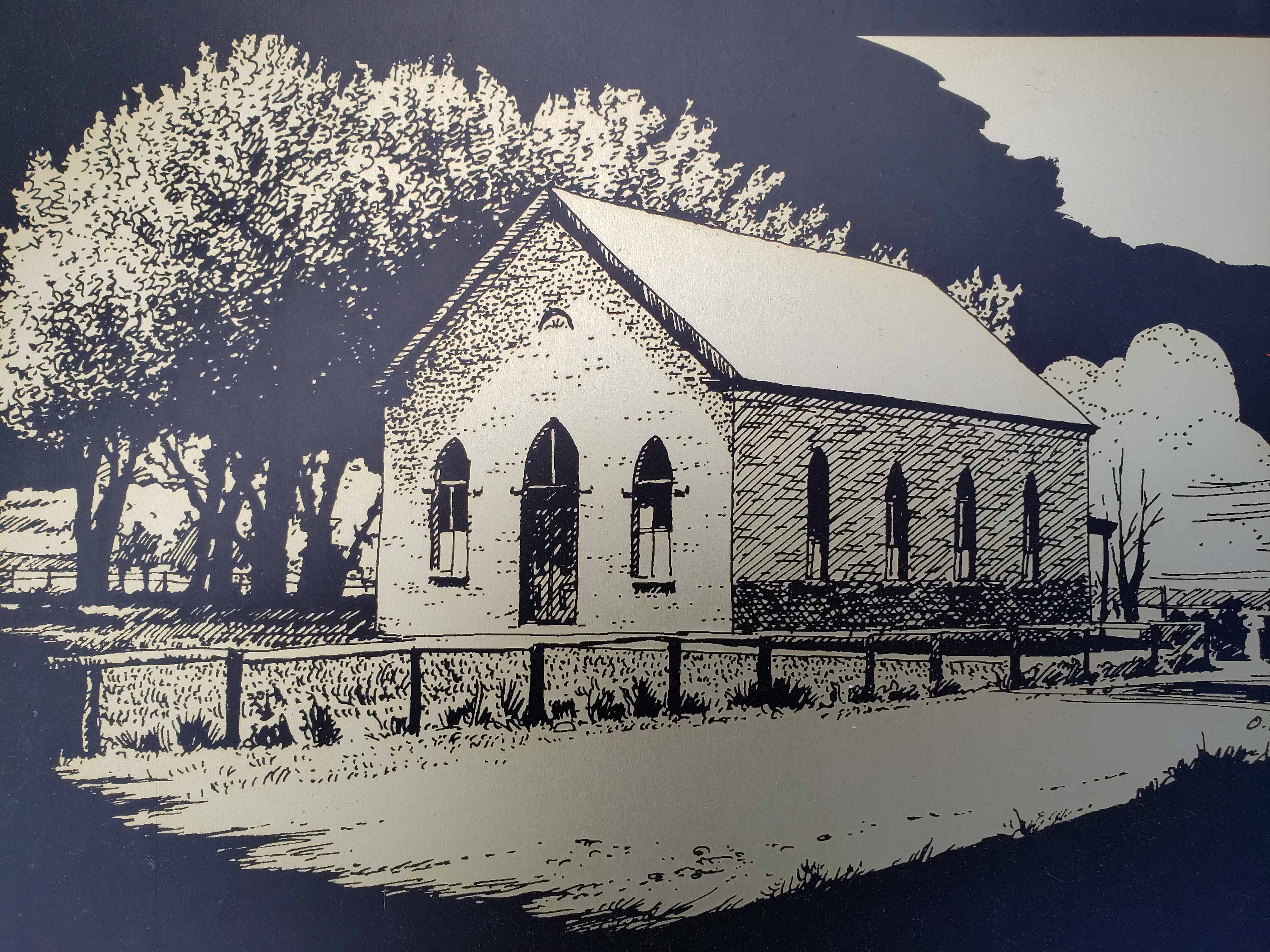


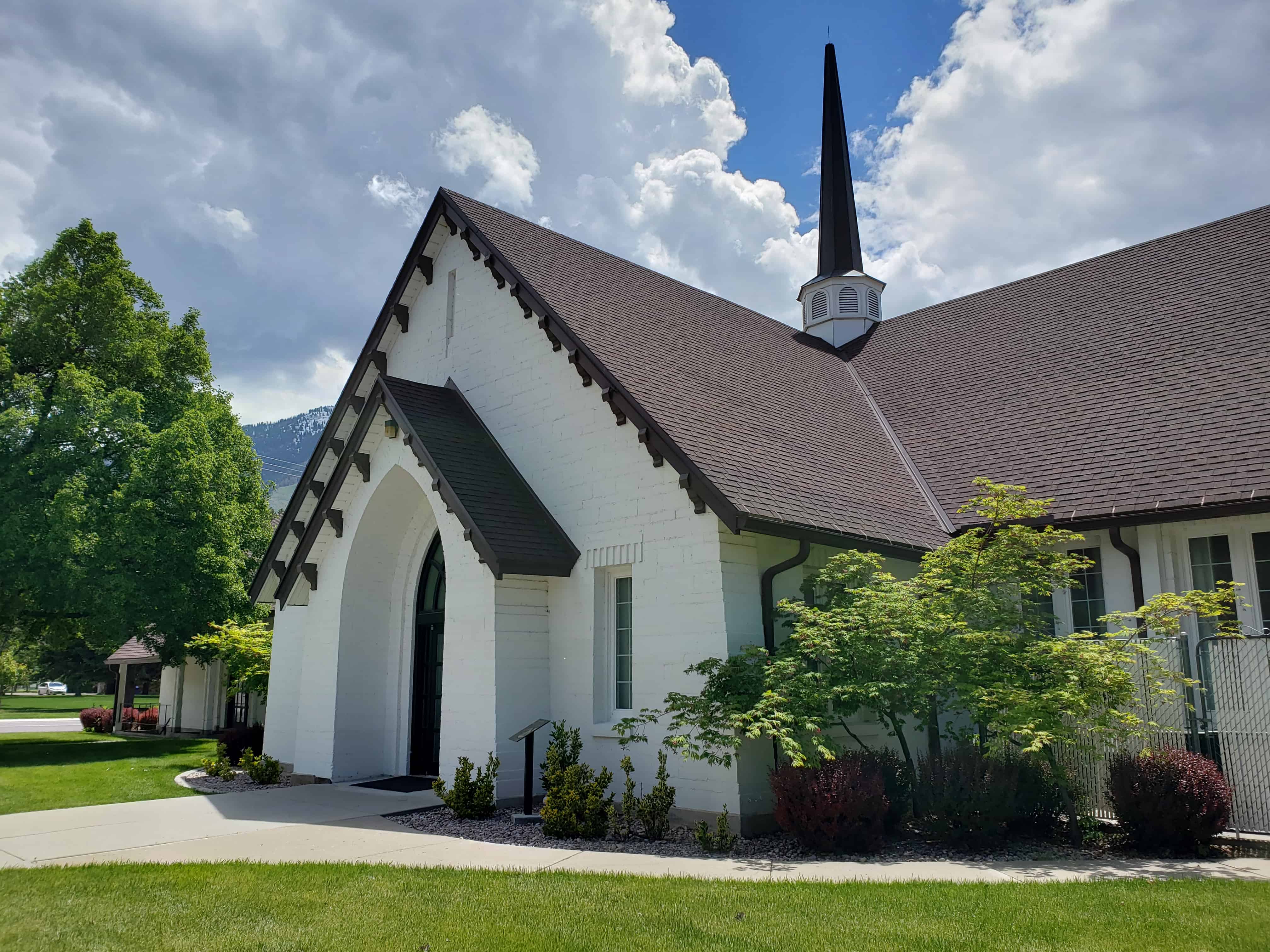


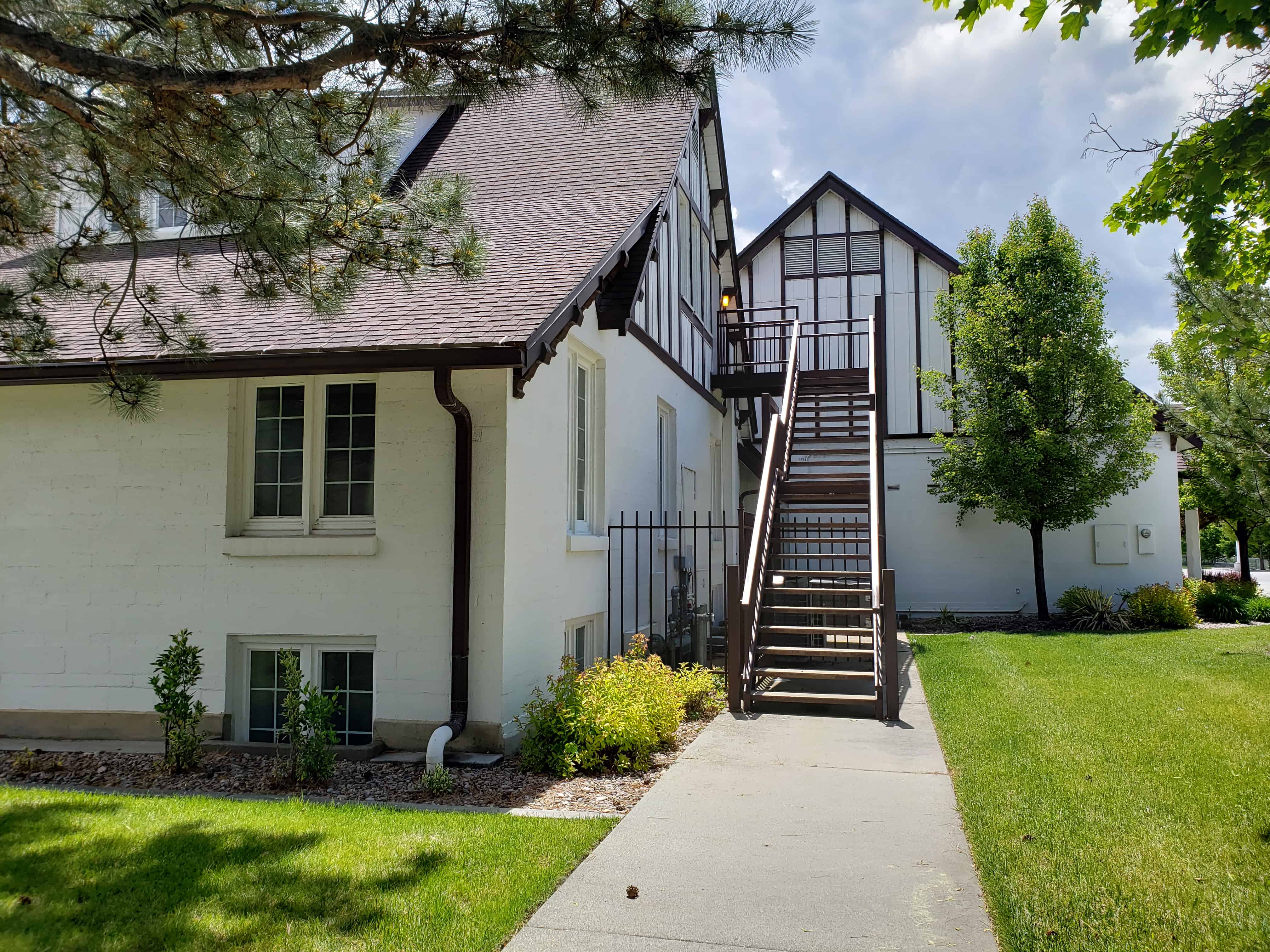


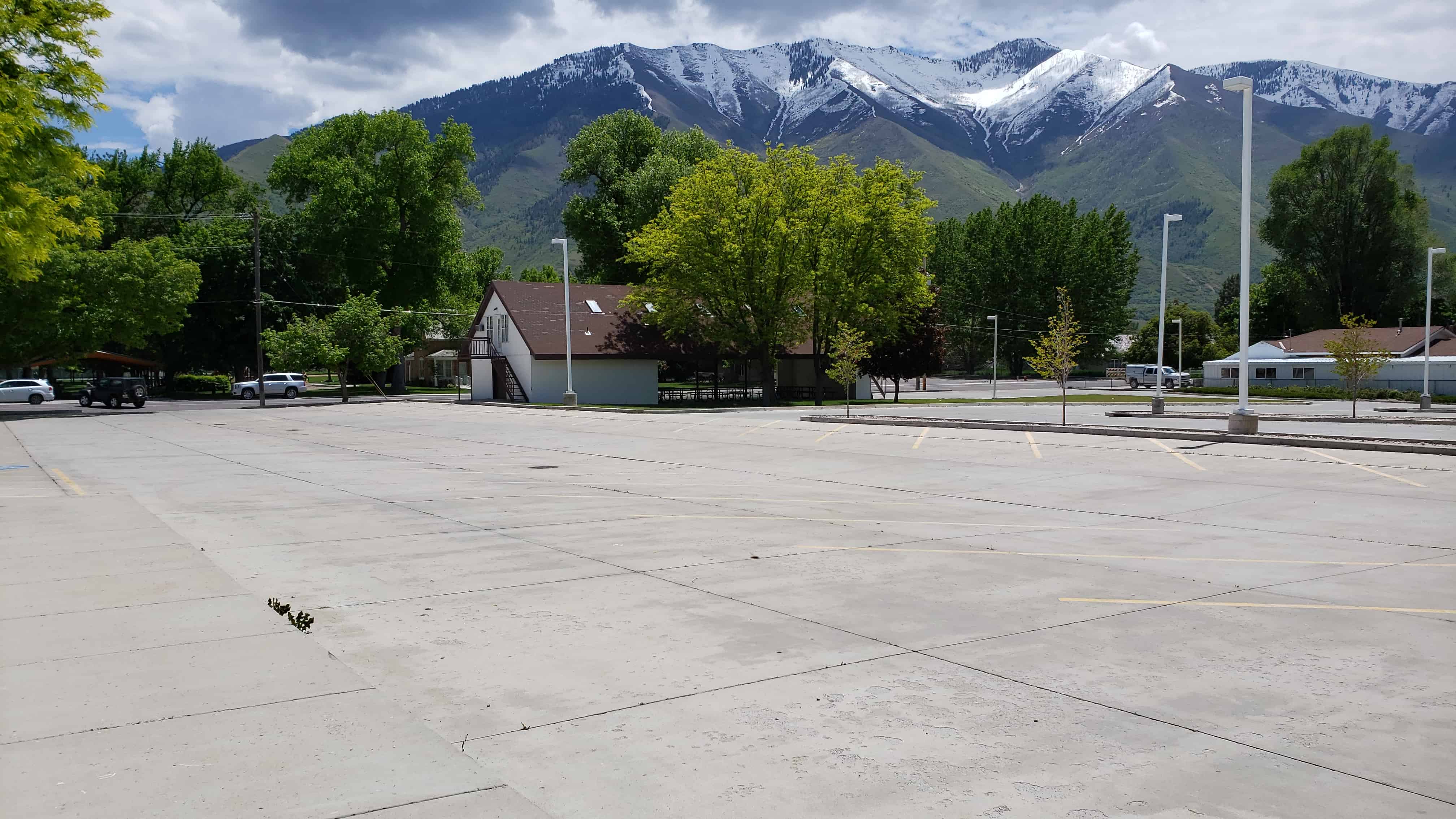
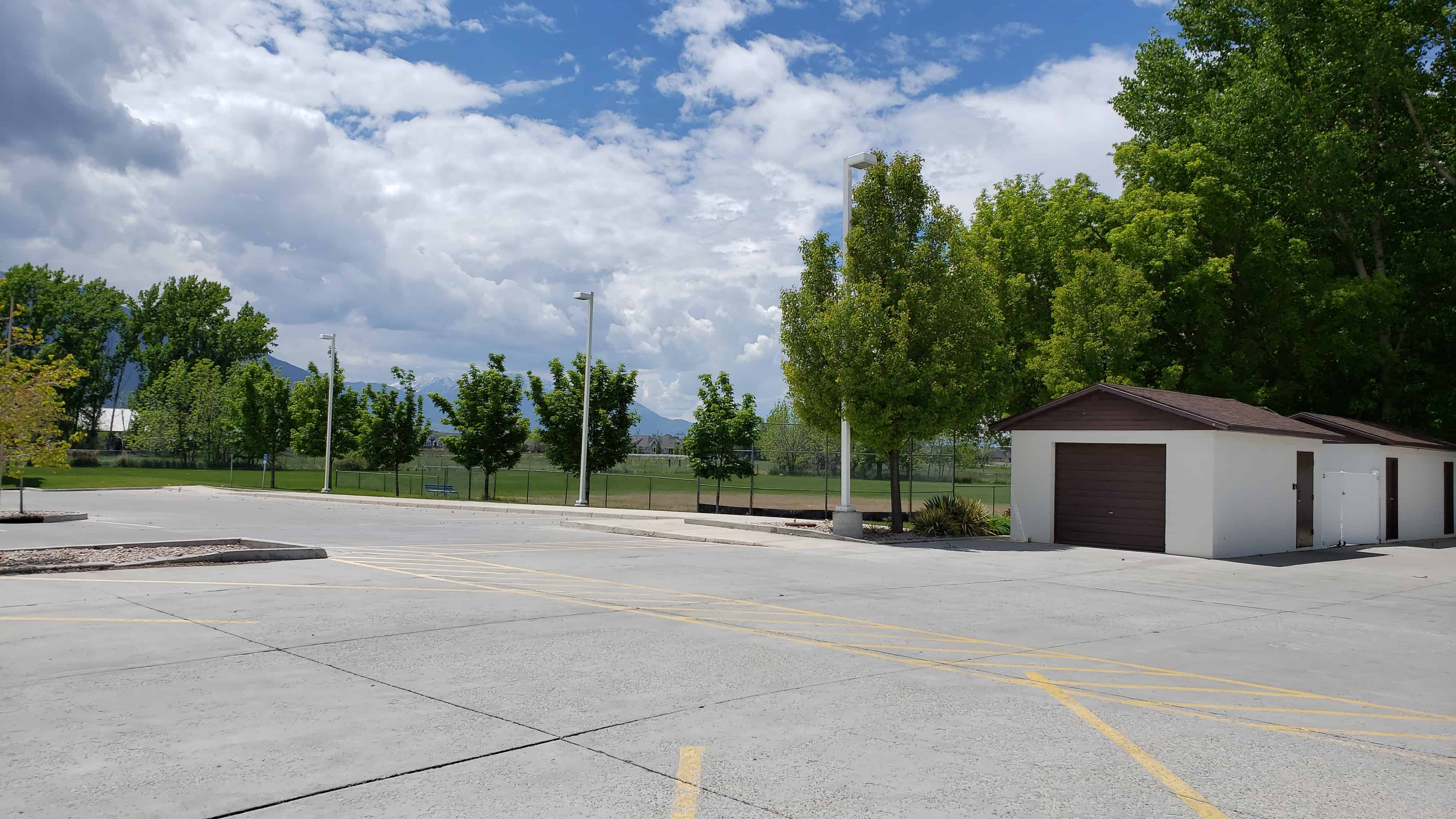



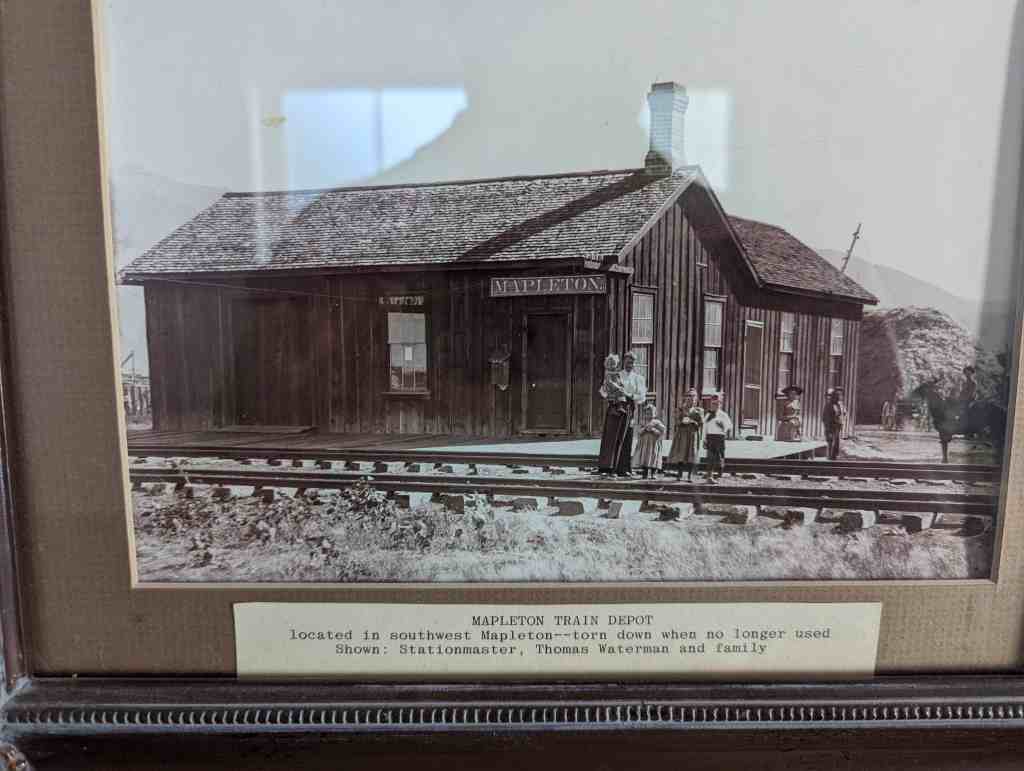
These photos are in the hallway inside the building:



08 Thursday Aug 2019
Posted in Uncategorized
Tags

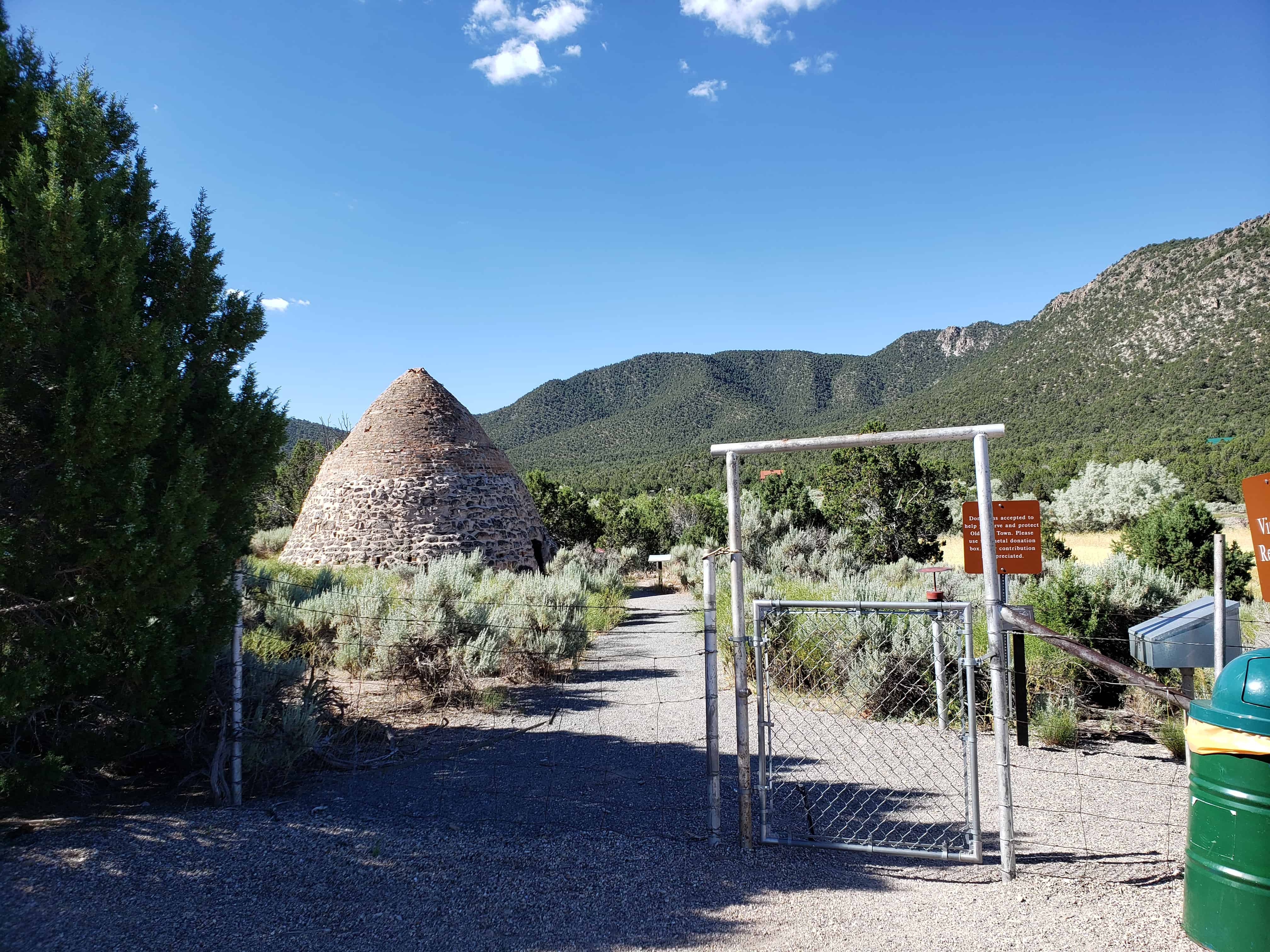
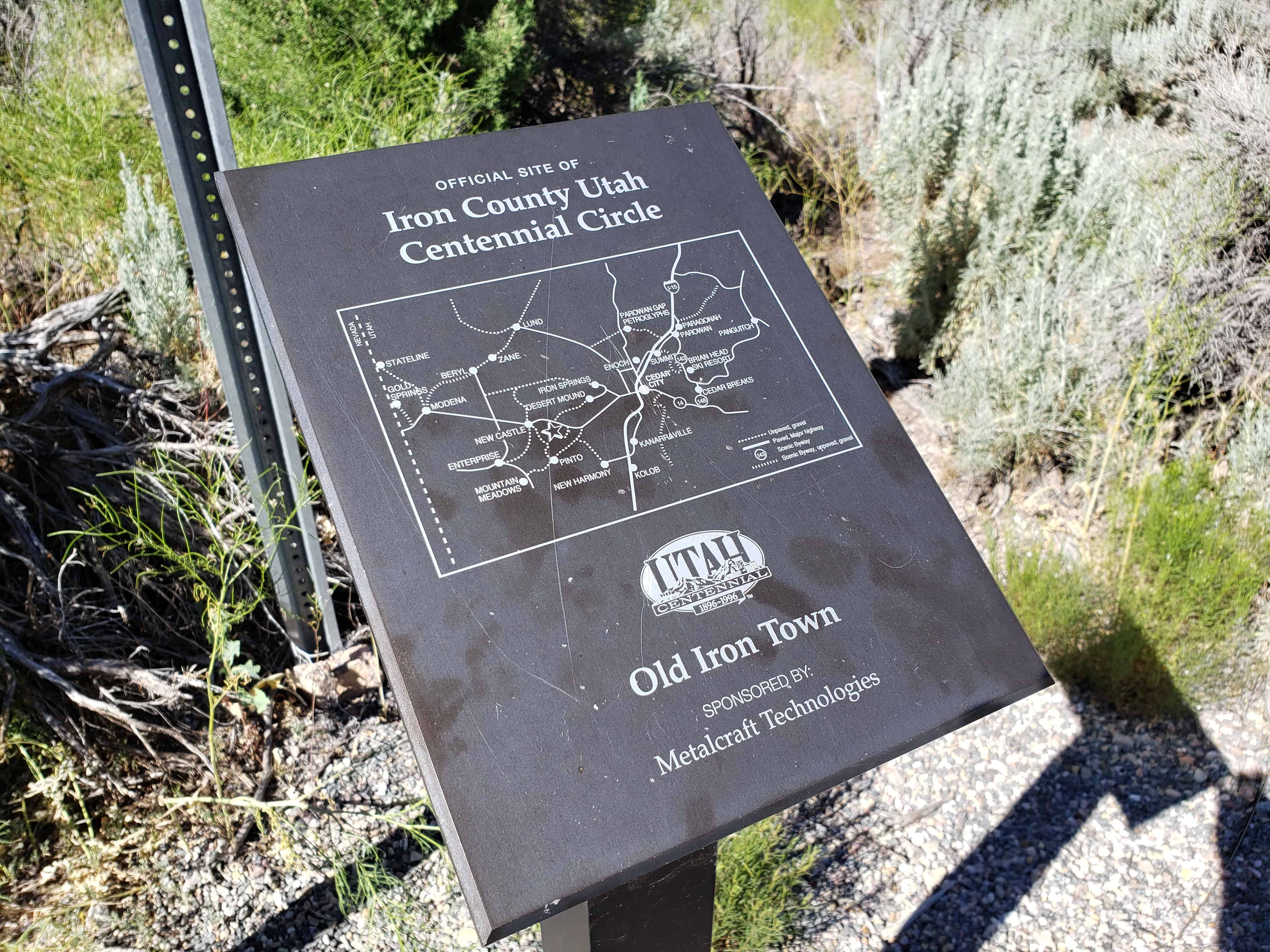
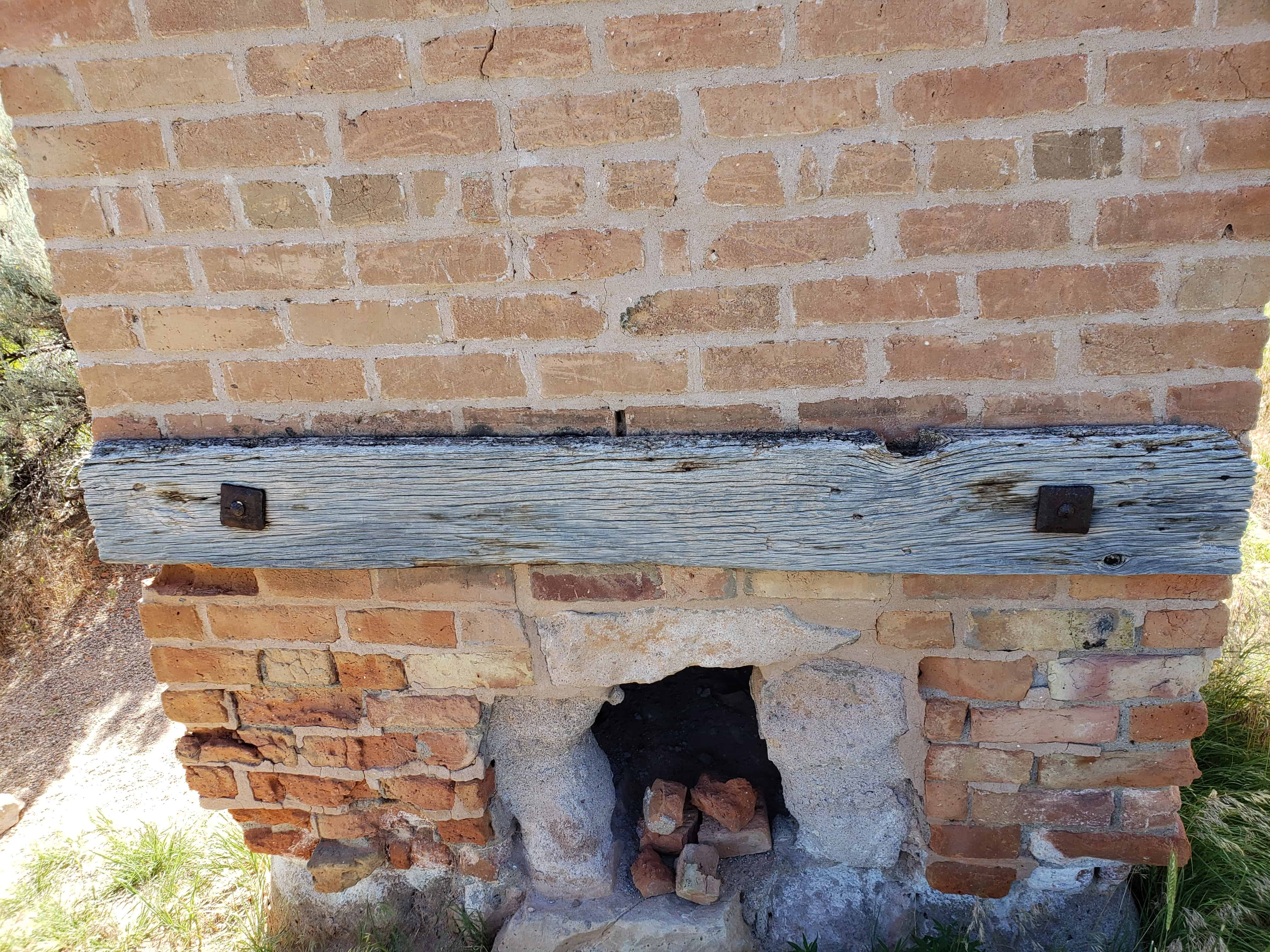
Formerly known as Little Pinto, Old Irontown is a ghost town with ruins of buildings and charcoal kilns in Iron County, Utah.
This historic marker reads:
Established 1868 by Ebenezer Hanks and others who organized the Great Western Iron Manufacturing Co., a cooperative enterprise. Officers were E. Hanks, President, Homer Duncan, Vice President, Seth M. Blair, Secretary. 800 pounds of iron of good quality produced each eight hours, the plant running day and night.

The story of Utah’s iron and steel industry begins soon after the arrival of the Mormon pioneers in Salt Lake Valley in 1847.
First of all, because of geographic isolation and because of their desire for ideological insolation, Mormon pioneer leaders early adopted a policy of economic independence and self-sufficiency. Coupled to this policy was a belief in their earthly stewardship; namely, “the earth is the Lord’s . . .” to be subdued by his chosen people. The Saints could make Zion flourish by applying themselves. The resources were there to be exploited.
As early as the fall of 1849 an exploring party, led by Apostle Parley P. Pratt, discovered Iron Mountain in Southern Utah and the coal beds nearby at Cedar City. Within two years settlements had been established at Parowan and Cedar City in Iron County. Those settlers called to Cedar City were designated “Iron Missionaries.” They formed the Pioneer Iron Company in 1851-1852. It was suceeded by the ill-dated and costly Deseret Iron Company, both located near Cedar City, which operated between 1852 and 1858 This latter company was an attempt by the L.D.S. Church to raise British capital to finance the development of the industry and to employ skilled English workmen to operate the furnaces and plants. However, although nearly $150,000 were expended over a ten-year period, only about 400 tons of iron were produced. Several factors, including cold weather and floods, destroyed the project.
Yet the resource remained as did the need for iron. A renewal of interest began in 1868. Seth M. Blair, Chapman Duncan and Ebenezer Hanks, Directors and President, respectively, of the new Union Iron Works, organized the new company and employed David B. Adams of Beaver to run the furnaces. They reported in August of 1871 that they could now produce up to 2,500 pounds of iron per day. Both church and government monies subsidized this operation.
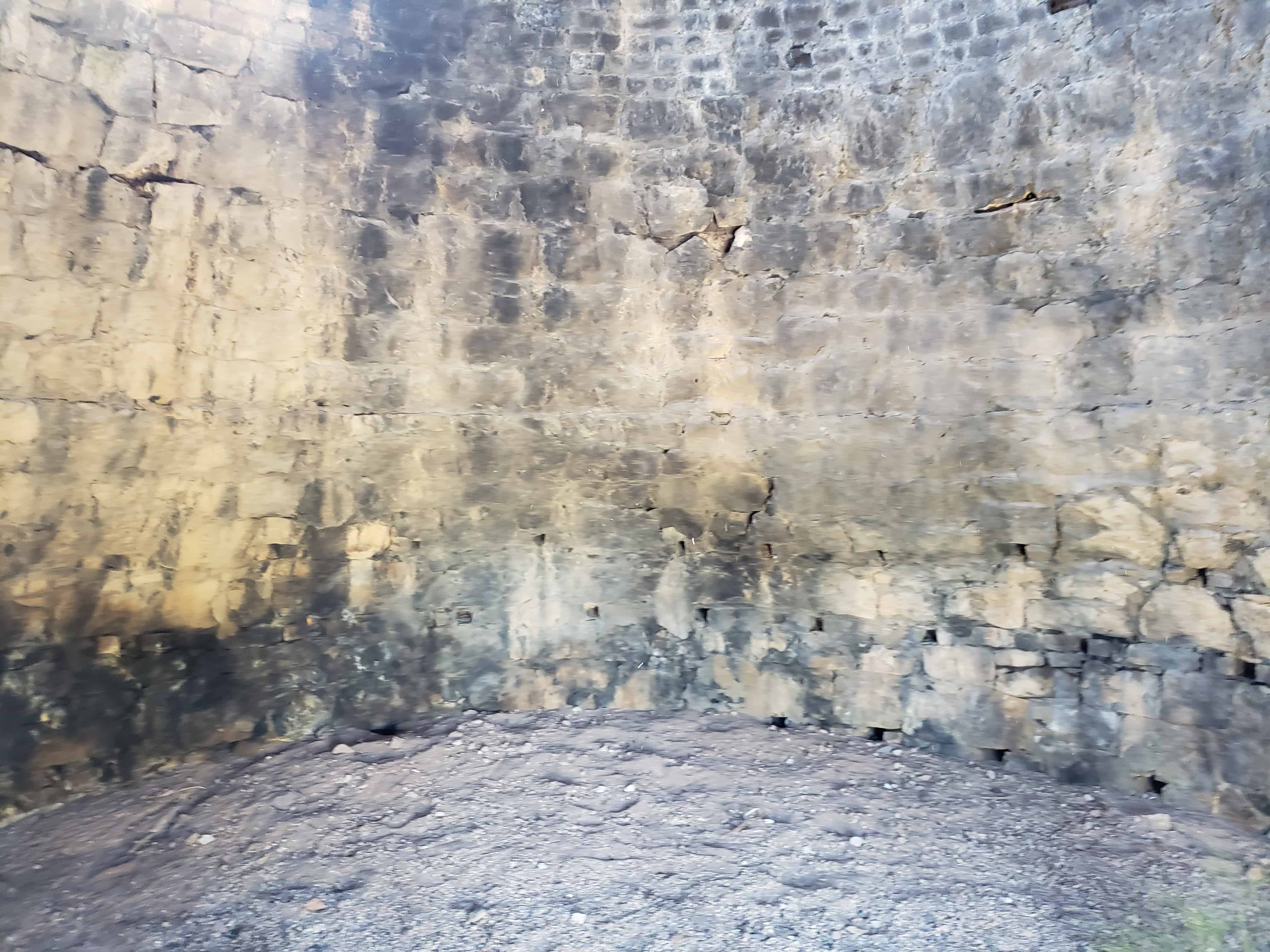
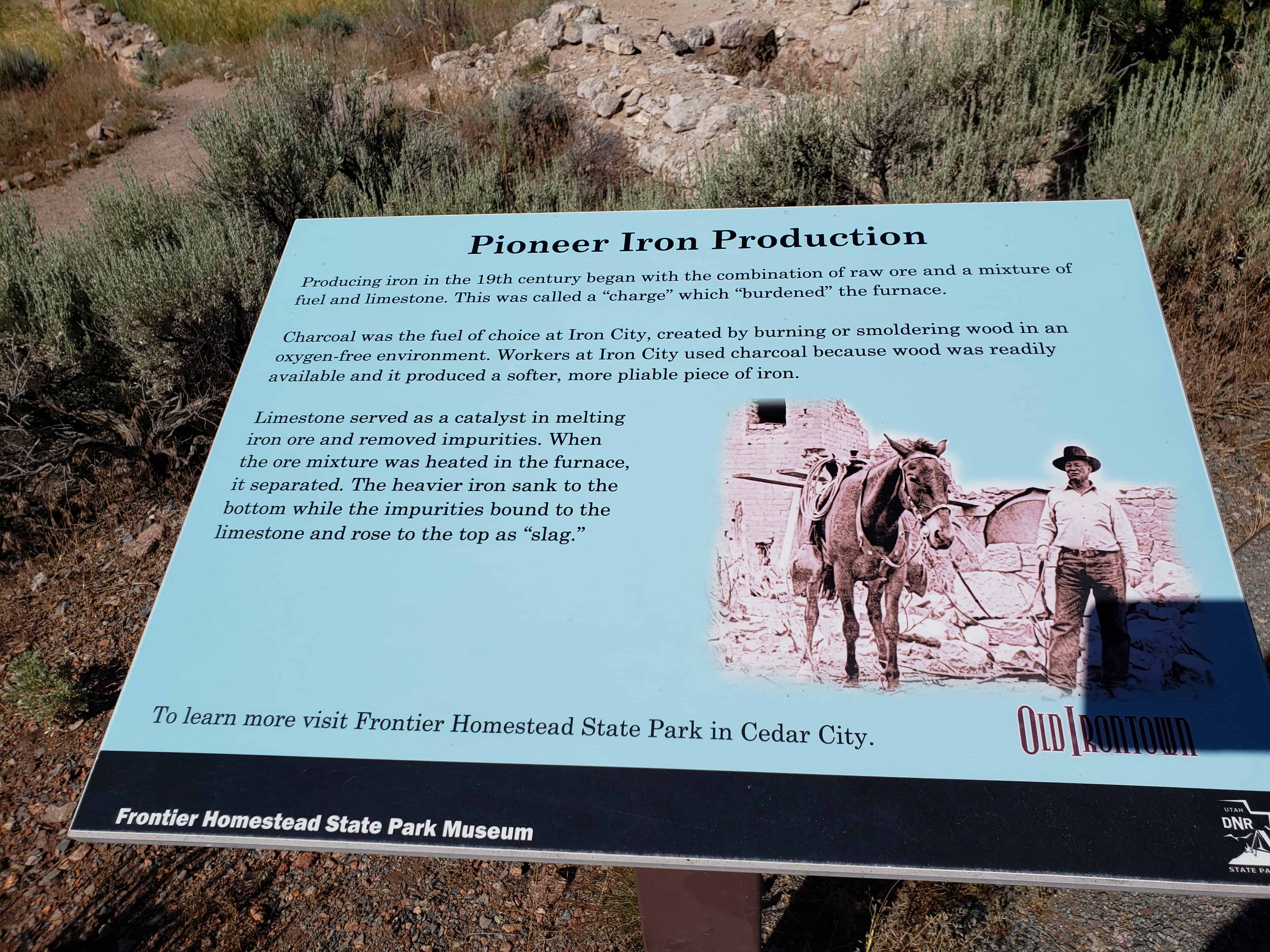
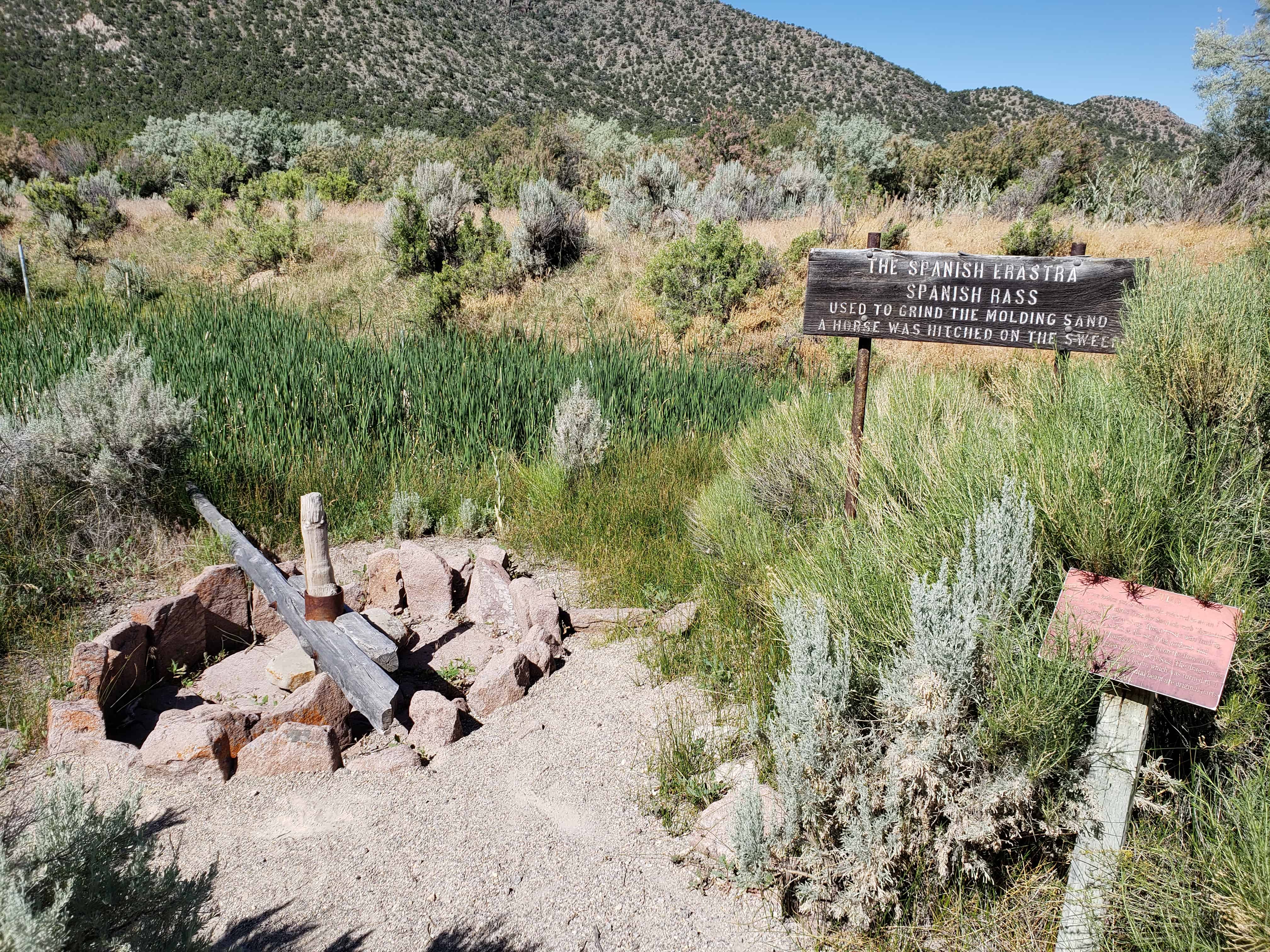
Their plant was located on Pinto Creek about 22 miles southwest of Cedar City, near the southern tip of Iron Mountain. They built several charcoal furnaces, one of which remains. (The coal near Cedar City contained so much sulfur that it was difficult to make a good coke; consideration was even given to moving the operation to Wales in Sanpete County.) They also constructed an “Arastra” for preparing fine sand for molds, a foundry and furnaces. Stoves, irons and milling equipment made at the site were sold to the miners in Nevada and elsewhere.
In 1873 the company was reorganized as the Great Western Iron and Manufacturing Company, which expanded the plant to include an engine house, two furnaces, a foundry, a pattern shop, and a business office. It remained active for three years, but could not compete on such a limited basis, and became inactive. This site preserves remnants of this 1868-1876 period of production.
In 1881 the Board of Trade and the leaders of the Mormon Church again sought the development of this major resource. The Utah Iron Manufacturing Company was organized but, as their mineral claims were “jumped,” litigation was required to clear title to them. By 1884, the properties were cleared and production was planned by the new Iron Manufacturing Company of Utah, consisting of the same interests basically as the 1881 company. However, by 1884 the United States Supreme Court had upheld the constitutionality of the 1882 Edmunds-Tucker Act prohibiting polygamous cohabitation in the case of Rudger Clawson. Consequently “Feds” descended on Mormon leaders, driving them “underground” and, in this particular instance, putting an end to the cooperative, church-supported development of Utah’s iron industry.
Later, of course, these resources were developed and became a part of the national iron and steel complexes.













05 Monday Aug 2019
Posted in Uncategorized

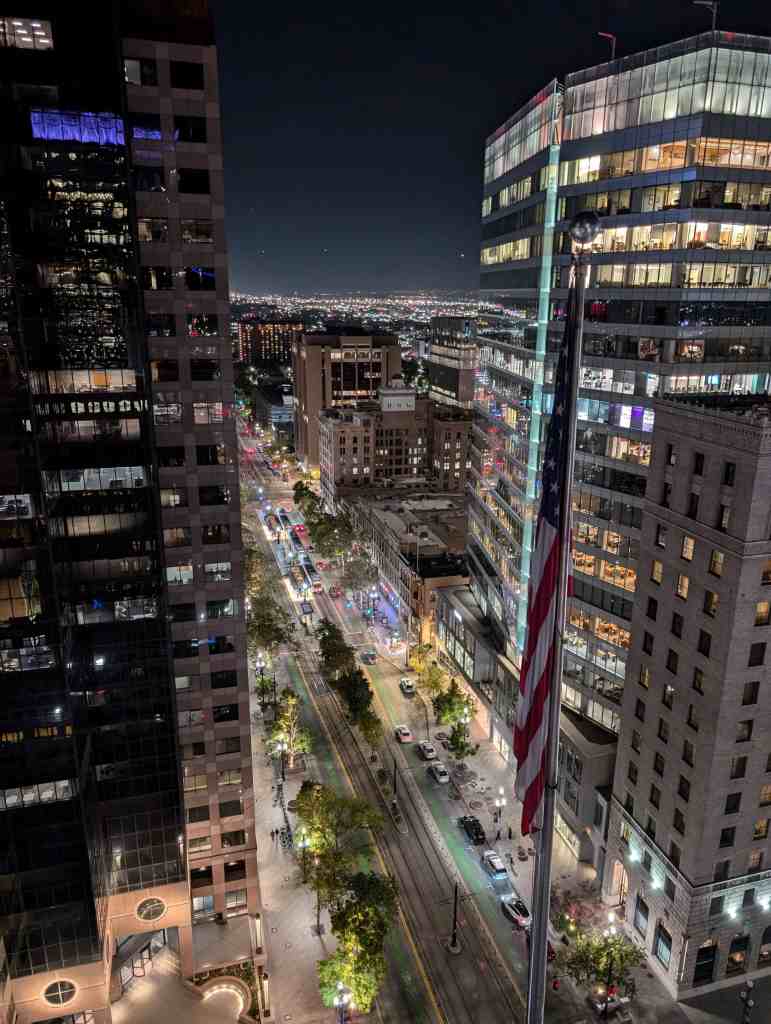
Main Street (Salt Lake City, Utah)
A Place of Parades and Celebrations
Parades united the city around a celebration of the common good – with a bit of fun thrown in. The earliest parades featured brass bands and marchers arranged around a theme. Over time, they became ever more elaborate. For the Pioneer Centennial in 1947, Main Street welcomed home from a reenactment a car caravan complete with wagon covers and plywood oxen attached to fenders.
Since the city’s early days, parades noted the annual passage of Independence and Pioneer Days in July. Similar events sent soldiers off to war and welcome them home again, advertised circuses and carnivals, touted Utah’s progress, and heralded St. Patrick’s Day. Main Street remained the city’s principal parade route until 1997 when construction of the TRAX line necessitated a new venue.

The following is a list of the places I’ve documented on Salt Lake City’s Main Street – sorted by address, north to south. (other addresses listed here)
| West side of Main Street (north to south) | East side of Main Street (north to south) |
| – Girard Avenue – | – Girard Avenue – |
| 115 W Girard Avenue | 105 W Girard Avenue |
| 553 N Main St | 526 N Main St |
| 527 N Main St | 524 N Main St |
| 521 N Main St | 520 N Main St |
| 517 N Main St | 512/514 N Main St – William J. Silver Home |
| 501 N Main St – Joseph Dean Home | 510 N Main St |
| – 500 North – | – 500 North – |
| 469 N Main St – Paul E. B. Hammer Home | 470 N Main St |
| 459 N Main St | 475 N Wall St |
| 451 N Main St | 450 N Main St |
| 441 N Main St | 434 N Main St |
| 439 N Main St | 430 N Main St |
| 425 N Main St | 426 N Main St |
| 419 N Main St | 420 N Main St |
| 407 N Main St | 58 W 400 N |
| – 400 North – | – 400 North – |
| 399 N Main St (stairs) | 394 N Main St |
| 397 N Main St | 388 N Main St |
| 391 N Main St | 374 N Main St |
| 387 N Main St | 372 N Main St |
| 371 N Main St | 364 N Main St |
| 361 N Main St | 358 N Main St |
| 70 W Apricot Avenue | 354 N Main St |
| – Apricot Avenue – | – Apricot Avenue – |
| 345 N Main St | 344 N Main St |
| 337 N Main St | 340-342 N Main St |
| 333 N Main St | 336 N Main St |
| 331 N Main St | 300 N Main St – Pioneer Memorial Museum |
| 325 N Main St | |
| 321 N Main St – William R. Calderwood Home | |
| 311 N Main St | |
| – 300 North – | – 300 North – |
| 225 N Main St | 294 N Main St |
| 288 N Main St | |
| 282-284 N Main St | |
| 276-278 N Main St | |
| 270 N Main St | |
| 258 N Main St | |
| 256 N Main St | |
| – Center Street – | – Hillside Avenue – |
| 8 E Hillside Avenue | |
| 241 N Vine St | 200 N Main St – McCune Mansion |
| – 200 North – | – 200 North – |
| 180 N Main St | |
| 158 N Main St – also the Kimball Whitney Cemetery and DUP Marker 333 | |
| 105 N Main St – Grand Central (now Conference Center) | 150 N Main St |
| 60 W North Temple – LDS Conference Center | 15 E North Temple – Family History |
| – North Temple – | – North Temple – |
| 50 E North Temple – Temple Square | 50 E North Temple – Temple Square |
| – South Temple – | – South Temple – |
| 15 W South Temple – Council House | 1 S Main St – Zions Bank 1 S Main St – Formerly Templeton Building |
| 24 S Main St | 21 S Main St – Z.C.M.I. / Macy’s |
| 34 S Main St – Constitution Building | 34 S Main St – Constitution Building |
| 50 S Main St – City Creek Mall | 51 S Main Street – City Creek Mall |
| 54 S Main St | 55 S Main St – City Center TRAX Station |
| 62 S Main St – Amussen’s Jewelry | 79 S Main St – Deseret Bank Building |
| 68 S Main St – McIntyre Building | |
| 10 W 100 S / 74 S Main St – McCornick Block | |
| – 100 South – | – 100 South – |
| 100 S Main St – The Old Clock | 111 S Main St – Office Building |
| 102 S Main St – Eagle Emporium | |
| 120 S Main St – 120 South Main | |
| 122 S Main St – 122 South Main | 123-125 S Main St – Farmers & Stock Growers Bank (now Eccles Theater) |
| 124 S Main St – 124 South Main | |
| 128 S Main St – The Daft Block | 131 S Main St – Eccles Theater |
| 134 S Main St – Kearns Building Parking Garage | 135 S Main St – Grayson’s Department Store (now Eccles Theater) |
| 136 S Main St – Kearns Building | 143 S Main St – Tribune Building |
| 143 S or 167 S Main St – The Salt Lake House | |
| 147 S Main St – Site of a Pony Express Station and Pony Express Division Headquarters | |
| 148 S Main St – Pantages Theatre | 149 S Main St – The Lady Bag |
| 151 S Main St – Tracy Loan & Trust Company | |
| 154 S Main St – Ary’s Barber Shop | 155 S Main St – Eva’s Bakery |
| 156 S Main St – Twisted Roots | 157 S Main St – McKay Diamonds |
| 158/160 S Main St – Murphy’s Bar | 159 S Main St – Hepworth-Carthey Building |
| 163 S Main St – First National Bank | |
| 163 S Main St – Pony Express: Great Salt Lake City Station | |
| 165 S Main St – Herald Building | |
| 170 S Main St – US Bank | 175 S Main St – Walker Center |


04 Sunday Aug 2019
Posted in Uncategorized
Tags

Amanda Knight Hall, named in honor of Amanda McEwan Knight, wife of Jesse Knight, was the first dormitory for women built by Brigham Young University. Completed in 1939, this three-story, red brick building was designed by architect, Joseph Nelson. ‘The blend of Tudor Revival and Collegiate Gothic architectural styles is rarely seen in Provo and contributes to the turn-of-the-century architecture found on North University Avenue. The building was dedicated by LDS Church President David O. McKay on May 26, 1954.
The Amanda Knight Hall, completed in 1939, is locally significant under Criterion C in the area of Architecture as the only, largest, and most ornate hybrid example of the English Tudor Revival and Jacobethan Revival styles in the city of Provo. The building is the embodiment of the distinctive characteristics of its period and styles of construction. It is a product related to the peak of English styles of architecture on college campuses in the early twentieth century, particularly for private universities, sometimes known as the Collegiate Gothic style. In Utah, the Jacobethan Revival style was particularly popular for educational buildings in the first half of the twentieth century. The English Tudor Revival elements provide a more domestic feel to the dormitory. The Amanda Knight Hall is also a local landmark significant under Criterion A in the area of Education for its association with the development of Brigham Young University (BYU). The women’s dormitory was built in the late 1930s during a time of growing enrollment at Brigham Young University, a private college owned by the Church of Jesus Christ of Latter-day Saints (LDS Church). It was the first and only institutional housing built for female students at BYU prior to World War II. The Amanda Knight Hall and its contemporaneous companion, the Allen Hall built for male students, were built in the residential neighborhood between BYU original lower campus and the current upper campus. Since the demolition of Allen Hall in 2018, the Amanda Knight Hall is now the only landmark building that links the lower (former) and upper (current) BYU campuses. The period of significance begins with the construction of Amanda Knight Hall in 1938-1939 and ends with the last women’s dormitory use in 1964.
Located at 42 East 800 North in Provo, Utah the hall was added to the National Historic Register (#100006910) on September 15th, 2021.
Construction on the Amanda Knight Hall began in 1938 and was completed in 1939. The property is locally significant under Criterion C in the area of Architecture as the only example of a hybrid of the Jacobethan and English Tudor Revival styles in Provo. The building was designed by local architect, Joseph Nelson, of Provo. Joseph Nelson also designed the first men’s dormitory associated with the campus: Allen Hall at 100 E. 700 North, completed in 1938. Allen Hall was a smaller complex, housing 70 male students, less than the 90 female students housed in the Amanda Knight Hall. The Jacobethan Revival architecture of Allen Hall was similar with gabled parapets, striated brick, and cast concrete; however, Allen Hall had only a small amount of decoration and no English Tudor Revival elements. The demolition of Allen Hall in 2018 helped spark public interest in the preservation of the Amanda Knight Hall. The Amanda Knight Hall was the first women’s dormitory built at Brigham Young University. It remained the only women’s institution housing for the university until the 1950s when BYU initiated an ambitious plan of constructing dormitories and apartments on the upper campus.

Brigham Young University was founded in Provo in 1875 as the Brigham Young Academy. The Academy used various commercial buildings in downtown Provo until 1892 when the Academy building was dedicated. The Academy building is a large Victorian Eclectic style building that was used by the university until 1968. The building was listed on the NRHP in 1976 (NRIS #76001839). It was restored between 1999-2001 and is now the Provo City Library at Academy Square (520 N. University Avenue). The Brigham Young Academy became Brigham Young University (BYU) in 1903. A group of buildings associated with the Academy (later BYU) were built in this location, known as the lower campus. Most have been demolished, but the Women’s Gymnasium, a NeoClassical building, (built in 1912) and a utilitarian Blacksmith Shop (1904) still exist across the street from the Academy Square. Like most public and private universities of the nineteenth century, BYU’s lower campus was a mix of architectural styles as buildings were added according to a particular donor’s fancy.
Beginning in 1894 with the construction of Pembroke Hall at Bryn Mawr College on the east coast, campus architects in the United States began emulating the venerated architecture of Cambridge and Oxford in England. A more focused version of the Victorian Eclectic, this style of architecture became known as the Collegiate Gothic style, also known as Educational Gothic. Whole campus were either designed or remade with Collegiate Gothic buildings around a central quad. Utah’s best example is Converse Hall on the campus of Westminster College in Salt Lake City built in 1906 (NRIS #78002685). Converse Hall has many elements of the Jacobethan Revival style (steeply pitched roof, window and door surrounds, bay windows), but the tall towers are a mark of the Collegiate Gothic style.
Because of the gradual transition of campus facilities from the lower campus on University Avenue to the upper campus on Temple Hill after land was acquired in 1907, BYU did not adapt the English quad model of campus planning. The Maeser Building was Neo-Classical (1909-1911), the one-story Brimhall Building (1918) was updated with Art Deco upper floors in the 1930s, and the Heber J. Grant Building was a muted example of the Second Renaissance Revival (1925). The same year Provo architect Joseph Nelson designed the Grant Building, he also designed the first President’s House at BYU, a two-story English Tudor cottage. Joseph Nelson would later design Allen Hall and the Amanda Knight Hall in 1937 and 1938 respectively.
Joseph Nelson was born in Mantua, Utah, in 1876 and graduated from the Brigham Young College in Logan, Utah.3 He later studied at the University of Pennsylvania under noted architect Paul P. Cret. Nelson won first prize in a 1908 design competition while at the university. He traveled and studied architecture throughout Europe as a young man. After establishing his offices in Provo, Nelson designed a number of institutional buildings in central and southern Utah. A biographical sketch of Nelson described his experience: “Having spent a large portion of this time in studying the architecture of the large eastern cities, specializing to a great extent on schools, churches, gymnasiums and libraries, he is especially qualified for work along these lines.”4 After a long career designing mostly institutional and commercial buildings, Joseph Nelson died at the age of 76.
The contractor for both the Allen Hall and the Amanda Knight Hall was Louis De Young.5 De Young was born in the Netherlands in 1890. He started working in the building trades at the young age of eight years old. He immigrated to Utah in 1908 and was a concrete worker before starting his own contracting business in Salt Lake City. De Young worked in a variety of building types and styles. His notable works include the dairy building at the Branch Agricultural College in Cedar City (now Southern Utah University), the remodeling of the LDS Hospital and the construction of the Yalecrest LDS Ward Meetinghouse (both in Salt Lake City). Louis De Young died in 1966.
The use of the Jacobethan Revival style for Allen Hall and Amanda Knight Hall is not surprising since the style was popular for institutional buildings in Utah from 1900s to the late 1930s. Allen Hall showed all the characteristics of the style: steeply pitched gable roofs, bay windows, and ogee arched entrances. The style was particularly distinctive for its use of stone, terra-cotta, or cast concrete for surrounds, copings, and stringcourses. What makes the Amanda Knight Hall stand out in terms of design is the seamless integration of the Jacobethan Revival with the English Tudor Revival style of architecture. The English Tudor Revival was the most popular of the European influenced styles that doughboys returning from World War I brought back to the United States. The style was popular in Utah between 1915 and 1930 and was mainly adapted to residential architecture, but also a few churches. The characteristics of the style include an asymmetrical façade, steeply pitched roofs, casement windows, and exposed framing members with infill panels of stucco. The alternating pattern of Jacobethan and English Tudor Revival ornamentation across the façade of the Amanda Knight Hall produced a surprisingly unified design.
The Amanda Knight Hall is particularly well-preserved, especially on the exterior. Contextually, the Amanda Knight Hall (and its demolished companion, the Allen Hall) represent the only phase of construction at Brigham Young University that was influenced by rise of English Revival styles (Jacobethan, English Tudor and the Collegiate Gothic) on campuses throughout the United States in the first half of the twentieth century. The two dormitories were built as BYU was transitioning to the upper campus, which would eventually be dominated by Modern-style buildings by 1968 when the university closed the Academy building within the lower campus.

The Amanda Knight Hall is locally significant under Criterion A in the area of Education as the only surviving institutional housing associated with Brigham Young University that was built prior to World War II. The property is also an important architectural representative of the history and influence of the Church of Jesus Christ of Latter-day Saints in the day-to-day operations of its flagship school: Brigham Young University. Enrollment in 1904, the campus’ first full year as a university was 899 students, with 74 in collegiate programs and 825 in the high school level academy. When Franklin S. Harris became university president in 1921, the high school programs had been phased out with the exception of teacher training, and the university enrollment was nearly 300. By the time the Amanda Knight Hall was completed in 1939, BYU was an accredited university with 2,375 students.
Aware of the need to expand the campus, the university’s most generous benefactors, Jesse and his wife, Amanda Knight, donated 7.18 acres of land on Temple Hill (now called University Hill), which Amada had originally obtained for use a public park named for her son, Raymond. The Knights owned most of the upper campus where nearly all the university’s subsequent land acquisitions were located. Jesse and Amanda Knight would eventually donate or sell nearly 500 acres to the university. Even with rapid enrollment growth in the first quarter of the twentieth century, no institutional housing was built by the university. Students lived with relatives or rented rooms in private homes throughout the city.
At a meeting in 1937, BYU President Harris reminded the Church Board of Education that the university’s only endowment fund for many years contained $200,000 and was producing an extremely low rate of interest. President Harris recommended that part of the Jesse Knight Endowment fund be used to build a dormitory for 70 to 75 male students to accommodate burgeoning enrollment. Following up on President Harris’ recommendation, Allen Hall was completed at a cost of $75,000 with a large amount of labor donated by the students. The 35-bedroom hall was designed as a cooperative housing unit where residents would donate their time to meal preparation and building maintenance. This was designed to help students with limited means. Allen Hall was the first dormitory built for BYU. The Provo Daily Herald noted that “With the erection of a new dormitory for men at Brigham Young University, Provo will take on more and more the aspect of a university city.” Allen Hall at the corner of 700 North and 100 East opened on February 1, 1938 at full capacity. The residence hall was named for Robert Eugene and Inez Knight Allen, who was Amanda Knight’s daughter. Mr. and Mrs. Allen were also generous benefactors to the university.
Allen Hall proved so successful that steps were taken to construct a similar cooperative residence hall for women, also financed partially through the Knight Endowment fund. President of the LDS Church, Heber J. Grant had to personally approve the financing. Construction on the 46-bedroom Amanda Knight Hall began in the fall of 1938 and continued through the spring of 1939. As with Allen Hall some of the labor was donated by students. The housing costs for the 90 to 100 coeds was estimated to be $20 to $25 per month, with opportunities for cooperative meal preparation and building maintenance. Several descriptions of the nearly completed building complimented the Tudor design, especially the “long Tudor dining room.” One article described the building enthusiastically in this way: “It is of authentic sixteenth century Tudor and Elizabethan architecture with ultra-modern facilities and furnishing.” The building cost was $100,000.
Allen Hall and Amanda Knight Hall remained the only dormitories until World War II when an influx of defense workers caused a housing shortage for students throughout Utah County. For a short time during World War II, Allen Hall housed young women as the number of male enrollees dropped considerably, while female enrollment increased. Portions of buildings on the lower campus were converted to temporary dormitories. These buildings were part of the Brigham Young Academy Historic District in 1976 but were later demolished.

To alleviate the shortage for female students, BYU purchased a number of private houses to serve as cooperative housing. One known example, the Iona House, named for Iona Knight Jordan, was located at approximately 710 N. 300 East. About 30 female students occupied Iona House during the war years and during a dramatic increase in enrollment in the decade after World War II. Iona House was demolished in the early 1990s. Warnick House, located kitty-corner from Allen Hall, at 694 N. 100 East, housed a similar number of female students in the same time period. Warnick House was probably named for Effie Warnick, the dean of the Home Economics department. The house, built in 1916, is extant, but it has been a single-family dwelling since 1992. There were at least two other cooperative houses, but their addresses are unknown.
In the years after World War II, enrollment at BYU doubled to over 5,000 by 1951, the year Ernest W. Wilkinson became university president. Only about a quarter of students lived in universityowned housing. Most of the students still lived in privately-owned houses and apartments in Provo and the neighboring communities. By 1951, the occupancy of Amanda Knight Hall had risen to 140 to female students, Allen Hall housed 110 male students, and there were 111 student living in various cooperative houses. On the upper campus, BYU had acquired 26 barracks from the Ogden Arsenal at the close of World War II, which housed 350 single students and 200 married families in 1951. The barracks were eventually replaced by mobile homes in 1956 (Wyview Village, demolished circa 1970) and student family apartments in 1962 (Wymount Terrace, partially intact). In 1948, BYU remodeled a 1930s youth training school into the Knight Mangum Hall on the upper campus for 340 female students in 1951 (used as housing for a few years only, demolished in 2008).
With a goal of housing approximately half the students on campus, BYU built several large-scale Modern-style student housing projects in the 1950s and 1960s. Between 1953 and 1956, a complex of 24 residential buildings known as Heritage Halls were built on the upper campus. Each building was named for a notable LDS woman. The living arrangement in these halls was more apartmentlike with six unmarried female students sharing a kitchen and bathroom, which became a model for approved off-campus housing. Heritage Halls was replaced by a new set of apartment buildings constructed between 2011 and 2015. Several new Heritage Halls (2015-2020) replaced the dormitory-style Deseret Towers (built in 1965 and demolished in 2006-2008). Helaman Halls, built in 1958, and renovated in the 1990s, is the only remaining twentieth-century dormitory-style complex on campus.
Even before construction began, the name Amanda Knight Hall was chosen for the first women’s dormitory at BYU. The Amanda Knight Hall was the first building to be named in honor of a woman at BYU. The building was dedicated, along with 22 other campus buildings, by LDS Church President David O. McKay on May 26, 1954.10 Since the demolition of Allen Hall in 2018, the Amanda Knight Hall remains the only extant dormitory building, which was built prior to World War II and linked to BYU’s historic lower campus.


Amanda Knight was born Amanda Melvina McEwan in Salt Lake City on November 13, 1851. She married Jesse Knight on January 18, 1868. Jesse Knight (1845-1921) was one of the very few Mormon mining magnates in Utah. Poor throughout his youth, Knight struck it rich with the Humbug Mine in the Tintic Mining District in 1886. Knight was known for his benevolence toward his mine workers and their families, earning him the nickname “Uncle Jesse” for most of his life. The couple lived in Payson, Utah, for several years before building a large mansion on Provo’s Center Street. Their mansion was listed on the National Register in 1982 and is a contributing building in the Provo East Central Historic District (NRIS #82004174 and #98000281). Among their many philanthropic endeavors, Jesse and Amanda Knight shared an interest in supporting Brigham Young University. The financial support earned Jesse Knight, a second nickname: the “patron saint” of BYU. The campus has the Jesse Knight Building and several monuments to him, but only the Amanda Knight Hall honors her contributions.
As a mother, Amanda sought to further the education of her six children. For that reason, the family moved from Payson to Provo. One tribute noted “She was particularly interested in assisting young people to gain an education and awarded scholarships for that purpose.” Amanda Knight continued her philanthropic work for the university after the death of her husband in 1921, until her own death at the age of 81 on December 15, 1932. Although the name of the building honors her, Criterion B was not selected for this nomination, since Amanda Knight died before it was constructed, making it a commemorative rather than an associated property.
Professor Effie Warnick was chosen to be the first supervisor of the Amanda Knight Hall. Effie Warnick (1883-1965) joined the BYU faculty in 1922. By 1935, Warnick was a full professor and the chair of the Home Economics department. According to one source, Effie Warnick contributed to the design of the dormitory. The 1940 census enumeration lists Effie Warnick as the head of household at Amanda Knight Hall, presumably living in the supervisor’s apartment on the second floor. The census listed another faculty member in residence, Ileen Ann Waspe (1903-1943). Ileen Waspe was the assistant dean of women at BYU when she retired to marry Wilford LeCheminant in 1942. The census lists only nine students living at the hall in April 1940. Three were from Mexico, two were from Hawaii, two from Utah, and one from Canada.
In 1964, Amanda Knight Hall was no longer used as a female dormitory. Teacher training workshops were held in the building in the 1960s. For a time both Allen Hall and Amanda Knight Hall housed church missionaries to accommodate overflow from the Language Training Mission in Salt Lake City. This use presumably was continued until the Missionary Training Center was built above BYU’s upper campus and all missionary training transferred there in 1978. Among its many subsequent uses, the Amanda Knight Hall has been home to the BYU Arts Department and most recently, the English as a Second Language program. In 2019, BYU sold the building to the current owner. The rehabilitation was completed and approved as a state and federal tax credit project in 2021.


02 Friday Aug 2019
Posted in Uncategorized
Tags

I just thought this was a cool looking house and wanted to document it now before it’s gone someday.


I was on facebook and noticed the cover photo for this group was an older photo of this house, cool to see it when it was in better shape.

06 Saturday Jul 2019
Posted in Uncategorized
Tags
DUP, Historic Markers, Lumber, Mills, Pine Valley, utah, Washington County

Pine Valley
In 1855 this valley was discovered by Isaac Riddle an Indian Missionary, while searching for a lost cow. The first sawmill south of the rim of the Great Basin was built on this site in 1855-1856 by Robert Richey, Jehu Blackburn and Isaac Riddle.
The first homes in the valley were erected around the mill. Pine Valley became the source of much of the lumber used in early towns of southern Utah and Nevada.
Daughters of Utah Pioneers Marker #215 Located in Pine Valley, Washington County, Utah


01 Monday Jul 2019
Posted in Uncategorized

Dammeron Valley is in Washington County with a population of about 800, it was founded in 1859 and later abandoned and then more recently built up again.